General General 5 min read

What bird species can recognize human faces and remember them for years?
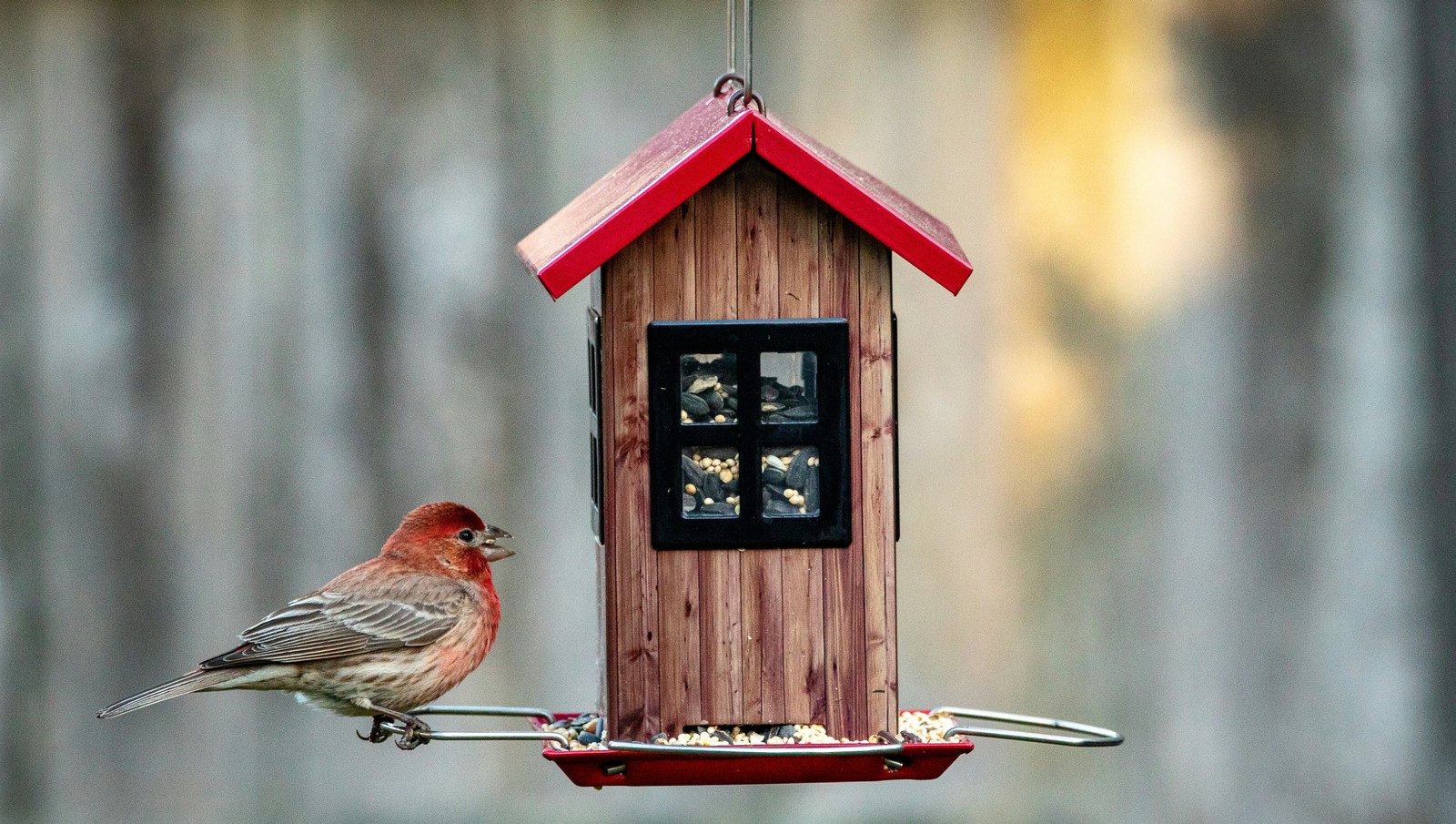
Image: Joshua J. Cotten

Backyard birding doesn’t require binoculars, special gear, or even much planning. Just a window, a cup of coffee, and a bit of curiosity. Across the United States, from the Rockies to the coastal plains, a colorful cast of familiar birds visits neighborhoods every day. Whether you catch the bright flash of a cardinal, the quick zip of a hummingbird, or the clever antics of a crow, these 12 backyard birds offer stories worth noticing. Keep reading to learn their traits and what you can do to lure them in for a closer look.

1
American Goldfinch
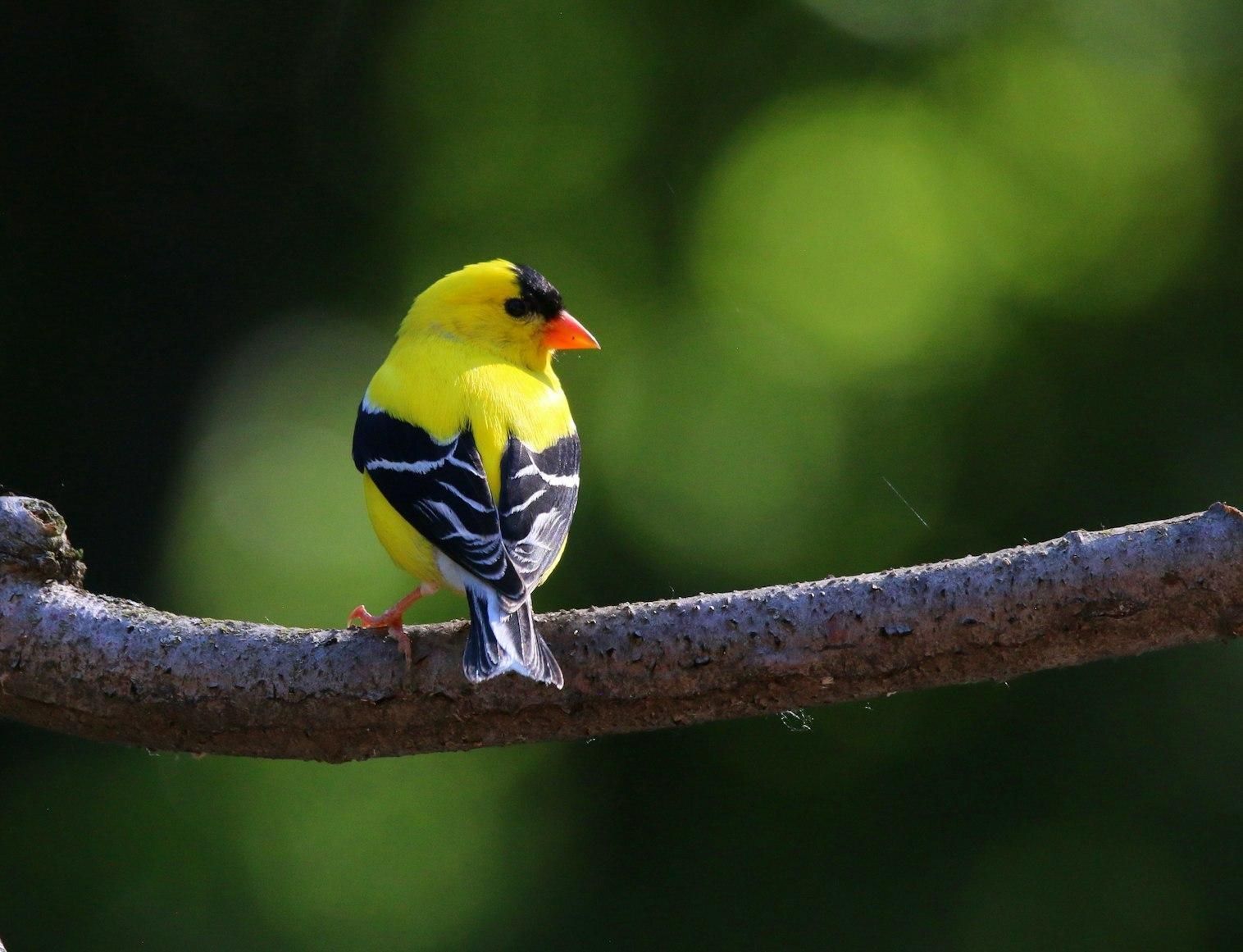
Image: Paul Crook

If you’ve spotted a drop of sunshine landing on your feeder sometime in the summer, that’s the American Goldfinch. Males turn a vivid yellow each year thanks to a complete molt, usually finished by late May.

They’re found coast-to-coast but are especially common in the northern and central U.S., where they favor open meadows and backyard thistle feeders. Unlike most songbirds, they nest late, often waiting until July when thistle seeds peak. If you see a tiny bird—barely 5 inches long—bouncing through the air in a roller-coaster flight pattern, you’ve found the American Goldfinch.

2
Blue Jay
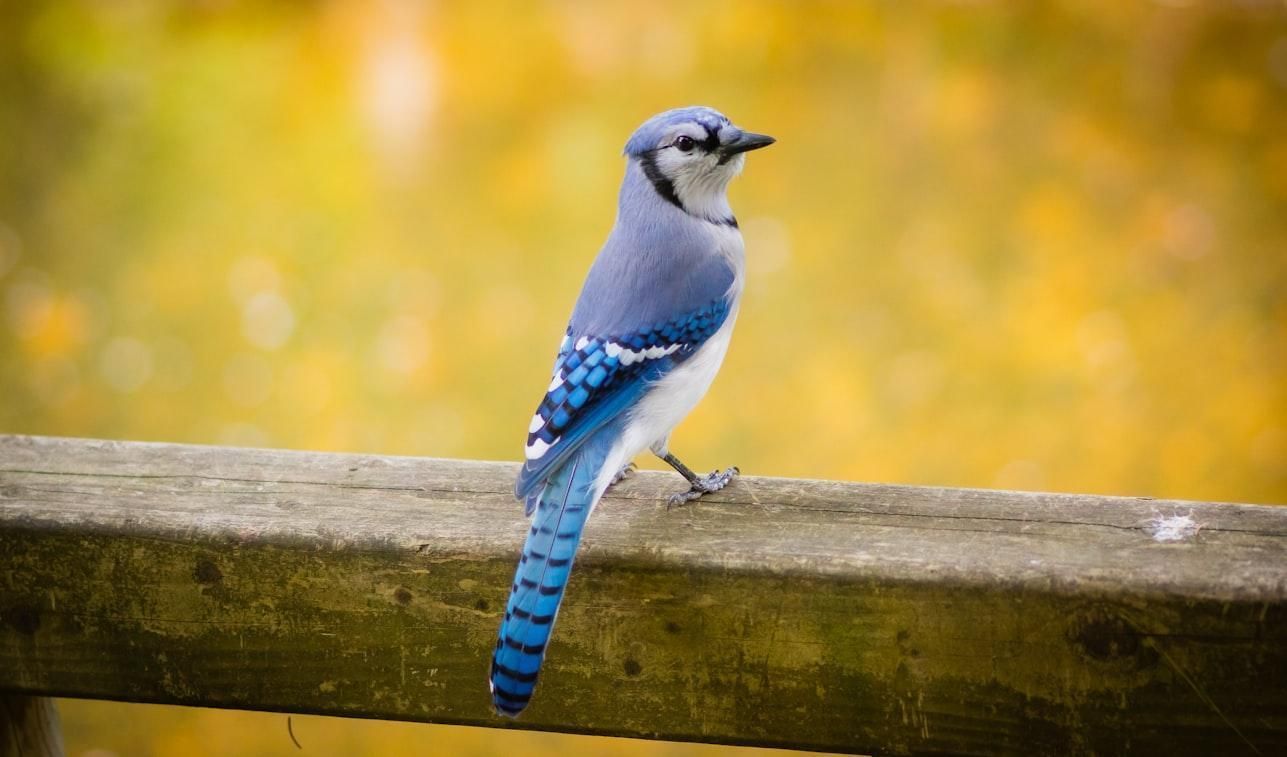
Image: Ruben Ortega

Blue Jays are known for being loud, confident, and colorful. Throughout the eastern half of the U.S., from Florida to Maine, they flash electric-blue wings marked with black "bar codes." Their blue color is actually a light trick: microscopic feather structures scatter wavelengths to create the hue. Another fun fact: back in the 1970s, researchers discovered they can mimic hawks, a clever way to scare other birds away from food.

3
American Robin
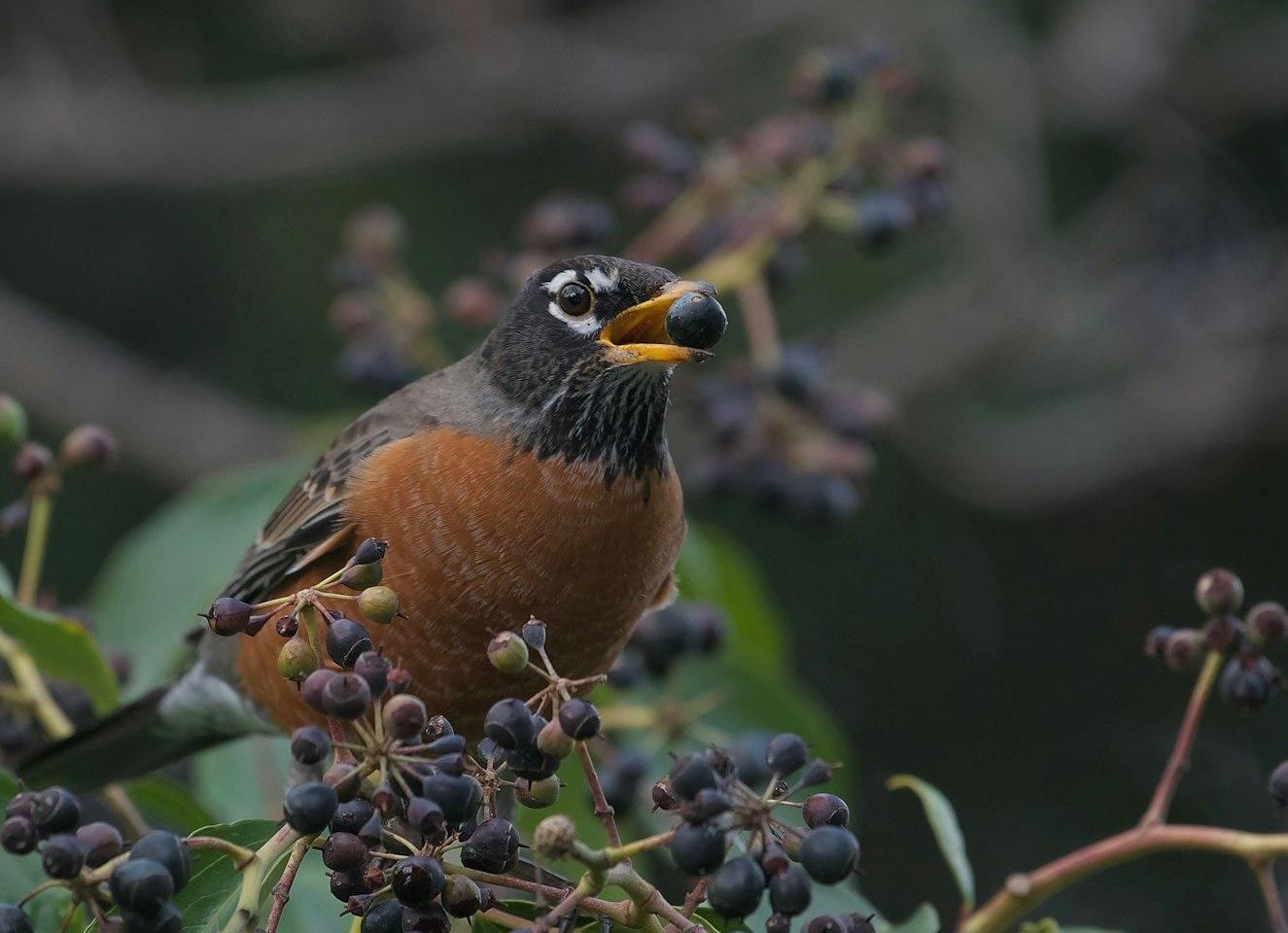
Image: Vijayalakshmi Nidugondi

Long before digital calendars, people guessed the seasons thanks to this bird. The American Robin’s spring chorus has been recorded in journals as early as the 1800s, marking the end of winter across most of the U.S. They’re widespread, found in all lower 48 states and even in Alaska during summer. Robins stand upright, tugging worms from lawns with that unmistakable rusty-orange chest. Adults measure about 10 inches long, roughly the size of a small paperback book.

4
Ruby-Throated Hummingbird
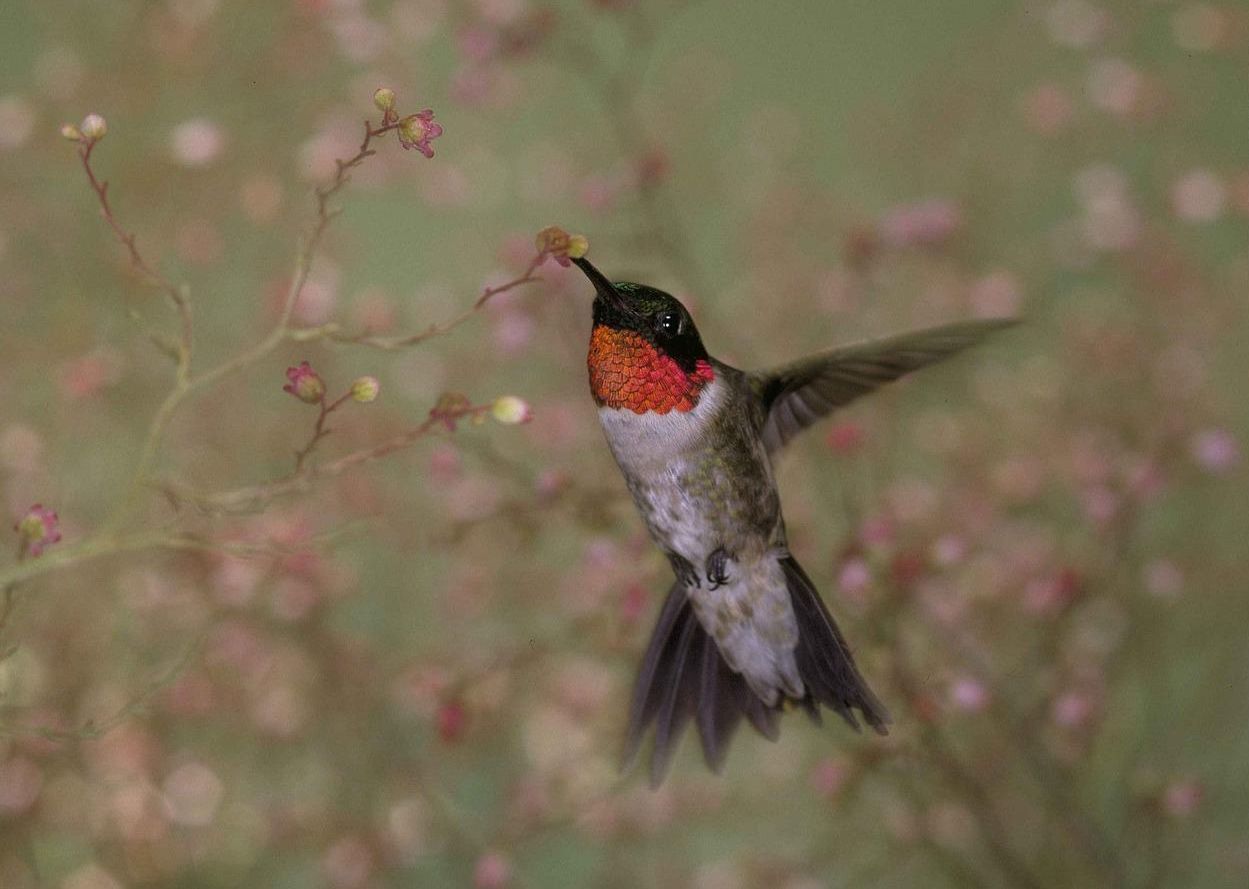
Image: PublicDomainImages

If you’ve ever seen a green flash zip past your porch faster than a camera shutter, it may have been a Ruby-throated Hummingbird. It is the only hummingbird species that breeds east of the Mississippi. It weighs 0.2 ounces—as little as a nickel!—yet crosses the Gulf of Mexico during migration. Males display an iridescent red throat that lights up when sunlight hits at the perfect angle. A single feeder with a simple sugar solution can lure them in from May through September.

5
Northern Cardinal
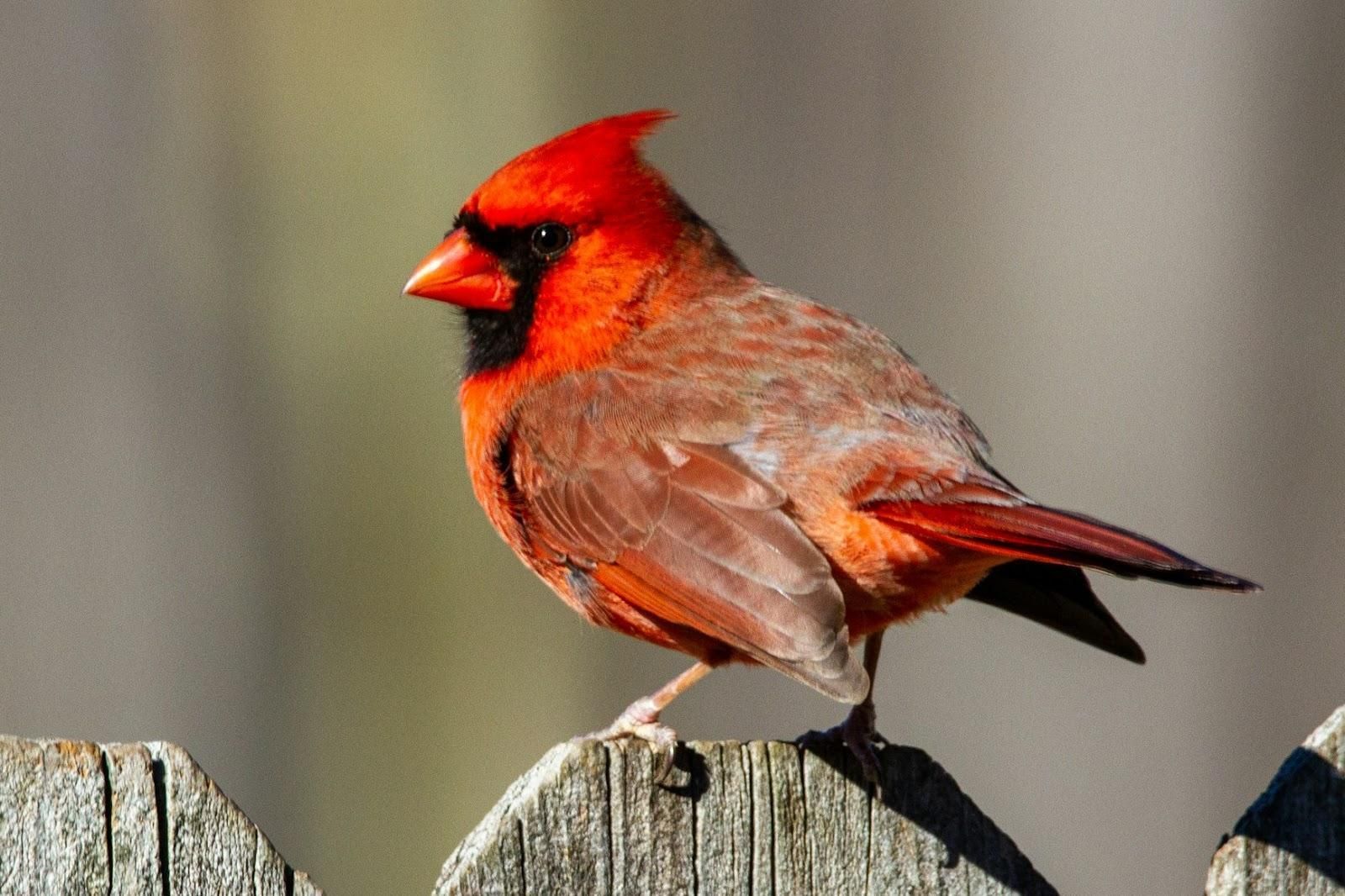
Image: Joshua J. Cotten

Northern Cardinals look like Christmas on wings, and it’s easy to see why. Males glow bright red, while females wear warm browns brushed with hints of red. They live year-round in the eastern and central U.S., especially in woodlots and suburban yards. Cardinals measure about 9 inches long and crack seeds with thick, powerful bills. Their "what-cheer!" call is one of the most recognized bird sounds in North America.

6
Song Sparrow
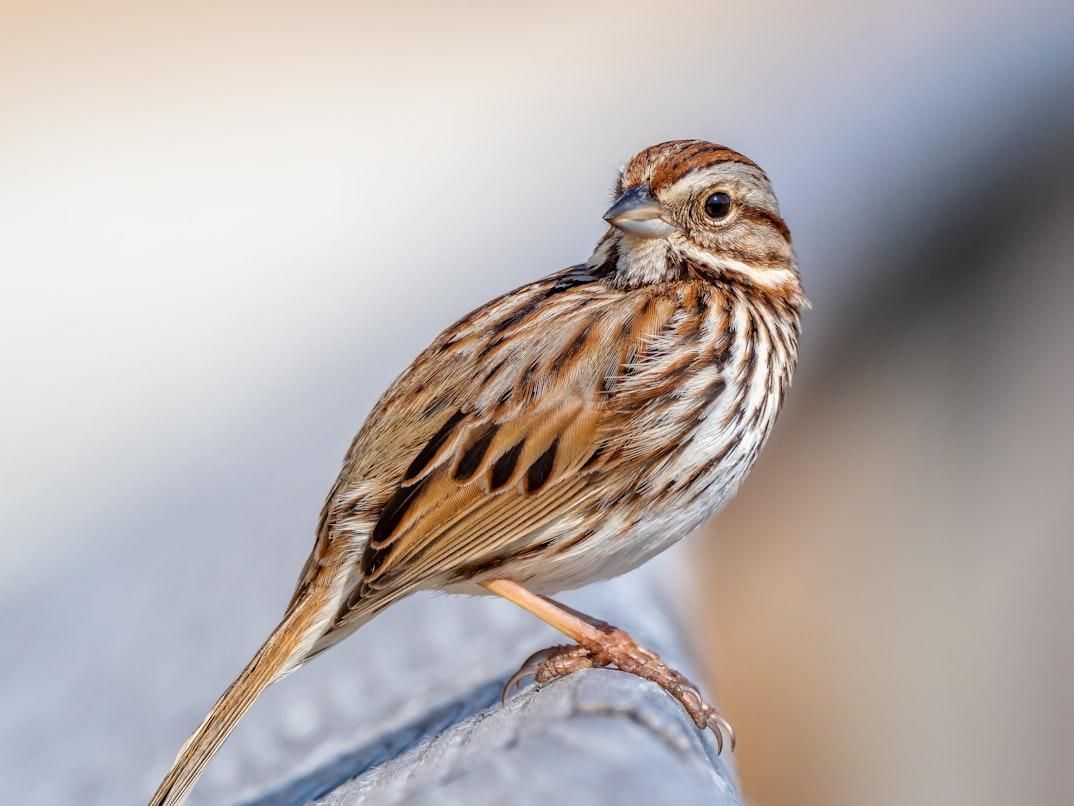
Image: Patrice Bouchard

At first glance, this little brown bird might look like one of many, but listen closely. Song Sparrows have been studied for their remarkable vocal variety; a single male may sing more than 10 distinct song types. They’re common nationwide, from the Atlantic to the Pacific, but differ subtly by region. They’re small—around 6 inches—but their voice carries surprisingly far.

7
Black-Capped Chickadee
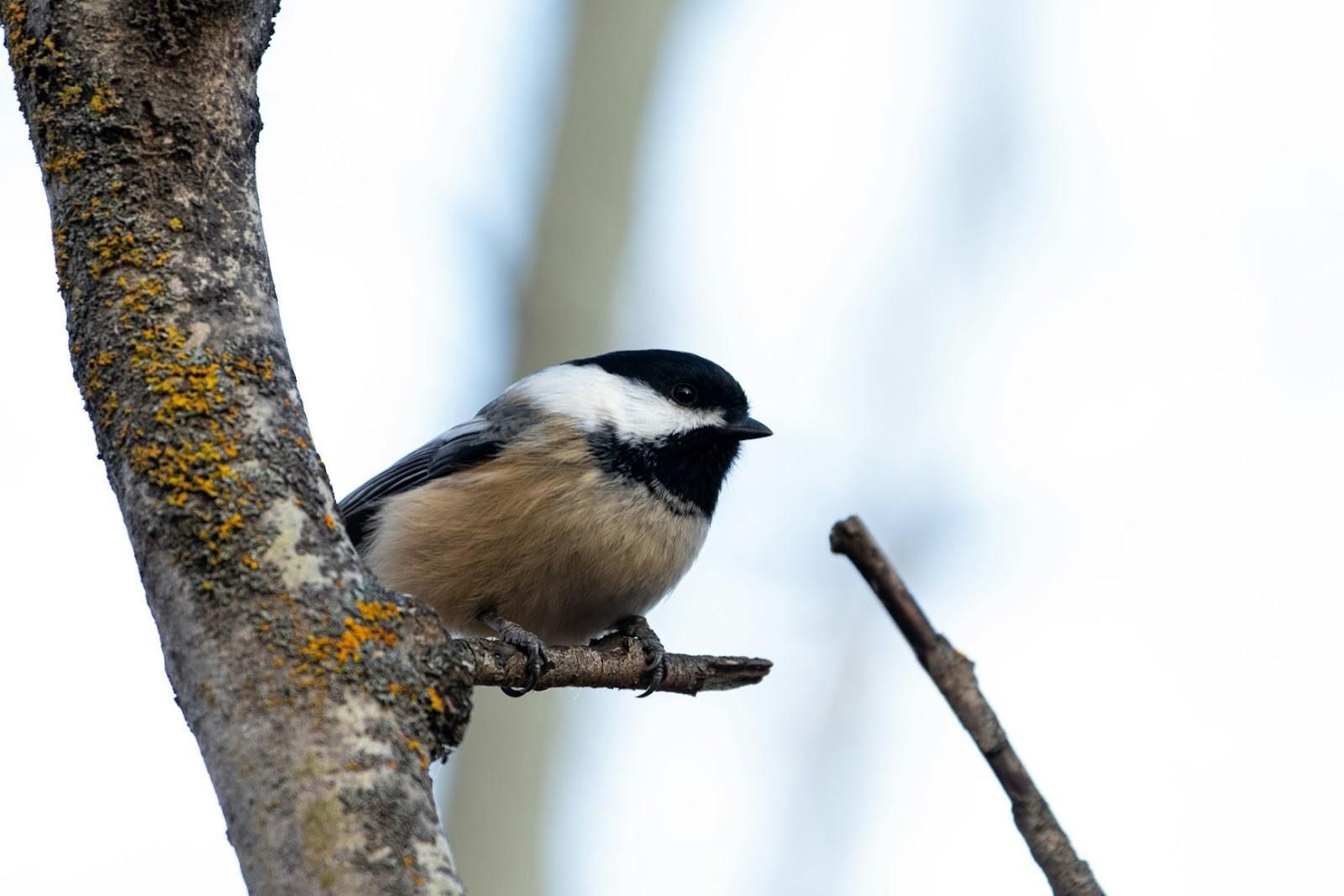
Image: Derek Otway

A bird the size of a tennis ball—about 0.3 ounces—with the confidence of a much larger creature: that’s the Black-capped Chickadee. They have a surprisingly sophisticated communication system. In fact, biologists discovered that the number of "dee" notes in their call changes depending on the threat level of predators.

Found across the northern U.S. and in the Rockies and Appalachians, they sport crisp black caps and snow-white cheeks. Offer sunflower seeds, and they’ll visit you all winter.

8
Northern Mockingbird
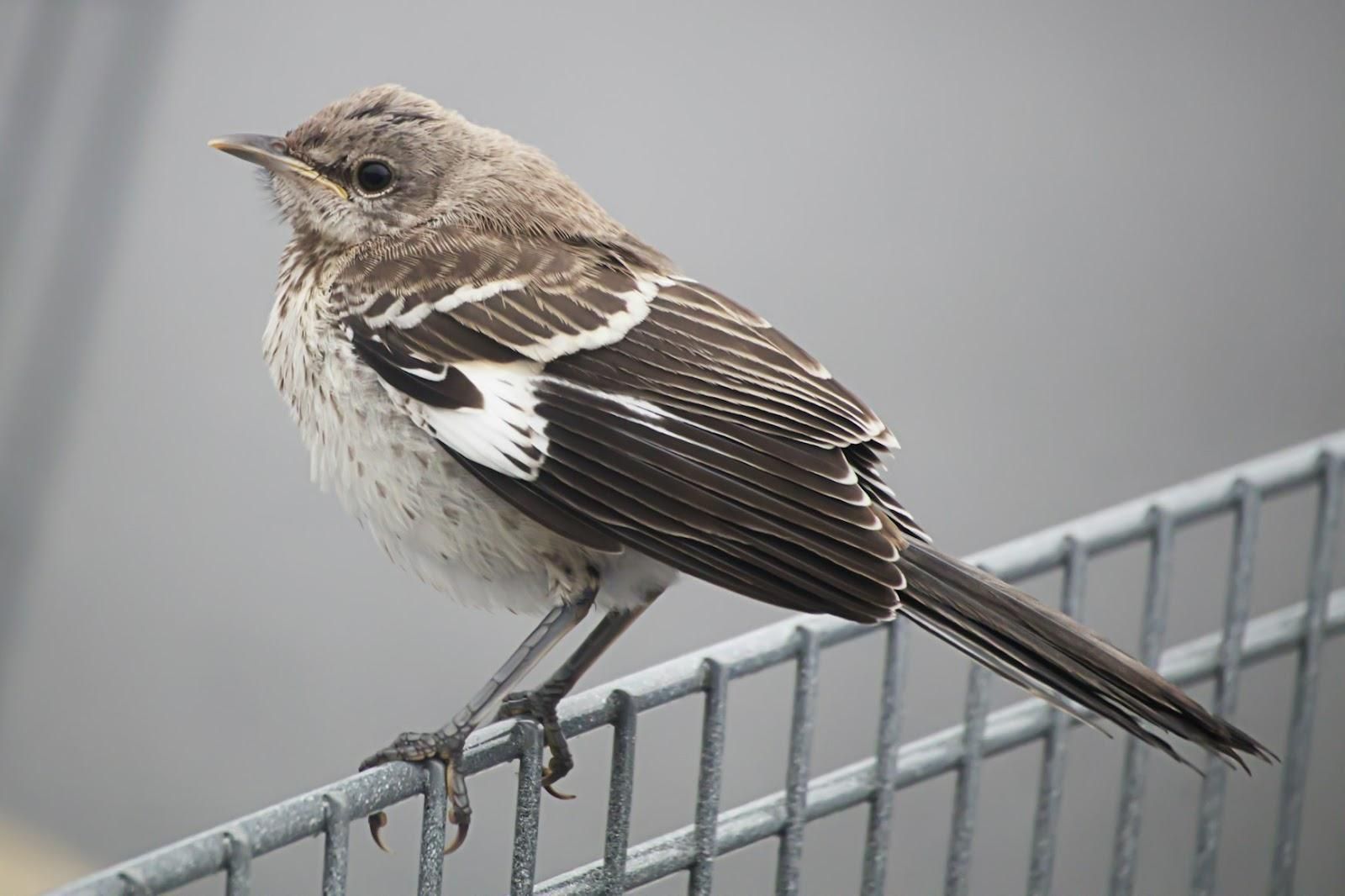
Image: Jacob McGowin

What if one bird could perform an entire playlist? Northern Mockingbirds—common throughout the South, Midwest, and many western suburbs— can mimic over 100 sounds, from other birds to squeaky gates. In the 1960s, scientists confirmed their habit of singing at night, especially males guarding territory.

They’re roughly 10 inches long, the size of a stretched-out flashlight. Their slender gray bodies and white wings make them easy to spot when they swoop from fence posts.

9
Baltimore Oriole
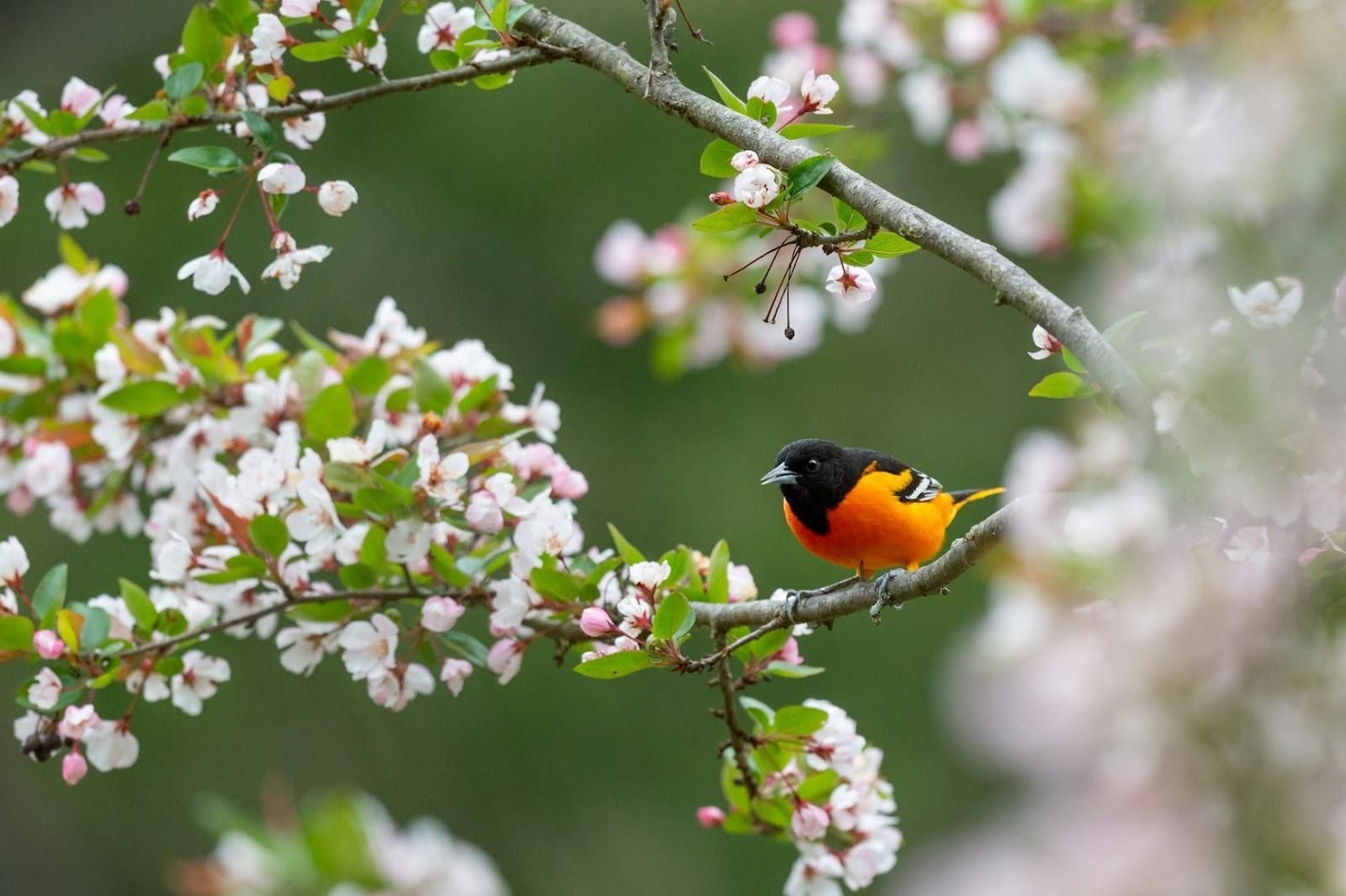
Image: Ray Hennessy

The Baltimore Oriole can be described as "a flame carried by wings", since males sport brilliant orange while females show softer yellows.

These bright orange migrants breed across the Northeast and Midwest before wintering in Central America. Their hanging pouch nests—up to 8 inches deep—are woven with fibers like tiny hammocks swaying in the breeze. Orioles love tall shade trees and can hang upside down to sip nectar or jelly.

10
American Crow
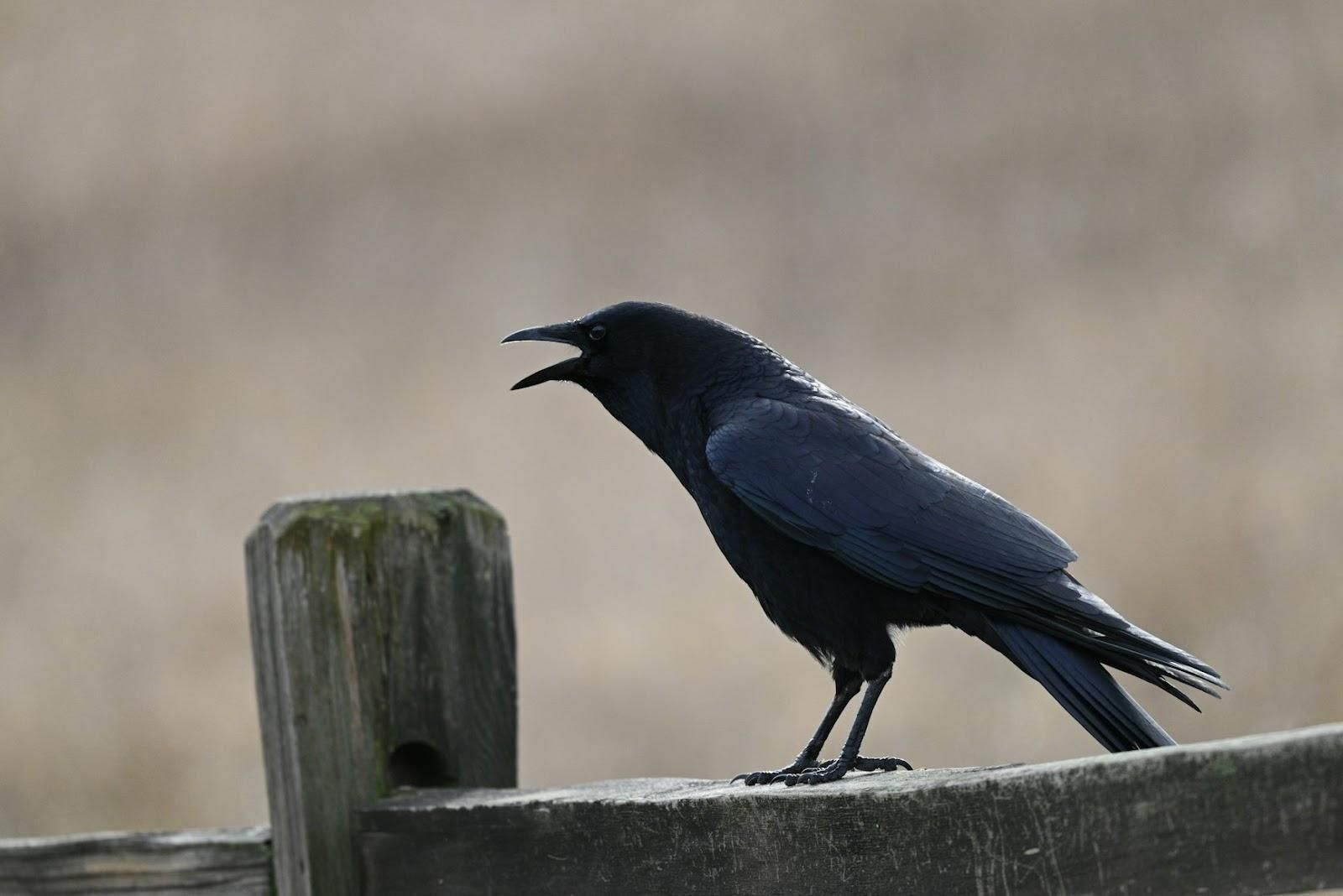
Image: Genevieve Curry

Think of crows as neighborhood detectives. Studies show they can recognize human faces and remember them for years. Found in every U.S. state except Hawaii, American Crows are large—about 17 inches long—and solid black from bill to tail. Their aerial circling and communal roosts, sometimes numbering thousands, are especially common in the Midwest. They travel in family groups and announce their presence with a clear "caw!"

11
Black-billed Magpie
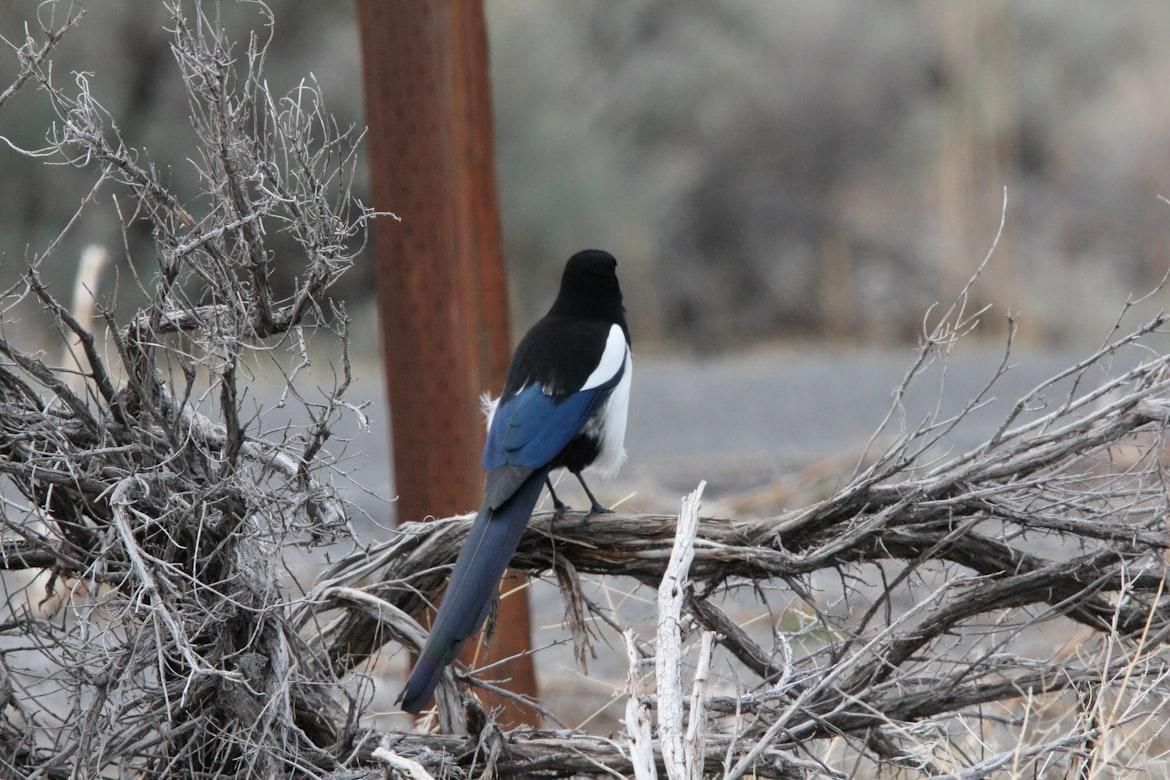
Image: anish lakkapragada

If you’ve ever driven through the Rockies or the Great Plains, you’ve likely seen this striking bird swooping low over fields. Black-billed Magpies, common from Nevada to the Dakotas, wear glossy black feathers with a blue-green sheen and long tails that can reach 12 inches—nearly half their total length. Their dome-shaped stick nests can be 3 feet across, and they thrive in open country and ranchlands.

12
Tufted Titmouse
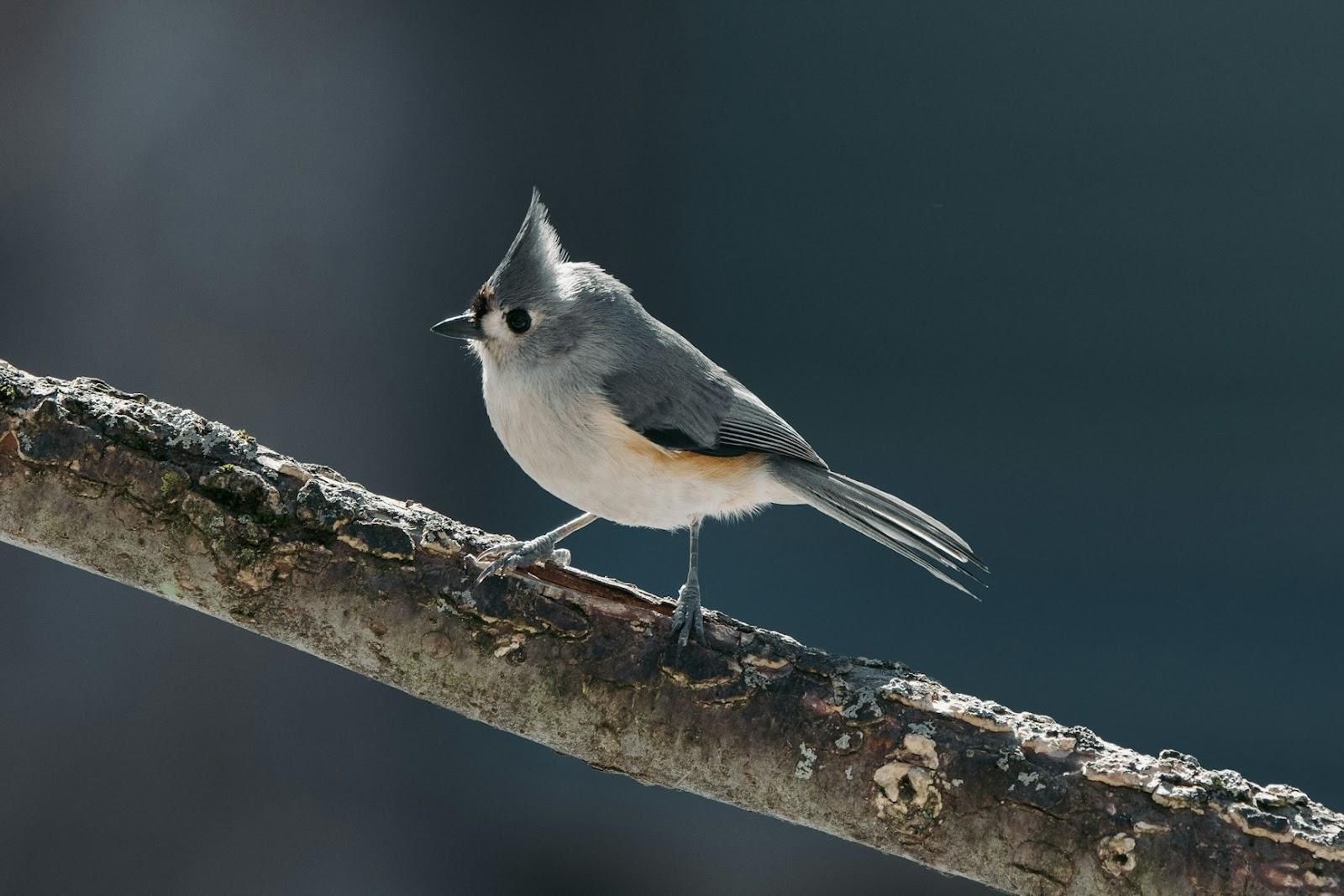
Image: Mark Olsen

One of the most charming feeder visitors in the eastern U.S., the Tufted Titmouse has a soft gray coat, a tiny crest, and warm orange patches under the wings. Though small—around 6.5 inches—they have a bold, ringing call: peter-peter-peter . Their range has expanded steadily northward, partly thanks to backyard feeders. Another fun fact: titmice store seeds one by one in tree bark, creating "pantries" they revisit all winter.
13

Culture Culture 6 min read

The Five-Sided Puzzle Palace

A man lived there secretly? Stunning facts about the Pentagon

Image: Touch Of Light, CC BY-SA 4.0, via Wikimedia Commons

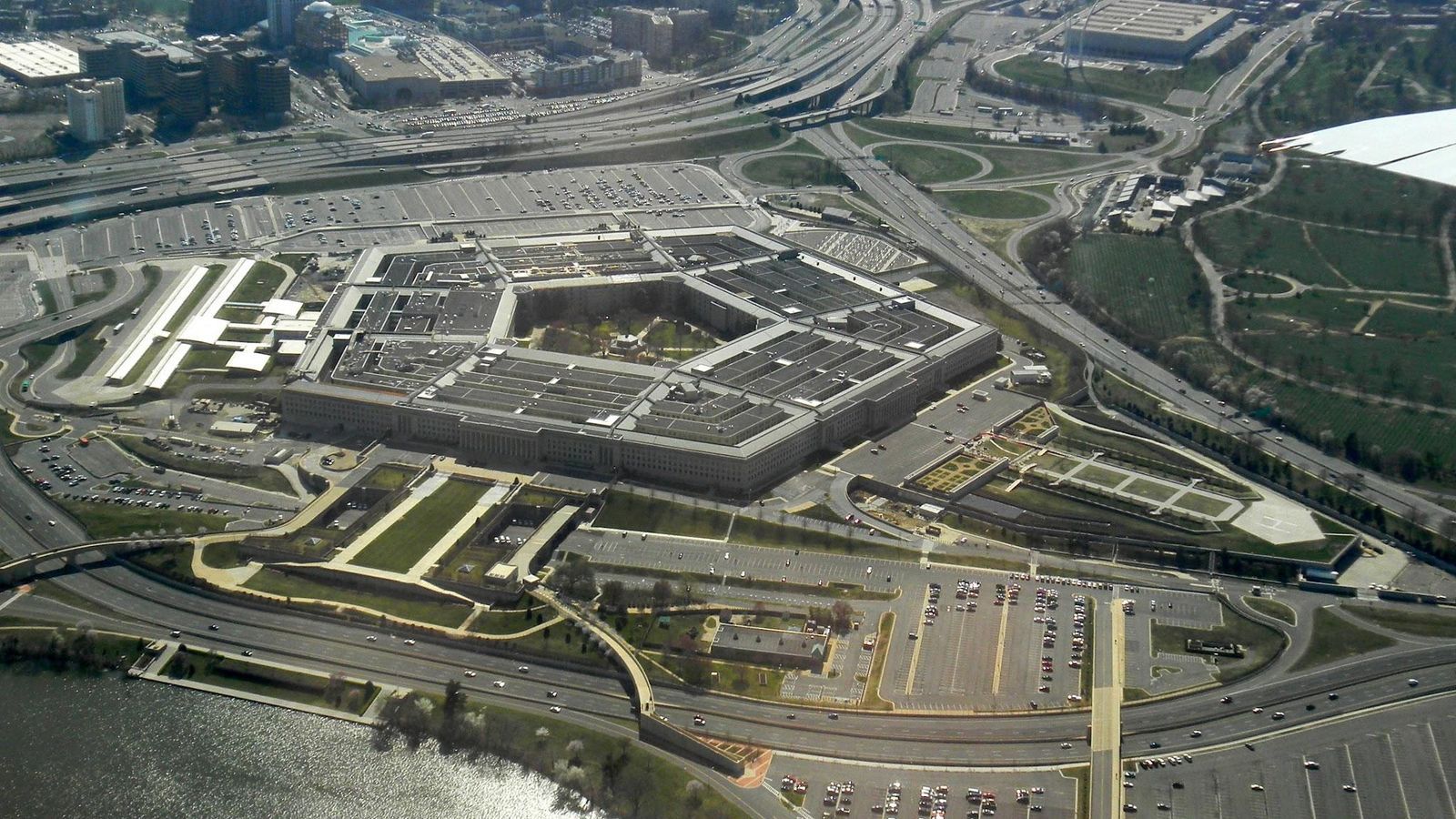
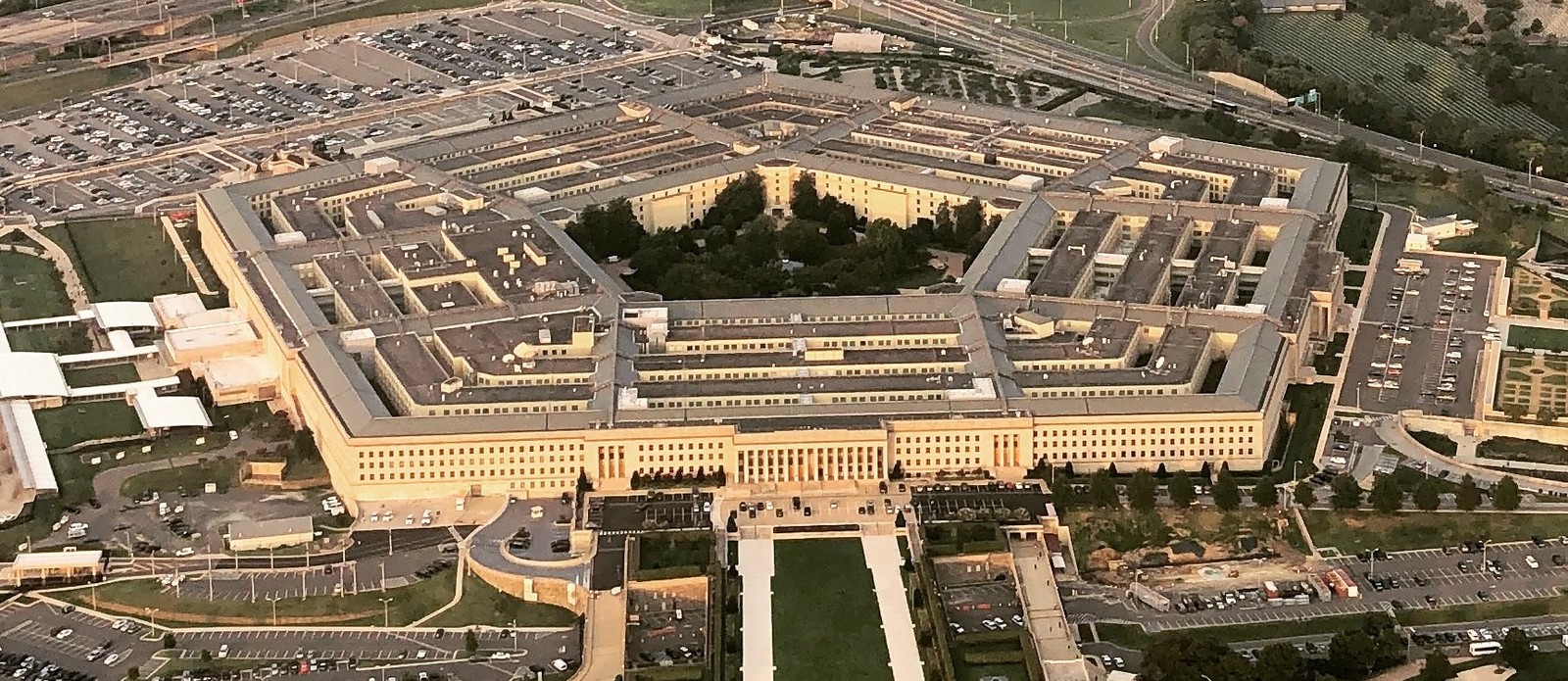
Did you know that construction on the Pentagon building began on September 11, 1941, exactly 60 years before it was attacked? The home of the US Department of Defense has stood for more than 80 years. Although its iconic shape is intriguing in itself, it hides deeper secrets that many Americans have never heard of. Did you know it feeds 26,000 people a day—at a McDonald's, a Five Guys, a Taco Bell, and over 30 other restaurants? Or that a man secretly lived inside its walls for years? Let’s dive into the Pentagon building’s secrets.

1
A renovation project saved thousands of lives on 9/11

Image: Office of the Secretary of Defense - Public Affair, Public domain, via Wikimedia Commons

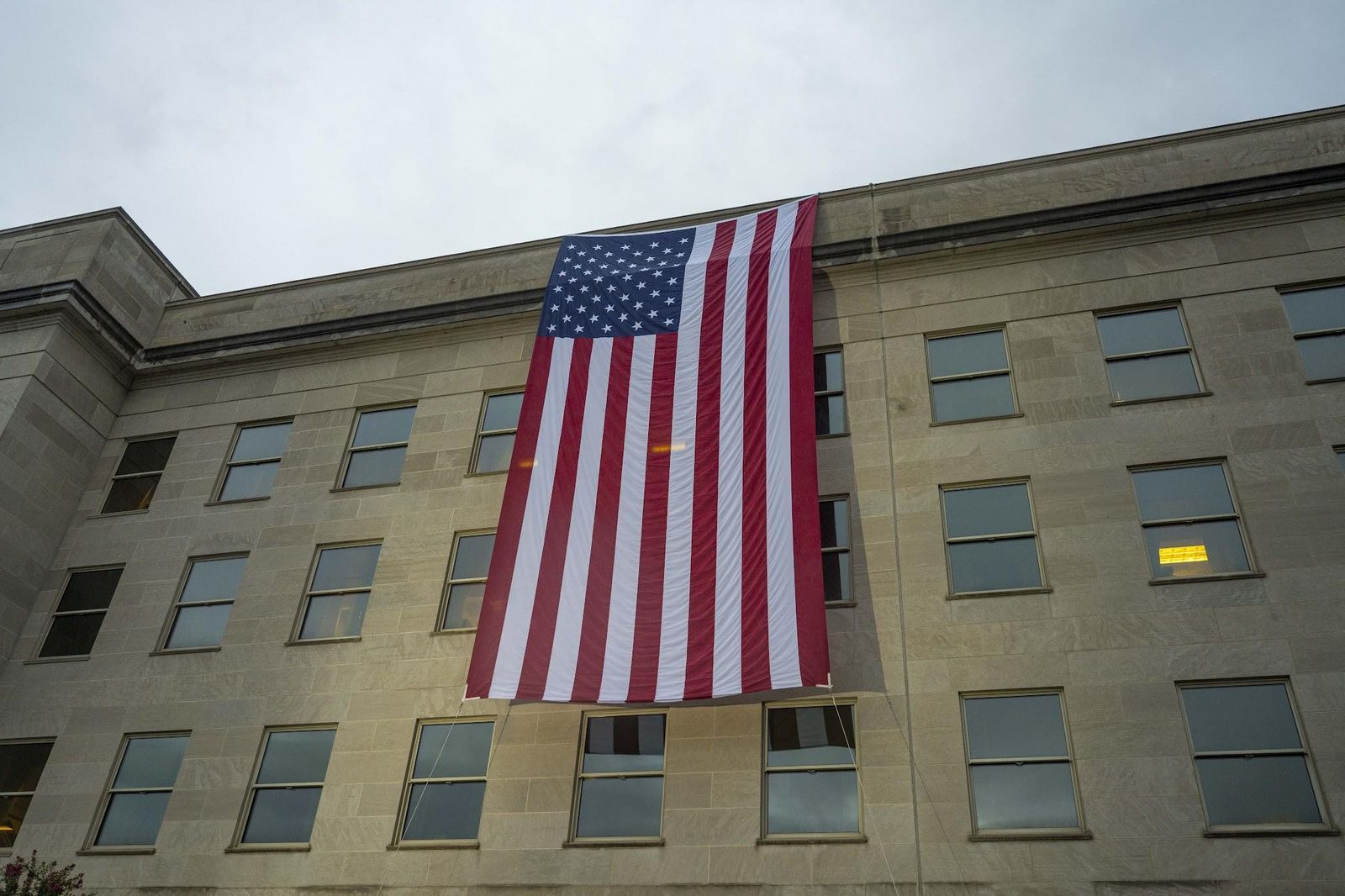
On September 11, 2001, American Airlines Flight 77 struck the Pentagon at 9:37 a.m., killing 189 people. Few people know this part: the death toll could have been much higher. But there was a renovation project underway at the time of the attacks.

The Pentagon’s five-sided structure is divided into five "wedges," and workers had been renovating them one at a time. Flight 77 struck the wedge that had just been completed. Of the 4,500 people who normally worked in that section, only about 800 had moved back in. Without the reinforced construction and the incomplete occupancy, experts believe the casualties would have been catastrophically higher.

2
The Cold War and the hot dog stand

Image: Anete Lusina

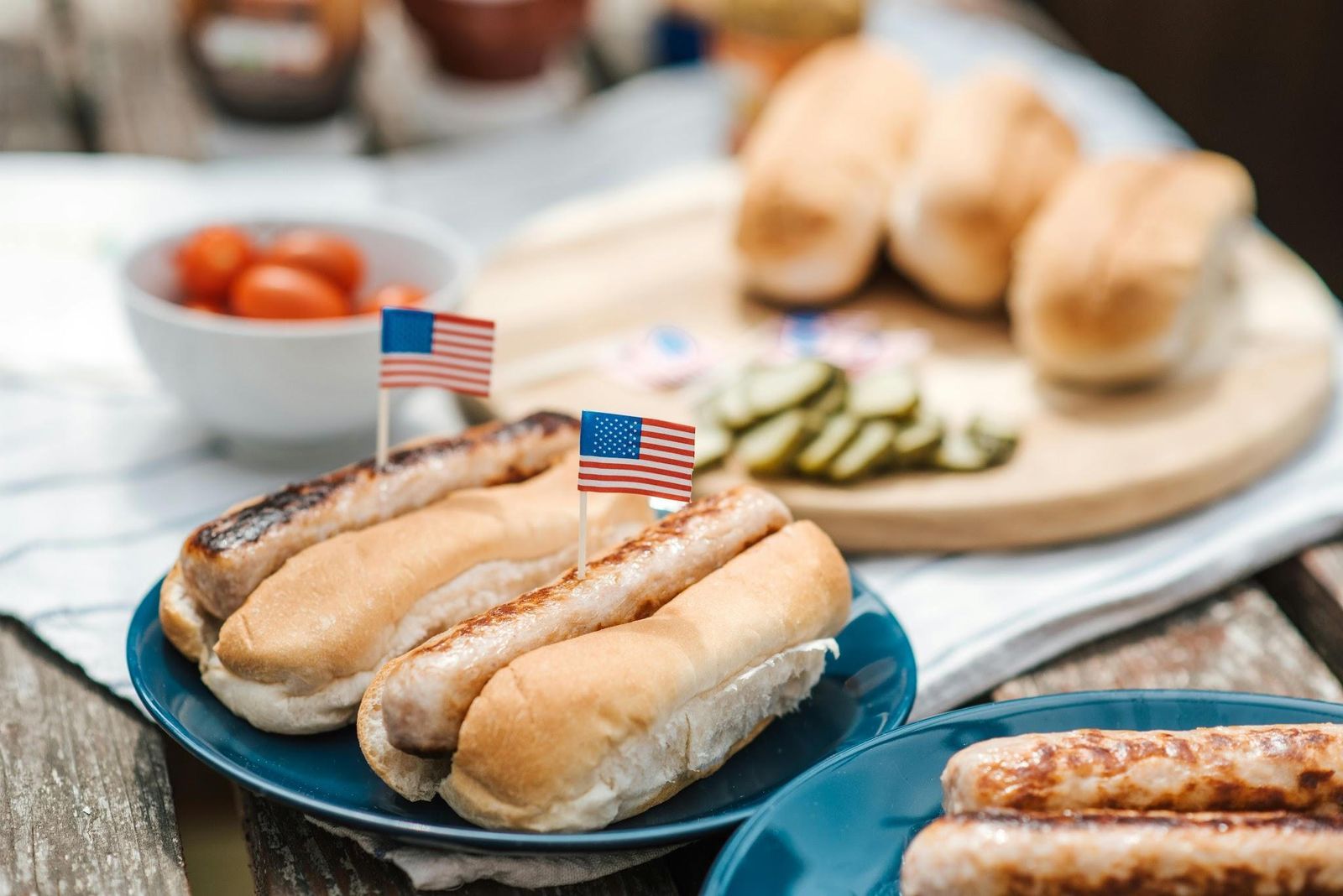
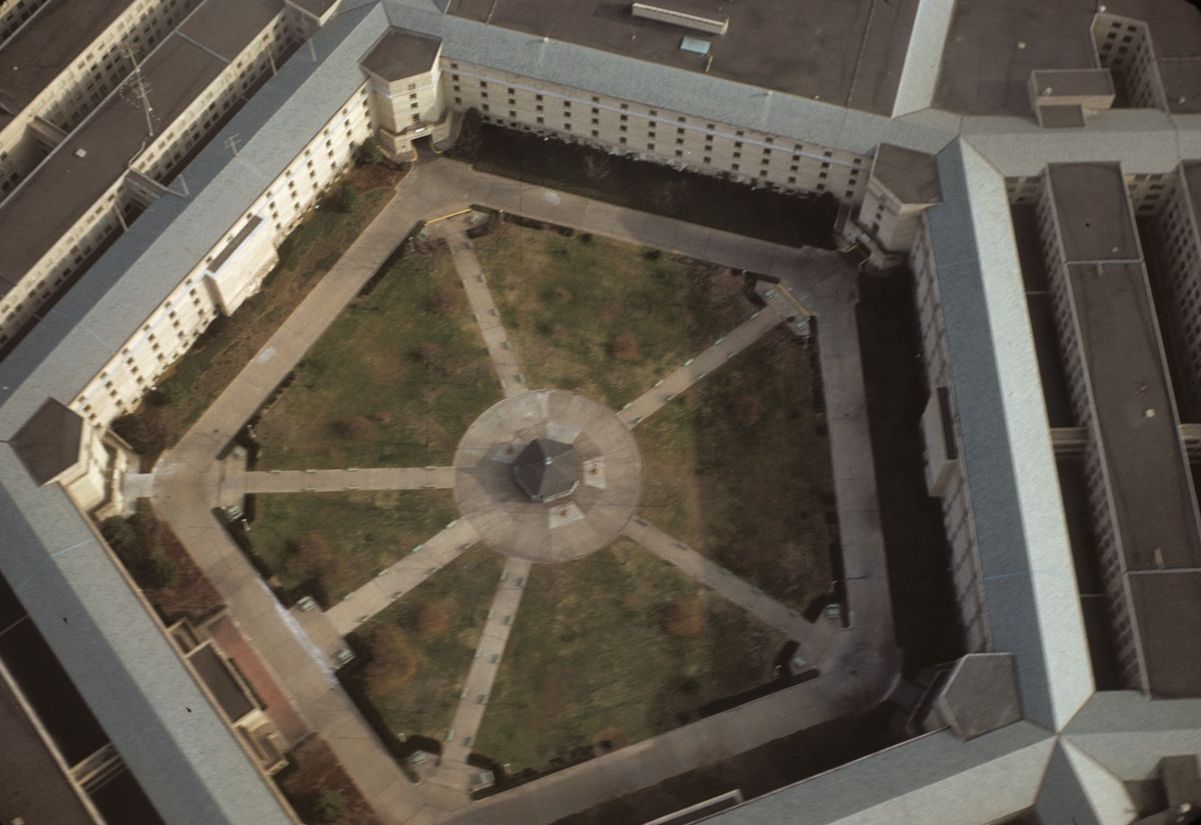
In the middle of the Pentagon’s five-acre center courtyard once stood a modest hot dog stand. According to a Cold War legend (one still retold by official Pentagon tour guides on every public tour), between the 60s and the 80s, Soviet satellite images tracked large groups of high-ranking military officials converging on that small building at the same time every day.

Soviet intelligence reportedly concluded the structure must be the entrance to some underground bunker in America. In reality, all it did was sell lunch. In 2006, the original stand was torn down, and a sandwich shop was built in its place.

3
Its construction began on September 11th, exactly 60 years before the attack

Image: Aber, Marilyn K., Public domain, via Wikimedia Commons

Builders broke ground on the Pentagon on September 11, 1941. That was exactly 60 years to the day before the September 11, 2001, terrorist attacks that would strike the same building.

Construction had been ordered by Army Brigadier General Brehon Somervell, who wanted a permanent headquarters for the Defense Department to replace its then-17 scattered offices across Washington, D.C.

The project was extraordinarily ambitious: plans called for the world’s largest office building to be completed in just 16 months. In the end, the conception, design, and construction of the entire Pentagon building took a total of 15 months.

4
The same person oversaw its construction and the Manhattan Project

Image: U.S. Army, Public domain, via Wikimedia Commons

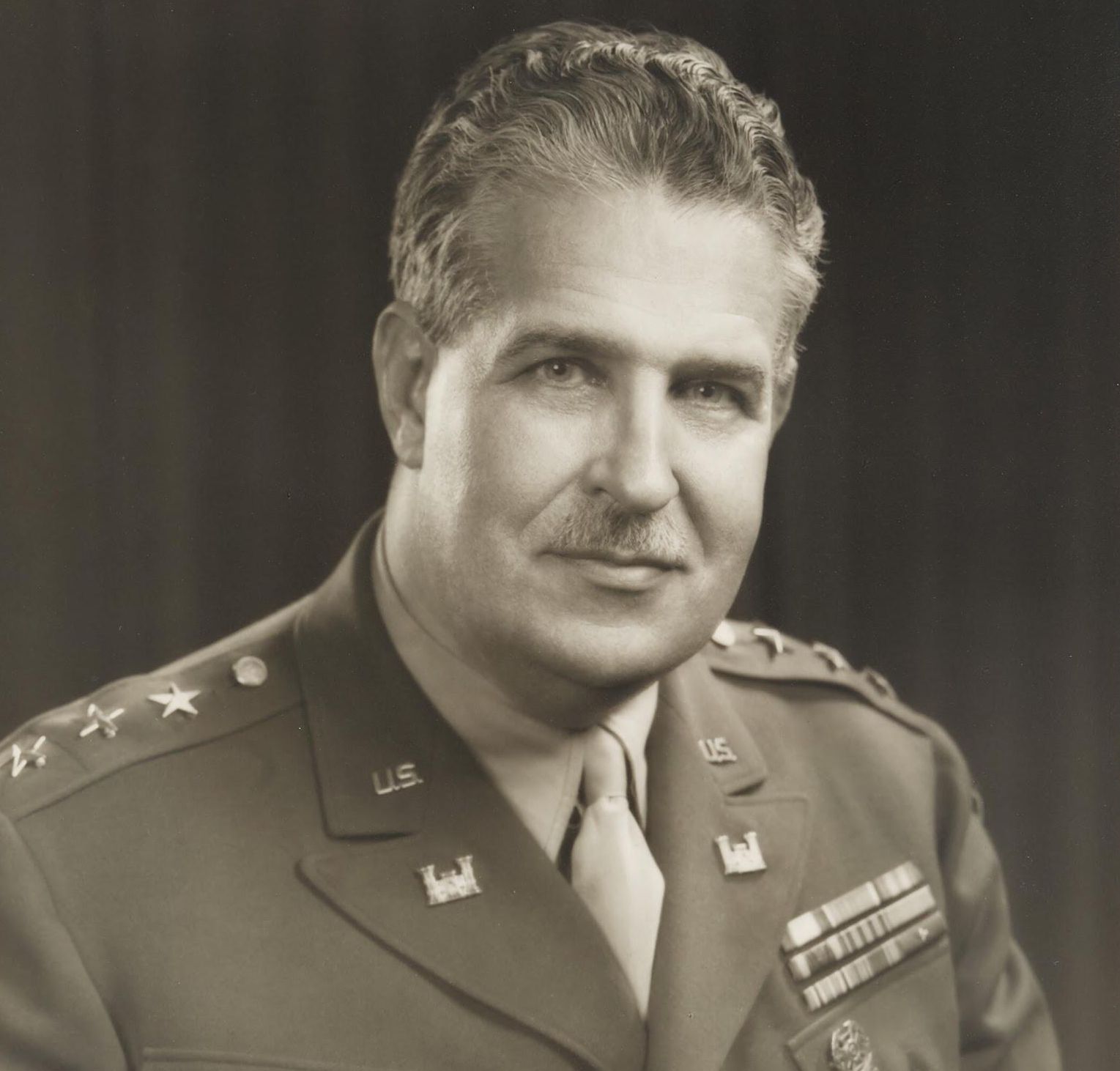
Colonel Leslie Groves of the Army Corps of Engineers took charge of Pentagon construction in August 1941. He worked six days a week and drove his team relentlessly, at one point employing more than 15,000 workers around the clock.

When the Pentagon was finished in January 1943, Groves was assigned to lead the Manhattan Project, America’s secret program to build the atomic bomb . His deputy, Captain Robert Furman, followed him into the Manhattan Project as chief of foreign intelligence. Together, the men who built the world’s largest office building went on to produce the weapon that ended World War II.

5
Why is it shaped like that?

Image: Boston Public Library, CC BY 2.0, via Wikimedia Commons

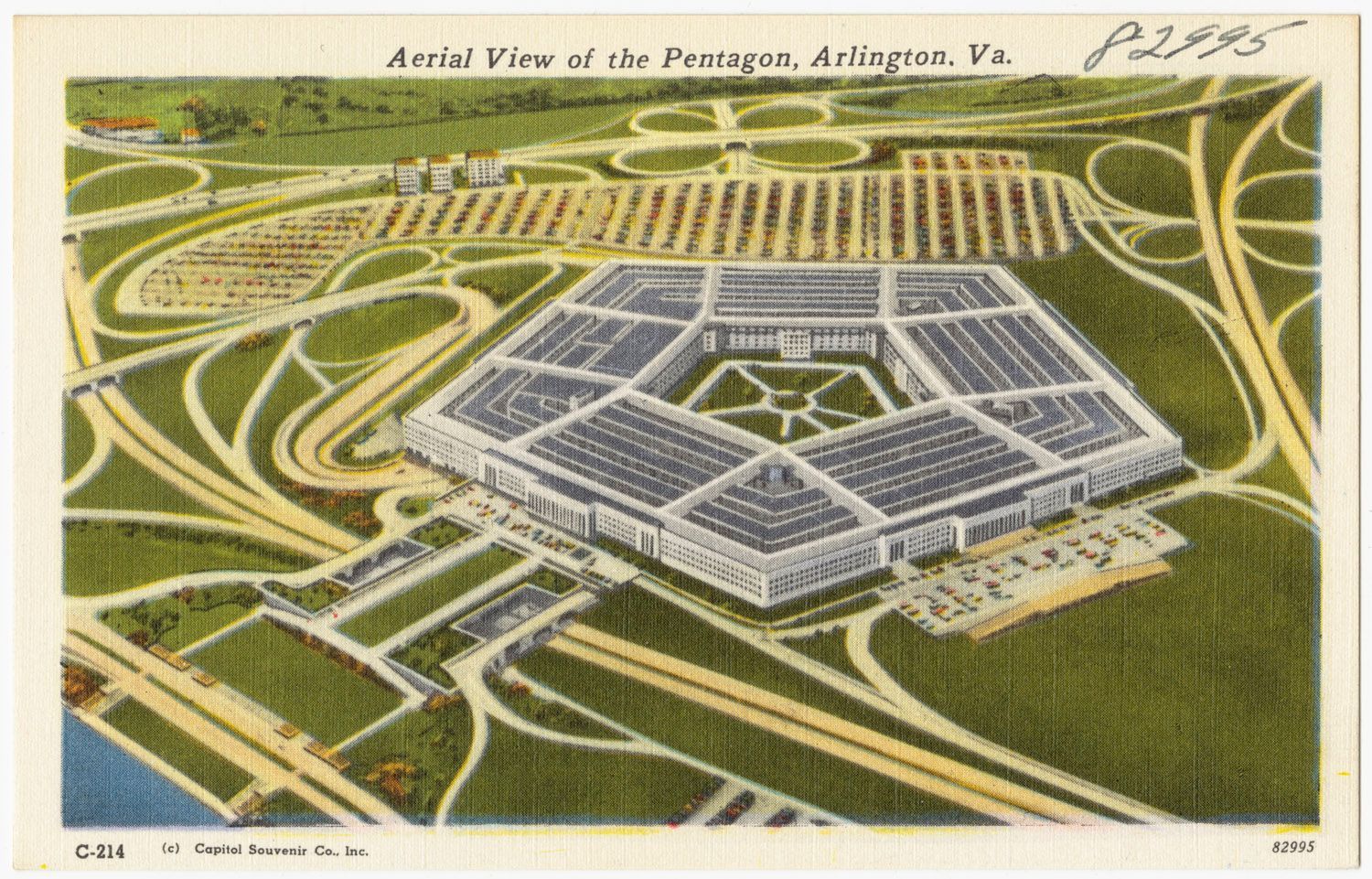
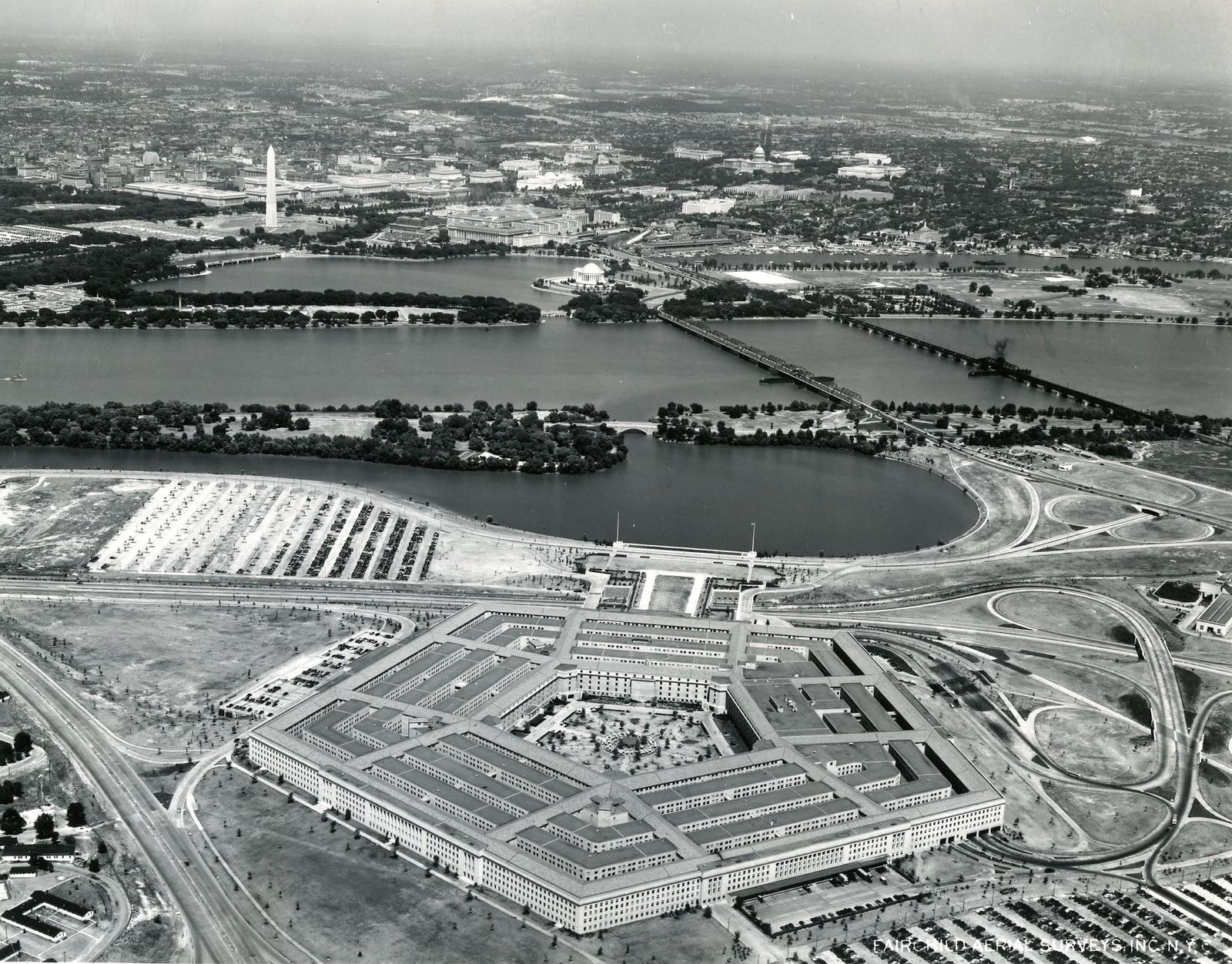
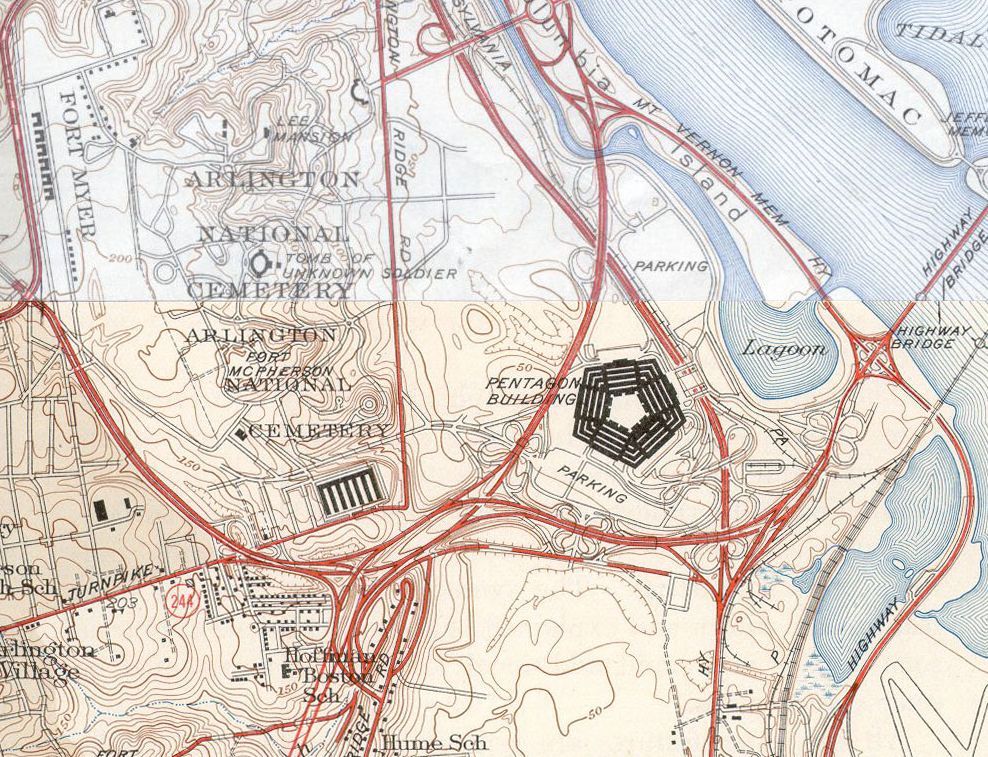
The Pentagon’s iconic five-sided shape was the consequence of a geographic accident. The original site selected for the building, near Arlington Cemetery, **happened to be bordered on five sides by roads. **Architects designed the structure to fit those boundaries, producing a pentagonal floor plan. Then President Franklin D. Roosevelt intervened: worried the massive building would obstruct the view of Washington, D.C. from Arlington, he ordered the site moved to its current location along the Potomac River. But the five-sided design had already been drawn up, and nobody changed it.

6
It was the first desegregated building in Virginia

Image: https://ddotlibrary.omeka.net/items/show/100, Public domain, via Wikimedia Commons

When the Pentagon was designed in 1941, segregation was the law in Virginia. Original plans called for doubled bathroom facilities: separate ones for Black and white employees, as required by Virginia statute. But President Roosevelt had signed Executive Order 8802 in June 1941, prohibiting racial discrimination in federal employment and government contracting.

As a federal building, the Pentagon was exempt from Virginia law. It became the only building in the state where segregation was not enforced. A fully desegregated federal workplace that opened in 1943. The doubled bathrooms were built anyway, as the plans were too far along to revise, but were never used as separately designated spaces.

7
Its construction was surprisingly frugal and incredibly fast

Image: See page for author, Public domain, via Wikimedia Commons

Ground broke on September 11, 1941, and construction finished on January 15, 1943, just 16 months later. More than 15,000 workers were on site around the clock. Wartime office shortages were so severe that employees moved into completed wings before the rest of the building was finished. Steel was too scarce to use extensively, so builders relied almost entirely on reinforced concrete. The 689,000 tons of sand and gravel required came directly from the nearby Potomac River, cutting transportation costs. The project was budgeted at $35 million, but the final bill was $63 million, which would translate to over $900 million in today’s dollars.

8
You can walk between its farthest points in only 7 minutes

Image: Bea A Carson, CC0, via Wikimedia Commons

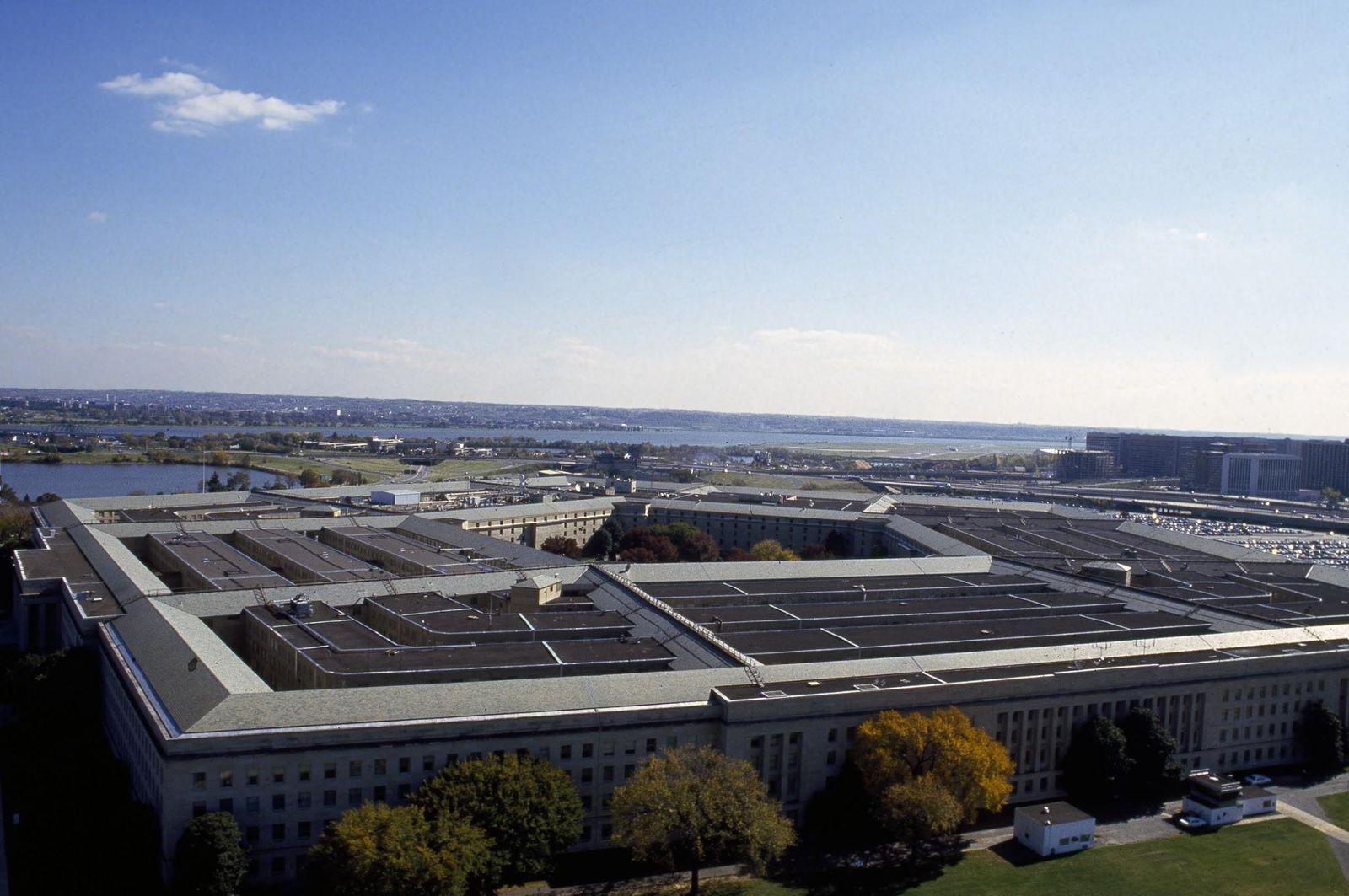
The Pentagon is the world’s largest low-rise office building: 6.5 million square feet of space, which is three times the total floor area of the Empire State Building. Each of its five outer walls is 921 feet long. It has 7,754 windows and 17.5 miles of corridors. Approximately 26,000 military and civilian employees report for work there every day.

Despite that scale, the building’s concentric ring design is so efficient that it takes only about seven minutes to walk between its two farthest points.

9
The man who secretly lived inside its walls

Image: Carol M. Highsmith, Public domain, via Wikimedia Commons

During construction, Colonel Groves drove his deputy, Captain Robert Furman, so relentlessly that Furman rarely left the building. To cope, Furman had contractors build him a small, windowless apartment hidden inside the walls of the Army’s Ordnance Division. In this private room, he could sleep and shower without leaving the premises.

When construction ended and personnel dispersed, knowledge of the hidden room was never passed on to building management. Months later, when Furman returned to Washington on Manhattan Project intelligence business, he found the apartment undiscovered and exactly as he’d left it.

For over a year, he would slip back to the Pentagon, pop open a wall panel, spend the night, and emerge in the morning with his suitcase. He was finally caught in 1943 and forced to surrender the keys. It was never disclosed whether the secret apartment was maintained or eventually absorbed back into the official floor plans.

10
It houses over 30 restaurants, including everyone's favorite chains

Image: Harrison Keely, CC BY 4.0, via Wikimedia Commons

The Pentagon feeds roughly 26,000 people a day, and its dining options read less like a military headquarters and more like a mall food court. The main Concourse Food Court, which opened in September 2009 and seats 875 people, is the largest of several dining areas.

Confirmed chains currently inside the building include McDonald’s, Five Guys, Subway, Popeyes, Starbucks (multiple locations), Dunkin’ (two locations), Panera Bread, Taco Bell, Panda Express, Baskin-Robbins, Potbelly, Jamba Juice, and Moe’s Southwest Grill, among others. The building also houses a CVS pharmacy, a florist, a jeweler, and a dry cleaner. In the summer of 2024, Potbelly became the first restaurant to open in the center courtyard. Yes, the very spot where the legendary Cold War hot dog stand once stood.

Culture Culture 5 min read

Why does Japan eat KFC for Christmas? The answer will shock you!

Image: Nixx Photography

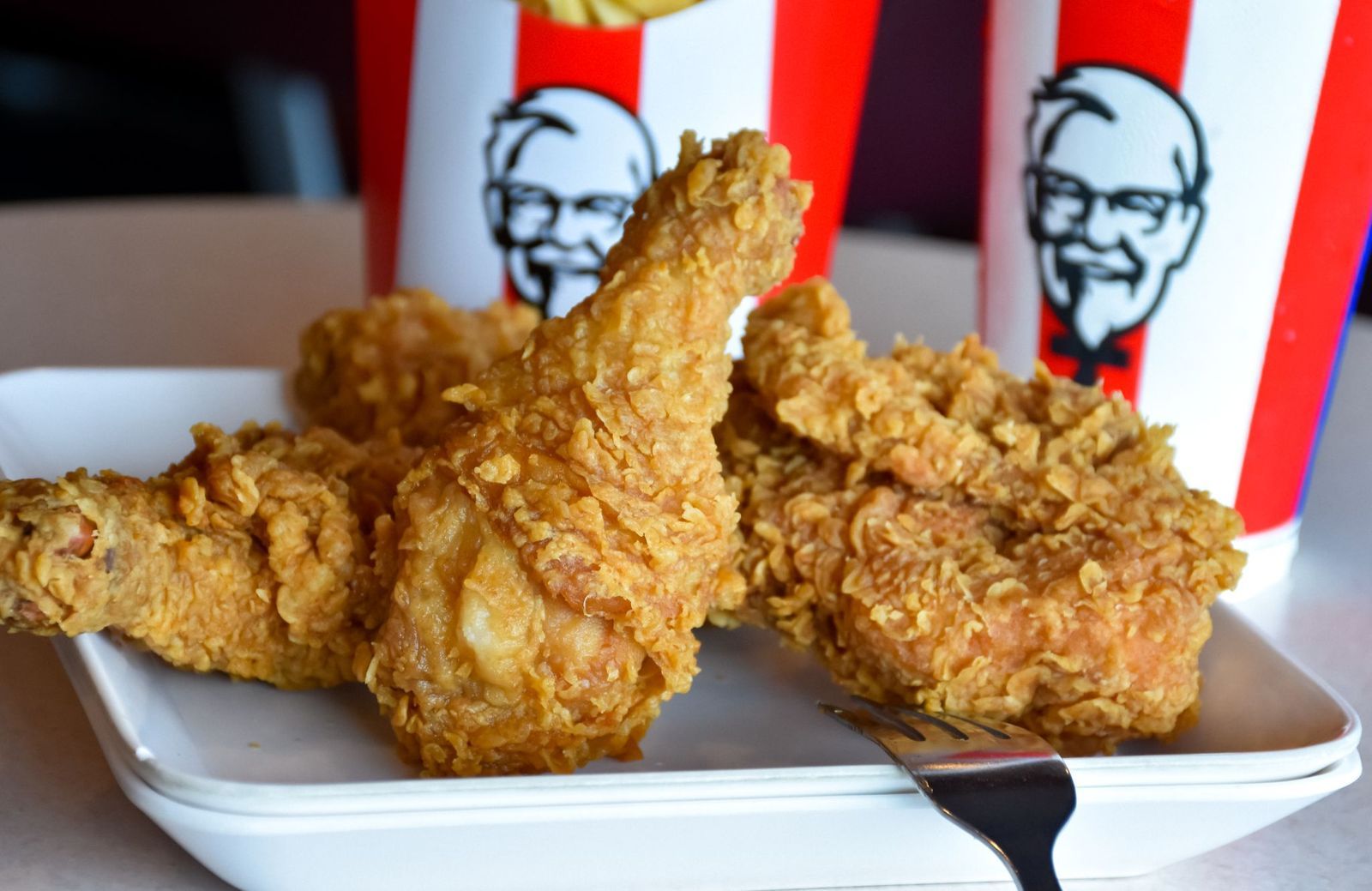
When you think of fast-food royalty, few figures are as universally recognizable as Colonel Harland Sanders. With his iconic white suit, black string tie, and goatee, his image is plastered across tens of thousands of Kentucky Fried Chicken (KFC) locations around the globe. Yet, behind that grandfatherly smile lies a corporate history filled with drama, secret recipes, and unusual marketing decisions. Here are 10 mindblowing facts about KFC and its legendary founder.

1
A rivalry becomes a business success

Image: Unclear, likely someone from the family of Colonel Sanders, Public domain, via Wikimedia Commons

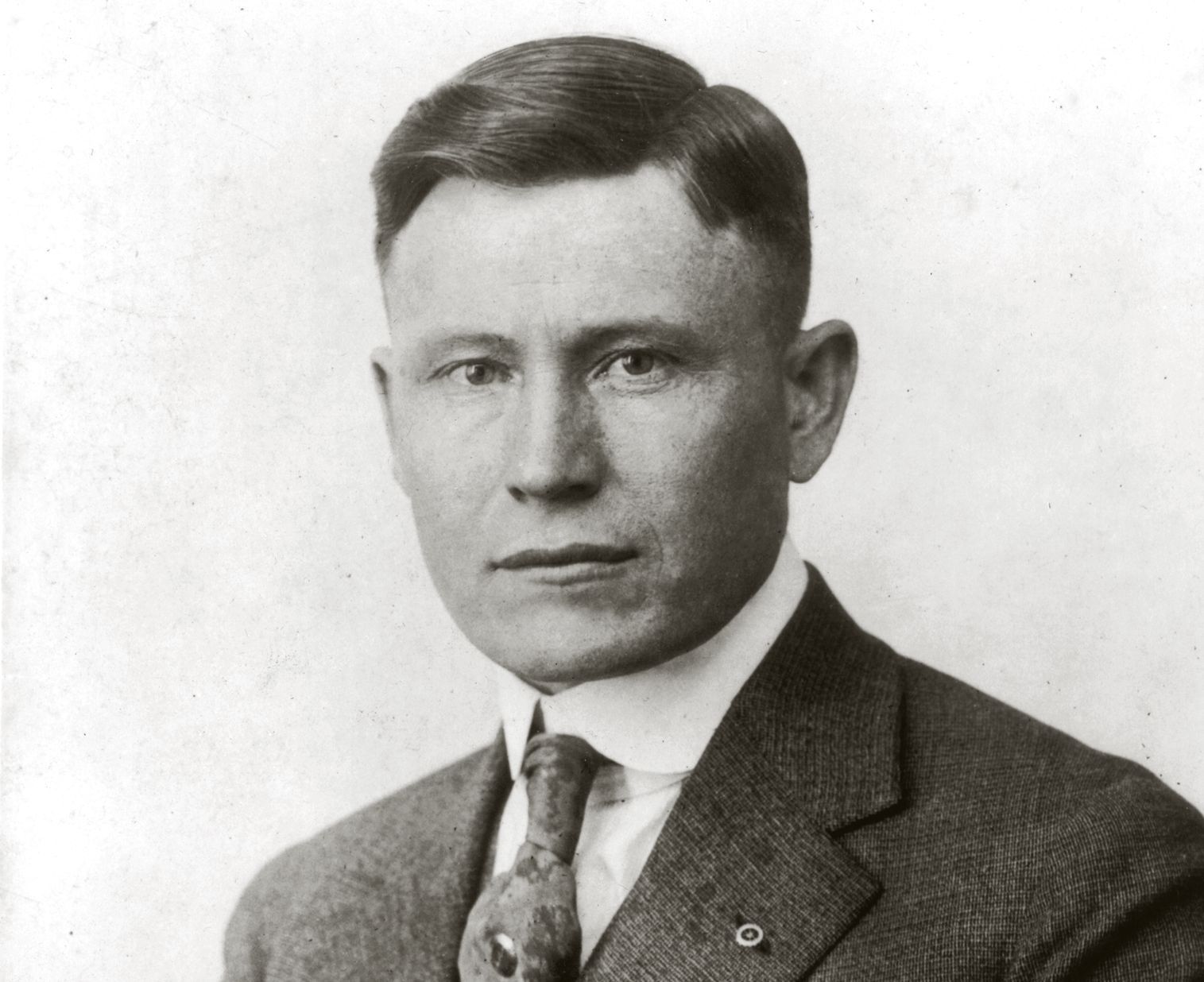
During the Great Depression, Harland Sanders ran a humble Shell station in Corbin, Kentucky. Back then, business was cutthroat, and Sanders found himself in a bitter feud with Matt Stewart, a rival gas station owner who kept painting over Sanders’ highway signs to redirect traffic. After several warnings went unheard, Sanders marched over to confront Stewart.

When Stewart was caught in the act, a physical confrontation quickly escalated. Stewart drew a pistol and shot a Shell manager who was accompanying Sanders, killing him on the spot. Sanders retaliated by firing back and wounding Stewart, who was later arrested and sentenced to prison for murder. With his main competitor safely behind bars, Sanders was able to expand his service station, perfect his pressure-frying method, and ultimately transform his business into a massive commercial success.

2
The KFC you know today exists thanks to Wendy’s

Image: Pavlovska Yevheniia

Although you may view KFC and Wendy’s as distinct competitors, the reality is that the chicken giant owes its structural identity to Dave Thomas, the founder of Wendy’s. In the 1960s, Thomas worked as a head chef and regional manager for the Colonel’s franchises.

He was a marketing whiz who personally convinced Colonel Sanders to star in his own television commercials, cementing his status as a living mascot. Furthermore, Thomas created the iconic red and white striped bucket design. He became so wealthy from his shares and success at KFC that he used his payout to establish his own burger empire, Wendy’s, in 1969.

3
The secret recipe's security

Image: Patcharaporn Puttipon4289

The legendary blend of "11 herbs and spices" is one of the most famously guarded secrets. Did you know KFC keeps the recipe locked inside a top-secret vault at the corporate headquarters in Louisville, Kentucky?

The vault, encased in thick layers of concrete, is protected by motion sensors, security cameras, and 24/7 guards. To ensure the formula is never leaked, KFC splits the production pipeline: two different companies are hired to mix separate halves of the spice blend. Neither company knows the other's ingredients, and a computer system automatically combines the two halves before the seasoning is shipped out to individual franchises.

4
KFC for Christmas in Japan

Image: Tricky_Shark

In the United States, a Christmas dinner consists of roasted turkey or ham. In Japan, however, Nativity food comes in a cardboard bucket. This wild tradition dates back to 1974, sparked by Takeshi Okawara, the manager of the country's first KFC branch.

After overhearing homesick Western expats lamenting how difficult it was to source a holiday turkey in Japan, Okawara launched the national "Kentucky for Christmas" campaign, which exploded into a cultural phenomenon. Today, an estimated 3.6 million Japanese families celebrate Christmas Eve with KFC, with patrons placing their orders months in advance to avoid long lines.

5
Colonel Sanders hated KFC

Image: WayneRay, CC BY-SA 4.0, via Wikimedia Commons

By 1964, 73-year-old Colonel Snaders felt he was no longer cut out for the pace of corporate life. He sold the Kentucky Fried Chicken company to a group of investors for $2 million, under a contract that allowed the brand to continue using his likeness.

As executives changed the original recipes to cut costs, Sanders grew to hate the food KFC was serving. He began travelling the country, showing up unannounced at franchises to taste the food, throw public tantrums, and openly tell the media that the new gravy tasted like "wallpaper paste" or "sludge". He even attempted to open a rival restaurant and sued KFC for using his image, leading the company to counter-sue him. Eventually, KFC paid him an additional million dollars just to stop making public scenes.

6
KFC Double Down

Image: Boyloso

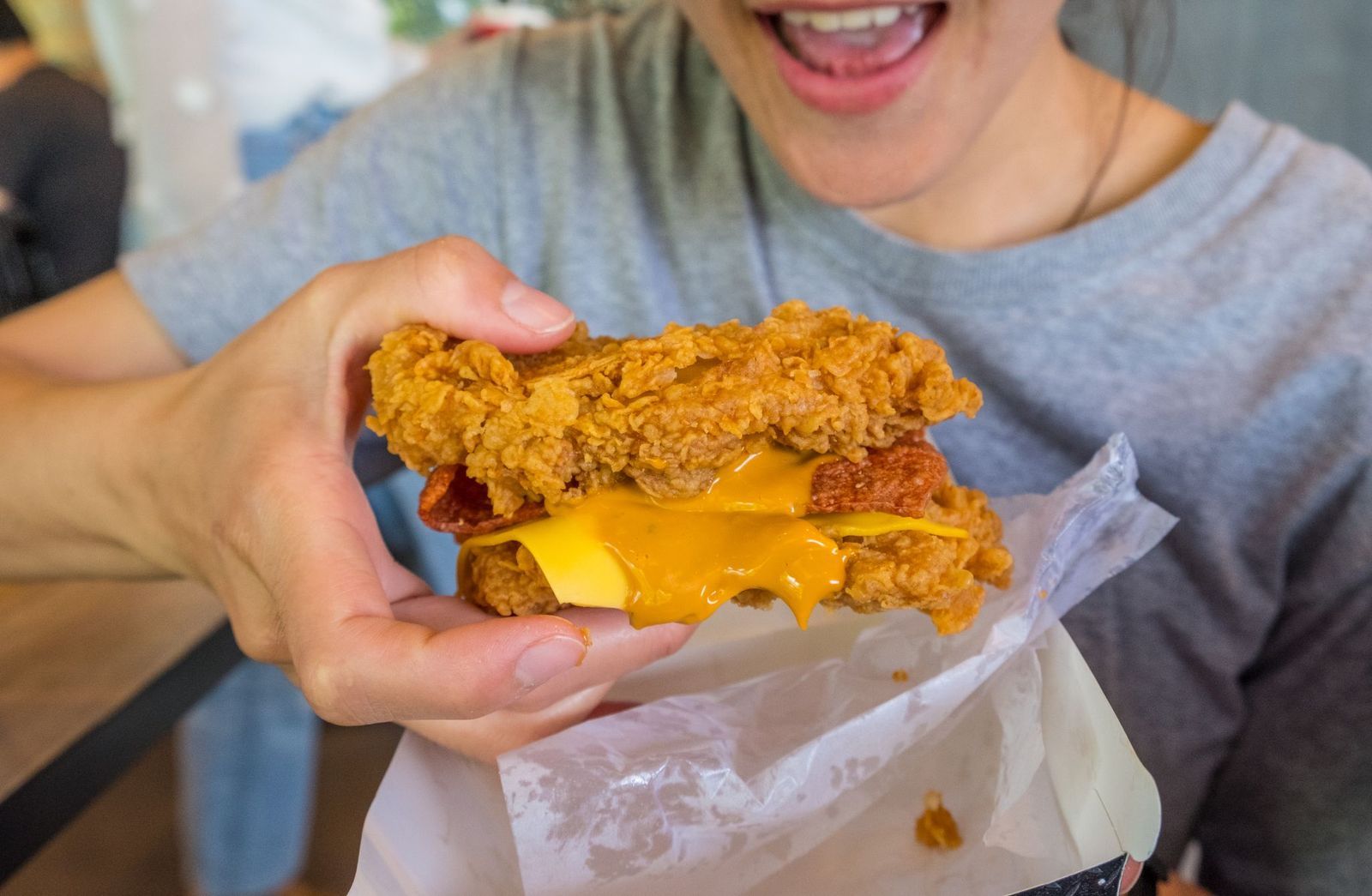
KFC has never been afraid of pushing nutritional boundaries, but in 2010 they certainly hit another level. The Double Down features bacon, Monterey Jack cheese, and a Colonel's special sauce encased between two seasoned, crispy slabs of fried chicken breast instead of bread buns.

The item sparked a media frenzy, with health advocates calling it a dietary disaster and foodies treating it as a dare. Ultimately, it proved to be a commercial hit. As it turns out, when it comes to extreme fast food, consumers are more than willing to ignore the carbs in favor of deliciousness.

7
That time KFC ran out of chicken

Image: richardjohnson

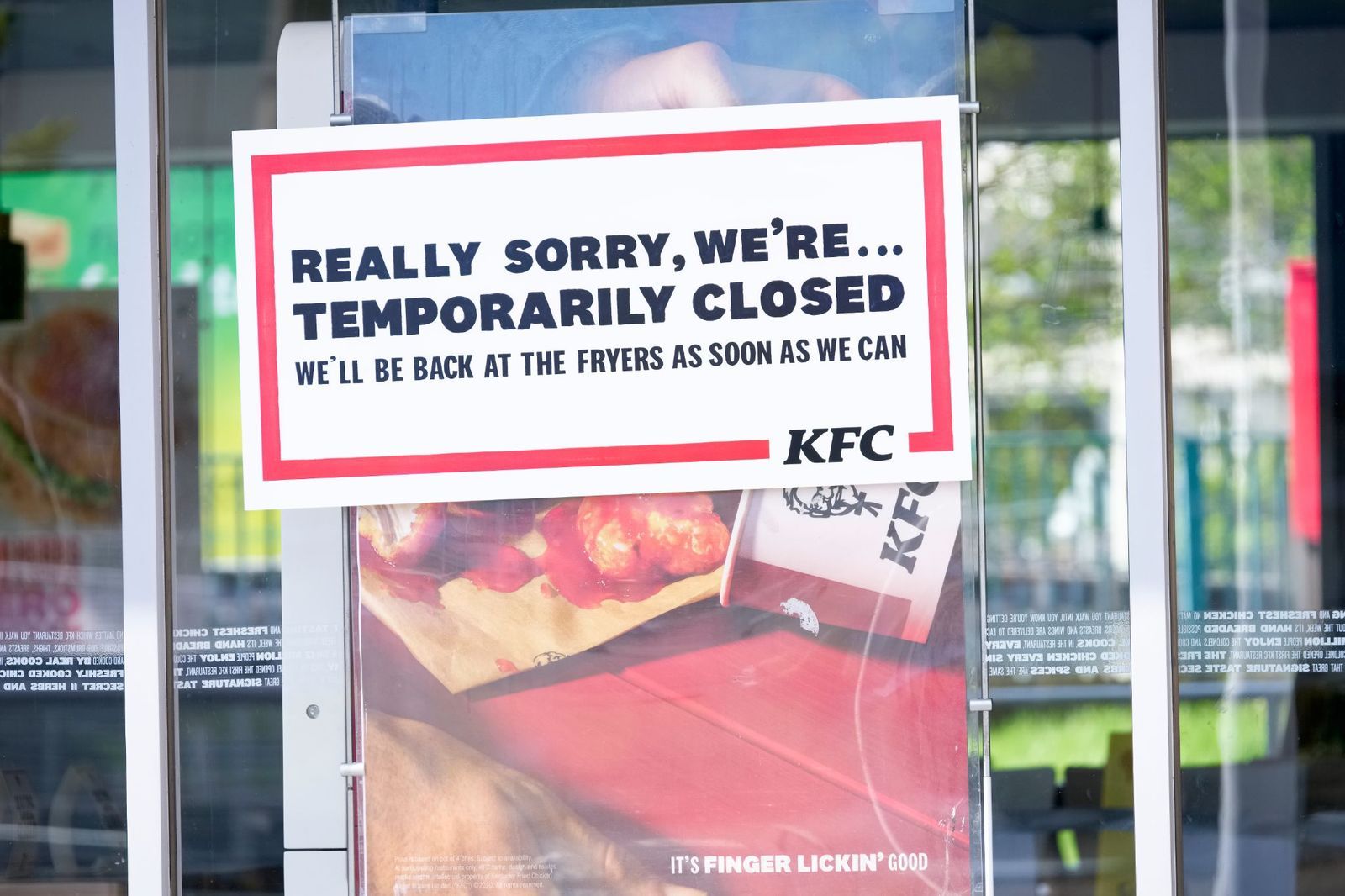
A fried chicken restaurant running out of its main ingredient sounds like a nightmare, but in 2018, it became real for KFC in the United Kingdom. In an effort to optimize logistics and save money, management switched its delivery contract to DHL. The transition went completely wrong, resulting in a supply chain jam that left over 900 UK locations with no chicken to fry.

Hundreds of stores were forced to shut down temporarily, sparking nationwide outrage, with desperate citizens even calling the police to complain. KFC managed to restore its reputation by leaning into self-deprecating humor, purchasing newspaper advertisements that featured an empty bucket rearranged to read "FCK".

8
The problem with the slogan in Chinese

Image: Patcharaporn Puttipon4289

When international fast food brands began expanding into foreign territories in the late 1980s, errors were very common. KFC experienced this firsthand when it opened its first store in Beijing, China, in 1987. The company wanted to proudly display its world-famous catchphrase, "Finger-Lickin' Good", to tempt local diners.

Unfortunately, due to an oversight in Mandarin translation, the slogan was literally translated to "Eat Your Fingers Off". While the phrase initially startled and amused local consumers, the brand quickly corrected the translation mishap to something more culturally appropriate and appetizing.

9
KFC's video game

Image: Ratana21

Decades after the Colonel’s passing, KFC’s marketing division decided to lean into modern internet subcultures. In 2019, the brand shocked the gaming community by releasing an official, anime-style video game titled I Love You, Colonel Sanders! A Finger Lickin’ Good Dating Simulator.

Developed as a visual novel, the free game places the player in a culinary school alongside a young and handsome romanticized version of Colonel Sanders. The goal of the game is to successfully navigate cooking school battles while attempting to woo the chicken chef. Against all odds, the game became a viral sensation.

10
KFC releases its own console

Image: Pixel-Shot

Following the unexpected success of their video game, KFC’s marketing team announced the KFConsole in 2020. Many assumed it was an April Fool’s joke, but it turned out to be a genuine gaming PC.

The most bizarre feature of the console is its custom "Chicken Chamber". This specialized compartment uses the heat generated by the computer’s internal components to keep pieces of fried chicken warm and crispy while you play video games.

Explore more American facts

Choose your favorite category!

General
General

As American as apple pie—the very best America has to offer!

Culture
Culture

Delve into the astounding richness of American lore.

Geography
Geography

Hop in and explore vast and diverse American landscapes.

History
History

Discover the key moments that shaped the United States.