Geography Geography 5 min read

Extraordinary secrets about the capitals of the United States

The only state capital without a McDonald's and 11 other fun facts
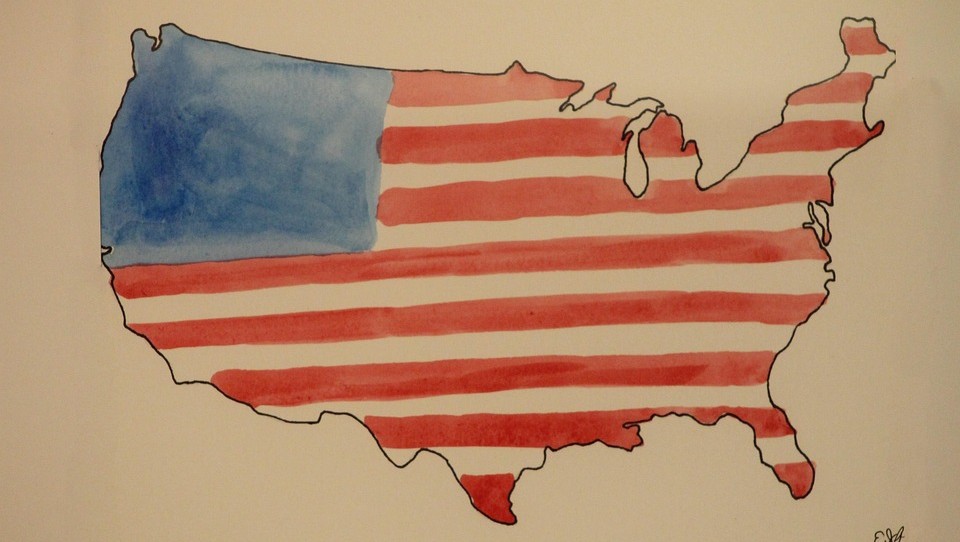
Image: AmericanBenchCraft

Can you guess which is the only U.S. capital built on top of an extinct volcano? What about which is the oldest state capital, the least populated, or the one with the coldest temperature? If you're dying to know the answers to these questions, read on to discover 12 fun facts about our state capitals that you probably didn't know!

1
Jackson, Mississippi

Image: Engineers' office, department of Tennessee, Public domain, via Wikimedia Commons

Did you know Jackson, Mississippi, is named after the 7th U.S. President, Andrew Jackson? It is one of the four state capitals named after American presidents —the other three are Jefferson City (Missouri), Lincoln (Nebraska), and Madison (Wisconsin).

Jackson is the only U.S. capital built on top of an extinct volcano. Interestingly, during the Civil War, the city was burned by Union troops, giving it the nickname "Chimneyville". In addition, Jackson is best known for being the center of the civil rights movement during the 1950s and 1960s.

2
Santa Fe, New Mexico

Image: Wendy Shervington

In 1610, Spanish settlers established Santa Fe as the capital of New Mexico, making it the oldest state capital in the country. But that's not the only peculiarity of this quaint city with a temperate climate and a unique historical and cultural richness. At 7,000 feet above sea level, Santa Fe is also the highest U.S. capital.

3
Honolulu, Hawaii

Image: Daniel Lee

Known for its spectacular beaches and rich cultural heritage, Honolulu is the only state capital not on the North American mainland. Considered the birthplace of modern surfing, it also has the highest average annual temperature of any U.S. state capital.

But those aren't the only interesting facts about Hawaii's capital. Here are a few equally (or more) crazy ones: it hosts the only royal palace in the United States (Iolani Palace), the island is made up of volcanic soil, and it houses the world's largest open-air shopping mall (Ala Moana Center).

4
Annapolis, Maryland

Image: Terry Granger

Annapolis is a historic city on the shores of the Chesapeake Bay, known for its colonial architecture, nautical tradition, and academic value. But did you know it is also the smallest U.S. capital by land size? Just 6.7 square miles!

Annapolis was also one of the nine capitals the United States has had throughout its history. For nine months during the Revolutionary War, Maryland's current state capital served as the seat of the Confederation Congress.

5
Bismarck, North Dakota
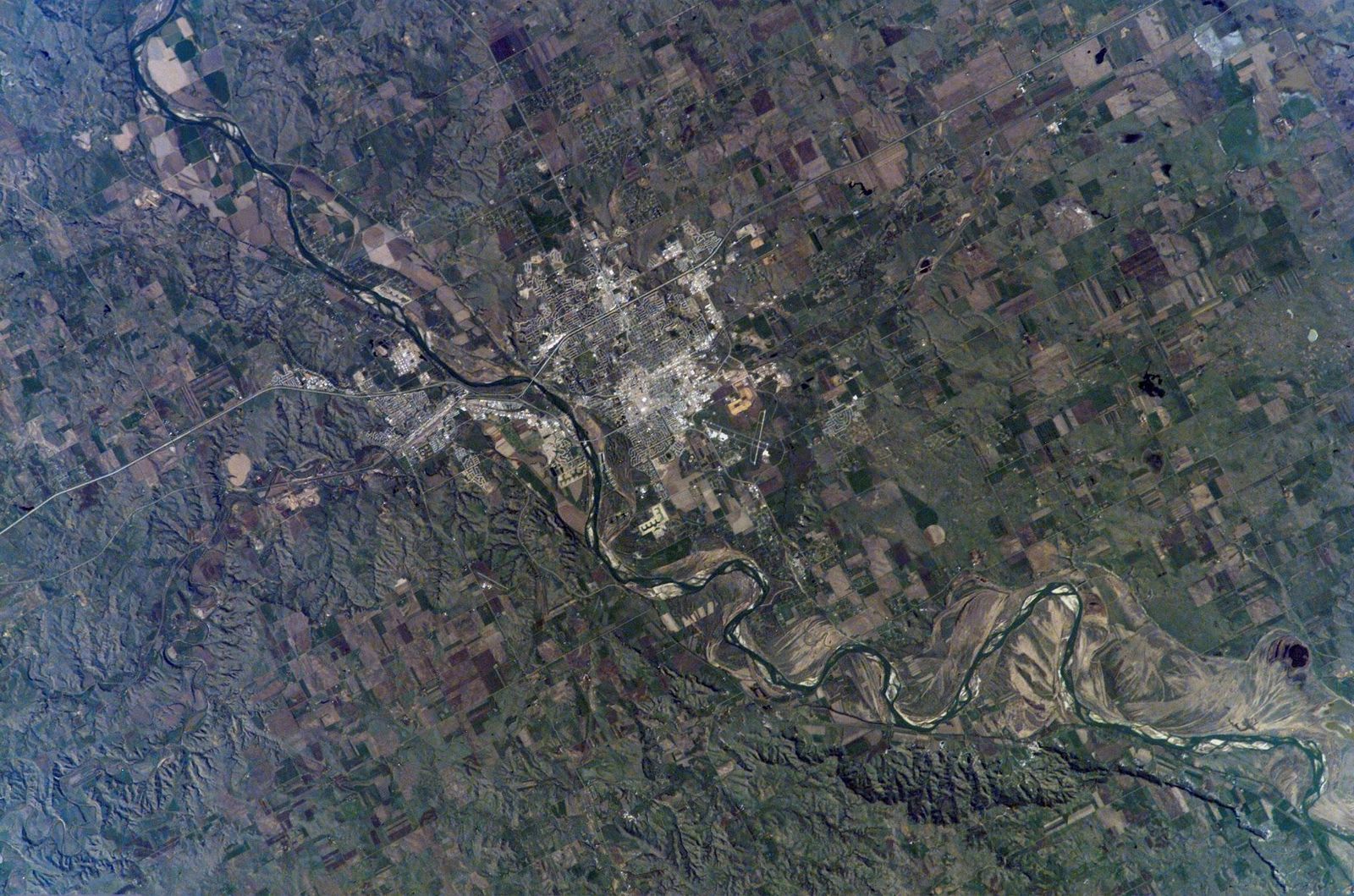
Image: NASA Astronaut, Public domain, via Wikimedia Commons

If you thought Juneau, Alaska, had the lowest average winter temperature of all state capitals, think again! It's actually Bismarck, North Dakota, where the coldest temperature ever recorded was -45°F. Imagine that!

Bismarck was founded in 1872 on the banks of the Missouri River. The city was named after Otto von Bismarck, the chancellor of Germany, to attract German investors. Another fun fact? In 1930, Bismarck and Fargo had a dispute, known as the "Capitol Tower War," over which city should be the state capital.

6
Charleston, West Virginia
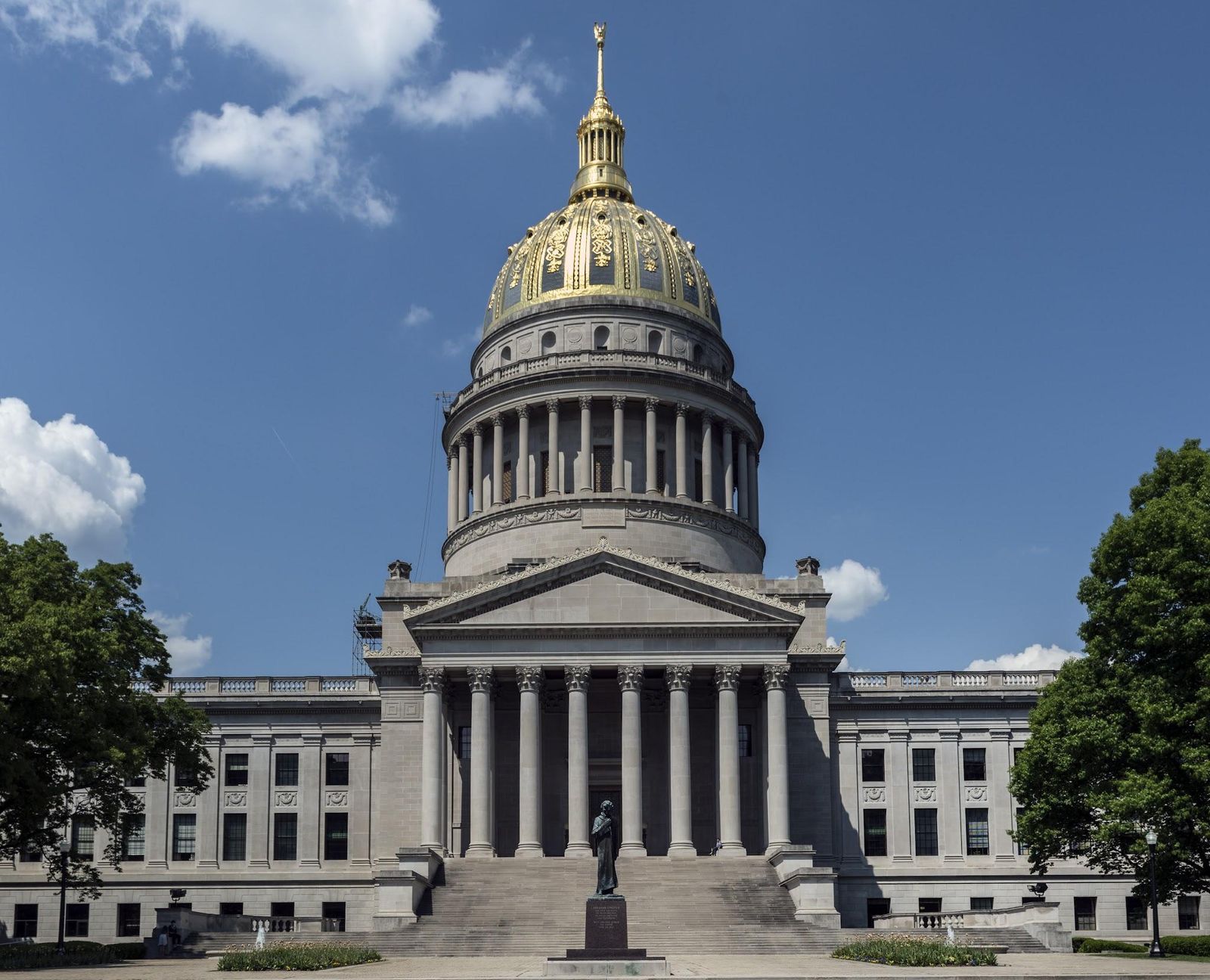
Image: Carol M. Highsmith, Public domain, via Wikimedia Commons

Did you know that the original name of West Virginia's capital was Charles Town in honor of the father of Colonel George Clendenin, one of the first settlers?

Charleston is best known for offering a unique combination of history, culture, and outdoor adventure.

7
Hartford, Connecticut

Image: Balazs Busznyak

Founded in 1635, Connecticut's capital is one of the oldest cities in the U.S. Hartford is known for being a key cultural center in New England. It was the home of writer Mark Twain and is home to historic sites such as the State Capitol, the Harriet Beecher Stowe House, and Bushnell Park, the oldest public park in the country.

Hartford is also called the "insurance capital of the world" due to the presence of major insurance companies. But the city's most curious fact is that it was where Teddy Roosevelt, aboard the Columbia Electric Victoria Phaeton, took the first presidential automobile ride in history!

8
Harrisburg, Pennsylvania

Image: Katherine McAdoo

Pennsylvania's capital city is best known for its role in the Civil War and the Underground Railroad. Located on the banks of the Susquehanna River, Harrisburg has been an important center of transportation and commerce. Today, it is known for its historic architecture, museums, and special events.

Harrisburg is also home to the longest stone arch bridge in the world, the Rockville Bridge, built in 1902. Oh, and in 1979, it came close to a nuclear disaster due to the accident at the Three Mile Island plant, the worst in U.S. history —but that's a longer story for another article!

9
Olympia, Washington

Image: Peter Robbins

Located at the southern tip of Puget Sound, Washington's state capital is known for its natural beauty and vibrant culture. But did you know Olympia is the northernmost state capital in the contiguous U.S.?

Oh, and it's also a great place to try some of the best craft beer in the country.

10
Salt Lake City, Utah
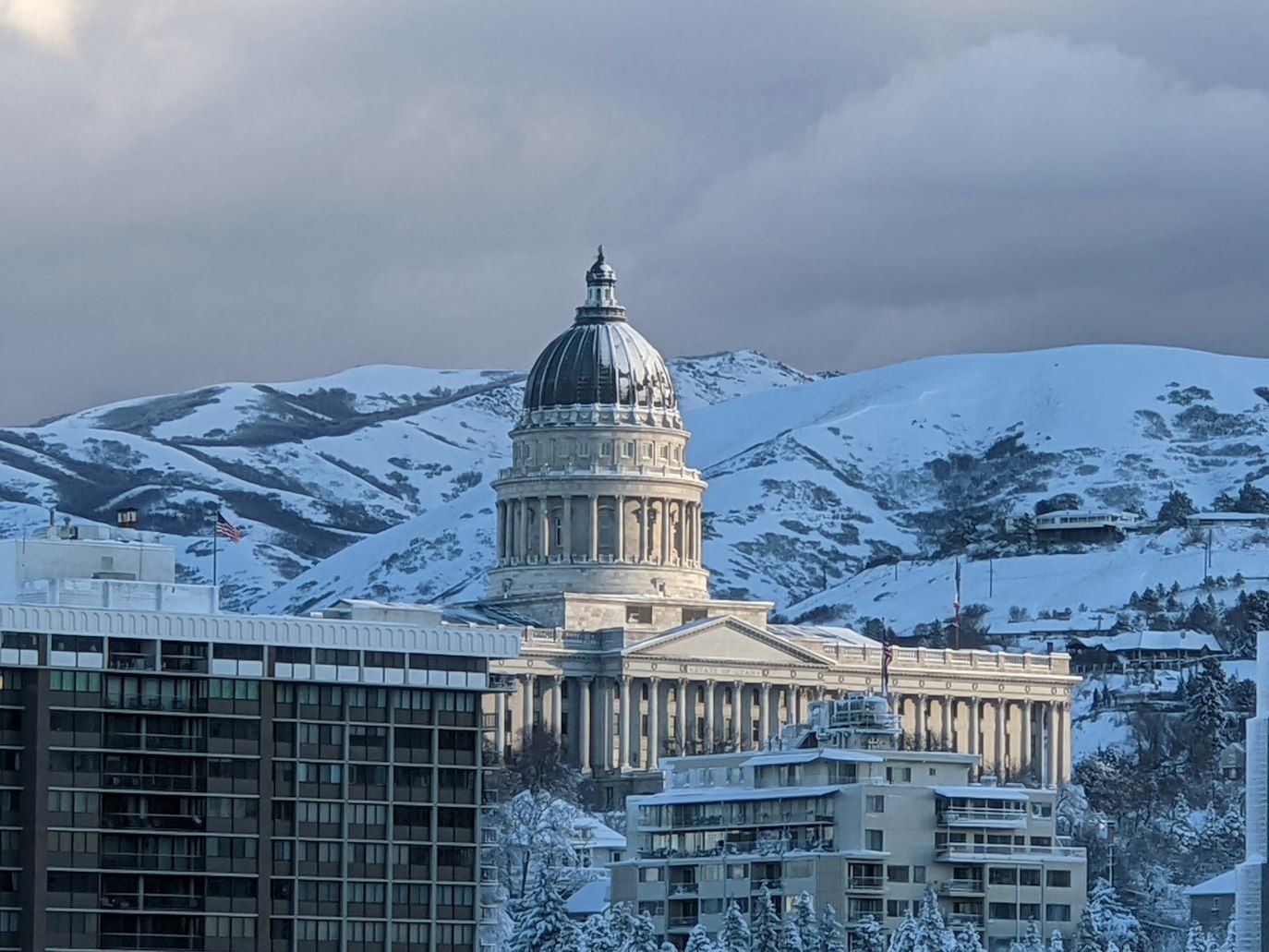
Image: Cong Wang

Utah's state capital is popular for being one of the best places to ski in the United States. But that's not all! Salt Lake City is also the only state capital with three words in its name. Have you ever thought about that?

It has the largest Mormon population in the country and is the world headquarters of the Church of Jesus Christ of Latter-day Saints. Another fun fact? Salt Lake City is home to more plastic surgeons per capita than any other state capital!

11
Montpelier, Vermont

Image: John Holm

Named after the French city of the same name, Montpelier is the least populated state capital, with a population of just 7,900. Probably for that reason, Vermont's capital prides itself on its small local businesses: it is the only state capital that doesn't have a McDonald's or a Starbucks. Could you live without these fast food chains? It doesn't have a Walmart store either!

12
Topeka, Kansas

Image: Nils Huenerfuerst

Topeka, Kansas’s state capital, has several interesting tidbits. For example, did you know its name, of Native American origin, means "a good place to dig potatoes"? Interesting, don’t you think?

In 2010, Topeka temporarily changed its name to "Google, Kansas" to attract the attention of the internet giant and become the capital city of fiber optics. Frivolous facts aside, Topeka was also very important in the history of the civil rights movement.
General General 5 min read

Say cheese!

Did you know American cheese is not actually cheese?

Image: Jonathan Borba

Few foods trigger as much heated debate as the neon-orange, perfectly square slice of American cheese. To culinary purists, it’s an industrial piece of rubber. But to the backyard grill master and the late-night grilled cheese enthusiast, it is a scientific masterpiece of consistency and meltability. The truth is, American cheese has been both witness and party to U.S. history, from World War I to Apollo missions. Before you peel back the wrapper on your next slice, let’s dive into 10 mind-melting facts that prove American cheese is one of the most fascinating—and misunderstood—innovations in food history.

1
It was invented in Switzerland

Image: NastyaSensei

While the name suggests a US origin, the technology that created American cheese actually began in the heart of the Alps. It was developed in 1911 by Swiss researchers Walter Gerber and Fritz Stettler, who were looking for a way to extend the shelf life of their country’s famous Emmental cheese.

The problem with traditional cheese is that it eventually dries out, molds, or separates into a greasy mess when heated. By shredding the cheese, adding sodium citrate, and heating it, the Swiss duo discovered they could create a stable, smooth product that didn't separate. While they weren't trying to create "American" cheese as we know it today, their emulsification process laid the foundational science for every single-wrapped slice produced today.

2
It was popularized by a Canadian

Image: Martylunsford, CC BY-SA 4.0, via Wikimedia Commons

The man responsible for the global dominance of American cheese was James L. Kraft. Ring any bells? Kraft was a Canadian immigrant who moved to Chicago in 1903. While he didn't invent the concept of processed cheese, he perfected the industrial scale of its production and marketing.

Kraft noticed that retailers struggled with cheese spoilage; if a wheel of cheddar didn't sell quickly, it was a total loss. He experimented with various methods of heating and blending cheese until he found a formula that could be canned and shipped long distances without spoiling. In 1916, he received a patent for his "processed cheese," and during World War I, the U.S. government purchased millions of pounds of it for soldiers, cementing its privileged place in the American diet.

3
It was almost called "Embalmed Cheese"

Image: Internet Archive Book Images, No restrictions, via Wikimedia Commons

When processed cheese first hit the market, it had its detractors. Traditional cheesemakers were horrified, and so were pure food advocates. These critics argued that the product shouldn't even be called cheese. They’ve even gone so far as to call it "embalmed cheese" because of its unnaturally long shelf life and the chemical emulsifiers used to keep it stable. Yet, Kraft’s marketing prowess and the sheer convenience of the product ultimately won the naming battle. At least in the court of public opinion.

4
Technically, it isn’t cheese

Image: RDNE Stock project

Kraft may have won the battle among the people, but legally, American cheese is not considered cheese. If you look closely at the packaging, you will rarely see the word "cheese" on its own. Because of strict FDA regulations, most varieties are legally classified as "Pasteurized Process Cheese Product" or "Pasteurized Process American Cheese Food."

To be labeled "cheese," a product must be made primarily of milk, salt, and enzymes. Processed American cheese, however, is made by blending real cheese—usually cheddar or Colby—with emulsifying salts, whey, and sometimes extra milk or fats.

5
Any cheese can be made into American cheese

Image: Edita Brus

The term "American cheese" refers more to a process than a specific flavor. In theory, you could make "American-style" brie, blue cheese, or parmesan. The defining characteristic is the addition of an emulsifier, which breaks down the proteins and allows the fats and water to stay together.

In fact, some high-end chefs now make their own artisanal American cheese with aged cheddars processed with sodium citrate to create a slice that has the complex flavor of an expensive block but the melting point of a Kraft Single.

6
It isn’t naturally yellow

Image: jianwei zhu

The vibrant orange-yellow hue of American cheese is entirely a cosmetic choice. Traditionally, cheese color varied by the season; when cows ate fresh grass in the summer, their milk contained more beta-carotene, leading to a naturally yellowish cheese. To make their cheese look high-quality all year round, cheesemakers began adding dyes.

American cheese takes this tradition to the extreme. It is typically colored with annatto, a seed from the achiote tree. Without this dye, American cheese would be a pale, creamy white, which is how it is sold in many delis as "White American". Yes, that’s right, there is no flavor difference between the white and yellow versions.

7
It has an extremely low melting point

Image: Vinícius Caricatte

The scientific superpower of American cheese is its meltability. Traditional cheeses have a protein structure that tightens when heated, which is why a slice of aged cheddar on a burger often results in an oily puddle and a rubbery clump.

Because of the emulsifying salts, the proteins in American cheese can withstand heat without clumping together. This gives it an incredibly low and stable melting point, transforming the slice into a silky sauce. This is why it remains the undisputed king of grilled cheese sandwiches.

8
It’s been in space

Image: NASA, Public domain, via Wikimedia Commons

When you're hurtling through orbit in a cramped capsule, you need food that is stable, easy to eat, and won't crumble into thousands of tiny, electronics-clogging pieces. American cheese fit the bill perfectly for early NASA missions.

Processed cheese in tubes or cubes was a staple of the Apollo missions. Because it doesn't separate or sweat oil in varying temperatures and pressures, it was one of the few dairy products that could reliably provide flavor and calcium to astronauts.

9
It helped bring cheese to the masses

Image: Internet Archive Book Images, No restrictions, via Wikimedia Commons

Before the advent of processed cheese, cheese was often a seasonal luxury. It was difficult to transport, expensive to store, and highly variable in quality. James L. Kraft’s invention changed that. By creating a product that was uniform in flavor and shelf-stable, he made cheese affordable and accessible to every corner of the United States.

10
The U.S. Government once gave it out

The U.S. government not only bought tons of American cheese during World War I. In the 1980s, the term "government cheese" became a thing. During a period of dairy surpluses, the government bought millions of pounds of cheese to prop up prices for struggling farmers.

To avoid letting it rot, the Reagan administration began distributing five-pound blocks of cheese to low-income families, seniors, and schools. For many who grew up in that era, that pale orange processed cheese was a lifesaver.

General General 3 min read

They have rules too

The president can’t open the White House windows? Here’s why!

Image: Fine Photographics

Being the president of a nation might seem glamorous, and while it comes with a couple of nice benefits, the role is also full of obligations, strict protocols, and surprising restrictions . From accepting luxurious gifts to buying a smartphone or taking a simple walk, here are all the "don’ts" of being a US president!

1
Open the windows

Image: Braden Burson

Yes, you read that right. A sitting US president can’t just get up and open the windows of the White House to enjoy a beautiful day. While there’s no law against it, the protocols state that any action that could pose a security risk to the commander-in-chief must be carefully reviewed and approved by the staff.

2
Go to the cinema

Image: Krists Luhaers

Going to the movies is one of life’s simple pleasures. Unfortunately, if you’re the president, it’s not one of your options. While it’s not officially forbidden, crowded and dark spaces like movie theaters represent serious security risks. Luckily, the White House has its own private screening room, so the president and his family can still enjoy movie night at home.

3
Attend their children’s events

Image: Sincerely Media

You’ll rarely see a president at their kids’ school plays or sporting events. And it’s not because they’re bad parents; it’s because regulations discourage them from attending. With so many people, children, and things happening at the same time, keeping the commander-in-chief safe in those settings is nearly impossible.

4
Buy their own tech devices

Image: appshunter.io

When a new iPhone hits the market, many rush to buy it, but presidents can’t make this decision on their own. Any electronic device, like a smartphone or tablet, could be vulnerable to hacking or espionage. So while presidents can use cell phones, theirs must be secure, vetted, and government-approved.

5
Block people on social media

Image: Julian

And that isn’t the only restriction on cell phones. Presidents who use their social media accounts for official communications are advised not to block people in their official POTUS account, since doing so could be seen as suppressing free speech. On the other hand, they can block users on personal accounts.

6
Go out alone

Image: Warren K. Leffler, Public domain, via Wikimedia Commons

The US president can’t just grab the keys and head out for a walk. Sure, strolls around the White House gardens are fine, but stepping beyond the gates is a different story. Anytime the president leaves the White House, even for a quick walk around the block, the Secret Service must secure the area, plan the route, and provide constant protection. Sounds a little overwhelming, right? But when you’re the commander in chief, safety always comes first!

7
Drive

Image: Jerry Kavan

Ever felt the urge to hop in your car and drive somewhere spontaneously? Well, if you’re the President of the United States, that’s off-limits. Security measures strongly recommend that presidents must always travel in a secure vehicle with a driver and a full security detail. In fact, the last president known to drive alone on the open road was Lyndon B. Johnson (1963-1969).

8
Fly on commercial airlines

Image: The White House, Public domain, via Wikimedia Commons

Just as security protocols strongly discourage the president from driving alone on open roads, flying on commercial airlines is also off-limits. Imagine being hundreds of feet in the air, locked in with strangers; it could be extremely unsafe when you’re the president of the United States. Implementing proper security measures would be too complicated, and with a large presidential staff, there might not even be enough seats for everyone.

9
Accept expensive gifts

Image: Ayana Ames

Presidents receive many, many letters and gifts from the public, but not all of them can be accepted. The US Constitution and federal law require presidents to decline overly expensive gifts, whether they come from foreign leaders or everyday citizens, to prevent any appearance of conflict of interest or corruption.

10
Discard official mail

Image: Wolfgang Vrede

Although it may seem like a harmless, ordinary task, the president can’t just start cleaning out their office or email inbox. All presidential correspondence, physical or digital (even spam!), is considered official government property. It must be processed or archived according to federal records regulations, and discarding anything requires a strict review process.

Explore more American facts

Choose your favorite category!

General
General

As American as apple pie—the very best America has to offer!

Culture
Culture

Delve into the astounding richness of American lore.

Geography
Geography

Hop in and explore vast and diverse American landscapes.

History
History

Discover the key moments that shaped the United States.