History History 4 min read

Old-school education

10 classroom habits that once ruled U.S. schools—but are gone for good
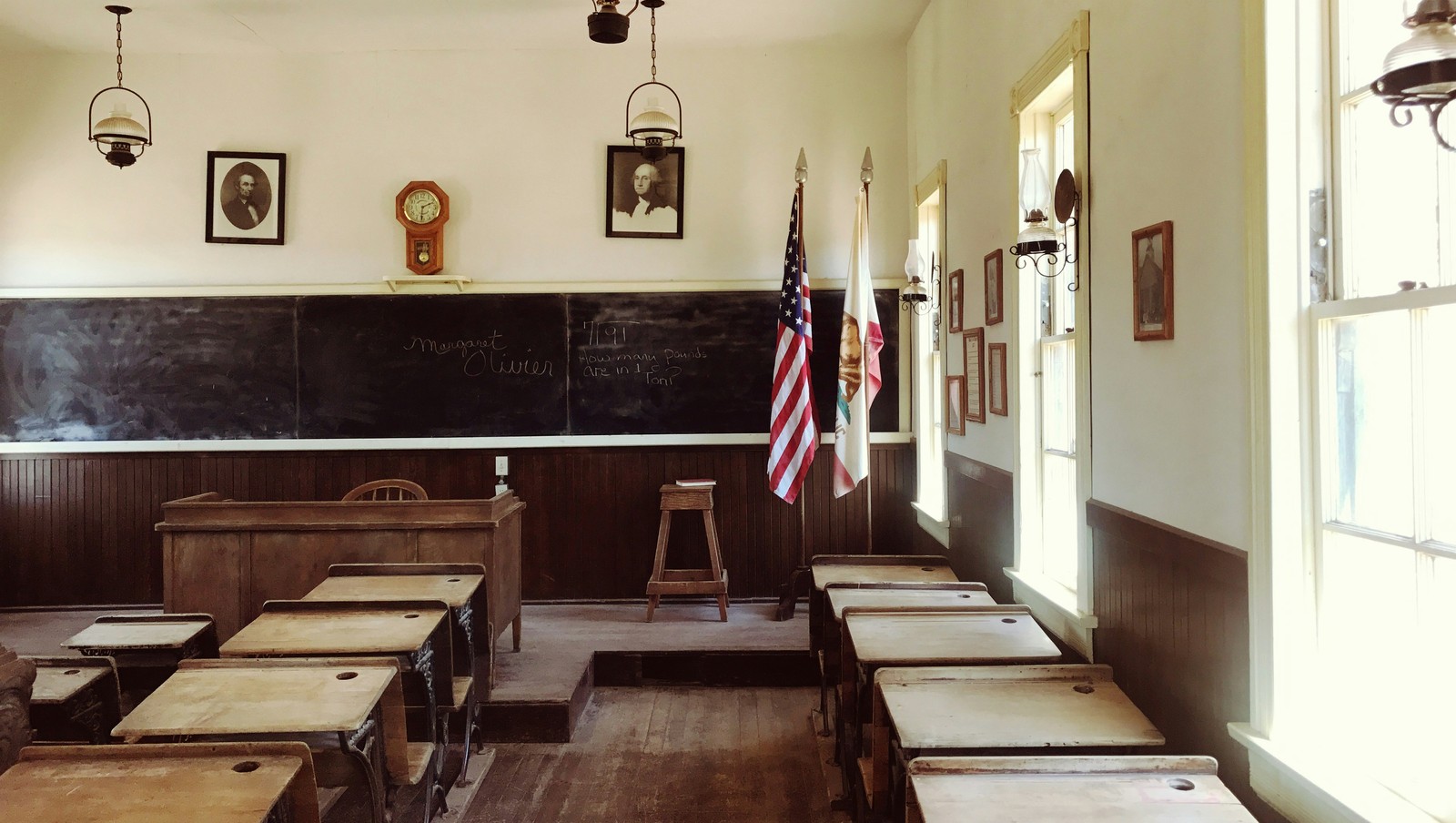
Image: Nicola Tolin

Many once-standard school customs in the U.S. have quietly vanished—phased out by shifting norms, safety rules, and cultural changes. These traditions shaped daily routines for generations, yet few remain today. From daily cursive drills to milk breaks , here are 10 traditions that have disappeared, along with the reasons behind their decline.

1
Home economics class

Image: Merve Sehirli Nasir

Home economics as a school subject peaked in the mid-20th century, teaching sewing, cooking, and budgeting —often aimed at girls.

By the 2000s, however, many states had folded it into a broader "family and consumer sciences" category, as shifting gender roles and changing cultural habits made the old curriculum feel increasingly outdated.

2
Woodshop in every school

Image: benjamin lehman

Lightly supervised children with access to power tools? Today, it seems hard to believe, but woodshop was a standard industrial arts course throughout the 1950s–1980s.

Declines began in the 1990s due to higher liability insurance costs, budget cuts, and a growing emphasis on college-prep academics over practical skills. Some schools still maintain limited woodworking programs, often using them as hands-on, integrated learning tools.

3
The dodgeball era

Image: Wan San Yip

Dodgeball dominated physical education classes well into the 1990s, often using hard rubber balls that were notorious for causing stingers, bruises, and occasional injuries . The game was popular because it required little equipment, could fill an entire class period, and kept large groups of students active.

By the 2000s, however, concerns about safety and bullying led many districts to restrict or replace dodgeball with more structured team sports. Some schools still play modified versions, usually with soft foam balls and strict rules.

4
Chalkboard dusting

Image: Vitaly Gariev

For over a century, green and black chalkboards were the centerpiece of American classrooms, with students regularly assigned to "clap out" erasers outside to clear the built-up dust. Chalk was cheap, durable, and easy for teachers to use in large rooms.

By the 1990s, districts began replacing chalkboards with whiteboards due to dust concerns linked to asthma and indoor air quality. The shift accelerated as overhead projectors, digital displays, and interactive whiteboards provided cleaner surfaces and reduced inhalation hazards.

5
Daily milk breaks
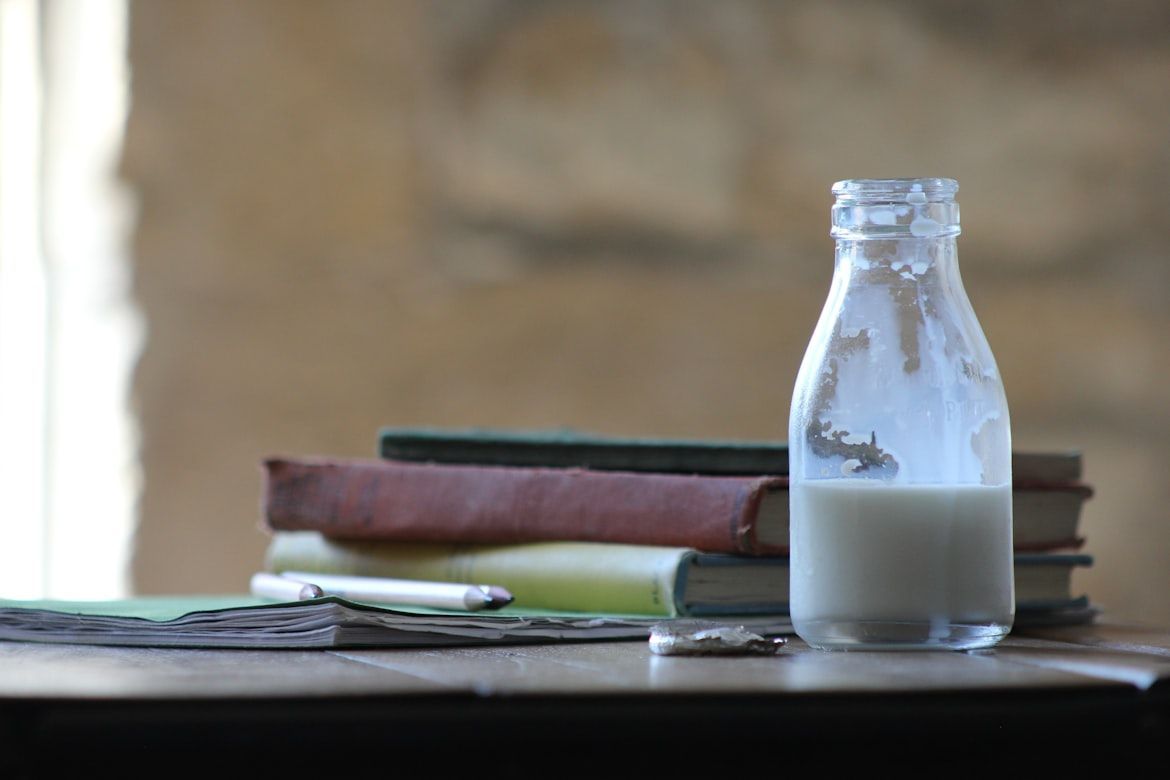
Image: ROBIN WORRALL

Mid-morning milk breaks became common in American elementary schools after the USDA expanded dairy subsidies through programs like the Special Milk Program in 1954. For decades, students lined up for small cartons—usually whole milk—intended to boost childhood nutrition and support U.S. dairy producers during periods of surplus.

By the 1990s and 2000s, milk breaks declined as updated nutrition guidelines shifted schools toward broader meal programs rather than standalone milk service.

6
In-school smoking lounges

Image: Andres Siimon

The idea of teens openly smoking on school grounds would be almost unimaginable under today’s health and liability standards. But through the 1960s and into the early 1980s, many American high schools—especially in the Midwest and Northeast—maintained designated smoking areas for students.

The practice disappeared quickly as federal and state regulations tightened, beginning with widespread adoption of indoor smoking bans in the late 1980s and early 1990s. The 1994 Surgeon General’s report and anti-tobacco campaigns further pushed districts to eliminate student smoking sections altogether.

7
Daily cursive drills

Image: Aaron Burden

For most of the 20th century, daily cursive drills were a nonnegotiable part of American schooling , often reinforced by specific handwriting manuals. Teachers devoted significant class time to perfecting loops, slants, and connected strokes, because cursive was considered essential for legibility, speed, and personal discipline.

The decline accelerated after the rollout of the Common Core State Standards in 2010, which omitted cursive entirely in favor of keyboarding and digital literacy benchmarks. With shrinking instructional time, cursive was often one of the first skills removed from early-grade schedules.

8
Class pet enclosures

Image: Minjae Cho

From the 1960s through the 1990s, class pets—hamsters, guinea pigs, turtles, goldfish, and even the occasional lizard—were staples of American elementary classrooms. Teachers used them to teach responsibility, empathy, and basic biology , and many classes created rotating "pet helper" charts for feeding and tank cleaning.

Today, the idea of a live animal in a crowded classroom, handled daily by students, feels out of step with modern safety, allergy, and sanitation standards. Maintenance costs, humane-treatment rules, and the challenge of caring for animals during breaks led schools to retire these longtime classroom mascots.

9
Student hall monitors
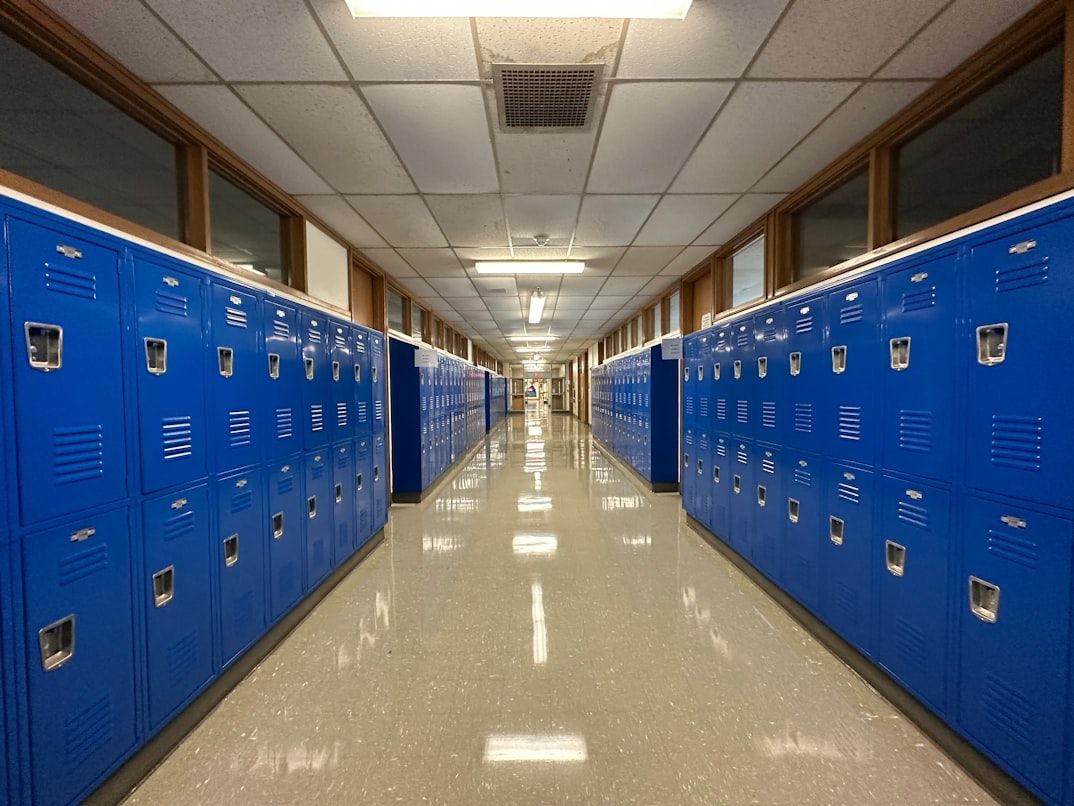
Image: Christopher Ryan

For much of the mid-20th century, student hall monitors were a fixture in American schools. Selected students—often upper-grade or high-performing—wore badges or sashes and were tasked with checking hall passes, reporting loitering, and keeping noise down between classes.

By the 1990s, the role faded as schools adopted professional security staff, stricter attendance protocols, and legal liability rules that made peer enforcement impractical. As districts invested in cameras, campus supervisors, and centralized discipline systems, the traditional hall monitor quietly disappeared from most American schools.

10
Morning physical calisthenics

Image: Philip White

From the 1950s through the early 1970s, influenced by Cold War fitness campaigns, many American schools began the day with school-wide calisthenics —jumping jacks, toe touches, and arm circles—led over the PA system.

The practice faded as schedules tightened and PE moved into dedicated class periods, with research favoring structured fitness over brief daily routines. Today, the idea of entire schools performing synchronized drills feels almost militaristic.
Geography Geography 5 min read

Extraordinary secrets about the capitals of the United States

The only state capital without a McDonald's and 11 other fun facts

Image: AmericanBenchCraft

Can you guess which is the only U.S. capital built on top of an extinct volcano? What about which is the oldest state capital, the least populated, or the one with the coldest temperature? If you're dying to know the answers to these questions, read on to discover 12 fun facts about our state capitals that you probably didn't know!

1
Jackson, Mississippi

Image: Engineers' office, department of Tennessee, Public domain, via Wikimedia Commons

Did you know Jackson, Mississippi, is named after the 7th U.S. President, Andrew Jackson? It is one of the four state capitals named after American presidents —the other three are Jefferson City (Missouri), Lincoln (Nebraska), and Madison (Wisconsin).

Jackson is the only U.S. capital built on top of an extinct volcano. Interestingly, during the Civil War, the city was burned by Union troops, giving it the nickname "Chimneyville". In addition, Jackson is best known for being the center of the civil rights movement during the 1950s and 1960s.

2
Santa Fe, New Mexico

Image: Wendy Shervington

In 1610, Spanish settlers established Santa Fe as the capital of New Mexico, making it the oldest state capital in the country. But that's not the only peculiarity of this quaint city with a temperate climate and a unique historical and cultural richness. At 7,000 feet above sea level, Santa Fe is also the highest U.S. capital.

3
Honolulu, Hawaii

Image: Daniel Lee

Known for its spectacular beaches and rich cultural heritage, Honolulu is the only state capital not on the North American mainland. Considered the birthplace of modern surfing, it also has the highest average annual temperature of any U.S. state capital.

But those aren't the only interesting facts about Hawaii's capital. Here are a few equally (or more) crazy ones: it hosts the only royal palace in the United States (Iolani Palace), the island is made up of volcanic soil, and it houses the world's largest open-air shopping mall (Ala Moana Center).

4
Annapolis, Maryland

Image: Terry Granger

Annapolis is a historic city on the shores of the Chesapeake Bay, known for its colonial architecture, nautical tradition, and academic value. But did you know it is also the smallest U.S. capital by land size? Just 6.7 square miles!

Annapolis was also one of the nine capitals the United States has had throughout its history. For nine months during the Revolutionary War, Maryland's current state capital served as the seat of the Confederation Congress.

5
Bismarck, North Dakota

Image: NASA Astronaut, Public domain, via Wikimedia Commons

If you thought Juneau, Alaska, had the lowest average winter temperature of all state capitals, think again! It's actually Bismarck, North Dakota, where the coldest temperature ever recorded was -45°F. Imagine that!

Bismarck was founded in 1872 on the banks of the Missouri River. The city was named after Otto von Bismarck, the chancellor of Germany, to attract German investors. Another fun fact? In 1930, Bismarck and Fargo had a dispute, known as the "Capitol Tower War," over which city should be the state capital.

6
Charleston, West Virginia

Image: Carol M. Highsmith, Public domain, via Wikimedia Commons

Did you know that the original name of West Virginia's capital was Charles Town in honor of the father of Colonel George Clendenin, one of the first settlers?

Charleston is best known for offering a unique combination of history, culture, and outdoor adventure.

7
Hartford, Connecticut

Image: Balazs Busznyak

Founded in 1635, Connecticut's capital is one of the oldest cities in the U.S. Hartford is known for being a key cultural center in New England. It was the home of writer Mark Twain and is home to historic sites such as the State Capitol, the Harriet Beecher Stowe House, and Bushnell Park, the oldest public park in the country.

Hartford is also called the "insurance capital of the world" due to the presence of major insurance companies. But the city's most curious fact is that it was where Teddy Roosevelt, aboard the Columbia Electric Victoria Phaeton, took the first presidential automobile ride in history!

8
Harrisburg, Pennsylvania

Image: Katherine McAdoo

Pennsylvania's capital city is best known for its role in the Civil War and the Underground Railroad. Located on the banks of the Susquehanna River, Harrisburg has been an important center of transportation and commerce. Today, it is known for its historic architecture, museums, and special events.

Harrisburg is also home to the longest stone arch bridge in the world, the Rockville Bridge, built in 1902. Oh, and in 1979, it came close to a nuclear disaster due to the accident at the Three Mile Island plant, the worst in U.S. history —but that's a longer story for another article!

9
Olympia, Washington

Image: Peter Robbins

Located at the southern tip of Puget Sound, Washington's state capital is known for its natural beauty and vibrant culture. But did you know Olympia is the northernmost state capital in the contiguous U.S.?

Oh, and it's also a great place to try some of the best craft beer in the country.

10
Salt Lake City, Utah

Image: Cong Wang

Utah's state capital is popular for being one of the best places to ski in the United States. But that's not all! Salt Lake City is also the only state capital with three words in its name. Have you ever thought about that?

It has the largest Mormon population in the country and is the world headquarters of the Church of Jesus Christ of Latter-day Saints. Another fun fact? Salt Lake City is home to more plastic surgeons per capita than any other state capital!

11
Montpelier, Vermont

Image: John Holm

Named after the French city of the same name, Montpelier is the least populated state capital, with a population of just 7,900. Probably for that reason, Vermont's capital prides itself on its small local businesses: it is the only state capital that doesn't have a McDonald's or a Starbucks. Could you live without these fast food chains? It doesn't have a Walmart store either!

12
Topeka, Kansas

Image: Nils Huenerfuerst

Topeka, Kansas’s state capital, has several interesting tidbits. For example, did you know its name, of Native American origin, means "a good place to dig potatoes"? Interesting, don’t you think?

In 2010, Topeka temporarily changed its name to "Google, Kansas" to attract the attention of the internet giant and become the capital city of fiber optics. Frivolous facts aside, Topeka was also very important in the history of the civil rights movement.

General General 5 min read

Say cheese!

Did you know American cheese is not actually cheese?

Image: Jonathan Borba

Few foods trigger as much heated debate as the neon-orange, perfectly square slice of American cheese. To culinary purists, it’s an industrial piece of rubber. But to the backyard grill master and the late-night grilled cheese enthusiast, it is a scientific masterpiece of consistency and meltability. The truth is, American cheese has been both witness and party to U.S. history, from World War I to Apollo missions. Before you peel back the wrapper on your next slice, let’s dive into 10 mind-melting facts that prove American cheese is one of the most fascinating—and misunderstood—innovations in food history.

1
It was invented in Switzerland

Image: NastyaSensei

While the name suggests a US origin, the technology that created American cheese actually began in the heart of the Alps. It was developed in 1911 by Swiss researchers Walter Gerber and Fritz Stettler, who were looking for a way to extend the shelf life of their country’s famous Emmental cheese.

The problem with traditional cheese is that it eventually dries out, molds, or separates into a greasy mess when heated. By shredding the cheese, adding sodium citrate, and heating it, the Swiss duo discovered they could create a stable, smooth product that didn't separate. While they weren't trying to create "American" cheese as we know it today, their emulsification process laid the foundational science for every single-wrapped slice produced today.

2
It was popularized by a Canadian

Image: Martylunsford, CC BY-SA 4.0, via Wikimedia Commons

The man responsible for the global dominance of American cheese was James L. Kraft. Ring any bells? Kraft was a Canadian immigrant who moved to Chicago in 1903. While he didn't invent the concept of processed cheese, he perfected the industrial scale of its production and marketing.

Kraft noticed that retailers struggled with cheese spoilage; if a wheel of cheddar didn't sell quickly, it was a total loss. He experimented with various methods of heating and blending cheese until he found a formula that could be canned and shipped long distances without spoiling. In 1916, he received a patent for his "processed cheese," and during World War I, the U.S. government purchased millions of pounds of it for soldiers, cementing its privileged place in the American diet.

3
It was almost called "Embalmed Cheese"

Image: Internet Archive Book Images, No restrictions, via Wikimedia Commons

When processed cheese first hit the market, it had its detractors. Traditional cheesemakers were horrified, and so were pure food advocates. These critics argued that the product shouldn't even be called cheese. They’ve even gone so far as to call it "embalmed cheese" because of its unnaturally long shelf life and the chemical emulsifiers used to keep it stable. Yet, Kraft’s marketing prowess and the sheer convenience of the product ultimately won the naming battle. At least in the court of public opinion.

4
Technically, it isn’t cheese

Image: RDNE Stock project

Kraft may have won the battle among the people, but legally, American cheese is not considered cheese. If you look closely at the packaging, you will rarely see the word "cheese" on its own. Because of strict FDA regulations, most varieties are legally classified as "Pasteurized Process Cheese Product" or "Pasteurized Process American Cheese Food."

To be labeled "cheese," a product must be made primarily of milk, salt, and enzymes. Processed American cheese, however, is made by blending real cheese—usually cheddar or Colby—with emulsifying salts, whey, and sometimes extra milk or fats.

5
Any cheese can be made into American cheese

Image: Edita Brus

The term "American cheese" refers more to a process than a specific flavor. In theory, you could make "American-style" brie, blue cheese, or parmesan. The defining characteristic is the addition of an emulsifier, which breaks down the proteins and allows the fats and water to stay together.

In fact, some high-end chefs now make their own artisanal American cheese with aged cheddars processed with sodium citrate to create a slice that has the complex flavor of an expensive block but the melting point of a Kraft Single.

6
It isn’t naturally yellow

Image: jianwei zhu

The vibrant orange-yellow hue of American cheese is entirely a cosmetic choice. Traditionally, cheese color varied by the season; when cows ate fresh grass in the summer, their milk contained more beta-carotene, leading to a naturally yellowish cheese. To make their cheese look high-quality all year round, cheesemakers began adding dyes.

American cheese takes this tradition to the extreme. It is typically colored with annatto, a seed from the achiote tree. Without this dye, American cheese would be a pale, creamy white, which is how it is sold in many delis as "White American". Yes, that’s right, there is no flavor difference between the white and yellow versions.

7
It has an extremely low melting point

Image: Vinícius Caricatte

The scientific superpower of American cheese is its meltability. Traditional cheeses have a protein structure that tightens when heated, which is why a slice of aged cheddar on a burger often results in an oily puddle and a rubbery clump.

Because of the emulsifying salts, the proteins in American cheese can withstand heat without clumping together. This gives it an incredibly low and stable melting point, transforming the slice into a silky sauce. This is why it remains the undisputed king of grilled cheese sandwiches.

8
It’s been in space

Image: NASA, Public domain, via Wikimedia Commons

When you're hurtling through orbit in a cramped capsule, you need food that is stable, easy to eat, and won't crumble into thousands of tiny, electronics-clogging pieces. American cheese fit the bill perfectly for early NASA missions.

Processed cheese in tubes or cubes was a staple of the Apollo missions. Because it doesn't separate or sweat oil in varying temperatures and pressures, it was one of the few dairy products that could reliably provide flavor and calcium to astronauts.

9
It helped bring cheese to the masses

Image: Internet Archive Book Images, No restrictions, via Wikimedia Commons

Before the advent of processed cheese, cheese was often a seasonal luxury. It was difficult to transport, expensive to store, and highly variable in quality. James L. Kraft’s invention changed that. By creating a product that was uniform in flavor and shelf-stable, he made cheese affordable and accessible to every corner of the United States.

10
The U.S. Government once gave it out

The U.S. government not only bought tons of American cheese during World War I. In the 1980s, the term "government cheese" became a thing. During a period of dairy surpluses, the government bought millions of pounds of cheese to prop up prices for struggling farmers.

To avoid letting it rot, the Reagan administration began distributing five-pound blocks of cheese to low-income families, seniors, and schools. For many who grew up in that era, that pale orange processed cheese was a lifesaver.

Explore more American facts

Choose your favorite category!

General
General

As American as apple pie—the very best America has to offer!

Culture
Culture

Delve into the astounding richness of American lore.

Geography
Geography

Hop in and explore vast and diverse American landscapes.

History
History

Discover the key moments that shaped the United States.