Culture Culture 4 min read

What if…?

You won’t believe who almost replaced Harrison Ford in Star Wars!

Image: GR Stocks

Some movie characters have become so iconic that it’s hard to picture anyone else in the role. But the truth is, many of these parts almost went to completely different actors. Can you imagine Al Pacino as Han Solo? It nearly happened! In this article, we’ll explore that story and nine other cases where famous characters almost end up with a different face.

1
Han Solo- Al Pacino
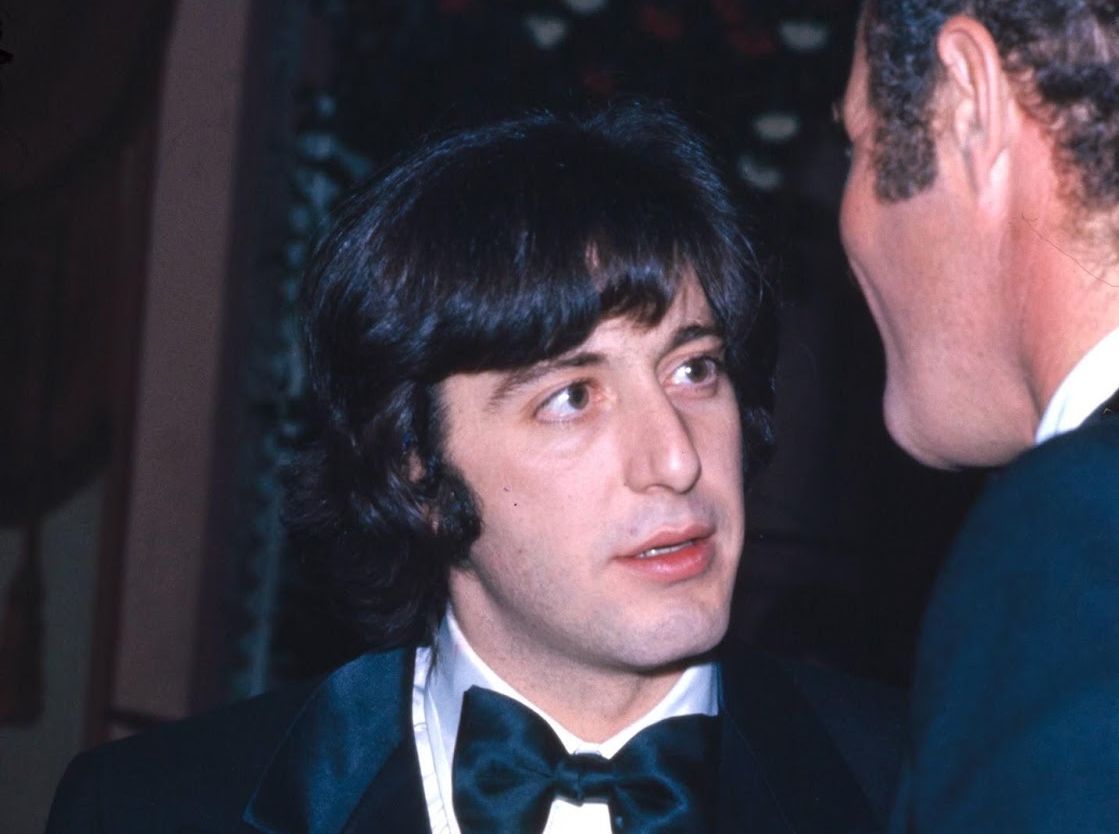
Image: Gotfryd, Bernard, photographer, Public domain, via Wikimedia Commons

Can you imagine the legendary Han Solo played by anyone other than Harrison Ford? Hard to picture, right? But it nearly happened: Al Pacino was actually offered the role. According to Pacino, he got the Star Wars script before it became a massive hit, but he "didn’t understand it" and decided to pass.

2
Jack Nicholson- Michael Corleone

Image: Larry Bessel, Los Angeles Times, CC BY 4.0 <https://creativecommons.org/licenses/by/4.0>, via Wikimedia Commons

It’s true that the great Jack Nicholson had no shortage of incredible roles and performances. But did you know he almost played one of cinema’s most iconic gangsters, Michael Corleone? However, Nicholson felt that "an Italian-American character should be played by an Italian-American actor" and passed on the role, which ultimately went to the brilliant Al Pacino.

3
Pretty Woman- Molly Ringwald

Image: Panio Gianopoulos, CC BY-SA 3.0 <https://creativecommons.org/licenses/by-sa/3.0>, via Wikimedia Commons

Pretty Woman (1990) is undeniably one of the iconic films of the ’90s, made unforgettable by the stellar performances of Richard Gere and Julia Roberts. But did you know the role of Vivian almost went to someone else? Molly Ringwald, star of Sixteen Candles (1984) and The Breakfast Club (1985), was originally considered, but she turned it down because she didn’t feel comfortable with the role.

4
Jack from Titanic- Matthew McConaughey

Image: All-Pro Reels from District of Columbia, USA, CC BY-SA 2.0 <https://creativecommons.org/licenses/by-sa/2.0>, via Wikimedia Commons

Can you picture a young Matthew McConaughey as the lovely Jack in Titanic (1997)? Hard to imagine, right? But it almost happened! Although he was five years older than Leonardo DiCaprio, both auditioned for the role. McConaughey came close to landing it but ultimately lost out because he refused to drop his Southern accent.

5
Catwoman- Madonna

Image: chrisweger, CC BY-SA 2.0 <https://creativecommons.org/licenses/by-sa/2.0>, via Wikimedia Commons

When we think of Catwoman, Michelle Pfeiffer instantly comes to mind, as she gave us one of the most iconic portrayals of the character in Batman Returns (1992). But the role wasn’t always meant for Pfeiffer. That’s right! Catwoman almost went to the legendary Madonna. Believe it or not, the singer was originally offered the role but didn’t find it appealing at the time. Years later, she admitted she regretted passing it up.

6
Django- Will Smith

Image: Raph_PH, CC BY 4.0 <https://creativecommons.org/licenses/by/4.0>, via Wikimedia Commons

In 2012, Quentin Tarantino brought us Django Unchained , inspired by the 1966 Spaghetti Western classic Django . The film was a hit, with Jamie Foxx shining as the lead. But it could have looked very different, as another actor was originally offered the role: Will Smith. After reading the script, he passed, feeling that Django was overshadowed by other characters and that the story focused too much on vengeance.

7
Mrs. Smith- Gwen Stefani

Image: Lorie Shaull from St Paul, United States, CC BY-SA 2.0 <https://creativecommons.org/licenses/by-sa/2.0>, via Wikimedia Commons

Mr. & Mrs. Smith (2005) isn’t just one of the sexiest films of recent years; it’s also where Brad Pitt and Angelina Jolie met and fell in love. But we almost missed out on this iconic couple! Why? Well, besides Angelina, other actresses and artists were considered for the role. One of them was singer Gwen Stefani, who said she "almost got it" but chose to focus on her music career instead.

8
Neo- Will Smith

Image: Gage Skidmore from Peoria, AZ, United States of America, CC BY-SA 2.0 <https://creativecommons.org/licenses/by-sa/2.0>, via Wikimedia Commons

We don’t know how many roles Will Smith has turned down over the years, but he appears twice on this list! This time, it’s the legendary Neo from The Matrix franchise. According to Smith, when they offered him the role, he had also been offered Captain James West in Wild Wild West (1999) and ultimately chose that one instead.

9
Captain America- John Krasinski

Image: Gabriel Hutchinson, CC BY-SA 4.0 <https://creativecommons.org/licenses/by-sa/4.0>, via Wikimedia Commons

John Krasinski won our hearts as the clever Jim in The Office . But did you know he nearly became a superhero? He was close to playing Captain America! Although he even auditioned, Krasinski later joked that when he saw Chris Hemsworth in his Thor costume, he realized the role and the movie weren’t quite for him.

10
Iron Man- Tom Cruise

Image: Gabriel Hutchinson Photography, CC BY-SA 4.0 <https://creativecommons.org/licenses/by-sa/4.0>, via Wikimedia Commons

Iron Man, the genius billionaire who uses his brains and wealth for good, is a Marvel icon we all know and love thanks to Robert Downey Jr.’s brilliant performance. But did you know we almost saw Tom Cruise dressed up as a superhero? That’s right! He was seriously considered for the role, though the way the project was pitched didn’t quite convince him.
History History 3 min read

Have you experienced any coincidences?

12 incredible coincidences in American history

Image: Library of Congress

A coincidence is a remarkable concurrence of events or circumstances without an apparent causal connection. Most of us experience coincidences regularly, but they tend to be more ordinary—like discovering you’re wearing the same sweater as someone else in the room. The following 12 examples are much more extreme, and some even seem unbelievable, even though they are true. Read on and prepare to be amazed!

1
A Presidential curse

Image: David Everett Strickler

For almost 140 years, U.S. presidents elected in years ending in zero died while in office. It happened to William Henry Harrison (elected in 1840, died in 1841), Abraham Lincoln (elected in 1860, died in 1865), James A. Garfield (elected in 1880, died in 1881), William McKinley (re-elected in 1900, died in 1901), Warren G. Harding (elected in 1920, died in 1923), Franklin D. Roosevelt (elected to a third term in 1940 and a fourth in 1944, died in 1945), and John F. Kennedy (elected in 1960, died in 1963). Ronald Reagan, elected in 1980, broke the curse by surviving an assassination attempt.

2
Mark Twain and Halley’s Comet

Image: Justin Wolff

In the year Mark Twain was born, 1835, Halley’s Comet passed by Earth. The great writer famously predicted he’d "go out with it" as well . Indeed, he passed away in 1910, the next time the comet appeared.

3
Jefferson and Adams

Image: iStrfry , Marcus

A patriotic yet somber coincidence, indeed. John Adams and Thomas Jefferson, the second and third U.S. presidents, both died on July 4, 1826 —exactly 50 years after the signing of the Declaration of Independence.

4
Hoover Dam’s first and last casualties

Image: Ryan Thorpe

The construction of the Hoover Dam was a long and difficult process, claiming over 100 lives. The first person to die was J.G. Tierney , and the last recorded death was his son , Patrick Tierney.

5
Lincoln and Kennedy

Image: Kelli Dougal

Abraham Lincoln and John F. Kennedy were elected 100 years apart (1860 and 1960). Both suffered fatal head wounds and were succeeded by presidents named Johnson. Their assassins each had three names: John Wilkes Booth and Lee Harvey Oswald. Both were assassinated on a Friday while sitting next to their wives at the time that it happened.

6
Charles Francis Coghlan’s last journey

Image: Rhodi Lopez

Actor Charles Francis Coghlan died in Texas in 1899. But his casket was lost at sea during a hurricane. Eight years later, his coffin washed ashore near his birthplace in Prince Edward Island, Canada, more than 3,000 miles away.

7
The Titanic coincidence

Image: K. Mitch Hodge

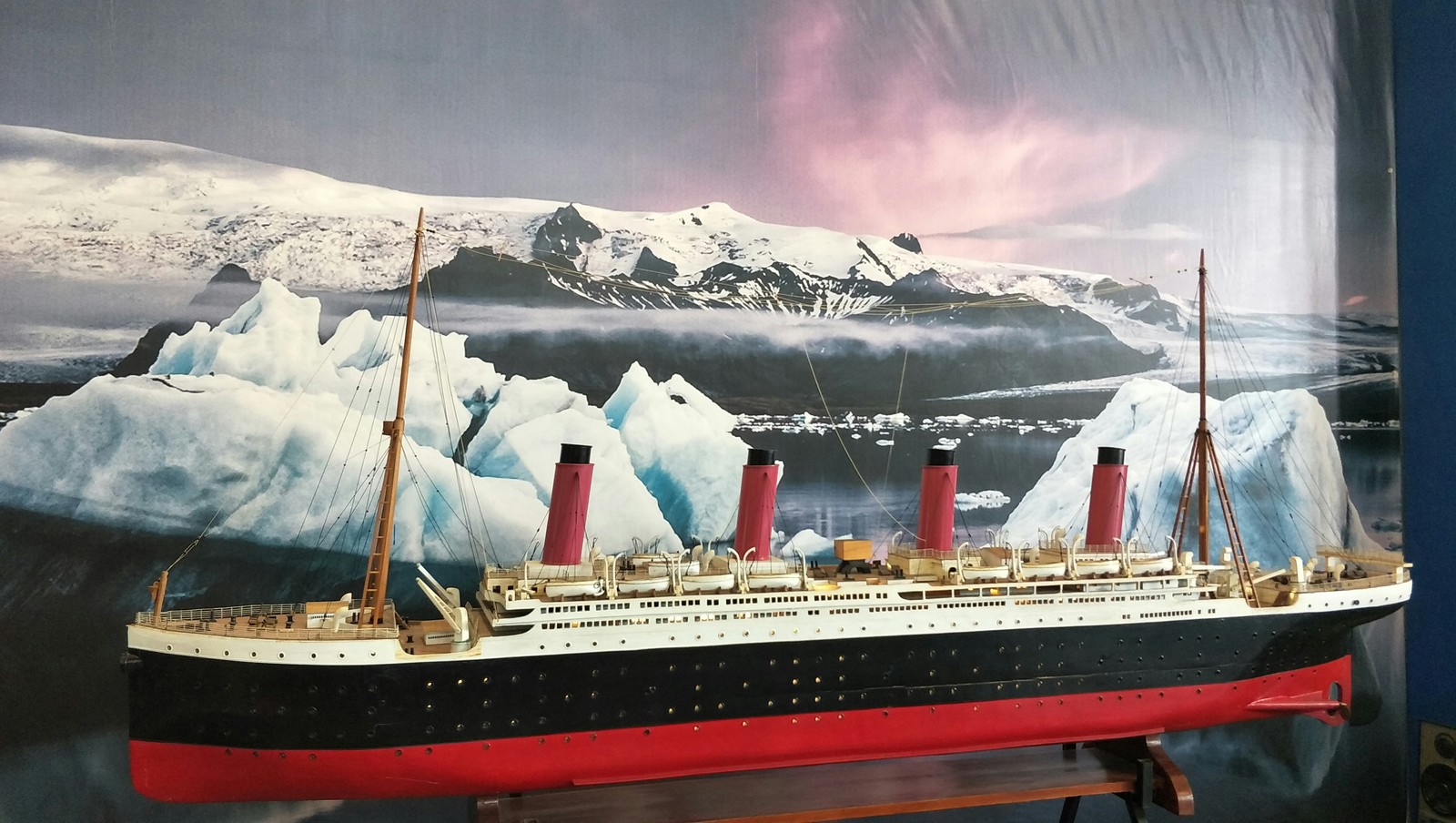
A few years before the Titanic sank, Morgan Robertson wrote a short book called Futility , about a massive "unsinkable" ship called the Titan that hit an iceberg and sank. The tale describes a ship with a similar size and a similar lack of lifeboats to the famous vessel.

8
Dennis the Menace

Image: Mitch Rosen

Two comic strips featuring a character named Dennis the Menace debuted in British and American outlets, respectively, on March 12, 1961—only a few hours apart. However, the two creators did not know each other and had no idea of the other’s work.

9
Jim Lewis and Jim Springer

Image: Vidar Nordli-Mathisen

Identical twin brothers separated at birth , Jim Lewis and Jim Springer, were reunited at age 39 and discovered many coincidences: both married women named Linda , divorced, and then remarried women named Betty. Both had dogs named Toy and drove the same model of car. Both grew up with an adopted brother named Larry and had sons whom they named James Allan.

10
Disney magic

Image: PAN XIAOZHEN

A soon-to-be-married couple, Alex and Donna , were looking through old photos to include in their wedding video. They found one photo of Donna posing on a childhood trip to Disney World in 1980. And in the background, they spotted Alex being pushed in a stroller by his father.

11
Moped meets taxi, twice

Image: Ruslan Bardash

In 1975, 17-year-old Erskine Lawrence Ebbin was struck by a taxi in Bermuda while riding his moped. A year later, his brother Neville , also 17 at the time, was riding the same moped when he was struck by the same taxi —with the same passenger—on the same street.

12
Lightning strike survivor

Image: Felix Mittermeier

Being hit by lightning is an extremely rare occurrence. Park ranger Roy Sullivan was struck not once, but seven times between 1942 and 1977 —and survived them all. The strikes hit him in a fire tower, in his truck, in his yard, while patrolling, and more. His unusual record earned him the nickname "Human Lightning Rod."

Geography Geography 6 min read

Territorial anomalies

There's a country within the US that was created to avoid double taxation

Image: Pin Adventure Map

Ever thought about how the borders in our country were defined ? States that almost became official, U.S. points that are only accessible through Canada's borders, territorial feuds over taxes, and more have constructed the limits of the country we know today. Here are 10 territorial quirks you probably never knew of.

1
Point Roberts, WA: The 49th parallel accident

Image: United States Geological Survey, Public domain, via Wikimedia Commons

Imagine if you had to cross two borders just to get to the market for a gallon of milk. That’s actually a reality for residents of Point Roberts, Washington. That’s because, following the Anglo-American Convention of 1818, the 49th parallel divided Canada and the U.S. In 1846, the line was extended westward and then officially recognized by the International Boundary Commission in 1925.

However, a tiny tip of the Tsawwassen Peninsula poked out just below that line. Since then, the locals have lived in a boundary quirk. To get to the rest of Washington State by land, they must drive through Canada, show their passports, and do it all over again on the way back.

2
Statue of Liberty: Common misconception

Image: Mohamed Osama

If you want to start a friendly argument at a dinner party, ask whether the Statue of Liberty lives in New York or New Jersey. The funny thing is, both answers are technically right . While the statue physically sits in the waters of the Garden State, Liberty Island is legally an exclave of New York. This dates back to a 1664 land grant by the Duke of York in a document so vague and confusing that it took a 1834 Compact between the two states to settle the deal. New Jersey gets the water and the submerged lands, but New York keeps the monument.

However, the Federal Government actually manages the site through the National Park Service (NPS), providing security and maintenance.

3
The State of Franklin: Failed 14th state

Image: Bennett1203, CC BY-SA 4.0, via Wikimedia Commons

If you think Tennessee was the 14th state to join the Union, there’s a catch. Before Tennessee, there was Franklin. In 1874, three counties in North Carolina felt neglected by their government and decided to strike out on their own . They even elected a governor, John Sevier, and printed their own money. They came just two votes short of being recognized by Congress as a formal state. Eventually, things got heated, and North Carolina sent troops, leading to a small civil war between the locals. By 1879, the dream of Franklin was dead and buried, and the territory became part of Tennessee.

4
Kentucky Bend

Image: Brian Stansberry, CC BY 4.0, via Wikimedia Commons

If you look closely at a map, there’s a piece of Kentucky that looks like it doesn’t belong. That’s the Kentucky Bend, also called the New Madrid Bend, a tiny peninsula in Fulton County that is almost completely separated from the rest of the Bluegrass State . The strange situation was the consequence of the massive series of earthquakes that took place in that area between 1811 and 1812, which were so violent they famously caused the Mississippi River to flow backwards for several hours. When the dust settled, the river had carved a new path that looped around this small patch of land, surrounded by Missouri and Tennessee instead of Kentucky. The 9 residents living there today go through Tennessee just to get to their home state.

5
The State of Deseret: The empire that almost was

Image: Carl Radefeld (cartographer); Joseph Meyer (publisher), Public domain, via Wikimedia Commons

Imagine a state so big it makes Texas look tiny. That almost happened back in 1894, when Mormon pioneers proposed the State of Deseret. The territory comprised what we now know as Utah, most of Nevada, parts of Arizona and Colorado, and a massive chunk of the California coast, including San Diego.

Had it been formalized, it would have been a powerhouse with its own seaport and total control over the West. However, Washington, D.C. wasn’t so keen on one group having that much territory and power, so they whittled it down, and we ended up having the states we know today.

6
The lawless "No Man's Land"

Image: Steve Shook from Moscow, Idaho, USA, CC BY 2.0, via Wikimedia Commons

Have you ever wondered what happens when two governments simply give up on a piece of land? Between 1806 and 1821, there was a strip of land in what is now western Louisiana that was, literally, No Man’s Land. Neither the U.S. nor Spain, which owned part of the territory, could agree on the border, so they declared it "Neutral Ground" to avoid armed conflicts . The plan backfired as, with no laws to contain it, it quickly became a favorite for the outlaws in the West —meaning deserters and bandits hiding there were legally untouchable. The conflict was resolved by the 1819 Adams-Onis Treaty, which officially set the Sabine River as the legal boundary.

7
The Republic of the Indian Stream

Image: Jon Platek, CC BY-SA 3.0, via Wikimedia Commons

In the early 1830s, people living in a small area between New Hampshire and Quebec were fed up, and in this case, taxes were the problem. Both Canada and the US were trying to collect taxes, and nobody likes being double-billed . In 1832, the residents essentially said "neither of them can tax us" and formed their own country called the Republic of the Indian Stream. They had their own constitution and Capitol for four years, until 1836, when the militia marched on the disputed territory to reclaim the land. It wasn’t until 1842, when the land dispute and the double-taxation was definitively resolved by the Webster–Ashburton Treaty, which assigned the land to New Hampshire.

8
The Northwest Angle: Mapping mistake of 1783

Image: Lorie Shaull, CC BY-SA 4.0, via Wikimedia Commons

When the Treaty of Paris was signed in 1783 to end the Revolutionary War, the mapmakers used a chart that was flat-out wrong. They thought the Mississippi River started much further north than it actually did. Because of that mistake, a piece of Minnesota got cut off from the rest of the country . To this day, the "Northwest Angle" is the only place in the lower 48 states north of the 49th parallel. Much like Point Roberts, you have to cross a massive lake or drive through Canada just to visit it.

9
The District of Columbia’s "lost" corner

Image: Tim Mossholder

If you look at a map of D.C., you’ll notice it’s missing a chunk; it’s not a perfect square as it was originally intended. Originally, the capital was a perfect ten-mile square diamond , taking land from both Maryland and Virginia. But by 1846, things got tense. Residents in the Virginia portion, which included Alexandria and Arlington, were worried the federal government would abolish slavery in the District, which was the backbone of their economy. They successfully petitioned to have Virginia "take back" that portion of the land and subsequently changed the shape of the national capital forever.

10
UN Headquarters: International territory

Image: LPulecio-WMF, CC BY 4.0, via Wikimedia Commons

If you want to feel international, go to the United Nations Headquarters on the East River in midtown Manhattan, New York. Once you cross that gate onto the 18-acre site, you are technically leaving the United States. You don’t need to show your passport, but that’s international territory, which means it has its own laws , its own security force, and even its own postal service. It is a legal hole in the middle of New York City.

Explore more American facts

Choose your favorite category!

General
General

As American as apple pie—the very best America has to offer!

Culture
Culture

Delve into the astounding richness of American lore.

Geography
Geography

Hop in and explore vast and diverse American landscapes.

History
History

Discover the key moments that shaped the United States.