Geography Geography 4 min read

Go with the flow

10 great rivers that carved American history
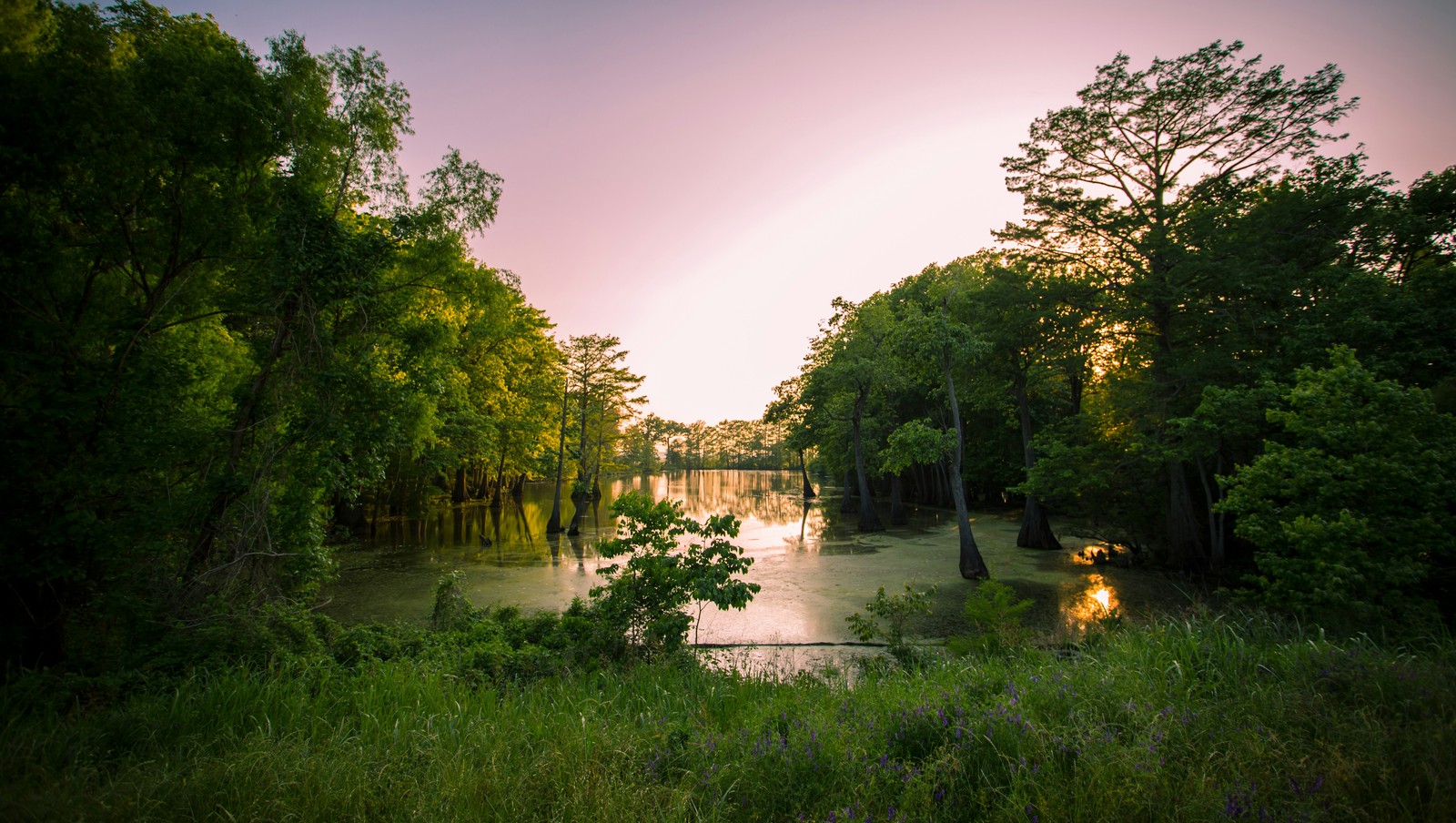
Image: Jp Valery

From tales of hidden treasure to the birth of major cities, America’s rivers are much more than waterways—they’re living history. These 10 rivers have shaped culture, commerce, and legend across the nation, carrying stories as deep as their currents.

1
Mississippi River
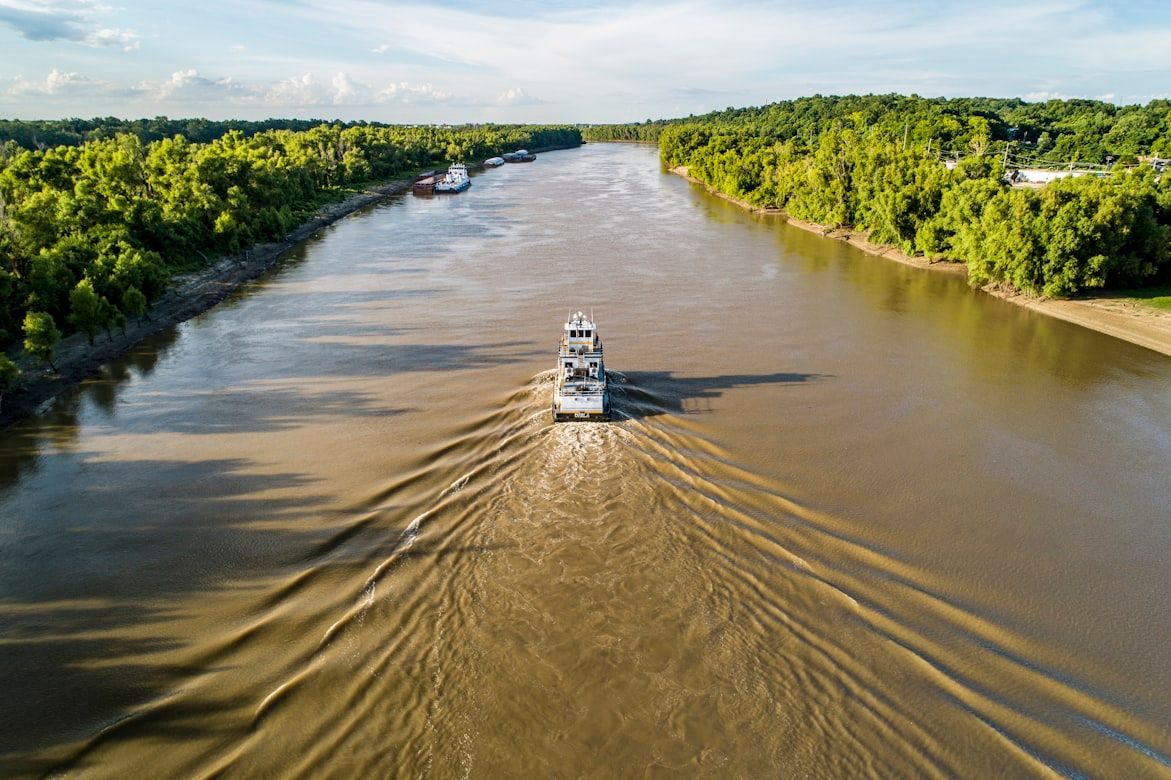
Image: Justin Wilkens

Beloved by blues musicians and immortalized by Mark Twain, the Mississippi has been central to exploration, trade, and American identity. The name comes from the Ojibwe/Anishinaabe word misi‑ziibi, meaning "Great River" or "Father of Waters."

Flowing some 2,320 miles, its watershed drains roughly 41% of the continental U.S., and its vast system remains critical for both commerce and agriculture.

2
Missouri River
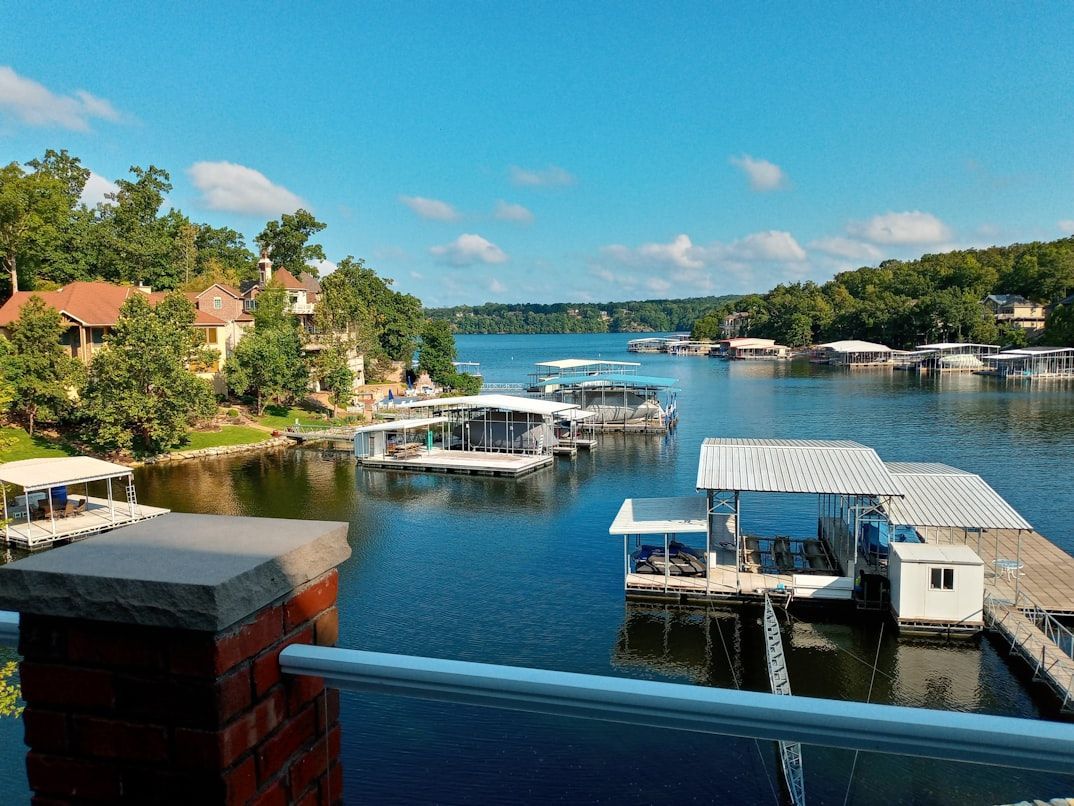
Image: Jayden Herr

The name of the Missouri River comes from the Algonquian term ouemessourita, meaning "people with dugout canoes."

A crucial highway for early explorers like Lewis and Clark, as well as later settlers, this 2,300-mile-long river was once home to Native tribes such as the Missouria. Today, it remains a vital part of regional agriculture and river transport.

3
Hudson River
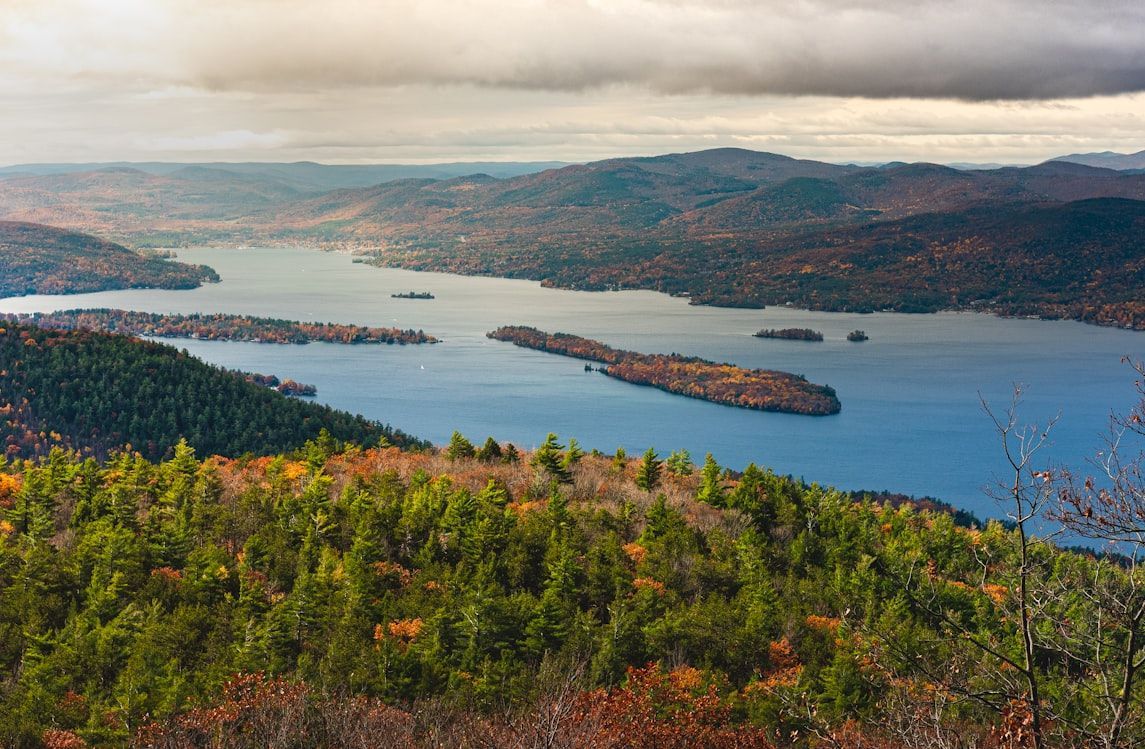
Image: Harry Gillen

Originally called Muh-he-kun-ne-tuk ("waters that are never still") by the Mohicans, the river was later renamed after Henry Hudson, who explored it in 1609 for the Dutch East India Company.

The Hudson Valley later grew into both an economic and cultural hub, inspiring the Hudson River School of painters and playing a strategic role during the American Revolution.

4
Colorado River
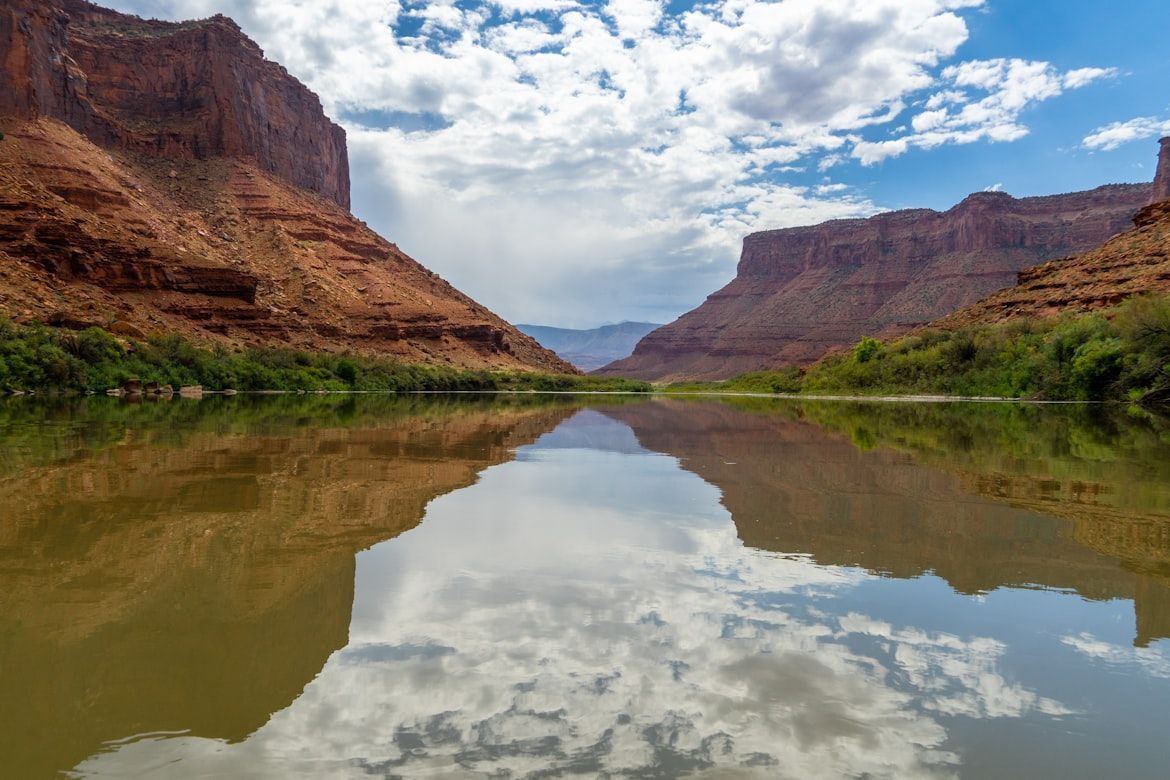
Image: Mike Newbry

The name Colorado comes from Spanish, meaning "reddish," a reference to the red silt once carried by the river. Before 1921, its upper course was known as the Grand River, until Congress renamed it to reflect the state of Colorado.

Over millions of years, the Colorado River carved the Grand Canyon, one of the world’s most dramatic natural landscapes. Today, it supports irrigation across seven U.S. states and northern Mexico and generates hydroelectric power through major dams such as Hoover Dam and Glen Canyon Dam.

5
Rio Grande
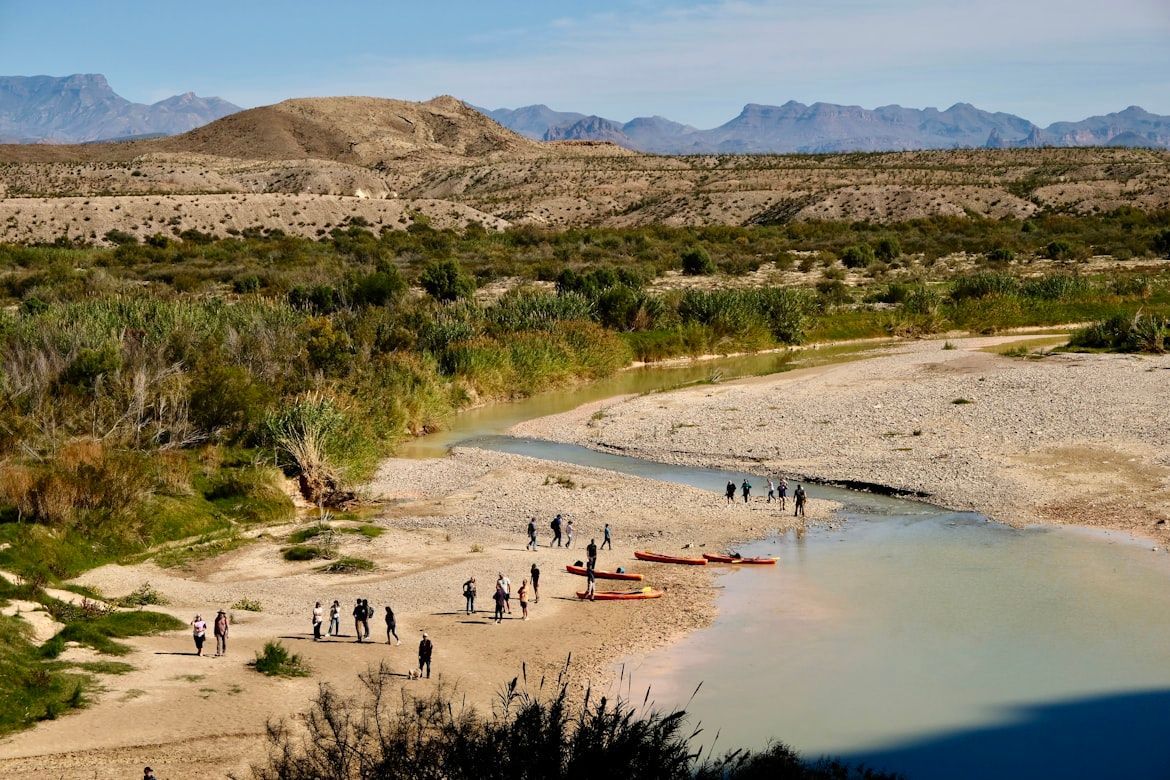
Image: Sara Cottle

The name Rio Grande means "Big River" in Spanish. Serving as the border between the U.S. (Texas) and Mexico, it has defined geopolitical boundaries since the end of the Mexican-American War in 1848.

Historically, the Rio Grande supported Indigenous communities such as the Pueblo and Apache peoples, and later Spanish missions and settlements. Today, it serves as a lifeline for agriculture, cities, and wildlife habitats across the arid regions of Texas, New Mexico, and northern Mexico along its 1,896-mile course.

6
Ohio River
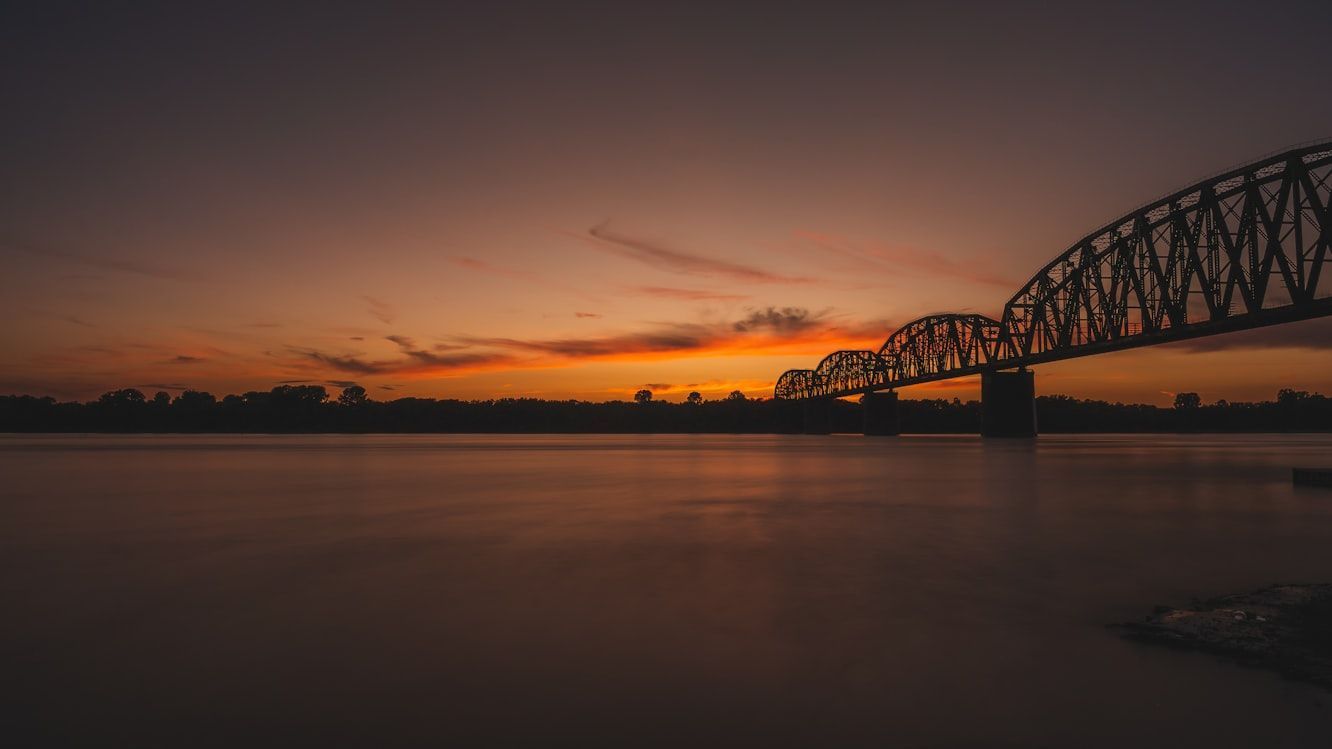
Image: Joshua Canter

"Ohio" comes from the Seneca word ohi:yo’ , meaning "good river" or "large creek." Formed by the confluence of the Allegheny and Monongahela Rivers at Pittsburgh, it flows for about 981 miles through six states before joining the Mississippi River.

In early America, the Ohio was a key route for westward expansion and trade. Settlements along its banks grew into important commercial and industrial centers, including cities like Cincinnati, Louisville, and Pittsburgh, and its fertile floodplains supported agriculture that fueled the growing nation.

7
Columbia River
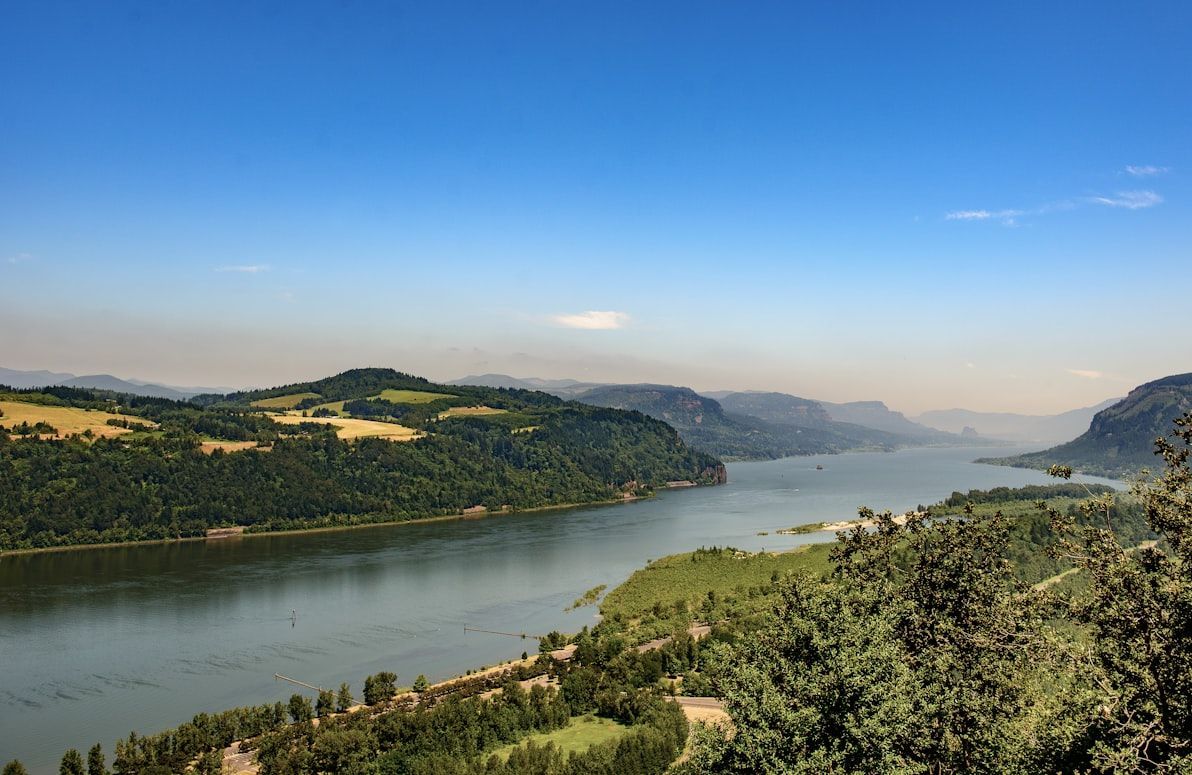
Image: Stephen Walker

The Columbia River was named after the Columbia Rediviva , the ship captained by Robert Gray , which itself was named in honor of Christopher Columbus. For thousands of years, the river served as a vital trade network for numerous Native American tribes, and later became central to the North American fur trade.

Its fertile valleys supported settlements and agricultural development throughout the Pacific Northwest. Today, the Columbia is a major source of hydroelectric power, with major dams such as Grand Coulee and Bonneville supplying electricity to millions of people.

8
Potomac River
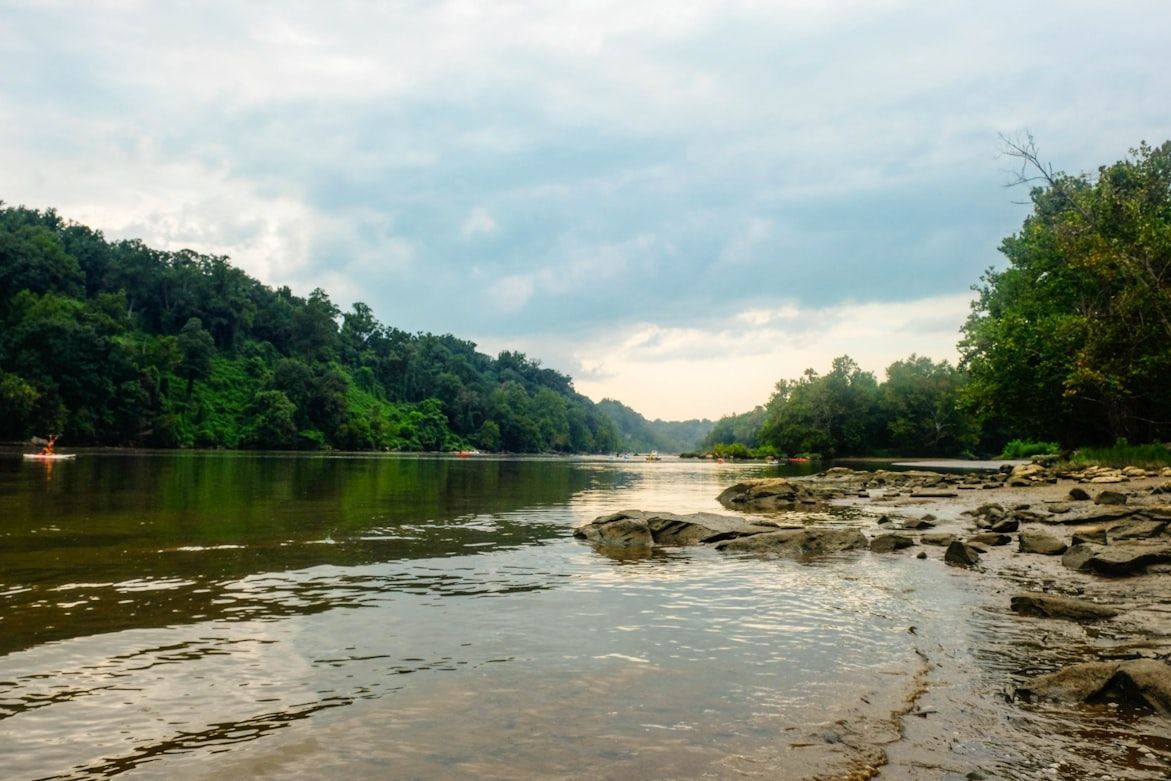
Image: Sara Cottle

The name "Potomac" comes from a Native Algonquian word, likely Patawomeck (probably Piscataway), meaning "river of swans." The river flows past Washington, D.C., and George Washington’s Mount Vernon estate overlooks it.

During the colonial era and the Civil War, it was a crucial transport route, and its watershed continues to hold historical, cultural, and political significance today.

9
Delaware River
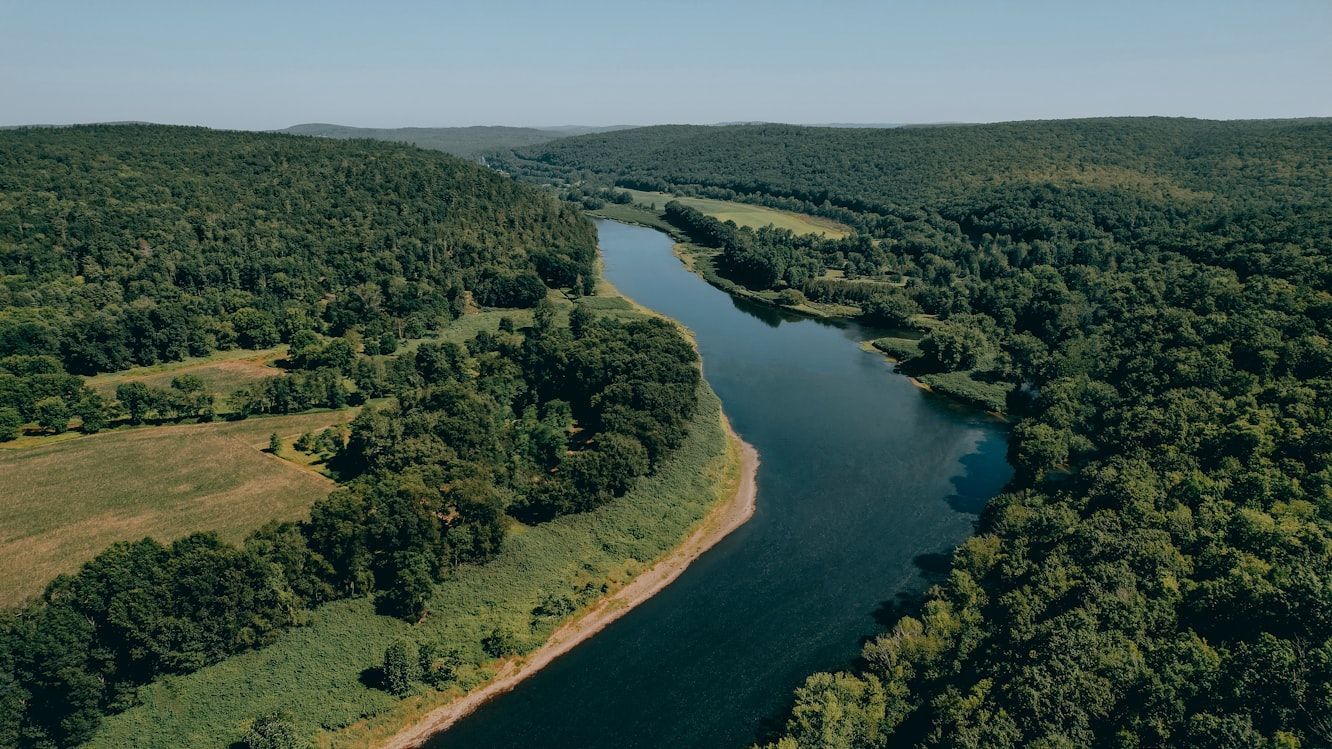
Image: Clay Banks

Named after Lord De La Warr (Thomas West), an English nobleman and colonial governor, the Delaware River is best known for George Washington’s daring 1776 crossing, which surprised Hessian troops in Trenton and provided a crucial morale boost for the Continental Army during the Revolutionary War.

Over the years, the river has remained vital for trade and industry, shaping the mid-Atlantic economy and supporting major ports in New Jersey, Pennsylvania, and Delaware.

10
Susquehanna River
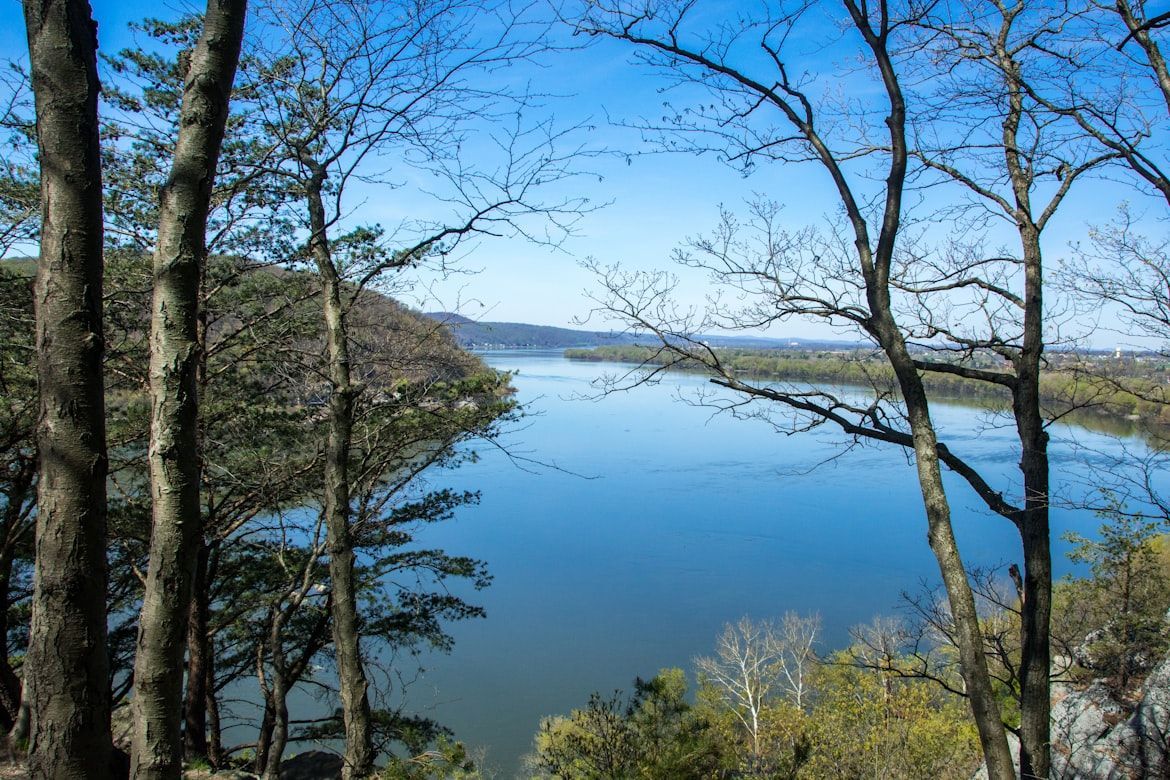
Image: Jennifer Wick

The name "Susquehanna" likely comes from the Lenape word siskëwahane, meaning "Muddy River" (though other translations, such as "Oyster River," have been proposed). One of the oldest river systems in North America, the Susquehanna stretches about 444 miles from New York through Pennsylvania to the Chesapeake Bay in Maryland.

It supported Indigenous communities such as the Susquehannock, and early colonial settlements relied on it for transport, fishing, and trade. Its fertile valley later powered mills, contributed to the region’s coal and lumber industries, and played a key role in shaping the development of the Mid-Atlantic.
Geography Geography 4 min read

Behind tall faces

Mount Rushmore hides many secrets. Did you know all of these?

Image: Jake Leonard

What famous woman’s face almost became the fifth face on Mount Rushmore? Did the sculptor Gutzon Borglum really intend to just carve out the heads? Why is the mount named that, and not Borglum? The answers to these questions are some lesser-known facts about one of the most famous landmarks and sights in our country. Let’s dive into these stories!

1
The original plan included full-body figures

Image: Thomas Shockey

Mount Rushmore was supposed to be even more colossal than it already is. Sculptor Gutzon Borglum envisioned the four presidents carved from the waist up .

He even made plaster models showing Abraham Lincoln's coat folds and Teddy Roosevelt’s hand clutching his lapel. But as costs went up, Congress said: "heads only, please."

2
Charles Rushmore was just a curious New Yorker

Image: Maarten van den Heuvel

Back in 1925, when the mount was about to be carved into a monument, Charles Rushmore wrote a letter explaining why the peak bore his name. He recalled that in the 1880s he was a young New Yorker working in the area, and fell fond of that particular granite peak .

When he asked the locals about it, they informed him that it had no name, but that if he wished so, they would just start calling it Rushmore Peak, or Mount Rushmore, or the likes. Years later, that very name had been inscribed in the public domain to designate the peak.

3
Yes, there’s a hidden room behind Lincoln’s head

Image: Laura Nyhuis

Behind Abraham Lincoln’s hairline lies a hidden chamber, part of Borglum’s lofty idea for a "Hall of Records." This room was meant to house foundational American documents like the Constitution or the Declaration of Independence.

Instead of that, in 1998, a titanium box was placed inside, filled with copies of important documents and biographies, as a time capsule to preserve the treasure of knowledge for future generations.

4
Thomas Jefferson was moved

Image: Dave Baraloto

Jefferson was originally supposed to go to Washington’s right, but after 18 months of chiseling , the granite betrayed them. Cracks and flaws made the site unworkable.

Borglum made the painful decision to blast Jefferson’s half-formed face clean off and start anew on Washington’s left.

5
The mountain was almost a monument to western heroes

Image: Timberly Hawkins

Before presidents took over, the mountain was pitched as a giant tribute to the Wild West . South Dakota historian Doane Robinson wanted to see frontier legends like Lewis & Clark carved into the Black Hills.

But when Borglum came aboard, he had a grander (and more politically bankable) idea: four presidents to symbolize national unity and expansion.

6
A woman’s face was almost added

Image: Tom Fournier

In the 1930s, there was serious talk of honoring Susan B. Anthony alongside the Founding Fathers, as a nod to the women’s suffrage movement.

Borglum wasn’t opposed to the idea, but Congress quickly nixed it, stating that only U.S. presidents could be included.

7
The workers were mostly local miners and loggers

Image: Pixabay

They were neither sculptors nor artists. Most of the workforce came from nearby Keystone, South Dakota: miners, loggers, and hard-up laborers looking for work during the Great Depression.

Borglum trained them himself. There were no safety harnesses, and yet, remarkably, no one died on the job.

8
Dynamite did 90% of the work

Image: Alexander Paramonov

To carve the faces of Washington, Jefferson, Roosevelt, and Lincoln, workers used carefully timed dynamite blasts to remove over 450,000 tons of rock. They got so precise, they could blast within inches of where the final surface would be.

The last details, like wrinkles, pupils, or Roosevelt’s glasses, were done with jackhammers and chisels.

9
The noses are disproportionate

Image: Dudubangbang Travel

Standing in front of the mountain, the faces seem alright. But that’s a trick of perspective. Each presidential nose is a whopping 20 feet long .

If the sculptures had included full bodies as planned, each figure would have stood 465 feet tall. That’s taller than the Statue of Liberty and most downtown skyscrapers.

10
Teddy Roosevelt was the most controversial pick

Image: Dudubangbang Travel

Washington, of course. Jefferson, made sense. Lincoln, sure. And Teddy? Some critics raised their eyebrows at Borglum’s fourth choice. Roosevelt had only recently passed away in 1919, and many questioned whether he'd stood the test of time.

But Borglum defended the decision Roosevelt’s role in breaking up monopolies, conserving national parks, and engineering the Panama Canal. Plus, Borglum had met him personally and was a fan.

11
It was supposed to have inscriptions

Image: Dan Pick

Borglum had grander plans than just four giant heads. He wanted to carve a massive inscription next to them, a timeline of America’s most important milestones , chiseled straight into the mountain. In time, the idea was scrapped for practical and aesthetic reasons.

12
The visionary died before completion

Image: Lisa Reichenstein

Gutzon Borglum, the visionary behind it all, didn’t live to see his masterpiece finished. He died in March 1941, just as the construction was reaching its end. His son, Lincoln Borglum (yes, named after that Lincoln), took over the project.

Still, with WWII drawing resources elsewhere, funding was slashed, and Lincoln had to wrap things up quickly . Some features, like Lincoln’s ear, were never fully detailed.

History History 4 min read

Even biz wizards fail sometimes

What brought Sears down? 10 mistakes from giant companies

Image: Melinda Gimpel

As Dr. House once said, mistakes are as serious as the results they cause. And, in the case of big companies, those mistakes can be just as big, often measured in terms of lost jobs and money. From poor marketing decisions to small mistakes that cause multi-million dollar losses, the types of blunders made by some of these companies and individuals are nothing short of breathtaking— and not in a good way. Take a look at the following 10 stories of failure. Did you know any of these?

1
$125 million for a Grade-school math error

Image: Aaron Lefler

Imagine losing a hugely expensive spacecraft due to a simple mix-up between English and metric measurements . That is exactly what happened to NASA in 1999 when a Mars orbiter designed by Lockheed Martin was lost in space.

The confusion caused a malfunction on the $125 million craft, resulting in the probe’s loss. Although it was unusual for Lockheed to use English measurements for a NASA design (since NASA had stipulated using metric measurements for many years), there were still several instances where the error should have been caught but wasn’t.

2
Toys ‘R’ Us blunder

Image: Taylor Heery

If you think an action figure of a drug dealer isn’t the best idea for a toy store , you’re not alone. Yet, for some reason, Toys "R" Us decided otherwise in October 2014, possibly hoping to cash in on the massive success of the Breaking Bad TV series.

Unsurprisingly, the giant toy retailer was forced to pull from its shelves four collectible dolls based on characters from the AMC hit show, each doll featuring a detachable sack of cash and a bag of meth.

3
Apple Maps' rocky beginnings

Image: CardMapr.nl

When Apple decided to launch its own map application on iOS devices after a conflict with Google in 2012, users quickly realized that the Apple app was not nearly as launch-ready as it should have been .

Locations were mislabeled, roads were missing, and it occasionally steered people in entirely the wrong direction. The problem was eventually, though largely, resolved, but it was an embarrassing misstep for a company known for never launching a product before it was as near-perfect as possible.

4
Bank of America debit card fee

Image: Ali Mkumbwa

Back in 2011, when the backlash against the banking industry had not yet reached its boiling point, Bank of America announced it would charge customers $5 per month to use their debit cards .

It was a bad business decision. More than 300,000 people signed an online petition, and Fox Business Network’s Gerri Willis cut up her debit card on air. The bank pointed to federal regulations as the reason for the charge but ultimately capitulated to consumer demand after a month before the fees went into effect.

5
$33 airline tickets from Toronto to Cyprus

Image: Miguel Ángel Sanz

If buying a business class ticket regularly priced at $2,558 for just $33 sounds too good to be true, it probably is. Except in 2006, when an Alitalia employee accidentally forgot to input two extra zeros when pricing business-class tickets from Toronto to Cyprus.

Due to the exchange rate on that day and the blunder, hundreds of buyers managed to snag fares for just $33. The airline honored those deals, accepting the heavily discounted price for the 509 people who purchased tickets before the error was detected.

6
A $70 million comma

Image: Nattipat Vesvarute

As the folks at NASA and Alitalia have shown us, small errors can lead to costly mistakes. The following blunder comes courtesy of Lockheed Martin , which issued a contract to a customer with a missing comma in the sale price .

The astute customer held the aerospace company to the contract, costing Lockheed Martin $70 million for a C-130J Hercules aircraft in June 1999.

7
Sears misses the ship

Image: Estefania Cortes

A retail giant that faced a situation similar to the one Kodak faced—embrace the new and unknown or cling to the old, successful recipe—Sears sold everything from socks to tires via mail order, shipping across the U.S.

Choosing to stick with the old method, the company ended its catalog and delivery business in 1993 . In 1994, Amazon was founded , filling the business void that Sears had just created. The rest is history.

8
Passing on Microsoft

Image: Jaime Marrero

$60 million might seem like a lot of money to us regular folks, but for someone with very deep pockets like Texas businessman and two-time U.S. presidential candidate Ross Perot, it wasn’t all that much.

In 1979, he was offered the chance to buy Microsoft for that sum. However, his final offer to the tech company was just $15 million, and as a result, the Texan missed out on the opportunity to own what would become one of the biggest companies in the world .

9
Blackberry sticks with the old

Image: Thai Nguyen

Another case of a brand sticking with the old instead of embracing the new, BlackBerry was all the rage at the start of the 21st century— until Steve Jobs came along with the Apple iPhone .

While BlackBerry Messenger was extremely popular, with over 80 million users worldwide, the device lacked the new touchscreen functionality and sleek design of the Apple product. From being a market leader, BlackBerry’s market share plummeted to 0.2% by 2016.

10
RadioShack’s downfall

Image: Jelleke Vanooteghem

Not so long ago, RadioShack was a familiar presence on the streets and the go-to place for buying batteries and electronics. But it was that same brick-and-mortar presence, coupled with a reluctance to embrace e-commerce , that ultimately led to its demise .

Eventually, poor profit margins on what they could sell, combined with a loan they couldn’t repay, brought down what was once the go-to place for electronics.

Explore more American facts

Choose your favorite category!

General
General

As American as apple pie—the very best America has to offer!

Culture
Culture

Delve into the astounding richness of American lore.

Geography
Geography

Hop in and explore vast and diverse American landscapes.

History
History

Discover the key moments that shaped the United States.