Lesser-known tales

California's Grizzly is extinct? 10 stories behind American symbols
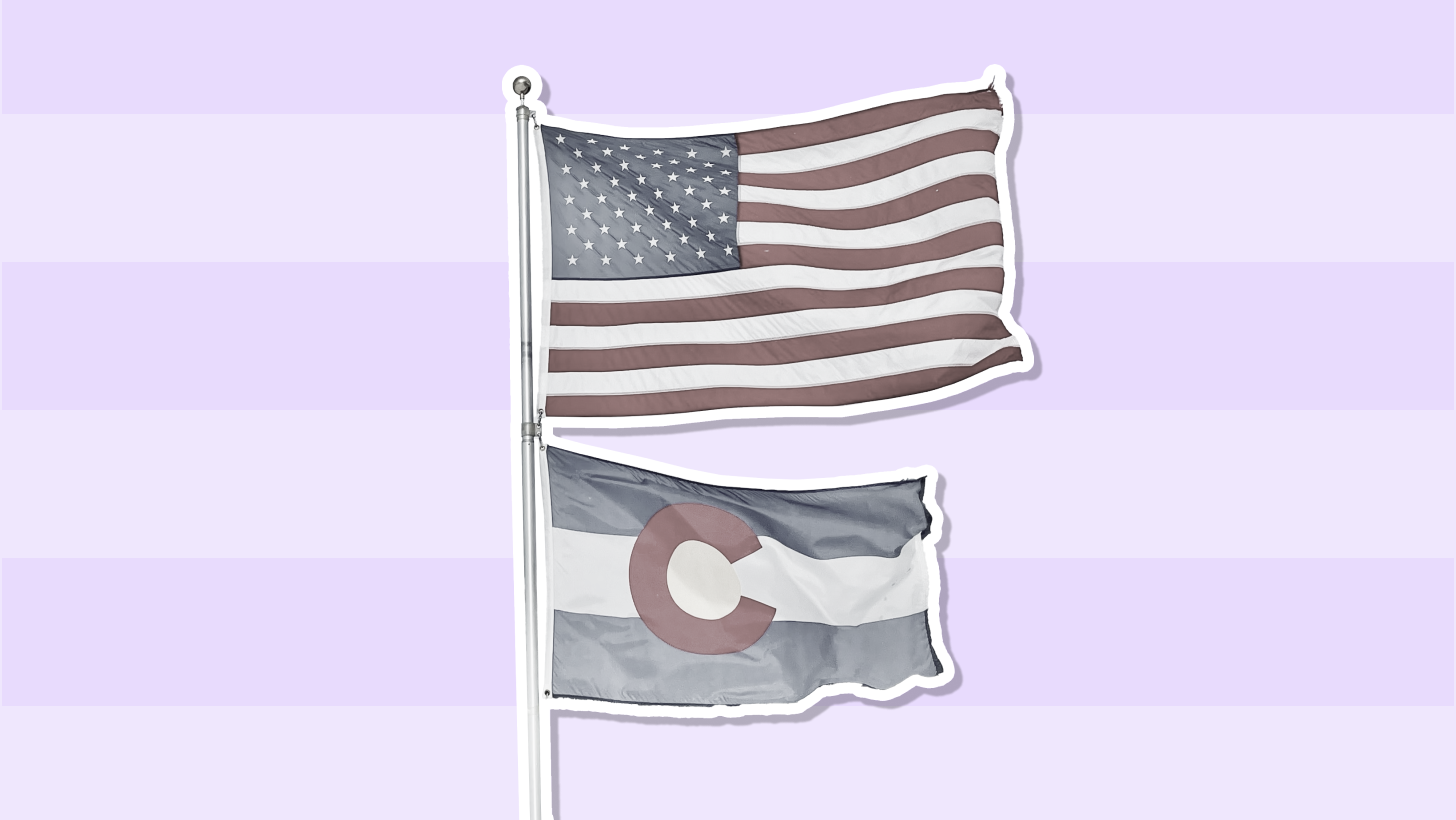
Image: Fr. Daniel Ciucci

It’s one thing to be acquainted with American symbols, but it’s another to learn—years later—the unexpected, hidden stories behind them! Did you know that California’s subspecies of grizzly bear (yes, the one on the flag) has been extinct for over a hundred years ? Or that Texas’s state dish was allegedly invented by prisoners? Maybe you know some of the facts listed here—but we’re sure you don’t know them all!

1
California’s state animal is extinct

Image: Levi Meir Clancy

The California grizzly bear adorns the state flag, but you won’t find one in the wild anymore. Once abundant throughout the region, this was a subspecies of Grizzly also known as "California golden bear."

By the 1920s, this majestic animal had disappeared from the wild, but it has remained a powerful symbol of the state, featured on the flag since the Bear Flag Republic’s short-lived attempt to break from Mexico in 1846.

2
The American flag was (probably) designed by a teenager

Image: Sharefaith

In 1958, around the time Alaska and Hawaii were being added to the Union, an Ohio high schooler named Robert Heft stitched a 50-star flag for a class project . His teacher gave it a B–, scoffing that the brand-new design "lacked imagination."

However, not long after, Heft’s design was selected from thousands of submissions sent to President Eisenhower to determine the official flag. That teacher later changed the grade to an A.

3
Texas’s state dish may have been invented by prisoners

Image: Zak Chapman

Chili con carne is the Lone Star State’s official dish. While its exact origins are uncertain, some say that Texan prisoners in the 1800s were the minds who concocted the dish. According to this version, the stew—made with beans, thin strips of beef, and chili peppers—was the local equivalent of bread and water: a kind of Texan gruel .

4
Alabama's state nut was once a life-saver

Image: Antoni Shkraba

Pecans aren’t just Alabama’s official nut—they’re also symbols of resilience from the Depression era. When cotton crops failed in the 1930s, families turned to harvesting pecans to survive. The nuts became a form of currency , traded for goods, and even used to make mortgage payments. Today, Alabama produces over 30 million pounds annually.

5
The Star-Spangled Banner was once a drinking song

Image: JosephHershMedia

You may know that America’s anthem has a boozy British past. The melody originated as "To Anacreon in Heaven," a raucous 18th-century tavern tune sung by a London gentlemen’s club. A relative of Francis Scott Key noticed that his poem fit perfectly with the melody—and thus, the anthem as we know it was born.

6
The Great Seal almost had a turkey

Image: Roman Manshin

Can you imagine if the Great Seal of the United States featured not a mighty eagle, but a turkey? It was none other than Benjamin Franklin who proposed the turkey as America’s symbol, calling it " a bird of courage ."

Instead, he dismissed the bald eagle as "a lazy scavenger." Congress ultimately overruled him, but Franklin did have a point: turkeys are known to be fiercely protective.

7
The flag’s colors weren’t meant to mean anything—at first

Image: Jon Tyson

Red, white, and blue may seem deeply symbolic today, but in 1775, the Continental Navy chose them simply to match the British flag’s palette. A rebellious decision, if you think about it. The "valor, purity, justice" meanings were tacked on later by poets and politicians.

8
Is South Carolina’s flag really what it seems?

Image: Jaden Dessureault

South Carolina’s flag features a blue background with a palmetto tree and what appears to be a crescent moon. But there are stories that sustain that the silver symbol isn’t a moon at all —it’s a gorget, the curved neck armor worn by 18th-century soldiers. Historians have searched for records to back this theory, but no nods to gorgets have officially been found.

9
Colorado’s flag was once a confusing disaster

Image: Olga Kovalski

When Colorado unveiled its bold "C" design in 1911, it forgot one crucial detail: specifying which shade of blue to use for the background. For 26 chaotic years, flags fluttered in everything from pale sky blue to deep navy—until officials finally standardized the hue in 1937.

10
One of Illinois’ state symbols was chosen by… kids

Image: Peter Schad

Illinois’ state snack was chosen by the most powerful lobbyists of all: children. When a group of fourth graders learned their state produced a large portion of America’s popcorn , they launched a 2003 campaign so persuasive that lawmakers had no choice but to make it official.
What were you thinking?

Appalling misconceptions: Facts about the US that many people get wrong

Image: Mick Haupt

Some people believe that the Liberty Bell cracked upon its first toll. That would speak of a very poorly built bell, don’t you think? Others believe that the Declaration of Independence was signed by all 56 delegates on the same day. Another common misconception! And can you believe that some people thought the faces on Mount Rushmore were random profiles carved naturally by some wind? Let’s look into myths about the US, ranging from understandable to appalling, and see if you fell for any of these!

1
There are 52 states in the U.S.

Image: Chris Lawton

Remember that Friends episode where the characters were racing to write down as many state names as they could? When they asked Joey how many he’d gotten, he leaned back and proudly announced: "Fifty-six."

While not many Americans would share Joey’s confusion, believe it or not, some people are lost about the exact number . Many, when asked, reply that the country contains 52 states! Nope, it’s still just 50. People often mistakenly include Puerto Rico and Washington, D.C. as states.

2
The Declaration of Independence was signed by everyone on July 4th, 1776

Image: Ryan Wallace

You’ve seen the paintings—quills raised, scroll unfurled, patriotic ambiance in full bloom. You probably pictured the famous document (scribbled on dramatically aged paper) being passed around the table and filled with names.

But reality was less cinematic . While July 4, 1776, is when the Declaration was adopted, only a few signatures made it on the page that day. Most of the 56 signers added their names over the course of weeks, and some not until August... or even later!

3
The Founding Fathers were all old men with powdered wigs

Image: The New York Public Library

You’d think the Founding Fathers were all 60-something aristocrats in wigs , sitting by candlelight. But many were in their twenties and thirties—Alexander Hamilton was just 21, and James Madison 25. Wigs weren’t as common as Hollywood would have you believe. Most preferred their natural hair, styled with a bit of 18th-century flair.

4
The U.S. Constitution was signed on July 4th, 1776

Image: Tara Winstead

It’s easy to jumble up America’s important dates , but this one’s a whopper. July 4th marks the adoption of the Declaration of Independence, not the Constitution. The Constitution came along in 1787, over a decade later, and was signed on September 17.

5
The Statue of Liberty belongs to New Jersey

Image: Avi Werde

You’d be right to observe that Lady Liberty is surrounded by Jersey’s waters. But there’s a caveat: Liberty Island itself is federal property administered by the National Park Service. And while the island is closer to the shores of New Jersey, it remains under the sovereignty of New York State .

6
Benjamin Franklin was a U.S. president

Image: Adam Nir

No! He may have earned his place on the $100 bill, but it wasn’t for being the POTUS. He will always remain, however, one of the most recognizable Founding Fathers . He flew kites in storms, and he founded institutions like it were a hobby. He was a diplomat, inventor, philosopher... basically everything but president.

7
The Liberty Bell cracked on the first ring

Image: Joe Richmond

Not exactly. But it sounds poetic, right? A symbol of freedom breaking as it sounded its first call. Except... not true. The Liberty Bell didn’t crack on its first ring. It cracked years after its arrival and was recast twice before the famous fracture, which likely developed in the early 1800s, during a routine toll.

8
The Grand Canyon is visible from the moon

Image: Tim Hart

The Grand Canyon is not visible from the moon. At least not to the naked human eye! Neither is the Great Wall of China, as great as it may be. In fact, no man-made structure or geological feature is visible from the moon with the naked eye.

9
Walt Disney is cryogenically frozen

Image: Steve DiMatteo

Disney was cremated in 1966, and his ashes rest at Forest Lawn Memorial Park in Glendale. No secret cryo-labs under Disneyland. Just a very enduring urban legend. But the myth persists ; some even think he's buried under Disneyland's Pirates of the Caribbean ride.

10
Hawaii is the westernmost state

Image: Roberto Nickson

Alaska is officially considered the westernmost state, even when counting Hawaii. That’s because the Aleutian Islands stretch so far west that some cross the 180th meridian, which is the line that separates the Eastern and Western Hemispheres. And here’s the twist: since those islands wrap around the globe’s edge, they also make Alaska the easternmost state.

11
Hollywood is a city

Image: De'Andre Bush

It might feel like its own world (glamorous, chaotic, full of paparazzi), but Hollywood isn’t its own standalone city. Sure, it has its own sign and red carpet events, which led people around the globe to believe it was independent from L.A., but "Tinseltown" is technically a neighborhood within Los Angeles

12
Mount Rushmore is a natural formation

Image: VERONICA LIVESEY

Finally, the unbelievable one. Some tour guides from Mount Rushmore report that tourists have, indeed, looked them straight in the face and asked about the natural phenomenon that carved those profiles into the mountains. Nope —Gutzon Borglum and his team spent 14 years blasting the four former presidents into the rock.

What were they thinking?

You won’t believe these 10 not-so-great brand names are real

Image: kelisa Bernard

A name is like a business card, and as such, it should be carefully considered. A good brand name is easy to pronounce and remember, clearly communicates what the product or service represents, does not offend, is not an easy target for puns, and sounds appealing. All of these points may seem obvious, but as it turns out, there are always people who think otherwise, throw caution to the wind, and choose names that are bizarre, inadequate, weird, or worse. Listed below, you will find ten examples that fit the bill. Some of these names work. And some don’t. Which ones do you like?

1
Sam and Ella’s

Image: Jason Leung

We get it—you and your significant other built a restaurant and decided to name it after yourselves. Good for you. But if, by any chance, your combined names sound like a food poisoning illness , that might not be the best choice for a restaurant.

The restaurant could have easily been named Ella and Sam’s, to avoid this issue. But maybe, and just maybe, the couple had a twisted sense of humor and decided to go with it and see how it would turn out.

2
ChubbyBrain

Image: Jakub Żerdzicki

What does this name bring to mind? The image of a chubby brain is probably not an appealing one, and it certainly doesn’t convey the idea of a venture capitalist database. Yet, that’s exactly what ChubbyBrain is.

If your business needs funding, this company will analyze its database of venture capitalists, grant providers, and investors and match you up with those who would be most sympathetic to your cause , thus maximizing your chance of successful fundraising. A valuable service, hidden behind a weird name, indeed.

3
Wesabe

Image: Andre Taissin

A word that sounds similar to a Japanese sushi condiment was chosen as the name for this company, founded in 2005 to help users track their spending habits. The idea was a noble one: assist people in getting out of debt and learning how to make wise financial decisions.

But, alas, the company was not able to attract an audience. The name Wesabe was likely intended as a play on "We Save," but it didn’t translate that easily and it ended up being a nonsensical name for a good idea.

4
Cuil

Image: Growtika

There was a time when search engines were more diverse and prevalent than they are today, at least for the general public. Before Google became the giant it is now, Altavista, AskJeeves, Lycos, Yahoo!, and others were the go-to sites for browsing the web.

Cuil was one of those search engines, it boasted the largest search index and the fastest queries . But, for some reason, it shut down in 2010. The name might have played a part in that, as it had no connection to searching and its pronunciation was unclear. Granted, many search engines had equally odd names and still made it. But it certainly didn’t help in Cuil’s case.

5
Boring Business Systems

Image: Rodeo Project Management Software

If your name is also a word, with a meaning attached to it, then it would be wise to consider if associating it with a product or service is a good idea, or not. Named after one of its original executives, Allan D. Boring, this network services and IT support company is unashamed of its namesake. In fact, it embraces it, assuring outsiders that there is "nothing boring" about its features and services.

6
Xobni

Image: Solen Feyissa

One would be hard-pressed to link this name to a product or service, that is, unless you were looking at it reflected in a mirror because Xobni is "Inbox" spelled backward. Yes, this company made email-related products , until it shut down in 2014.

Besides the unoriginal idea of simply spelling your product name backward, it doesn’t help if the resulting word sounds odd and unrelatable.

7
Lawdingo

Image: Tingey Injury Law Firm

The idea of having a Saul Goodman-type lawyer might be appealing to some, but for the most part, people believe that the law is serious business and should be treated as such. Lawdingo is a web service that provides affordable legal advice for both individuals and businesses.

While the idea behind it seems great, the word "dingo" can hardly be associated with the kind of characteristics one searches for in a law firm, like quality and professionalism.

8
Qwikster

Image: Phil Hearing

When choosing a literal brand name, it’s generally a good practice to select one that clearly associates with the product or service offered. Qwikster was a company launched by Netflix in 2011 to focus on the DVD-by-mail service branch of the business.

According to the people in charge, the name Qwikster was chosen because it referred to quick delivery. Or at least that is what they thought. While the name does have a rhythmic quality, it doesn’t really connect to the service it was meant to represent.

9
AmericInn Hotel

Image: Marten Bjork

Some brands thrive despite having less-than-ideal names. AmericInn Hotel is a mid-priced hotel franchise consisting of 240 locations across the U.S. While AmericInn has done arguably well for itself, one can only wonder how much better it might have performed with a different name.

The problem isn't the name itself, but its awkward spelling. Any brand thinking about purposefully misspelling common words, should proceed with extreme caution and only use this resource if it truly makes business sense.

10
Backrub

Image: Greg Bulla

As strange as Google might have sounded at first, BackRub would have sounded even weirder had it gained the same level of recognition. Founders Larry Page and Sergey Brin named their first search engine BackRub in 1996. A year later, BackRub became too large to operate on the Stanford University servers that hosted the website, prompting them to register the now-familiar domain name Google.com.

While using the expression "rub it" in the same way we use "google it" today might have been a possibility, it certainly does not have the same ring to it.

Explore more American facts

Choose your favorite category!

General
General

As American as apple pie—the very best America has to offer!

Culture
Culture

Delve into the astounding richness of American lore.

Geography
Geography

Hop in and explore vast and diverse American landscapes.

History
History

Discover the key moments that shaped the United States.