Geography Geography 4 min read

Around the world

A Statue of Liberty in Paris? 10 Landmarks with clones around the world!

Image: Darryl Brooks

The world is full of iconic landmarks: Mount Rushmore, the Colosseum, and the Eiffel Tower, just to name a few. These majestic monuments are rich in history and reflect the societies that built them. But what if we told you there's a Leaning Tower of Pisa in Tennessee or a Statue of Liberty in France? It may seem like the world is upside down, but they do exist! Join us as we explore 10 fascinating replicas of the world's most famous landmarks.

1
The Statue of Liberty in France

Image: Tom Corbett

Europe may seem like a different world from the United States, but surprisingly, some things bring us closer. Did you know there's a replica of the Statue of Liberty in Paris? Unveiled in 1889 —just three years after the original in New York—it was created to honor the strong ties between the US and France. It stands along the banks of the iconic Seine River . At about 37 feet tall , it’s quite a bit smaller than the original, which stands at 151 feet.

2
The Leaning Tower of Pisa in Illinois

Image: davide ragusa

Ahhh... the Leaning Tower of Pisa, one of the most famous and instantly recognizable landmarks in the world. Have you seen that classic picture of tourists "holding up" the tower? Well, you don't need to travel all the way to Italy to take one, because Illinois has its very own replica!

The Leaning Tower of Niles, Illinois, is about half the size of the original (94 feet vs. 183 feet), but it's just as fascinating. Next time you're in the Prairie State, you’ll know where to stop!

3
The White House in China

Image: Raymond M.E. Aguirre

The White House in Washington, DC, is a powerful symbol of America—but it's not the only one of its kind! Believe it or not, replicas of this iconic mansion can be found in various parts of the world, including China. In fact, China has not just one, but several replicas of the historic American building. And that’s not all—there’s also a life-size replica of the US Capitol Building in Beijing. Pretty wild, right? We'd love to visit these replicas!

4
Trevi Fountain in Nevada

Image: Michele Bitetto

Las Vegas, Nevada, is definitely one of the places in the US with the most replicas of international landmarks. One of the most celebrated is the Trevi Fountain at Caesars Palace, with its amazing resemblance to the original.

If you've been to the Trevi Fountain in Rome—or even if you've just seen pictures of it—you know that the details of its sculptures are incredibly intricate, so creating a replica is no small feat. Fortunately, Las Vegas pulled it off quite well. Although their fountain is much smaller than the original, it’s no slouch when it comes to beauty!

5
The Hollywood Sign in Ireland

Image: De'Andre Bush

The huge and famous Hollywood sign attracts millions of visitors each year. Fortunately, people living in Europe don’t need to travel all the way to California to get their own " Hollywood " photo —there’s a replica of the legendary sign in Ireland !

But here's the crazy fact: there's a city called Hollywood in Ireland, which is believed to have inspired the name of the Los Angeles film district.

6
The Eiffel Tower in Texas

Image: Malgorzata Frej

Paris isn’t just the famous city of love in France. There's another charming Paris, and it's located here in the US, more specifically, in Texas!

As a way to celebrate its name, the city of Paris, Texas, built a replica of the splendid Eiffel Tower in 1993. The Texan version stands at about 65 feet tall , compared to the original’s 1,083 feet. While it may not reach the same height, it has a unique twist that makes it special: the tower is topped with a big red cowboy hat !

7
The Mount Rushmore in China

Image: Brandon Mowinkel

Mount Rushmore is definitely one of America’s most iconic landmarks, with the faces of Lincoln, Washington, Roosevelt, and Jefferson carved into a massive granite mountainside.

Incredibly, there's a replica of this monument in China ! The Chinese version closely resembles the original, although it was created using much more modern techniques—and, of course, it’s considerably smaller in scale than the original.

8
The Parthenon in Tennessee

Image: Joshua Woods

A former temple in Greece dedicated to the goddess Athena, the Parthenon is one of the most famous monuments in the world. Although much of the original has fallen into ruins, you can still see what it looked like when it was complete right here in Tennessee!

That’s right! The city of Nashville has a full-scale replica of the incredible temple. Built in 1897, it still stands today as a stunning tribute to classical architecture.

9
The Stonehenge in Washington

Image: K. Mitch Hodge

Stonehenge is that famous prehistoric monument in England, made up of massive 25-ton stones —each standing about 13 feet tall and 7 feet wide—arranged in a mysterious circle. But here's the great news: You don't have to travel to Europe to experience it up close because we have our very own replica right here in Washington State!

Known as the Maryhill Stonehenge , this version was created as a memorial to those who died in World War I. It took 11 years to complete, from 1918 to 1929, and instead of ancient stone, it’s made entirely of concrete .

10
The Pyramid in Nevada

Image: Simon Berger

In the incredible city of Las Vegas, you also have the chance to see a replica of one of the Seven Wonders of the Ancient World ! We’re talking, of course, about the Great Pyramid of Giza—recreated at the Luxor Hotel and Casino . Built in 1993, the Las Vegas pyramid rises an impressive 30 stories high!

General General 4 min read

The secrets of the greenback

Dollar bills are green for this reason

Image: Pepi Stojanovski

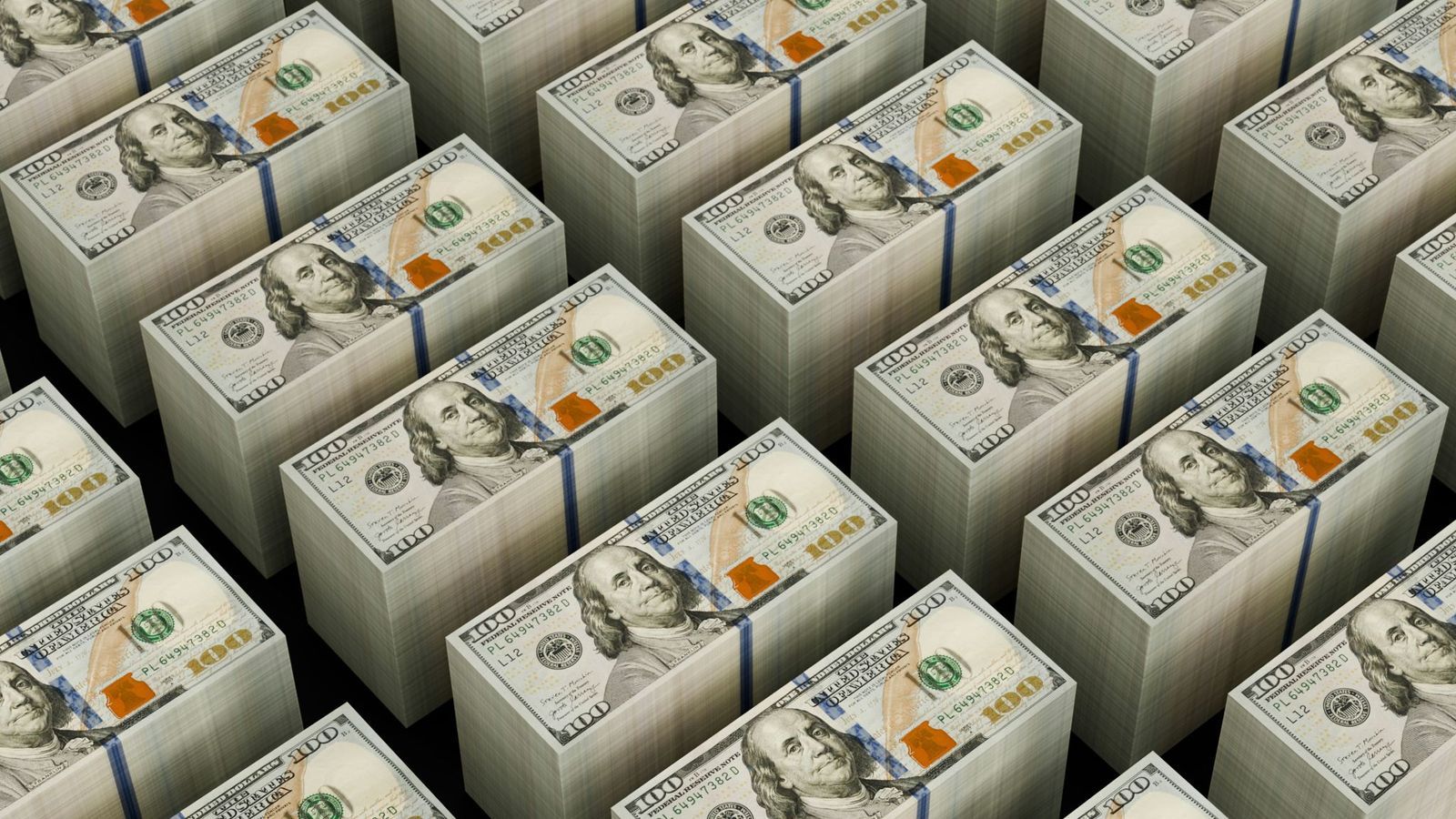
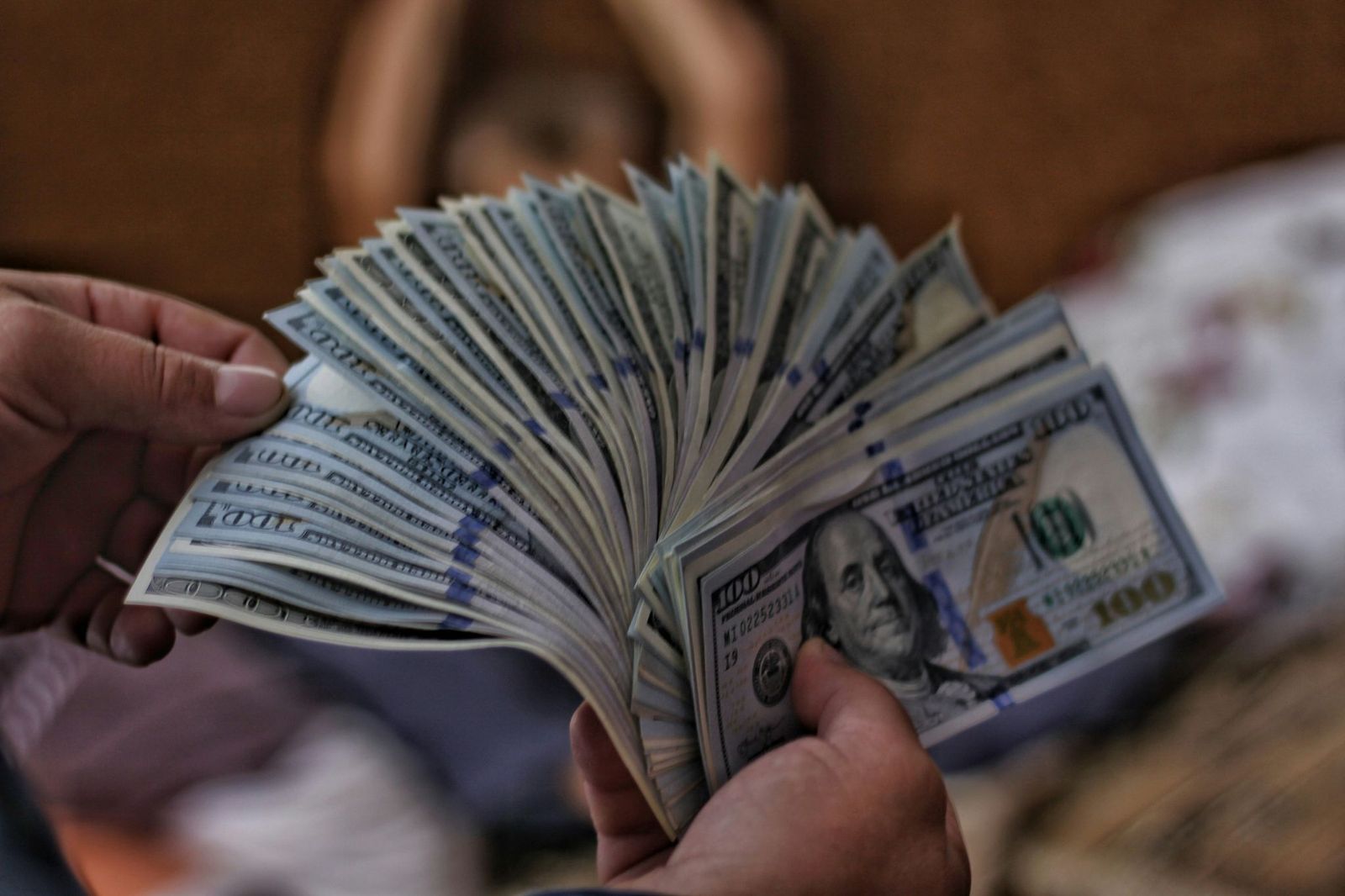
The U.S. dollar is one of the most powerful and recognizable currencies in the world, but its physical form is unique for many other reasons . From its composition to its symbols, dollar bills and coins are carefully designed to combine history, security, and convenience. Let’s explore our national currency!

1
What are bills made of?

Image: Viacheslav Bublyk

Unlike other currencies, dollar bills are not made of paper or plastic. U.S. dollar bills are made from a special fabric blend composed of 75% cotton and 25% linen. This mix makes the bills extremely durable and resistant, and they can be folded about 4000 times before tearing.

2
What bills are valid?

Image: U. S. Government, The Bureau of Engraving and Printing, Public domain, via Wikimedia Commons

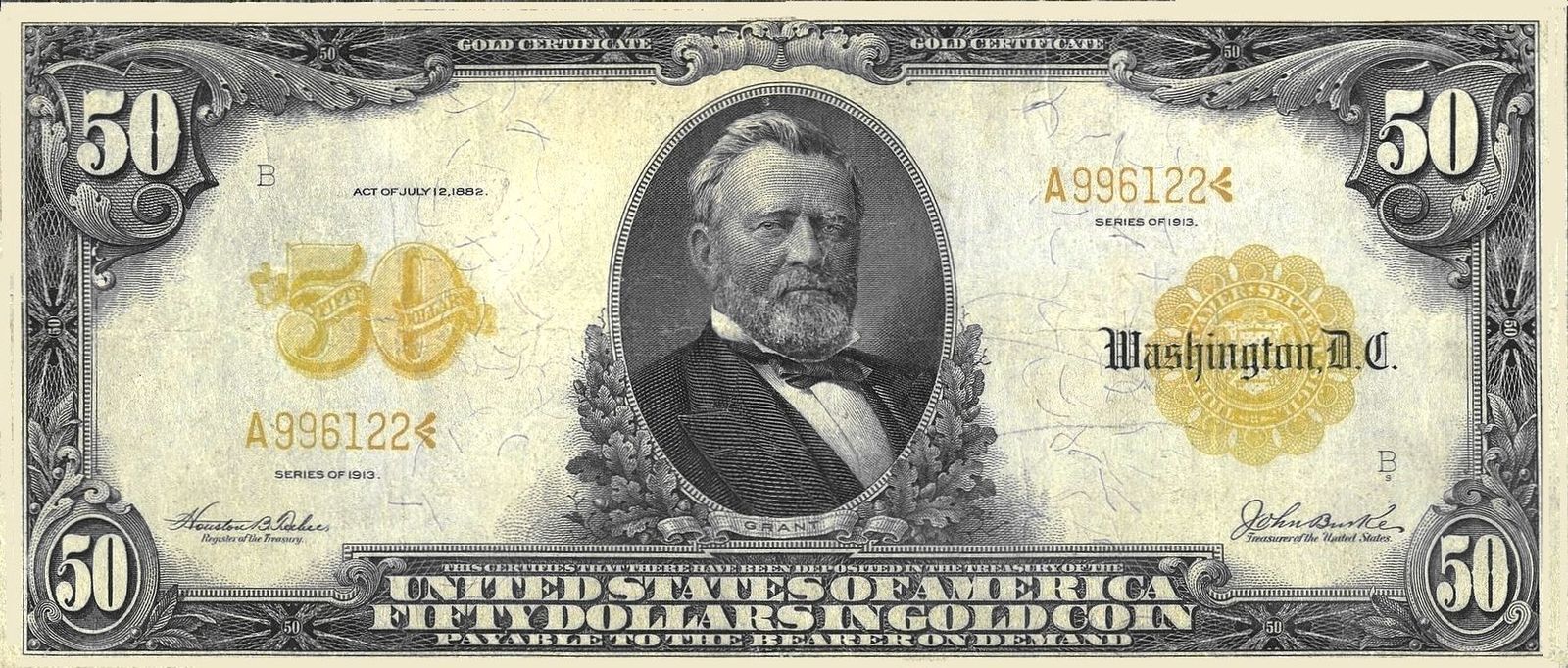
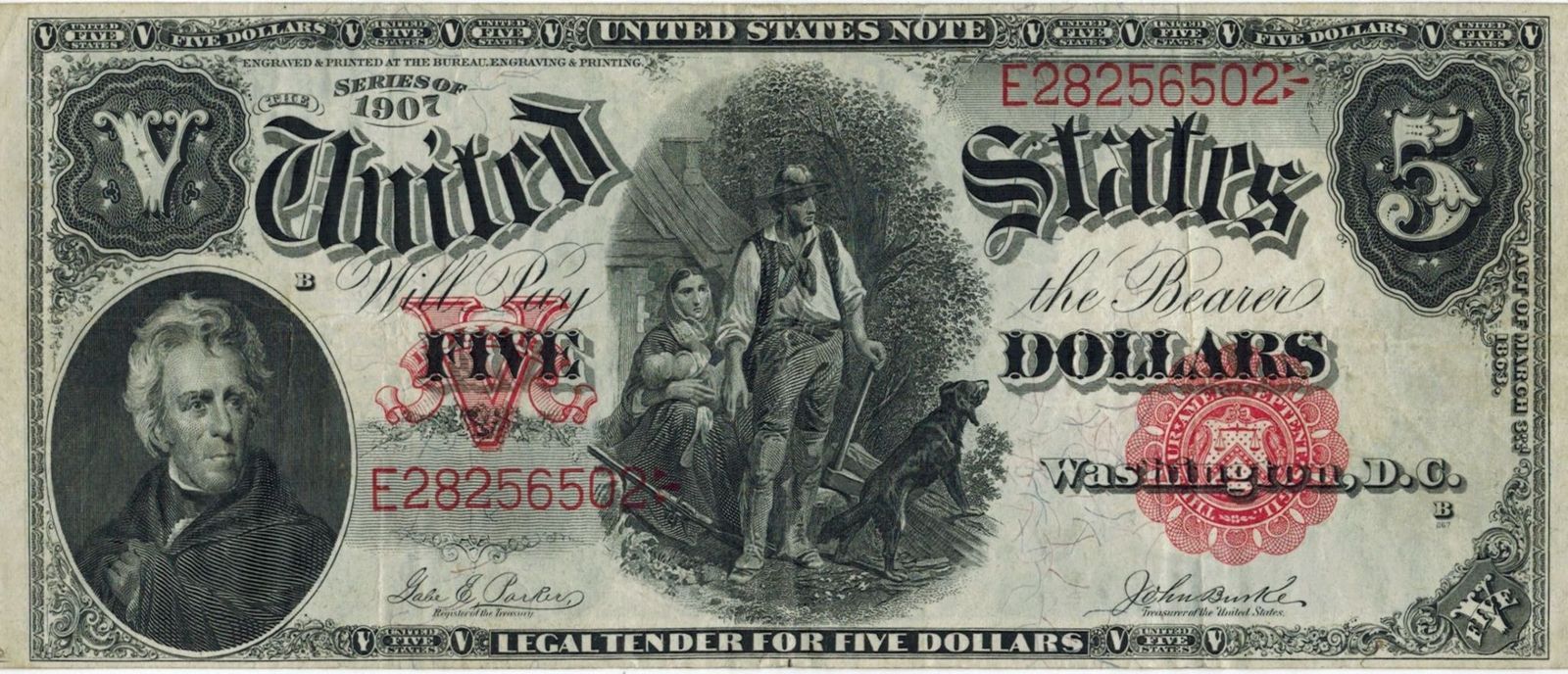
Any U.S. dollar bill that was legally printed is valid, no matter how old, as American currency does not have an expiration date. While some bills might not be accepted by businesses of foreign exchange services due to their condition or if they are a discontinued version of the bill, the bills themselves are still valid, and American banks will accept them, though they might take them out of circulation.

3
American leaders

Image: Lukasz Radziejewski

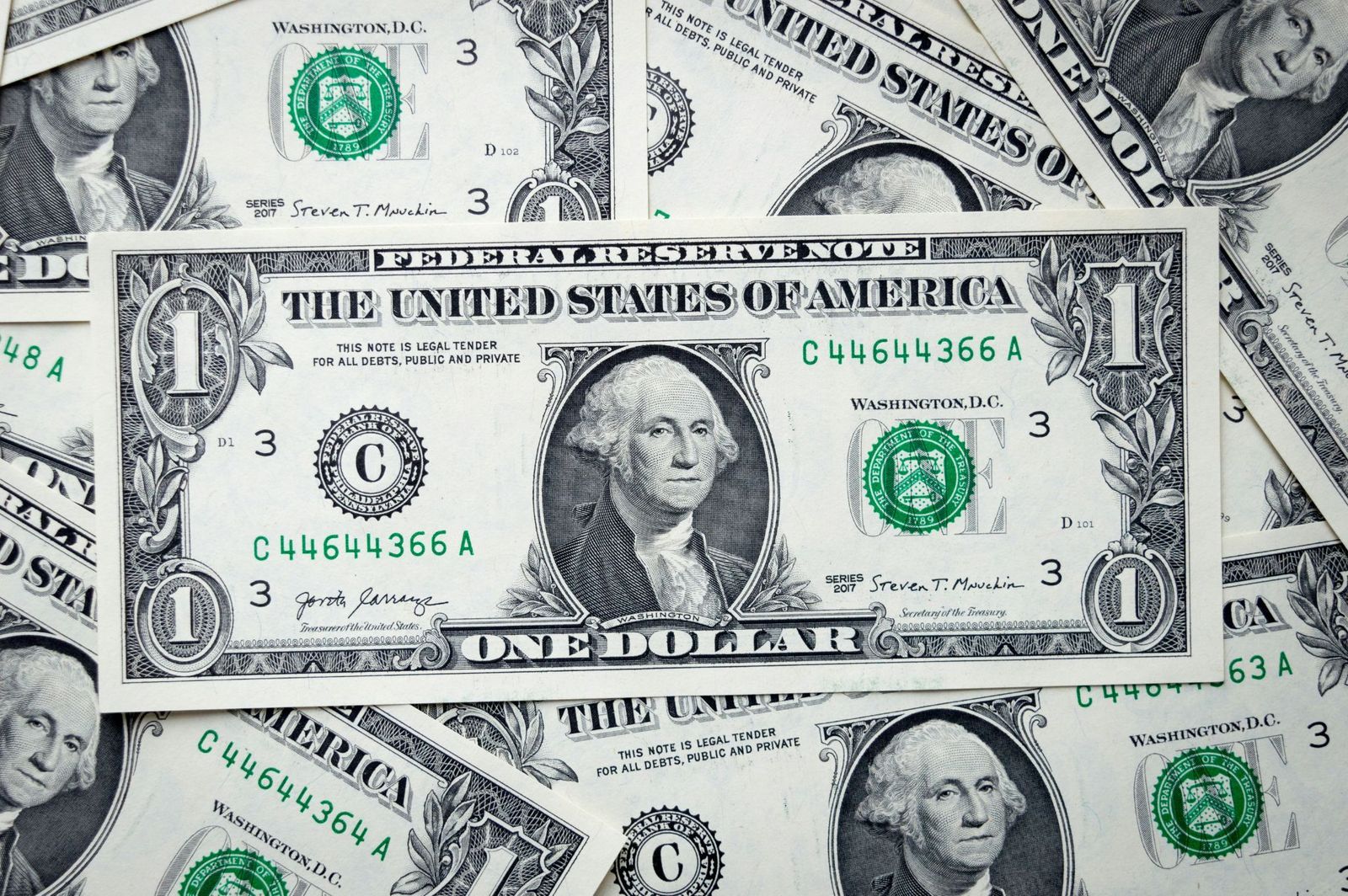
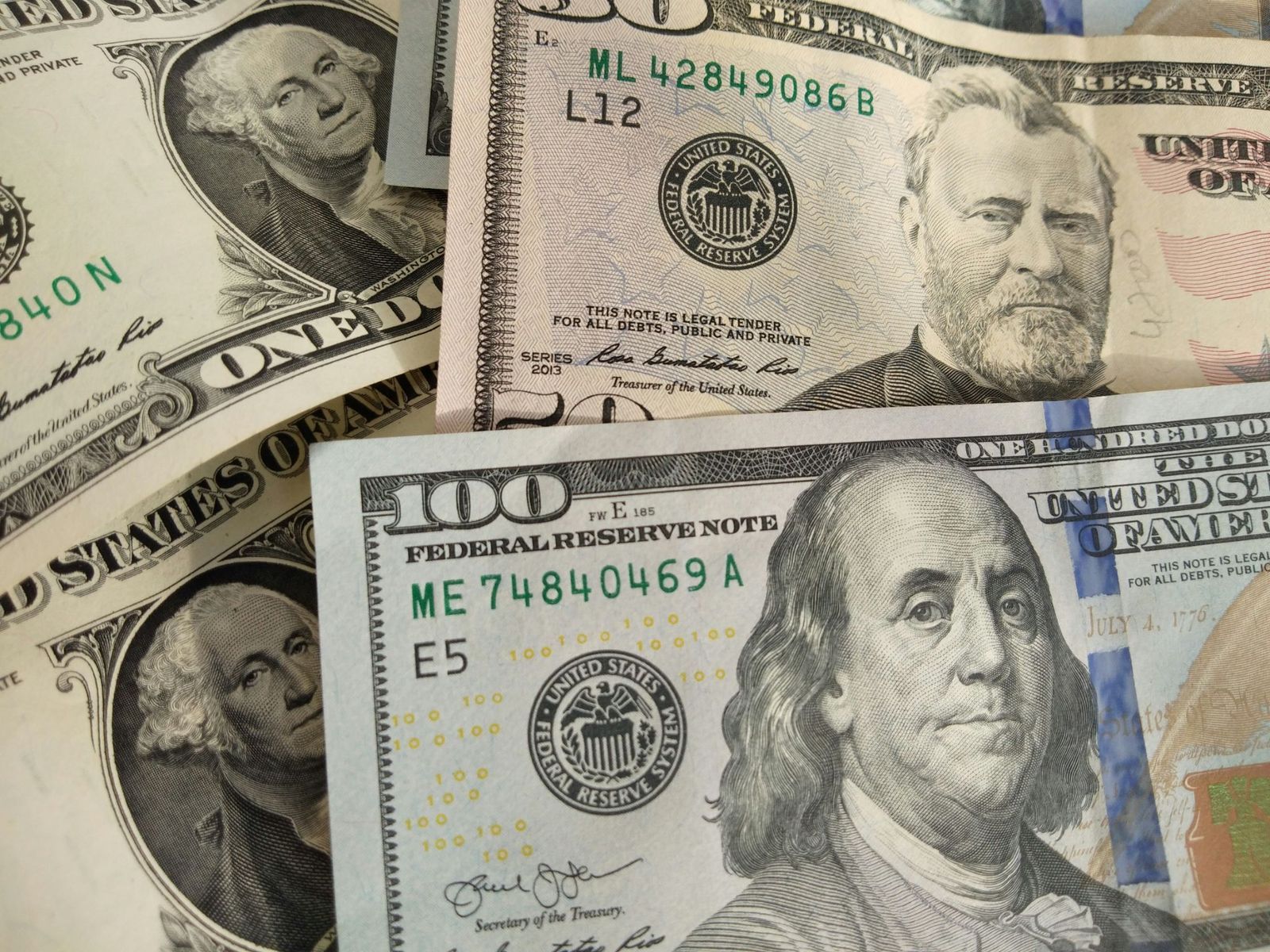
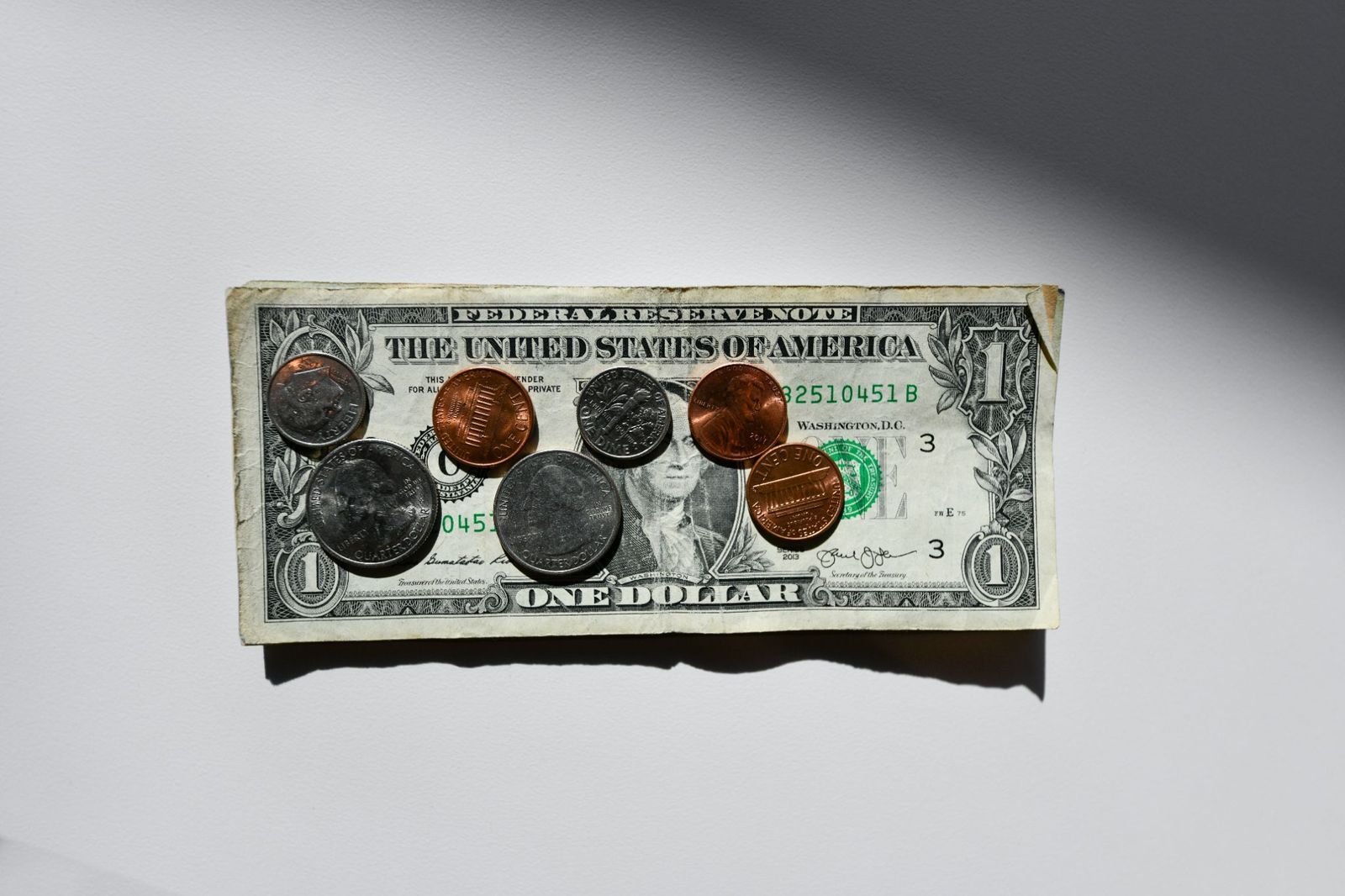
Five bills have a depiction of an American president. The exceptions are the $10 bill, with Alexander Hamilton on the front, and the $100 bill, with Benjamin Franklin. The $1 bill, depicting George Washington, is extremely symbolic: several elements are repeated 13 times as a nod to the thirteen colonies, and it showcases the Bald Eagle and the Eye of Providence as a sign of God watching over America.

4
A change in size

Did you know that dollar bills used to be so big that they were nicknamed "horse blankets"? Original dollar bills were 7.4 × 3.1 inches. In 1929, the Treasury Department reduced the size of bills to 6.14 × 2.61 inches to reduce production costs and materials. Old bills, though still valid, are worth much more as collector items.

5
Uniformity

Image: Avinash Kumar

Besides their value and design, all dollar bills have the same size (6.14 × 2.61 inches), color, and weight (1 gram) , which sets American currency apart from other countries where bills of different values are differentiated by size, color, or both. Why doesn’t the U.S. implement differences among bills? The cost of adapting vending machines, bank drawers, and ATMs to new bill sizes would cost billions of dollars.

6
Hard to copy

Image: United States Treasury Department, Public domain, via Wikimedia Commons

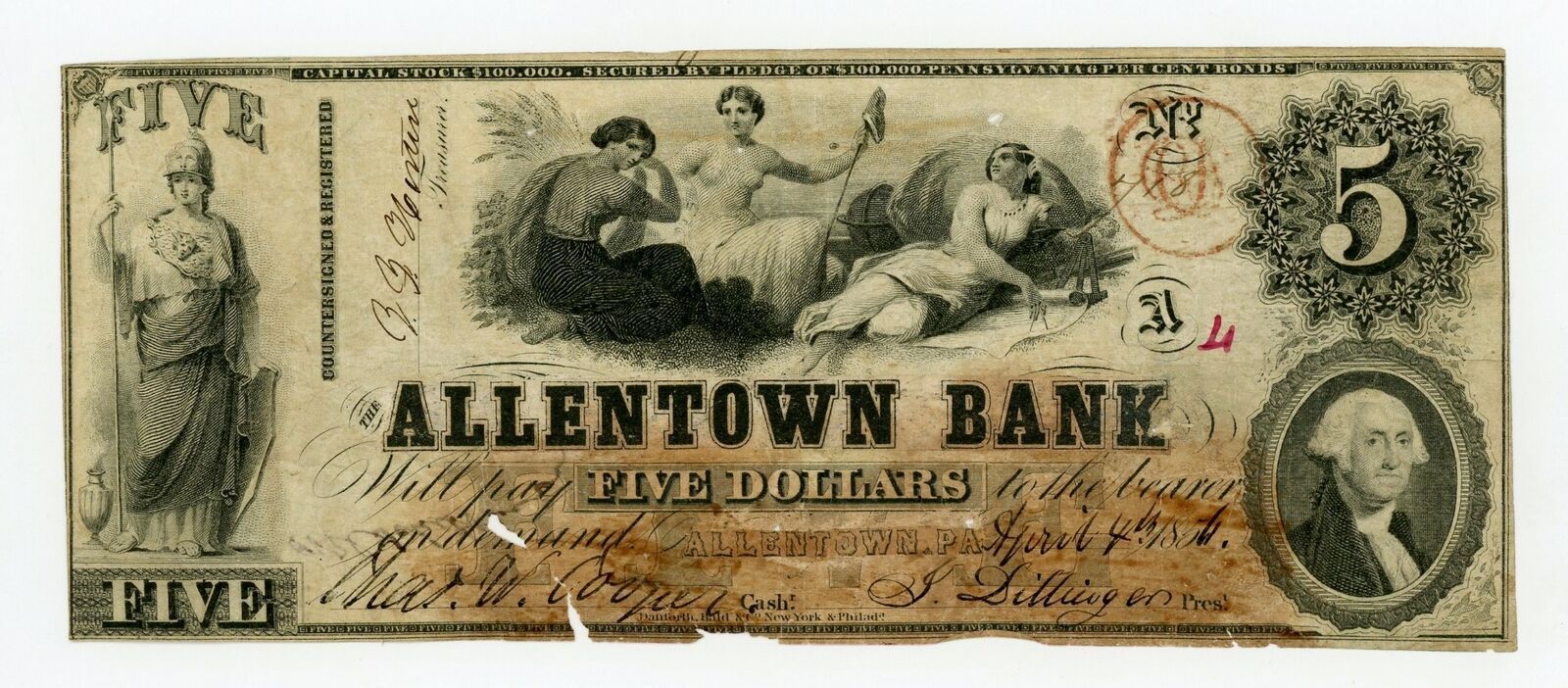
Originally, dollars were not green, but black. As time passed, green ink was favored, as it was cheap and did not fade as much as black. The new color also prevented people from using black-and-white cameras to create counterfeit money. Currently, dollar bills are predominantly green, but newer versions also include extra colors, such as pink, orange, or purple.

7
A $100,000 bill?

Image: The original uploader was Durova at English Wikipedia., Public domain, via Wikimedia Commons

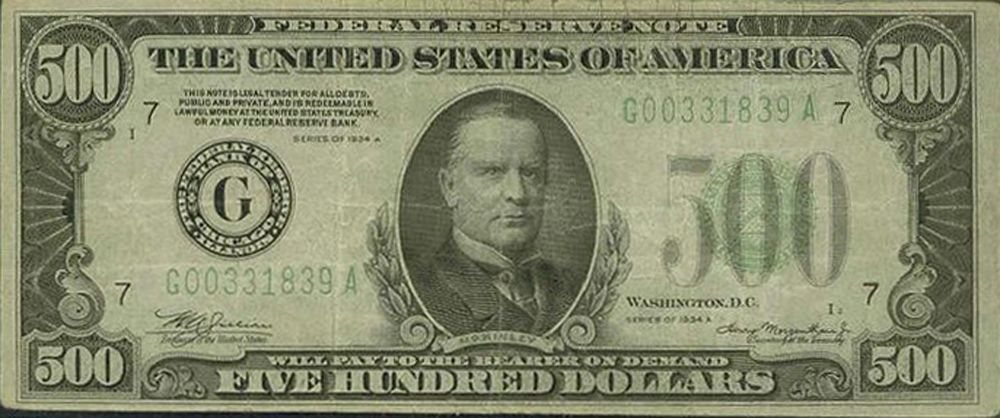
Have you ever seen a $500 or 1,000 dollar bill? What about a $100,000? Up until 1945, the U.S. Treasury printed $500, $1,000, $5,000, $10,000, and $100,000 notes , in addition to the values currently in use. These higher-value notes were mainly intended for bank and government use, but were sought by criminals as they made it easier to hide large amounts of money. Even though they were officially discontinued in 1969, these notes are still valid, though rare, and they have a high worth as collector's items.

8
No numbers

Image: Quilia

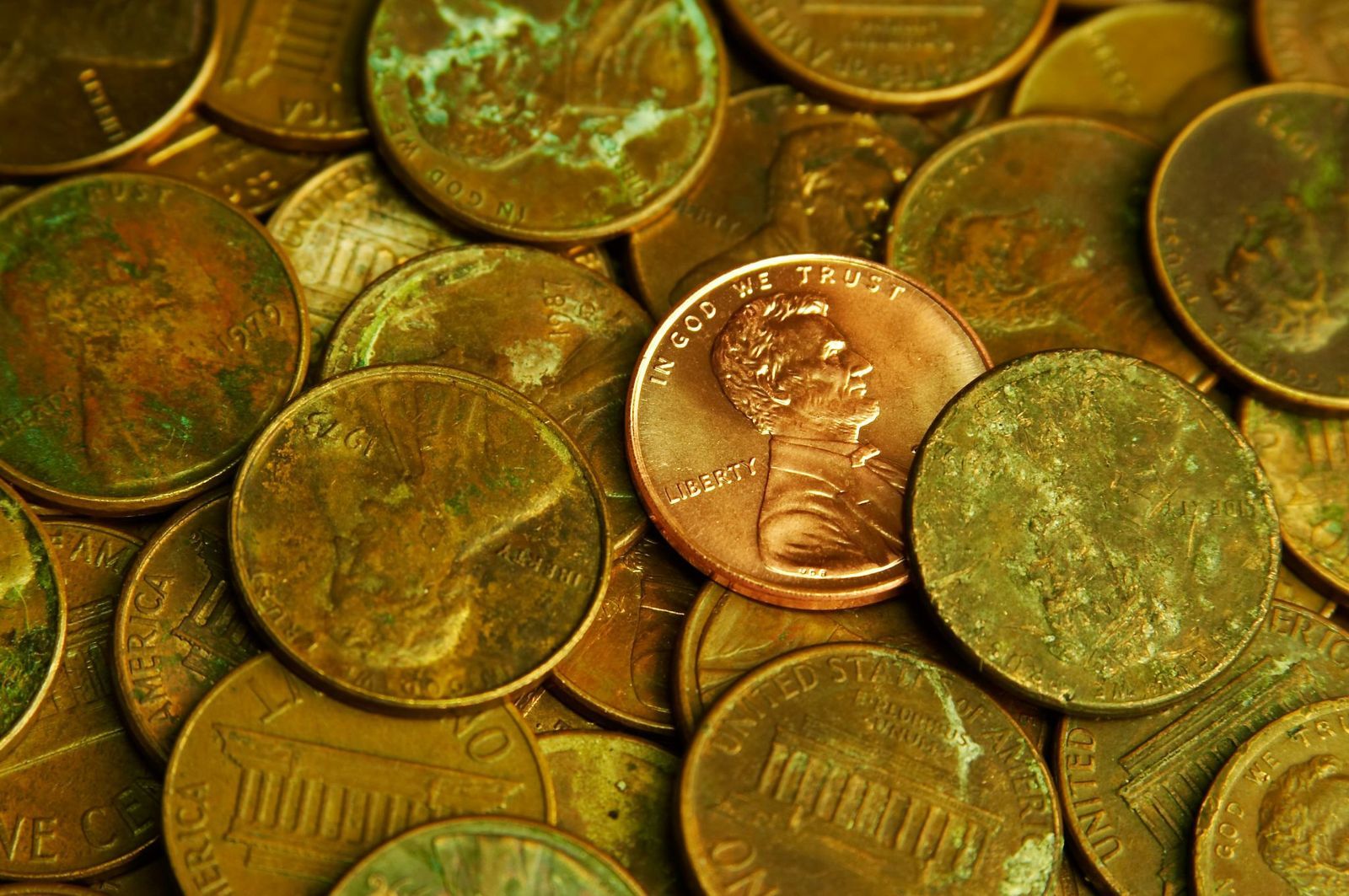
Unlike bills, American coins have different sizes and colors related to their value. Originally, gold, silver, and copper were used for coins, but modern coins are made of copper, zinc, or nickel. Besides their size and design, the value of each coin is printed in letters, not in numbers , alongside depictions of American presidents.

9
Liberty for all (the coins)

Image: Money Knack

By law, all American coins must include six specific details : the word ‘Liberty’, the name of our country, the national motto "In God We Trust", the oldest American motto "E Pluribus Unum", the value of the coin, and the year. Each coin also includes a mint mark that shows where it was made: "P" for Philadelphia, "D" for Denver, "S" for San Francisco, and "W" for West Point.

10
A global currency

Image: Logan Voss

The American dollar is one of the most powerful currencies in the world, acting as a backbone for international trade and finances. It is estimated that two-thirds of the physical dollars in circulation are outside American territory. Besides the U.S. and its territories, eight sovereign nations have the U.S. dollar as their official currency, with several more accepting it as legal tender.

History History 5 min read

What First Lady was accused of bigamy? 10 political crises

Image: EQRoy

From the founding era to the turn of the 21st century, political scandals have shaped public trust and dismantled entire careers. Looking back at ten of the most notorious political crises in American history reveals how the intersection of media and culture forces the nation to look in the mirror.

1
Rachel Jackson: A "Bigamy" scandal (1820s)

Image: L. Bernie Gallaher, Public domain, via Wikimedia Commons

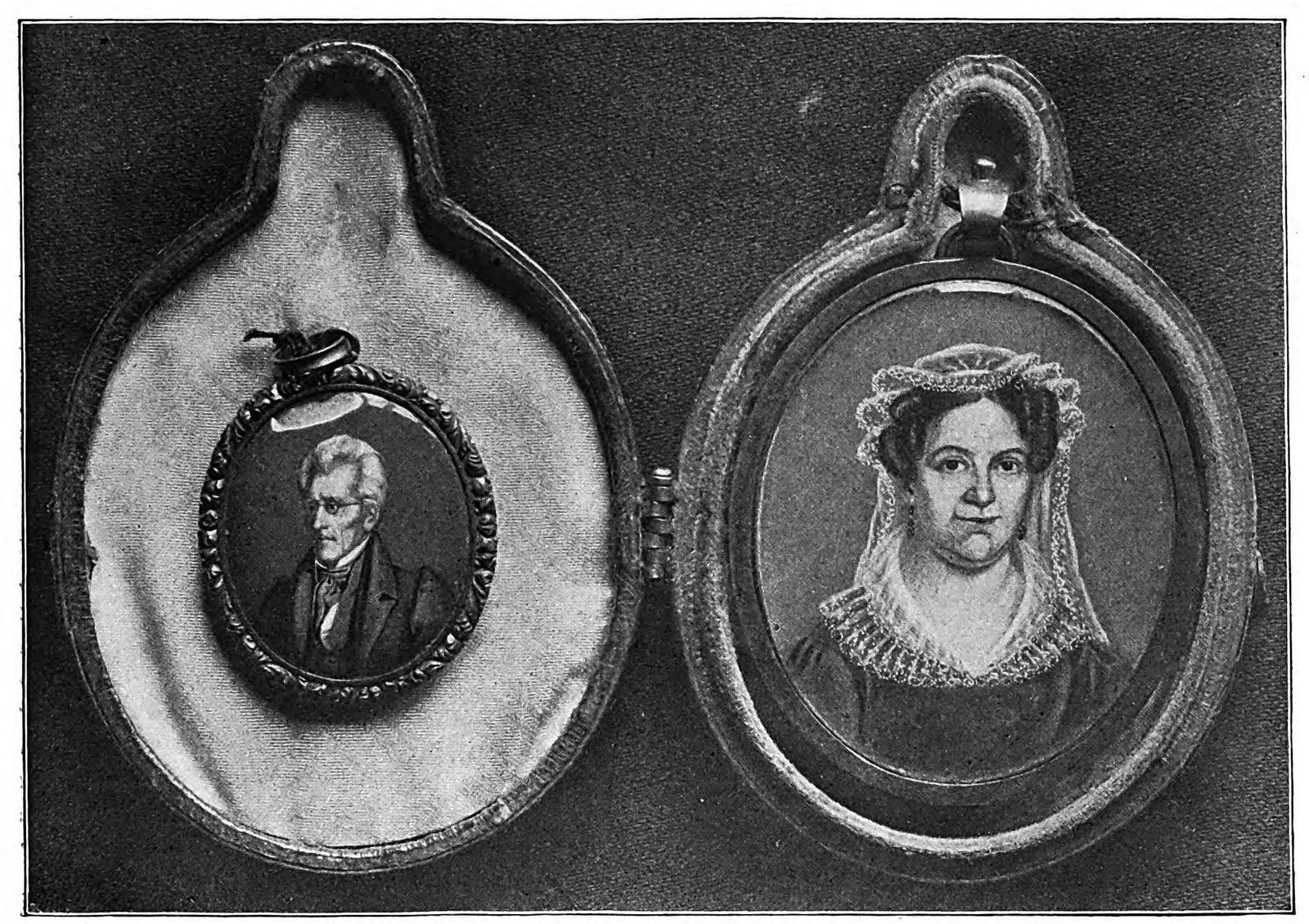
In 1791, a young Andrew Jackson married Rachel Donelson. Both believed her first husband, Captain Lewis Robards, had successfully finalized their divorce. Apparently, Robards didn’t file the petition, making her marriage to Jackson technically bigamous. Once the divorce went through in 1794, they officially remarried.

During the 1828 presidential campaign, Jackson’s political opponents used this legal mistake against him. They branded Rachel a loose woman and a bigamist in pamphlets scattered across the country. The intense public shaming broke her spirit and deteriorated her health. She suffered a fatal heart attack just days before Jackson’s inauguration, leaving the newly elected president heartbroken and extremely bitter toward his political rivals for the rest of his life.

2
Grover Cleveland’s illegitimate child (1884)

Image: Frank Beard, Public domain, via Wikimedia Commons

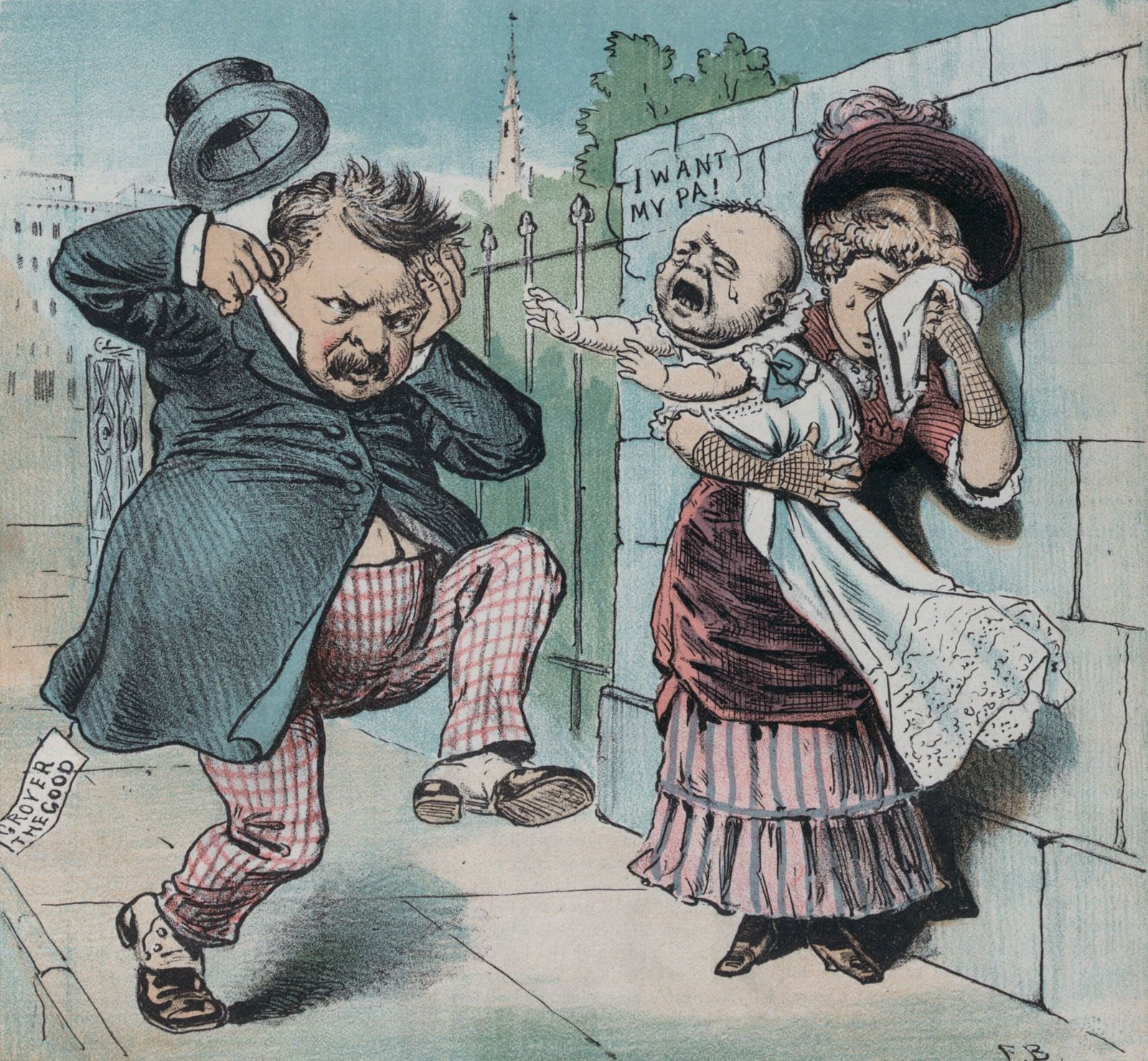
Decades later, another personal bombshell rocked another presidential race. Republican opponents revealed that Democratic nominee Grover Cleveland, a bachelor praised for his integrity, had fathered a child out of wedlock with a widow called Maria Halpin ten years before.

Republicans paraded through the streets chanting, "Ma, Ma, where’s my Pa?" Instead of denying the affair or trying to bury it, Cleveland instructed his campaign managers to do something radical: "Tell the truth." He admitted to supporting the child financially. His honesty caught his opponents off guard and won over voters who were tired of such dirty political tactics.

3
The Crédit Mobilier scandal (1872)

Image: Joseph Keppler, Public domain, via Wikimedia Commons

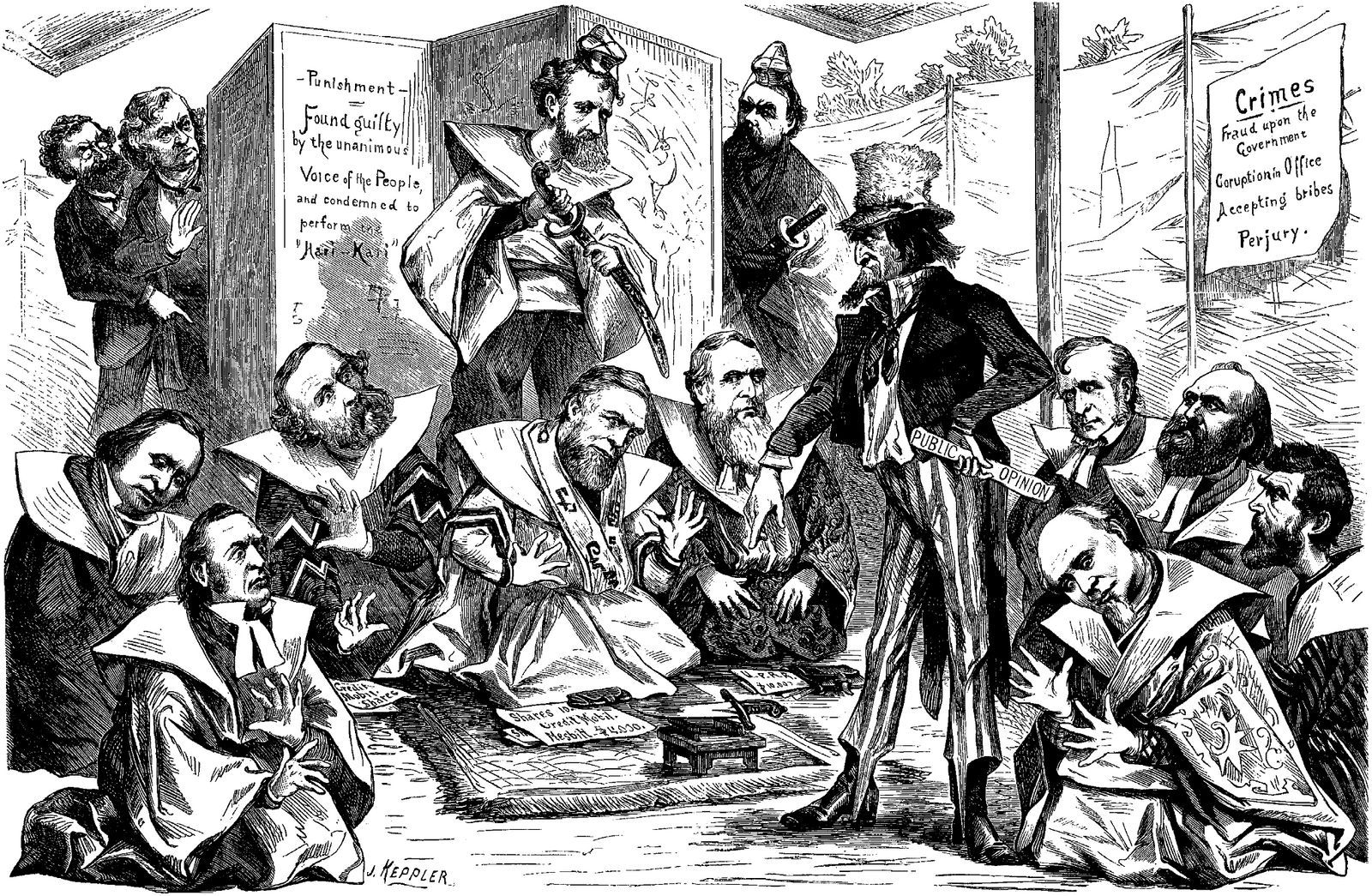
This particular scandal stands as one of the most shameless corporate schemes of the Gilded Age. Stockholders of the Union Pacific Railroad formed a fraudulent construction company called Crédit Mobilier of America . Then, they hired themselves to build the transcontinental railroad at inflated prices, pocketing tens of millions of dollars in federal subsidies.

To prevent Congress from investigating their profit margins, Congressman Oakes Ames distributed discounted shares of the company’s stock to influential politicians, including Vice President Schuyler Colfax. When the press exposed the story in 1872, the revelation that lawmakers were bribing themselves tarnished the legacy of the Ulysses S. Grant administration.

4
The Whiskey Ring scandal (1875)

Image: Cornell University Library, No restrictions, via Wikimedia Commons

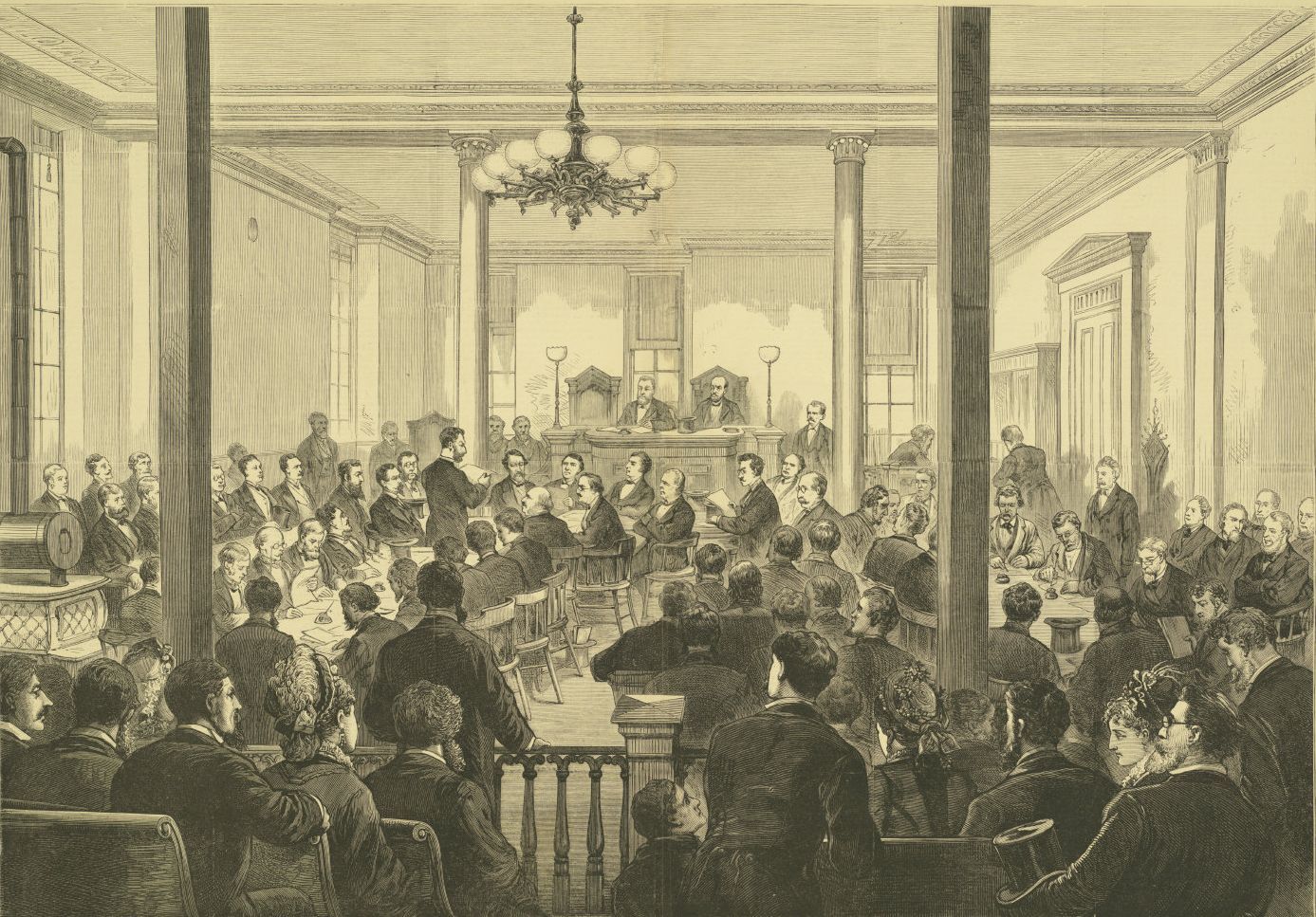
A few years later, another financial disaster hit the Grant administration. The Whiskey Ring was a widespread conspiracy involving distillers, distributors, and internal federal tax officials who stole millions of dollars in liquor taxes.

Using a complex web of bribes and falsified records, the ring defrauded the U.S. Treasury. The scandal reached the inner circle of power when President Grant’s own private secretary, Orville Babcock, was indicted as a ringleader. Grant provided a deposition in his secretary’s defense. While this saved Babcock from prison, it permanently damaged the president’s reputation.

5
The Teapot Dome scandal (1920s)

Image: Boyd Norton, Public domain, via Wikimedia Commons

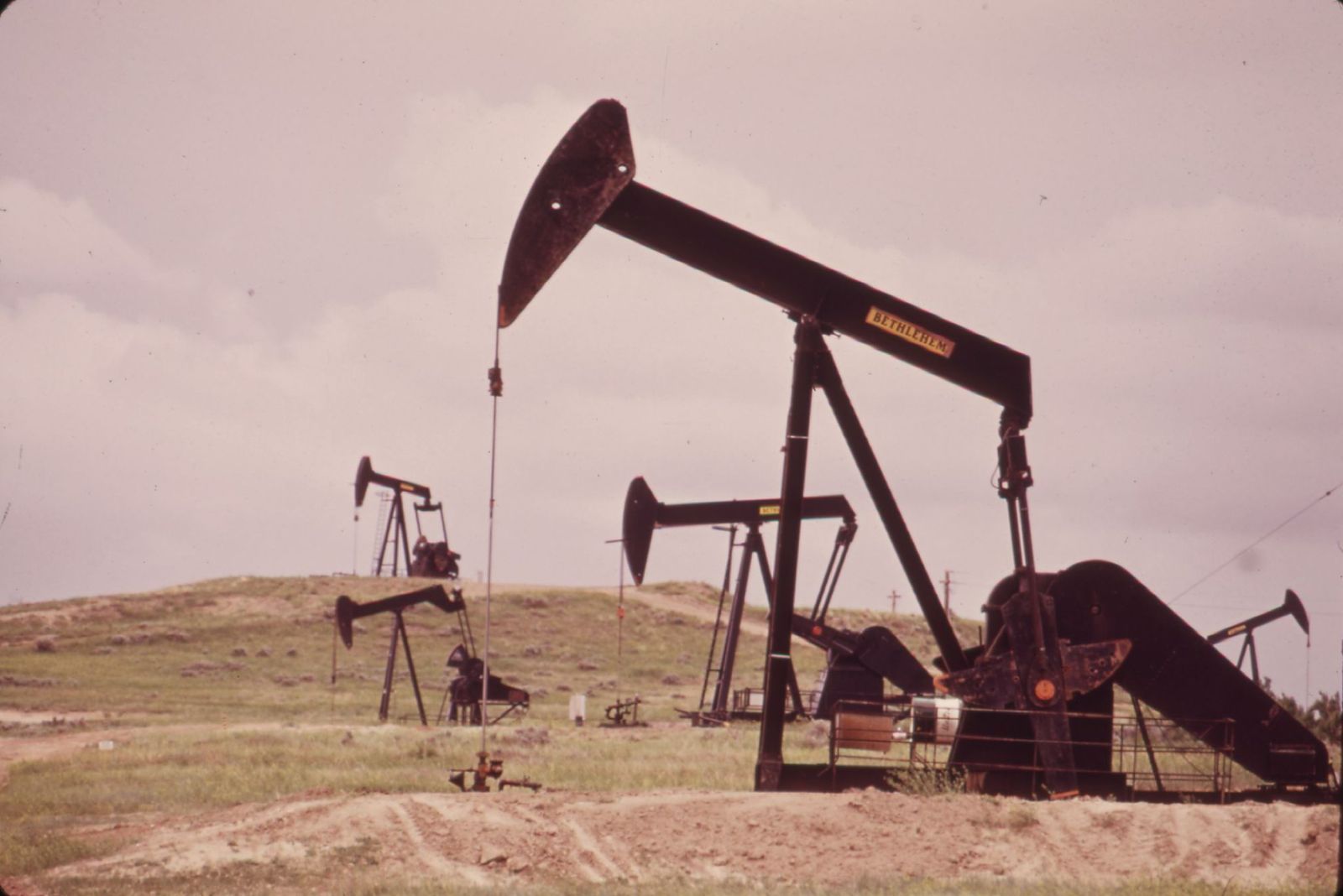
Until Watergate occurred, Teapot Dome was synonymous with political corruption. During the administration of Warren G. Harding, Secretary of the Interior Albert Fall took control of valuable federal oil reserves located at Teapot Dome, Wyoming, and Elk Hills, California.

Instead of opening these fields up for competitive bidding among energy companies, Fall secretly leased the drilling rights to private oil tycoons in exchange for more than $400,000 in bribes.

6
The Chappaquiddick incident (1969)

Image: United Press International, Public domain, via Wikimedia Commons

By the mid-20th century, the nature of political scandals shifted. Secrets began to involve personal crisis and tragic losses.

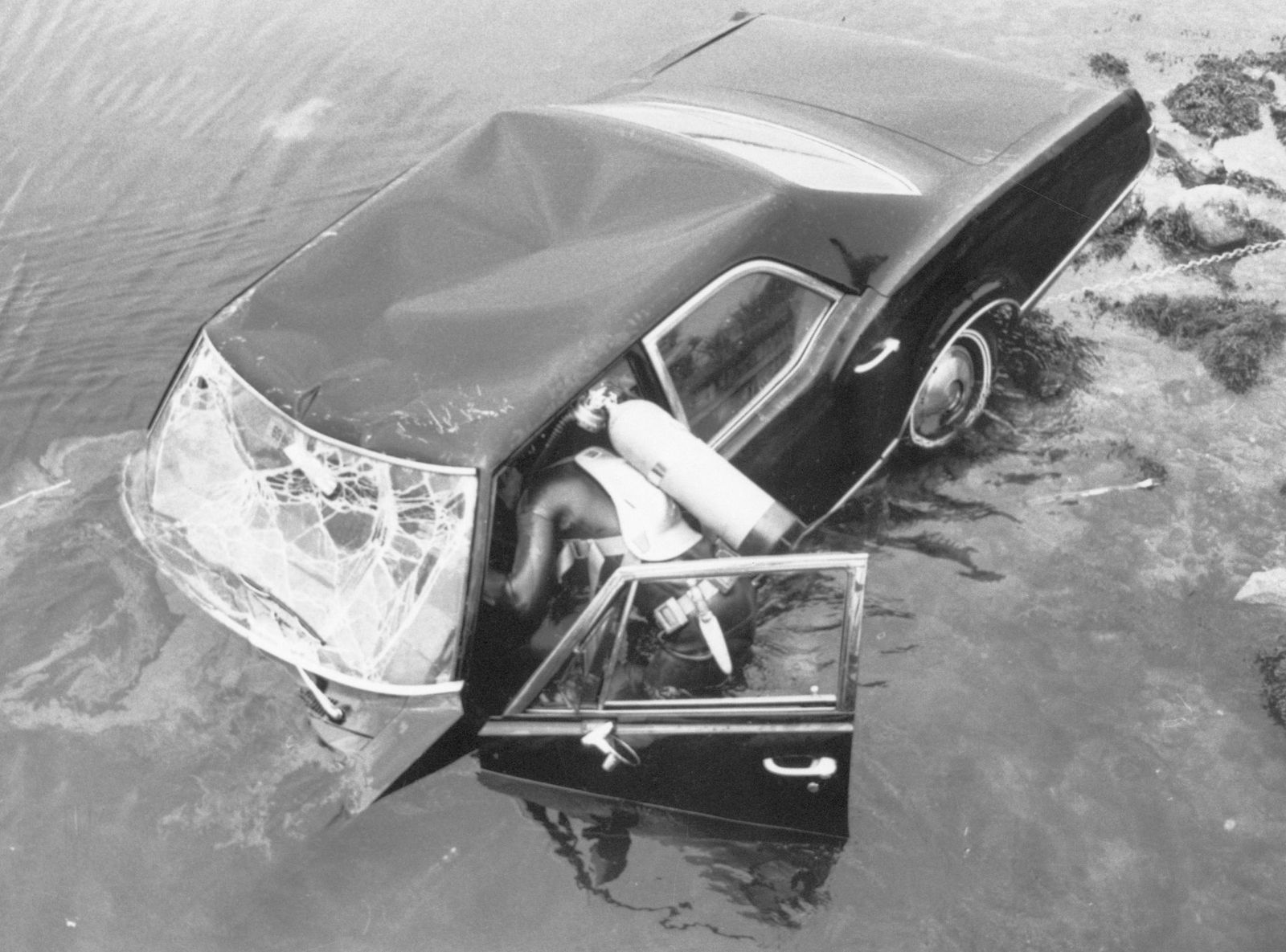
In July 1969, Senator Edward "Ted" Kennedy drove his car off a narrow wooden bridge on Chappaquiddick Island, Massachusetts. The vehicle overturned into a tidal pond, trapping and drowning his passenger, 28-year-old campaign worker Mary Jo Kopechne. Kennedy managed to escape but failed to report the fatal accident to the police for ten hours. Although he eventually pleaded guilty to leaving the scene of an accident, his delayed reaction ended his lifelong presidential ambitions.

7
The Pentagon Papers (1971)

Image: See page for author, Public domain, via Wikimedia Commons

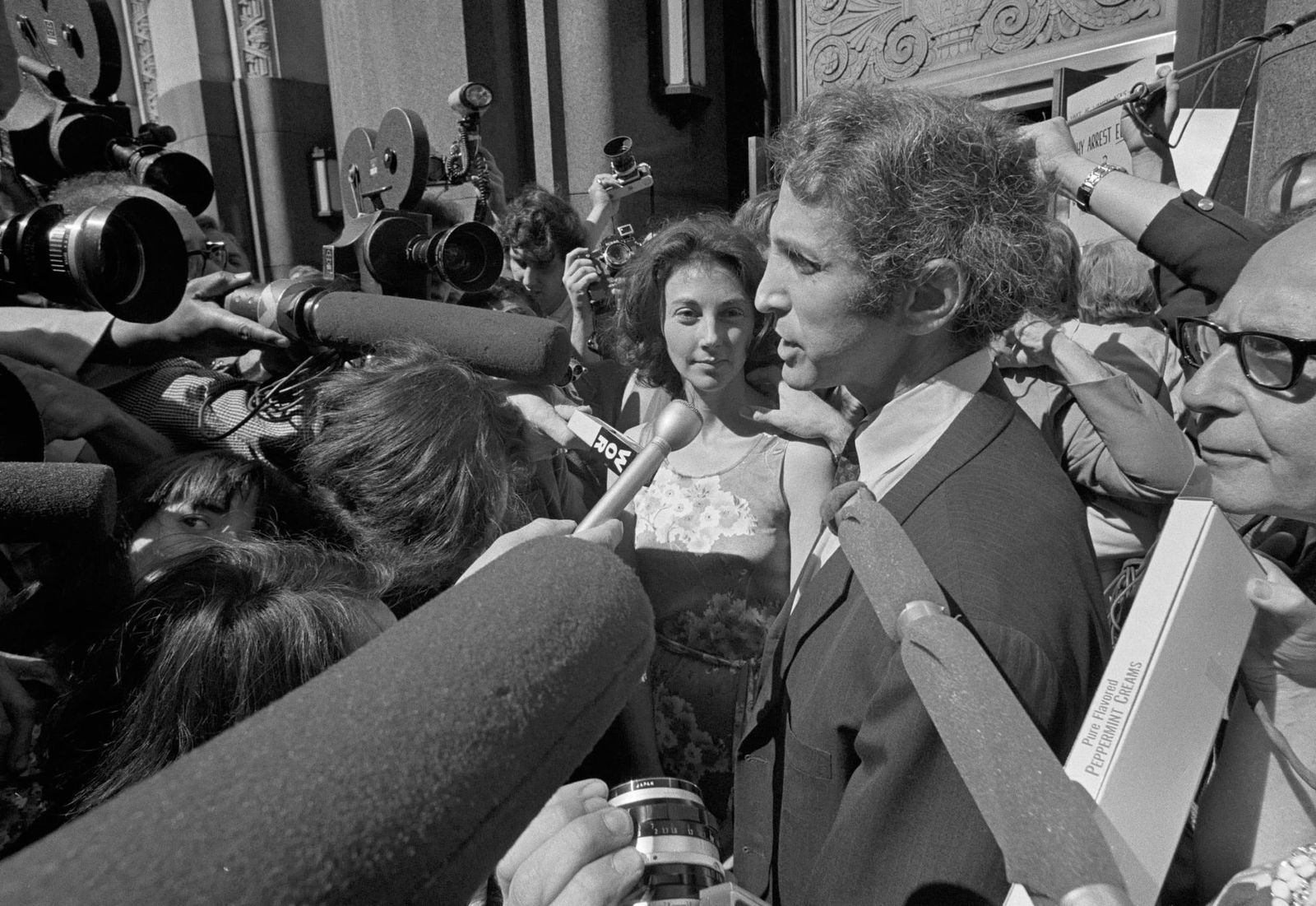
In 1971, military analyst Daniel Ellsberg felt the moral obligation to leak a top-secret 7,000-page Department of Defense study detailing U.S. political and military involvement in Vietnam from 1945 to 1967.

Published by The New York Times , the papers exposed a disturbing truth: successive administrations had systematically lied to both Congress and the American public. The documents proved that the government had expanded the war and increased troop counts while knowing that the conflict was unwinnable. The Supreme Court eventually rejected the government’s attempts to block the leaks, making a victory for freedom of the press.

8
The Watergate scandal (1972–1974)

Image: National Archives & Records Administration, Public domain, via Wikimedia Commons

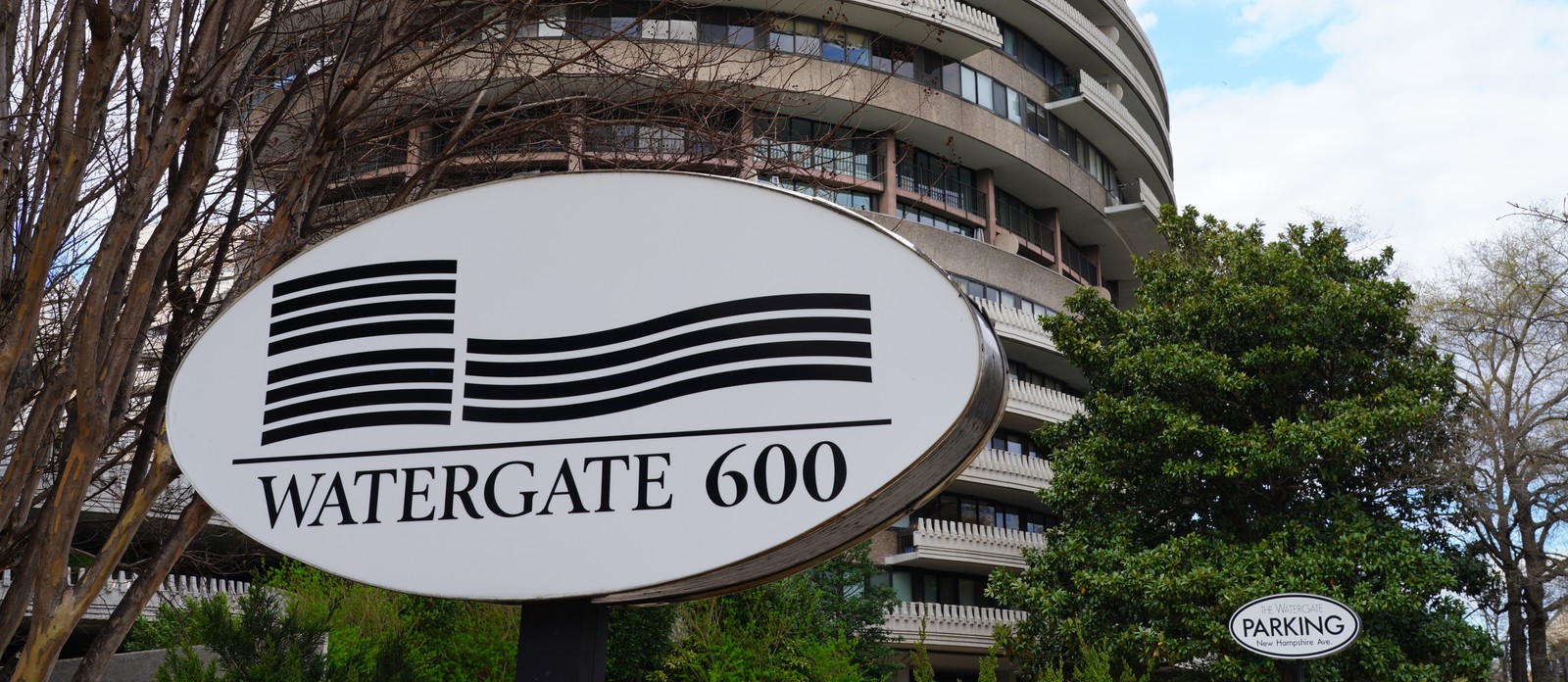
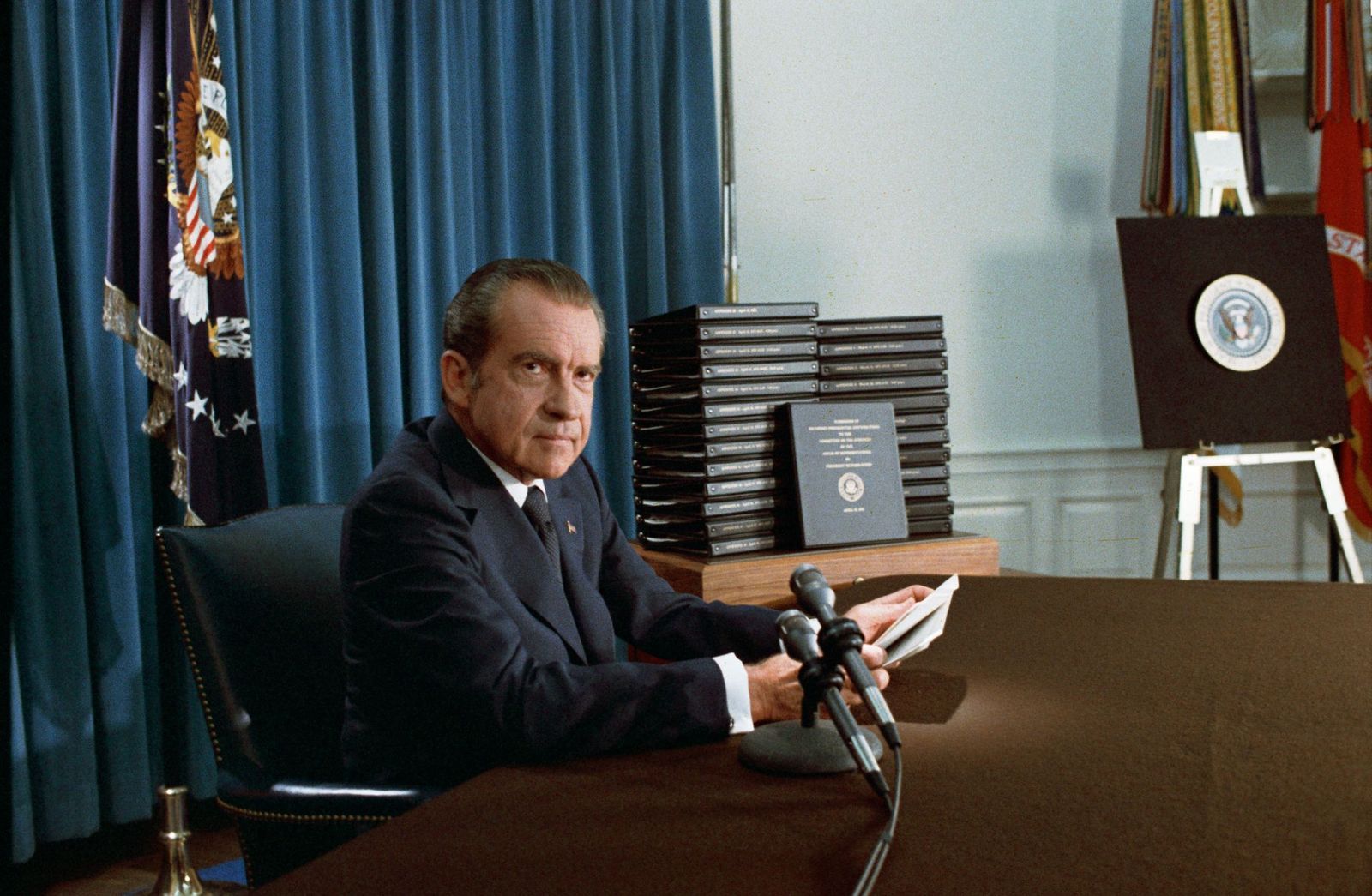
This is, probably, the ultimate American political scandal. In June 1972, five men were arrested breaking into the Democratic National Committee headquarters at the Watergate complex in Washington, D.C.

The break in itself was minor compared to the illegal cover-up orchestrated by President Richard Nixon and his collaborators. From paying hush money to instructing the CIA to block the FBI’s investigation, Nixon’s complicity was exposed via his own secret White House taping system. Facing impeachment and conviction by the Senate, Nixon became the first and only U.S. president to resign from office.

9
The "Keating Five" (Late 1980s)

Image: KonstantinChristian

During the Savings and Loan crisis of the late 1980s, five U.S. Senators—John McCain, Alan Cranston, Dennis DeConcini, John Glenn, and Donald Riegle—came under intense scrutiny.

The group was accused of intervening with federal banking regulators on behalf of Charles Keating, the chairman of Lincoln Savings and Loan, who had contributed to their political campaigns. Lincoln eventually collapsed, costing American taxpayers over $3 billion. Although the Senate Ethics Committee ultimately cleared the senators of corruption, they were publicly condemned.

10
The Bill Clinton–Monica Lewinsky affair (1998)

Image: Clinton White House, Public domain, via Wikimedia Commons

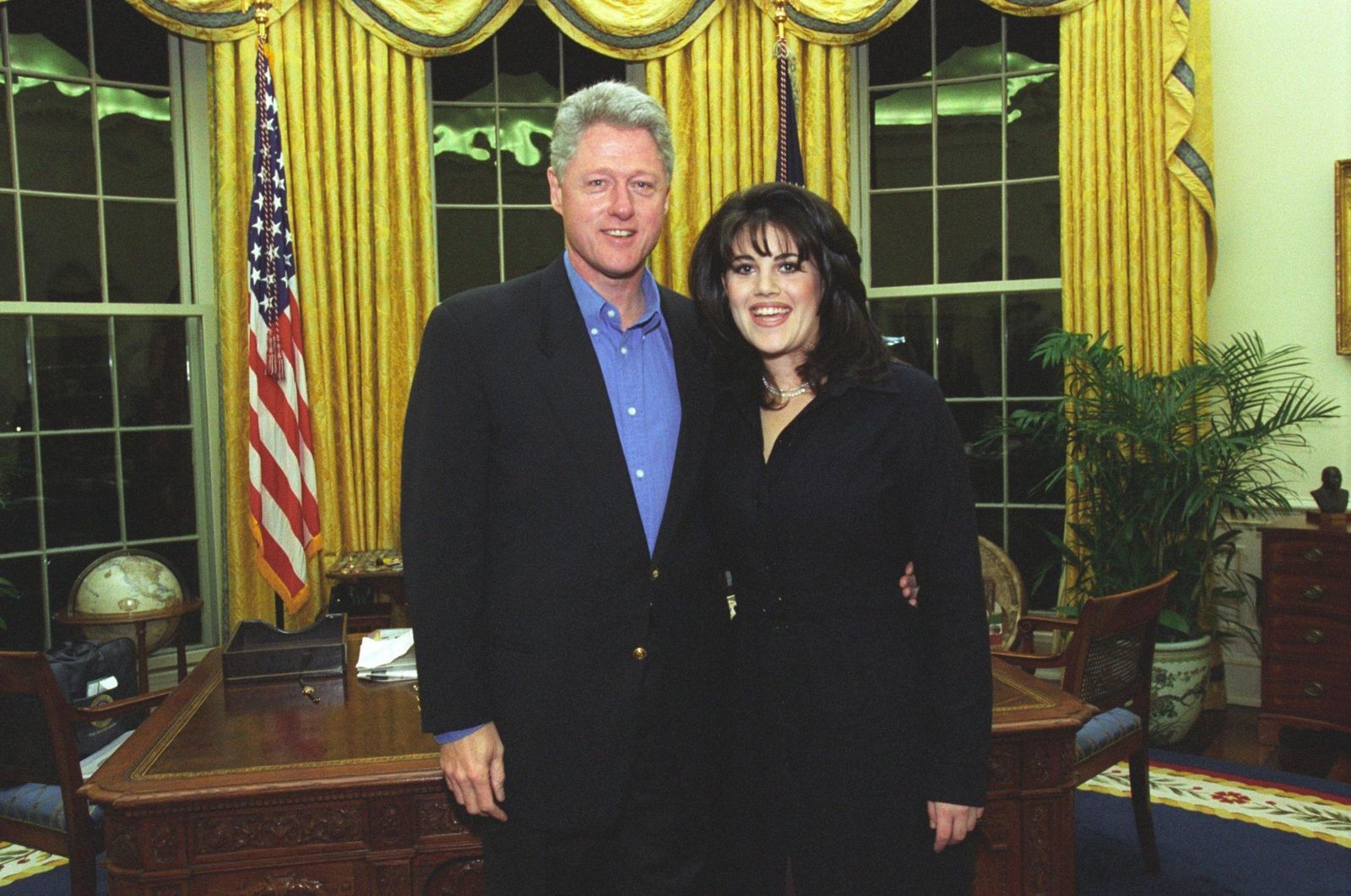
The 20th century ended with a scandal that blended personal infidelity with a constitutional crisis. In 1998, news broke that President Bill Clinton had an intimate relationship with a 21-year-old White House intern called Monica Lewinsky.

The affair turned into a legal battle when Clinton denied the relationship under oath during an unrelated sexual harassment lawsuit. The investigation led to Clinton’s impeachment by the House of Representatives on charges of perjury and obstruction of justice. The Senate ultimately acquitted him, yet he couldn’t bypass the media circus.

Explore more American facts

Choose your favorite category!

General
General

As American as apple pie—the very best America has to offer!

Culture
Culture

Delve into the astounding richness of American lore.

Geography
Geography

Hop in and explore vast and diverse American landscapes.

History
History

Discover the key moments that shaped the United States.