History History 9 min read

From crisis to action

11 crises that changed American history
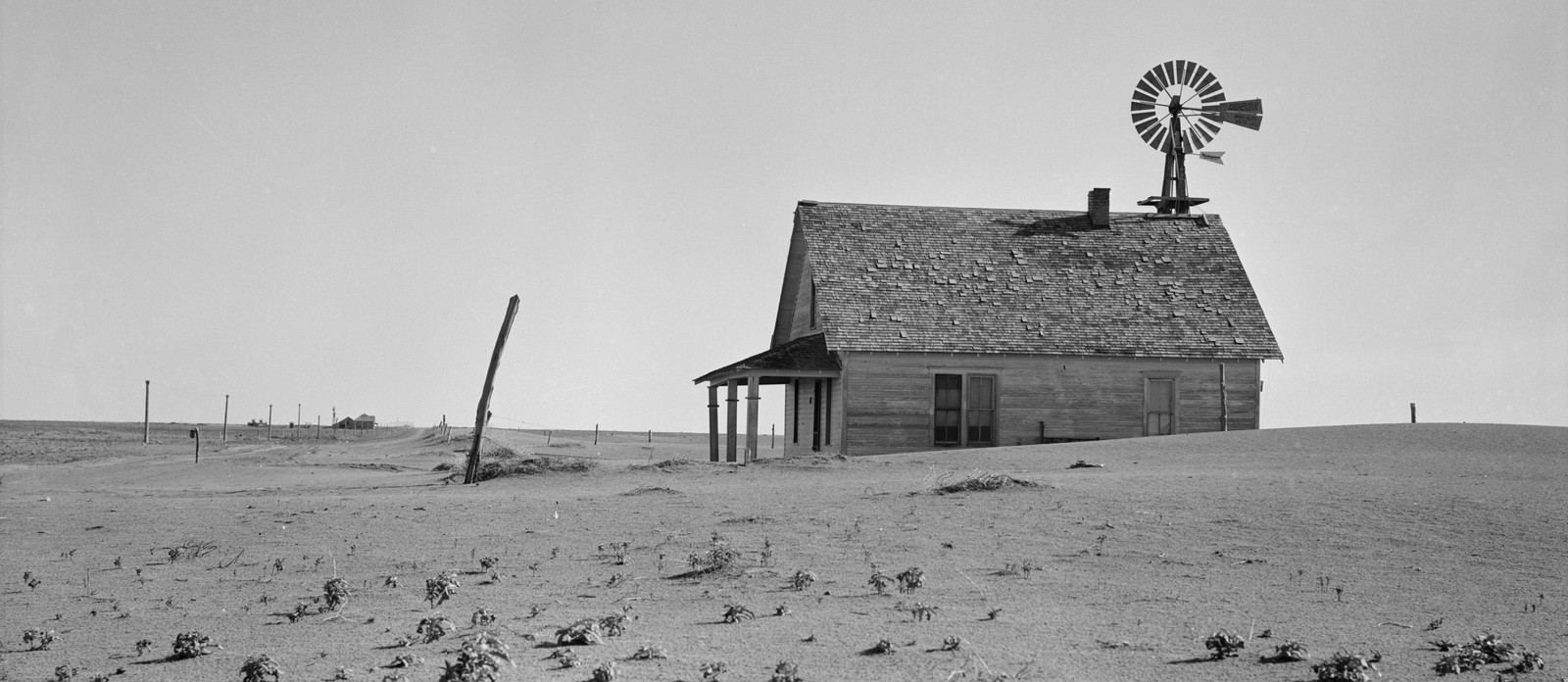
Image: Dorothea Lange, Public domain, via Wikimedia Commons

Nowadays, we take many sanitary, economic and safety standards for granted. Food should be unadulterated, drinking water should be fit for consumption, and the government should have a series of preventions in place. But this was not always the case. Many of these systems and laws are relatively new, and some of our worst crises have led the U.S. government to devise systems to ensure these events would not happen again. Here are 11 crises in American history that led to change.

1
World War II (1939–1945)
Image: Aaron Burden

American veteran soldiers are entitled to several benefits as recognition for their service on behalf of the country, but this was not always the case. Before 1944, war veterans received pensions and disability-related medical care, but that was it. WWI veterans had received bonuses for their service, but these were not redeemable until 1945, which led to protests and turmoil during the Great Depression.

To avoid a similar situation with soldiers serving in WWII, a set of laws, popularly known as the "G.I. Bill", was passed in 1944. These laws guaranteed that, in addition to pensions and medical assistance, veterans were entitled to financial help towards education or training, low-cost loans, unemployment benefits, and job-search assistance . Since then, additional "G.I. Bills" have been passed, ensuring that veterans are looked after once their service is complete.

2
The Great Depression (1929–1939)
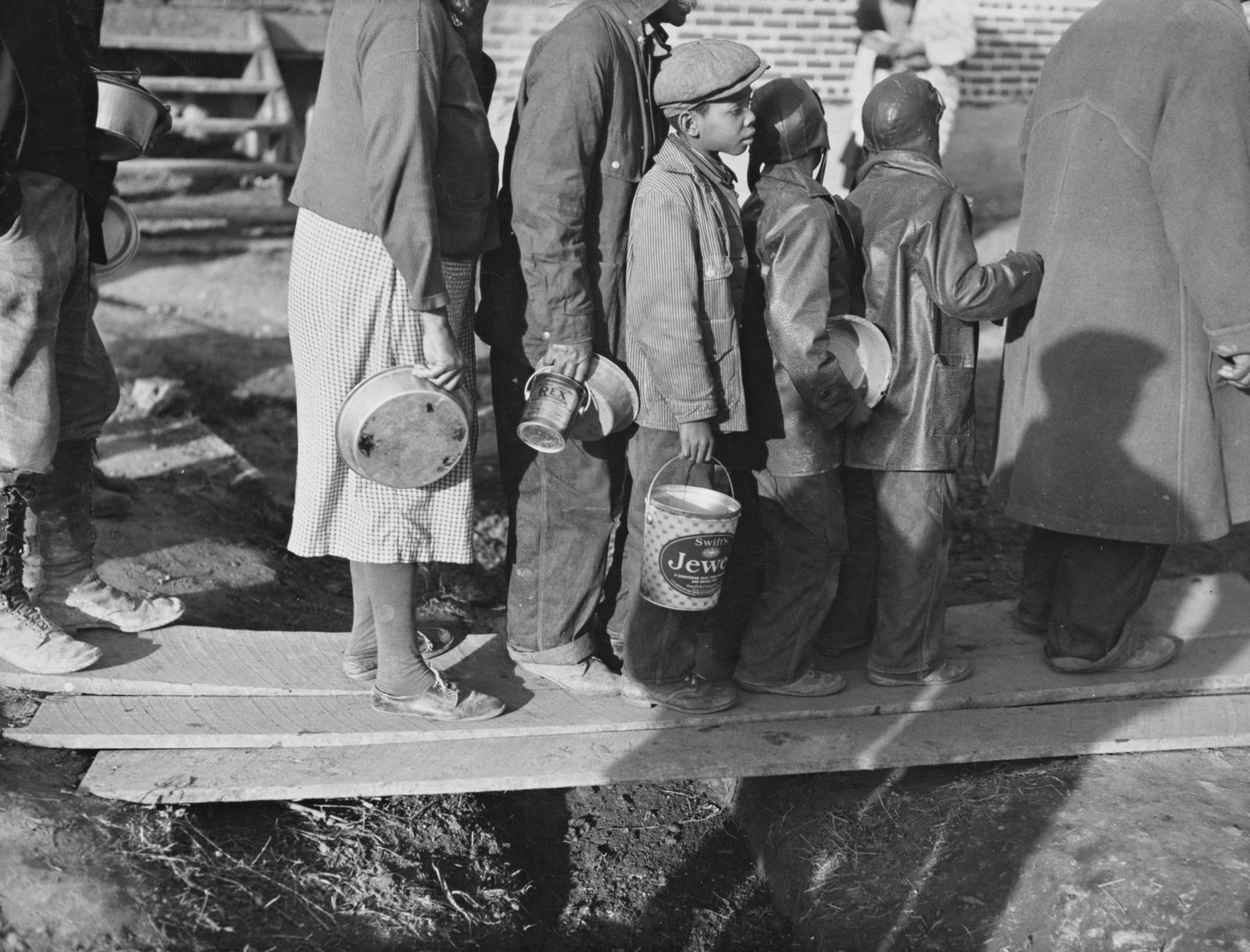
Image: The New York Public Library

Historians agree that, despite President Roosevelt’s best efforts, the Great Depression was effectively ended by the industrial mobilization caused by WWII. America’s biggest economic crisis to date had been brought on by several factors , many of them related to reckless market speculation, inefficient monetary policies, lack of social security, and massive bank withdrawals made by panicked citizens.

While F.D.R.’s "New Deal" policies were insufficient to overcome the crisis, they successfully set up a system to prevent a similar economic collapse in the future . As a result of financial and banking reform, personal accounts were federally insured —which prevented future massive withdrawals that would deplete savings, commercial and investment banking were separated, and commissions were set up to regulate trading and prevent fraud. Additionally, social and welfare laws established pensions, work insurance, and unemployment compensation, and protected unions that allowed workers to collectively bargain with their employers.

3
The Great Chicago Fire (1871)
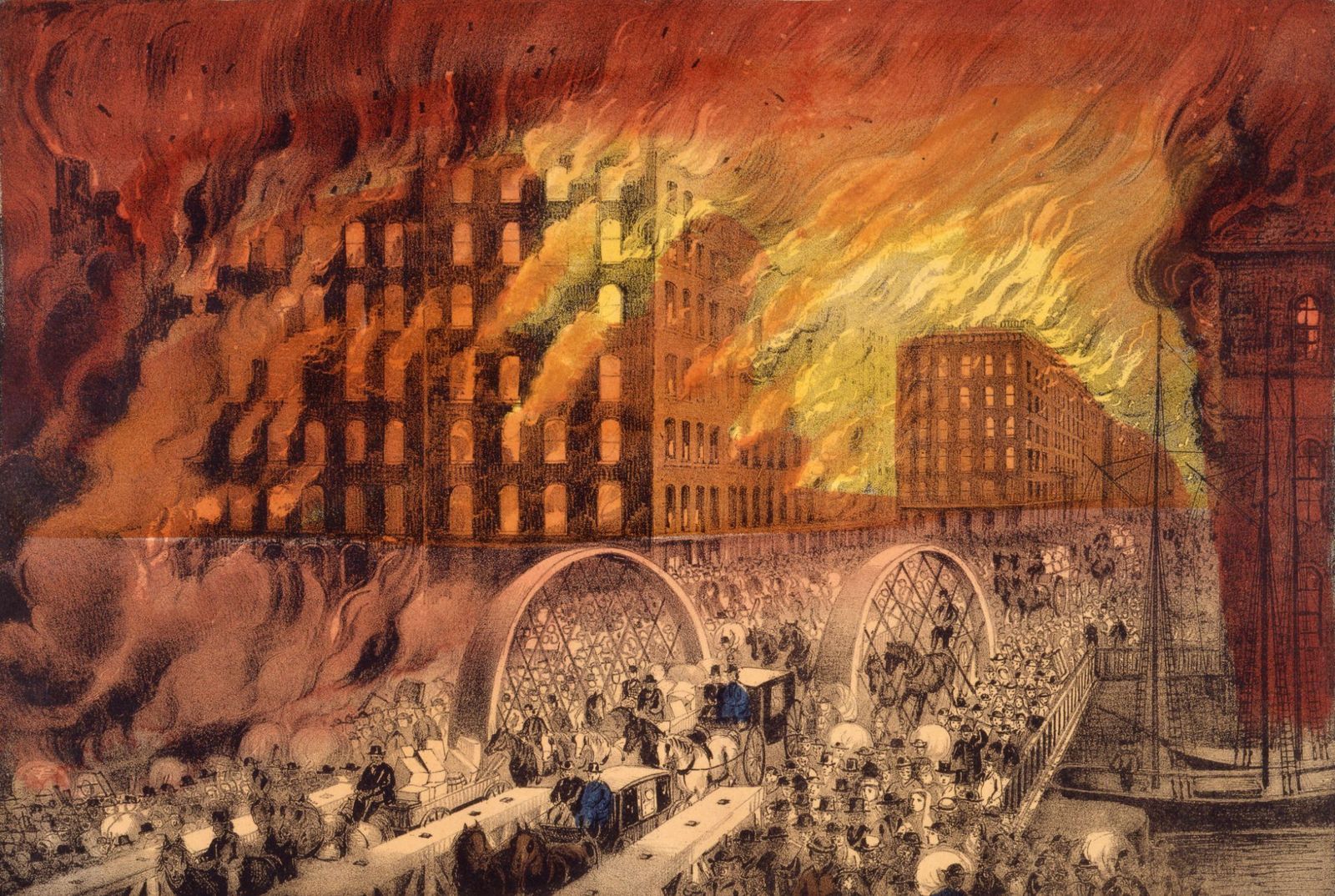
Image: Currier and Ives, Public domain, via Wikimedia Commons

On October 8, 1871, a fire started on DeKoven Street, Chicago, and it burned for three days, destroying 17,450 buildings and leaving 300 casualties and thousands of people homeless. According to legend, the fire was started by a cow (owned by a woman named Mrs. O’Leary), although this was never confirmed; it was the wooden buildings, the strong wind, and the dry weather that turned an accident into a catastrophe.

Americans from all over the country rallied behind the relief effort, donating money, food, clothing, and more, but the tragedy also forced authorities to review their own municipal safety codes. New fire and building safety codes were implemented, banning wood buildings and requiring fire-safe materials such as brick, stone, or marble, as well as fireproof staircases, exit signs, and outward-opening doors. A new fire academy was founded to properly train firefighters, which put Chicago at the lead of America’s firefighting force.

4
Yellow Fever (1793)
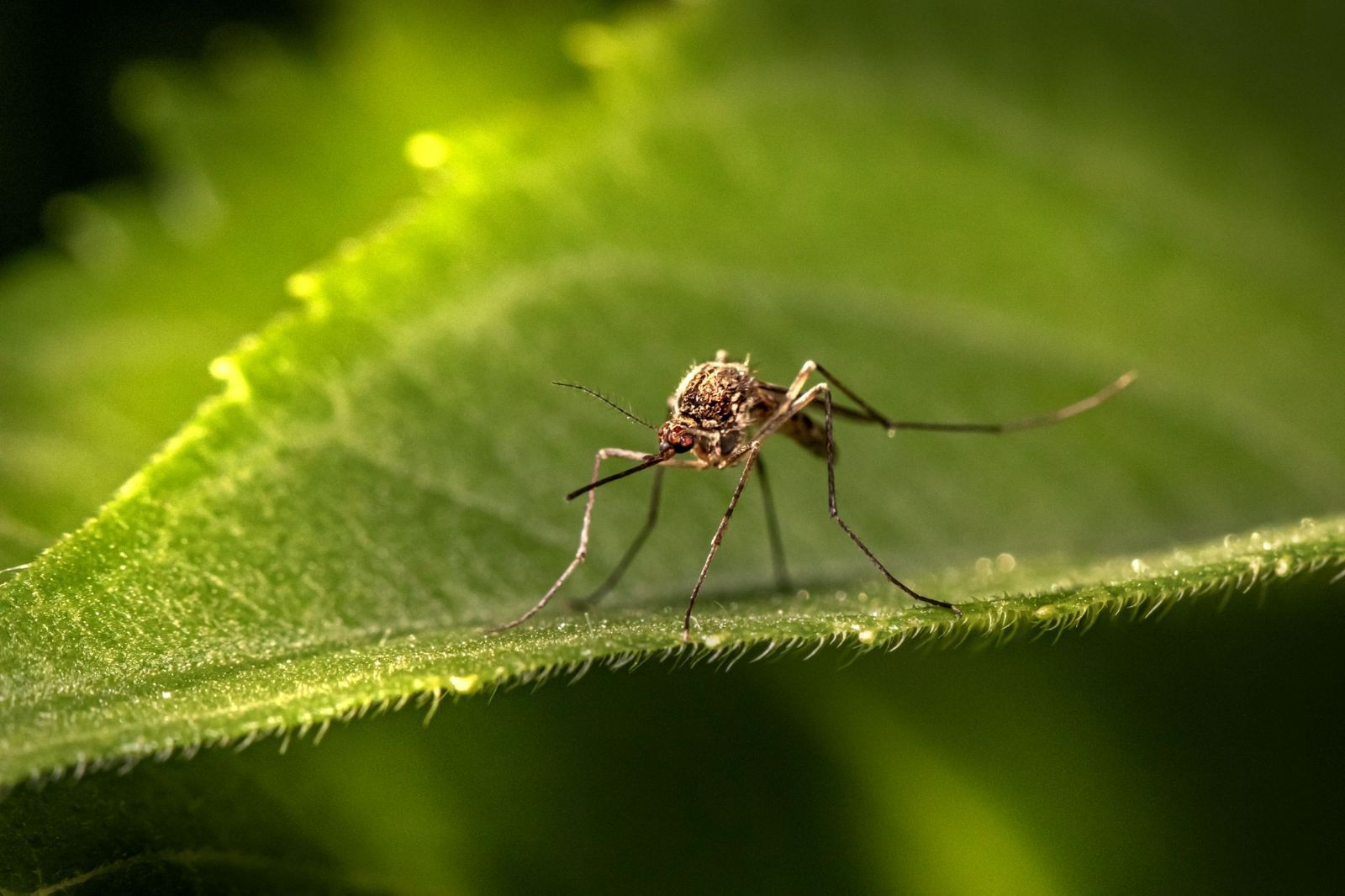
Image: Erik Karits

In 1793, the city of Philadelphia received cargo ships from Saint-Domingue (modern-day Haiti), and with them, an epidemic that lasted for half a year. Among the cargo from the Caribbean, there were yellow fever-carrying mosquitoes, which thrived in the crowded docks and in the humid spring and summer weather. The open sewers, poor waste management, and general ignorance about the disease worsened the situation, which only let up with the cold fall weather, with 5,000 people, about 10% of the population, as casualties.

Although the widely believed cause of the spread of the epidemic —foul "miasma" or bad air— was incorrect, it did lead to proper infrastructure changes to prevent a similar situation. The city targeted polluted waterways and rotten waste, exposing severely contaminated wells. Municipal water systems to provide clean drinking water were created, and paved streets with proper gutters and sewers reduced the amount of stagnant water . Additionally, the crisis led to the establishment of municipal health boards, proper quarantine facilities for incoming ships, and municipal hospitals all across the country.

5
The Triangle Shirtwaist Factory Fire (1911)
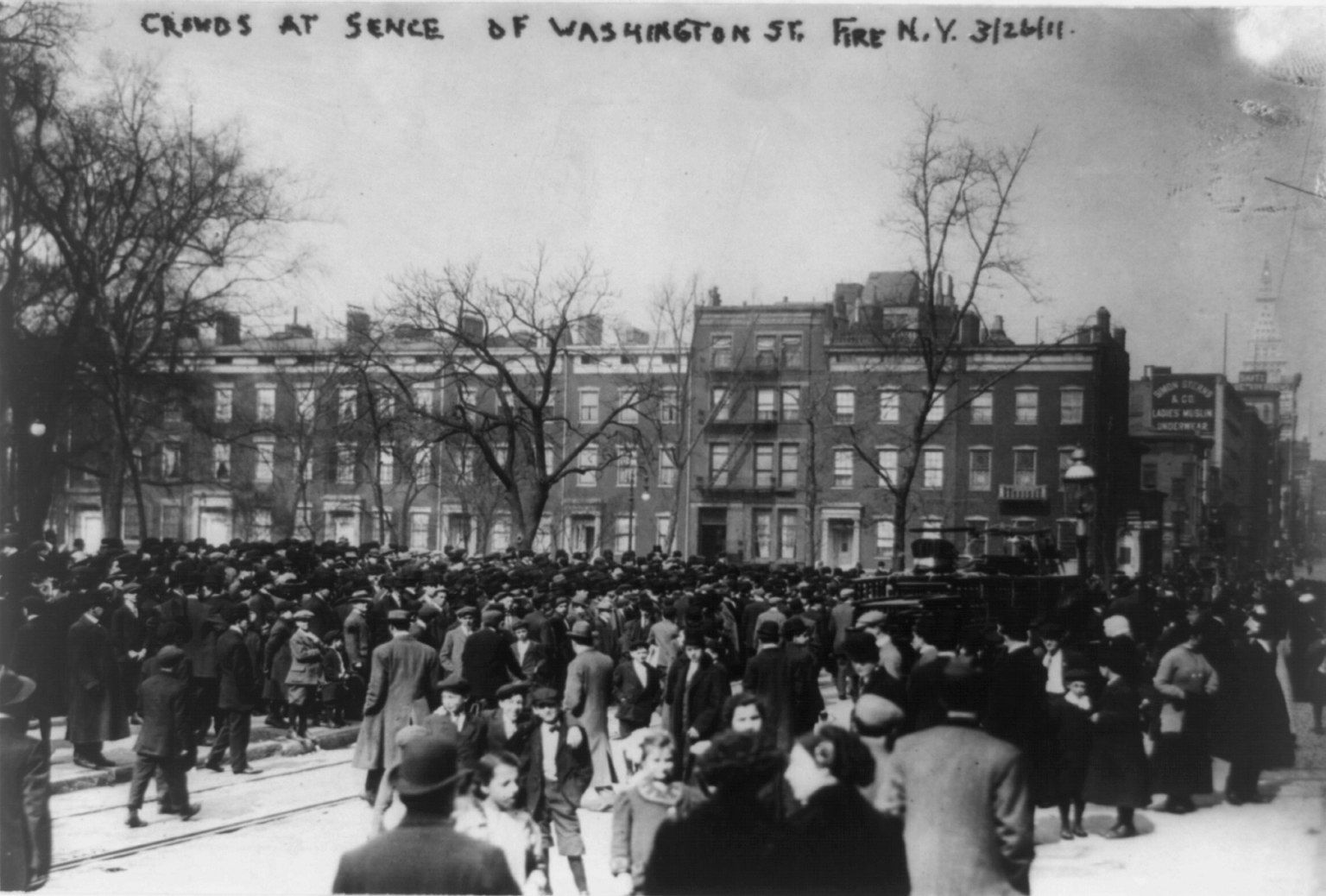
Image: George Grantham Bain Collection, Public domain, via Wikimedia Commons

Nowadays we expect any factory or building to have proper fire and safety systems in place, but not so long ago safe working conditions were not a given. Places like the Triangle Shirtwaist Factory in New York not only lacked fire alarms, sprinklers, and fire escapes, but also locked their doors during work hours to prevent unauthorized breaks and workers' union gatherings . On March 25, 1911, when a pile of rags caught fire, the single fire escape collapsed and, with firefighters' ladders only able to reach six of the ten floors, the factory became a deadly trap that took the lives of 146 workers.

New Yorkers were outraged by the conditions that led to the tragedy, and public pressure led to the establishment of an investigating commission. As a result, more than 30 safety laws were passed , making fire drills, sprinklers, fire escapes, and emergency exits mandatory, among other measures, all of which set a precedent for federal safety codes and protections. The event also strengthened labor unions all across the country, who pushed for better working conditions.

6
The Dust Bowl (1930s)
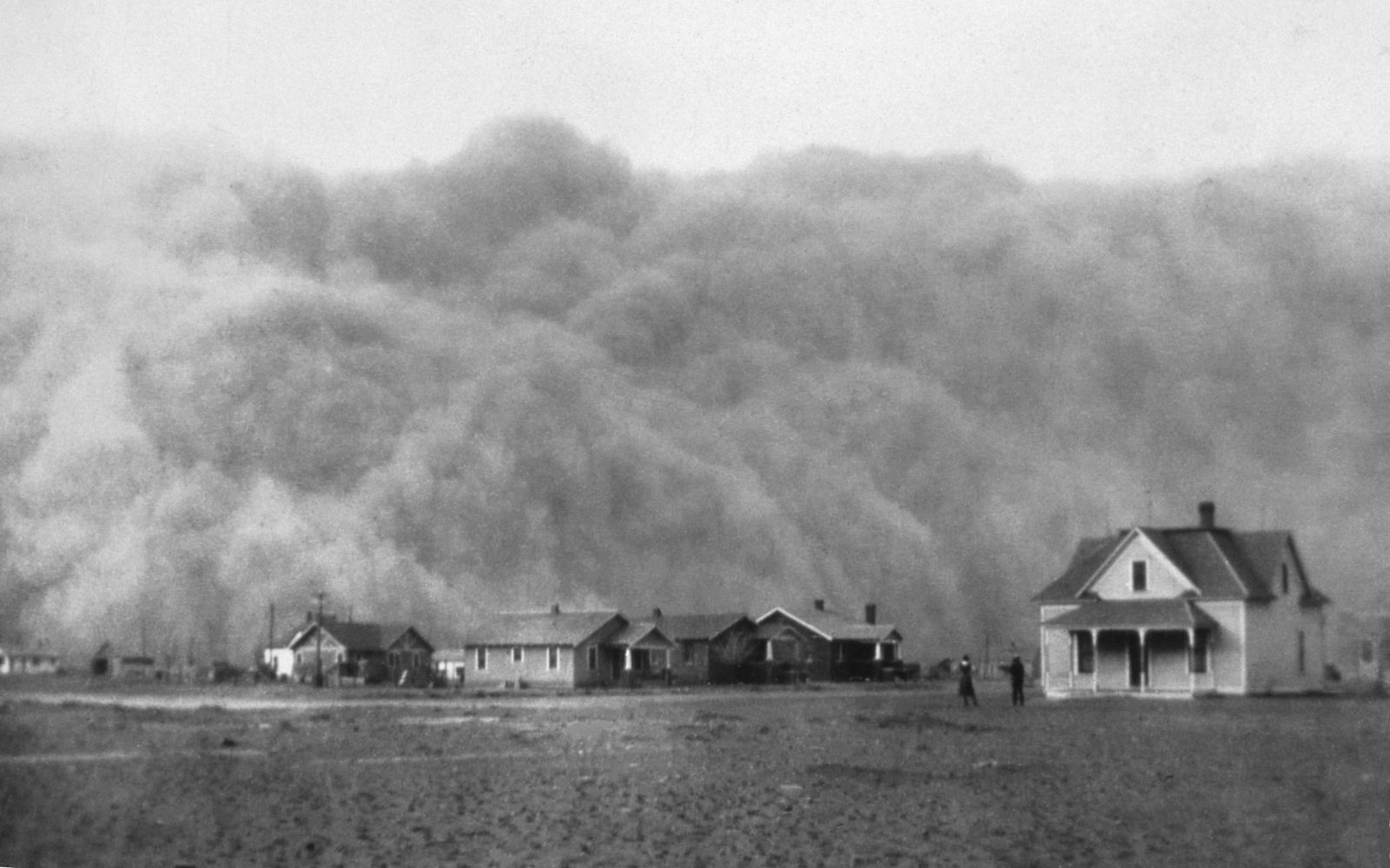
Image: George Everett Marsh Jr., Public domain, via Wikimedia Commons

The 1929 Wall Street Crash had already kickstarted the Great Depression, but the American crisis was still deepening. By the start of the 1930s, years of severe drought had hit the Great Plains (comprising ten states in the Midwest and Rocky Mountain regions) and had worsened an environment already depleted by human intervention. Native grasses that protected the topsoil had been eradicated through plowing, leaving the land vulnerable to wind erosion, while intensive cultivation of single crops had depleted the land. All this caused severe dust storms that hit the plains, further eroding the fields and suffocating the crops. In an agricultural recession, thousands of families migrated West looking for work.

The government’s response had diverse approaches. The Soil Conservation Service focused on changing detrimental agricultural practices through educating farmers on contour plowing, crop rotation, and shelterbelt tree planting. FDR’s "New Deal" plan established subsidies for farmers, requiring landowners to distribute a percentage of the subsidy to their laborers, and thousands of cattle were acquired, butchered, and distributed by the government to the affected population. Ultimately, the return of rain in the 1940s ended the drought and helped restore the soil, but the education, conservation, and relief mechanisms implemented by the government ensured that the Great Plains would not be as severely affected by drought in the future.

7
The Cold War (1945-1991)
Image: Markus Winkler

The euphoria of the WWII victory in American politics was short-lived, as the climate quickly shifted to a new threat: communism. The Cold War deeply affected domestic American life, and the paranoia of the Red Scare prompted the government to invest thousands of dollars in defense , infrastructure, political propaganda, and counter-espionage. Sadly, this paranoia also allowed government officials and politicians, like Senator Joseph McCarthy, to persecute and blacklist thousands of suspected communist sympathizers without solid evidence.

While the desire to beat the USSR in public achievements resulted in the government funding the military industry, science education and research, and sports programs, espionage and propaganda were targeted through the creation of federal agencies —among them the CIA, the NSC, and the NSA— that managed domestic security, international intelligence, information, and propaganda.

8
The Revolutionary War Smallpox Epidemic (1775–1782)
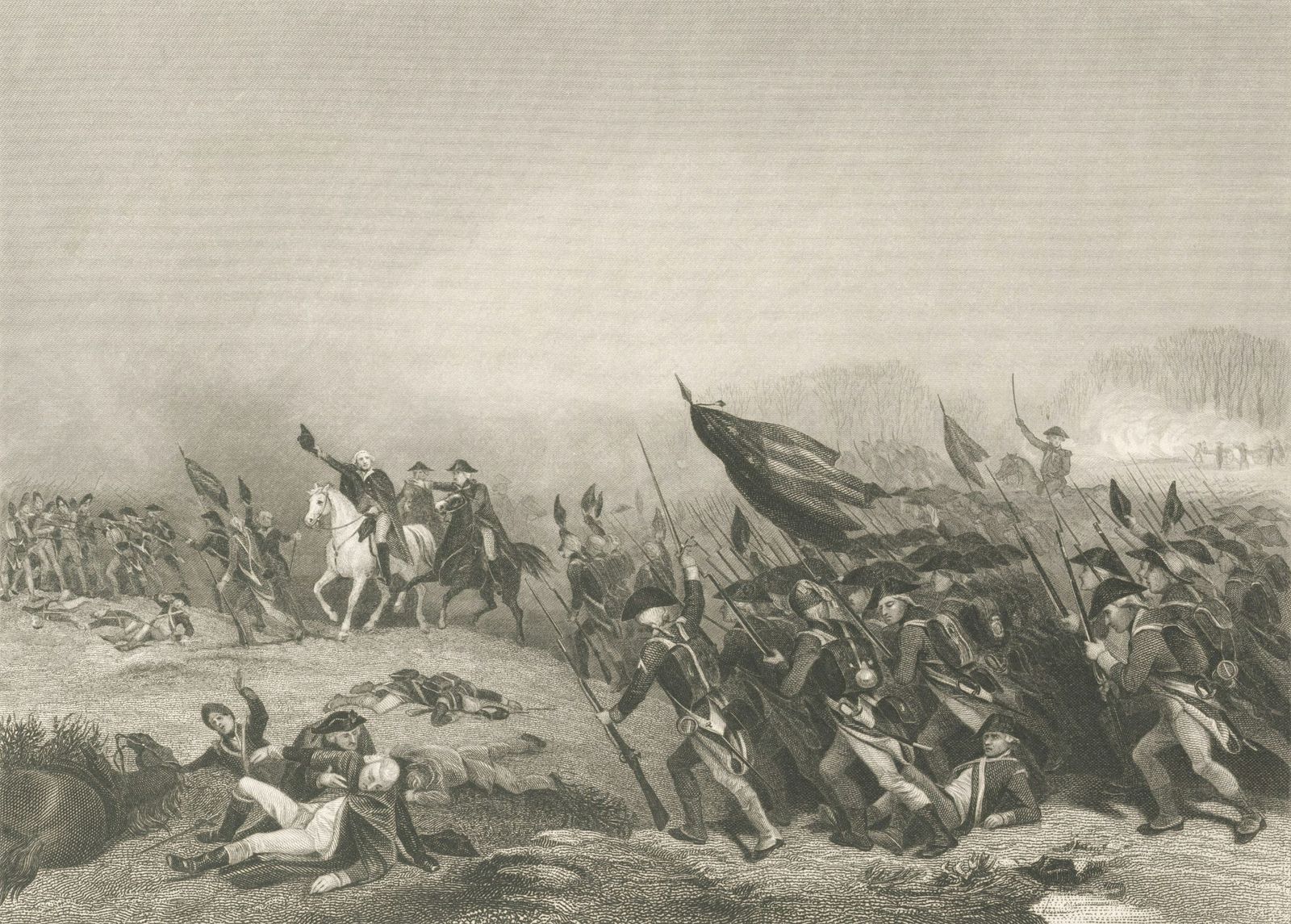
Image: The New York Public Library

The 1775 North American Smallpox epidemic lasted for nearly a decade, well beyond the Revolutionary War, but the military leaders of the Revolution were the ones to put in the efforts to contain it and prevent further spreading of the disease. In 1775, smallpox was a rampant disease in the American colonies, and a big part of the population had not been exposed to it due to isolation. This meant that, when colonists from rural areas joined the Continental Army, overcrowded military camps became a hotspot of contagion. It is estimated that smallpox caused more casualties than the fighting itself.

While smallpox decimated the Revolutionary Army, the British, who had been traditionally exposed to the disease, were immune to it. Recognizing the need to stop the spread of the disease, George Washington ordered a secret mass immunization of the troops in 1777 , a measure that drastically lowered the mortality rates among the army. While several founding fathers were in favor of mass inoculations and better public health policies, most of the colonists were distrustful of vaccinations and of government-mandated health policies. The success of Washington’s mass inoculation showed that public health policies could make the difference, and paved the way for later policies and health systems.

9
The Cholera Waves (1832–1866)
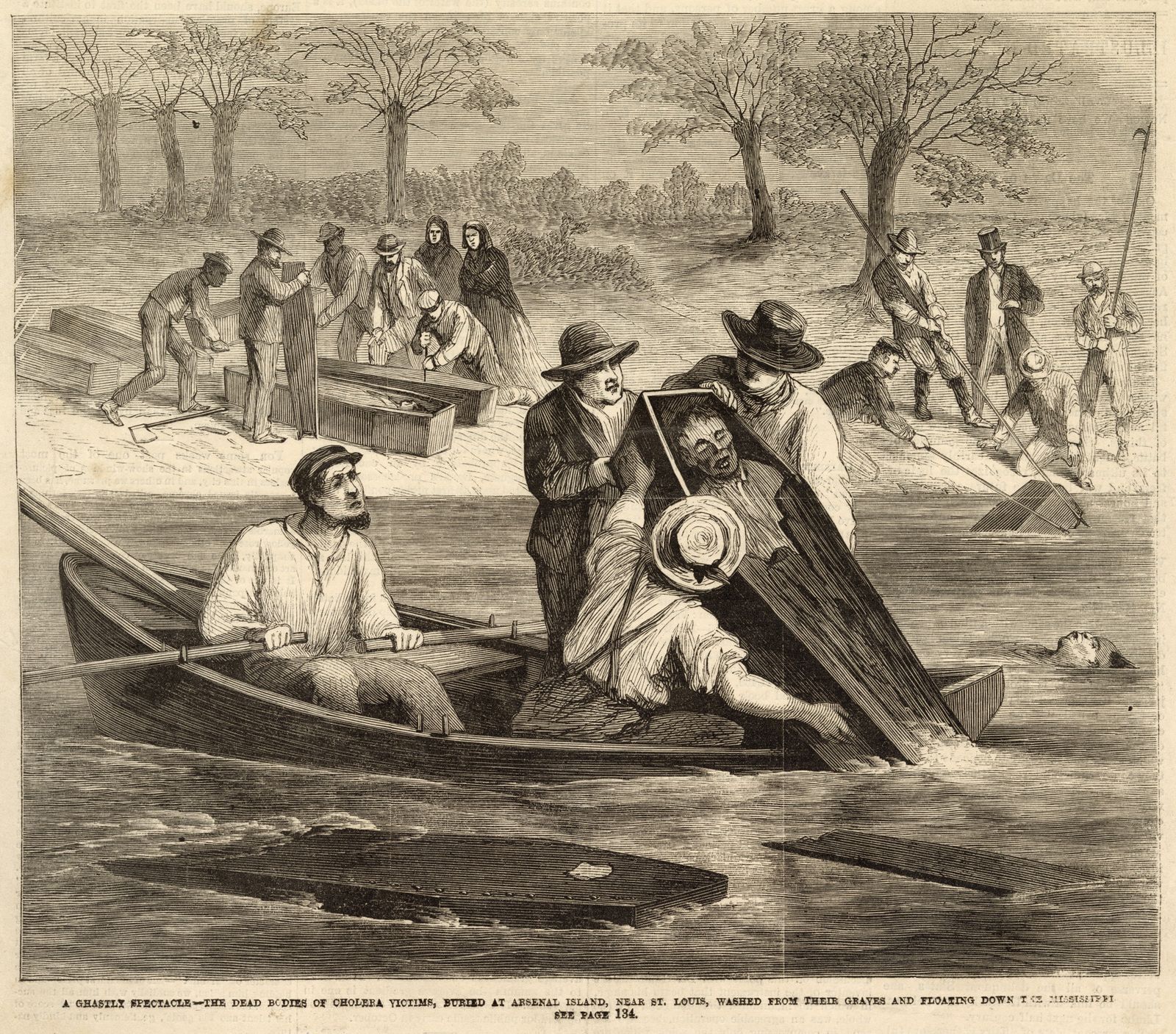
Image: Missouri Historical Society, No restrictions, via Wikimedia Commons

The U.S. went through three major cholera waves in 1832, 1849, and 1866, with tens of thousands of casualties, economic crises, and mass panic. Rapidly growing cities lacked proper sewage, and rancid water accumulated in the unpaved streets, while overcrowding and poor living conditions furthered the contagion. New travel methods such as the railroad helped introduce the disease to different regions, while doctors blamed the epidemic on "bad air" or a divine punishment.

It was not until the 1866 wave that city governments decided to change their approach to the health crisis. New York was the first city to establish a Metropolitan Board of Health, which focused on improving sanitary conditions and reforming the hospital system. Police forces encouraged (or forced) residents to clean their yards and remove manure and rotten waste, while the city strived to maintain clean streets and build sewage systems. By the time the third cholera wave hit New York, the city was prepared, and the number of casualties was much lower. Following its example, other major cities established their own permanent boards of health, implemented municipal health codes, improved their hospitals, and constructed underground sewers.

10
The Smoking and Lung Cancer Crisis (1960s)
Image: Pascal Meier

Although tobacco had been popular for decades, the 20th century saw a rise in consumption thanks to aggressive cigarette marketing campaigns in print, radio and television. Smoking was allowed everywhere, and it was portrayed as stylish and smart in movies and magazines. There was a lack of education about the addictive properties of nicotine and the chemicals present in commercial cigarettes , a fact that the tobacco industry was eager to keep concealed. By the 1960s, lung cancer and heart disease numbers had risen dramatically, forcing the government to address the situation.

The 1964 Surgeon General’s report was the first to publicly link lung cancer and heart disease with tobacco consumption. Following several reports by other specialists , public opinion about cigarettes drastically shifted, despite the efforts of the tobacco industry . In 1965, Congress passed a law requiring mandatory health warning labels on cigarette packaging, and in 1971, cigarette radio and TV ads were outlawed. As a result, from the 1960s to the 2010s, cigarette consumption decreased by nearly 50%.

11
The Pure Food and Drugs Act (1906)
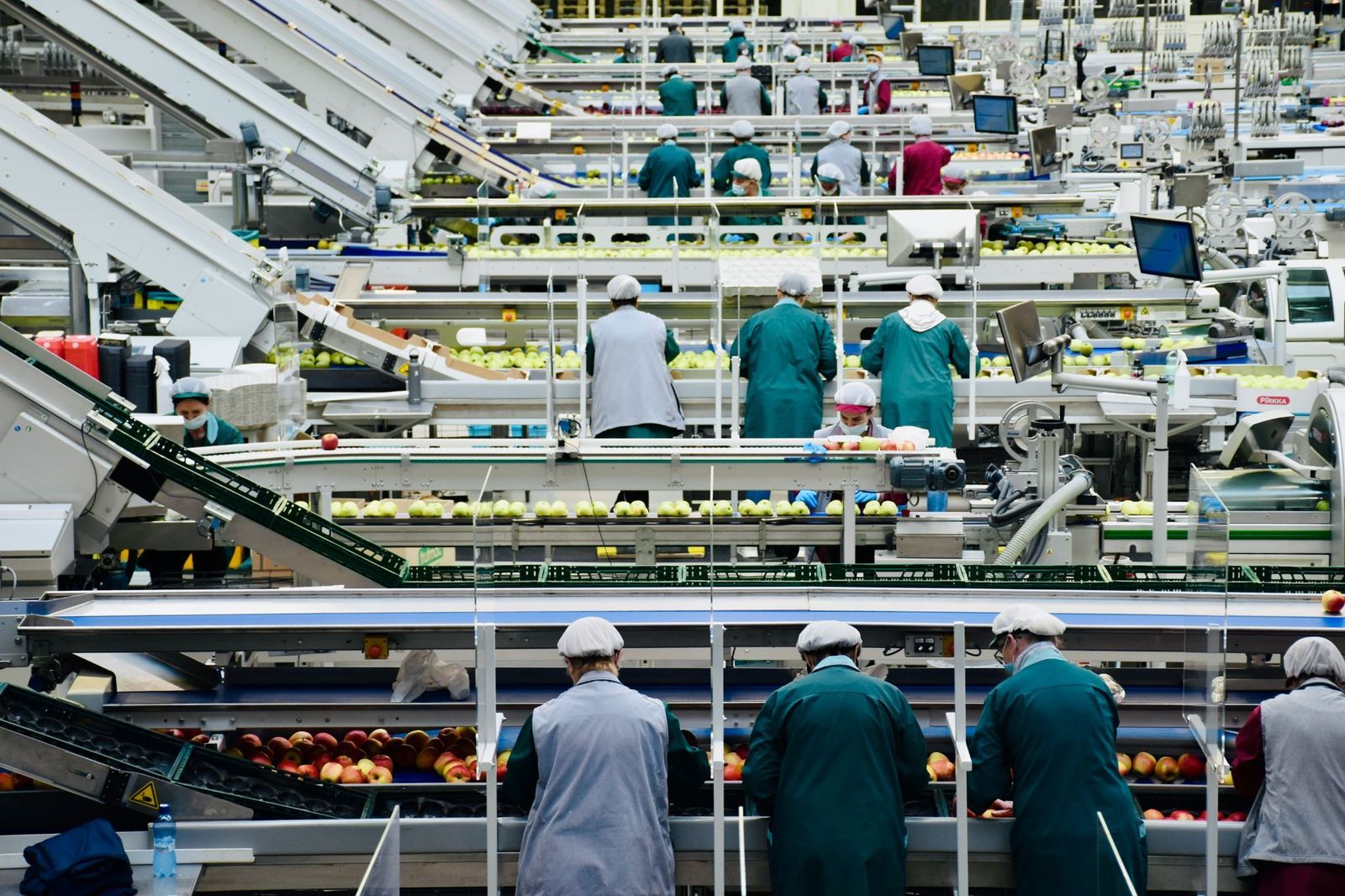
Image: Arno Senoner

If you are the kind of person who religiously scans the ingredient list on food and medicine labels, you might not know that these labels exist thanks to a novel (and several journalists' investigations). In the late 19th century, increased food and medicine demands led manufacturers to sell tainted or unsafe products with false labels and filled with unsafe preservatives. Factory sanitary conditions were also subpar, which led many journalists to write about the issue. In 1906, Upton Sinclair’s novel The Jungle described the meat-packing industry practices in a graphic and revolting way, which caused mass outrage.

The Pure Food and Drugs Act of 1906 was the first of a series of laws passed by Congress to address the issue. It created a federal agency (now called the FDA) responsible for overseeing food and drug manufacturing , banned a series of commonly used substances and active ingredients, outlawed the sale of spoiled or contaminated food, set an inspection system for factories, and acted as a baseline for future consumer protection laws.
Culture Culture 6 min read

How do the most powerful blow off steam?

Which US President spent a quarter of his presidency at a ranch in Texas?

Image: Robert LeRoy Knudsen, Public domain, via Wikimedia Commons

Running the White House is a highly demanding job, so throughout history, many presidents have found ways to relieve the pressure and stress of leading at the highest level of government. When not shaping the path of the nation, presidents have enjoyed a variety of hobbies and pastimes that provide them with leisure time to relax, unwind, and clear their minds. From golfing and swimming to reading and painting, here are 12 U.S. Presidents who found the perfect balance between pleasure and duty.

1
George Washington

Image: Alonzo Chappel, CC0, via Wikimedia Commons

Founding Father and first president of the United States, George Washington, enjoyed many recreational activities during his free time. He was a true outdoorsman—he loved hunting and fishing and was a devoted gardener and farmer .

It’s common knowledge that after deciding not to run for a third term, he retired to his Virginia farm and dedicated the rest of his life to farming. But one fact you may not know is that, in his youth, Washington was a frequent dancer —and rumor has it, he was even extremely good at it! He considered dancing an important social interaction, describing it as "so agreeable and innocent an amusement."

2
Franklin D. Roosevelt

Image: National Archives and Records Administration, Public domain, via Wikimedia Commons

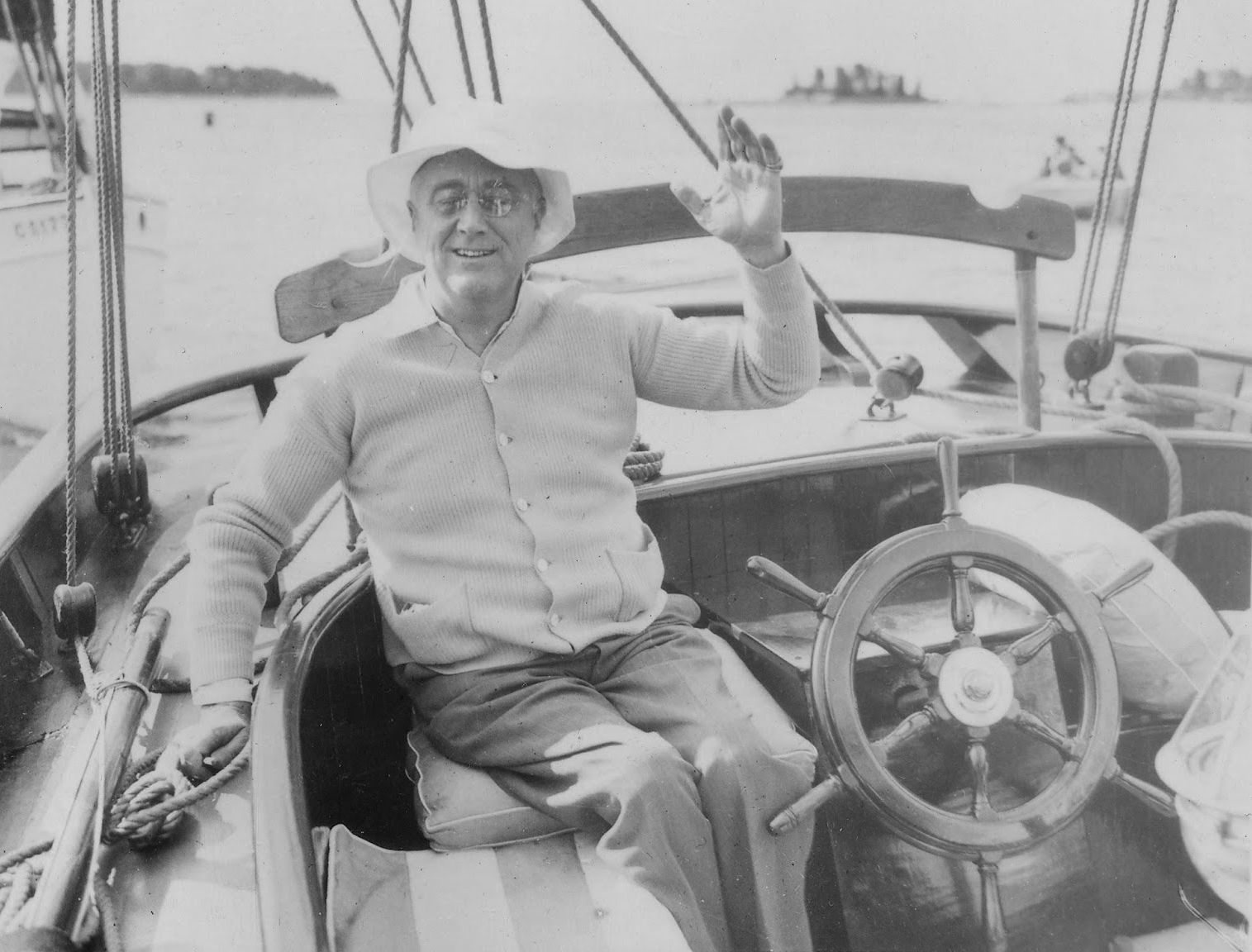
Franklin D. Roosevelt, the only president to be elected to four consecutive terms, led the country through the critical years of the Great Depression and World War II. To maintain a clear mind while navigating such tumultuous times, Roosevelt embraced a number of pastimes. He collected books , stamps , and ship models , for example.

In addition, he was an avid swimmer . After losing the ability to walk due to polio, Roosevelt began swimming three times a week to strengthen his muscles. Following his election, the New York Daily News donated a swimming pool to the White House so he could continue his practice.

3
James A. Garfield

Image: Unknown; part of Brady-Handy Photograph Collection., Public domain, via Wikimedia Commons

Before becoming the 20th president, James A. Garfield enjoyed fishing , hunting , and playing billiards . But he was also exceptionally intelligent and studious.

Though many people may know Garfield for serving just four months in office, he was also the first ambidextrous president of the United States . Not only could he write with both hands, but when asked a question, he could simultaneously write the answer in ancient Greek with one hand and Latin with the other. Pretty impressive, don’t you think?

4
Calvin Coolidge

Image: National Photo Company Collection, Public domain, via Wikimedia Commons

The 30th president of the United States liked riding horses so much that he had an electronic horse installed in the White House. The device had two speeds—trot and canter—and he rode it every day.

That said, Calvin Coolidge was a taciturn man of few words, who enjoyed taking afternoon naps, earning him the nickname "Silent Cal." He also had a very particular sense of humor . He reportedly enjoyed pressing the alarm buttons in the Oval Office or hiding in the garden shrubbery to startle his Secret Service agents.

5
Jimmy Carter

Image: Tuntematon, Valkoisen talon valokuvaajat (01/20/1977 - 01/20/1981), Public domain, via Wikimedia Commons

Throughout his life, Jimmy Carter was a curious man who never stopped doing things. He studied nuclear physics in college, could read two thousand words a minute, wrote numerous books, and even won a Nobel Peace Prize in 2002.

But what did this brilliant man like to do in his spare time? Carter had a variety of hobbies, including painting , poetry , tennis , cycling , fly fishing , and skiing . However, the one activity in which he perhaps excelled most was woodworking . After retiring, the 39th president of the United States set up a garage workshop on his Georgia ranch, where he built furniture that was later auctioned to benefit the Carter Center.

6
John Quincy Adams

Image: Pieter Van Huffel, 1769 - 1844, CC0, via Wikimedia Commons

John Quincy Adams was notoriously meticulous and kept a diary detailing his daily routine. Thanks to this, we now know that the sixth president of the United States liked to relieve the stress of the presidency with an early morning swim .

After waking up around 4 or 5 a.m., Adams would walk two miles to the Potomac River and leave his clothes on the shore before taking a swim. According to lore, one morning, a reporter named Anne Royall snatched his clothes and demanded that the president give her an interview. Adams had no choice but to answer her questions while standing deep in the river, completely naked.

7
Harry S. Truman

Image: Abbie Rowe, Public domain, via Wikimedia Commons

Harry S. Truman governed the United States from 1945 to 1953, right after World War II—a difficult and stressful time, to be sure. To blow off some steam, the 33rd president liked to immerse himself in one of his two long-time passions: reading and music .

Truman had eye problems, which prevented him from participating in sports. As a result, he became an avid reader from an early age—in fact, he once boasted of having read every book in the library by the age of 14. He was also a very skilled piano player , having started lessons at the age of seven.

8
Lyndon B. Johnson

Image: Yoichi Okamoto, Public domain, via Wikimedia Commons

Living up to the legacy of one of the most popular presidents in American history can't be easy. But it appears that the 36th president of the United States knew just how to maintain a good balance between responsibility and leisure. During his five-year administration, Lyndon B. Johnson spent 490 days —about a quarter of his presidency— at the LBJ Ranch in Stonewall , Texas, combining work and vacation so seamlessly that the place became known as "The Texas White House."

At this ranch, Johnson had an extensive collection of vehicles . Among them was the Amphicar, an amphibious passenger car built in the 1960s, which he used to play pranks on his visitors.

9
Richard Nixon

Image: White House Photographer, Public domain, via Wikimedia Commons

Not many people know this, but Richard Nixon was an artistic man. He enjoyed theater—he even met his future wife during a community theater audition—and he could play five musical instruments : piano, saxophone, violin, clarinet, and accordion.

But he was also into sports. In addition to being a huge football fan, he and First Lady Pat Nixon enjoyed bowling . In fact, the Nixons were responsible for moving the White House bowling alley back to the Executive Mansion after it had been relocated to a nearby building years earlier.

10
George W. Bush

Image: Series: Photographs Related to the George W. Bush Administration, 1/20/2001 - 1/20/2009Collection: Records of the White House Photo Office (George W. Bush Administration), 1/20/2001 - 1/20/2009, Public domain, via Wikimedia Commons

During his free time, George W. Bush enjoyed golfing, biking, attending baseball games, and reading American history. He was also a very competitive runner .

However, when the 43rd president of the United States left office, he was only 62 years old—plenty of time to acquire a new pastime. In the years following his time in the White House, Bush surprised many by turning to painting . "I’m a painter," he told Jay Leno on The Tonight Show .

11
Dwight D. Eisenhower

Image: ddd

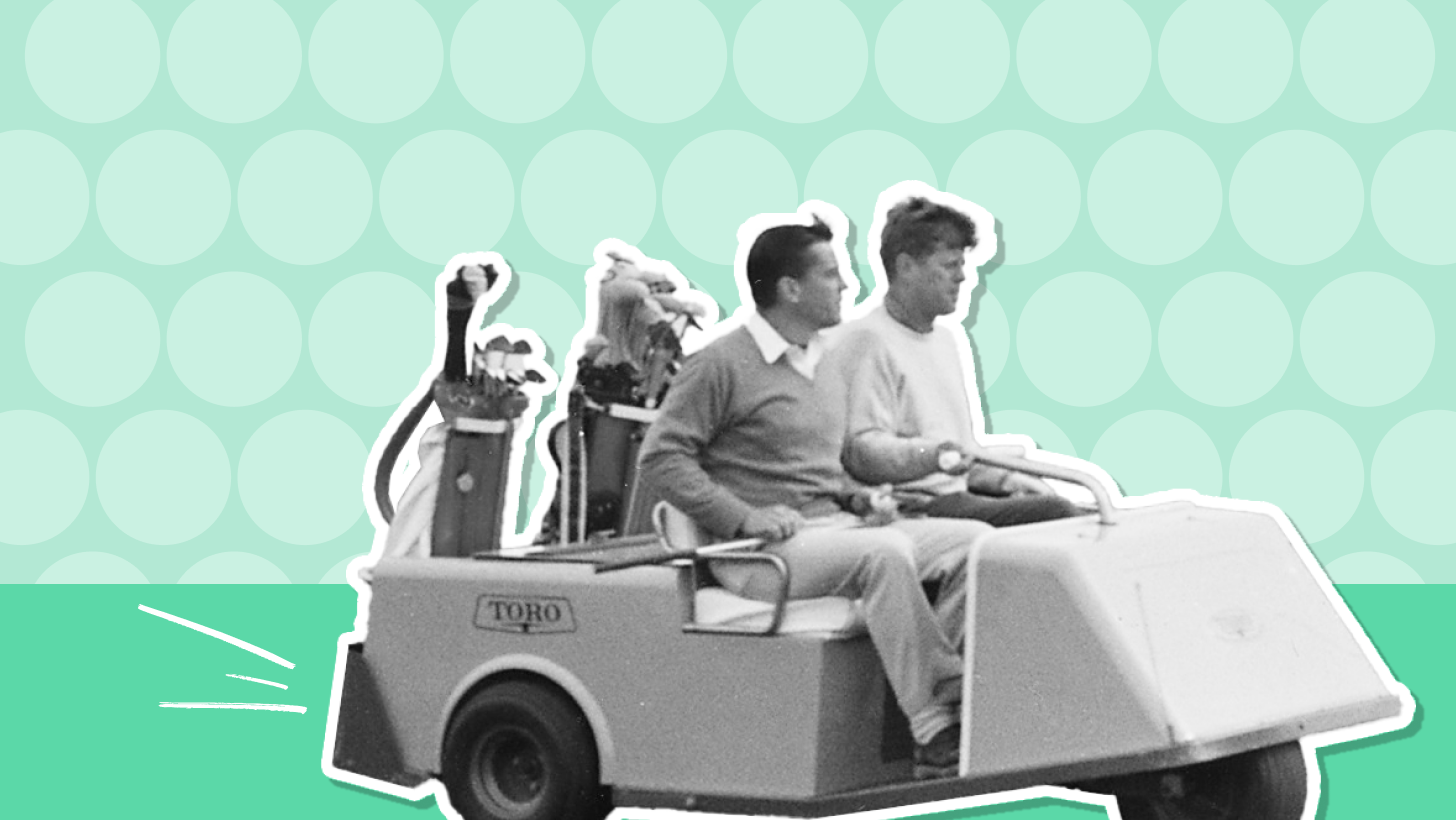
To relieve the stress of leadership, Dwight D. Eisenhower maintained a number of hobbies that he cultivated throughout his life. One of his main passions was golf , which he played during and after his presidency. He even kept a small putting green in the White House garden and had a four-hole practice course installed at Camp David.

But that’s not all. Ike enjoyed fishing, hunting, shooting, watching Western movies, and playing bridge. He was also an avid painter who often captured natural landscapes and gave them as gifts to friends. After leaving the White House, Ike settled on a farm near Gettysburg, Pennsylvania, where he raised Black Angus show cows that won blue ribbons at state and county fairs.

12
John F. Kennedy

Image: Robert LeRoy Knudsen, Public domain, via Wikimedia Commons

John F. Kennedy was an exercise enthusiast and something of a jock. He played many sports : golf, tennis, swimming, baseball, and football. Despite being an athletic man, he enjoyed smoking between four and five cigars a day—his favorite brands were Upmanns and Monticellos!

But perhaps the hobby that most helped him relax from the tensions of the presidency was boating. Like many members of his family, John F. Kennedy loved to sail and was often photographed at sea with his wife and young children.

Geography Geography 5 min read

Extraordinary secrets about the capitals of the United States

The only state capital without a McDonald's and 11 other fun facts

Image: AmericanBenchCraft

Can you guess which is the only U.S. capital built on top of an extinct volcano? What about which is the oldest state capital, the least populated, or the one with the coldest temperature? If you're dying to know the answers to these questions, read on to discover 12 fun facts about our state capitals that you probably didn't know!

1
Jackson, Mississippi

Image: Engineers' office, department of Tennessee, Public domain, via Wikimedia Commons

Did you know Jackson, Mississippi, is named after the 7th U.S. President, Andrew Jackson? It is one of the four state capitals named after American presidents —the other three are Jefferson City (Missouri), Lincoln (Nebraska), and Madison (Wisconsin).

Jackson is the only U.S. capital built on top of an extinct volcano. Interestingly, during the Civil War, the city was burned by Union troops, giving it the nickname "Chimneyville". In addition, Jackson is best known for being the center of the civil rights movement during the 1950s and 1960s.

2
Santa Fe, New Mexico

Image: Wendy Shervington

Founded by Spanish colonists in 1610 as the capital of the colony of New Mexico, Santa Fe is the oldest U.S. city that still functions as a state capital today.

But that's not the only peculiarity of this quaint city with a temperate climate and a unique historical and cultural richness. At 7,000 feet above sea level, Santa Fe is also the highest U.S. capital.

3
Honolulu, Hawaii

Image: Daniel Lee

Known for its spectacular beaches and rich cultural heritage, Honolulu is the only state capital not on the North American mainland. Considered the birthplace of modern surfing, it also has the highest average annual temperature of any U.S. state capital.

But those aren't the only interesting facts about Hawaii's capital. Here are a few equally (or more) crazy ones: it hosts the only royal palace in the United States (Iolani Palace), the island is made up of volcanic soil, and it houses the world's largest open-air shopping mall (Ala Moana Center).

4
Annapolis, Maryland

Image: Terry Granger

Annapolis is a historic city on the shores of the Chesapeake Bay, known for its colonial architecture, nautical tradition, and academic value. But did you know it is also the smallest U.S. capital by land area? Just 6.7 square miles!

Annapolis was also one of the nine capitals the United States has had throughout its history. For nine months during the Revolutionary War, Maryland's current state capital served as the seat of the Confederation Congress.

5
Bismarck, North Dakota

Image: NASA Astronaut, Public domain, via Wikimedia Commons

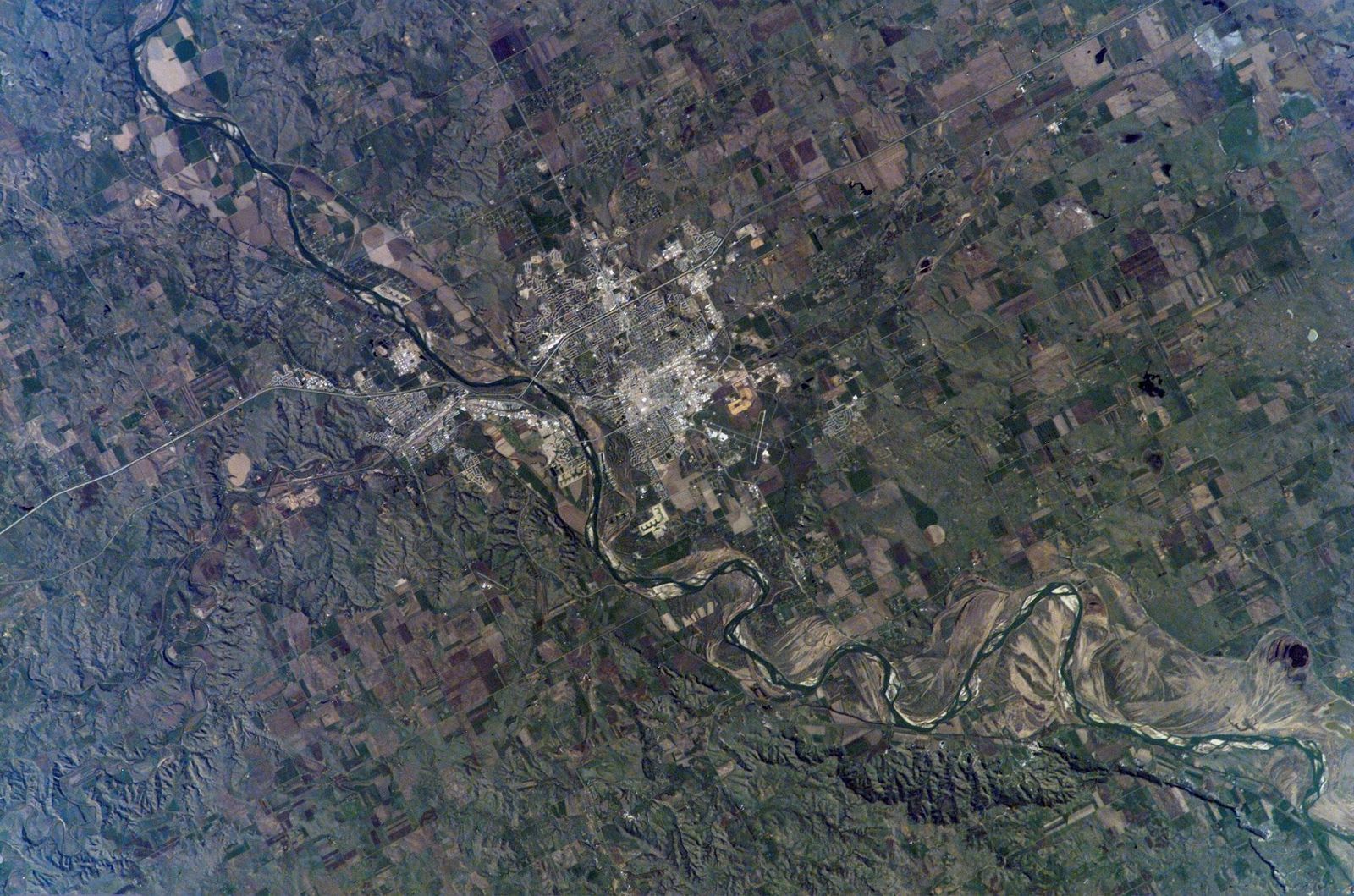
If you thought Juneau, Alaska, had the lowest average winter temperature of all state capitals, think again! It's actually Bismarck, North Dakota, where the coldest temperature ever recorded was -45°F. Imagine that!

Bismarck was founded in 1872 on the banks of the Missouri River. The city was named after Otto von Bismarck, the chancellor of Germany, to attract German investors. Another fun fact? In 1930, Bismarck and Fargo had a dispute, known as the "Capitol Tower War," over which city should be the state capital.

6
Charleston, West Virginia

Image: Carol M. Highsmith, Public domain, via Wikimedia Commons

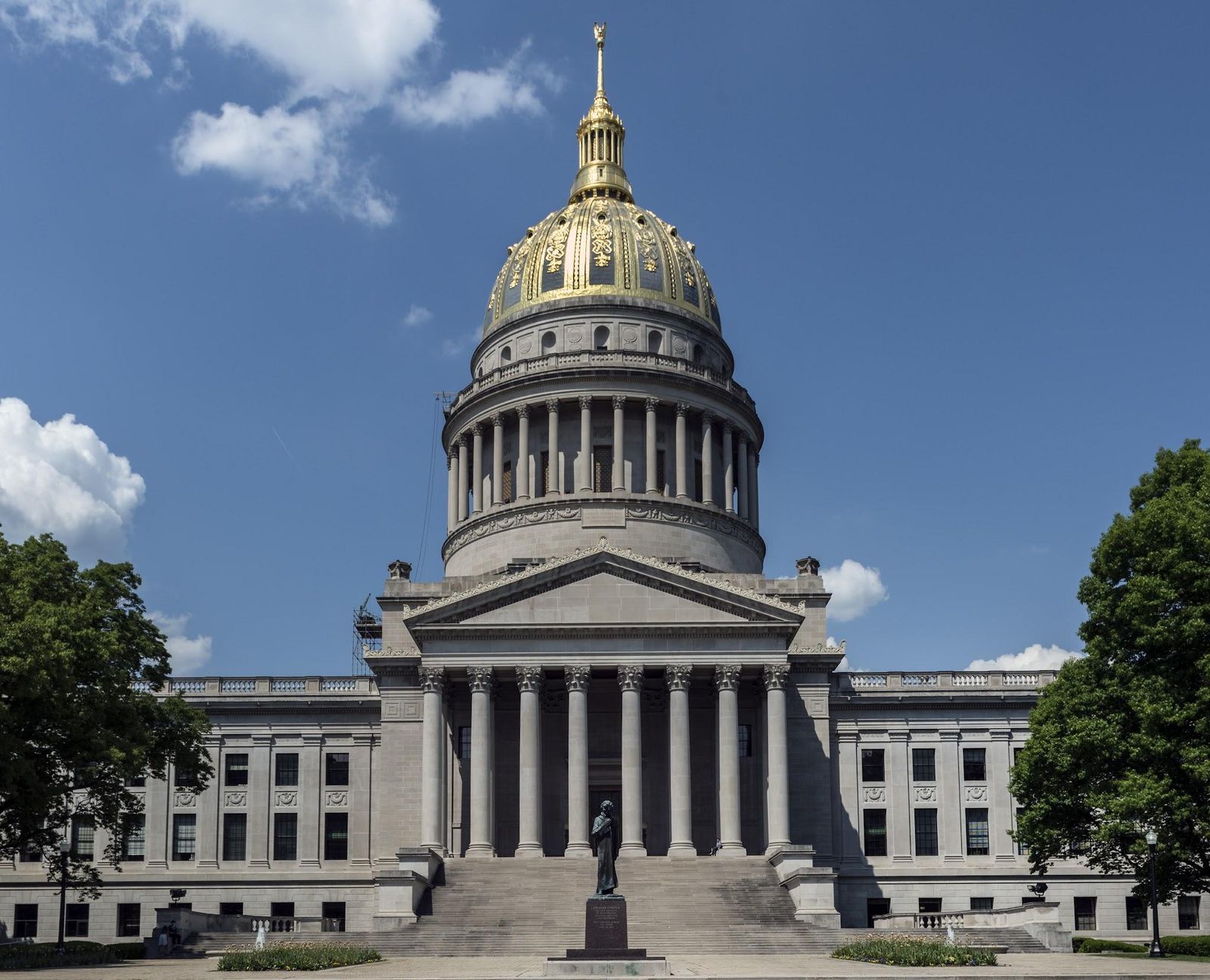
Did you know that the original name of West Virginia's capital was Charles Town in honor of the father of Colonel George Clendenin, one of the first settlers?

Charleston is best known for offering a unique combination of history, culture, and outdoor adventure.

7
Hartford, Connecticut

Image: Balazs Busznyak

Founded in 1635, Connecticut's capital is one of the oldest cities in the U.S. Hartford is known for being a key cultural center in New England. It was the home of writer Mark Twain and is home to historic sites such as the State Capitol, the Harriet Beecher Stowe House, and Bushnell Park, the oldest public park in the country.

Hartford is also called the "insurance capital of the world" due to the presence of major insurance companies. But the city's most curious fact is that it was where Teddy Roosevelt, aboard the Columbia Electric Victoria Phaeton, took the first presidential automobile ride in history!

8
Harrisburg, Pennsylvania

Image: Katherine McAdoo

Pennsylvania's capital city is best known for its role in the Civil War and the Underground Railroad. Located on the banks of the Susquehanna River, Harrisburg has been an important center of transportation and commerce. Today, it is known for its historic architecture, museums, and special events.

Harrisburg is also home to the longest stone arch bridge in the world, the Rockville Bridge, built in 1902. Oh, and in 1979, it came close to a nuclear disaster due to the accident at the Three Mile Island plant, the worst in U.S. history —but that's a longer story for another article!

9
Olympia, Washington

Image: Peter Robbins

Located at the southern tip of Puget Sound, Washington's state capital is known for its natural beauty and vibrant culture. But did you know Olympia is the northernmost state capital in the contiguous U.S.?

Oh, and it's also a great place to try some of the best craft beer in the country.

10
Salt Lake City, Utah

Image: Cong Wang

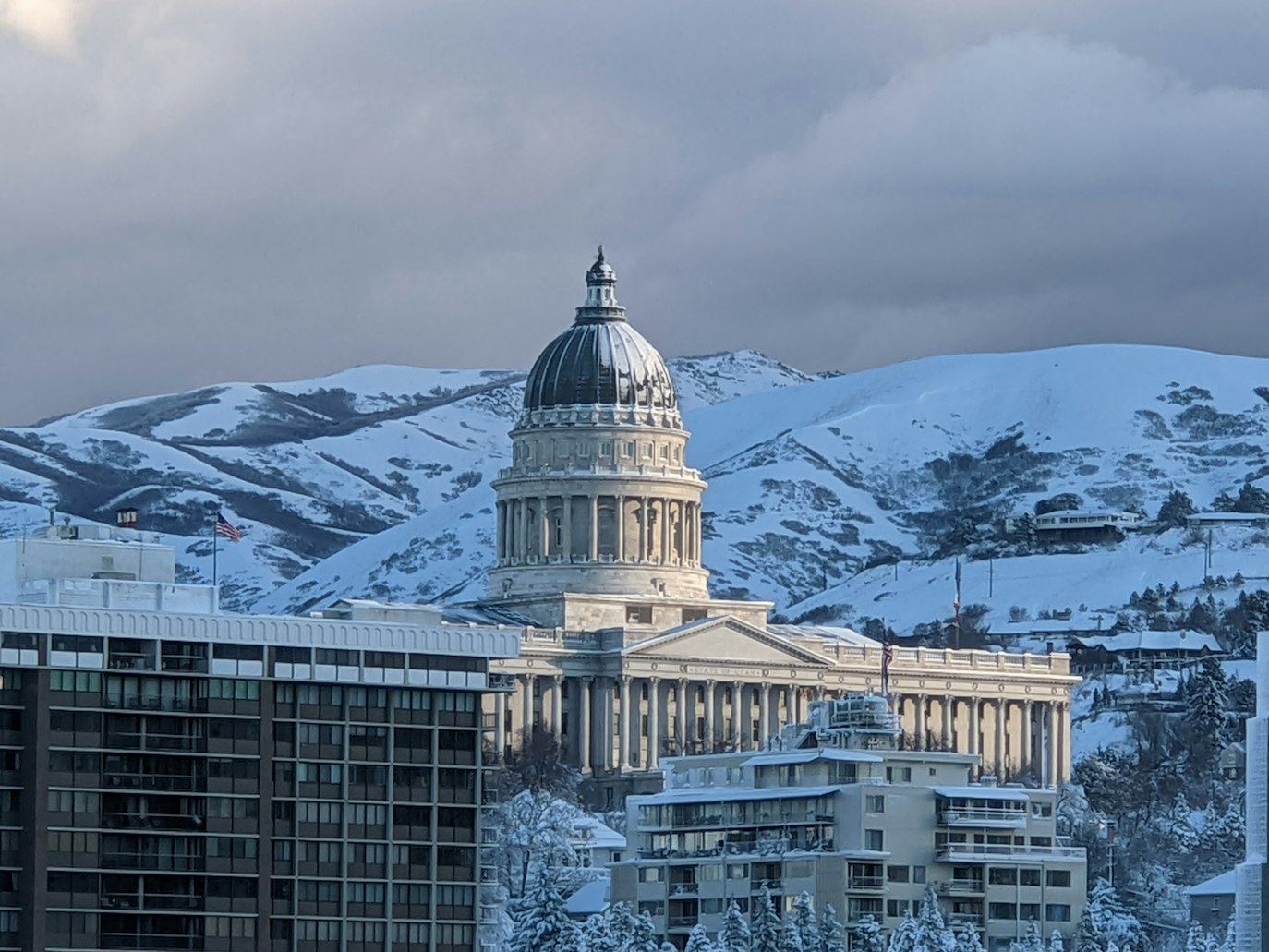
Utah's state capital is popular for being one of the best places to ski in the United States. But that's not all! Salt Lake City is also the only state capital with three words in its name. Have you ever thought about that?

It has the largest Mormon population in the country and is the world headquarters of the Church of Jesus Christ of Latter-day Saints. Another fun fact? Salt Lake City is home to more plastic surgeons per capita than any other state capital!

11
Montpelier, Vermont

Image: John Holm

Named after the French city of the same name, Montpelier is the least populated state capital, with a population of just 7,900. Probably for that reason, Vermont's capital prides itself on its small local businesses: it is the only state capital that doesn't have a McDonald's or a Starbucks. Could you live without these fast food chains? It doesn't have a Walmart store either!

12
Topeka, Kansas

Image: Nils Huenerfuerst

Topeka, Kansas’s state capital, has several interesting tidbits. For example, did you know its name, of Native American origin, means "a good place to dig potatoes"? Interesting, don’t you think?

In 2010, Topeka temporarily changed its name to "Google, Kansas" to attract the attention of the internet giant and become the capital city of fiber optics. Frivolous facts aside, Topeka was also very important in the history of the civil rights movement.

Explore more American facts

Choose your favorite category!

General
General

As American as apple pie—the very best America has to offer!

Culture
Culture

Delve into the astounding richness of American lore.

Geography
Geography

Hop in and explore vast and diverse American landscapes.

History
History

Discover the key moments that shaped the United States.