General General 5 min read

Historic ghost towns open for visitors

One ghost town has a fire that's burned for 60 years
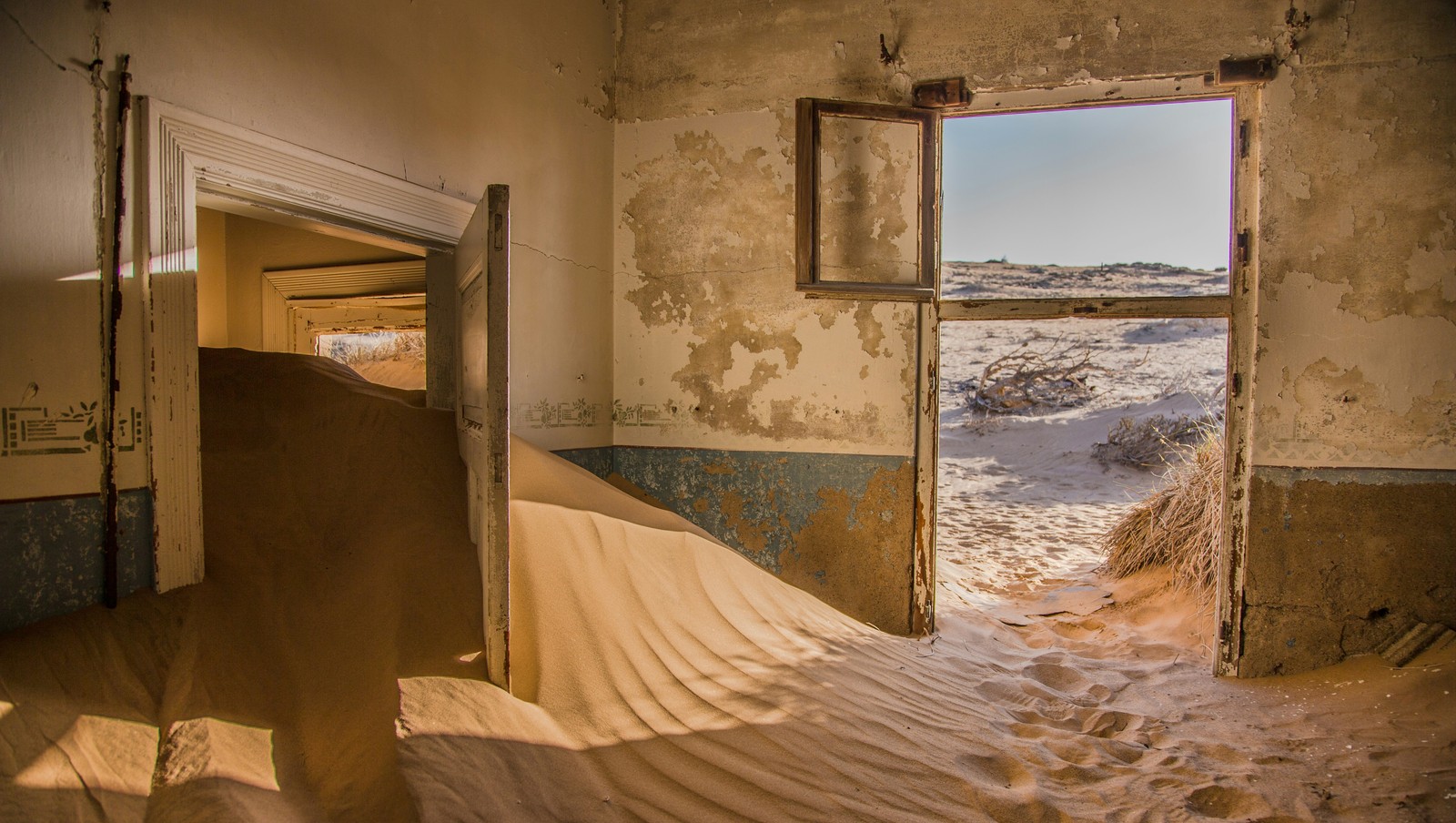
Image: jean wimmerlin

Ever wondered what happened to those Wild West towns after the gold rush ended? Or where all those miners went when the silver ran out? Across America, dozens of ghost towns sit frozen in time, waiting for curious travelers like you to explore their dusty streets . Get ready to explore ten of America's most fascinating ghost towns that are still standing and open for visitors.

1
Bodie, California
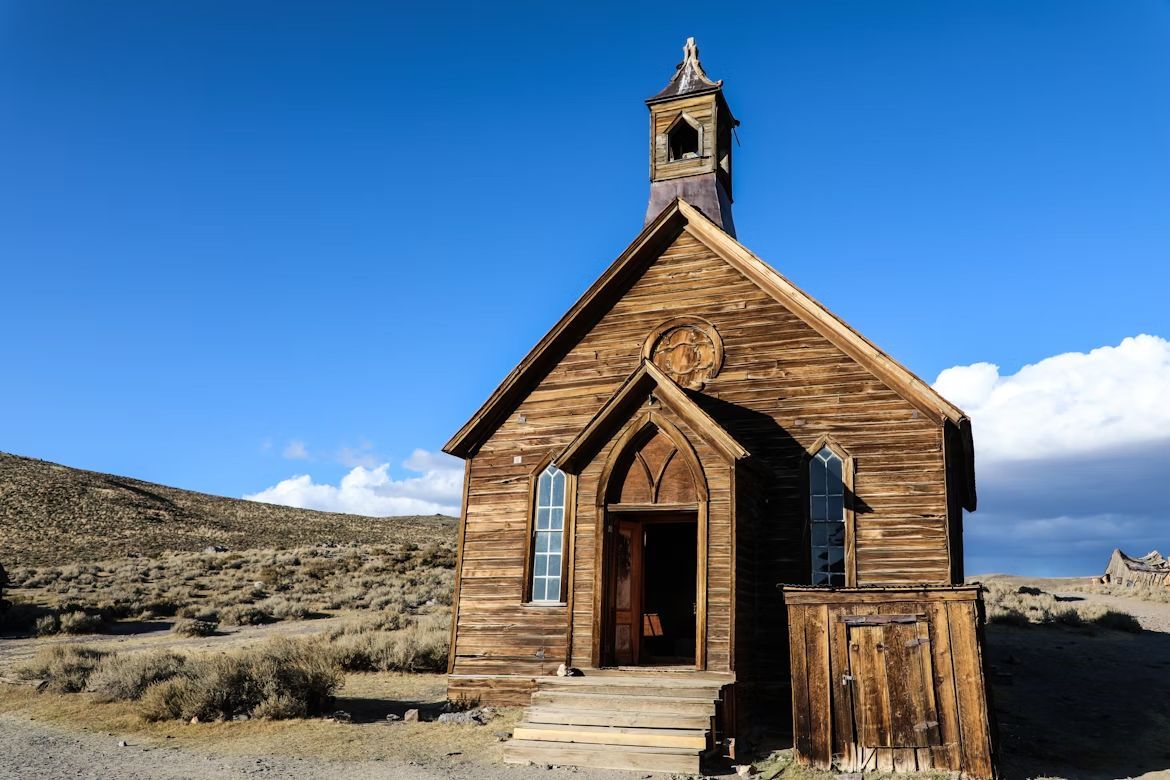
Image: Michael & Diane Weidner

This former gold-mining hub in the Sierra Nevada once boasted nearly 10,000 residents, dozens of saloons, and a reputation for being one of the wildest towns in the West. Today, it's preserved in a state of "arrested decay," meaning the buildings are maintained exactly as they were found, complete with dishes still on tables and goods still on store shelves .

The California State Parks system manages Bodie, which means it's well-maintained but authentically eerie. About 200 buildings still stand, including a church, schoolhouse, and that infamous red-light district (though considerably quieter now).

2
Jerome, Arizona

Image: Strange Happenings

Perched impossibly on Cleopatra Hill in central Arizona, Jerome has pulled off the ultimate comeback story. This former copper mining town was literally sliding down the mountain in the 1950s, but instead of becoming a pile of rubble at the bottom, it reinvented itself as an artist colony and tourist destination. Today, it's one of the few ghost towns where you can actually spend the night, grab dinner, and browse art galleries .

The town's steep streets are lined with buildings that seem to defy gravity, and many claim the place is seriously haunted: the Jerome Grand Hotel, a former hospital, supposedly has particularly active spirits. Whether you believe in ghosts or not, you'll definitely believe in the impressive engineering it took to build a town on a 30-degree slope.

3
Rhyolite, Nevada
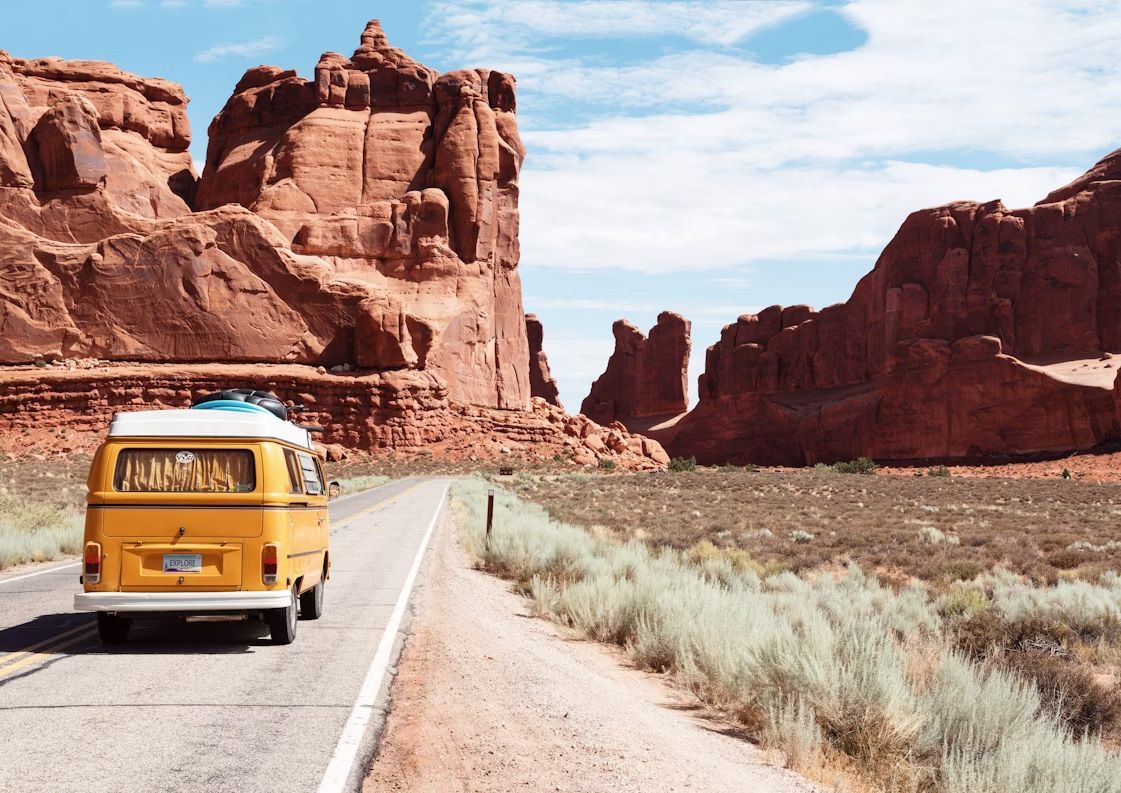
Image: Dino Reichmuth

In 1905, this place exploded from nothing to a town of 5,000 people in just two years, complete with electric lights, a stock exchange, and even an opera house. Then the financial panic of 1907 hit, the mines proved less profitable than hoped, and by 1916, the lights went out for good.

What makes Rhyolite especially photogenic are the ruins themselves—massive concrete structures and the famous Bottle House, built entirely from beer and liquor bottles . The three-story bank building and the remnants of the jail are particularly impressive, showing just how convinced everyone was that this town would last forever.

4
St. Elmo, Colorado

Image: Arturo Rivera

Tucked in the Sawatch Range at 10,000 feet, St. Elmo is Colorado's best-preserved ghost town and one of the most visited. Founded in 1880 as a mining and rail hub, it once had a population of 2,000 people and all the amenities a Victorian-era miner could want.

What really sets St. Elmo apart is accessibility and atmosphere. It's an easy drive from nearby towns, and during the summer months, a few seasonal residents actually run the general store, selling snacks and souvenirs .

5
Bannack, Montana
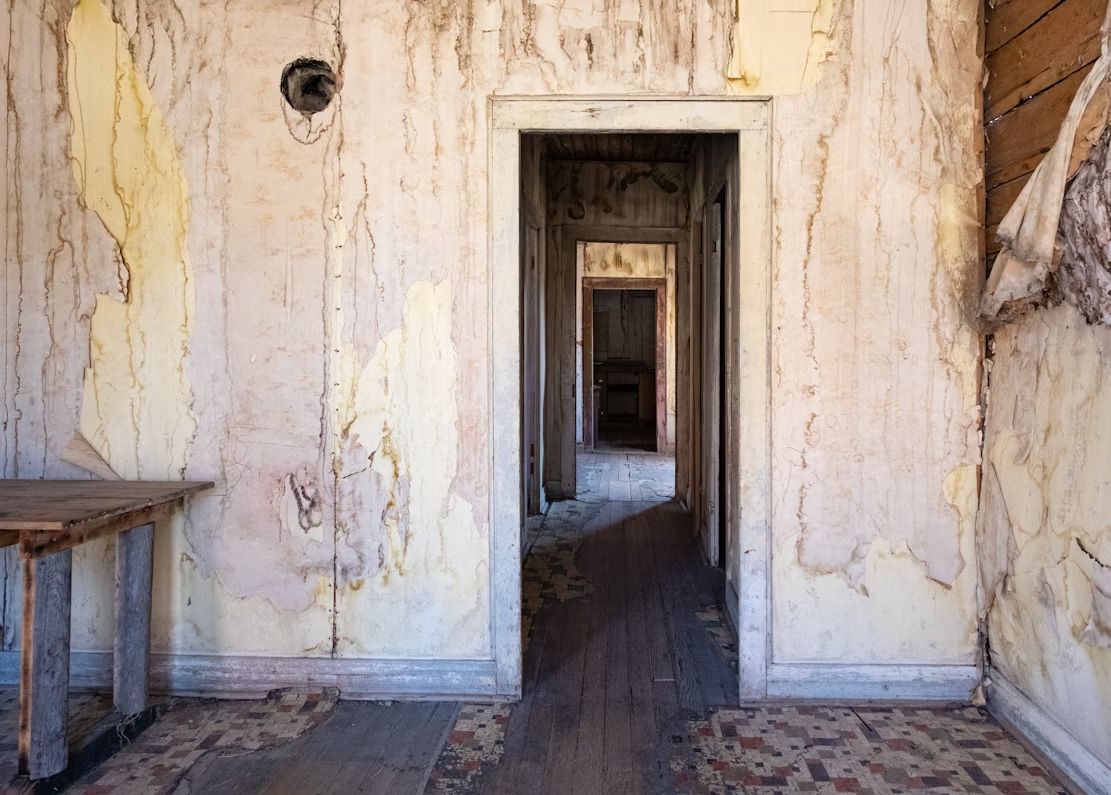
Image: Donald Merrill

Montana's first territorial capital, Bannack, sprang up in 1862 after gold was discovered in Grasshopper Creek. Within a year, it had 3,000 residents and a serious problem with road agents (fancy term for bandits). The town's sheriff, Henry Plummer, turned out to be secretly leading the gang of robbers—one of the West's great scandals. After Plummer was hanged by vigilantes in 1864, Bannack settled down, but eventually, the gold ran out, and so did the people. The last residents left in the 1970s.

Now a well-preserved state park, Bannack features over 60 structures you can explore, including the hotel, church, schoolhouse, and Plummer's old jail . They even host a popular "Bannack Days" event each July with period costumes, demonstrations, and activities.

6
Grafton, Utah
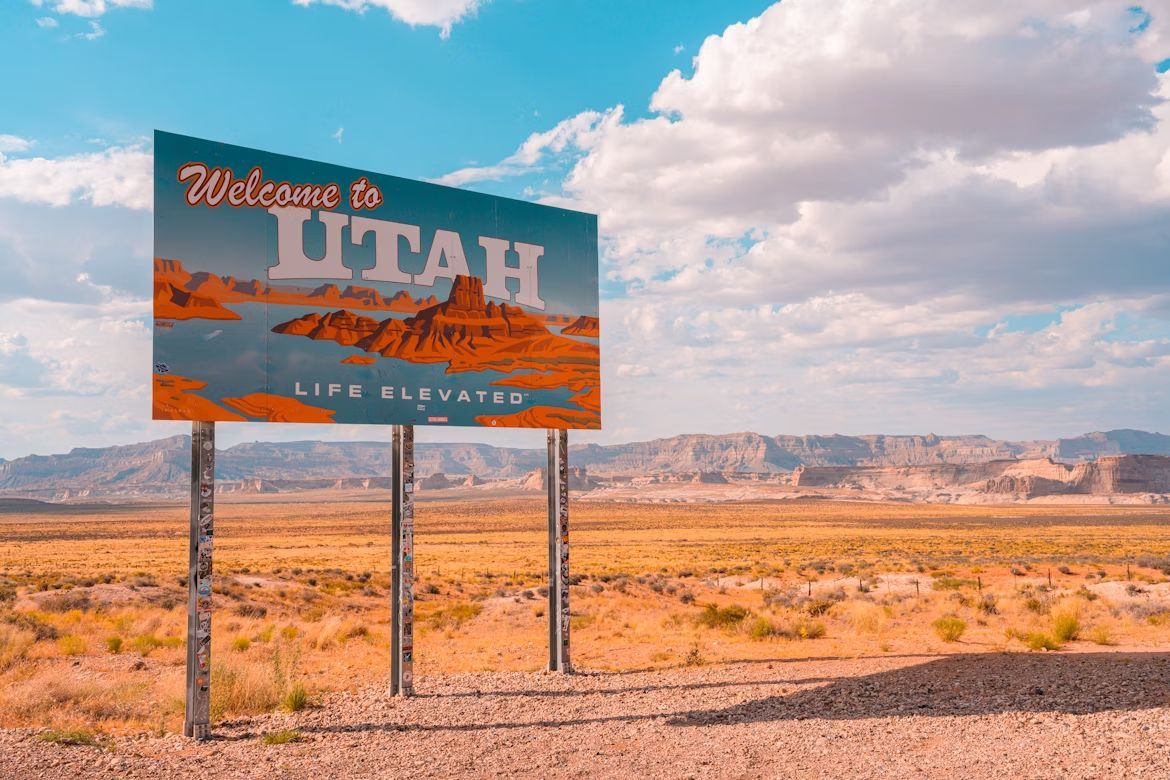
Image: Arturo Rivera

This tiny Mormon settlement near Zion National Park has been featured in dozens of movies and commercials, most famously in "Butch Cassidy and the Sundance Kid." Founded in 1859, Grafton struggled with flooding from the Virgin River, conflicts with Native Americans, and general isolation. By 1944, the last resident had left, but unlike many ghost towns, Grafton's buildings were later restored and maintained by preservation groups.

Today, only a handful of structures remain—a schoolhouse, a church, and a few cabins—but they're set against absolutely spectacular red rock canyon scenery . The Grafton Cemetery, still maintained by descendants, sits on a hill with jaw-dropping views. It's free to visit, though donations are encouraged for preservation efforts.

7
Terlingua, Texas
Image: Glen Carrie

Once a thriving mercury mining town with 2,000 residents, it collapsed in the 1940s when the mines closed. Today, it's home to about 60 full-time residents, plus a rotating cast of artists, wanderers, and people who just couldn't handle civilization anymore.

The original townsite features impressive ruins of the Chisos Mining Company headquarters, a crumbling movie theater, and a cemetery with elaborate Mexican grave decorations . But the real attraction is the eccentric present-day community that's grown up around the ruins. You can stay in unique lodgings, eat at the famous Starlight Theatre, and experience some of the darkest night skies in the continental US.

8
Garnet, Montana
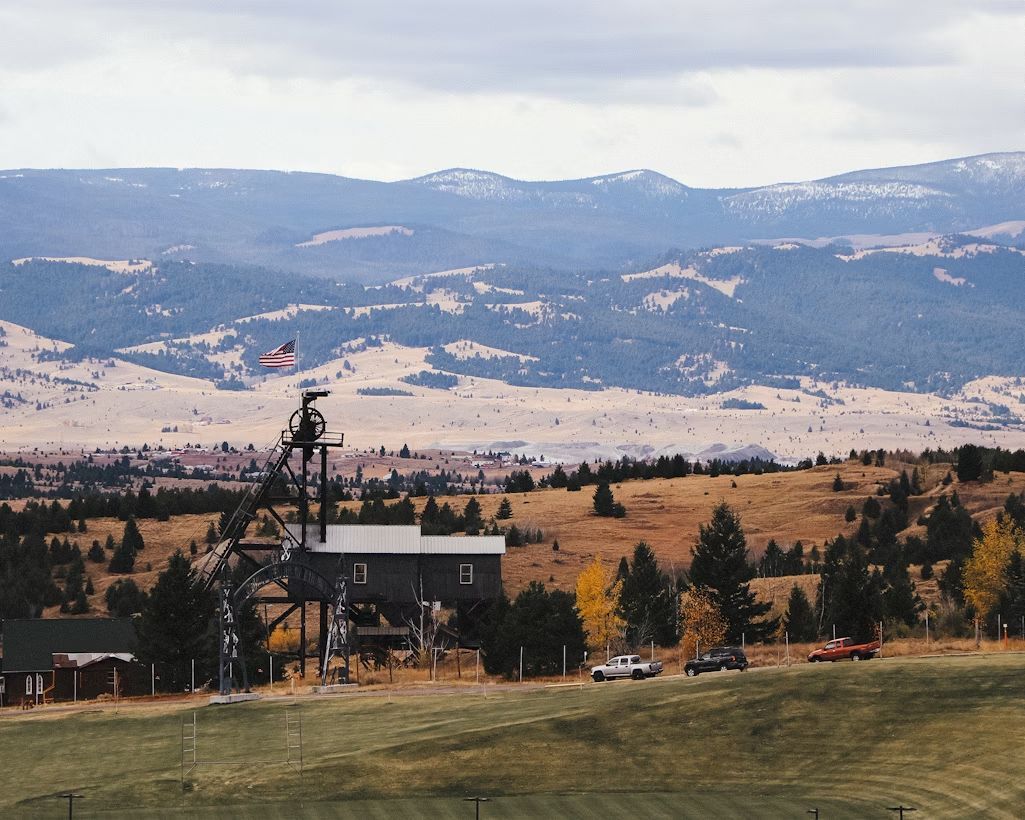
Image: Natalie Nicks

Located deep in Montana's mountains about 35 miles from Missoula, this gold mining town boomed in the 1890s with about 1,000 residents. The last 11 miles are on a rough dirt road that's impassable in winter, but that difficulty is exactly why Garnet remains so well-preserved and authentic. Casual tourists don't make the trek, which means you'll likely share the site with only serious ghost town enthusiasts.

About 30 buildings still stand, including the surprisingly intact Kelly's Saloon, complete with bar and furnishings . The Bureau of Land Management maintains the site and even offers rustic cabin rentals if you want to spend the night.

9
Centralia, Pennsylvania
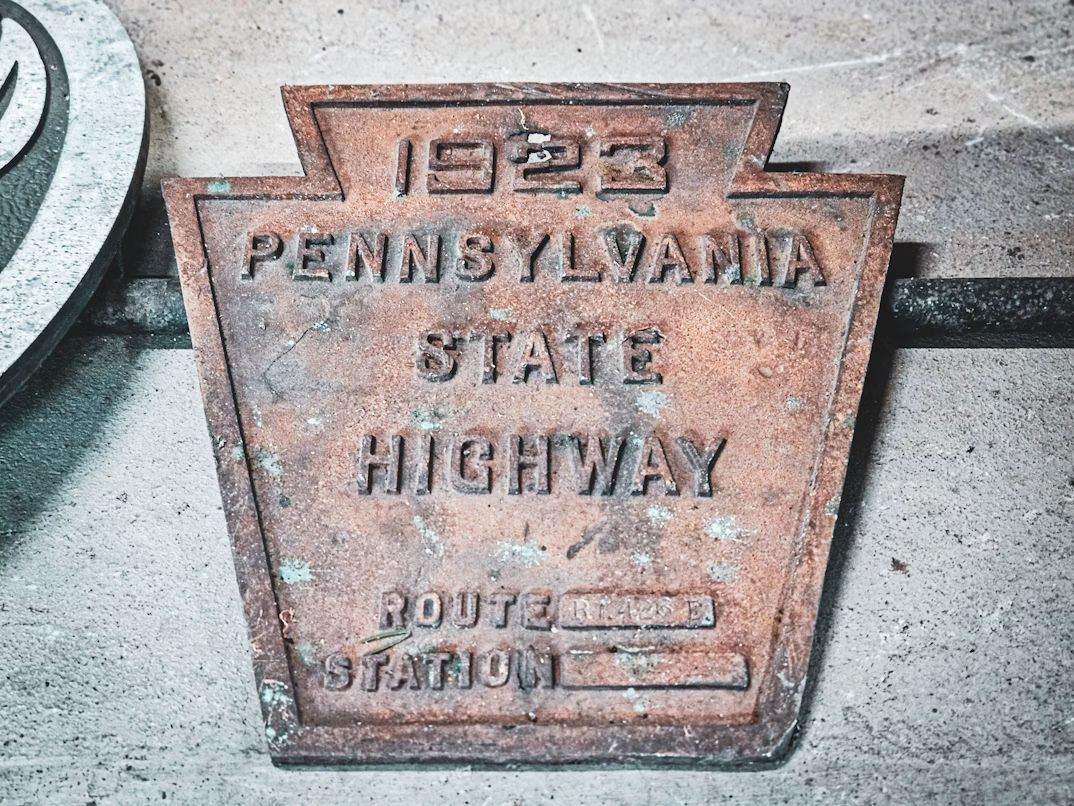
Image: Megs Harrison

This isn't a Wild West mining town—it's a modern ghost town with an underground coal fire that's been burning since 1962 and could continue for another 250 years. At its peak, Centralia had over 1,000 residents. Today, fewer than five people remain in what's become one of America's most surreal abandoned places. The fire releases toxic gases through cracks in the ground, and the heat has buckled roads into impossible angles.

The most famous feature is the graffiti-covered section of abandoned Route 61, where smoke sometimes rises through cracks in the pavement . Most buildings have been demolished, but the street grid remains, marked by empty lots and crumbling foundations. It inspired the video game and film "Silent Hill," and it's easy to see why—the place feels genuinely otherworldly. Technically, Centralia is off-limits, and Pennsylvania has tried to discourage visitors due to safety concerns about the underground fire.

10
Calico, California
Image: Volodymyr Hotsyk

Founded in 1881 after a major silver strike, it boomed to 1,200 residents before the silver price crash killed it in the 1890s. Unlike other ghost towns on this list, Calico was reconstructed and restored as a theme-park-style attraction in the 1950s by Walter Knott.

Today, Calico is a San Bernardino County park with restored buildings, shops, restaurants, and even staged gunfights on weekends . You can tour a genuine silver mine, pan for "gold" (spoiler: you'll find some), and ride a narrow-gauge railroad. About half the buildings are original, and half are reconstructions, giving you the ghost town experience without the sadness of actual decay.

Geography Geography 6 min read

BREATHTAKING PLACES TO VISIT

The 10 Most Amazing Unesco World Heritage Sites In The US

Image: Gert Boers

The United States is home to 24 of the 1121 Unesco World Heritage Sites around the world. These special spots are designated for their universal value in terms of natural or cultural heritage and are as unique and diverse as the pyramids of Egypt, the Serengeti in East Africa, and the Grand Canyon in the U.S.

Have you ever been to a World Heritage site? In this article, we have compiled a list of 10 of the most extraordinary locations our country has to offer . Go grab your travel bucket list and start reading!

1
Yellowstone National Park

Image: Meina Yin

Yellowstone National Park, created in 1872, is a vast natural forest of 3,500 square miles that spans the states of Wyoming, Montana, and Idaho. More than half of the world's geothermal phenomena can be observed here , with some 10,000 different examples. It also has more than 300 geysers, which is about two-thirds of all the geysers on the planet.

This location, the first national park in the United States, has been a World Heritage Site since 1978. It is also known for protecting abundant and diverse wildlife —such as grizzly bears, wolves, bison, and wapiti— and for drawing millions of visitors from all over the world each year. And you, have you ever been?

2
Independence Hall

Image: Rdsmith4, CC BY-SA 2.5, via Wikimedia Commons

The Independence Hall, located in historic Philadelphia, was designated a World Heritage Site in 1979. This location, far more than just a building, is considered the birthplace of America’s political foundation . The Assembly Room of the Pennsylvania State House, now known as Independence Hall, is where the Declaration of Independence was signed in 1776. And just 11 years later, the United States Constitution was also debated and signed here.

This Georgian-style red brick structure was designed by Scottish lawyer Andrew Hamilton and completed in 1753 to house the colonial assembly of the Province of Pennsylvania. In the 19th and 20th centuries, it was then renovated several times. In 1966, the building was recognized as a National Historic Landmark by the U.S. government and is currently the centerpiece of the Independence National Historical Park.

3
Statue of Liberty

Image: Anthony DELANOIX

Installed in 1886 at the gate of New York’s harbor, the Statue of Liberty has since welcomed millions of immigrants who have come to populate the United States. This colossal neoclassical 305-foot-tall effigy enlightening the world with its torch was made in Paris by the sculptor Frédéric Auguste Bartholdi in collaboration with Gustave Eiffel. It was a gift from France to our country on the occasion of the centenary of our independence.

To visit this historic monument, declared a UNESCO World Heritage Site in 1984, tickets must be purchased in advance. Or you can always ride the fare-free Staten Island ferry and admire it from afar in all its splendor!

4
Mesa Verde National Park

Image: Alec Krum

Located in the southwest of Colorado, the Mesa Verde Plateau reaches an altitude of over 8,500 feet. The National Park was established in 1906 and was added to the list of American World Heritage Sites in 1978. This location hosts a large number of Pueblo Indian dwellings built between the 6th and 12th centuries. Some 4,400 settlements have been found , including villages built high up on the plateau and imposing stone-built homes on rocky outcrops, with more than a hundred rooms in some cases.

The Mesa Verde National Park, which nowadays protects these invaluable archaeological sites, is a testament to the ancient cultural traditions of Native American tribes and is among the best preserved in the United States. If you haven’t visited yet, you must! We guarantee you a spectacular window into the past!

5
Hawaii Volcanoes National Park

Image: Zongnan Bao

Hawaii Volcanoes National Park is located on the southernmost Hawaiian island and was founded in 1916. It is best known for its extraordinary biodiversity spread over more than 340,000 acres, and it is in fact thanks to this natural richness that UNESCO declared it a World Heritage Site in 1987.

The park, as you would have guessed, is home to several volcanoes . Although many of them are currently inactive, two are very much alive: Mauna Loa , which last erupted in 1984, is known to be still active and is considered the world's greatest volcanic mass; Kīlauea is more than 200,000 years old and has been erupting since 1983, the most recent occurring on June 3, 2024.

If you are considering visiting the park, exploring the volcanoes, and enjoying a unique experience, we also recommend a museum tour , where you can learn all about the history of these fascinating fiery peaks.

6
Monticello and the University of Virginia

Image: Richard Hedrick

The Monticello Residence in Virginia, designed by Thomas Jefferson, the third president of the United States, is one of the finest examples of American neoclassical architecture . Since 1987, it has been on the UNESCO World Heritage List, along with the University of Virginia in Charlottesville.

Jefferson created Monticello as his plantation mansion and envisioned the university as the ideal ‘academic village’ . His vision of architecture, based on classical antiquity, reflects not only his aspirations for a new American republic heir to the European tradition but also the degree of cultural experimentation that could be expected of a country in the process of democratic evolution.

7
Papahānaumokuākea

Image: U.S. Fish & Wildlife Service - Pacific Region's, CC BY 2.0, via Wikimedia Commons

Papahānaumokuākea, made up of a series of 583,000 square miles of small islands, atolls, and surrounding marine wilderness, is located in northwest Hawaii. This particular location has enormous natural value as one of the largest marine protected areas in the world . It is equally important for its Native culture. Two of its islands, Nihoa and Makumanamana , bear archaeological remains that attest to the presence of human settlement even before the arrival of Europeans . For Hawaiians, this site has cosmological significance , as it represents the bond between humans and nature.

Papahānaumokuākea was designated a World Heritage Site in 2010, and although it’s not currently open to the general public, it continues to be accessible for research, habitat restoration, and cultural and educational purposes.

8
Grand Canyon National Park

Image: Isadora Neto

Grand Canyon National Park is known as one of the seven natural wonders of the world and has been a UNESCO World Heritage Site since 1979.

Located in the state of Arizona, this park is divided by a gigantic steep-sided canyon carved by the Colorado River, which, at more than 6,000 feet deep, is the most spectacular gorge in the world . This site is so relevant that all the geological history of the last two billion years can be found in its horizontal strata. And across its 277 miles, there are even traces of prehistoric man's efforts to adapt to a particularly inhospitable environment .

If you haven’t visited it yet, you should soon join the more than 5 million people traveling each year!

9
San Antonio Missions

Image: USA-Reiseblogger

This 2015 World Heritage Site, built on what was once the border of New Spain along the San Antonio River, constitutes five mission complexes that reflect the history of the region.

Founded by Franciscan missionaries in the 18th century, San Antonio includes architectural structures, archaeological remains, churches, dwellings, farmland, silos and water supply systems .

This site, located in Texas, is a living testament to the Hispanic monarchy's enterprise to colonize, evangelize, and defend the northern frontier territories of New Spain. These missions are also an example of the mixture of Hispanic and Coahuila culture , as can be seen in the ornamental elements of the churches that mix Catholic symbolism with native naturalist aesthetics.

10
The 20th-Century Architecture of Frank Lloyd Wright

Image: Yuhan Du

This series of eight Frank Lloyd Wright works recognizes the famous architect's influence on modern design . The most relevant buildings included in the 2019 Unesco designation are Fallingwater House in Mill Run, Pennsylvania; Unity Temple Church in Oak Park, Illinois; Herbert and Katherine Jacobs House in Madison, Wisconsin; and the Solomon R. Guggenheim Museum of Art in New York City, among others.

These sites are a great example of the ‘organic architecture’ conceived by Wright, characterized by open plan design, the blurring of the boundaries between inside and outside, and the highly original use of materials such as steel and concrete . Wright's innovative conception of architecture, whether in residential, work, cultural, or religious buildings, greatly influenced the evolution of modern architecture in Europe and the United States and is still a point of reference for designers today.

Culture Culture 5 min read

HOLLYWOOD REGRETS

What If: 10 Actors Who Turned Down Big Roles

Image: Shlag / Kal Visuals

Forrest Gump played by an actor other than Tom Hanks? What would "Gone with the Wind" be like with Cary Grant in the lead role? Or the blockbuster "Titanic" without Kate Winslet as Rose? Characters become classics mostly thanks to the actors who bring them to life. Hollywood history is full of examples in which incredibly famous characters came close to being played by someone else . In this article, we present 10 stars who, for various reasons, dropped iconic roles that ended up being played by other actors who knew exactly how to make the most of them.

1
Sean Connery, The Lord of the Rings

Image: Thomas Schweighofer

One of the actors who has turned down the most iconic roles in cinema history is probably Sean Connery. For example, he passed on to interpret the evil cannibal in "The Silence of the Lambs", which later earned Sir Anthony Hopkins an Academy Award for Best Actor.

But perhaps the most curious decision of his career was to refuse the role of Gandalf in the 2001 adaptation of "The Lord of the Rings". The producers went so far as to offer him up to ten million dollars and 15% of the film's profits, which would have amounted to around 400 million dollars. Years later the actor declared that he didn’t understand the script and that he didn’t find Tolkien's work attractive enough. Go figure!

2
Gwyneth Paltrow, Titanic

Image: David_Do

More than 25 years after its premiere, we can’t imagine any actress other than Kate Winslet playing the young socialite Rose Bukater in Titanic . However, the director's first choice for the role was American actress Gwyneth Paltrow . After reading the text, Paltrow told her agents that she found the story too corny and ended up turning down the role.

James Cameron's film was a box-office success and Winslet was nominated for an Oscar for her work . But there was another plot twist: a year later, in 1988, the British actress turned down the "Shakespeare in Love" project for which Paltrow won the golden statuette.

3
Al Pacino, Star Wars

Image: Saksham Gangwar

Al Pacino, who starred in great films such as "The Godfather" and "Scent of a Woman", admitted that he was offered the role of Han Solo in "Star Wars", but didn’t accept it because he didn’t understand George Lucas' script .

Recently, he said at an event: "They offered me so much money. I don't understand it.... So I said I couldn't do it. I gave Harrison Ford a career." Truth be told, other actors like Christopher Walken didn't trust the project either . Perhaps in the mid-1970s, no one could have imagined that this fantasy saga would become a multi-million franchise still widely revered by audiences to this day.

4
Marilyn Monroe, Breakfast at Tiffany’s

Image: pure julia

Starring an iconic Audrey Hepburn, "Breakfast at Tiffany’s" was released in 1961. That role marked a turning point in Hepburn’s career, consolidating her as a serious actress. However, Truman Capote, author of the original novel, was totally against her being the protagonist .

Apparently, he wrote the story with Marilyn Monroe as the carefree Holly Golightly in mind . As it turns out, Monroe's acting coach rejected the idea because she didn't want the actress to play "a lady of the night." Capote was never happy with the result and even said, "It is the most miscast film I've ever seen. It made me want to throw up."

5
Gary Cooper, Gone with the Wind

Image: Ian Wagg

Producer David O. Selznick's first choice for the role of Rhett Butler in "Gone With the Wind" was the great Gary Cooper. However, the actor from "The Virginian" didn't want it, and he showed it quite strongly. Cooper reportedly predicted that the film would be the biggest flop in Hollywood history . He allegedly said, "I'm just glad it'll be Clark Gable who's falling on his face and not Gary Cooper."

Of course, he couldn't have been more wrong. Not only is the film considered one of cinema's greatest masterpieces, but it also earned Clark Gable an Oscar nomination for Best Actor and made him one of the most iconic actors of the 20th century. Did Cooper regret it later?

6
Kim Basinger, Basic Instinct

Image: Vlad Deep

Sharon Stone's name will always be associated with the thriller "Basic Instinct" and that famous leg-crossing scene. Although it was the role that made her famous, she got it because other actresses such as Julia Roberts, Michelle Pfeiffer, Geena Davis, Kathleen Turner, and Meg Ryan had previously rejected it.

In the beginning, the film's leading man, Michael Douglas, had recommended Kim Basinger , who had already starred in the erotic romantic drama "9½ Weeks" in 1986. However, Basinger considered Paul Verhoeven's film too extreme for her and chose not to do it. In the end, "Basic Instinct" was one of the highest-grossing films of 1992, although not without controversy.

7
John Travolta, Forrest Gump

Image: Yosuke Ota

The producers' first choice to play the lead role in "Forrest Gump" was John Travolta . The "Grease" and "Saturday Night Fever" actor turned down the role that would later earn Tom Hanks his second Academy Award.

With hindsight, however, we know that Travolta did the right thing . Besides the fact that we couldn't imagine anyone else playing the tender, naïve Forrest, Travolta said no because he had another project in the works. That other film ended up giving him the best character of his entire career: Vince Vega in Pulp Fiction —probably also Quentin Tarantino's best film.

8
Molly Ringwald, Pretty Woman

Image: Look Studio

Vivian Ward's character in "Pretty Woman", which made Julia Roberts a star and for which she won a Golden Globe, had been previously offered to Molly Ringwald . At just twenty years old, Ringwald was already an icon and a reference for the girls of her generation and one of the most sought-after and best-positioned actresses in Hollywood. However, she decided to turn down the offer and go to Paris.

Around that time, she also didn't land roles in "The Silence of the Lambs" and "Working Girl". Those decisions cost her dearly and although she tried to resume her career in the United States years later, it was not easy for her to regain the star status she had had during the 80s.

9
Leonardo DiCaprio, Boogie Nights

Image: Regina Valetova

Leonardo DiCaprio as charismatic porn star Dirk Diggler? Believe it or not, it could have happened. However, at the time DiCaprio felt that director Paul Thomas Anderson didn't have much experience and turned down the lead role in "Boogie Nights" to make "Titanic".

Years later, Di Caprio said in an interview that the 1997 period drama was a film he would have loved to make. "Boogie Nights" is certainly both an audience and critics favorite and the one that catapulted Mark Wahlberg to fame. But if Di Caprio hadn't starred in "Titanic", would he have the career he has today? Luckily, we'll never know!

10
Bette Midler, Sister Act

Image: cottonbro studio

The lead character in "Sister Act" had originally been written for Bette Midler . However, the actress, singer, and comedian was hesitant because she was worried that her fans would not want to see her play a nun.

Producers pestered her for several weeks but Midler felt she could wear anything but a nun's costume and ended up not accepting it. The job eventually went to Oscar winner Whoopi Goldberg who, due to the film's huge success, returned for a sequel in 1992.

Explore more American facts

Choose your favorite category!

General
General

As American as apple pie—the very best America has to offer!

Culture
Culture

Delve into the astounding richness of American lore.

Geography
Geography

Hop in and explore vast and diverse American landscapes.

History
History

Discover the key moments that shaped the United States.