General General 4 min read

Beyond the law

Wait… that's not illegal? 11 ‘crimes’ you didn't know are legal

Image: Jan van der Wolf

Sometimes we’re so accustomed to doing things a certain way that doing anything different feels illegal. But not every bit of "common sense" is backed by an actual law. Many widely accepted practices are merely norms or policies—not legislation. From driving barefoot to owning a flamethrower, here are 11 things you might think are illegal… but actually aren’t.

1
Driving barefoot

Image: Ashley Byrd

No federal or state law in the U.S. bans driving barefoot. Though sometimes discouraged for safety reasons, driving barefoot is legal in all 50 states (and in most countries worldwide as well).

While police might ask you to put your shoes on during a traffic stop, it’s merely a suggestion, not a legal requirement. In most modern cars, driving barefoot presents no significant safety risks, but it could affect insurance claims. If you’re involved in an accident while barefoot, you might face increased scrutiny from insurers.

2
Riding in the back of a pickup truck
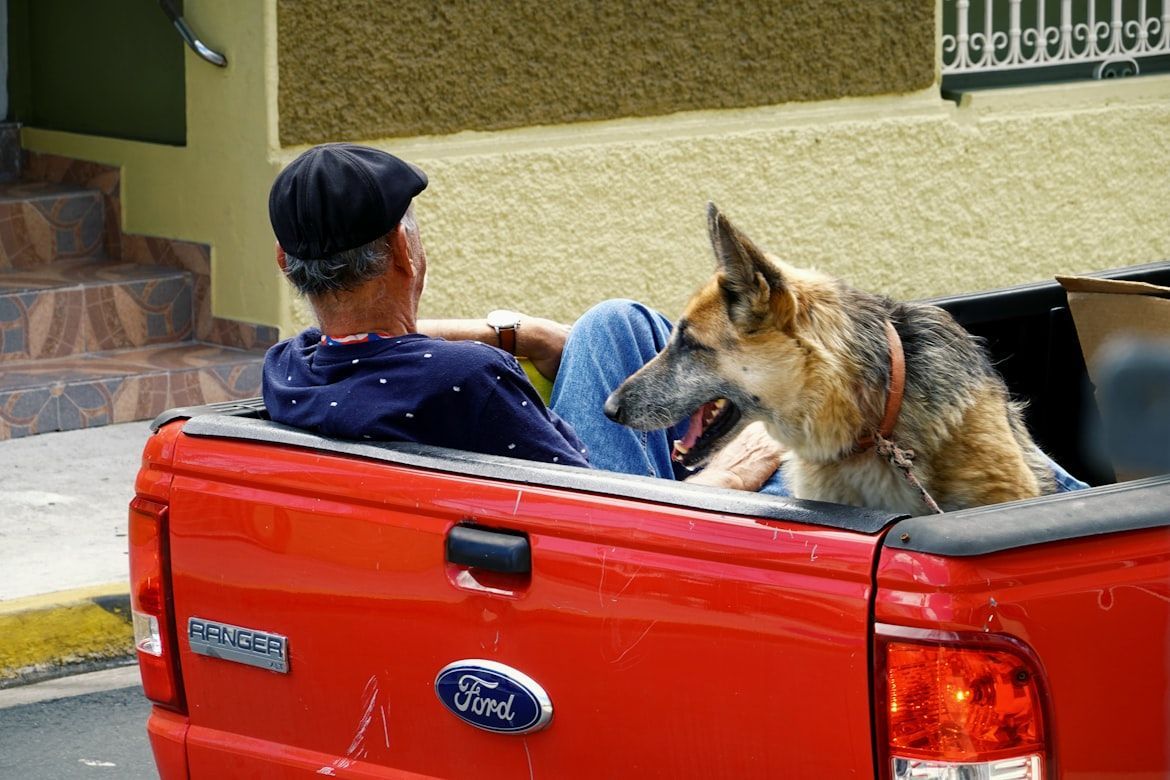
Image: Richard Lu

This is a bit of a gray area. There is no federal law regulating the practice, but some states or local jurisdictions may impose restrictions, often including age limits.

In rural areas, most people won’t bat an eye if you ride in the bed. However, it can be considered a safety risk and may serve as an aggravating factor if you’re stopped for speeding or other traffic violations.

3
Cursing in public

Image: Kristina Flour

While it’s common courtesy not to go around hurling insults and profanity, the truth is no one can legally require you to stop if you are so inclined.

This is because profanity is generally protected speech. However, "generally" is doing some heavy lifting here, as depending on the context, it could be considered provocation or incitement to violence.

4
Sleeping in your car
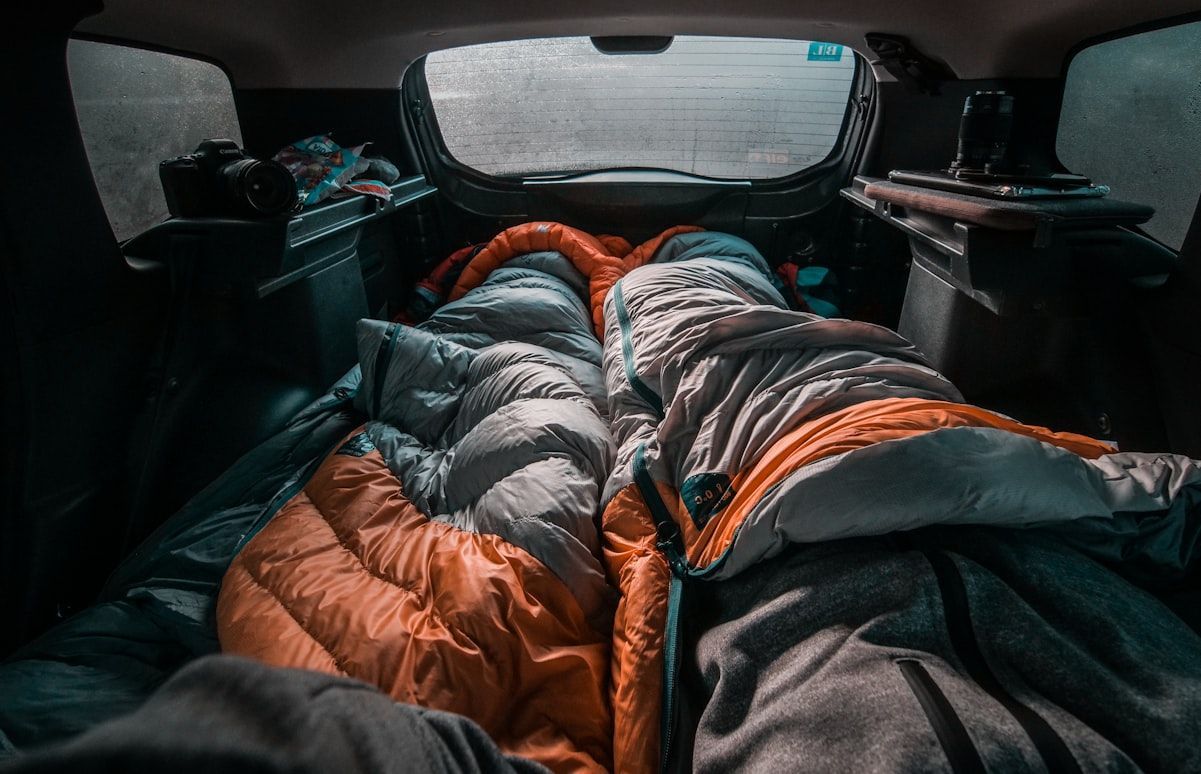
Image: lucas Favre

It’s not illegal to sleep in your car unless local ordinances specifically prohibit it in certain areas, such as city streets or commercial lots.

Often, it has nothing to do with sleeping whatsoever, as in some places, all overnight parking at rest stops is prohibited or limited to just a few hours. Some Walmart lots might allow it, but that’s a private policy—not a law—and you should check with the local manager to be sure.

5
Eating while driving

Image: Dmitriy Frantsev

There’s no blanket law against eating while driving, though it can be considered a distraction. If it leads to unsafe driving, you could be cited.

Washington State’s distracted driving law bans holding electronic devices and allows extra fines for erratic driving caused by distractions , including eating or drinking . Some states, such as New Jersey, have considered banning it entirely, but most proposed laws are too vague to be enforced clearly.

6
Owning a flamethrower
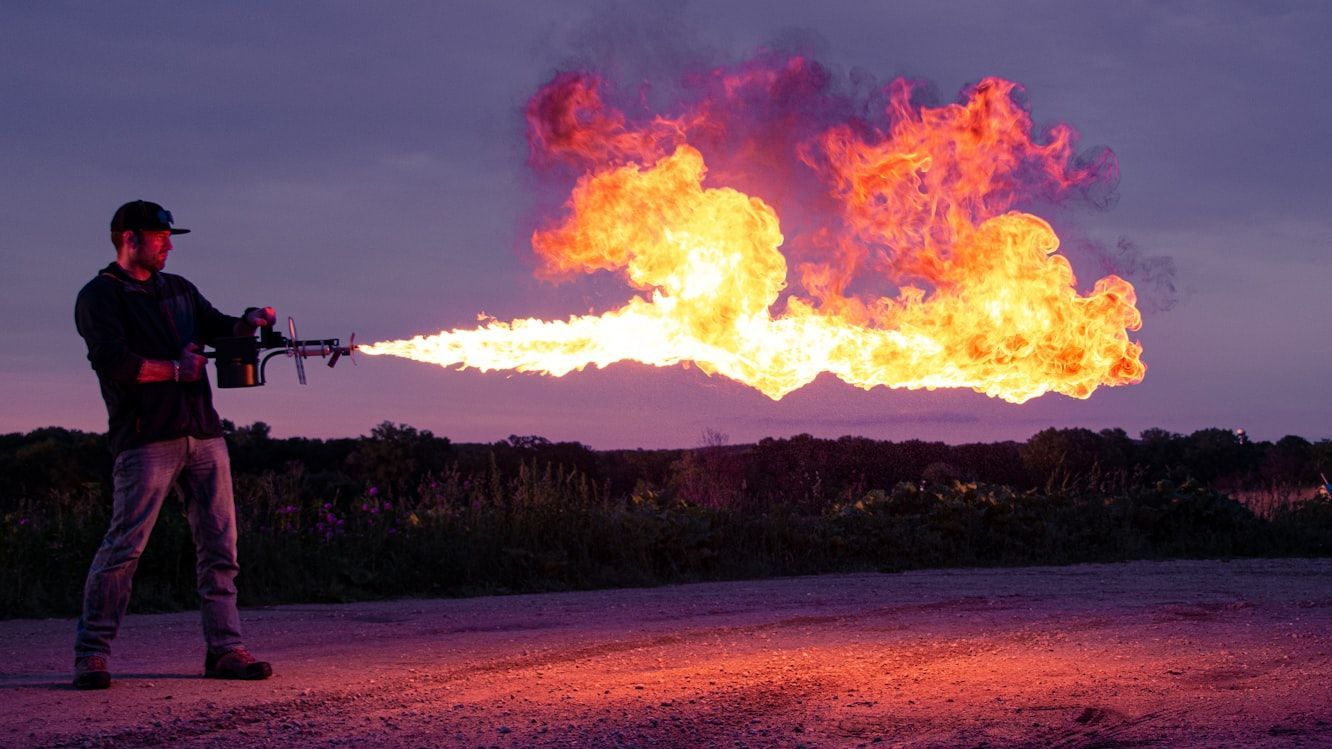
Image: Tali Despins

Surprisingly, there’s no federal law in the U.S. that bans civilian flamethrower ownership. However, a few states do impose restrictions; California and Maryland have strict laws prohibiting or regulating them.

Some companies even market flamethrowers for agricultural use, like controlled burns or weed clearing. But misuse of a flamethrower can lead to serious legal charges—for instance, arson, reckless endangerment, or other criminal or civil liabilities.

7
Ignoring someone knocking at your door

Image: Aaron Burden

No law requires you to open your door to anyone, including police, unless they have a warrant.

If you're pulled over while driving or stopped on the street, you’re generally required to comply with police instructions. But if you're inside your home with the door closed—and ideally locked—you’re under no obligation to respond at all.

8
Selling homemade food without a license

Image: Museums of History New South Wales

Most states require permits or inspections to sell food commercially. However, many states have "cottage food laws" that allow limited sales of certain homemade goods without a license.

But if you scale up beyond small-batch home production, you’ll likely face a citation—and a hefty fine—from the authorities.

9
Backyard burials

Image: Jennifer Grismer

Believe it or not, there’s no federal law against burying human remains on private property. Many states allow it, provided you have the proper paperwork, such as a death certificate and burial permit. Local zoning laws may regulate factors like location, depth, and proximity to water sources or property lines.

Similarly, pet burials are generally permitted, but local ordinances can vary —so it’s important to check them first.

10
Using a fake name online

Image: Sander Sammy

Unless it’s used for fraud or to impersonate a real person, using an alias on social media or online forums isn’t a crime.

Some platforms may prohibit it in their terms of service, but that’s a civil matter—not a criminal one. Legal issues generally arise only if the alias is used to cause harm, deceive others, or commit financial fraud.

11
Flying the U.S. flag at night without lighting
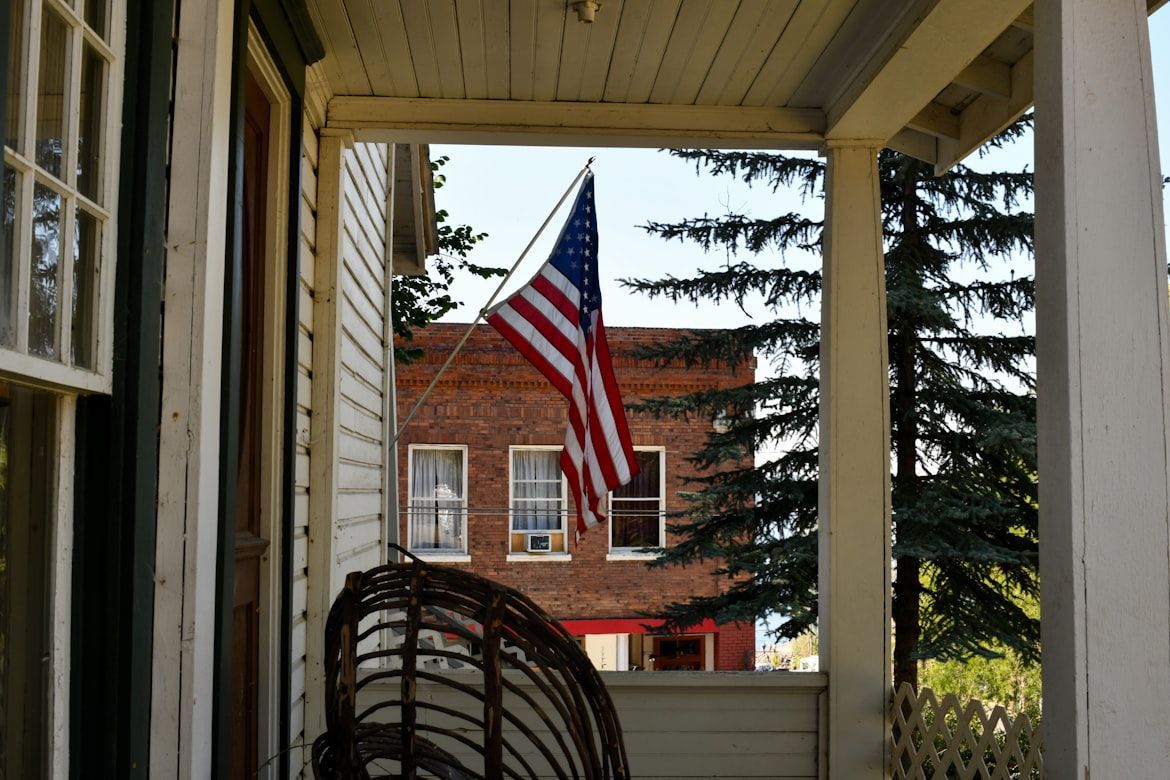
Image: Shelley Pauls

The U.S. Flag Code suggests that the flag should be illuminated if flown at night, but this is just a general guideline, not a legally enforceable law.

Stricter requirements may apply to government buildings, but for private citizens, the code is purely advisory and symbolic.

History History 3 min read

Think you know presidents?

Did you know a US president did this? 10 records held by US presidents

Image: History in HD

Being President of the United States doesn't mean you can't also be a record-breaker. In fact, several presidents have set some interesting and fun records during their time in office. Want to know who had the most expensive inauguration ever? Or who appeared on the most magazine covers? What about the president with the most children, or the one who lived the longest? All the answers are in this article. Come check it out!

1
The most expensive presidential inauguration

Image: Nils Huenerfuerst

Presidential inaugurations are grand events attended by politicians and influential figures, so it’s no surprise they can come with a hefty price tag. The record for the most expensive US presidential inauguration goes to Donald Trump, with an estimated cost of around $230 million. He had already set the record in 2017 with a $107 million inauguration, which at the time surpassed Barack Obama’s 2009 expenditures of roughly $53 million.

2
The US president with the most Time magazine covers

Image: History in HD

Of course, presidents are always in the spotlight: We see them on social media, on TV, and on the covers of newspapers and magazines. As of April 2025, Donald Trump had appeared on 46 Time magazine covers, tying with Ronald Reagan. But the record still belongs to Richard Nixon, who holds the title with an impressive 55 covers!

3
The president who lived the longest

Image: Claudio Schwarz

Jimmy Carter was the US president who lived the longest. Born in October 1924 and passing away in December 2024 at the age of 100 years , 2 months, and 29 days, Jimmy Carter surpassed the previous record held by George H. W. Bush, who lived to be 94. Pretty impressive, wouldn't you agree?

4
The president with the most children

Image: freestocks

If managing a household with three kids sounds tough, imagine having 15! John Tyler holds the record for the most children of any US president. He had 15 in total: eight with his first wife, Letitia Christian Tyler, and seven with his second wife, Julia Gardiner Tyler.

5
Most handshakes by a head of state

Image: Constantin Wenning

Yes, there's even a record for this. Believe it or not, Guinness World Records lists Teddy Roosevelt as the US president who gave the most handshakes in a single day. Want to know how many? On New Year's Day in 1907, President Roosevelt held an open house where he shook hands with an incredible 8,513 people.

6
Most pets in the White House

Image: Bruce Warrington

Which president holds the record for having the most pets living in the White House? With an incredible 48 animals, that would be Theodore Roosevelt! We couldn’t list them all here, but a few examples speak for themselves: during his presidency, Roosevelt owned a black bear, a badger, a hyena, several dogs and cats of different breeds, horses, ponies, guinea pigs, a lizard, a pig, and even an owl!

7
First president to be given a Secret Service code name

Image: Will Ma

Secret Service protection for US presidents became permanent in the early 1950s. In 1951, the first presidential code name was assigned: "General." Who used it? Our 33rd president, Harry S. Truman. Since then, every US president and their immediate family members have been given Secret Service code names.

8
The youngest

Image: History in HD

The youngest president in US history was Theodore Roosevelt. However, he wasn't elected to his first term; he assumed office at age 42 following the assassination of William McKinley. Considering that, the youngest president ever elected was John F. Kennedy, who won the presidency in 1960 at the age of 43.

9
Oldest elected as US president

Image: History in HD

While JFK and Teddy Roosevelt hold the record as the youngest men to become US presidents, Donald Trump sits on the opposite end. President Trump was 78 when he was elected to his second term, making him the oldest person ever elected to the office. In doing so, he broke the record previously held by Joe Biden, who was elected in 2020 at 77.

10
First US president to use email in office

Image: Mariia Shalabaieva

There's a first time for everything, even for presidents! And that includes sending an email. Although email is everywhere today, the first US president to use it was Bill Clinton. He was the first to have a White House email address , though he admitted to using it only sparingly.

Culture Culture 6 min read

From pages to heart

Jay Gatsby or Tom Sawyer? 10 unforgettable American literary characters!

Image: Chris Lawton

Whether you're a book lover or not, there are certain books that everyone has read, and they've touched the hearts of many Americans. Between meticulous descriptions, unique stories, and unforgettable dialogues, these books have something that particularly stands out: their characters . From classics like Huckleberry Finn and Tom Sawyer to iconic names such as Jay Gatsby and Atticus Finch, these literary characters have become a fundamental part of American culture , and for excellent reason. Today, we're celebrating 10 beloved characters from American literature!

1
Huckleberry Finn

Image: Pedro Forester Da Silva

Mark Twain has given us some of the most iconic characters in our country's literature, and Huckleberry Finn is one of them.

He stole our hearts as the main character of The Adventures of Huckleberry Finn (1884), where his experiences and charm made him unforgettable. Adventurous, independent, rebellious (rightly so), and very smart, "Huck," as he is called in the novel, surprises us with reflections and critiques on the society of his time.

Huck not only escapes an abusive home but also makes an incredible journey down the Mississippi River in search of freedom. Along the way, he forms deep connections with those he meets, making it impossible not to feel attached to him.

2
Atticus Finch

Image: Scott Graham

When discussing classics of American literature, it is impossible not to include in the list the Pulitzer Prize-winning novel To Kill a Mockingbird (1960) by Harper Lee.

And if there's one thing this novel has to offer, it's some unforgettable characters. At the center of it all is none other than Atticus Finch. Atticus is described as an honorable lawyer with a profound commitment to justice and equality, serving as a moral beacon in a society defined by its lack of both. He always stands up for his principles , even when they go against the dominant norms.

One of his most iconic lines in the novel is a phrase that defines him very well: "The one thing that doesn't abide by majority rule is a person's conscience."

3
Holden Caulfield

Image: Hiroyoshi Urushima

J.D. Salinger's novel The Catcher in the Rye (1951) is undoubtedly a landmark of American literature. And one name that has stayed with us forever is Holden Caulfield, the novel's unforgettable protagonist.

With his characteristic red hat , Holden Caulfield is the definitive teenager: rebellious, curious, somewhat cynical , selfish, and mischievous. As he roams New York City after being expelled from several prep schools, we are witnesses of his intense and often smartly critical thoughts and experiences. However, despite his disillusionment with the world, Holden demonstrates a deep sensitivity .

4
Jay Gatsby

Image: Hardini Lestari

Published almost 100 years ago, F. Scott Fitzgerald's The Great Gatsby (1925) has become one of our classics , portraying life during the Roaring Twenties and inspiring many film adaptations. Jay Gatsby, with his ambition, idealism, and charisma, gets all the attention in this novel as an enigmatic character who is proof of the majesty of its author.

Much like Dante's Beatrice, the character of Daisy Buchanan inspires in Jay Gatsby an almost obsessive love that drives him to make key decisions and take powerful actions throughout the novel. It is this passion that fuels his rise to wealth and eventually leads to his downfall.

5
Tom Sawyer

Image: Lawrence Chismorie

Endlessly reproduced in other art forms, Tom Sawyer by Mark Twain is one of the most representative characters of American literature.

The first and most famous book featuring the Missouri boy is, of course, The Adventures of Tom Sawyer (1876), but we also see him in the sequel named after his friend, a character we have already talked about: The Adventures of Huckleberry Finn (1884).

Despite his mischievous nature and penchant for getting into trouble with his tricks and pranks, Tom is a clever and independent boy who constantly seeks out new adventures.

6
Scarlett O'Hara

Image: Lizelle De Wit

Gone with the Wind (1936) by Margaret Mitchell is a title everyone has heard of, whether you've read the book or not. Its characters have also become famous beyond the pages of this iconic novel.

One of them is none other than Scarlett O'Hara, the central character of this story. The novel portrays the American South during and after the Civil War , where Scarlett O'Hara, shaped by her circumstances, appears as a self-centered and spoiled character. However, as the story progresses, Scarlett evolves, showcasing her tenacity , determination, and protective spirit when she sets her mind to something. You probably remember the iconic line, "Tomorrow is another day."

7
Dean Moriarty

Image: Rémi Jacquaint

A fundamental member of the so-called Beat Generation , Jack Kerouac gifted us with one of the most famous novels in American literature: On the Road , published in 1957.

One of his most remembered characters is Dean Moriarty, who was based on a real person , Neal Cassady, a close friend of the author. Moriarty embodies some of the most outstanding characteristics of the Beat Generation, portraying an enthusiastic, adventurous, free-spirited, energetic, and charismatic character. With such a personality, it's no surprise that Dean Moriarty creates unforgettable moments and becomes an important figure in the story.

8
Hester Prynne

Image: Chris LaBarge

Hester Prynne, from Nathaniel Hawthorne's acclaimed novel The Scarlet Letter (1850), is undeniably one of the earliest and most significant female characters in our country's literature.

Hester defies the norms of her time by having an illegitimate child, making her a target of dramatic criticism and punishment from her contemporaries. Set in 17th-century Puritan Massachusetts, the story unfolds in a society defined by strict rules and oppression. In this context, Hester Prynne appears as a strong woman who endures the severe judgment of her time with courage.

Despite her harsh circumstances, Hester Prynne is described as a powerful, dignified, and empathetic character with extraordinary sensitivity.

9
Santiago

Image: Anastasiya Chervinska

Another undisputed classic is Ernest Hemingway's The Old Man and the Sea , published in 1952.

Santiago is the central character in this novel, which explores various aspects of the human condition in depth. Santiago, the old man of the title, is a fisherman who has gone many days without catching a single fish. Faced with diverse challenges and, above all, his own physical limitations , Santiago is described as a strong character of great constancy , dignity, and resilience who has a strong bond with the sea and its mysteries.

The character's perseverance shines through in his battle with the giant marlin , which stands as one of the most important moments in this story.

10
Ishmael

Image: Richard Sagredo

Continuing our journey along the sea, let's talk about one of the most iconic narrators in American literature: Ishmael. His name is perpetuated in the very first line of Herman Melville's great novel, Moby-Dick (1851). Who could forget the iconic opening: "Call me Ishmael" ?

Ishmael serves as the first-person narrator of one of the most memorable tales in literature, a sailor distinguished by his profound, analytical, and reflective personality.

Though he shares few details about his background or appearance, Ishmael masterfully narrates the events aboard Captain Ahab's whaling ship , giving us a unique perspective on the events.

Explore more American facts

Choose your favorite category!

General
General

As American as apple pie—the very best America has to offer!

Culture
Culture

Delve into the astounding richness of American lore.

Geography
Geography

Hop in and explore vast and diverse American landscapes.

History
History

Discover the key moments that shaped the United States.