General General 4 min read

Beloved products that vanished from stores

Ten discontinued American products we still miss today
Image: Natasha Connell

Remember when you could walk into any store and find your favorite snack, only to have it vanish without a trace years later? Some discontinued products become legends, living on in our memories and late-night conversations about "the good old days." Here are ten discontinued products that still make us nostalgic, and honestly, a little hungry for the past.

1
Hydrox Cookies
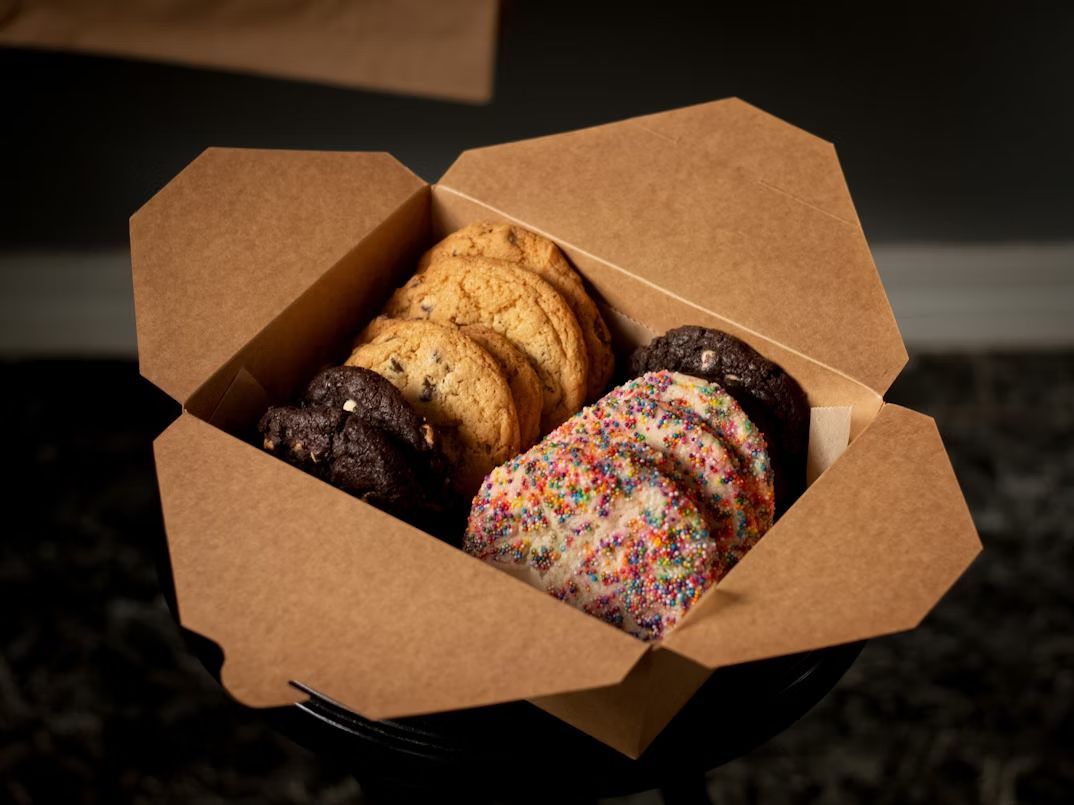
Image: Conor Brown

Introduced in 1908, these chocolate sandwich cookies with cream filling were the original, while Oreos followed four years later in 1912 . Hydrox had a crunchier cookie and a less sweet filling, which devoted fans absolutely loved.

Hydrox disappeared from shelves in 2003, leaving longtime fans heartbroken and insisting that they were superior to their more famous competitor. The cookie made a brief comeback in 2015 under new ownership, but it never quite recaptured its former glory or widespread availability.

2
Squeezit
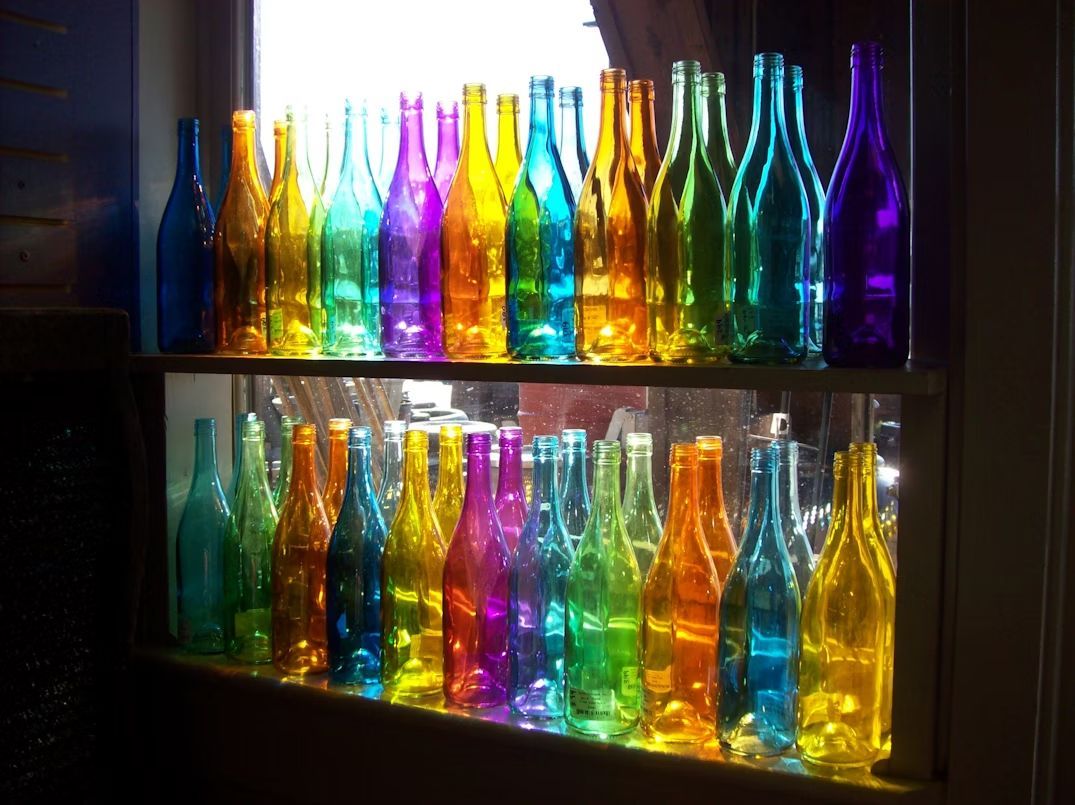
Image: Haley Owens

Squeezit arrived on the scene in 1985 with its unique bottle design that you literally had to squeeze to drink from—no straw needed! The bottles came in wild colors and flavors like Chucklin' Cherry and Grumpy Grape, each with its own cartoon character printed on the label.

General Mills discontinued Squeezit in 2001, crushing the dreams of millennials everywhere who had fond memories of squeezing these bottles a little too hard and squirting juice everywhere.

3
Jell-O Pudding Pops

Image: sheri silver

Bill Cosby might have made these famous in commercials, but it was the frozen treat itself that made Pudding Pops legendary in the 1980s. Introduced in 1979, these weren't your typical popsicles— they had a creamy, mousse-like texture that was somewhere between pudding and ice cream.

Jell-O discontinued the original Pudding Pops in the early 1990s, and despite several attempted comebacks with different formulations, they've never tasted quite the same as the originals. People who remember the real deal insist that the modern versions just don't have that same creamy texture or rich flavor.

4
Crystal Pepsi

Image: Giorgio Trovato

Launched in 1992, this clear cola was supposed to represent "purity" and tap into the clear product craze of the era . It tasted almost exactly like regular Pepsi, which created a weird cognitive dissonance: your brain expected lemon-lime, but your taste buds got cola. Crystal Pepsi flopped hard and disappeared by 1994, but it achieved cult status among nostalgic millennials and Gen Xers.

5
Bonkers! Candy

Image: Edgar Chaparro

"Bonkers bonks you out!" went the commercial jingle, and this chewy fruit candy certainly made an impact when it hit stores in the early 1980s. Each piece was wrapped individually and packed an intensely fruity flavor that was almost overwhelming—in a good way . Bonkers came in flavors like grape, strawberry, and watermelon, and they had a unique texture that was chewier than Starburst but softer than taffy.

Nabisco stopped making Bonkers in the 1990s, and fruit candy lovers have been mourning ever since. There were brief periods when the candy reappeared under different ownership, but it never achieved the same widespread distribution.

6
Dunkaroos

Image: RUMEYSA AYDIN

Introduced by Betty Crocker in 1990, these snack packs came with small kangaroo-shaped cookies and a container of frosting for dipping. The concept was simple but brilliant—make cookies even more fun by turning them into an interactive snack. Flavors included chocolate chip cookies with vanilla frosting, vanilla cookies with chocolate frosting, and the ultimate combo of chocolate cookies with chocolate frosting.

General Mills discontinued Dunkaroos in the United States in 2012, sparking outrage among millennials who considered them a sacred part of their childhood. The good news? After years of petitions and social media campaigns, Dunkaroos made a triumphant return in 2020.

7
Clearly Canadian

Image: 소녀

Before sparkling water became trendy, there was Clearly Canadian— a flavored sparkling water that came in distinctive teardrop-shaped glass bottles . Launched in 1987, this Canadian import became hugely popular in the U.S. throughout the late 80s and 90s. The flavors had fancy names like Wild Cherry, Country Raspberry, and Orchard Peach, and the carbonation was more aggressive than today's LaCroix.

Clearly Canadian largely disappeared from American stores in the 2000s as other beverages dominated the market, though the company never completely shut down. Thanks to a Kickstarter campaign in 2015, it made a comeback, but it's still not as widely available as it once was.

8
P.B. Crisps

Image: Olga Nayda

Planters gave us the ultimate peanut butter snack in 1992 with P.B. Crisps— crispy shell-shaped cookies filled with peanut butter . These weren't ordinary peanut butter cookies; they had a unique, crispy texture on the outside and creamy peanut butter on the inside, creating a perfect contrast.

Sadly, P.B. Crisps were discontinued in 1995 after just three years on the market, leaving peanut butter lovers devastated. No snack has quite filled that void—Nutter Butters are too cookie-like, and peanut butter crackers are too cracker-like.

9
Altoids Sours

Image: Customerbox

These tiny, tangy candies came in flavors like Tangerine, Citrus, and Raspberry, and they packed a seriously sour punch that made your whole face scrunch up . They came in the same iconic tin as regular Altoids, which made them feel substantial and collectible.

Altoids discontinued the Sours in 2010, and fans have been petitioning for their return ever since. There have been multiple online petitions, Facebook groups, and even people hoarding old tins as collectors' items.

10
Snapple Elements

Image: Snappr

Launched in 1999, these drinks came in wide-mouthed glass bottles and had more exotic flavors than typical Snapple offerings . Rain was agave cactus, Sun was starfruit, and Fire was dragonfruit. The bottles themselves were beautiful, with distinctive designs and colors that made them stand out on store shelves.

The Elements line was discontinued in the early 2000s, though Snapple brought back a reformulated version in 2008 that wasn't quite the same. The original Elements had a devoted following who appreciated the more complex flavors and the beautiful bottle design.


Culture Culture 3 min read

Tom Waits approves

Did you know about these 12 bizarre American musical moments?

Image: Peter Herrmann

Music in America has never been afraid to get weird. From homemade instruments and oddball inventions to accidental hits and cosmic jazz, our country’s history is full of unexpected sound. These 12 examples prove that when it comes to music, sometimes stranger is better.

1
Singing Tesla coils

In the early 2000s, engineers discovered that Tesla coils could emit tones by modulating the sparks themselves. When programmed, they could play songs using bursts of lightning as notes.

Audiences watched and listened as glowing bolts of electricity "sang" familiar tunes like movie themes. These displays, part science and part spectacle, were a short-lived trend, but they were interesting while they lasted.

Image: Brett Wharton

2
Franklin’s glass armonica

Benjamin Franklin invented many things. Among them, a glass armonica, using spinning glass bowls tuned by size . Players touched the rims with wet fingers to produce pure, haunting tones that seemed to shimmer in midair.

Its ghostly beauty amazed 18th-century audiences. Yet rumors spread that the vibrations could cause fainting or madness, making the momentum of the instrument short-lived.

Image: Karim MANJRA

3
Harry Partch’s microtonal instruments

Frustrated with the limits of Western scales, composer Harry Partch built a system using forty-three tones per octave . He crafted odd instruments from glass, bamboo, and metal to play them.

Performers had to relearn music from scratch, producing sounds that felt alien and ancient at once. His homemade orchestra became a true milestone in America’s experimental environment.

4
The theremin craze

Image: Ryunosuke Kikuno

Invented in the 1920s, the theremin created sound from invisible electromagnetic fields, played by moving hands through the air . It was one of the world’s first electronic instruments.

By the 1950s, its eerie wails filled American sci-fi movies and radio shows. Home versions soon appeared, letting living rooms buzz with strange, ghostlike melodies.

5
The Stroh violin

Back in the days when microphones were not so great at picking up sounds, early studios struggled to capture soft instruments. The Stroh violin solved that by replacing the wooden body with a brass horn that amplified sound directly .

Its brassy, nasal tone worked perfectly for primitive recording gear. Once technology advanced, the mechanical violin faded for good.

Image: Mick Haupt

6
Sun Ra’s cosmic jazz

Jazz mad scientist Sun Ra claimed he was born on Saturn and sent to Earth to spread peace through sound. His Arkestra mixed free jazz, chants, and futuristic costumes into wild multimedia performances .

Audiences never knew what to expect: space helmets, electronic keyboards, or cosmic sermons. His blend of myth, science, and swing launched Afrofuturism, a style of his own.

Image: Matt Artz

7
Singing saw

Rural American musicians once discovered that a regular handsaw could "sing" when bent and bowed like a violin . The flexible steel vibrated with a haunting, "human-like" voice.

The sound carried through old-time folk, gospel, and early film scores. Even today, the singing saw appears in grassroots festivals and soundtracks.

8
Prepared piano

Image: Andrew Petrischev

Avant-garde composer John Cage inserted screws, bolts, and rubber between piano strings, turning each key into a new percussive sound . The result was bizarre but original.

He called it the "prepared piano." Audiences heard rhythms that clanged, thumped, and chimed like a whole percussion ensemble.

9
Moog synthesizer

Image: Adi Goldstein

The Moog was born in the late 1960s with its maze of knobs and wires , and it caused a sensation among musicians. Those who experimented found endless possibilities in its electronic tones .

From the Monterey Pop Festival to Wendy Carlos’s soundtracks for The Shining and A Clockwork Orange , the Moog’s strange bleeps reshaped American pop.

10
The Singing Nun

In 1963, a Belgian nun named Sister Luc-Gabrielle unexpectedly topped U.S. charts with "Dominique," sung in gentle French. Her purity and optimism charmed listeners across the country.

Her hit briefly outshone even the Beatles. Though her fame faded quickly, the story of a shy nun reaching number one remains a sweet oddity, for sure.

Image: Pete F

11
The "Longplayer" experiment

Launched in 1999, "Longplayer" is a music piece designed to play continuously for one thousand years without repeating . It was created by American artists who joined the project to maintain its endless cycle.

The music changes subtly with time, echoing life’s slow rhythm. Its creators call it "a conversation between centuries".

12
Hard-drive symphonies

Image: Borja Verbena

In the 2010s, hobbyists reprogrammed old computer drives to "play" songs by spinning and clicking at different speeds . Each tone came from mechanical motion, not speakers.

Videos of clattering machines performing pop hits can still be found all over YouTube. These homemade orchestras turned computer nostalgia into an art.

General General 6 min read

12 American inventions that shaped modern life

Image: National Gallery of Art, CC0, via Wikimedia Commons

From life-saving medical developments to groundbreaking technologies, American inventors have transformed how we live, work, and communicate. These innovations not only transformed everyday life but also ignited the flame of progress across the globe. Let’s dive into our selection of the 12 inventions that best reflect American creativity and ingenuity.

1
The light bulb

Image: Zach Lucero

Delivering electricity to the masses was one of the greatest technological advances in human history. The mid-1800s saw great competition in this area, as inventors around the world raced to invent their own electric light. The first filament bulb was developed by British inventor Warren de la Rue in 1840, but his use of a platinum filament made it expensive and impractical.

A few years later, Joseph Swan in the UK and Thomas Edison in the US each independently invented bulbs using cheaper elements. However, Edison received a patent on his bulb in early 1880, slightly before Swan. The light bulb, an invention that quickly reached every home, revolutionized life around the world, led to the development of the electrical grid, and set the stage for our modern electricity-dependent society.

2
The telephone

Image: viarami

In this modern era of emails and text messages, it can be hard to appreciate that the telephone was once revolutionary. The telegraph, the phone’s predecessor, only transmitted brief written messages. The telephone, however, allowed people to speak with one another in real time over long distances.

Inventor, scientist, and engineer Alexander Graham Bell invented the electric telephone in 1876. Although Bell was Scottish-born and also lived in Canada, he patented his invention in the US . The telephone was a game-changing technology that improved business efficiency, enabled instant global connections, and allowed emergencies to be reported as they occurred. It effectively made the world more connected and faster-paced.

3
The fire escape

Image: Lewis J Goetz

When we think of US inventions, the first things that come to mind are usually the light bulb or the telephone. But did you know that the modern fire escape was also a US innovation? Designed in 1887, this simple yet life-saving invention changed building safety forever.

In the late 1800s, fires were devastating cities across America. One woman, Anna Connelly, saw this horror up close and decided to do something about it. She designed an external iron staircase system, and in 1887, she patented it. At a time when women couldn’t even vote, Anna’s invention became a safety standard in most major cities, saving thousands of lives. Today her name is barely known, but next time you see a fire escape, remember the woman who made them possible.

4
The cash register

Image: Di Du

The first mechanical cash register for calculating and recording sales transactions was invented by saloonkeeper James Ritty following the American Civil War. He was looking for a way to stop cashiers from stealing, and finally patented his novel invention in 1879.

When a transaction was completed, Ritty's Incorruptible Cashier made a bell sound, and the amount was displayed on a large dial on the front of the machine. During each sale, a paper tape was hole-punched so the vendor could keep track of sales. Pretty ingenious, don’t you think?

5
Interchangeable parts

Image: gayulo

Standardized interchangeable parts for machines are now a staple of modern manufacturing, but it’s not a new idea. There’s evidence that thousands of years ago, ancient Carthage used them to build warships, and ancient China applied the idea to crossbows. Many centuries later, French experimentation with interchangeable musket parts inspired Thomas Jefferson.

In 1798, President George Washington and his Congress finally agreed to Jefferson’s idea of implementing the technology in America. They awarded a contract to Eli Whitney—the inventor of the cotton gin—to supply the government with 20,000 muskets. Whitney recognized the potential of developing firearms with identical parts and mechanisms. His advancements in interchangeable parts laid the foundation for modern manufacturing, enabling improved quality control, reduced costs, and faster production of goods.

6
The assembly line

Image: Public domain, via Wikimedia Commons

For most of human history, manufactured goods were custom-made. Every model of a machine, piece of clothing, or tool was unique. The development of interchangeable parts was a huge advancement, but automobile manufacturer Ransom Olds took it a step further with the assembly line in 1901. By standardizing and automating many aspects of manufacturing, uniform goods could be created faster and at lower costs.

Olds’ vehicle, the Oldsmobile Curved Dash, became the first mass-produced car . His method was later adopted and perfected by Henry Ford, whose moving assembly line for the Model T in 1913 revolutionized manufacturing. Today, the assembly line combines human labor and automation to produce nearly every mass-market product on Earth. Many experts agree it was one of the most significant technological developments of the 20th century.

7
The airplane

Image: Wright Brothers, Public domain, via Wikimedia Commons

People have always observed birds and insects and dreamed of flying. The Greeks told the story of Icarus and Daedalus, who crafted wings of wax and feathers; Leonardo da Vinci sketched and theorized flying machines, but it wasn’t until 1903 that the airplane became a reality in Kitty Hawk, North Carolina.

Wilbur and Orville Wright experimented with aeronautics for several years before achieving their successful first flight. A few years later, airplanes were first used in warfare. Within seven decades, their technology evolved and took us to the Moon. Today, the airplane is an indispensable technology that allows us to transport goods and people around the world in no time.

8
GPS

Image: Stanislav Kondratiev

It’s hard to imagine life without GPS—but do you know how it began? When the Soviet Union launched Sputnik in 1957, American physicists realized they could track the satellite’s radio transmissions using the Doppler effect.

Soon after, the U.S. military began testing and launching the Navstar Global Positioning System satellites. In 1983, President Ronald Reagan approved GPS for civilian use, and by the start of the 21st century, GPS devices were widely available in vehicles and mobile phones . Today, GPS is an essential technology for business, travel, and military operations.

9
Personal computers

Image: Unidentified U.S. Army photographer, Public domain, via Wikimedia Commons

The first electronic general-purpose computer, ENIAC, was built in 1946 at the University of Pennsylvania. It occupied 1,800 square feet of floor space and weighed 30 tons. At the time, imagining a consumer-grade computer small enough to fit in every home would have seemed impossible. Yet, just one generation later, the impossible became reality.

Over the years, computers became smaller, cheaper, and more powerful than the ENIAC’s creators could have imagined. In 1971, John Blankenbaker developed the first PC, the Kenbak-1. Fifty years later, it is clear that personal computing has fundamentally shaped the modern world.

10
The internet

Image: Lorenzo Herrera

Revolutionary technologies such as the wheel, the internal combustion engine, the telephone, and the airplane have forever changed the way we travel and communicate. The internet is no exception; it gives people access to the entirety of human existence with just a few clicks.

In 1969, computer scientists at the Advanced Research Projects Agency (ARPA) created the first network connecting labs at UCLA and Stanford. Over time, their network expanded, connecting anyone with a device. Since then, the internet has revolutionized the way human beings access resources and share information.

11
E-mail

Image: Brett Jordan

After the personal computer and the Internet, we only needed to invent a modern method of sending messages and letters to each other. The Advanced Research Projects Agency Network, known as ARPANET, sent the first email in 1971. Within five years, the majority of exchanges within the ARPANET community were via email.

With the introduction of attachments in the early 1990s, electronic mail became the fastest and easiest way to send information from point to point. By the start of the 21st century, email enabled people around the world to communicate quickly and inexpensively, and the technology quickly became one of the primary tools for global communications.

12
Magnetic resonance imaging

Image: MART PRODUCTION

The impact of the MRI machine on medicine is invaluable. The principles behind nuclear magnetic resonance (NMR) have been known since at least the end of World War II. Yet, two researchers in the late 1960s and early 1970s recognized the potential of this technology to revolutionize medicine forever.

American chemist Paul Lauterbur and physician Raymond Damadian separately experimented with NMR in scanning for cancer cells. After publishing the promising results of their experiments, a patent was filed. By 1977, the first full-body scanner was developed. Since then, millions of lives have been saved by the MRI machine. For his contributions, Lauterbur was awarded the Nobel Prize in Physiology or Medicine in 2003.

Explore more American facts

Choose your favorite category!

General
General

As American as apple pie—the very best America has to offer!

Culture
Culture

Delve into the astounding richness of American lore.

Geography
Geography

Hop in and explore vast and diverse American landscapes.

History
History

Discover the key moments that shaped the United States.