General General 5 min read

What are the most essential traditional folk songs? 10 contenders

Image: Metropolitan Museum of Art, CC0, via Wikimedia Commons

Traditional folk music, with its origins deeply rooted in American history and tradition, is a treasure that has endured through the centuries. This form of musical expression has left an indelible mark on our culture, and its legacy is evident in a wide variety of modern musical genres. In this article, we bring back 10 traditional folk songs that not only influenced great artists such as Bob Dylan but also continue to inspire listeners today.

1
John Henry

Image: Ylanite Koppens

John Henry is one of the greatest heroes of American folklore, so it is not surprising that several songs celebrate his deeds. The legend of his battle with the steam drill symbolizes humanity’s struggle against automation and technological change, inspiring countless tunes.

There are many musical versions of John Henry’s story: some are ballads, while others are "hammer songs" (a type of song related to railroad work). Whatever the genre, all of these traditional songs are so good that the best American musicians have recorded them multiple times over the years.

2
Oh My Darling, Clementine

Image: Angshu Purkait

There are multiple variations of this song, but it is believed to have been written by Percy Montrose in 1883. The melody may be older and possibly inspired by a Spanish ballad , while the lyrics likely emerged sometime after the Gold Rush era.

Over the years, several verses were added and numerous versions were recorded, such as Bing Crosby's in the 1940s and Bobby Darin's in the 1960s. Despite its age, "Clementine" remains a popular song for group singing all across America.

3
In the Pines
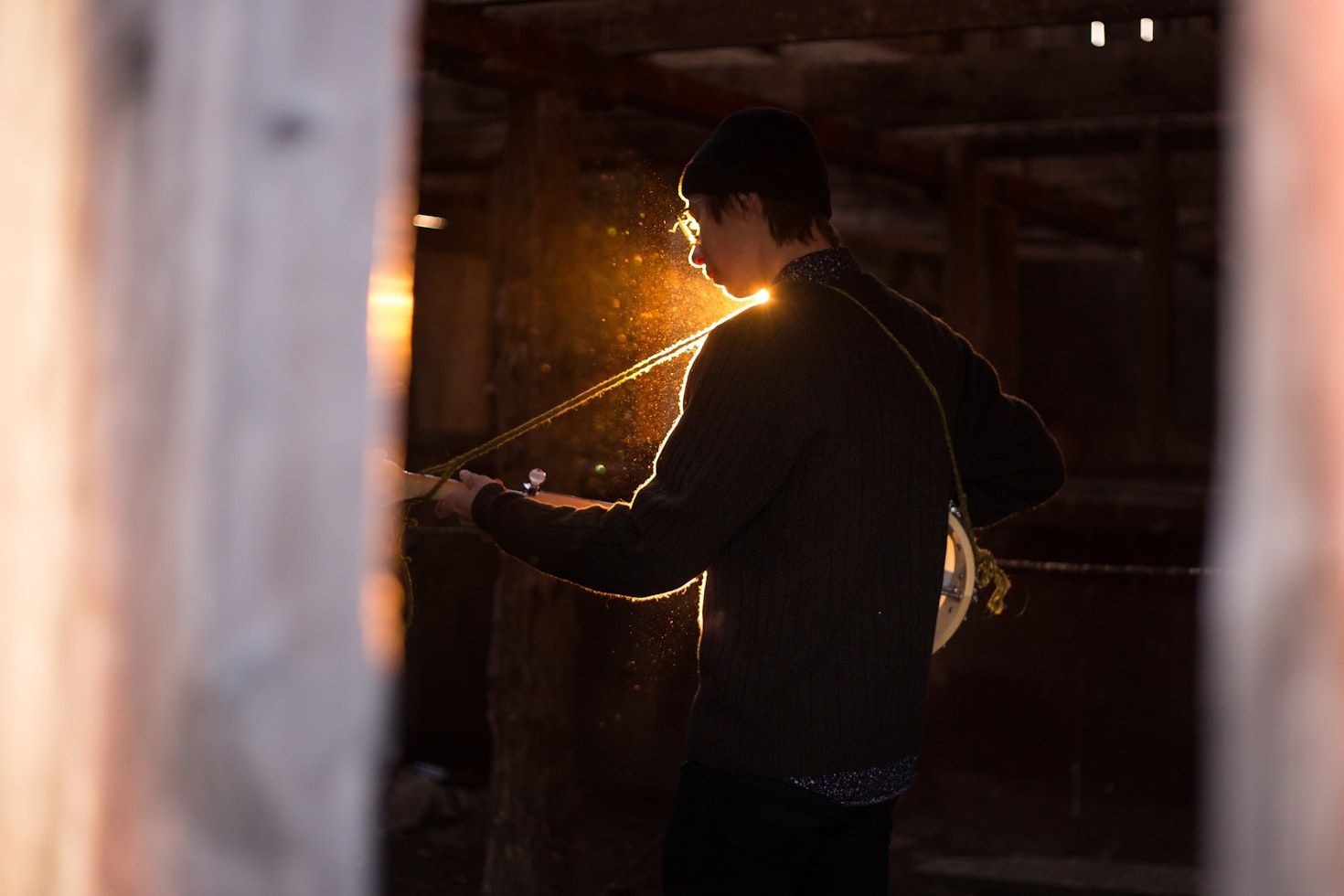
Image: Priscilla Du Preez

Like numerous other folk songs, the lyrics and melody of "In the Pines" were passed down orally from generation to generation, and its original author remains unknown. What we do know is that it dates back to at least the 1870s and likely originated in the Southern Appalachian region.

The structure of this unique, moody, blues-style song, as we know it today, has mutated over the years, merging with other tunes. The important thing is that "In the Pines" has become a staple of American music, being recorded by numerous artists, including Bill Monroe, Lead Belly, and even grunge band Nirvana.

4
Worried Man Blues

Image: LunarSeaArt

When hillbilly singers came into contact with African American blues, songs like "Worried Man Blues" began to emerge. The verses were likely inspired by the story of someone sentenced to work on a chain gang.

The song may have roots in a 19th-century African American spiritual , but it became widely known after the Carter Family recorded it in the 1930s, giving it a strong foothold in the country and early bluegrass repertoire. Decades later, folk revivalists adopted the tune, ensuring its place as a classic of American folk music.

5
Oh Shenandoah

Image: Matheus Ferrero

Although the exact origin of this folk song is uncertain, we know that it was sung as a river shanty in the 19th century, especially by American and Canadian fur traders traveling down the Missouri River.

The word Shenandoah is connected to the Shenandoah Valley in Virginia, though its precise meaning is debated. Some suggest it derives from an Iroquois word meaning "land of big mountains" or "daughter of the stars." Some versions of the song tell the story of a redskin chief, Shenandoah, and his beautiful daughter. According to the legend, a white trader eloped with the maiden after silencing the chief with firewater.

6
Oh! Susanna
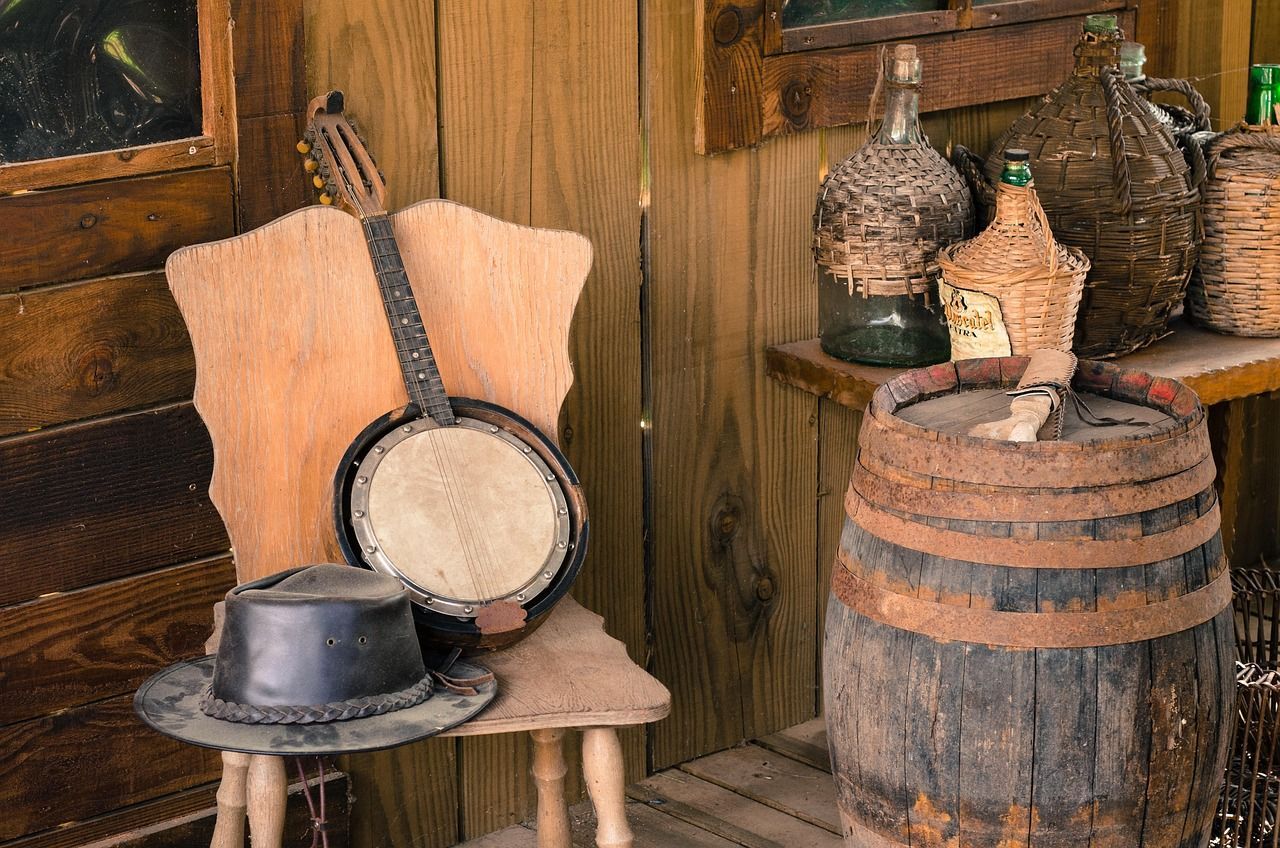
Image: ClickerHappy

"Oh! Susanna" is often considered the first big hit in American popular music. It became especially famous among the '49ers during the California Gold Rush and became an emblem of the conquest of the West.

With influences from European polka music and earlier traditional folk songs, "Oh! Susanna" was published in 1848 by Stephen Foster, later nicknamed the "Father of American Music." Many artists recorded different versions over the years, including The Big 3, The Byrds, and James Taylor.

7
Red River Valley
Image: Priscilla Du Preez

It is common for folk songs to be adapted to different regions , and this tune is no exception. Over the years, it has been named and renamed for many different valleys and locales. Most 20th-century versions use the title "Red River Valley" and, by implication, place it along the Red River that forms part of the boundary between Texas and Oklahoma.

However, some evidence suggests that the original version actually dates to around 1870 in Canada, near the Red River that flows into Lake Winnipeg. In that version, the lyrics tell of a French-Indian maiden lamenting the departure of a soldier who had come, stayed briefly, and then left. For Americans, though, the song is most closely associated with cowboys and the Red River of the South.

8
Man of Constant Sorrow

Image: Wilawan Pantukang

The origin of this southern mountain song is somewhat obscure. It is absent from most of the major standard collections, but some experts believe it might have been inspired by the 19th-century hymn "I Am a Poor Pilgrim of Sorrow."

Although numerous versions with different names and lyrics have circulated since at least the early 20th century, "Man of Constant Sorrow" was popularized by the Stanley Brothers in the 1950s. Soon after, musicians such as Bob Dylan, Joan Baez, and Judy Collins recorded their own interpretations, helping to cement its place as a classic of American folk music.

9
Home on the Range
Image: Jeremy Bishop

One of the best-known cowboy and Western songs, "Home on the Range," has long been the subject of disputes regarding its authorship. The most widely held theory is that it was inspired by a poem called "My Western Home," written by Dr. Brewster Higley in the 1870s. The well-known American composer David W. Guion claimed to have composed the music, stating that he wrote it at the age of 16, influenced by his life in West Texas.

"Home on the Range" enjoyed great popularity in the 1930s through radio broadcasts and recordings during the cowboy-song fad. Since 1947, it has been Kansas’s official state song.

10
Michael, Row the Boat Ashore
Image: Blind Rhino Media

Folk song revivalists discovered "Michael, Row the Boat Ashore" in the Georgia Sea Islands and passed it around widely and fervently. The tune blends spiritual, calypso, and sea-song styles, and it likely originated as both a spiritual and a work song sung by enslaved crews on plantation riverboats.

The name Michael refers to the Archangel Michael, and the song was likely used when the load was heavy or the boat was going against the tide. In the 1960s, it was popularized by folk band The Highwaymen and was also recorded by other artists such as Pete Seeger, Bob Gibson, and Harry Belafonte, among others.


Geography Geography 5 min read

Weird American geography

Travel through the 10 strangest town names in the US!

Image: Leah Newhouse

The name of a town or a city often reflects its proud history. For instance, the city of Houston pays homage to Sam Houston, the first President of the Republic of Texas. In that sense, one can’t help but wonder what stories towns like Money, Mississippi, or Friendship, Maine, hide behind their unusual names. With that in mind, get ready to go on a wacky road trip with our selection of 10 of the most unusual names of American towns and cities. Enjoy!

1
Accident, Maryland

Image: Chiara Guercio

We’ll begin this article by quoting the great Bob Ross: "We don’t make mistakes; we make happy accidents". In that sense, a certain small town located in Garrett County, Maryland, is a living testament to the wonderful nature of accidents: Certainly, the town of Accident could use this Bob Ross quote as a town motto.

Nobody really knows where this unusual name comes from, but a popular theory states that when two men were conducting separate surveys in the area, one of them claimed land owned by the other "by accident". While we might never be sure if this story is true or not, people from Accident (or, as they like to be called, "Accidentals") definitively take pride in their weirdly named town.

2
Boring, Oregon

Image: charlesdeluvio

At first glance, the town of Boring, Oregon, seems to encapsulate the slow living of many American towns. While many disgruntled teenagers might call this peaceful lifestyle boring, we choose to consider it "peaceful". In any case, the name of this unincorporated community comes from a rather flashy geographical feature: a lava field.

If this unusual name makes you feel sorry about this town, don’t be: It has found a rather extraordinary group of sister cities. Boring, Oregon, is a proud member of a group known as "Trinity of Tedium", which includes the village of Dull, Scotland, as well as Bland, Australia.

3
Cucumber, West Virginia

Image: Harshal S. Hirve

The cucumber is definitively the star of many delicious salads. This versatile vegetable provides a fresh and unique taste to any dish. You would think that all the 74 residents of Cucumber, West Virginia, are big fans of this green delicacy, but in fact, the naming of this town seems to be in reference to entirely different reasons.

This mining-centered community was named after either Cucumber Creek, which is in the town’s proximity, or after the abundant cucumber trees in the area (which sadly don’t produce the green vegetables we know and love).

4
Mexican Hat, Utah

Image: Melanie Rosillo Galvan

With a population of only 31, the town of Mexican Hat in Utah is named after a peculiarly shaped landmark. A strange rock overlooks the northeast side of town, shaped just like an upside-down sombrero . This rock has 2 different climbing routes that ascend it, in case you want to take a trip and see this hat-shaped landmark in all its magnificence.

Mexican Hat was founded in 1908 by E.L. Goodridge, a man seeking oil in the area. While his efforts were unsuccessful, this settlement would eventually result in one of the most oddly named towns in America.

5
Chicken, Alaska

Image: Stephen Mierendorf

There’s no denying that America loves chicken: After all, we are the country that consumes the most chicken in the world. In that sense, it stands to reason that one of our many towns chose to celebrate our favorite domesticated bird. However, the history behind the naming of Chicken, Alaska, actually tells a different story.

This town was settled in the 19th century by gold miners rushing to Alaska during this state’s gold rush. When, in 1902, the site established a post office, it required a community name, and the settlers decided to name the newly-formed town after a type of game bird called ptarmigan. However, since no one was able to spell "ptarmigan" correctly, they ultimately settled on the much more spellable "Chicken".

6
Hot Coffee, Mississippi

Image: Alex Padurariu

Don’t you agree that thanking coffee for everything it does for us should be enough reason for this homage? The small community of Hot Coffee, Mississippi, pays a warm tribute to that miraculous drink that helps millions start their day right.

The community was established in the 19th century, located at the crossroads between two major travel routes. Logically, an inn was built to house weary travelers. A local man called L.J. Davis built a store and hung a sign designed to attract out-of-town customers that simply read: "the best hot coffee around". Davis’ store became a local landmark, and his excellent coffee soon became such a staple that it would eventually become the town’s name.

7
Truth or Consequences, New Mexico

Image: Photography Maghradze PH

On a certain day in March 1950, the city of Hot Springs, New Mexico, heard a weird yet exciting pitch on the radio: Ralph Edwards, the host of the popular NBC show "Truth or Consequences" , announced that he would broadcast a 10-year anniversary show from the first American town that chose to rename itself after the show.

By the end of that month, Hot Springs had collectively chosen to change its name, renaming itself "Truth or Consequence". Edwards not only held his end of the bargain, broadcasting the special show from the town, but also remained a lifelong friend of this city. He visited the town during the first weekend of May for the next 50 years, in an event that turned into a local Fiesta still celebrated today.

8
Nothing, Arizona

Image: Marta Nogueira

We get it: Naming a town must be difficult. Having said that, we think the founders of this now-abandoned town probably just winged it. Nothing, Arizona, was founded in the late 70s as an extremely small settlement: At its height, it had a population of 4.

While small and only comprising a small convenience store and a gas station, Nothing quickly became a popular tourist attraction. The town sign famously included the following phrase: "Thru-the-years-these dedicated people had faith in Nothing, hoped for Nothing, worked at Nothing, for Nothing."

9
No Name, Colorado

Image: Valentin Antonucci

Apparently, the name "placeholder" was already taken when it came time to name this small Colorado town. Located in Garfield County, No Name has a population of 117. Contrary to popular belief, this town’s name is not a result of a lack of creativity but rather a reference to the No Name Creek and the No Name Canyon, which are nearby. And in fact, both the town and these landmarks pay homage to an event in Colorado’s history.

In 1869, John Wesley Powell set out on an expedition to map out the Colorado River. Powell’s expedition included several boats, which featured names like "Emma Dean" and "Maid of the Canyon". Among them was the "No-Name", a boat that proved that even the most inconspicuous names can leave a huge mark.

10
Friendship, Maine

Image: Duy Pham

What’s life without friends? If there’s someone that can attest to that it’s the residents of Friendship, Maine . After all, they decided to name their town after one of the most important things in life.

You might be familiar with Friendship from the many examples of popular culture that feature this town. For instance, the 1995 film "Casper" takes place entirely in Friendship (which seems only fitting, since Casper is known as "the friendly ghost"). Also, many American authors have written about the town in their stories. Most notably, the short story "The Run of Yourself" by Richard Ford is set in Friendship.

General General 3 min read

Not everything has instructions

You were doing it wrong: Discover 12 things with unexpected uses

Image: Polina Zimmerman

Most of the things we use daily don’t require instructions to be operated successfully. Many others, we learn to use by watching other people. But in this instruction-less environment, some not-so-obvious possibilities are often overlooked. Do you know what the bumps on the F and J keys are for? Or what that extra piece of fabric that comes with some clothes is meant for? Read on to find out!

1
Tin can tab holes

Image: frame harirak

The tab on a tin can, which we use to open it, has two holes—one smaller than the other. If you turn the tab around and place the smaller hole over the can’s opening, you can slide a straw through it , keeping it in place.

2
F and J bumps on keyboards

Image: Jan Loyde Cabrera

Have you ever noticed the small bumps on the F and J keys of every computer keyboard? These bumps are tactile information that lets you know where your fingers are placed on the keyboard without having to look at them.

3
Pasta scoop holes

Image: María Sainz Cabezalí

Most people think the hole in the middle of a pasta scoop is just a strainer for draining excess water. While it does serve that purpose, it is actually designed to measure a single serving of spaghetti .

4
Oven under drawer

Image: Andrea Davis

The drawer beneath an oven is designed to keep food warm without cooking it further. In some models, it functions as a broiler drawer , it can be used for grating cheese. A heating element above the drawer allows for high-heat cooking.

5
Extra fabric

Image: PlanetCare

Some clothing items come with a small piece of extra fabric, matching the garment's material. This fabric isn’t meant as a patch for repairs but rather for testing in the washing machine , allowing you to check how it reacts to different wash cycles before laundering the entire garment.

6
Pan handle hole

Image: Mara Conan Design

The hole at the end of most pan handles is designed to hold a wooden spoon , preventing messes on the kitchen counter. Simply slide the handle of the wooden spoon into the hole, letting the spoon rest over the pan when not in use.

7
Toaster crumb tray

Image: Daniel Salgado

Hidden away at the bottom of your toaster’s side is a small removable tray designed to catch and collect crumbs . You can slide it out to dispose of the crumbs and slide it back in for easy cleanup.

8
Marker on laundry detergent’s bottle cap

Image: Julianna Arjes

Most people who do laundry know that the bottle cap on laundry detergent is used to pour the liquid into the washing machine. However, not everyone notices that these caps have markings inside to measure the correct amount of detergent for a single wash cycle.

9
Utility knife blade replacement

Image: ds_30

When your utility knife blade starts to show signs of wear, you can break off the end segment to reveal a fresh, sharp edge . To do this, remove the detachable plastic piece from the back of the knife. This piece has a small slot where you can insert the blade’s end segment and snap it off safely. Once done, simply reattach the plastic piece, and your knife is ready to use again.

10
Color thread on wheel tire

Image: Jaye Haych

Many tire manufacturers embed colored threads near the outer edge of tires to indicate when they need to be replaced. These thread lines help measure tread depth . When the tread wears down to the level of these colored lines, it signals that the tire is approaching the end of its usable life and may need to be replaced.

11
Pint glass bulge

Image: tito pixel

If you've ever wondered what the bulging part on the sides of a pint glass is for—besides aesthetics—the answer can be found in bars and pubs everywhere. When glasses are stacked, they can sometimes get stuck together . However, pint glasses with a bulging design prevent this from happening .

12
Tic Tac dispenser

Image: jarmoluk

Tic Tac containers have an oval-shaped indentation in the lid, where a single Tic Tac can fit snuggly . This design functions as a dispenser for individual servings. Instead of shaking the container like a salt shaker, simply tilt it on its side, open the lid slowly, and a single candy will appear on it.

Explore more American facts

Choose your favorite category!

General
General

As American as apple pie—the very best America has to offer!

Culture
Culture

Delve into the astounding richness of American lore.

Geography
Geography

Hop in and explore vast and diverse American landscapes.

History
History

Discover the key moments that shaped the United States.