History History 5 min read

History time

Let’s honor our 13 original colonies with 13 interesting facts!

Image: Kaboompics.com

The 13 original British colonies along the East Coast of what is now the United States were the building blocks of a new nation. At the same time, they were lively, complex, and filled with unique stories. Founded for reasons ranging from religious freedom to economic gain, each colony brought its own flavor to the mix. While they eventually united to resist British rule, their individual histories remain captivating. Let’s explore 13 interesting facts about these foundational colonies and uncover the tales that make them unforgettable.

1
New Hampshire: Constitution and potatoes

Image: Spenser Sembrat

New Hampshire was a pioneer in colonial America: They were the first colony to establish its own constitutional government. But its tastiest contribution? Potatoes!

In 1719, Scotch-Irish immigrants near Londonderry planted the first permanent potato crops. The tubers quickly became a staple and spread across the colonies only to become the most consumed vegetable in the country. Plus, New Hampshire even declared the potato its official state vegetable in 2013. Who knew potatoes had such historical roots?

2
Massachusetts: Named after the original inhabitants

Image: Wei Zeng

When English settlers arrived on the Mayflower in 1620, they weren’t stepping onto empty land. Indigenous peoples had called the area home for thousands of years.

The colony’s name, Massachusetts, honors the Massachusett tribe. Derived from the Algonquian word Massa-adchu-es-et , it translates to "great hill-small place." Even as history tells a more complicated story about their interactions with the settlers, it’s a nice tribute to the land's original inhabitants.

3
Connecticut’s secret tree

Image: Christopher Luther

Connecticut’s colonial history has a touch of mystery and rebellion . In 1662, the colony was granted a royal charter ensuring its right to self-govern by King Charles II. After his death, in 1686, King James II tried to revoke it.

Legend has it that, during a heated debate, the charter was spirited away during a momentary blackout and hidden in the hollow trunk of a white oak tree. The "Charter Oak" became a symbol of freedom and self-determination, and it’s now honored as Connecticut’s official state tree.

4
Rhode Island: Refuge for the rejected

Image: Demure Storyteller

The colonies were revolutionary, but some views were too progressive for the era. That is why Roger Williams, Rhode Island’s founder, was banished from Massachusetts . He had progressive views on religious freedom and so he found sanctuary in what later became Rhode Island.

In 1636, he purchased land from the Narragansett people and founded a colony based on the separation of church and state. It became a haven for minority religious groups like Baptists, Quakers, and Jews.

5
New York: From New Netherland to a global capital

Image: Benjamín Gremler

Before it was New York, it was New Netherland, a bustling Dutch colony founded in 1624. The Dutch established New Amsterdam on Manhattan Island, but in 1664, the English seized the territory and renamed it after the Duke of York.

New York grew rapidly, eventually becoming the first capital of the United States after the Revolutionary War. It’s amazing to think this vibrant city started as a modest Dutch trading post.

6
New Jersey’s devilish legend

Image: Benjamin Ashton

The Pine Barrens of New Jersey are home to one of America’s oldest and creepiest legends : the Jersey Devil. Do you know how it goes?

According to folklore, a woman named Mother Leeds cursed her 13th child, who was born as a monstrous creature, and fled into the forest. The tale, rooted in both colonial superstition and Indigenous folklore, has been passed down for centuries, keeping imaginations alive, and visitors on edge, in the Garden State.

7
Pennsylvania: The King’s debt becomes a colony

Image: The Body

Pennsylvania owes its existence to a royal, and quite big, IOU. King Charles II granted William Penn the land in 1681 as payment for a debt owed to Penn’s father.

Penn established the colony as a safe haven for Quakers, emphasizing religious tolerance and fair dealings with Indigenous peoples. Pennsylvania, clearly named after the family’s name, became a model of diversity and coexistence, attracting settlers of all faiths and backgrounds.

8
Delaware: The First to Declare Independence

Image: Demure Storyteller

Independence from Britain? They all did that, but Delaware took it a step further! Though initially governed as part of Pennsylvania, Delaware established its own legislature in 1704.

On June 15, 1776, this colony declared independence not just from Britain but also from Pennsylvania, making it the first colony to break away formally . Known as the "First State" for ratifying the US Constitution in 1787, Delaware’s pioneering spirit is woven into its history.

9
Maryland: A pirate colony?

Image: Luisa Frassier

Maryland’s early days weren’t all peaceful. William Claiborne , a man of the Virginian council, refused to accept that his settlement on Kent Island was part of Maryland after the colony’s charter was granted in 1632.

Claiborne launched pirate raids on Maryland’s trading posts, leading to charges of piracy and murder. While he eventually lost his claim, Claiborne’s defiance adds a plot twist to Maryland’s story.

10
Virginia: Witch trials in the South

Image: Henry Deng

Did you think witch trials only happened in Salem? Think again. Virginia held about two dozen trials between 1626 and 1730, including the infamous case of Grace Sherwood. If that name doesn’t ring a bell, maybe "The Witch of Pungo" does.

While we’re not going to get into the details of how they proved she "was a witch," she was convicted of witchcraft and spent several years in jail before she was released.

11
North Carolina: The Mystery of Roanoke

Image: Gene Gallin

North Carolina’s Roanoke Colony remains one of America’s greatest mysteries. In 1587, over 100 settlers vanished without a trace , leaving behind only the word "Croatoan" carved into a tree.

As you can imagine, there are plenty of theories surrounding this event: Did they join local Indigenous tribes, or succumb to the harsh environment? While we may never know, the "Lost Colony" keeps historians and treasure hunters quite captivated.

12
South Carolina’s "Blue Gold" boom

Image: Omri D. Cohen

South Carolina’s indigo trade, led by Eliza Lucas Pinckney in the 1730s, turned the colony into an economic powerhouse. This vibrant blue dye, vital for textiles, was so lucrative it earned the nickname "blue gold."

Despite the challenges, which included sabotage by rivals, the crop’s success transformed South Carolina’s economy. However, its growth came at the cost of enslaved labor, a sobering reality of the colony’s prosperity.

13
Georgia: A colony for a cause

Image: Jaanus Jagomägi

Founded in 1732 by James Oglethorpe, a prison reformer, Georgia was established as a social experiment . It was designed to provide a fresh start for England’s "worthy poor," and to that end, the colony outlawed slavery and large landholdings.

However, settlers soon pushed back, and by 1751, many of the original restrictions were lifted. Despite its challenges, Georgia’s idealistic beginnings make it a unique addition to the 13 colonies.

General General 3 min read

Which is your favorite food?

Did you know these 12 very American foods are not really American?

Image: Fernando Andrade

When your country is a melting pot of nationalities and cultural backgrounds, as America is, many things you might consider local are actually not, including food. You might be surprised to learn about the true origins of some of these American culinary icons, from the hamburger to apple pie and beyond. Which one do you like the best?

1
Hamburger

Image: Carles Rabada

Due to their popularity and widespread appeal, hamburgers are considered an unofficial national dish of the United States, and there’s good reason for this. It's hard to think of a more American dish than a hamburger, right?

Well, hamburgers may be a national treasure today, but their very name gives us a clue about their true origin: Germany’s Hamburg .

2
Hot dogs

Image: Peter Secan

Few things are as American as buying a hot dog from a street vendor and enjoying it in the sun, right? Well, not exactly. The more formal names of the humble hot dog—frankfurters and Vienna sausages—give us, once again, a hint about their German and Austrian true origin.

3
French fries

Image: Elizabeth Jamieson

While French fries have been a national staple for quite some time, their very name also gives away their foreign origin. There is an ongoing debate about whether these fries are actually French or Belgian , but in any case, these delicious bits of joy are not American.

4
Mustard

Image: Peter Werkman

Mustard, the first of many popular condiments cherished by Americans, was first consumed by the Egyptians in its original seed form and later by the Romans as the paste we most commonly use today.

5
Ketchup

Image: Dennis Klein

Another condiment that is at least as popular as mustard in America, if not more, ketchup originated as a Chinese fermented fish sauce called "kê-tsiap." Over time, the sauce evolved, leaving the fish behind and replacing it with tomatoes to become the ketchup we know today.

6
Pickles

Image: Mehmet Uzut

Another food highly appreciated on American soil is pickles. Whether on burgers, served as a side with sandwiches, chopped into relish for hot dogs, or enjoyed in many other ways, these vinegar-soaked cucumbers are a staple of our cuisine. But multiple records trace the origin of these treats as far as ancient Egypt , where even Cleopatra was rumored to love them.

7
Apple pie

Image: Priscilla Du Preez 🇨🇦

This may be shocking to some, but alas, it is true: the quintessentially American apple pie is not really American. The earliest known recipes for apple pie belong to the ancient Greeks . And Dutch bakers created the modern version of the pie in the 15th century.

8
Mac and cheese

Image: Hermes Rivera

Thomas Jefferson is often credited with inventing macaroni and cheese after bringing back a macaroni machine from a trip to Europe, but he was not the first to come up with the idea.

The original recipe for macaroni baked with cheese sauce first appeared in the 14th-century cookbook Liber de Coquina, which is believed to have been written by an Italian author.

9
Bacon

Image: Casey DeViese

Nobody "invented" bacon, right? It’s just a piece of meat. The origins can be traced back to the ancient world, where curing and preserving pork became a common practice. But, as it happens, most sources agree that the Celts were the first to prepare and cook it in the way we do today.

10
Meatloaf

Image: RitaE

A humble recipe, for sure, meatloaf was made in Medieval Europe from scraps of meat held together by fruits, nuts, and seasonings. It was created to stretch leftover beef or create a more substantial meal from less expensive cuts of meat.

11
Mayonnaise

Image: May_hokkaido

The third and final condiment on our list is another American staple, even though its French name might give us a pretty straightforward idea of its origin. But it's not that simple.

The French mayonnaise is likely derived from Spanish versions of aioli, which is a garlic mayonnaise.

12
Barbecue

Image: Andrik Langfield

Surely, something as American as a barbecue must be a local invention, right? Wrong, again. Known as "barbacoa" in the West Indies long before it became popular in America, barbecues have been around for a long time. Even the modern barbecue, with spice-rubbed meat slowly cooked over a fire and topped with sauce, originated in the Caribbean .

General General 4 min read

Read on and dream on

Luxury life: 12 extravagant features in American millionaires’ yachts

Image: Viktor Ritsvall

Peeking into the lives of the rich and famous has become easier over the years, thanks to social media and smartphones, which allow for very personal and up-close contact between the super-wealthy and the rest of us. Among the many spoils and luxuries these individuals indulge in, few pique interest quite like their superyachts. From basketball courts to helipads and more, the following 12 features are just a small glimpse of what money can buy. Can you imagine yourself on one of these boats?

1
Garage

Image: Danielle-Claude Bélanger

If you’re like most of us, when you hear the word garage , you think of a place to store cars—on land. But if you belong to the super-rich, you might think otherwise. Octopus is a superyacht owned by an extremely wealthy individual (as with every other massive boat on this list, we’ll avoid naming names) that features a two-story wet dock functioning as the explorer yacht's very own mini-marina.

Two primary tenders are stored and launched through a giant transom door, while the floodable dock is complemented by rows of smaller toy garages.

2
Spa

Image: Jared Rice

Many cruise ships offer spas as part of their onboard amenities, but sharing those accommodations with other passengers is usually to be expected. Unless, of course, you happen to own Kismet , a superyacht that boasts a " 7-star wellness suite ." This luxurious space includes a hammam, sauna, cryotherapy chamber, private treatment room with a massage table, and a chromotherapy bathtub. Not bad, right?"

3
Air-conditioned helicopter hangar

Image: Andrew Palmer

If you own a superyacht, chances are you probably own a helicopter too. So, it only makes sense to have a proper deck on your yacht to land your helicopter. However, the owner of Moonrise took things a step further by adding an air-conditioned helicopter hangar to the mix.

4
Bespoke chandelier

Image: William Krause

Probably due to the fact that these things always seem to hang rather precariously from the ceiling, chandeliers tend to be installed on dry land and not on moving vehicles. However, if your yacht is large enough, anything is possible.

Such is the case with the Aquila superyacht, which boasts a bespoke chandelier crafted by the Czech company Preciosa. This masterpiece made up of more than 850 pieces of hand-blown glass , stretches an astonishing 36.7 feet , cascading elegantly through four of Aquila’s five decks.

5
Nature-inspired spa

Image: Roberto Nickson

The Ahpo superyacht features a massive spa designed with curves, leaves, waves, and bamboo for a serene, nature-inspired aesthetic. Located on the lower deck, this luxurious facility includes a plunge pool , a Himalayan salt sauna , a hammam , and a massage room . Each space is decorated with intricate nature-themed mosaics and ceilings embedded with twinkling fiber optic lights, creating a tranquil and immersive experience.

6
A snow room

Image: Nathan Wolfe

If an onboard spa isn’t luxurious enough, how about a walk-in snow room ? The Faith superyacht takes indulgence to another level with its spa, which includes this unique feature. Aside from the fun of building a snowman while navigating across the Caribbean, spending time in the snow room offers several health benefits , such as stimulating metabolism , improving sleep , and relieving pain .

7
Underwater lounge

Image: Jeremy Bishop

Imagine relaxing in your superyacht’s private lounge, gazing through a huge window in front of you, half of it over the water line and half of it, underwater . This is the kind of extraordinary experience awaiting owners and guests aboard the Savannah . Spot marine life with a drink in your hand, anytime.

8
Private library

Image: Iñaki del Olmo

Arguably the most understated feature on this extravagant list, the massive L-shaped library aboard the M5 superyacht exudes a cozy, residential charm. With hundreds of volumes neatly arranged in rows and a plush L-shaped sofa to match, this library offers the perfect space to unwind in style.

9
Outdoor cinema

Image: Andre Ouellet

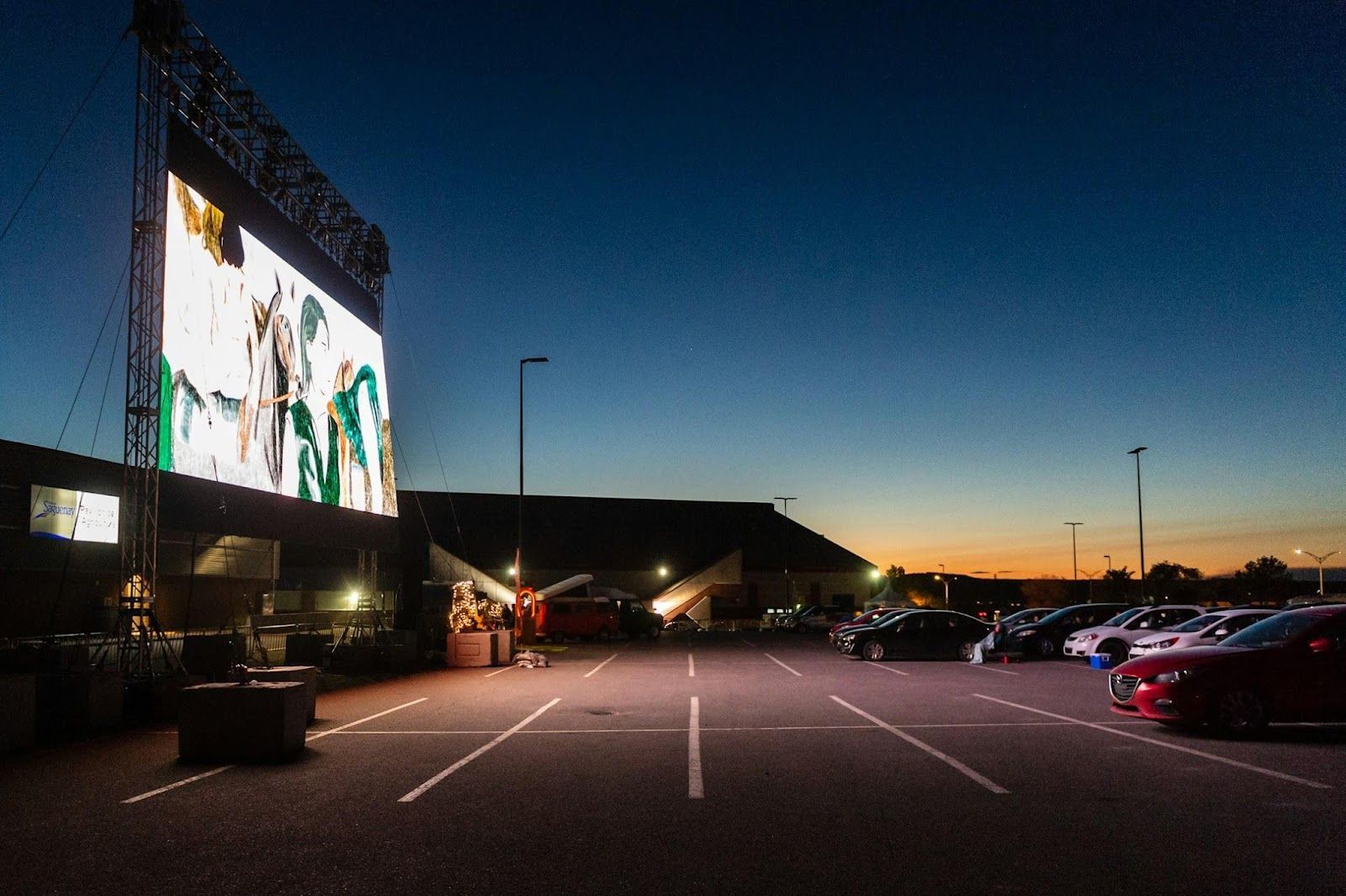
Imagine a drive-in theater—but at sea, and without the cars. That’s the kind of experience you can enjoy aboard Grey , another big boat with a glass-sided swimming pool complete with a high-luminosity cinema setup . Flanked by plush sofa seating, the area boasts integrated speakers and a state-of-the-art surround sound system.

And yes, in case you were wondering, the screen can completely retract and fold away when not in use.

10
Basketball court

Image: JC Dela Cuesta

Imagine playing basketball while the entire court is rocked by the waves —quite an experience! The lucky owner of Joy , another luxurious ship, can do just that. The court can also be converted into a badminton court. And after the workout, the dedicated onboard spa is ready to soothe those sore muscles.

11
A jaguar

Image: Jeff Heaton

Figureheads on the bow of ships are an ancient tradition, but placing a car-style hood ornament on a ship is something else altogether. And doing it on a massive scale creates quite the spectacle. The Whisper superyacht boasts a 12-foot silver jaguar statue on its bow , a tribute to its previous owner, who also happened to own the Jacksonville Jaguars football team.

12
Greek pool

Image: Alex Harmuth

Picture a massive pool, set underneath dramatic lighting to give the appearance of a night-lit sky, and surrounded by grand Greek statues , all aboard a luxury private yacht . That’s Leona , a 240-foot superyacht. The lavish atmosphere is completed by water outlets and fresco walls that make its visitors feel like they are in a Greek villa .

Explore more American facts

Choose your favorite category!

General
General

As American as apple pie—the very best America has to offer!

Culture
Culture

Delve into the astounding richness of American lore.

Geography
Geography

Hop in and explore vast and diverse American landscapes.

History
History

Discover the key moments that shaped the United States.