History History 5 min read

Stages that made history

Woodstock or Folsom Prison? 10 of the most iconic concerts in America

Image: Johannes Havn

Some performances stay with us forever. Moments like Jimi Hendrix setting his guitar on fire, Prince playing Purple Rain in the pouring rain, or The Beatles being drowned out by the roaring crowd at Shea Stadium are etched in the minds of millions. Some people witnessed them live, while others saw them in documentaries or YouTube videos that continue to amass views decade after decade. Regardless of the medium, generations agree that these 10 performances are among the most unforgettable shows ever staged in the US.

1
The Beatle’s Shea Stadium Concert

Image: Fedor

The Beatles couldn’t hear themselves over the overwhelming roar of the crowd during their first U.S. performance. The concert that the band from Liverpool gave at Shea Stadium in the summer of 1965 made history. It drew 55,000 fans—the largest rock concert audience at the time—and marked the first time a rock band played in a large stadium.

This event set a new standard for live music performances, highlighting the need for stadium sound systems capable of supporting massive concerts—since the one used that day was rudimentary. Though the band arrived by helicopter, sparked a frenzy of Beatlemania hysteria, and delivered a performance that would be rewatched for decades, they played only 12 songs in just 30 minutes .

2
1985’s Live Aid

Image: Andreas Talseth

Did you know that Phil Collins insisted on performing at both the U.K. and U.S. venues on the same day for 1985’s Live Aid? He boarded a Concorde jet to fly from Wembley Stadium to JFK Stadium in Philadelphia, where the U.S. leg of the famine relief fundraiser for Ethiopia was taking place.

The event was broadcast in 150 countries and reached nearly 1.9 billion people. The U.S. stage of Live Aid raised over $125 million and set the standard for large-scale charity concerts, inspiring similar events in the years that followed. Madonna, Bob Dylan, Mick Jagger with Tina Turner, Duran Duran, and Eric Clapton were just a few of the stars who performed that day.

3
Bob Dylan at Newport Folk Festival

Image: Nikoloz Gachechiladze

The 1965 Newport Folk Festival will always be remembered as the day Bob Dylan "went electric." His decision was controversial—he had long been associated with folk and blues, and his unexpected leap into rock divided the audience, with some cheering and others booing. Some believe the booing was directed at the poor sound quality rather than his choice to go electric. Regardless, Dylan left the stage after just three songs .

This moment is seen as a pivotal merger of folk and rock music. Afterward, Dylan fully embraced rock, releasing albums that included his hit "Like a Rolling Stone."

4
Simon & Garfunkel’s Concert in Central Park
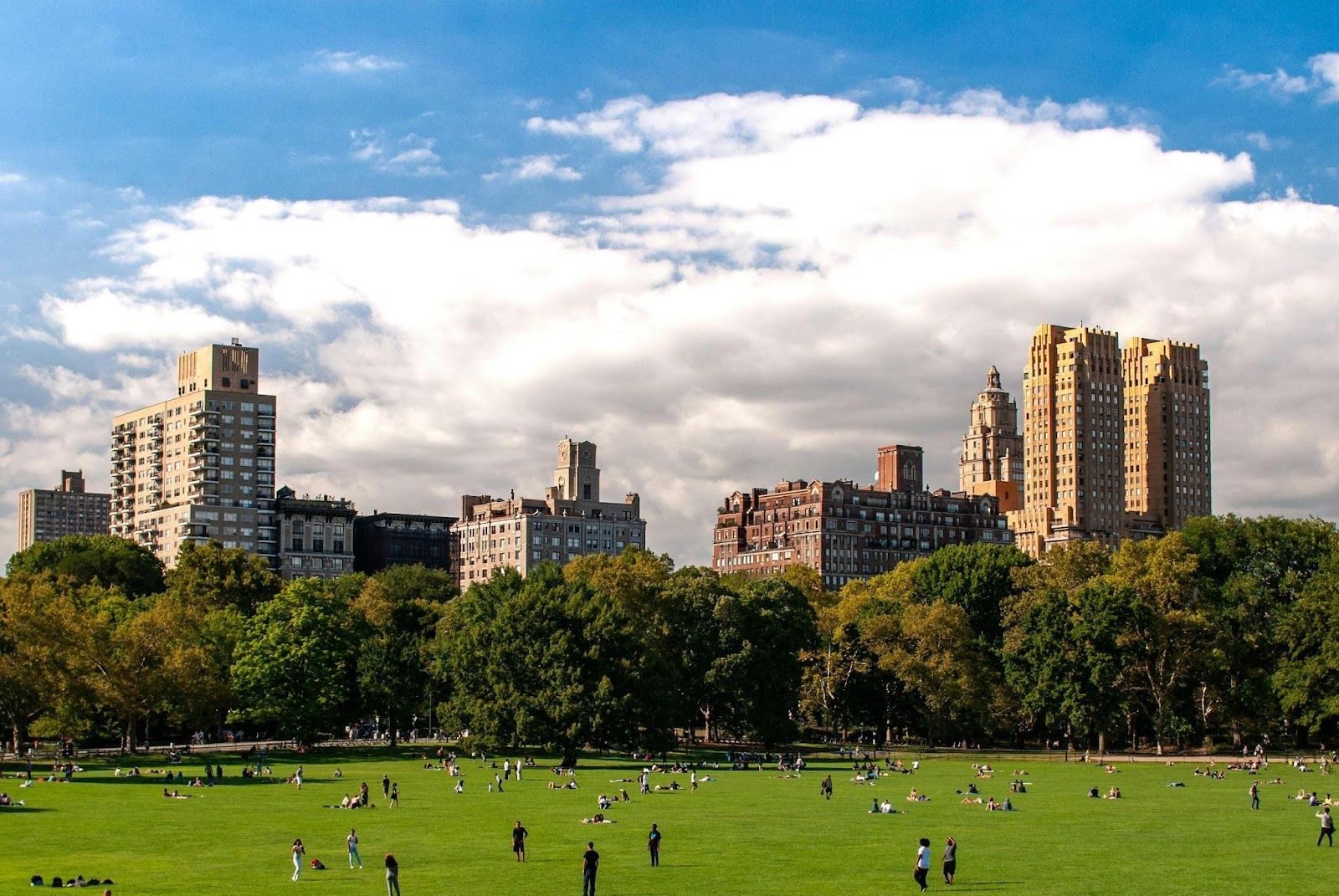
Image: David Vives

In September 1981, Simon & Garfunkel reunited at Central Park in New York for their first performance together in over a decade. The duo had publicly announced their breakup in 1970, after friction and disagreements that had forced them apart. Their immense popularity drew a crowd of half a million people to Central Park to witness the event.

The duo performed some of their biggest hits along with a few of Paul Simon’s solo songs. The concert was a benefit to raise funds for the park’s restoration. It was broadcast live, and the recording was later released as a live album . The event reignited their popularity and led to a successful reunion tour.

5
The Allman Brothers Band’s Fillmore East Concerts

Image: Pixabay

During the spring of 1971, The Allman Brothers Band performed for three nights at the Fillmore East in New York City. These performances were recorded and released as the live album At Fillmore East , which became one of the greatest live albums in rock history.

What made these recordings particularly compelling for fans was the inclusion of extended jam versions of songs like "Whipping Post," "You Don't Love Me," and "In Memory of Elizabeth Reed." The band’s improvisational skills and seamless fusion of blues, jazz, and rock made this weekend in New York a legendary and widely acclaimed performance.

6
Johnny Cash at Folsom Prison

Image: M Shiva

In 1968, Johnny Cash made a decision that would revive his career and solidify his image as both empathetic and rebellious. Following a decline in popularity and struggles with addiction, he arranged a performance for the inmates at California’s Folsom Prison, about which he had written the hit Folsom Prison Blues years earlier.

Cash had played in prisons before, but this time, he chose to record it. The resulting album captured the raw energy of his direct engagement with the audience. At Folsom Prison became a massive success, marking the first in a series of prison concerts that would go on to become some of his best-selling records .

7
The Last Waltz of The Band

Image: William Krause

The Last Waltz was billed as The Band’s farewell concert , designed as a celebration of their remarkable career. Filmed by Martin Scorsese, the event featured an all-star lineup of guest musicians, including Bob Dylan, Joni Mitchell, Van Morrison, Muddy Waters, and Ringo Starr—just to name a few.

Held in 1976 at San Francisco’s Winterland Ballroom, the concert was later released as a documentary film , becoming one of the greatest concert films of all time. With its chandeliers and grand ballroom atmosphere , The Last Waltz set a new standard for farewell concerts.

8
Prince’s Super Bowl Halftime Show

Image: Daniel Robert Dinu

Many will always remember when Prince performed "Purple Rain" in the pouring rain during the 2007 Super Bowl Halftime Show . Despite the adverse weather, he commanded the "P"-shaped stage at Miami’s Dolphin Stadium during the break in the game between the Colts and the Bears.

He opened with his anthem "Let's Go Crazy" and included covers of songs by Bob Dylan and Foo Fighters. Legend has it that before the show, Prince was asked if he was worried about performing in the rain. His alleged response? A playful, " Can you make it rain harder ?" He then stepped out and delivered one of the greatest halftime shows in history.

9
Jimi Hendrix at the Monterey Pop Festival

Image: mirkosajkov

Until the Monterey Pop Festival in 1967, Jimi Hendrix had yet to break through in the US. It was none other than Paul McCartney who convinced organizers that the festival would be incomplete without the rising star.

American audiences were introduced to Hendrix’s guitar wizardry at this concert, where he showcased his newly released album Are You Experienced. The moment that cemented him as a force to be reckoned with came during a dramatic rendition of "Wild Thing," when he set his guitar on fire before smashing it.

10
Woodstock Music and Art Fair

Image: PeterKraayvanger

Finally, we can’t overlook the legendary Woodstock Music and Art Fair, forever known simply as "Woodstock." Held on a dairy farm in Bethel, New York, the festival became a symbol of the 1960s counterculture . Nearly half a million people gathered for this three-day event, which was originally planned as a profit-making venture but turned into an open festival when the crowds became overwhelming.

The lineup featured many stars who became emblems of the era, including Jimi Hendrix, Janis Joplin, The Who, Santana, and Joe Cocker, among others. Despite its iconic status today, Woodstock faced challenges such as food and water shortages, heavy rain, and overwhelmed medical services. Although the festival initially resulted in a financial loss , the costs were eventually recovered through profits from the film and soundtrack releases.

General General 5 min read

HAUNTED CELEBRATION

Unmasking Halloween: the origins behind our spookiest traditions!

Image: Łukasz Nieścioruk

It’s that time of the year when all things spooky reunite to provide everyone with a fair dose of fun and jump-scares. Halloween in the U.S. is full of quirky traditions—from trick-or-treating to carving pumpkins and stuffing ourselves with candy. Above all, it’s a magical time of the year. But do you know where these traditions come from? Why do we use black and orange? Or why do children dress up? Join us as we go through 10 Halloween traditions and their origins. Are you ready?

1
Choose a villain

Image: Paige Cody

If reason were to govern our thoughts on the matter, no one could deny that seeing people of all ages dressed up as their favorite villains is a weird thing. We’ll discuss the treating part later, but let’s get into the costumes first.

This tradition has deep roots, and it goes all the way back to the Middle Ages and the ancient festival of Samhain. Now what was the purpose of the costumes? People used to believe that spirits roamed the earth on this particular night so, dressing up in costumes was the way to ward off these phantoms. Quite original, don’t you think?

2
Apple bobbing

Image: Nathan Dumlao

Among the spooky traditions, there is also one that relates to romance and love: bobbing for apples, and we’ve got Great Britain to thank for it.

In this game, an apple represented a potential husband, and, faith for young women who wished to marry was settled by how many attempts it took her to retrieve an apple. One bite meant jolly matrimony. Two bites, a not-so-long-lasting courtship. And three… Well, that relationship was doomed altogether.

Samhain was celebrated at the end of the harvest, and when Irish immigrants brought their costumes to America, this game fit fall festivities to perfection becoming a beloved Halloween game.

3
Jack-o’-lanterns

Image: Szabó János

Who is Jack, and why was he immortalized in a Halloween lantern? Well, it is all, of course, part of a curious legend. As the story goes, Jack tricked the devil twice. The first time, he tricked the Devil into becoming a coin and then, by making him promise not to claim his soul. However, all these tricks only brought nasty consequences—neither hell nor heaven wanted him.

So what happened? He was left to wander the earth with only a burning coal inspiring a carved-out turnip to light his way.

Turnips were just the start for the Scottish and Irish, soon they turned to beets and potatoes, and the tradition took the shape of pumpkins for Americans.

4
Trick or treat yourself!

Image: Nick Fewings

We’ve discussed the costumes, so let’s dive into the sweets. What’s the origin of knocking on doors and asking for candy?

When the Catholic Church established All Souls’ Day, in the Middle Ages, the costume tradition remained and a new one was added: knocking on doors and offering prayers for the dead in exchange for food. This was a practice called "souling."

But souling also suffered some changes and, in modern times, it evolved into what we know as "trick-or-treating," an activity in which children go door-to-door promising mischief if they don’t receive candy. Now you know this, we bet you’ll always give treats away!

5
Black cats, good or bad?

Image: Adél Grőber

In some cultures, spotting a black cat is a one-way ticket to destruction. In others, a black cat is a good luck omen, a sign that you’ll even find love. However, in America, black cats are part of the first group and have become a key symbol in Halloween celebrations and decorations.

Why is that? Because, in the Middle Ages, these poor animals were associated with witches and witchcraft. They were believed to have powers and to be connected to the evil spirits roaming the earth. True or not, they certainly add to the eerie atmosphere of Halloween, don’t you think?

6
Black and orange

Image: Bee Felten-Leidel

Have you ever wondered why we use these particular colors during the Halloween season? Well, the choice was not random at all, it has to do with the meaning behind orange and black.

For one, orange is related to the autumn season, and the end of the harvest (the original time of the Celtic celebration).

Black, on the other hand, brings in the spookiness and the mystery that we all love about Halloween night. It represents the color of the night sky, the shadows, and all things that add to the eerie atmosphere of the evening.

7
Haunted houses

Image: Bee Felten-Leidel

This tradition reveals the true essence of the Halloween spirit: to get as many scares as one can in a single night. All across America, on October 31st, families get their houses ready to invite people over for a thrilling experience.

Haunted houses aim to evoke tension and fear through ghostly figures, spooky decorations, dimmed lights, and chilling sounds with special effects. Have you ever visited one?

8
Bonfires

Image: henry perks

Bonfires, another tradition inherited from the Celtic celebration, are less common but they are still a Halloween tradition. As you can imagine, the original intention of the bonfires was to ward off evil spirits and to honor the Gods.

In the more modern Irish and Scottish traditions, the bonfires were part of a protective and communal custom that later made its way to America. In turn, this tradition has only remained to add warmth and a sense of togetherness to the holiday.

9
Candy Frenzy

Image: Mary Jane Duford

If you ask any child, candy is the best reason to celebrate Halloween. And we can’t blame them— they get to dress up, knock on doors, and get dozens of candies they will later exchange and eat in the company of their loved ones.

In our country, it’s not just the children or the houses who get ready for Halloween—the Marketing industry does too! Every year, countless candy brands (any brand really) adapt their products to make them Halloween-themed. The season kicks off when your local supermarket hangs those spiderwebs up and you start spotting black and orange packaging all over!

10
Scary stories

Image: Nika Benedictova

After collecting all the candies that were rightfully theirs for dressing up, children and young adults all over the country get together to end the night devouring their treats and immersing themselves one last time in the eerie atmosphere: It’s time for the spine-tingling tales.

No Halloween celebration is complete without a good dose of scary stories, fables of ancient times with mysterious characters and details that send shivers down the listeners’ spines. Why? For the sake of fear, after all, Halloween night is all about the supernatural!

Geography Geography 4 min read

ICONIC CITYSCAPES

City Heights: A Look at America's Most Spectacular Skylines

Image: Jonathan Roger

America’s cityscapes offer a striking counterpoint to its lush and vast landscapes. Their vibrant skylines not only define the cities themselves but also serve as physical manifestations of the dreams and ambitions of our nation. Join us on this tour of the country’s most iconic skylines , from the Big Apple's stunning brightness to the futuristic elegance of the Emerald City.

1
New York City, NY

Image: Laurenz Heymann

As anyone who has ever visited the "City of Dreams" knows, the skyline of New York City is unparalleled worldwide. Dominated by the Empire State Building and the One World Trade Center, it also features the bluish-green notes of its central monument and foundational symbol, the Statue of Liberty.

A constantly evolving city, New York transforms into a sea of lights after the sun sets, embodying the relentless spirit of the American dream.

2
Chicago, IL

Image: Pedro Lastra

Chicago's skyline, with its mix of historic and contemporary skyscrapers, is truly a visual feast. The Willis Tower (formerly Sears Tower) and the John Hancock Center are its most prominent features, but the contrast that Lake Michigan’s deep blue imposes on its numerous skyscrapers is hypnotic, blending natural beauty and architectural marvels.

One of its most famous monuments is the reflective Cloud Gate sculpture, popularly known as "The Bean," which adds a charming touch to the urban landscape.

3
San Francisco, CA

Image: Landry Gapangwa

When one thinks of San Francisco's skyline, the Golden Gate Bridge is what often comes to mind first, its majestic span frequently shrouded in fog. However, there's more to the city than Strauss’ magnum opus. San Francisco’s architectural style blends the past and future, with its skyline defined by the iconic Transamerica Pyramid and Salesforce Tower.

Fortunately, the city's hilly terrain offers unique vantage points to enjoy its skyline, providing breathtaking perspectives of the Golden City.

4
Seattle, WA

Image: Zhifei Zhou

Seattle's skyline, crowned by the Space Needle, exudes a futuristic vibe. The city's setting between Puget Sound and the Cascade Mountains enhances its visual appeal, with the natural beauty of Mount Rainier perfectly complementing the urban landscape.

Interestingly, the most modern-looking feature of its elegant skyline, the Space Needle, is one of its oldest parts, built for the 1962 World’s Fair. Many of Seattle’s actual modern skyscrapers are more recent additions, stemming from the city’s tech boom in the 1980s.

5
Las Vegas, NV

Image: Andraes Arteaga

A neon oasis in the desert, Las Vegas is renowned for its dazzling skyline, dominated by replicas of global landmarks like the Eiffel Tower and the Statue of Liberty, all glittering under impossibly bright lights.

While some may find its architectural exuberance tacky and the scenery bordering on surreal, the city's inherent extravagance is part of its charm. Las Vegas is one of the liveliest hubs in the country, and its vibrant, over-the-top style attracts millions of visitors seeking a unique and unforgettable experience.

6
Pittsburgh, PA

Image: Katherine Hanlon

Pittsburgh's skyline, marked by PPG Place and the U.S. Steel Tower, reflects its industrial heritage and modern transformation. Once an industrial powerhouse, Pittsburgh has evolved into a hub of education and healthcare, telling a compelling story of growth and reinvention.

Its main landmarks showcase its architectural evolution, while the picturesque confluence of the Allegheny, Monongahela, and Ohio Rivers connects the city to its natural landscape and humble origins.

7
Washington, D.C.

Image: Vadim Sherbakov

With the Washington Monument and the Capitol Building as its most recognizable structures, what’s not to love about Washington, D.C.'s skyline? The city's height restrictions on urban development have preserved the prominence of its historical monuments and maintained its vital connection to the nation’s political heart.

Landmarks like the Capitol and the Lincoln Memorial remain focal points, inspiring visitors from all over the country to honor and respect its rich heritage.

8
Atlanta, GA

Image: Joey Kyber

A major business and transportation hub, Atlanta reflects its history and ambitions in its skyline. The Bank of America Plaza, the tallest building in the city, stands as a beacon of its economic vitality and a testament to the rapid development of the "Hollywood of the South."

Another focal point is the Peachtree Center, a district almost entirely designed by local architectural legend John C. Portman Jr.

9
Miami, FL

Image: Denys Kostyuchenko

Framed by its iconic palm-laden beaches along Biscayne Bay and a pink-hued sky, Miami's skyline is a blend of sleek high-rises and Art Deco buildings, with the iconic Panorama Tower, the Aston Martin Residences, and Four Seasons Hotel Miami rising above all.

Evoking luxury and leisure, the city's skyline captures the vibrancy and dynamism of Miami, making it a top destination for tourists and investors alike.

10
Philadelphia, PA

Image: Nick Fewings

Even without considering Philadelphia's pivotal role in America's industrial and cultural history, its skyline speaks volumes. Known as "The Birthplace of America," Philadelphia seamlessly blends historical and modern architecture. The Liberty Place complex and the Comcast Technology Center stand out prominently in a truly delicate skyline.

And unlike many other cities, these massive structures are recognized not just for their size but for their elegant beauty and striking presence in the cityscape.

Explore more American facts

Choose your favorite category!

General
General

As American as apple pie—the very best America has to offer!

Culture
Culture

Delve into the astounding richness of American lore.

Geography
Geography

Hop in and explore vast and diverse American landscapes.

History
History

Discover the key moments that shaped the United States.