History History 4 min read

Versions to remember

Whitney's was unforgettable but so were these 10 National Anthem versions

Image: Xach Hill

Which version of The Star-Spangled Banner comes to mind when you hear the anthem mentioned? Is it the one you heard most often as a kid? The one that gave you goosebumps? Or perhaps the one that keeps showing up on social media? We decided to explore some of the most beloved versions of the National Anthem , as well as the most unforgettable performances. Let’s see if your favorite made the list!

1
Cher – Super Bowl of 1999

Image: Daniel Robert Dinu

Many consider Cher’s rendition of the "Star-Spangled Banner" at Super Bowl XXXIII in 1999 to be their favorite. Her velvety voice left some speechless—especially those who had only ever heard her sing pop!

The star brought her signature stage presence to the performance. Her deep, resonant voice filled the stadium. Dressed in a sleek, glittering gown, Cher let her vocals take center stage while elaborate choreography unfolded nearby.

2
Marvin Gaye – NBA All-Star Game (1983)

Image: Jon Tyson

Marvin Gaye’s rendition of "The Star-Spangled Banner" at the 1983 NBA All-Star Game was truly unforgettable. It remains one of the most iconic performances of the anthem. With a modern backing beat , the "Prince of Soul" infused the song with his signature smooth vocals and soulful style.

Featuring a slow, deliberate tempo and a drum machine backing track, Gaye encouraged the audience to clap along to the beat and created a unique, signature version.

3
Luther Vandross – Super Bowl of 1997

Image: Coppa Cover

The maestro of love ballads brought his signature smooth style to his version at Super Bowl XXXI in 1997 at the Louisiana Superdome.

Known for his romantic R&B hits, Luther Vandross infused the anthem with soul. Accompanied by slow drums and warm synths, he delivered a heartfelt and respectful rendition—with a distinctive ’90s twist.

4
Lady Gaga – Super Bowl of 2016

Image: Daniel Lazar

Lady Gaga was already an Academy Award nominee and multiple Grammy winner when she was invited to showcase her vocal prowess at Super Bowl 50.

She did not disappoint! Her powerful, theatrical voice delivered a vibrating version, accompanied only by a subtle piano. Dressed in glittering versions of the national colors, she moved the entire stadium.

5
Beyoncé – Presidential Inauguration of 2013

Image: Paul Weaver

"Queen Bey’s" performance of "The Star-Spangled Banner " at President Barack Obama’s second inauguration in 2013 was a moment of vocal brilliance.

Backed by a full, blaring orchestra , the global superstar showcased her impeccable voice control and a palpable sense of respect for the ceremony. While rumors swirled afterward about whether she had used a backing track—a claim she later addressed—the performance itself was undeniably impactful.

6
Diana Ross - Super Bowl of 1982

Image: Dave Adamson

What a voice! And she did it first ! Diana Ross was the first pop star to sing the national anthem at a Super Bowl. She took the mic and delivered an a cappella rendition for the entire stadium and viewers across the country—a feat that would have required courage from a less incredible singer!

The entire stadium joined in, creating an unforgettable, intimate feeling moment that ended in an uproar of cheers. Truly, a goosebump-inducing performance!

7
Jennifer Hudson – Super Bowl of 2009

Image: Ben Mater

Jennifer Hudson brought many to tears with her performance of "The Star-Spangled Banner" at Super Bowl XLIII in 2009. Already an Academy Award winner and celebrated musician, the American Idol star had firmly established herself as a force to be reckoned with.

Fans also cherished this performance as Hudson’s first public appearance following the tragic loss of three family members. Her powerful delivery was filled with chilling resilience.

8
Aretha Franklin & Aaron Neville – Super Bowl XL (2006)

Image: Ricardo IV Tamayo

The combined vocal power of Aretha Franklin and Aaron Neville at Super Bowl XL in 2006 resulted in a truly unforgettable rendition.

The undisputed Queen of Soul paired with Neville—renowned for his angelic falsetto—for a masterclass in soulful delivery . Backed by an impressive choir, the two legends crafted a unique and deeply moving performance.

9
Duke Ellington - Carnegie Hall Concerts

Image: Volodymyr Hryshchenko

Duke Ellington, the legendary composer and bandleader, graced the nation with his unique interpretation of "The Star-Spangled Banner" on multiple occasions, most notably during his Carnegie Hall concerts in the 1940s.

Renowned for his innovative big band jazz style, Ellington infused the anthem with swing and sophistication, creating a rendition that was both patriotic and unmistakably his own. His arrangement featured a dynamic brass section and lively percussion—timeless and elegant!

10
Jimi Hendrix – Woodstock in 1969

Image: Odair Faléco

Jimi Hendrix’s rendition of "The Star-Spangled Banner" at Woodstock deserves a place on the podium. It remains one of the most iconic—and controversial—performances of the anthem.

Known for his revolutionary electric guitar playing and psychedelic rock style, Hendrix reimagined the traditional melody as a powerful statement against the Vietnam War. While some found it disrespectful, others viewed it as a raw and relevant reflection of the era’s turbulence.

11
Whitney Houston – Super Bowl of 1991

Image: Roland Kay-Smith

Finally, the performance that many consider their all-time favorite: Whitney Houston’s. We should bear in mind that her rendition was so powerful that it even reached the Billboard Hot 100 faster than any of her previous hits!

Released as a single, the version raised funds for soldiers and the families of those involved in the Persian Gulf War. With one of the greatest voices of her generation and an undeniable passion for her country, Houston delivered a truly unforgettable anthem.

History History 5 min read

Would you survive these situations?

Many people don’t believe these 10 real survival stories. Do you?

Image: Yaroslava Borz

True survival tales make for the best motivational stories. Realizing the kind of challenges that a human being can withstand while continuing to persevere is both captivating and inspiring. The women, children, and men we are about to mention managed to pull off incredible feats and save their lives under terrible circumstances. Do you think you have what is necessary to survive in these situations?

1
Skydiving accident survivor

Image: Eun-Kwang Bae

Jordan Hatmaker was not an expert, but she had done enough skydiving jumps to recognize when something was wrong. On November 14, 2021, she jumped from a height of 4,100 meters and deployed her parachute. But a series of unfortunate malfunctions led to the chutes opening at the very last moment—and in a disastrous way—causing her to crash land.

Although Jordan survived, she suffered a spinal injury, broke her shin, completely shattered her ankle, and was paralyzed from the waist down. The doctors couldn’t tell if she would ever walk again. Yet, just three months after the accident, she defied expectations and began walking. Since then, she’s even climbed Mount Everest base camp.

2
Survived being frozen for 6 hours

Image: Jared Erondu

Imagine being frozen solid for a full six hours. Almost anybody who has been in a similar situation, even for a much shorter time, has experienced serious consequences or even death. But not Jean Hilliard, who slipped in the ice in the harsh Minnesota winter, knocked herself unconscious and remained frozen for six hours until a friend discovered her.

After her friend took her to the hospital, doctors had trouble inserting an IV cannula because her arm was frozen solid. But, after thawing her with heat pads, Jean came back to life and her body returned to its normal state. Her extremities took a bit longer to come around; her toes, especially, were numb for some time. Remarkably, Jean recovered quickly and has experienced no lasting physical effects from that fateful December night frozen in the ice.

3
Survived a self-amputation

Image: Justin Luebke

If you have seen the film 127 Hours then you’ll recognize this story: Aron Ralston was hiking in a remote Utah canyon when a boulder fell, trapping his arm . With no one around to hear his cries for help and his water supply dwindling, Aron made the excruciating decision to sever his arm below the elbow using a dull multitool.

After freeing himself, Ralston rappelled down a 65-foot cliff and hiked several miles through the rugged terrain before being discovered by a search and rescue helicopter.

4
Military jet crash survivor

Image: Albert Stoynov

David Steeves, a U.S. Air Force lieutenant, was ordered to fly a Lockheed T-33A trainer jet from an Air Force base near San Francisco to Craig Air Force Base near Selma, Alabama, on May 9, 1957. Shortly after takeoff, Steeves and the jet disappeared without a trace, and he was declared dead after an extensive search yielded no results. After the incident, during the height of the Cold War, Steeves faced unfounded accusations of defecting and giving the trainer jet to the USSR.

However, Steeves appeared out of the Sierra Nevada the following July. He claimed that after an explosion in the jet, he had ejected and parachuted to safety. For two weeks, he survived without food until he discovered a ranger’s cabin in Kings Canyon National Park, where he found fishhooks, beans, and a canned ham to sustain himself.

5
Rode off a cliff in her vehicle

Image: Fabian Quintero

In a scene straight out of a movie, Angela Hernandez swerved to avoid hitting a small animal on the road and accidentally drove her SUV off a cliff. Her vehicle tumbled about 200 feet to a desolate, rocky beach.

Despite suffering a brain hemorrhage, fractured ribs, a broken collarbone, ruptured blood vessels in both eyes, and a collapsed lung, Hernandez managed to pull herself out of the sinking car. She walked for days until hikers stumbled across her wrecked Jeep and scoured the beach. Eventually, they found Hernandez crumpled up, sleeping on some rocks. After surviving seven harrowing days, she was finally rescued.

6
Three-year-old survives 2 days in the wilderness

Image: Jeremy McKnight

Three-year-old Ryker Webb was playing with his dog when he decided to take a walk on his own and wandered off. After his disappearance, a massive search was launched, and for two days the search team made no progress. Then, a family visiting their remote cabin in the middle of the wilderness heard the faint cries of a little boy coming from behind a shed.

Ryker was found tucked into a lawnmower bag. He was dressed in a light blue onesie that had been covered in dirt. After they called the police, the family was shocked to learn about the massive search that had been going on. The little boy survived two days in Montana wilderness, in near-freezing temperatures in an area, that according to locals, is heavily populated with bears and mountain lions.

7
Saved his family from a plane crash

Image: Gianluca Bei

Saving oneself from a plane crash is an extraordinary feat in itself. But saving an entire family as well is exponentially harder. On August 13, 2011, Donald Evans and his family were flying to their new home in Anvik, Alaska, aboard a Cessna plane when tragedy struck. The plane crashed into the mountains, killing the pilot and another passenger, and leaving Donald and his family— including his pregnant wife—badly injured .

Despite his own injuries, Donald managed to keep his family alive until the National Guard arrived by helicopter to rescue them. Amazingly, every member of the family survived, including their unborn daughter.

8
Quicksand survivor

Image: Sumner Mahaffey

Quicksand is a threat much more present in child stories than in real life but it does exist, as Ryan Osmun discovered in the worst possible way. While hiking in Utah’s Zion National Park he and his girlfriend tried to cross an innocent-looking pond that turned out to be quicksand.

After managing to save his girlfriend, Ryan sank into the sandy bottom to no avail. He had to wait for long hours until help arrived at the scene, just in time to save his life with a pulley system to yank him out of the ordeal.

9
Surviving the Desert

Image: Max Templeton

At 72 years old, Ann Rodgers spent nine days lost in the Arizona desert keeping herself alive thanks to skills acquired at a survival course and her own knowledge of nature. After getting lost on a distant dirt road and running out of gas, she left her car and started wandering the desert.

Had she stayed in her car, police would have found her 3 days later. Despite this misstep, Ann managed to survive. After 9 days, a helicopter found her thanks to a large "HELP" sign she had crafted out of rocks and took her to the hospital, where she made a full recovery.

10
Lost in the woods with poor eyesight

Image: Jeremy Bishop

Being lost in the woods is a bad thing as it is. But being lost in the woods with very bad eyesight and no glasses is much worse. This is exactly what happened to Marcus Mazzaferri at Yosemite National Park when he tried to traverse a river by foot, slipped on a rock, and was pulled by the rapids.

Marcus was able to reach a river bank and wandered through the woods, challenged by cold and darkness, without his much-needed glasses. He hiked using deer tracks, which he was barely able to see, as his only guide. Eventually, he was able to contact a plow crew near the river and was saved.

History History 5 min read

What’s in a speech?

10 speeches that marked America

Image: The New York Public Library

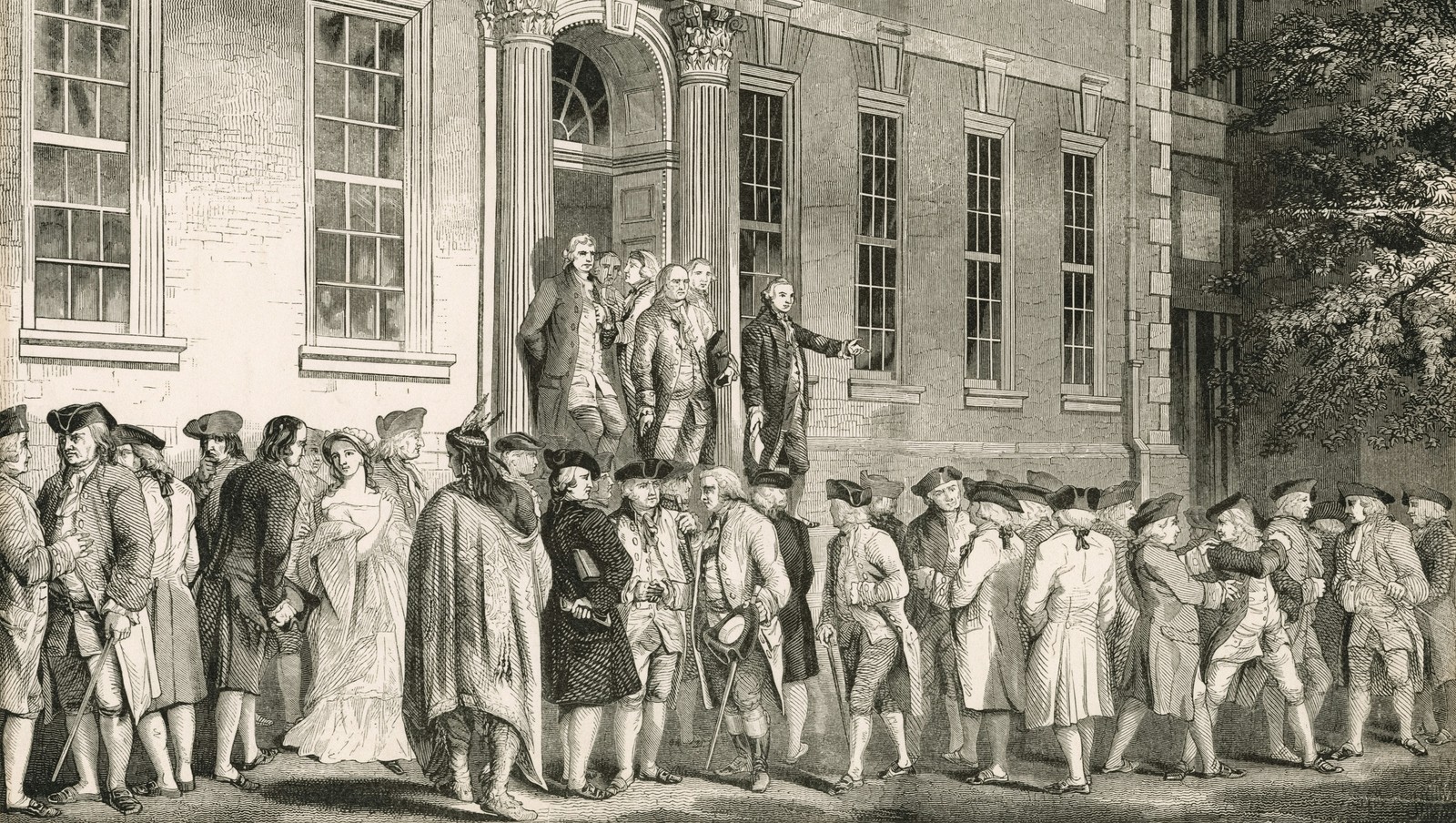
In more than two centuries of American history, countless speeches and addresses have proven worthy of remembrance. These words and ideas were expressed by all kinds of Americans, from presidents to fugitive slaves , and each left a lasting mark on the hearts and memories of their audiences. Here are 10 speeches that earned their place in the nation’s memory.

1
Patrick Henry: Give Me Liberty or Give Me Death!

Image: Eric Wiser

On March 23, 1775, those gathered at the Second Virginia Convention debated whether Virginia should raise troops in preparation for armed resistance against Great Britain. Patrick Henry, a delegate from Hanover County, addressed the convention and argued that war had already started and the confrontation was inevitable , so an independent militia was necessary. Henry concluded with the famous declaration: "I know not what course others may take; but as for me, give me liberty or give me death!", a passionate appeal that helped secure the required votes.

2
Jimmy Carter: A Crisis of Confidence

Image: WikiImages

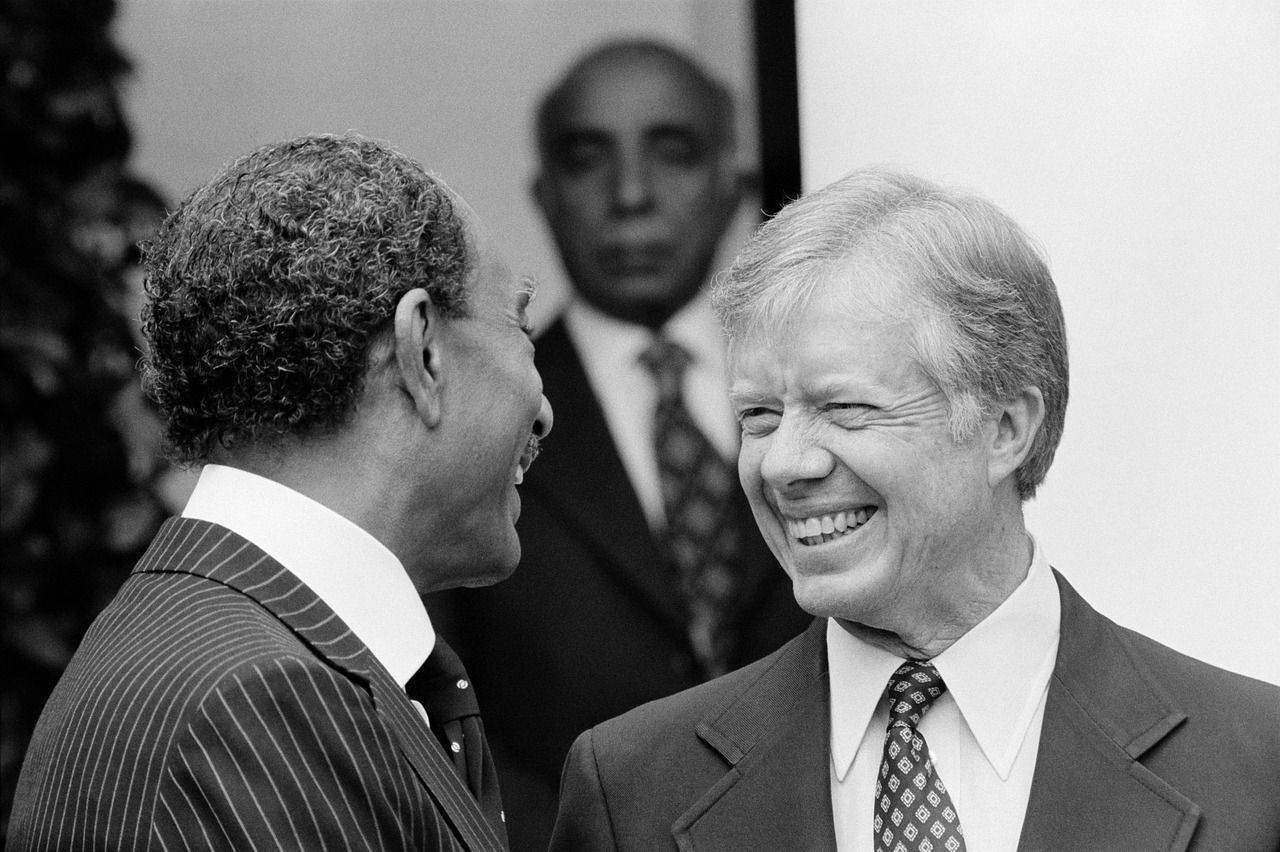
Also known as the "malaise speech" (though Carter never used that word), this address by President Carter recognized a dire problem in 1979’s America: the people felt abandoned by the government in their time of need. The crisis was much more than an economic issue, and Carter wanted to know what everyday Americans thought and needed . In a speech shaped by conversations he had with ordinary Americans, Jimmy Carter declared that America’s crisis was " a crisis of confidence" that had struck at the very heart and soul of the nation.

3
Martin Luther King, Jr.: I Have a Dream

Image: Raffaele Nicolussi

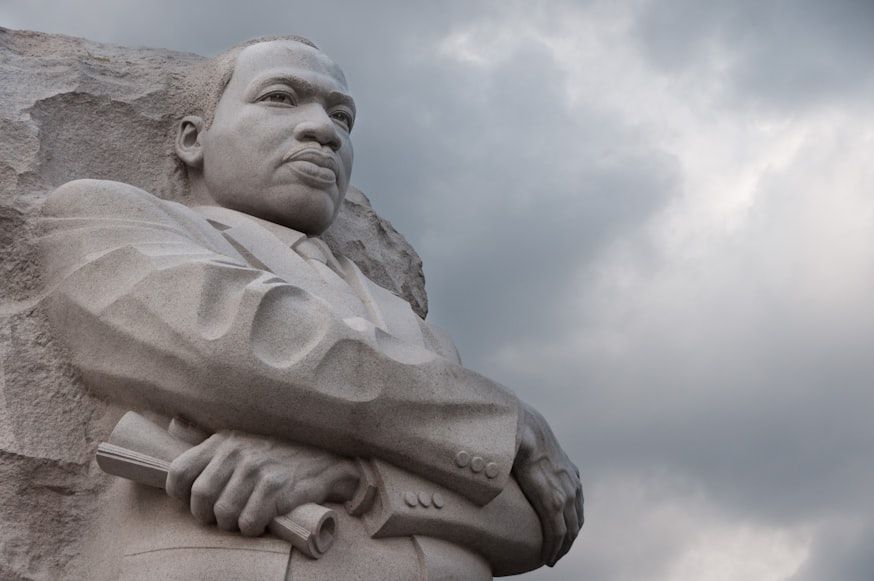
In one of the most iconic speeches in civil rights history, Martin Luther King Jr. addressed more than 200,000 people at the Lincoln Memorial in Washington, D.C., on August 28, 1963, during the March on Washington for Jobs and Freedom. Nearly a century after the Emancipation Proclamation, those freed from slavery were still not really free . After denouncing the laws that legalized racism and segregation, MLK expressed his wish for a free and unified America with a phrase that would go down in history: "I have a dream!"

4
Abraham Lincoln: The Gettysburg Address

Image: Timothy Pierce

Fought between July 1 and July 3, 1863, the Battle of Gettysburg was one of the bloodiest engagements of the American Civil War and was a decisive victory for the Union. Four and a half months later, President Lincoln delivered this speech on the battlefield, now a cemetery for more than 50,000 fallen soldiers. Lasting only about two minutes, Lincoln’s address reminded those present that it was the responsibility of the living to ensure that the sacrifice of the fallen would not have been in vain .

5
Sojourner Truth: Ain’t I a Woman?

Image: Hussain Badshah

Born into slavery as Isabella Baumfree, Sojourner Truth escaped after her enslaver failed to honor a promise to free her early under New York’s gradual emancipation law and uphold the New York Anti-Slavery Law of 1827. She later became an itinerant preacher and was involved in both the women’s rights and abolitionist movements. At the 1851 Women’s Rights Convention, she delivered a speech highlighting the double discrimination suffered by Black women . Even without full rights, white women received deferential treatment from men. Her phrase "Ain’t I a woman?" denounced that, while she had done all the things white women did and more, she was not considered worthy of respect because of her race.

6
Franklin D. Roosevelt: Pearl Harbor Address to the Nation

Image: Winston Chen

The bombing of Pearl Harbor by the Imperial Japanese Navy on December 7, 1941, marked the United States’ entry into World War II. The next day, President Roosevelt addressed Congress during a joint session, asking for a declaration of war. This address, famously remembered by its opening line—"Yesterday, December 7, 1941—a date which will live in infamy"— reinforced the idea of the attack as an unprovoked aggression that had resulted in over 2,400 casualties, both civilian and military, and appealed to patriotic sentiments. The speech attracted the largest live audience in American history (over 80% of the adult population) and resulted in Congress unanimously declaring war on Japan that same day.

7
John F. Kennedy: Inaugural Address

Image: History in HD

John F. Kennedy gave several memorable speeches during his presidency, but his inaugural address remains one of the most remarkable, and for good reason. According to accounts from his inner circle, the speech was meticulously crafted and reworked multiple times by Kennedy , who consulted the opinion of friends and advisors, and poured hours into making sure his first address as president would reflect the route he intended to take. As the youngest person elected to the presidency, Kennedy represented a generational change in the government. The central theme of his address was a call for civic responsibility and national service, an idea summarized in the address’s most memorable line: "Ask not what your country can do for you—ask what you can do for your country."

8
Frederick Douglass: What to the Slave is the Fourth of July?

Image: Stephanie McCabe

A writer, orator, and statesman, Frederick Douglass was a major figure of the abolitionist movement. Born into slavery, he became renowned for his autobiographical writings and powerful oratory, offering a living refutation against the slavist argument of the inferior capacity of African Americans. His most famous speech, What to the Slave Is the Fourth of July? , given to the Rochester Ladies' Anti-Slavery Society in 1852, is an acute analysis of how the American values of freedom and liberty were contradicted by the state and treatment of those in slavery.

9
Theodore Roosevelt: The Man in the Arena

Image: Rafael Camacho Greilberger

"Citizenship in a Republic" is one of Theodore Roosevelt’s most memorable speeches. He delivered it on April 23, 1910, at the Sorbonne in Paris, after leaving the presidency. In his long address, Roosevelt explains his convictions about democracy, civic virtue, and leadership. But there is a passage that stands out: "The Man in the Arena" highlights the value of those who strive and go on despite failure and ongoing challenges, and even those who fail in the end, but not for lack of effort . This passage has been quoted numerous times in American politics, including by Richard Nixon in both his 1968 victory speech and his 1974 resignation address.

10
Ronald Reagan: Tear Down this Wall

Image: André Fuck

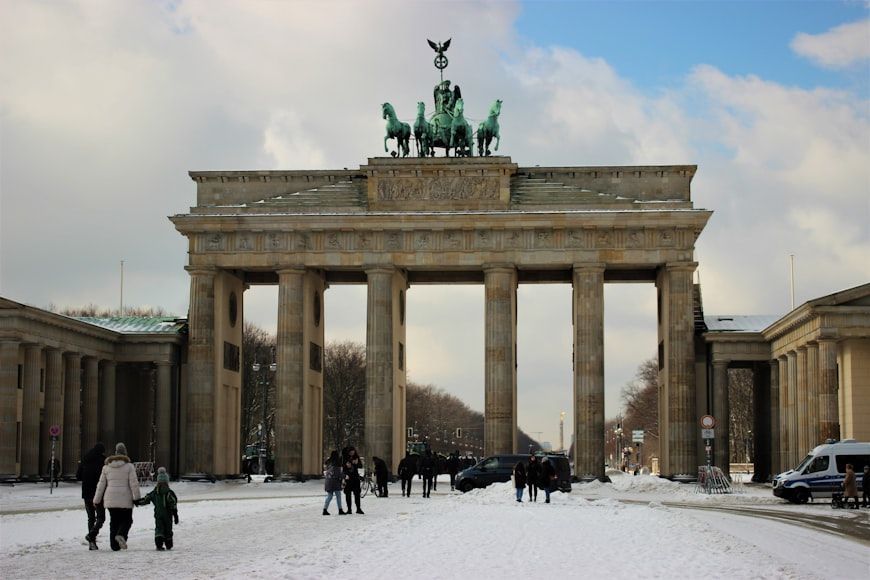
More than two decades after Kennedy’s " Ich bin ein Berliner " speech, President Reagan delivered another historic address at the Berlin Wall. Speaking at the Brandenburg Gate in a Berlin much more hostile to the American president’s presence, aides and advisors had recommended a change in the tone of the speech to avoid straining the relationship between the American and Soviet administrations . Reagan retained the passage that had caused concerns, which contained the most iconic phrase. In a direct appeal to the Soviet leader Mikhail Gorbachev, he declared: "Mr. Gorbachev, open this gate! Mr. Gorbachev, tear down this wall!" The speech was not widely covered by the media, and the reactions were lukewarm. Only after the fall of the Berlin Wall in 1989 did the address gain widespread recognition as a symbol of American resolve during the final years of the Cold War.

Explore more American facts

Choose your favorite category!

General
General

As American as apple pie—the very best America has to offer!

Culture
Culture

Delve into the astounding richness of American lore.

Geography
Geography

Hop in and explore vast and diverse American landscapes.

History
History

Discover the key moments that shaped the United States.