General General 4 min read

Phrases to live by

Did you know these 10 unofficial American mottos?

Image: Annie Spratt

We Americans love mottos. Just check a dollar bill, and you’ll come across the words "In God We Trust," our official national motto, displayed on various national monuments. In that spirit, all 50 states have their own mottos . For instance, Nebraska’s is "Equality Before the Law," while Rhode Island chose the single-word motto "Hope."

However, some places in America are also known by unofficial phrases , often overshadowed by the spotlight we give to official ones. With that in mind, let’s take a moment to celebrate those quirkier expressions you’ve probably seen proudly displayed on license plates and T-shirts . Let’s discover everything that makes America unique!

1
Keep Austin weird (Austin, Texas)
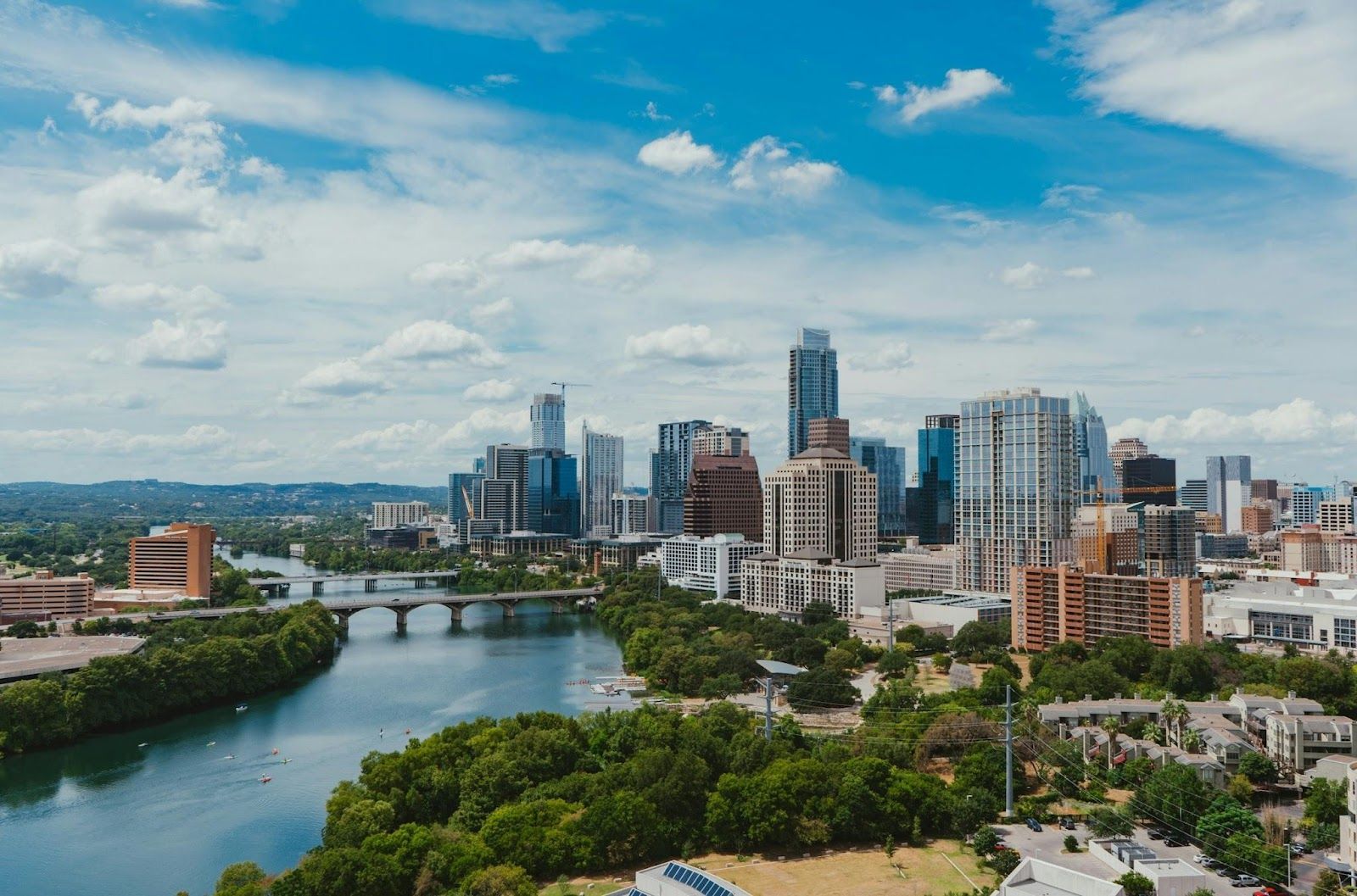
Image: MJ Tangonan

We’ll begin with one of the most distinctive unofficial mottos out there. In the year 2000, an Austin resident named Red Wassenich called a radio show and made a pledge encouraging fellow citizens to " Keep Austin Weird ." The phrase resonated with him, and he soon began printing bumper stickers and shirts. It was quickly embraced by other Austinites, eventually evolving into the unofficial motto still seen all over the Texas capital.

2
Al-Ki (Washington)

Image: Toan Chu

The only American state that has a fully unofficial state motto. " Al-Ki " (also written as "Alki") is a word from Chinook Jargon that translates to "by and by," though it’s sometimes interpreted as " hope for the future ." Whichever translation you prefer, both express a beautiful sentiment—one that reflects not only the optimism of early 19th-century settlers but also the warm, forward-looking spirit of the people of Washington State.

3
Land of Lincoln (Illinois)

Image: Joel Mott

Illinois takes great pride in being the home state of our 16th president—and with good reason. Who wouldn’t be proud of " The Great Emancipator "? Interestingly, Lincoln wasn’t born in Illinois; he was born in a log cabin in Kentucky and spent much of his childhood in Indiana. However, Illinois was definitely Lincoln’s home : it was in the "Prairie State" that he made a name for himself as a lawyer and met his future wife.

4
Sportsman’s Paradise (Louisiana)

Image: Fitsum Admasu

If you’ve ever visited the great state of Louisiana, you’ve probably noticed the many outdoor opportunities it offers, including abundant hunting, fishing, and trapping spots. While Louisiana’s official motto is "Union, Justice, and Confidence," many know the Pelican State by another moniker: "Sportsman’s Paradise."

5
Smiling faces, beautiful places (South Carolina)

Image: Jacqueline Munguía

One of the most memorable aspects of visiting the American South is experiencing its famous " Southern hospitality ." People from the South take pride in their warmth, kindness, and the instinctive way they welcome visitors. In that spirit, South Carolina’s unofficial motto perfectly reflects these values . After all, if you ever visit this great state, be prepared to be greeted by the two things it’s best known for: "Smiling Faces, Beautiful Places."

6
Taxation without representation (Washington, D.C.)

Image: Louis Velazquez

Most license plate mottos praise the state or city they represent. However, since 2000, Washington, D.C. has famously used a slogan that protests its unique political situation. For over 20 years, D.C. license plates have featured a variation of the phrase "Taxation Without Representation"—a quote that highlights the fact that D.C. residents must pay federal taxes without having voting representation in Congress.

7
Wild, wonderful (West Virginia)
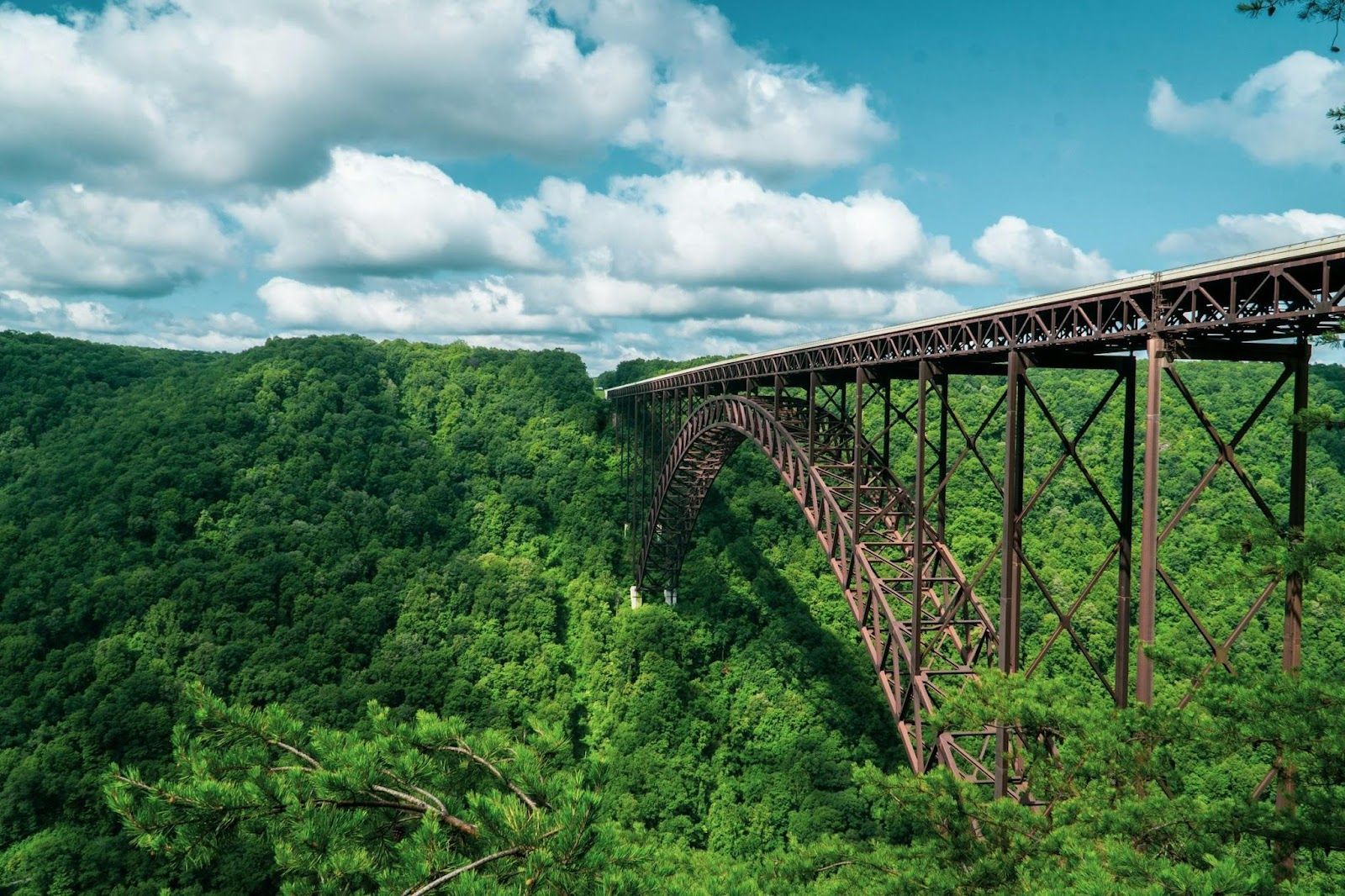
Image: Sharosh Rajasekher

There’s nothing like a good alliteration to lift your spirits. West Virginia is known worldwide for its beauty—a living reminder that good things come in small packages . What the state lacks in size, it makes up for with its stunning scenery. In that spirit, we’d like to celebrate whoever coined West Virginia’s most famous unofficial motto: "Wild, Wonderful." It’s short, simple, and perfectly captures the essence of this remarkable state.

8
America’s Dairyland (Wisconsin)

Image: Brian Suman

Wisconsin is known around the world for the exceptional quality of its dairy products, and Wisconsinites take great pride in that fact. Don’t believe it? Just look at the fans of the Green Bay Packers, who often wear iconic "cheesehead" hats shaped like wedges of cheese, proudly celebrating their state’s most famous export. While the official state motto is the single word "Forward," many prefer Wisconsin’s unofficial title: "America’s Dairyland," a nickname that appears frequently across the state.

9
Life Elevated (Utah)
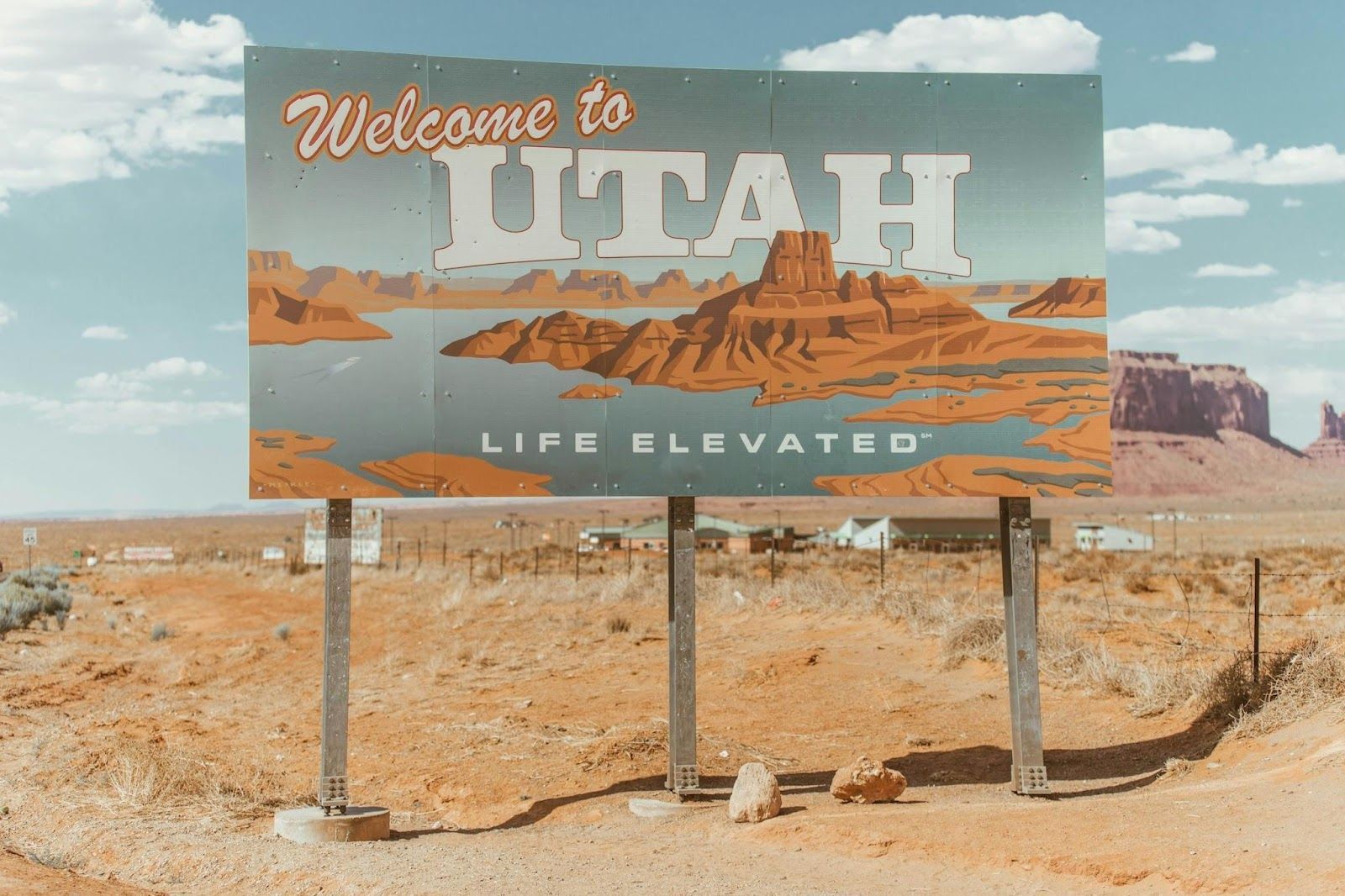
Image: Taylor Brandon

In 2006, Utah’s Department of Tourism introduced a new slogan to promote tourism and inspire residents to take pride in their beautiful state. The slogan, "Life Elevated," was featured on tourism signs and license plates throughout "The Beehive State." When you think about it, the slogan is quite clever, especially considering it indirectly references one of Utah’s most beloved natural wonders: Arches National Park.

10
Old Dominion (Virginia)

Image: STEPHEN POORE

From "the Mother of Presidents" to "the Mother of States," Virginia boasts a collection of iconic nicknames . While "Old Dominion" may not be as self-explanatory as some other monikers, it’s no less impressive. The name originates from Virginia being the first overseas dominion of the English kings and queens .

History History 5 min read

Myth-busting America

Fact vs. fiction: 10 myths that shaped American history

Image: Markus Spiske

American history is loaded with stories—some true, some half-true, and many others pure myth. Despite historians' best efforts, a few tales have been repeated so often they’ve become almost inseparable from real events. Today, we’re separating fact from fiction with a look at 10 of the most common myths and misconceptions in American history. From young Washington's cherry tree to the actual date of the Declaration of Independence, the truth behind these historical myths may surprise you. But wouldn’t the Founding Fathers say that the truth is always worth knowing?

1
The first Thanksgiving feast

Image: Claudio Schwarz

The story of the first Thanksgiving is often heavily romanticized, but it was largely rooted in political and survival needs. Wampanoag leader Ousamequin reached out to the English at Plymouth not out of inherent friendship, but because his people had been devastated by epidemic disease and needed allies.

Moreover, English Thanksgivings were originally solemn occasions of fasting and prayer —quite different from today’s feasts of abundance and celebration. The truth is that around the 1760s, Pilgrim descendants in Plymouth, concerned about their declining cultural influence, began promoting the idea that the original Pilgrims were America’s founding fathers. The notion of a holiday symbolizing unity and friendship between colonists and natives gained traction, eventually shaping the Thanksgiving tradition we know today.

2
Paul Revere’s "Midnight Ride"

Image: Priscilla Du Preez

Though "The Midnight Ride of Paul Revere" is legendary, Revere certainly didn’t act alone. The famous silversmith was only one of several riders, including William Dawes and Samuel Prescott, who warned of the British army’s approach. To be fair, much of the well-known story was fabled by Henry Wadsworth Longfellow’s poem "Paul Revere’s Ride," which is far from a historically accurate account.

Additionally, Revere would have never shouted "The British are coming!"—that wouldn’t have made much sense, as most Massachusetts colonists still identified as British. The actual alert was closer to "The Regulars are coming," referring to British troops.

3
The frontier was lawless

Image: Idean Azad

Popular culture paints the American West as a wild, lawless frontier, but crime was actually lower in many Western towns than in Eastern cities at the time. Local codes, vigilante groups, and early forms of law enforcement helped keep order, even in the most remote pioneer towns.

Many towns established designated areas where firearms were off-limits, requiring visitors to put away their weapons before entering. Of course, cities like Dodge City and Tombstone had their rowdy moments, but local communities established governance quickly. In many cases, justice in the West was rough but effective, and it helped establish America’s early legal backbone.

4
Washington chopped down a cherry tree

Image: Terence Starkey

Though it’s deeply etched in American memory, the story of young George Washington confessing to chopping down a cherry tree is entirely fictional. This tale was fabricated by Parson Weems, Washington’s biographer, to depict him as morally upright and honest from an early age.

While the story is charming and has contributed to America’s sense of ethos, it underscores the tendency in early American history to create heroic, almost mythical personas for its leaders. Yet, Washington’s legacy hardly needs fabricated childhood anecdotes to shine; his real courage and dedication to his country speak for themselves.

5
The Liberty Bell rang on Independence Day

Image: Dan Mall

The story of the Liberty Bell ringing for independence traces back to a fictional tale by George Lippard in an 1847 issue of The Saturday Courier. In this story, an elderly bellman in the State House steeple anxiously awaited news of Congress’s decision. Doubting their resolve, he suddenly heard his grandson’s triumphant shout: "Ring, Grandfather! Ring!"

This story captivated the public and cemented the Liberty Bell’s association with the Declaration of Independence. However, historians now doubt that the bell actually rang in 1776; at the time the State House steeple was reportedly in poor condition, and the bell may not have been in use. Though many bells rang throughout Philadelphia on July 8 to celebrate the Declaration, whether the Liberty Bell itself rang remains uncertain due to a lack of contemporary accounts.

6
Betsy Ross made the first American flag

Image: Luke Michael

The story of Betsy Ross sewing the first American flag is one of America’s favorite tales, but the sad truth is that there’s no historical evidence to support it. The story only emerged nearly a century after the Revolution, when her grandson published the account in a paper for the Historical Society of Pennsylvania in 1870.

While the Continental Congress did approve a flag design in 1777, it’s unclear who actually made it. However, despite historians' doubts, the early flag design with 13 stars in a circle is still popularly known as "the Betsy Ross flag."

7
Orson Welles’ broadcast induced mass panic

Image: Muhammed ÖÇAL

It’s widely believed that Orson Welles’ 1938 radio adaptation of The War of the Worlds caused widespread panic across the United States, with listeners mistaking it for real news of an alien invasion. However, the actual extent of the panic was greatly exaggerated by newspapers looking to discredit radio as a rival news source.

While the broadcast did unsettle some listeners, most of the audience knew it was a dramatic performance. Reports of mass hysteria were largely fabricated, and ironically, the media’s reaction to the broadcast may be a greater testament to its power than Welles’ fictional invasion ever could be.

8
Cowboys wore big, flashy hats

Image: Brice Cooper

While movies and TV shows often show cowboys wearing wide-brimmed, flashy hats, most cowboys actually wore bowler or derby hats until the late 19th century. These hats were more practical and better suited for riding. Men also wore flat wool caps, Mexican sombreros, or even old Civil War hats like the kepi.

The wide-brimmed "cowboy hat" only became popular later and evolved into a cultural icon thanks to cinematic depictions of the Wild West. As with most things, in truth practicality ruled the range, and the stereotype of the cowboy hat developed more from fiction than reality.

9
Benjamin Franklin discovered electricity

Image: Felix Mittermeier

Benjamin Franklin’s famous kite experiment didn’t really "discover" electricity but rather demonstrated that lightning was a form of electrical energy. In fact, historians aren’t even sure whether he performed the famous experiment himself. At the time, scientists in Europe had been experimenting with electricity for decades.

That being said, Franklin’s findings did help advance science, and laid the groundwork for future innovations. His research not only led to the practical study of electricity, but his invention of the lightning rod also helped save both people and structures. In any case, Franklin never patented any of his inventions, believing that "products of the human imagination belonged to no one person," so he likely wouldn’t have wanted credit as the discoverer of electricity either.

10
The Fourth of July marks the signing of the Declaration

Image: Trent Yarnell

The Declaration of Independence is celebrated on July 4th, but the actual timeline of events is a bit more complex. Independence was formally approved by Congress on July 2, 1776, through the Virginia resolution, which officially severed ties with Britain. However, the text of the Declaration was subjected to intense debate and revisions before Congress approved the wording on July 4.

Further complicating things, the Declaration wasn't publicly read until July 8, and it took several more weeks before all signers had added their names. While some Founding Fathers, like John Adams, initially advocated for celebrating on July 2, the public ultimately gravitated toward July 4—the date displayed on the final document.

Geography Geography 6 min read

WORDS OF WISDOM

Celebrate all that makes us great with these 10 American state mottos!

Image: Maik Poblocki

Mottos truly have a tough job, don’t they? These phrases usually have the gargantuan task of having to summarize everything they represent in just a few words. However, it’s in that simplicity and brevity that their beauty truly shines, and perhaps this concept is most clearly seen in our nation’s inspiring state mottos. These brief yet powerful words are astonishingly able to convey the beauty, history, and character of each of our 50 states, so we have decided to pay homage to 10 of the most remarkable American state mottos. Enjoy!

1
California - "Eureka"

Image: Chor Tsang

According to legend, after the Ancient Greek mathematician Archimedes discovered his groundbreaking principle, he happily proclaimed, " Eureka! " This expression, which means "I have found it," is almost as famous as Archimedes’ work, so it stands to reason that the State of California chose Eureka as its state motto.

The Golden State’s slogan references the California Gold Rush. It is believed that a miner who finally struck gold was as excited about his discovery as Good Old Archimedes was. While the California State Seal has included the word Eureka since its design in 1850, it was only adopted as the state’s official motto over a hundred years later, in 1963.

2
Kansas - "To the stars through difficulties"

Image: Taylor Hunt

In 1861, the State of Kansas adopted its official state seal which depicted a beautiful prairie at dawn, filled with hardworking Kansans under 34 stars and the Latin motto Ad Astra Per Aspera. Anyone who reads the English translation of this motto will immediately realize how perfectly it describes the industrious and resilient people of Kansas: Ad Astra Per Aspera means "To the stars through difficulties."

Our 34th state chose this phrase alongside its state seal in 1861, only a few months after the first Governor of Kansas delivered the inaugural "State of the State" address. Nowadays, this motto stands as a reminder of both the bravery and diligence of the state’s first settlers, as well as the hardships that Kansas had to go through in order to gain statehood.

3
Indiana - "Crossroads of America"

Image: Steven Van Elk

The phrase "Crossroads of America" has long been associated with the state of Indiana , particularly after a specific intersection in Terre Haute, where U.S. Highways 40 and 41 met. Over time, Indiana itself proudly embraced the title of "the Crossroads of America," eventually adopting it as the state motto in 1937.

Interestingly, while "Crossroads of America" is the state’s official motto, some Hoosier cities have adopted this phrase —or variants of it— as their respective city slogans. For instance, Indianapolis adopted the motto in 1988, to reference how the city serves as a junction of 4 different Interstate Highways.

4
West Virginia - "Mountaineers are always free"

Image: Sara Cottle

Have you ever reached the summit of a particularly steep mountain after hours of arduous trekking? If you had to describe that amazing feeling in one word, what would it be? We’ll leave you to ponder that while we tell you the first word that came into our minds: freedom.

Apparently, we share this feeling with the good people of West Virginia , since its motto reflects the freedom that its magnificent mountains and hills inspire. West Virginia’s motto is the Latin phrase Montani Semper Liberi, which means "mountaineers are always free." Furthermore, since one of West Virginia’s demonyms is "mountaineers," this phrase also speaks to the core of West Virginians’ identity.

5
New York - "Excelsior"

Image: ben o'bro

Any Marvel fan will associate this phrase with comic-book legend Stan Lee, after all, he made this word his catchphrase throughout his many media appearances. However, you might be surprised to learn that "Excelsior" is also New York’s official state motto, and it perfectly describes New Yorkers’ industrious and resilient nature.

"Excelsior" is a Latin word that’s commonly translated as "Ever Upward," but it can also mean "higher" or "superior." It is featured in New York’s coat of arms, which features the representations of Liberty and Justice standing above the state’s motto.

6
Montana - "Gold and Silver"

Image: Trevor Vannoy

Just like West Virginia, Montana pays tribute to its breathtaking mountains and landscapes with its motto. However, it focuses on another key aspect of its geography, more akin to its nickname: Montana’s motto Oro y Plata literally translates to "Gold and Silver," which is a direct reference to The Treasure State’s proud mining history.

Montana first included the phrase Oro y Plata on its State Seal many years before it was adopted as the state’s official motto. Shortly after Montana was declared an official U.S. territory in 1864, the newly formed state honored the gold rush that had led to its territorial status by including its two most precious metals into its State Seal. Finally, the state motto was officialized in 1865.

7
Tennessee - "Agriculture and Commerce"

Image: Nathan Anderson

It’s no secret that state mottos sometimes reference their state’s most prominent industry: As we mentioned before, Montana and California pay tribute to the mining that helped build their economies. In that regard, Tennessee is no exception; its state motto is incredibly straightforward, directly praising the industries that helped the Big Bend State grow.

Tennessee chose "Agriculture and Commerce" in 1987. In turn, this motto was directly taken from the State Seal, which was adopted in 1801. The seal shows both sides of this state’s industry, with "Agriculture" referenced by a bundle of wheat and a cotton plant, while "Commerce" is depicted by a riverboat, presumably trading goods.

8
Texas - "Friendship"

Image: Brandon Zanders

Texas’s state motto may only feature one word, but it singlehandedly describes an essential part of Texan history. Before we can delve into that, though, we have to take a quick look into the etymology of the name of this great state. The word Texas is believed to come from the Caddo word táy:shaʼ , which means "friend." Spanish settlers adopted this word for the area, spelling it as Texas or Tejas.

In that sense, Texas pays homage to its history with the single-word motto "Friendship." Not only that, while Texas is mostly known by the nickname "The Lone Star State," its official slogan is "The Friendly State."

9
Vermont - "May the fourteenth star shine bright" & "Freedom and Unity"

Image: Eric Chen

Vermont is the only state on this list to feature two official mottos: "Freedom and Unity" and the Latin phrase " Stella quarta decima fulgeat, " which translates to "May the 14th Star Shine Bright." Interestingly, this last phrase is also the newest slogan to be made official, since it was elected as Vermont’s state motto in 2015.

In any case, both mottos represent Vermont’s individuality, strength, and, perhaps more importantly, its solidarity: "Freedom and Unity" describes Vermont’s mission to create a free and neighborly community, while "May the 14th Star Shine Bright" depicts the search of the common good throughout the entire state.

10
Rhode Island - "Hope"

Image: Praswin Prakashan

We’ll end this article with probably the most beautifully simple American state motto. The State of Rhode Island has the single-word motto "Hope," which is also featured in its State seal. In tune with their long maritime history, the seal depicts a golden anchor emblazoned in a dark blue field.

The inspiration behind both Rhode Island’s state motto and seal is probably a biblical quote found in the New Testament, which reads "Hope we have as an anchor of the soul." Considering that this state was founded by a Christian minister seeking to escape religious persecution, this single word expresses a very powerful sentiment: the hope that people could find in this new land a place of refuge and freedom.

Explore more American facts

Choose your favorite category!

General
General

As American as apple pie—the very best America has to offer!

Culture
Culture

Delve into the astounding richness of American lore.

Geography
Geography

Hop in and explore vast and diverse American landscapes.

History
History

Discover the key moments that shaped the United States.