General General 3 min read

A breakfast staple

Which breakfast cereal is the most popular? Here are 10 contenders
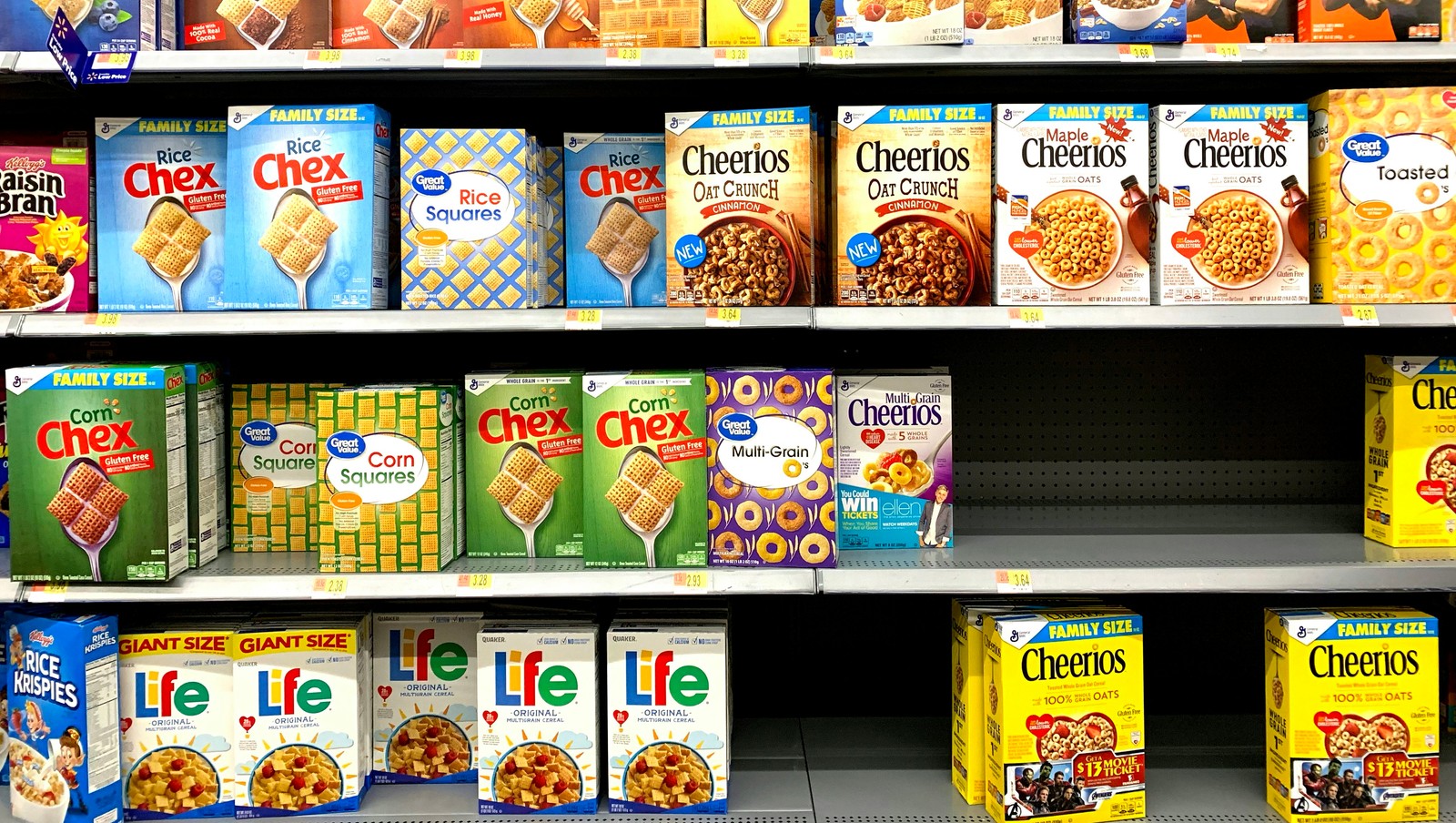
Image: Franki Chamaki

The idiom goes, "as American as apple pie," but, if we are talking breakfast options, it might as well go "as American as breakfast cereal." Cereal is a popular choice in many parts of the world, but it might be hard to find a place where it is as popular as in the U.S.

That said, not all breakfast cereals are created equal, and not all Americans have the same tastes. Cereal may be a staple, but which cereal? Let’s take a look (in no particular order) at 10 of the most popular choices among Americans.

1
Cinnamon Toast Crunch

Image: Diana Polekhina

Introduced in 1984 by General Mills, it was designed to be the cereal version of cinnamon toast. It is made from a mix of wheat and rice, and covered in cinnamon sugar. Besides breakfast, Cinnamon Toast Crunch is also popular as a snack on its own, in trail mixes, or as a crunchy topping.

2
Lucky Charms

Image: FlyD

Another General Mills classic, this "magically delicious" cereal features a mix of toasted oat pieces and colorful marshmallows. Besides the original flavor, there are several varieties of Lucky Charms, including Chocolatey Chocolate, S'mores, Berry Swirl, and Minis. A breakfast classic for many decades, one of its most famous features is its mascot, Lucky the Leprechaun.

3
Kellogg’s Raisin Bran

Image: Andreas Haslinger

One of Kellogg’s better-known "healthy" options, Raisin Bran is popular as a source of fiber. It was originally a copy of another cereal of the same name, but after a legal battle, it was determined that "raisin bran" was too descriptive to be a trademark, popularizing the name as a generic term for this type of cereal. What makes it so popular? Its name and marketing have long contributed to the perception of it as a "healthy cereal."

4
Cheerios

Image: Liia

Did you know that the original name of Cheerios was CheerieOats? It was introduced in the 1940s by General Mills, and it is a popular choice due to its whole-grain oat base, low sugar, no cholesterol, and the fact that it is gluten-free. Unlike many other cereals, the original version is not the most popular; it has been surpassed by the Honey Nut flavor.

5
Life
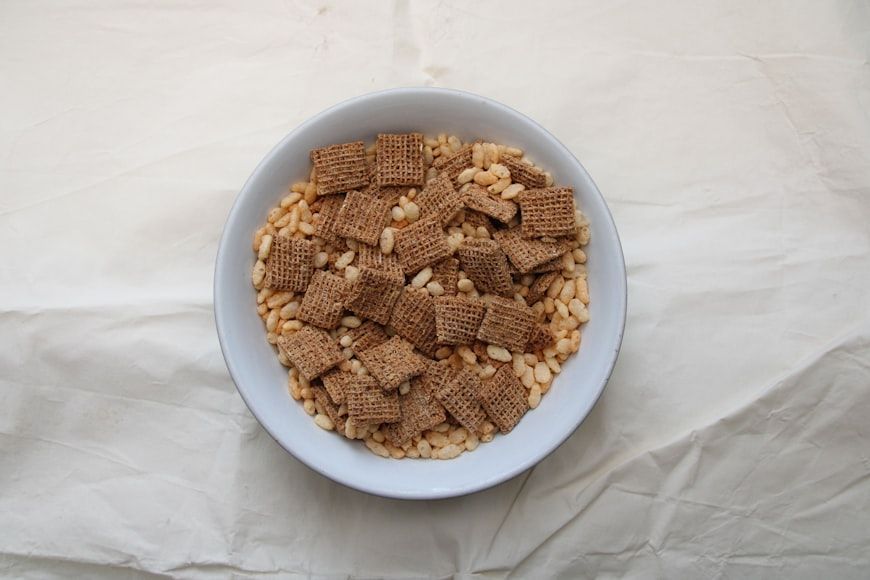
Image: M Alazia

Introduced by Quaker Oats, Life cereal gained popularity through a famous marketing campaign featuring a picky eater named Mikey, one of the longest-running ads in American television history. Life is marketed as a healthy, whole-grain choice without artificial flavors or colors, and has several flavors besides the original.

6
Frosted Flakes
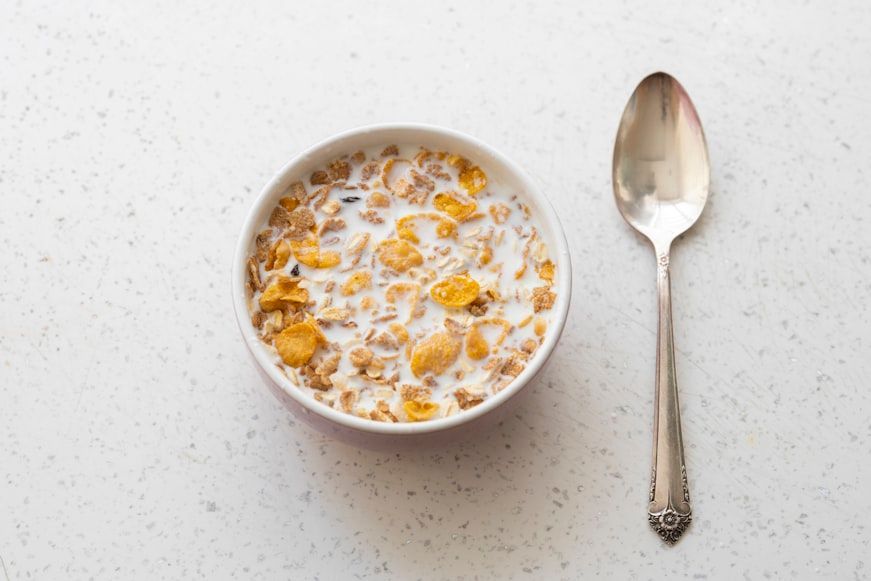
Image: engin akyurt

Did you know that cornflakes were invented by the brother of the founder of Kellogg’s? One of Kellogg’s most well-known cereals worldwide, Frosted Flakes was developed when sweet cereal became increasingly more popular. To boost its appeal to children, the cereal was introduced alongside a mascot, Tony the Tiger, now one of the most recognizable characters in the industry.

7
Cocoa Puffs

Image: Brands&People

One of the first chocolate cereals to exist, Cocoa Puffs is certainly among the most popular. Developed in the 1950s by General Mills, it initially used Hershey’s cocoa. Cocoa Puffs’ popularity is not limited to the American market. It is also a top seller in Canada, Europe, and Latin America, where it is commercialized in partnership with Nestlé under the name Nesquik.

8
Froot Loops
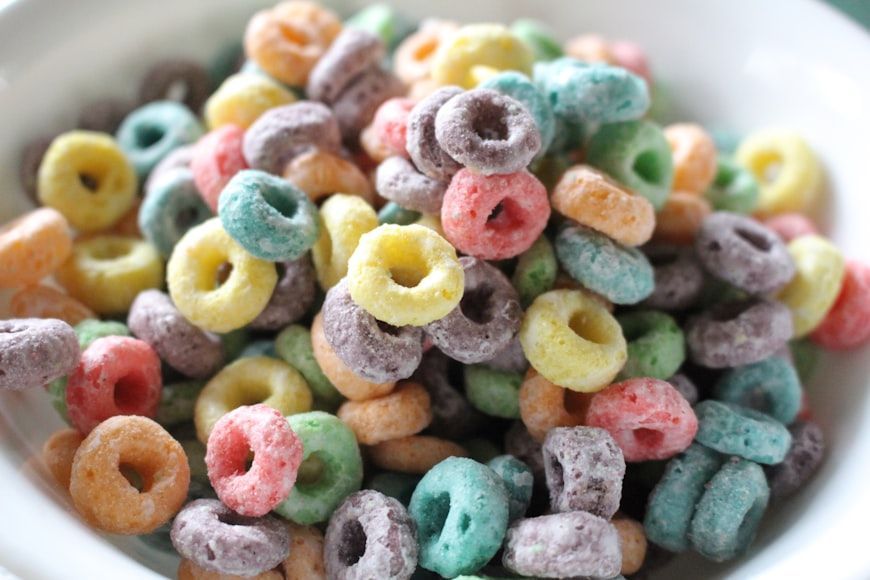
Image: Haley Owens

After Kellogg’s unsuccessfully tried to create a competitor to Cheerios, the company was left with specialized equipment designed to produce O-shaped cereal. Rather than scrap it, Kellogg’s used the machinery to develop a new, colorful cereal, along with a new mascot, Toucan Sam. Although the different colors in Froot Loops are meant to suggest different flavors, Kellogg’s has confirmed that they all taste the same.

9
Honey Bunches of Oats

Image: Benyamin Bohlouli

Originally called Battle Creek, this popular cereal was the result of experimentation. Released by Post in the 1980s, it was developed when one of the company’s employees mixed several existing cereals. After some feedback, honey was added to the mix, and it was renamed Honey Bunches of Oats.

10
Rice Krispies

Image: Emma Miller

Developed in the 1920s, Rice Krispies is not only one of Kellogg’s most iconic products but also one of the most popular cereals in America. Its famous "Snap, Crackle, Pop" slogan was inspired by the sounds the cereal makes when milk is added and was later adopted as the names of its three mascots.
Culture Culture 5 min read

Let’s hit the road: The 12 most iconic cars in film history

Image: dhans360

In the world of movies, a car can be much more than just a ride: it can be a star in its own right. Some roll onto the screen with such style and personality that they become as memorable as the actors behind the wheel. From gleaming convertibles to rumbling muscle cars, these unforgettable machines have carved out their well-deserved place in film history. Buckle up—here are 12 cars that earned both a standing ovation and a friendly honk.

1
Goldfinger: Aston Martin DB5

Image: Ulf Meyer

The ultimate Bond ride came dressed in silver-gray elegance, blending timeless style with secret-agent swagger. Beneath its polished curves, it packed a clever arsenal—hidden machine guns, retractable defenses, and even an ejector seat! Tipping the scales at roughly 3,300 pounds, it could push up to 145 miles per hour, a thrill worthy of 007 himself. And while that famous red eject button looked ready for action, it was all Hollywood magic—no villains actually took flight.

2
Ferris Bueller’s Day Off: Ferrari 250 GT California

Image: Joshua Koblin

Even though the Ferrari in John Hughes’ popular teen comedy, Ferris Bueller’s Day Off, was actually a replica —made to protect the real $250,000 classic from any on-set mishaps—it looked every bit as stunning as the genuine Italian beauty. With its smooth, elegant curves and that unmistakable engine roar, it captured the hearts of viewers and brought pure charm to the big screen. The Ferrari 250 GT California is as much a star as Ferris himself.

3
The Love Bug: Volkswagen Beetle

Image: kampfmonchichi

"Herbie" wasn’t just a car—he was a character with personality, spunk, and a soft spot for underdogs. Painted bright white with bold racing stripes and the unmistakable number 53, this little Volkswagen Beetle won hearts on and off the track. And here’s the charming part: no fancy computer wizardry brought him to life. Every wink, bounce, and "expression" you saw was pulled off with clever mechanics and old-school camera magic.

4
The Graduate: Alfa Romeo 1600 Duetto Spider

Image: emkanicepic

This bright red convertible became nearly as iconic as the tune "Mrs. Robinson" itself. Sleek, nimble, and full of charm, it could glide along the road at around 118 mph, turning heads wherever it went. More than just a prop, it became part of the film’s personality. And here’s a little nugget of trivia: before filming began, Dustin Hoffman had never driven a stick shift. Once he got the role, he had to master the art of shifting gears in record time, adding a dash of real-life nerves to those on-screen drives.

5
Bullitt: 1968 Ford Mustang GT 390

Image: Zhiqiang Wang

Steve McQueen and this dark green Mustang delivered pure cinematic thrills on the steep streets of San Francisco. The chase ran close to 10 full minutes—a rumbling, tire-squealing ballet that filmmakers have tried to imitate ever since. Under the hood, a growling V8 provided the muscle, while McQueen himself slid behind the wheel for many of the hair-raising maneuvers. Every jump, skid, and sharp corner helped cement it as one of cinema’s all-time great rides.

6
Ghostbusters: 1959 Cadillac Miller-Meteor

Image: voltamax

The Ghostbusters’ unforgettable Ecto-1 was based on a 1959 Cadillac Miller-Meteor ambulance/hearse. For the movie, it was transformed into a quirky, gadget-covered ghost-chasing machine, complete with flashing lights, sirens, and a roof stacked with mysterious equipment. This Cadillac became as much a character as the crew itself. Its over-the-top look made it instantly recognizable and turned it into a pop culture legend.

7
Back to the Future: DeLorean DMC-12

Image: Joel Muniz

With its brushed stainless steel body and those dramatic gull-wing doors that unfolded like a bird in flight, the DeLorean already looked futuristic before the time-travel magic began. On screen, it came equipped with the now-legendary "flux capacitor," a gizmo that, sadly, was pure movie magic. Even so, the rules of the story were clear; if you wanted to bend the laws of time, you had to floor it to exactly 88 mph. And yes, fans still quote that number like gospel.

8
Smokey and the Bandit: 1977 Pontiac Trans Am

Image: Photogon (Warren Valentine)

Burt Reynolds and that sleek black Trans Am—complete with the glittering golden firebird splashed across its hood—were a match made in movie heaven. With a top speed around 110 mph, it wasn’t just for show; this car had the muscle to back up its attitude. The stunt work was just as daring as it looked, with jaw-dropping jumps that thrilled audiences. Of course, the landings weren’t always smooth—more than a few Trans Ams met their end for the sake of those unforgettable scenes!

9
The Spy Who Loved Me : Lotus Esprit Series I

Image: Andras Stefuca

In the 1970s, more sleek, wedge-shaped sports cars replaced the curvy styles of earlier years. Cars like the Lancia Stratos and Lamborghini Countach changed the game with their sharp, futuristic look. Following that trend, Roger Moore slid behind the wheel of a white Lotus Esprit Series I in The Spy Who Loved Me . But what people remember the most about it is when Bond drives it straight into the sea, where it morphs into a fully equipped submarine! Fins and stabilizers pop out as it glides underwater, then it drives back onto the beach, leaving onlookers truly amazed.

10
The Italian Job: Mini Cooper S 1275

Image: Alex P

Compact, nimble, and unmistakably British, the Mini Coopers in The Italian Job didn’t just drive—they darted. On screen, they bounced down staircases, squeezed through narrow alleys, and even sped through tunnels like they were built for it. The funny part? British Motor Corporation wanted nothing to do with the film, so the production had to buy 36 cars outright. And here’s a bit of trivia to impress your friends: despite being the star, Michael Caine never once drives any of the Minis in the movie .

11
Vanishing Point: 1970 Dodge Challenger R/T

Image: Jonathan Nabais

This powerful white muscle car tore through the roads from Denver to San Francisco, racing against the clock. Weighing roughly 3,800 pounds, it packed a mighty HEMI engine under the hood—enough raw power to leave most challengers in the dust. With speed, grit, and sheer determination, it pushed the limits, turning the journey into one thrilling, high-octane ride to remember.

12
Batman: Lincoln Futura

Image: Bull-Doser, Public domain, via Wikimedia Commons

Before it became the legendary Batmobile we all know, this 19-foot futuristic prototype was showing off its sleek lines at auto shows. Then, in just 15 days, American designer and builder of Hollywood custom cars, George Barris, worked his magic. He added those unforgettable fins, jet engines, and clever gadgets that turned the Lincoln Futura into a TV icon. What began as a simple concept became one of the most recognizable cars in television history.

Culture Culture 3 min read

Tom Waits approves

Did you know about these 12 bizarre American musical moments?

Image: Peter Herrmann

Music in America has never been afraid to get weird. From homemade instruments and oddball inventions to accidental hits and cosmic jazz, our country’s history is full of unexpected sound. These 12 examples prove that when it comes to music, sometimes stranger is better.

1
Singing Tesla coils

In the early 2000s, engineers discovered that Tesla coils could emit tones by modulating the sparks themselves. When programmed, they could play songs using bursts of lightning as notes.

Audiences watched and listened as glowing bolts of electricity "sang" familiar tunes like movie themes. These displays, part science and part spectacle, were a short-lived trend, but they were interesting while they lasted.

Image: Brett Wharton

2
Franklin’s glass armonica

Benjamin Franklin invented many things. Among them, a glass armonica, using spinning glass bowls tuned by size . Players touched the rims with wet fingers to produce pure, haunting tones that seemed to shimmer in midair.

Its ghostly beauty amazed 18th-century audiences. Yet rumors spread that the vibrations could cause fainting or madness, making the momentum of the instrument short-lived.

Image: Karim MANJRA

3
Harry Partch’s microtonal instruments

Frustrated with the limits of Western scales, composer Harry Partch built a system using forty-three tones per octave . He crafted odd instruments from glass, bamboo, and metal to play them.

Performers had to relearn music from scratch, producing sounds that felt alien and ancient at once. His homemade orchestra became a true milestone in America’s experimental environment.

4
The theremin craze

Image: Ryunosuke Kikuno

Invented in the 1920s, the theremin created sound from invisible electromagnetic fields, played by moving hands through the air . It was one of the world’s first electronic instruments.

By the 1950s, its eerie wails filled American sci-fi movies and radio shows. Home versions soon appeared, letting living rooms buzz with strange, ghostlike melodies.

5
The Stroh violin

Back in the days when microphones were not so great at picking up sounds, early studios struggled to capture soft instruments. The Stroh violin solved that by replacing the wooden body with a brass horn that amplified sound directly .

Its brassy, nasal tone worked perfectly for primitive recording gear. Once technology advanced, the mechanical violin faded for good.

Image: Mick Haupt

6
Sun Ra’s cosmic jazz

Jazz mad scientist Sun Ra claimed he was born on Saturn and sent to Earth to spread peace through sound. His Arkestra mixed free jazz, chants, and futuristic costumes into wild multimedia performances .

Audiences never knew what to expect: space helmets, electronic keyboards, or cosmic sermons. His blend of myth, science, and swing launched Afrofuturism, a style of his own.

Image: Matt Artz

7
Singing saw

Rural American musicians once discovered that a regular handsaw could "sing" when bent and bowed like a violin . The flexible steel vibrated with a haunting, "human-like" voice.

The sound carried through old-time folk, gospel, and early film scores. Even today, the singing saw appears in grassroots festivals and soundtracks.

8
Prepared piano

Image: Andrew Petrischev

Avant-garde composer John Cage inserted screws, bolts, and rubber between piano strings, turning each key into a new percussive sound . The result was bizarre but original.

He called it the "prepared piano." Audiences heard rhythms that clanged, thumped, and chimed like a whole percussion ensemble.

9
Moog synthesizer

Image: Adi Goldstein

The Moog was born in the late 1960s with its maze of knobs and wires , and it caused a sensation among musicians. Those who experimented found endless possibilities in its electronic tones .

From the Monterey Pop Festival to Wendy Carlos’s soundtracks for The Shining and A Clockwork Orange , the Moog’s strange bleeps reshaped American pop.

10
The Singing Nun

In 1963, a Belgian nun named Sister Luc-Gabrielle unexpectedly topped U.S. charts with "Dominique," sung in gentle French. Her purity and optimism charmed listeners across the country.

Her hit briefly outshone even the Beatles. Though her fame faded quickly, the story of a shy nun reaching number one remains a sweet oddity, for sure.

Image: Pete F

11
The "Longplayer" experiment

Launched in 1999, "Longplayer" is a music piece designed to play continuously for one thousand years without repeating . It was created by American artists who joined the project to maintain its endless cycle.

The music changes subtly with time, echoing life’s slow rhythm. Its creators call it "a conversation between centuries".

12
Hard-drive symphonies

Image: Borja Verbena

In the 2010s, hobbyists reprogrammed old computer drives to "play" songs by spinning and clicking at different speeds . Each tone came from mechanical motion, not speakers.

Videos of clattering machines performing pop hits can still be found all over YouTube. These homemade orchestras turned computer nostalgia into an art.

Explore more American facts

Choose your favorite category!

General
General

As American as apple pie—the very best America has to offer!

Culture
Culture

Delve into the astounding richness of American lore.

Geography
Geography

Hop in and explore vast and diverse American landscapes.

History
History

Discover the key moments that shaped the United States.