General General 5 min read

The heart of the nation

What was the original plan for the Washington Monument?
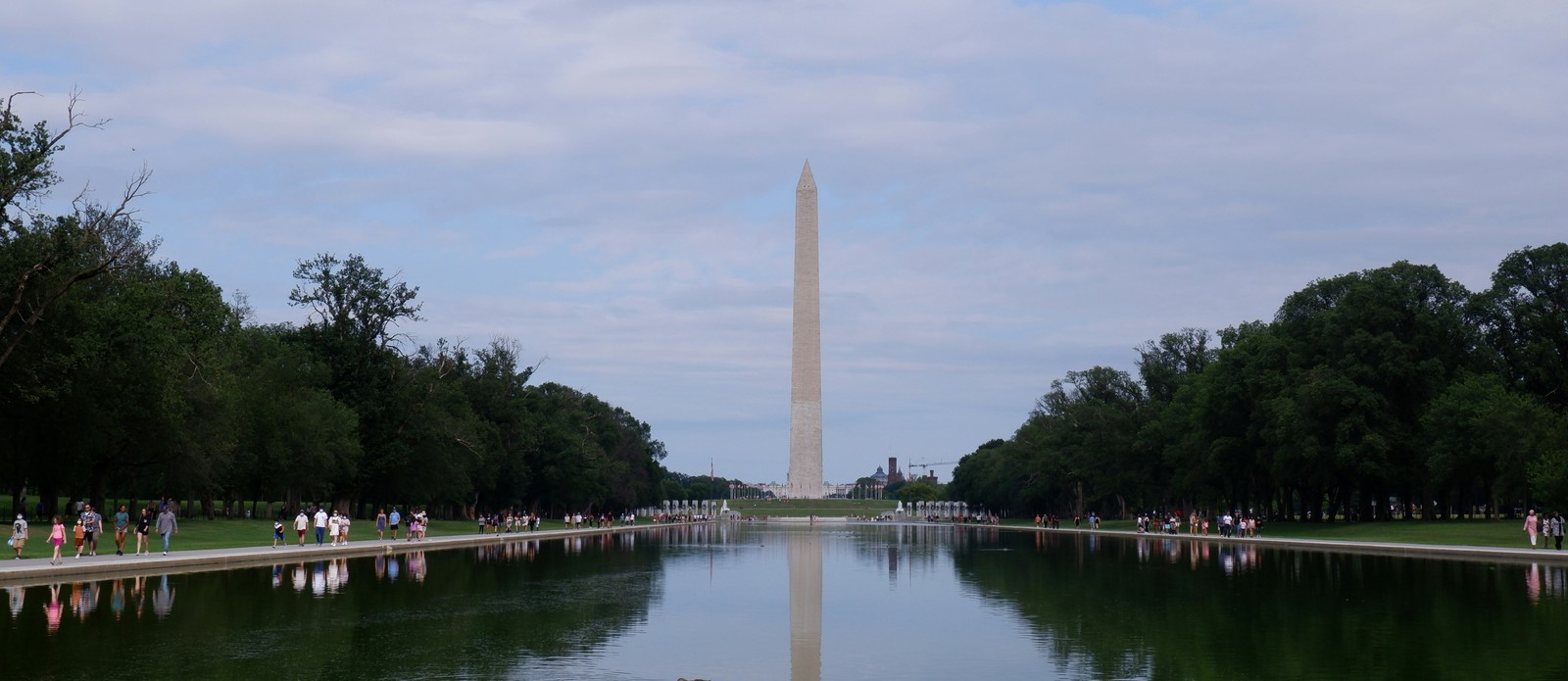
Image: Stephanie Rhee

If you’ve been to Washington, D.C., you likely walked by the White House, the Washington Monument, and the many Smithsonian museums . And you’ve certainly seen photographs of presidential inauguration ceremonies, landmark events like Martin Luther King Jr.’s "I have a dream" speech, and annual Fourth of July fireworks — all of them on the National Mall. The heart of the capital and so-called "America’s front yard," the site is a mix of living history and remembrance , and a place for all Americans to gather. Here’s all you need to know about the National Mall.

1
The White House
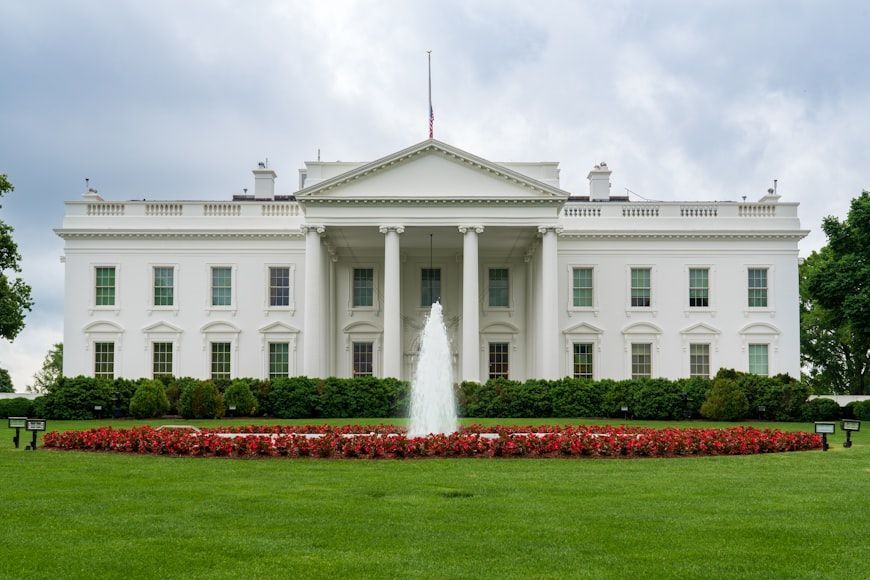
Image: Tomasz Zielonka

Though America’s most famous house, located at 1600 Pennsylvania Avenue, is not technically on the National Mall, it has been historically considered part of it due to its proximity and importance. It is separated from the National Mall by the Ellipse public park, and has a direct view of one of the most important Mall landmarks, the Washington Monument.

2
How America’s front yard came to be
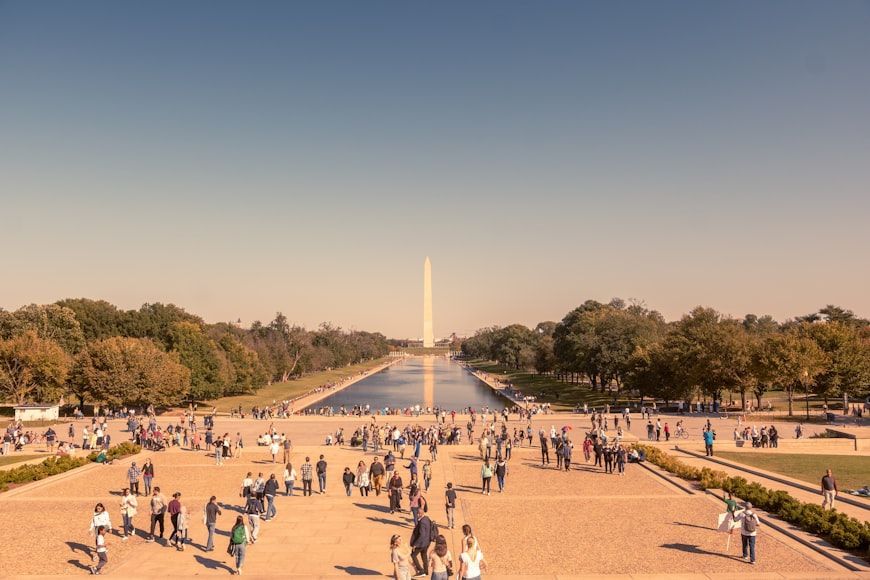
Image: Samuel Girven

When Pierre Charles L'Enfant designed Washington, D.C., in 1791, he envisioned a majestic avenue going from the Capitol to an equestrian statue of George Washington (now the site of the Washington Monument). The chosen name referenced the Mall in London, a fashionable avenue near Buckingham Palace. During the following century, L’Enfants’ plans for the Mall were ignored, and the space was used for canals, railways, and gardens. In 1901, the U.S. Senate decided to expand the number of monuments in Washington, D.C., which led to the renewal of the National Mall and to the addition of most of its iconic landmarks.

3
American history in action
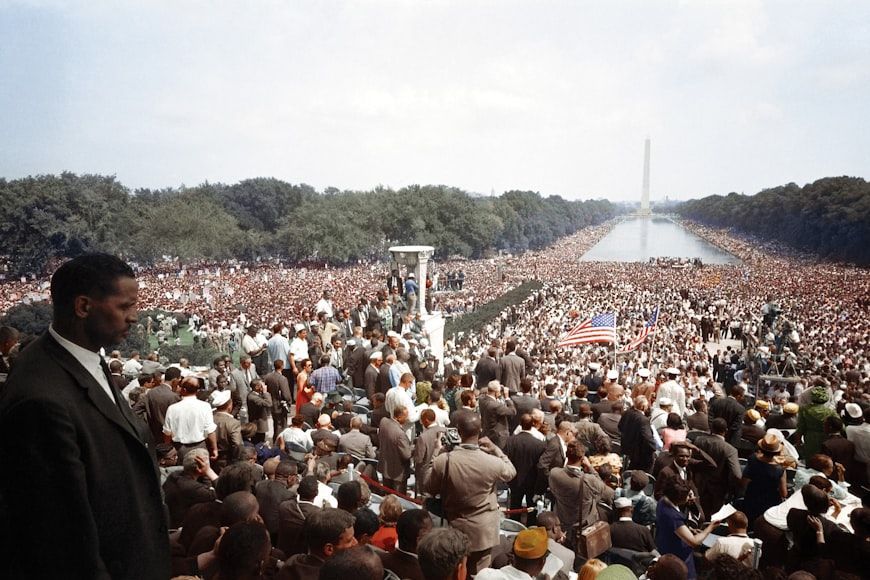
Image: Unseen Histories

As a space open to all Americans and one that is close to the Capitol and the White House, the National Mall has been the scene of many historical moments, from presidential inaugurations to festivals and protests. Among the most important events to take place in the National Mall, we can remember the 1963 March on Washington, the late 1960s Vietnam War protests, the 1987 AIDS Memorial Quilt, and the 1939 Marian Anderson concert.

4
Washington Monument
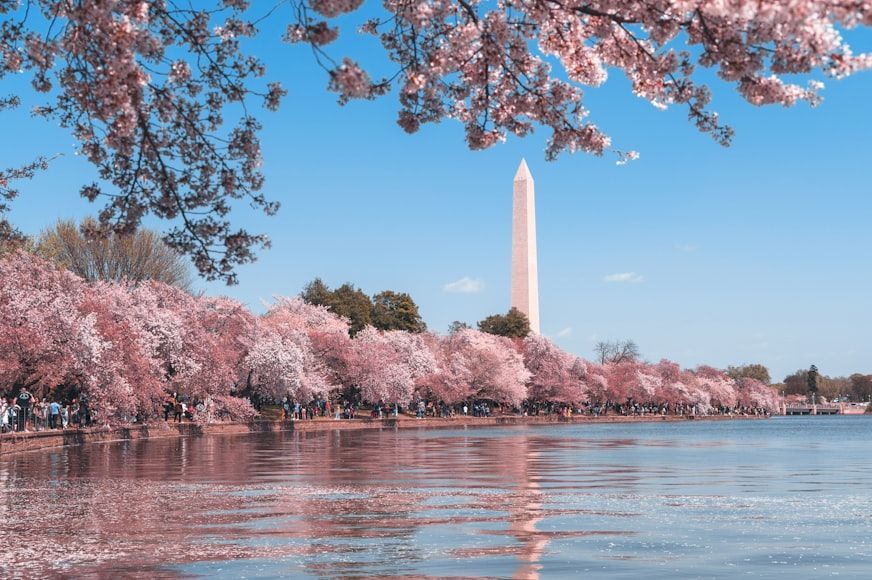
Image: Andy He

Located where L’Enfant initially envisioned an equestrian statue of George Washington, this 555-foot marble and granite obelisk was designed in the 1830s , but was not completed until 1884 due to fund shortages and political disputes. In 2011, damages caused by a 5.8 magnitude earthquake forced the closing of the monument, which reopened in 2014.

5
Lincoln Memorial
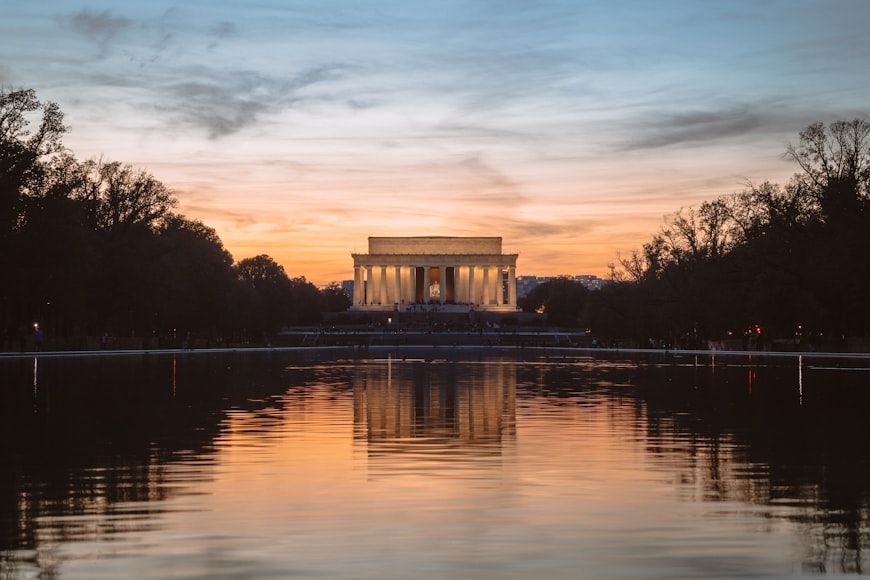
Image: Andy Feliciotti

Conceived shortly after Lincoln’s assassination in 1865, construction began only in 1914, and the memorial was dedicated in 1922. The Neoclassic structure is surrounded by 36 columns, representing the 36 states that formed the Union at the time of Lincoln’s death . The famous statue of Lincoln in the interior is 19 feet tall, and both the Gettysburg Address and Lincoln’s Second Inaugural Address are inscribed on the north and south interior walls.

6
Jefferson Memorial
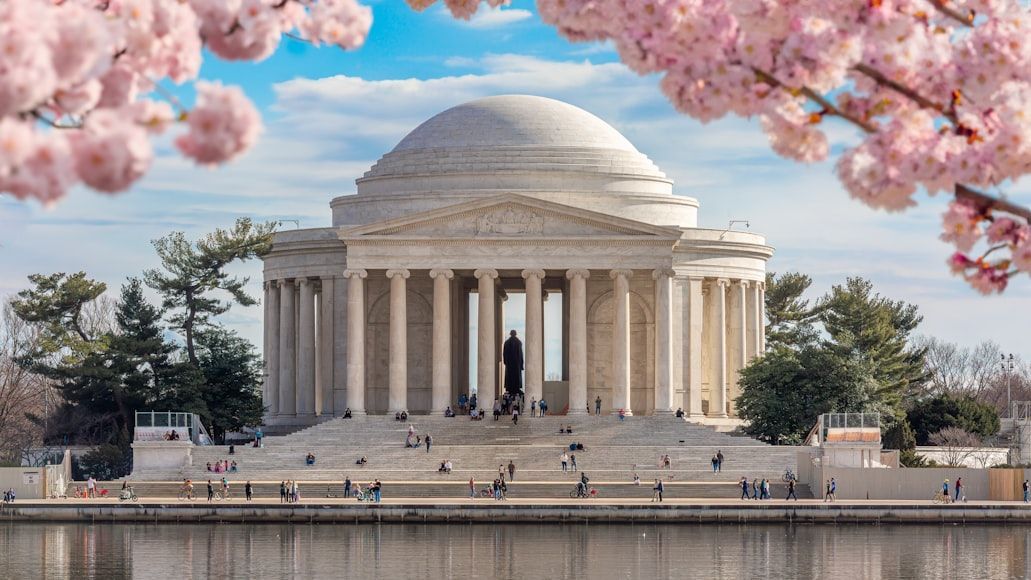
Image: Rafik Wahba

Authorized by Congress in 1934 and dedicated on April 13, 1943, the construction of this monument sparked outrage, as i t required clearing parts of the Tidal Basin and cutting down some of its cherry trees to make space for the memorial. In what is known as the 1938 Cherry Tree Rebellion, protestors chained themselves to the trees. In the end, a compromise was reached, and most of the trees were transplanted. The monument, an homage to Jefferson’s estate of Monticello and the rotunda of the University of Virginia, features excerpts of his most notable writings.

7
The Capitol
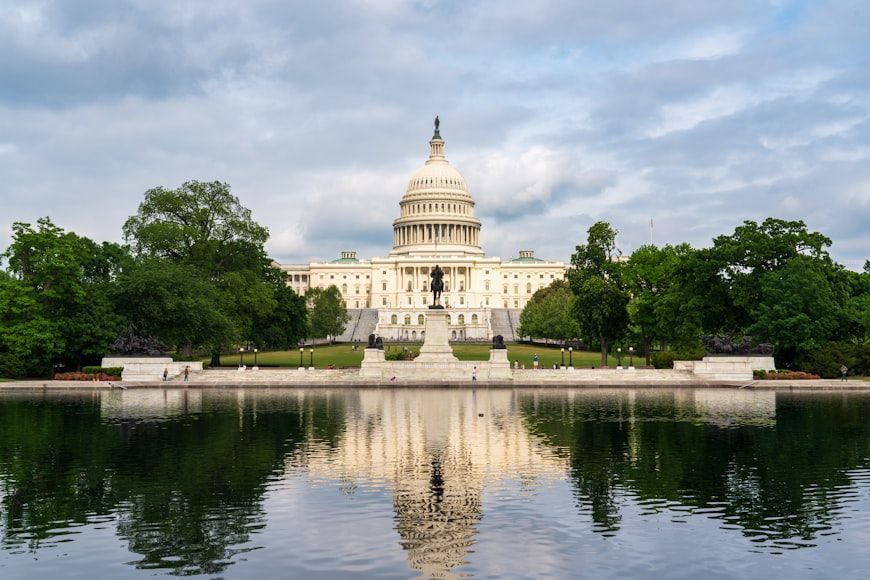
Image: Tomasz Zielonka

The first building to be constructed in the National Mall, the House of Congress is located in what was then known as Jenkins' Hill (now Capitol Hill) . George Washington laid the foundational stone in 1793, and the initial building was completed in 1800, but it was set on fire by the British during the War of 1812. It was reconstructed in 1826 and expanded during the 19th and 20th centuries.

8
War memorials
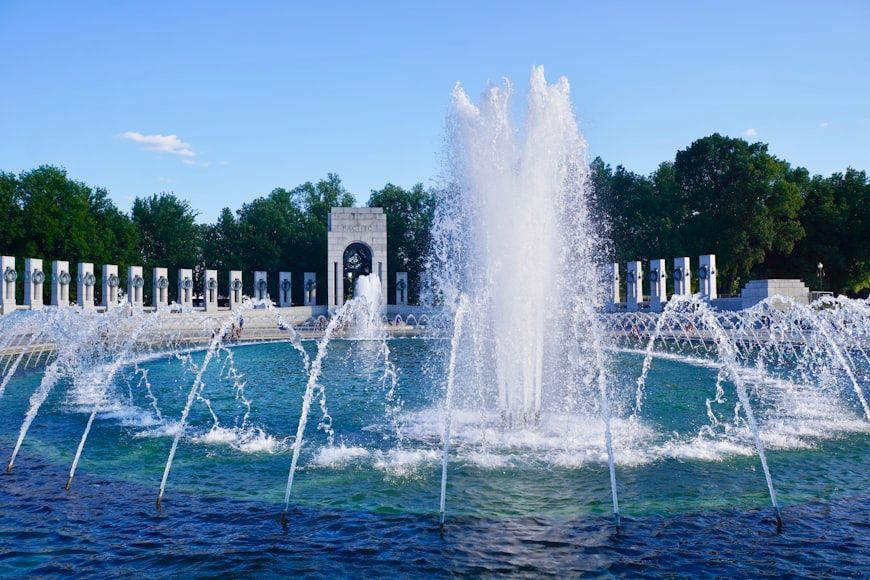
Image: Brett Wharton

Several memorials across the National Mall honor the thousands of Americans who gave their lives while serving the country . The first war memorial was the District of Columbia War Memorial of 1931, dedicated to honor residents of Washington, D.C. killed in WWI. Among the most significant memorials, we can find the National World War II Memorial of 2004, the Korean War Veterans Memorial of 1995, the Vietnam Veterans Memorial of 1982, and the National World War I Memorial of 2014.

9
FDR Memorial
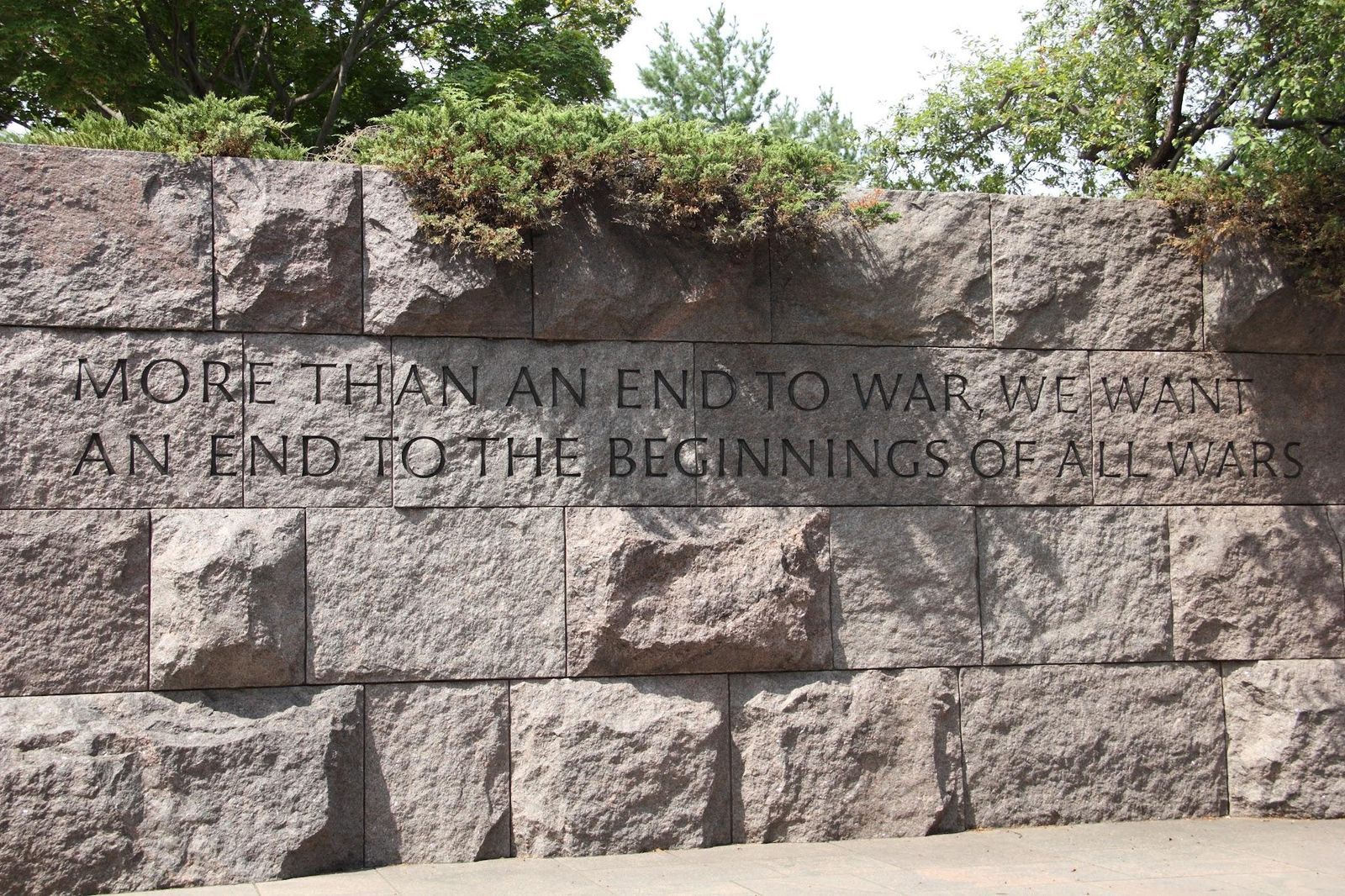
Image: Caroline Léna Becker, CC BY 3.0, via Wikimedia Commons

Despite President Roosevelt’s wish for an understated memorial near the National Archives, the project approved by Congress after his passing was much grander. Instead of a monolithic monument, the FDR Memorial consists of a park-like landscape , with areas representing the four terms he served and the conflicts he led the nation through. It is also the only presidential memorial to include a tribute to a First Lady, in the form of a bronze statue of Eleanor Roosevelt.

10
Museums
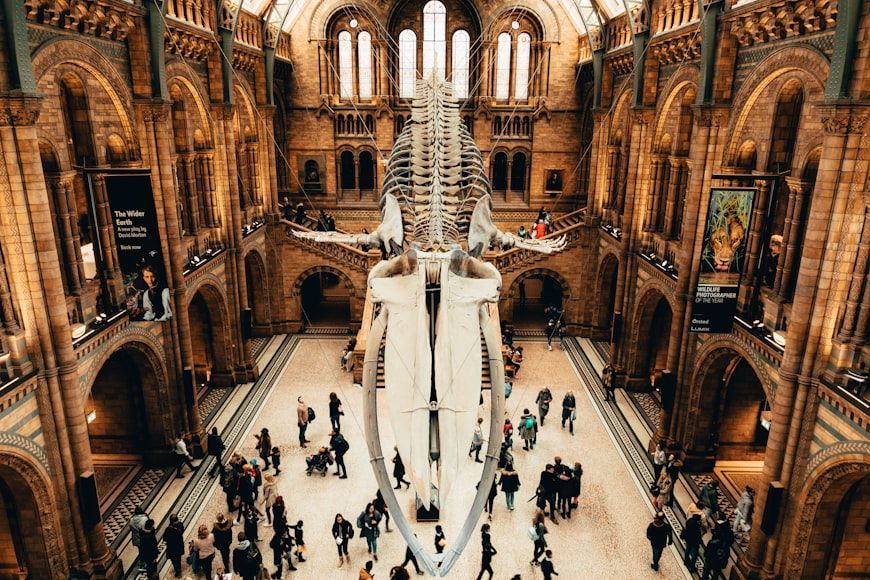
Image: Sheng L

The National Mall is one of the places with the highest concentration of museums in the world , most of them managed by the Smithsonian Institution. Among its most famous museums are the National Museum of American History, the National Museum of Natural History, the National Gallery of Art, the National Air and Space Museum, and the U.S. Holocaust Memorial Museum.

11
MLK Memorial
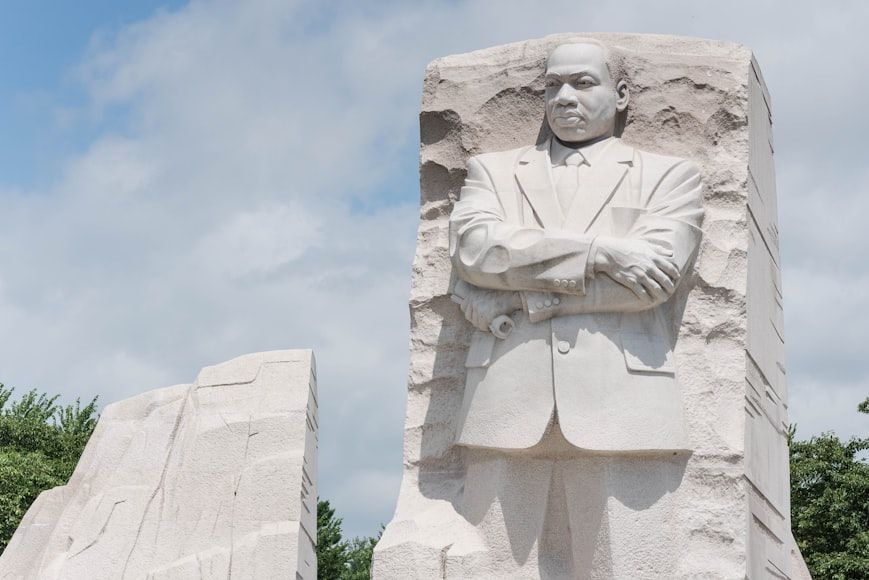
Image: E

In 1963, the National Mall was the stage for Martin Luther King Jr.’s most famous speech, "I have a dream" , during the March on Washington for Jobs and Freedom. After his 1968 assassination, members of the Alpha Phi Alpha fraternity —to which King belonged— petitioned to build a memorial in his honor on the National Mall, and were allowed by President Clinton in 1996. The memorial features a split rock —inspired by the iconic line "Out of the mountain of despair, a stone of hope."— and a central figure depicting MLK Jr.

12
Parks and Tidal Basin
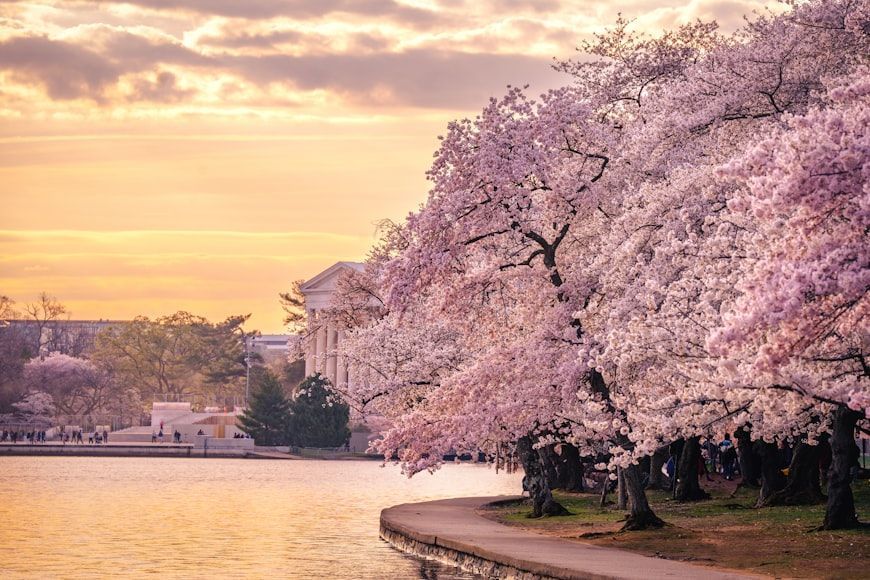
Image: Sharosh Rajasekher

The National Mall's original plan included several landscaped areas, but they were not designed as part of it until 1901, when the area was cleaned to include open lawns and rows of trees lining the different sections . In 1882, part of the Potomac River was dredged to reclaim 628 acres of land, creating the Tidal Basin and adding space for many of the current monuments. In 1912, the city of Tokyo gifted Washington, D.C., more than 3,000 cherry trees as a sign of friendship, now an iconic part of the Tidal Basin landscape. In 1965, the parks in the National Mall were consolidated as a unit as the National Mall and Memorial Parks.

General General 4 min read

1982’s movie classics

Can you believe these 10 classic movies were all released in 1982?

Image: Myke Simon

What happened in 1982? During President Ronald Reagan’s second year in office, Grace Kelly died at 52 in a car accident, the UK defeated Argentina in the Falklands War, Michael Jackson released Thriller , and Prince released 1999 as the first compact discs were sold commercially. It was also a landmark year in cinematic history — see the surprising number of all-time classic movies that were released in 1982, from sci-fi to comedy to romantic dramas.

1
E.T. the Extra-Terrestrial

Image: Rick L

In the same year that Michael Jackson’s Thriller was released, an 11-year-old Henry Thomas starred as Elliot, a young boy who befriends an extraterrestrial stranded in his backyard, and helps him find his way home.

Directed by Steven Spielberg, this science fiction classic was filmed in chronological order to ensure the young cast (which also included a then-unknown Drew Barrymore) could perform convincingly. After Star Wars’ big debut in 1977, E.T. held the record for the highest-grossing film of all time until Spielberg’s own Jurassic Park surpassed it in 1993.

2
Fast Times at Ridgemont High

Image: Tim Mossholder

Did you know this movie is Nicolas Cage's professional debut? He was about 17 -18 years old and played one of Spicoli’s (Sean Penn) stoner friends, called "Bad Bud". This coming-of-age comedy drama features early appearances by future stars like Penn, Eric Stoltz, and Jennifer Jason Leigh.

3
Tootsie

Image: Kyle Head

Tootsie is a satirical romantic comedy starring Dustin Hoffman as Michael Dorsey, a struggling actor who disguises himself as "Dorothy Michaels" to land a role on a soap opera. His success brings complications when he falls in love, putting both his career and his secret at risk. Jessica Lange later won the Academy Award for Best Supporting Actress for her role in the film.

4
Blade Runner

Image: Patrick Perkins

Directed by Ridley Scott, this futuristic science fiction classic starring Harrison Ford, Rutger Hauer, and Sean Young is set in a dystopian 2019 Los Angeles, where replicants (synthetic humans) are bio-engineered to work on space colonies. But when one group of rebellious replicants escapes back to Earth, policeman Rick Deckard (Ford) is in charge of hunting them down.

5
Rocky III

Image: Teitur Hansen

Rocky Balboa (Sylvester Stallone), now wealthy and complacent as champion, loses both his mentor Mickey and his title to his younger rival, Clubber Lang (Mr. T). With Apollo Creed’s help, he fights to regain his discipline and reclaim his championship.

The third installment of this sports drama trilogy , written, directed, and starring Stallone, was released on May 28, 1982.

6
Poltergeist

Image: m wrona

Because Steven Spielberg was contractually unable at the time to direct another movie other than E.T the Extra-Terrestrial, Tobe Hooper was chosen to direct the film. This supernatural horror film won the BAFTA Award for Best Special Visual Effects and was nominated for the Academy Award in the same category, losing to E.T the Extra-Terrestrial the next year.

7
An Officer and a Gentleman

Image: Specna Arms

On August 13, 1982, An Officer and a Gentleman hit theaters. This romantic drama , directed by Taylor Hackford and starring Richard Gere and Deborah Winger, follows the story of a Navy recruit who signs up for the Aviation Academy, where he learns to relate to others and finds love. It was a critical success and became the third highest-grossing film of 1982, after Tootsie and E.T the Extra-Terrestrial.

8
Gandhi

Image: Ishant Mishra

While science fiction was blowing everyone’s minds, this historical epic captured audiences’ hearts despite its 3-hour, 20-minute runtime. Ben Kingsley won both the Academy Award and the BAFTA Award for Best Actor in a Leading Role. The biographical drama follows the key moments of Mahatma Gandhi’s life, from resisting British rule to leading India toward independence.

9
The Thing

Image: Nathan Duck

Directed by John Carpenter, this sci-fi horror story is all about paranoia and mistrust during the Cold War era. In an isolated Antarctic base, the crew is hunted by a shape-shifting alien that can transform into the shape of any living organism it consumes. Paranoia erupts as the isolated scientists, led by MacReady (Kurt Russell), realize anyone could be the creature, leading to everyone's distrust and desperation.

At release, The Thing was overshadowed by E.T. the Extra-Terrestrial , but it later gained a strong cult following through TV and home video.

10
Tron

Image: TRON

Steven Lisberger drew inspiration for this science fiction adventure from the early video game Pong (1972). Combining groundbreaking animation with live action , the film was released on July 9, 1982, and became an influence on future animated filmmaking.

After discovering his work has been stolen, computer engineer Kevin Flynn (Jeff Bridges) attempts to hack into his company’s network, only to become trapped in a digital world.

Culture Culture 6 min read

Outlaws & Cowboys

Saddle up: Here are 10 of the most iconic figures of the American West

Image: Zeynep Sude Emek

American Wild West stories are fascinating but would be incredibly boring without the men and women who roamed the untamed frontier in search of new opportunities. Their activities ranged from lawmen and gunslingers to ranchers, gamblers, farmers, rodeo stars, bounty hunters, and outlaws. Join us to learn about the lives of 10 cowboys (and cowgirls!) who helped shape our nation’s cultural landscape.

1
"Buffalo Bill" Cody

Image: Illinois State University, Public domain, via Wikimedia Commons

If we had to name the most famous cowboy in history , Buffalo Bill Cody would probably be a top contender. Throughout his lifetime, Cody greatly contributed to shaping the image we have of the American West.

Born in Iowa in 1846, he earned his nickname while working for the Union Pacific Railway, where railroad workers were amazed by his hunting skills. But history had bigger plans in store for Cody, and he would soon become an actor , traveling throughout the eastern United States performing plays based on stories of the Wild West for more than 30 years.

Eventually, poor business management and a certain change in popular interests led Buffalo Bill to ruin and he retired from show business just two months before his death in 1917. He was, however, mourned by millions of people who considered him a hero.

2
John Henry "Doc" Holliday

Image: Mehmet Turgut Kirkgoz

John Henry "Doc" Holliday was born in 1851 in Griffin, Georgia, into a wealthy family. He earned his Doctor of Dental Surgery degree in Philadelphia but was shortly thereafter diagnosed with tuberculosis and advised to live in the drier, hotter climate of the West.

In Dallas, Texas, he pursued his trade as a dentist but also discovered saloons and whiskey. Soon, realizing that gambling could be much more lucrative than dentistry, he began his professional gambling career.

The rest of his life was spent among crooks, gunfights, and jailmates in New Mexico, Arizona, and California. At only 36 years old, his lungs could not keep up with his gunslinging way of life and he finally met his death in 1887 in a hotel bed in Colorado. It is said that his last words were, "This is funny."

3
Butch Cassidy and The Sundance Kid

Image: yavuz pancareken

The lives of Butch Cassidy and The Sundance Kid became legendary pretty quickly. As early as 1903, their exploits inspired the first modern film —Edwin S. Porter's _The Great Train Robbery_— and since then, their adventures have not ceased to be portrayed by popular culture. In a way, they symbolize the definitive end of the romanticized Western era at the hands of 20th-century industrialization and urbanization.

Both cowboys were members of a gang known as "The Wild Bunch," which earned them a reputation as bank and train robbers. According to lore, after several years of crime and run-ins with the law, the bandits managed to escape to Latin America. Eventually, they were caught and killed in Bolivia in 1908. The fact that their graves were never found helped fuel the myth that they had, in fact, returned to the United States and lived in anonymity for many more years.

4
Jesse James

Image: Steve

Jesse James's life is one of the most emblematic of the Wild West. His criminal career began after his involvement with pro-Confederate guerrillas during the Civil War. Along with the Younger brothers, he created a gang with which they robbed banks, trains, stagecoaches, and stores from Iowa to Texas and from Tennessee to California.

It is believed that throughout the years they netted more than a quarter of a million dollars. Despite the gory nature of their heists and murders, the gang often had public sympathy.

Jesse's death is as controversial as his life. At only 34 years old, he was shot in the back by one of his gang partners, who hoped to obtain a state reward in exchange for his betrayal. The public was not happy with the government conspiring to assassinate a citizen, no matter how criminal, and the matter became a scandal, resulting in Jesse James's rise to mythical status.

5
Annie Oakley

Image: International Film Service, Public domain, via Wikimedia Commons

From an early age, Phoebe Anne Oakley Moses, better known as Annie Oakley, took up hunting to help support her family. At the age of fifteen, she won a competition against the famous marksman Frank Butler, to whom she later married. Together, they appeared in several exhibitions across the country and, in 1885, joined Buffalo Bill's Wild West show.

Annie was able to open the edge of a letter, shatter glass balls thrown in the air, and hit dimes held between her husband's fingers or apples placed in her poodle's mouth by shooting from 30 paces away. Her life was so rich and fascinating that she was the inspiration for several movies and plays.

6
Billy the Kid

Image: See page for author, Public domain, via Wikimedia Commons

According to legend, Henry McCarty, better known as Billy the Kid, killed at least 21 people during his career as a notorious outlaw in New Mexico. However, he cemented his place in the pantheon of frontier legends not so much for his murders as for his personality and incredible marksmanship skills.

Born in the late 1850s in the Irish slums of New York City, McCarty had to reinvent himself as a gunslinger after the death of his mother when he was just a teenager. His life and the events surrounding his death at the hands of legendary lawman Pat Garrett were immortalized in numerous films, books, and songs. In fact, Billy the Kid holds the record as the most portrayed individual in cinematic history.

7
Lucille Mulhall

Image: Melissa Walsh

By 1900, split riding skirts allowed women to compete in rodeos without shocking Victorian-era audiences. But the truth is that women have been participating in exhibitions even in the early days of the Old West.

Lucille Mulhall is considered America's first legendary cowgirl. Born in 1885, Lucille grew up on her family's ranch in Oklahoma, where she acquired her incredible cattle-roping skills. She began performing in shows as a teenager and, throughout her career, competed in many rodeos, setting a few roping world records.

8
Belle Starr

Image: Pixabay

Perhaps the most famous female gunslinger in the history of the West was Myra Maybelle Shirley Reed Starr, better known as Belle Starr. Born in Missouri in 1848, Belle had a fairly well-to-do childhood and was a bright student. However, when her family moved to Texas after the Civil War, the young girl stumbled upon the James-Younger gang. After falling in love with Cole Younger, she became a member of the gang.

That love affair didn't last long, but a few others followed, which led her to live outside the law for the rest of her life. Her alleged riding and gun skills increased her fame throughout the country, turning her into a legend.

9
Wyatt Earp

Image: National Archives at College Park, Public domain, via Wikimedia Commons

Wyatt Earp belonged to a large family whose members were famous for being gunfighters, gamblers, bison hunters, miners, and lawmen. While all were notorious Wild West characters, it was Wyatt's exploits that have gone down in history. His life is testimony to the ambiguity that prevailed at a time when there was no distinction between upholding the law and transgressing it.

After a long life traveling the American West as a deputy sheriff, bounty hunter, and saloon owner, in 1905 Wyatt settled permanently in Los Angeles, California. He became a film consultant in Hollywood, befriending producers, directors, and actors. It is even said that John Wayne took Earp’s stories as inspiration for some of the tough characters he portrayed on the big screen.

10
"Wild Bill" Hickok

Image: Turuncu Sakal

James Butler Hickok, better known as "Wild Bill," is a legendary folk hero thanks to the many stories that romanticized his life as a soldier, gunslinger, gambler, marshal, and actor. Over the years, his adventures have been retold numerous times in pop culture. The truth is that Hickok did more in his thirty-nine years of life than most who lived twice as long.

Since his birth in Illinois in 1837, he is said to have been involved in some of the most dramatic and, at the same time, most spectacular events in the history of the Wild West. His death, unsurprisingly, is also legendary. In 1876, while playing a game of poker in a saloon in Deadwood, Dakota Territory, a man named Jack McCall shot him in the back of the head. The cards he was holding at the time —two pairs of Aces and black Eights— became the well-known "dead man's hand."

Explore more American facts

Choose your favorite category!

General
General

As American as apple pie—the very best America has to offer!

Culture
Culture

Delve into the astounding richness of American lore.

Geography
Geography

Hop in and explore vast and diverse American landscapes.

History
History

Discover the key moments that shaped the United States.