General General 5 min read

PIZZA TIME!

Want a Slice? Enjoy These 10 Tasty Facts About American Pizza!

Image: Quin Engle

Who doesn’t love pizza? This tasty Italian treat is truly the great equalizer: If there is something that can bring every American from across the aisle together, that is a good old slice of delicious pizza.

The United States has a proud pizza history that encompasses the better half of the 20th century, and continues to this very day. Let’s take a look at different styles, iconic parlors, and fun facts about America’s favorite street food.

1
New York-style Pizza
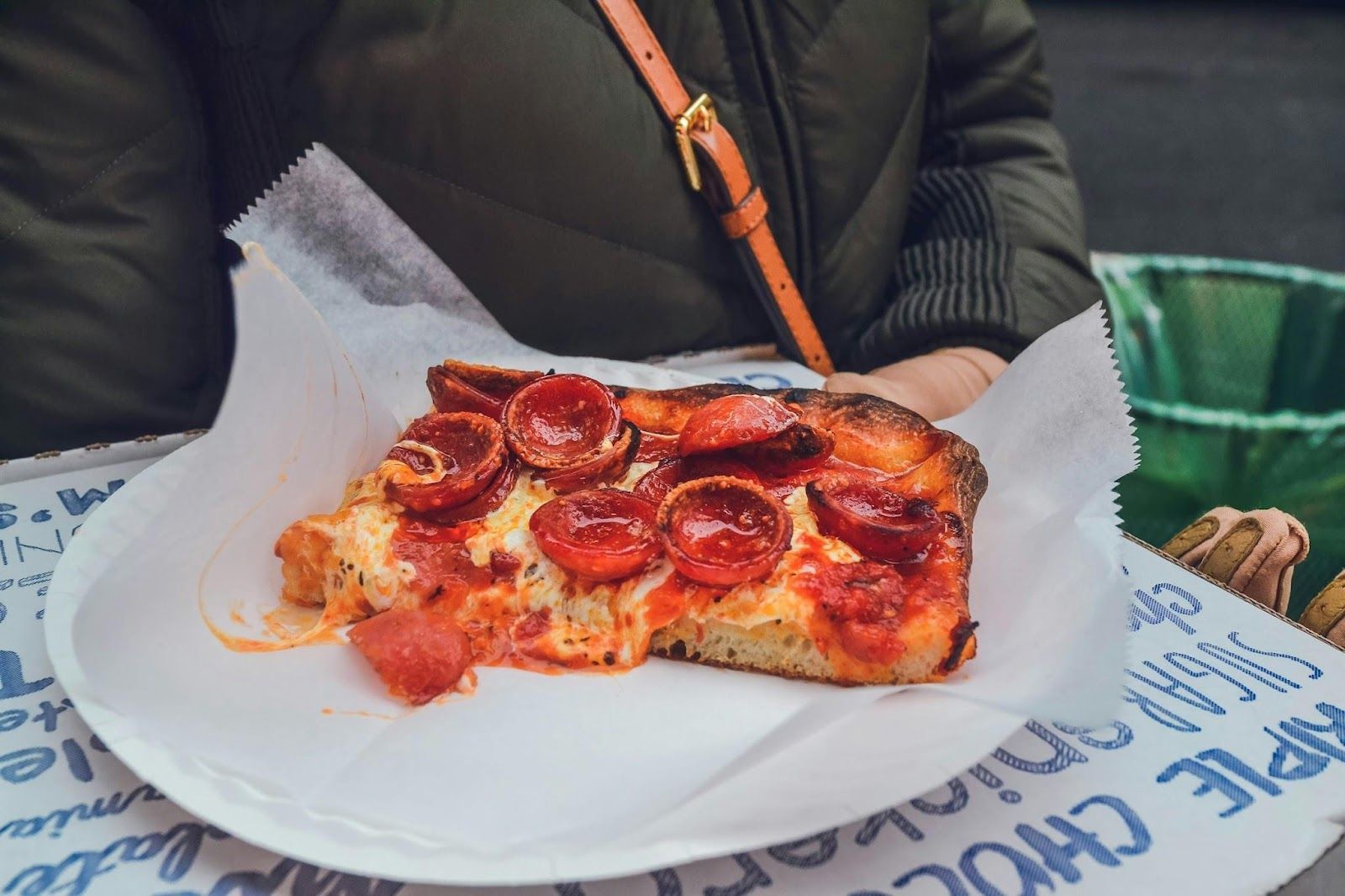
Image: Alex Haney

Let’s start with a city synonymous with excellent pizza . New York-style pizza is an iconic variety, universally recognizable for its thin crust, delicious sauce, and melted mozzarella cheese. Nothing says New York City as folding a mouth-watering slice and enjoying this delicacy while the sounds of "The City that Never Sleeps" seem to fade in the background.

New York style is remarkably similar to the Neapolitan style, an Italian recipe considered by many to be close to perfection . Many historians believe that Naples is the birthplace of pizza, so it seems almost poetic that what many consider to be the first truly American style was inspired by this iconic city.

2
Chicago-style pizza
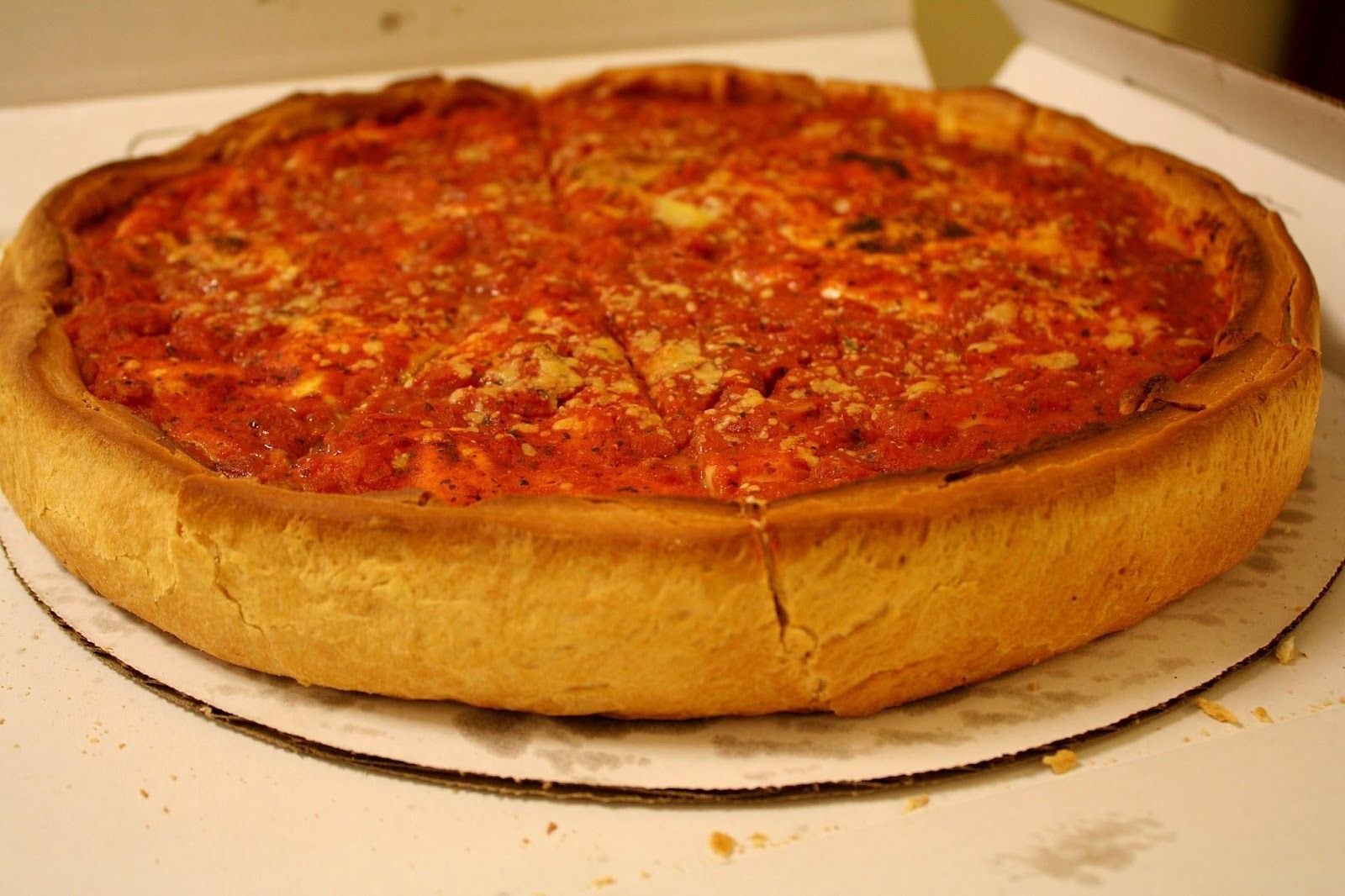
Image: Marit & Toomas Hinnosaar

Unlike its New York City counterpart, the Windy City’s pizza has no Italian ancestor. While its exact origins are still debated, we do know that Chicago-style pizza was developed at some point between the 1920s and 1940s. However our Italian friends might feel about this style, the good people of Chicago proudly stand by this beloved deep-dish, high-edge cheesy treat.

One of the most interesting things about Chicago-style pizza is how it turns around the traditional way in which pizza ingredients are placed: Its chunky tomato sauce covers the copious amounts of cheese used. The result is a hearty and delicious meal , sought after by both locals and tourists alike.

3
Pepperoni
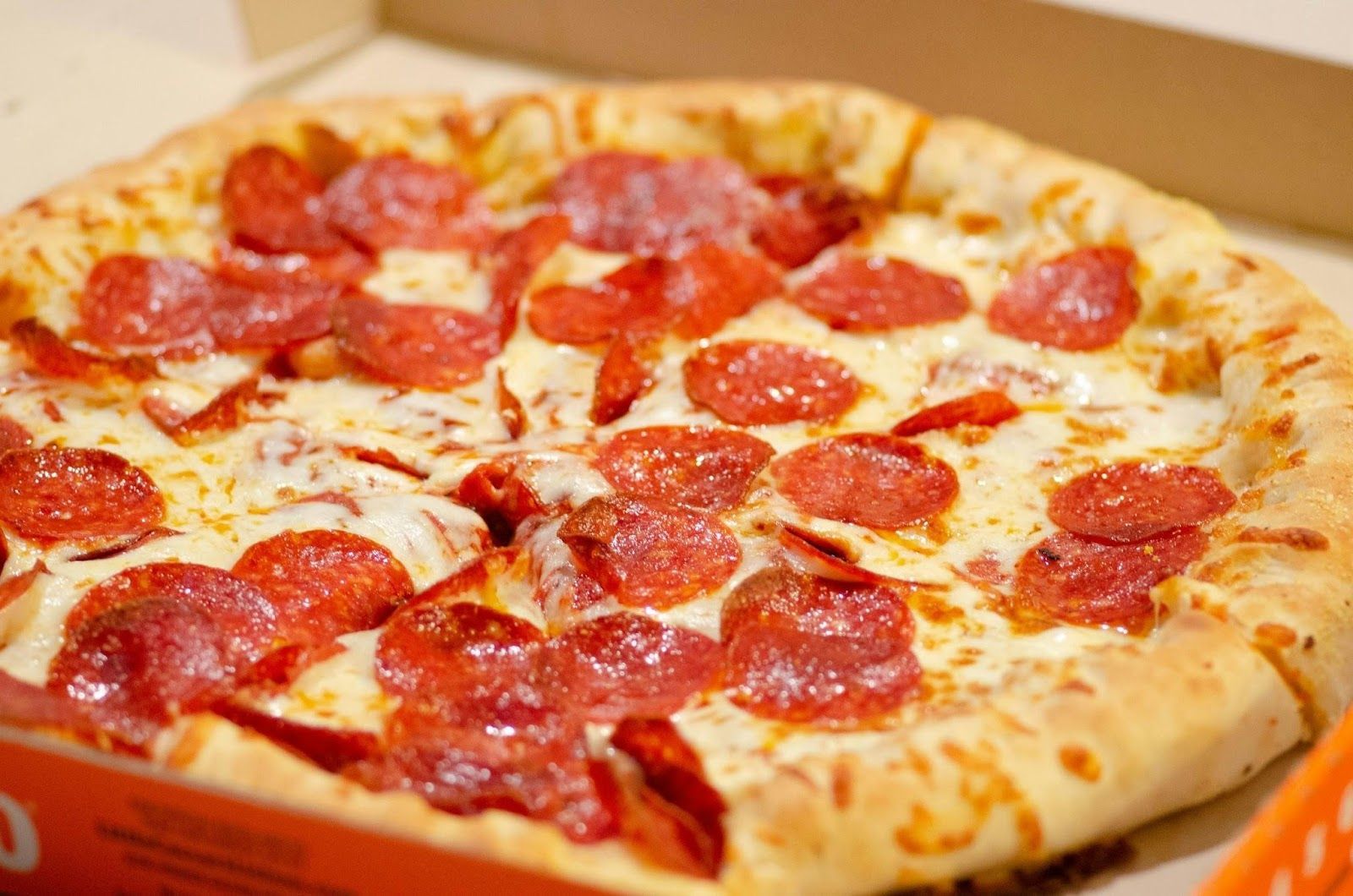
Image: Alan Hardman

While no one can deny that Italy is the birthplace of pizza, this delicious ingredient comes straight from America . Granted, it is a variation of the Italian salami invented by immigrants in New York City at the start of the 20th century, but it has grown to become one of the most iconic toppings associated with American pizza.

Pepperoni comes from " peperoni ," which is the Italian word for "bell peppers". This spicy sausage is fairly similar to the salamis from Southern Italy, like " salsiccia" or " soppressata ."

4
California style pizza
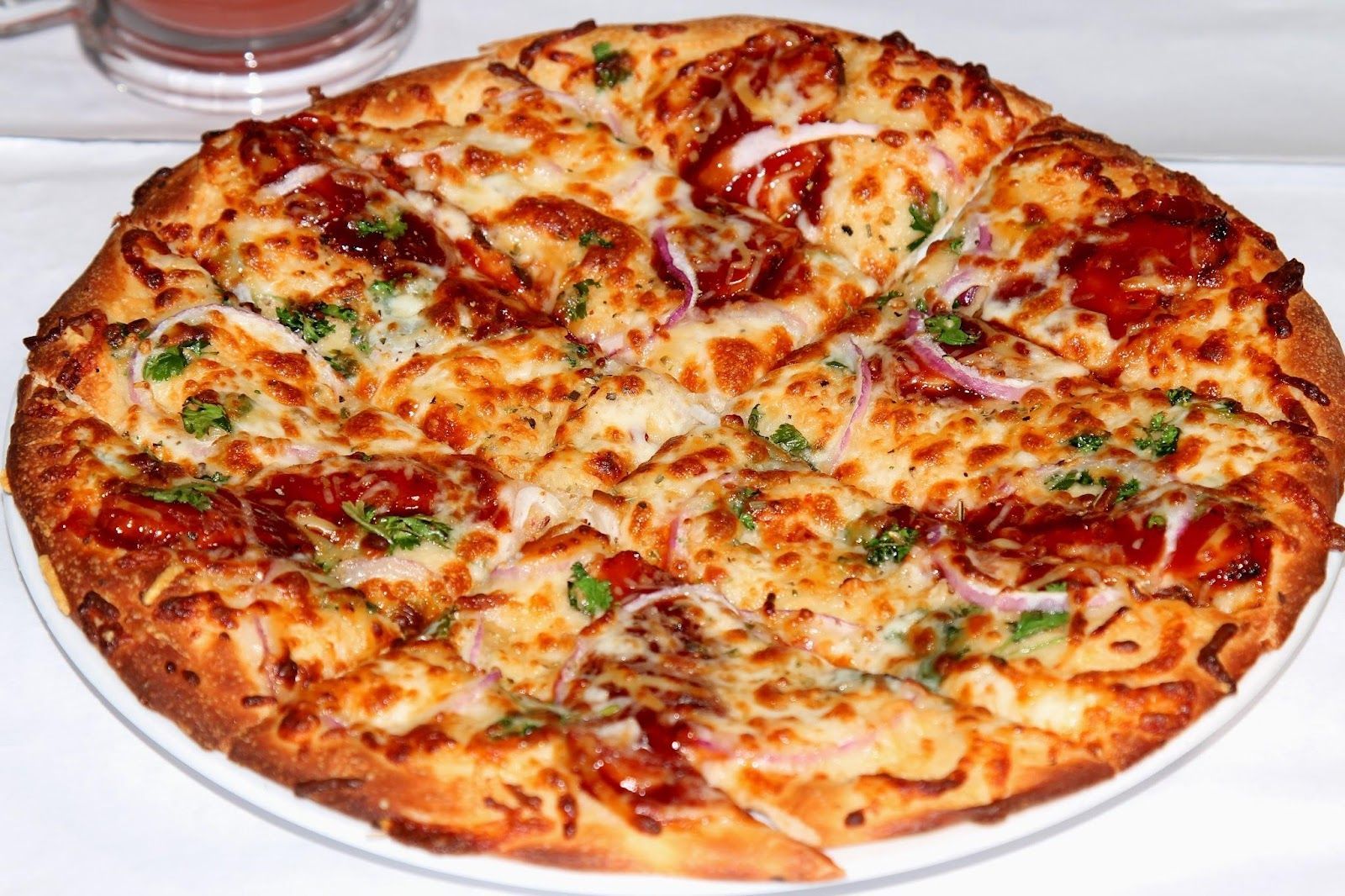
Image: Prayitno

This is one of the youngest entities on this list. In the 1980s, several California chefs simultaneously came up with a new idea for pizza: a pie that combines New York’s thin crust with traditional toppings from California cuisine. The result is known as the California-style pizza, an amalgamation of traditional characteristics and innovative new flavors .

Among the many toppings that might be included in this type of pizza, a few that particularly stand out are zucchini flowers, smoked salmon, eggs, and bacon. However, perhaps the most well-known contribution from this style is the now-iconic barbecue chicken pizza , created by chef Ed LaDou in 1985.

5
Detroit Style
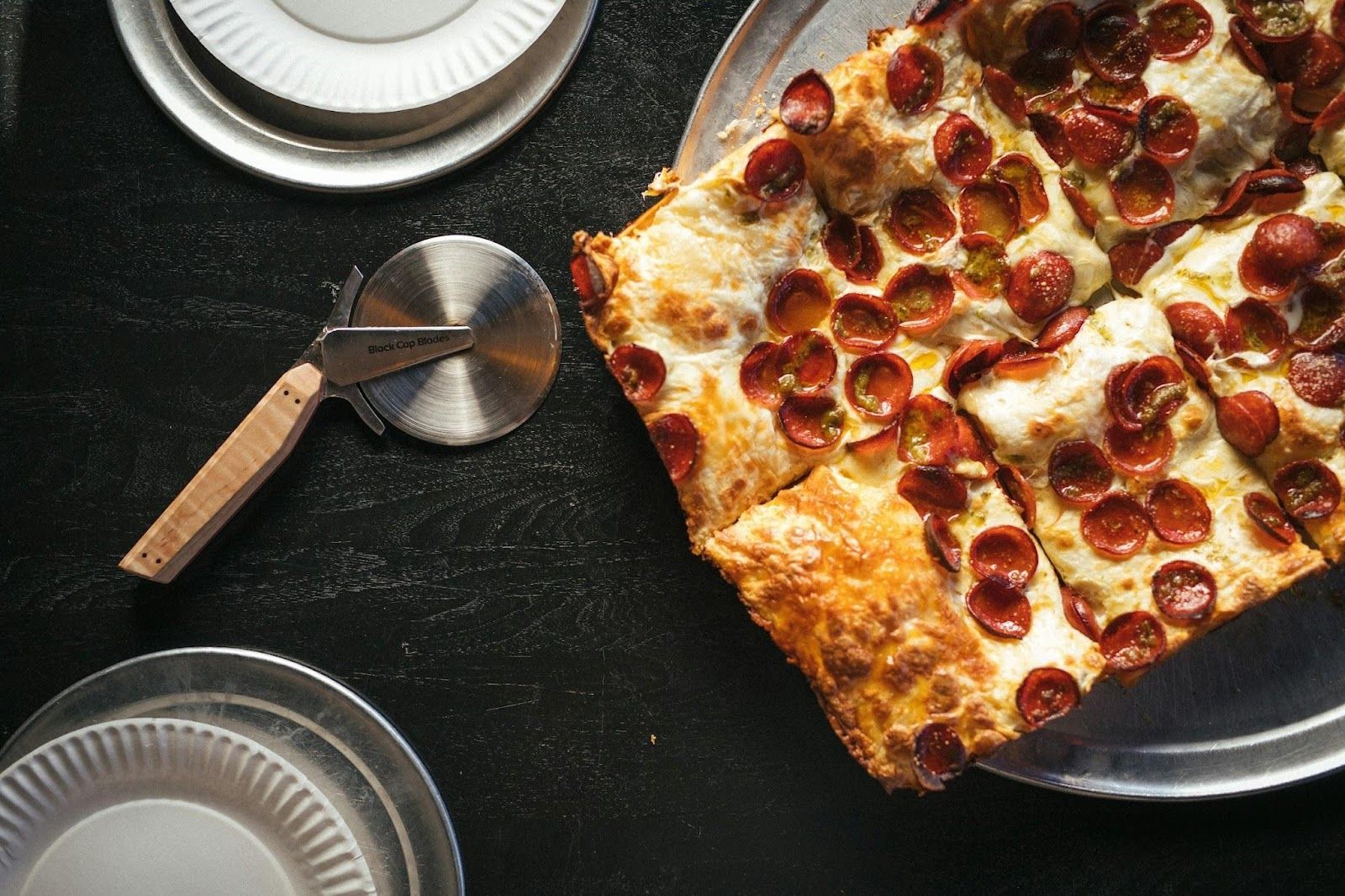
Image: Parker Hilton

If Detroit-style pizza teaches us anything, is that pizza is delicious no matter which shape it’s in . Known for its characteristic rectangular shape, this variety’s crust resembles a typical focaccia , a type of Italian bread. It was created in the 1940s, allegedly invented in a former speakeasy at the corner of Six Mile Road and Conant Street.

Interestingly, the unusual shape of this delicious pizza is associated with Detroit’s impressive automotive industry. Many believe that the first pies of this style were baked in steel trays used in car factories, either as dripping pans or to hold small parts.

6
Famous Pizza Places
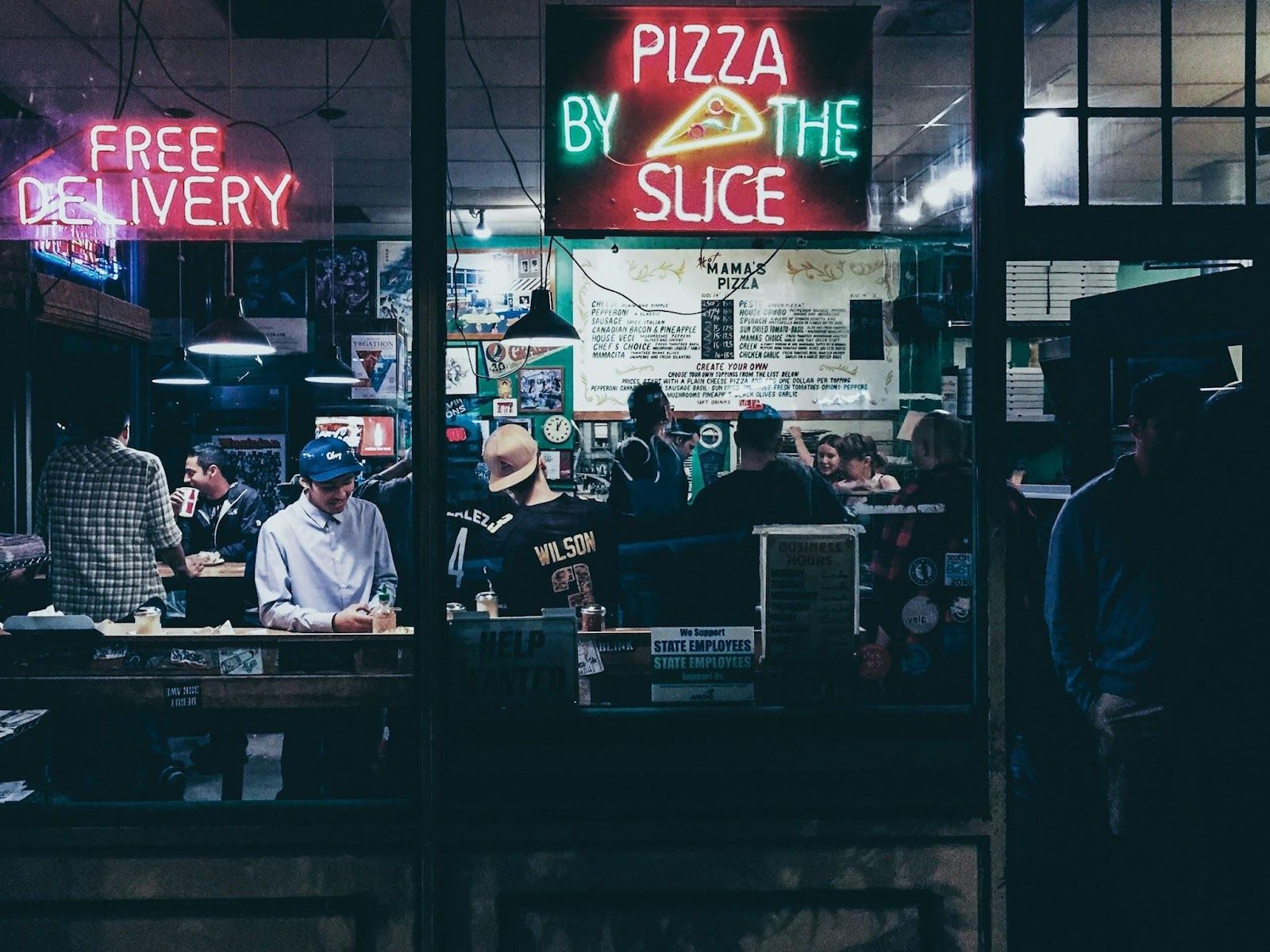
Image: Dylan Mullins

In 1905, Italian immigrant Gennaro Lombardi opened the very first pizza restaurant in America, located in the heart of Manhattan. And while the still-operational Lombardi’s was the first American parlor, it certainly wasn’t the last. Let’s take a memento to recognize a few of the very best pizza places America has to offer.

If you are looking for an unusual yet unforgettable pie, you might want to visit Frank Pepe's in New Haven, Connecticut, and try their unique clam pizza, topped with olive oil, garlic, and freshly shucked clams. Should you want a nice deep-dish pizza, try the original Uno Pizzeria & Grill, which claims to be the birthplace of Chicago-style pizza . Or, if you want to stick with a classic, you can always visit Lombardi’s and try their 119-year-old recipe.

7
Hawaiian pizza

Image: bckfwd

The origins of this pizza are controversial , and almost as divisive as this peculiar flavor is. For starters, let’s start with the elephant in the room: This pizza was not invented in America. It was created by Sam Panopoulos, a Greek-born Canadian cook who wished to experiment with sweet and savory flavors and decided to try adding bits of pineapple to a ham pizza.

However, this pizza is named after America’s 50th state for a reason, since pineapples are probably Hawaii’s most iconic product . In fact, Panopoulos named his creation after the brand of canned pineapple he was using at the time. In any case, the matter of whether Hawaiian pizza was a hit or a miss is still debatable. Some praise its unique taste, while others openly loathe it.

8
Pizza Chains

Image: Alexandra Gorn

After the American public was introduced to it in the 20th century, pizza unsurprisingly became an extremely profitable consumer good. In the 1960s, many now-massive pizza chains came into existence, providing the market with a massively popular and easily produced fast food.

Just to name a few, brands like Pizza Hut, Domino’s or Little Caesar’s became household names in no time. Besides their massive success and worldwide locations, these pizza chains share a common characteristic: they all started as small businesses, that eventually became beloved behemoths through hard work and resilience.

9
Tomato pie

Image: NASA

Just like with Hawaiian pizza, prepare for a controversial subject , which can be summed up into a single, self-contained question: Are tomato pies pizzas? Let’s see the arguments for both sides. On one hand, tomato pies are usually not served straight from the oven, and in some areas, they are even completely cheeseless. On the other, we can take an "if it looks like a duck" mentality regarding tomato pies: If they look like pizza and taste like pizza, then how can we consider them anything else but pizza?

In any case, whatever classification this tasty treat might fall into, it should be said that tomato pies are a must-try delicacy while visiting the Northeastern United States. They are also known as bakery pizza and church pie in Rhode Island and Philadelphia.

10
Pizza Delivery

Image: Rowan Freeman

The history of pizza wouldn’t be complete without the advent of this game-changing innovation. Deliveries allowed us to enjoy all the cheesy goodness of pizza in the comfort and convenience of our homes. A lot could be said about the unsung heroes who made pizza and movie nights possible, so we’ll pay tribute to them by retelling two turning points in pizza delivery history.

In 1994, Pizza Hut made history by launching the very first viable online ordering system. While primitive, this service registered thousands of orders: To this date, Pizza Hut claims that the very first online purchase ever was a Pizza Hut pizza. Not content with this record, in 2001 Pizza Hut decided to go against "the Final Frontier" and delivered a salami pizza to the International Space Station, the very first pizza successfully delivered to outer space.

History History 5 min read

AHOY, CAPTAIN!

Which Is The Most Valuable Shipwreck Ever Recovered?

Image: Massimiliano Morosinotto

There is something equally fascinating and haunting about a huge ship lying on the bottom of the ocean or a lake. From the sad story of the Edmund Fitzgerald to the largest wooden ship, or the most valuable ship ever lost, you will find here 10 ships that met their untimely fate and remain hidden underwater. Keep reading to discover which of these famous wrecks you can recognize.

1
Nuestra Señora de Atocha (Our Lady of Atocha)

Image: NOAA

A ship that sank off the coast of the Florida Keys in 1622, the Nuestra Señora de Atocha is, to this day, the most valuable shipwreck ever recovered. Originally bound from Havana, Cuba to Spain, the Atocha was loaded with a large treasure, ranging from copper and gems to gold and indigo from the Spanish colonies.

But, shortly after launching from port, a major hurricane caught the ship and destroyed the Atocha , which sank 56 feet beneath the surface. In 1985, treasure hunters rediscovered the wreck off the coast of the Florida Keys. Currently holding a Guinness World Record for its recovered value, the Atocha is a continual treasure trove for divers and fortune hunters alike.

2
SS Republic

Image: Vlad Tchompalov

A ship that served both the US and Confederate governments, the SS Republic sank in 1865 during a hurricane off the coast of Georgia. After the Civil War, the Republic carried passengers and cargo from New York to New Orleans. On October 20, 1865, a hurricane off the coast of Georgia damaged the ship, which sank around four in the afternoon.

As a result of the sinking, the cargo was lost with the ship until 2003, when a commercial archaeology company rediscovered the wreck approximately 100 miles from Savannah, Georgia. About a third of the coins that were on board the ship have been recovered, and are now valued at over USD 75 million.

3
The Whydah Gally

Image: NOAA

The Whydah Gally was intended for service in the British Empire before it was captured by the infamous pirate Samuel "Black Sam" Bellamy. As Bellamy and his crew approached the Massachusetts coast the weather turned, creating a violent nor’easter cyclone. The ship capsized and its cargo, 144-man crew, and captain were consequently thrust into the sea.

In 1984, underwater archaeologist Barry Clifford discovered the Whydah Gally. Since its rediscovery, many artifacts have been retrieved from the ship, including the ship’s bell , inscribed with the words: "THE WHYDAH GALLY 1716." This helped authenticate the Whydah as the first pirate shipwreck to ever be found and confirmed.

4
SS Central America

Image: Giuseppe Murabito

The SS Central America was an American sidewheel steamer that operated between the East Coast and Central America. In September 1857, carrying 477 passengers, 101 crewmembers, 38,000 pieces of mail, and 30,000 pounds of gold harvested during the California Gold Rush to New York City, the Central America was engulfed by a Category 2 hurricane.

At the time of the boat’s sinking, over 400 people were still on board, making it the most deadly of any American commercial boat disaster. The gold on board was also lost. In 1988, explorer Tommy Gregory Thompson found the ship, and up to three tons of gold were excavated, leading to long legal battles that have continued to the present day.

5
SS Georgiana

Image: Jason Mavrommatis

The SS Georgiana was a Confederate steamer. Built in Scotland, the ship sailed its maiden voyage in 1863 to Charleston, South Carolina, where it was expected to be outfitted by Confederate soldiers. However, the Georgiana was not armed with any guns on its first journey and approached its destination on March 19, 1863, with minimal defense.

A member of a Union blockade alerted the nearby battleship USS Wissahickon , which shot and pierced both sides of the ship’s hull. Captain Davidson, signaled a surrender to the Union blockade before beaching the boat. Before the beached ship could be boarded Davidson purposefully sank the boat, before escaping to land with his entire crew. Found on March 19, 1965, the Georgiana was lost for exactly 102 years before its discovery.

6
Edmund Fitzgerald

Image: Nott Peera

Arguably one of the most famous shipwrecks in American history , the Edmund Fitzgerald was the largest ship on the Great Lakes until 1971. The freighter was fatally wrecked on Lake Superior during the winter of 1975, with all her crew losing their lives.

The exact cause of the sinking, with no outward signs of severe damage, is still heavily debated. The prominent theories include the vessel running aground or suffering damage during the storm. A U.S. Navy Lockheed P-3 Orion aircraft discovered the wreck of Edmund Fitzgerald in November 1975, 15 miles west of Deadman’s Cove, Ontario.

7
Carl D. Bradley

Image: Sandra Seitamaa

The SS Carl D. Bradley , a Great Lakes freighter built in 1927, was popularly known as the "Queen of the Lakes" because it was the longest and largest freighter on the Great Lakes at the time. In 1957, it collided with another vessel , the MV White Rose , causing damage to the hull.

It was caught in a storm in November of the same year and sank in Lake Michigan, killing 33 of the 35 crew members. The sinking was caused by structural damage caused by the poor choice of steel used in its construction. The wreck, lying 360 feet under the water, was discovered in 1959 by the Army Corps of Engineers.

8
Lady Elgin

Image: ALDO DE PASCALE

The Lady Elgin was a wooden-hulled steamship built in 1851 that served on the Great Lakes as a passenger ship. On September 6, 1860, while returning from Chicago, the vessel sank in an unfortunate accident.

While facing a strong gale, it was rammed by the schooner Augusta of Oswego and, due to the damages caused by the collision, the vessel sank sometime later, resulting in the death of more than 300 people. Though the exact number remains unknown since the manifest was lost during the accident, it remains one of the worst shipwrecks in the region.

9
SS Eastland

Image: Anton Repponen

The SS Eastland was a Chicago-based passenger ship , used for tours. On 24 July 1915, the ship rolled over onto its side while tied to a dock in the Chicago River. In total, 844 passengers and crew were killed in what was the largest loss of life from a single shipwreck on the Great Lakes.

After the disaster, the Eastland was salvaged and sold to the United States Navy which, after restorations and modifications, designated it a gunboat and renamed it USS Wilmette . It was used primarily as a training vessel on the Great Lakes and was scrapped after World War II.

10
Wyoming

Image: rashid

The largest wooden ship ever built , the Wyoming was a six-masted schooner built, completed in 1909 in Bath, Maine. It had a length of 450 ft from jib-boom tip to spanker boom tip.

Because of its extreme length and wood construction, the Wyoming tended to flex in heavy seas, which would cause the long planks to twist and buckle, allowing sea water to intrude into the vessel. For this reason, the Wyoming had to use pumps to keep itself relatively free of water. In March 1924, it foundered in heavy seas and sank with the loss of all hands.

General General 6 min read

Curious keepsakes

America’s Quirkiest Artifacts Hidden in the Library of Congress

Image: Iñaki del Olmo

History has seen all kinds of objects come and go—some more fascinating than others, of course. Some were worth saving and preserving. The Library of Congress is home to some of the most fascinating historical artifacts from across time. Among the millions of items housed within its walls are treasures that range from quirky to iconic. From antique board games to century-old maps, each artifact tells its own story and connects both locals and visitors to specific moments in history. Today, we’ll take a lighthearted look at 10 of the most interesting finds . Sit back and let’s dive into history!

1
Movie etiquette slides: The "don’ts" of early cinema

Image: Alex Litvin

Long before "silence your phones" became a common phrase, the audience was advised to mind their manners with whimsical "movie etiquette" slides. These slides, from the early 1900s, reminded theatergoers to behave properly while in the establishment. Suggestions like "Applaud with hands only" were a gentle nudge to stay courteous—after all, what else would one applaud with, right?

Another classic recommendation: "If annoyed when here, please tell the management," a precursor to modern customer service advice.

2
America’s birth certificate: The map that named a continent

Image: Chris Lawton

Does America have a birth certificate? Not exactly, but something like that—hear this out. It’s actually a map that holds the unique honor of using the name "America" for the very first time . Created by Martin Waldseemüller in 1507, it has a lengthy Latin title and shows an emerging understanding of the globe, especially the newly discovered Western Hemisphere and Pacific Ocean.

For the first time, a cartographer separated the Americas from Europe and Asia, recognizing them as distinct continents. The Library of Congress acquired the map in 2003 and is often referred to as America’s "birth certificate."

3
A Monopoly prequel: The Office Boy

Image: Jaciel Melnik

Before Monopoly was monopolizing (pun intended) family game nights, Parker Brothers tested the waters with a lesser-known board game called "The Office Boy." Released in 1889, this early game was all about climbing the corporate ladder , reflecting the "American Dream" narrative popular at the time.

Players began as humble stock boys and had to work their way up to the head of the firm, with virtues like integrity and promptness helping them along, while carelessness could set them back. Pretty much like real life, huh?

Although "The Office Boy" never reached the same iconic status, it’s a fascinating precursor to Monopoly and you can take a look at it at the Library of Congress.

4
Locks of famous hair: A snip of history

Image: Taylor Smith

It might sound strange today, but saving locks of hair from notable figures was a common practice in the past. The Library of Congress holds strands from historical figures like Thomas Jefferson, Walt Whitman, and James Madison.

Along with the locks, you can also learn some interesting facts. For example, Jefferson’s hair was cut at his deathbed by his family, while Whitman’s came courtesy of his housekeeper, who took the liberty of snipping a few strands. These tiny, personal (maybe too personal) belongings have lost their shine over the years, but they still connect visitors to some of the most influential figures in history.

5
Bizarre health labels: Fat-Ten-U tablets, anyone?

Image: Jenelle

We might find it hard to believe at times, but societies do change. Want to see how? Take a look at advertisements from a certain era, and you’ll notice the early 20th century had its fair share of questionable health products—some of them can be found at the Library of Congress.

For example, one product you can take a look at is "Loring’s Fat-Ten-U Food Tablets," which promised to help skinny folks gain weight quickly . The accompanying ads featured dramatic before-and-after illustrations of people plumping up into "rosy" health with these tablets.

Compare that with today, and you’ll see that marketing, fads, and science have certainly come a long way, don’t you think?

6
The first road map: Paving the way for American travelers

Image: LouisMoto

We’ve mentioned the first map to name America as a continent, but have you ever wondered who the first person to draw a roadmap of the US was? Well, you can learn about that at the Library of Congress.

Back in 1789, when George Washington became president, Christopher Colles published what is now considered the first road map of the United States . His guide, titled A Survey of the Roads of the United States of America , helped travelers navigate the relatively new nation. Rather than displaying large swathes of territory, each page zoomed in on short stretches of road, making it much easier to navigate.

Of course, if you look at it today, it is outdated, but back then, it made traveling around the country a lot easier!

7
Culinary advice for motorists: Gourmet on the go

Image: Debby Hudson

One doesn’t usually—or immediately—place a motorist in a kitchen, right? But we guess this is here to prove us wrong!

When early motorists hit the road, there weren’t fast-food chains or convenience stores on every corner. This posed a problem, but the solution came around rather quickly: The Motorist’s Luncheon Book by May Southworth, published in 1923, provided travelers with the advice they needed to plan their meals on the go. The book suggested packing emergency supplies like sardines, canned frankfurters, and even "bacon in jars" and some recipes to cook on the road.

If you’re ever out of ideas in the kitchen, you might want to get a quick look at this book!

8
Jefferson’s vanilla ice cream recipe: Founding Father of desserts

Image: Hidden

Wait, Jefferson—as in the Founding Father? That’s right. Thomas Jefferson may have helped write the Declaration of Independence, but he also knew how to make a mean vanilla ice cream.

Among his vast collection of papers at the Library of Congress is his personal recipe for the classic dessert . The recipe is as simple as it gets: just "good cream," egg yolks, sugar, and vanilla. Jefferson, known for his love of French cuisine, likely picked up this ice cream-making skill while serving as a diplomat in Paris. While the recipe is quite detailed, it’s a reminder that even the most powerful figures in history had a sweet tooth. You could honor him by making this for your loved ones tonight!

9
The first known book printed in America: The Bay Psalm Book

Image: Aaron Burden

We all know what the first printed book in the world was, right? But what about the first printed book in America? Here’s what you need to know about it.

North America’s first printed book, The Whole Booke of Psalmes , also known as The Bay Psalm Book , dates back to 1640, just two decades after the Mayflower landed. This hymnal was created in the Massachusetts Bay Colony and contains psalms translated from Hebrew into English—but with a twist: the spelling and grammar were, well… creative by modern standards.

The book has no music notes, just the lyrics for worshippers to follow along with. Though simple in appearance, it pretty much marks a milestone in American printing and religious history.

10
Helen Keller’s plea to Alexander Bell: A message of hope

Image: Anne Nygård

As you probably already know, Hellen Keller was both deaf and blind. But that was never an obstacle to her journey of self-improvement and activism for the rights of the disabled. She is, still today, one of the most influential figures in history.

Now, concerning this article, here’s the fascinating artifact’s history: In 1907, Helen Keller sent a telegram to Alexander Graham Bell, the inventor of the telephone and an advocate for the deaf. In it, Keller, who was both deaf and blind, asked Bell to join her in delivering a speech , hoping he would repeat her words aloud for the audience. This small but powerful telegram is now part of the Library of Congress’s collection and you can take a look at it to learn about the deep bonds formed between two icons of American history.

Explore more American facts

Choose your favorite category!

General
General

As American as apple pie—the very best America has to offer!

Culture
Culture

Delve into the astounding richness of American lore.

Geography
Geography

Hop in and explore vast and diverse American landscapes.

History
History

Discover the key moments that shaped the United States.