General General 6 min read

UNCOVERING SIN CITY SECRETS

Visible from space? 10 fun facts about Las Vegas you probably didn't know

Image: David Lusvardi

Frenetic, passionate, shocking, exciting, dazzling, monumental, and even overwhelming. All of this is Las Vegas, a city that evokes so many feelings and emotions that any adjective falls short. Few cities carry such a mystique as Las Vegas. Also called "Sin City", it concentrates the largest number of casinos and hotels in the world, making it one of the tourist destinations most chosen by travelers. But Las Vegas is a lot more than just gambling and fleeting entertainment. In fact, it hides some juicy secrets you'll want to learn. Join us to discover 10 fun facts about Las Vegas you probably didn't know.

1
The Strip is not really in Las Vegas

Image: Stephen Leonardi

The Strip is probably the most iconic attraction in Las Vegas. It stretches approximately 4.2 miles along Las Vegas Boulevard and is the vibrant heart of the city , attracting millions of tourists to experience a unique combination of entertainment and luxury. However, did you know that The Strip is not in Vegas?

Well, it's a technicality. The Strip is located south of the city of Las Vegas, more specifically in Clark County, Nevada, in the unincorporated towns of Paradise and Winchester. In any case, this area is one of the most filmed and photographed in the United States. It is also home to many of the world's largest hotels, casinos, and resorts, such as The Mirage, the Caesars Palace, and The Bellagio.

2
There’s more than one Vegas

Image: Jim Witkowski

Although Las Vegas, Nevada is the most famous of them all, it is not the only one. In New Mexico, just a few miles from Santa Fe and Albuquerque, there is another city called Las Vegas. Founded in 1835, it was one of the main stops on the Santa Fe Trail.

Being part of this trail and preserving the Spanish Colonial style of its buildings has earned this town the right to have up to 900 of its buildings on the National Register of Historic Places. And it is the only place in the United States to reach that number!

Like its big sister in Nevada, Las Vegas, New Mexico is now a major film and television set. Series like House of Cards and movies like No Country for Old Men and Wyatt Earp have been filmed here. Who would have guessed?

3
The Great Sphinx is bigger than the original

Image: lindsayascott

The Great Sphinx of Giza is one of the most beautiful and emblematic monuments ever erected in the history of mankind. So, of course, Sin City had to have one of its own. This replica is located in Luxor Las Vegas, a casino following the theme of Ancient Egypt on The Strip.

Interestingly, however, the Luxor Las Vegas Sphinx is much larger than the Egyptian Sphinx at Giza. The original statue is only 66 feet tall, while the Las Vegas version is over 110 feet tall. What’s more accurate is the massive Luxor Pyramid making up the main building of the casino, it is as large as the Red and Bent Pyramids of Egypt.

4
One bright city

Image: Isaac Davis

Las Vegas is famous for its spectacular nighttime lights. In fact, it is considered one of the brightest cities in the world. But can you see it from space? The answer is yes! Las Vegas can be seen from space, as confirmed by NASA and images taken aboard the International Space Station.

In 2021, astronaut Shane Kimbrough tweeted an aerial photograph of the city taken 250 miles above Earth. In it, you can spot clearly a brighter band where The Strip is located. This is due to the high concentration of lights from casinos, hotels, and other attractions in this famous area. It is estimated that approximately 12,000,000 lights are turned on every night on the Las Vegas Strip!

5
Some hotels are missing a floor

Image: jaygeorge

Americans are used to hotels with no 13th floor, but why do some Las Vegas casinos lack 4th floors? Las Vegas hotels avoid numbering floors with a four to ward off any superstition associated with death.

Fear of the number four, called tetraphobia, is common in many Asian countries, especially China. The word death sounds eerily similar to the number four in Chinese and Japanese. Given that Las Vegas receives a large number of Asian tourists each year, it makes sense that so many casino owners want to avoid making them uncomfortable. In fact, many hotels such as the Aria, the Wynn, and the Elara don't even have floors 40 through 49.

6
More than 200 weddings a day

Image: Pexels

Las Vegas is where reality becomes fantasy, where the Eiffel Tower, Egyptian pyramids, and medieval castles shine away on a glamorous desert strip. It's no wonder, then, that Sin City remains a popular wedding destination.

In September 2023, Las Vegas celebrated its 70th anniversary as the "Wedding Capital of the World." There are about 100 chapels in the city issuing more than 200 licenses a day for couples looking for a simple, quick, and —why not?— themed wedding. Throughout history, lots of couples have tied the knot in the city, including celebrities such as Jennifer Lopez and Ben Affleck, Frank Sinatra and Mia Farrow, and Elvis Presley and Priscilla Beaulieu.

7
A ghost town below Lake Mead

Image: Nikola Majksner

Located 24 miles from the city of Las Vegas, Lake Mead is one of the most important tourist attractions in the state of Nevada. It is the largest lake and reservoir in the United States and is a great destination for water activities and fishing.

However, this place holds a big secret. A few years ago, the lake's low water level revealed the ruins of the abandoned city of St. Thomas, approximately 18 meters below the surface. St. Thomas, founded in 1865 by Mormons, was one of the communities directly affected by the construction of the Hoover Dam.

Today, its gloomy structures have become an attraction for those who want to see the remains of a town that once housed 500 people. The foundations of what was originally a school, a post office, a supermarket, and a church make it a true ghost town.

8
A mecca for antique collectors

Image: Kenny Eliason

There's so much more to do in Sin City besides gambling! Did you know that there is an impressive number of antique stores in Las Vegas? These second-hand shops are a favorite among locals and tourists alike and have been in the area for decades.

For example, Downtown Las Vegas, the city’s historic center, is the best place to find bargains, one-of-a-kind items, collectibles, vintage fashion, and unique pieces of jewelry. If you are visiting the city and, at some point, you get tired of the slots, you can go thrifting and take home a piece of the city's history.

9
FedEx wouldn’t exist without Sin City

Image: Michał Parzuchowski

Today FedEx is one of the best-known companies in the United States. With a large fleet of planes and trucks, the company delivers 16.5 million packages daily to 220 countries and territories. However, the delivery giant had a rocky start and there was a moment, five decades ago when it was close to disappearing.

In the mid-1970s, the oil crisis increased the company's operating costs. Overwhelmed by debt, founder Frederick W. Smith withdrew the last US$5,000 and spent a weekend gambling in the famous Las Vegas casinos. Fortunately, luck was on his side and today we can enjoy this service that changed the postal system forever.

10
The largest bronze sculpture in the U.S.

Image: Wadems, Public domain, via Wikimedia Commons

As we’ve seen, everything in Las Vegas is grandiose and monumental. So it's no wonder that this city is home to the largest bronze sculpture in the United States. The iconic MGM Grand lion weighs a staggering 90,000 pounds and stands 45 feet tall.

This sculpture was placed at the entrance of the hotel in 1998 to replace a cartoon-like giant lion head made of fiberglass. The thing is, record-breaking has been at the heart of the MGM Grand since its beginnings: It was the largest hotel in the world at the time of its opening. Now, it is the largest single hotel in the country, with 5,124 rooms in one building.

Culture Culture 3 min read

Powerful styles

How can a beard change history? 10 US presidents with iconic facial hair!

Image: Library of Congress

Can you guess how many US presidents have had beards? And how many grew a mustache? Which one comes to mind first? For some, it's Lincoln's unmistakable beard; for others, Roosevelt's distinguished mustache; and some will remember John Quincy Adams' sideburns. From the most classic mustaches to eccentric beards, today, we're taking a look at 10 unforgettable presidential styles!

1
Abraham Lincoln

Image: Library of Congress

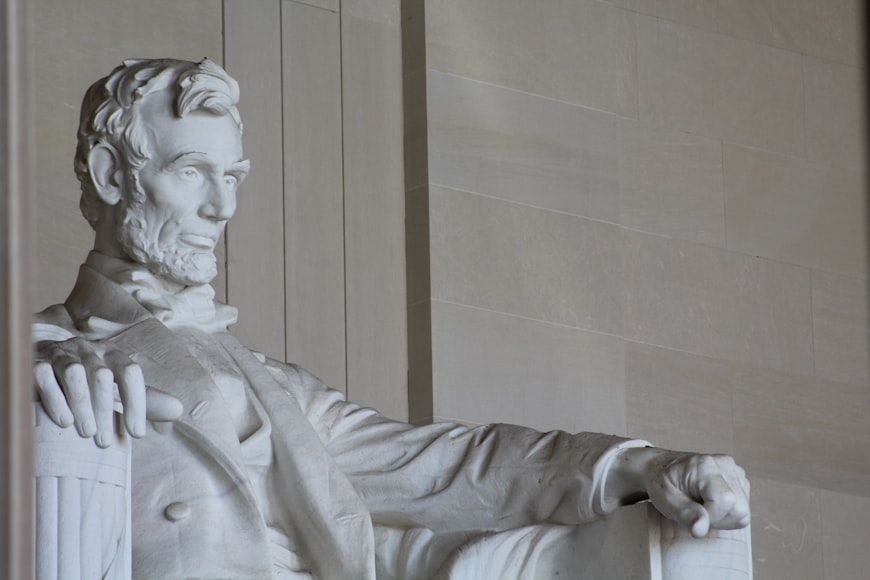
Probably one of the most remembered presidential beards is that of the 16th US President and author of the unforgettable Gettysburg Address, Abraham Lincoln. But, while his image is forever linked to his top hat and distinctive, mustache-free beard, he actually didn't always have it.

Before he was elected president, an 11-year-old girl wrote him a letter suggesting he grow a beard. Fortunately, Lincoln took her advice! Thus, he became the first president to grow a beard while in office.

2
Theodore Roosevelt

Image: Library of Congress

Another iconic style was that of Teddy Roosevelt. His handlebar mustache is not only seen in photos and portraits from his time in office but is also forever etched on the imposing Mount Rushmore. Many men of his era imitated his dramatic, thick, and bushy mustache, which perfectly matched the vigor and toughness that defined the 26th US president.

3
Ulysses S. Grant

Image: Sergei Starostin

Beard? Yes! Sideburns? Of course. Mustache? That too! That is the case with Ulysses S. Grant, a president with a full look, fitting for a Civil War hero.

Grant's beard and mustache were thick -though not long- covering his jawline and also much of his cheeks. Thus, the 18th US president set a fashion trend that would be followed by several other presidents of the 19th century.

4
Grover Cleveland

Image: Dave Sherrill

Another president with a well-remembered mustache was Grover Cleveland, the first US president to serve two non-consecutive terms.

Cleveland's mustache was fluffy and extended just past the edges of his mouth. Although this might have been a problem when dining with guests, his mustache always looked neatly trimmed.

5
William Howard Taft

Image: Ronaldo Guiraldelli

Now, it's time to talk about the only person in the history of the US to have served as both President and Chief Justice of the Supreme Court: William Howard Taft.

Taft sported a bushy mustache, like Teddy Roosevelt, who served right before him. But, unlike his predecessor, the tips of Taft's mustache didn't point downward; instead, they bent upward, making it much more theatrical.

6
John Quincy Adams

Image: Library of Congress

John Quincy Adams didn't need a mustache to stand out with his style. His hallmark was something quite original: sideburns.

Remembered for being bushy and always well and neatly groomed, the 6th president's memorable sideburns extended down the sides of his face, even connecting beneath his chin!

7
Rutherford B. Hayes

Image: Nikolaos Dimou

Rutherford B. Hayes was another 19th-century president known for sporting a full beard. In addition to being thick, his beard and mustache were quite long and even joined together, fully covering his lips, as seen in portraits from the time. While the 19th President looked really distinguished, we can't help but wonder how he handled summer with that style!

8
James A. Garfield

Image: Sean Foster

James A. Garfield had a look strikingly similar to that of his predecessor, Rutherford B. Hayes.

Also sporting a thick, long, full beard, Garfield's mustache was slightly shorter than Hayes', and his beard extended further onto his cheeks. It seems that you had to put some serious effort into perfecting your facial hair to be trendy in the late 19th century!

9
Martin Van Buren

Image: Jack Bulmer

"Mutton chops" is the term for the thick, bushy sideburns worn by Martin Van Buren, the 8th president of the United States, a style known more for its volume than its tidiness.

As seen in portraits from different moments of his life, Van Buren had sideburns from a young age, but they definitely stood out during his presidency. In fact, political cartoons of his time often emphasized that very feature, making his sideburns exaggeratedly large.

10
Zachary Taylor

Image: Josh Sorenson

Before Lincoln, the dominant fashion was a clean-shaven look. But Zachary Taylor -just like John Quincy Adams and Martin Van Buren- came to revolutionize things with his sideburns.

We have to admit Taylor's sideburns were far more modest than those of his predecessors, but he remains one of the few presidents to have worn any facial hair before Honest Abe made it a trend!

General General 5 min read

Culinary influences

Discover 10 "foreign" foods that are actually American

Image: Dyana Wing So

In the United States—the great melting pot—we have embraced countless delicious dishes brought by immigrants when they arrived in America. At the same time, this cultural exchange gave rise to new recipes that, while borrowing elements from cuisines around the world, were created entirely on American soil. For example, did you know that no one in Italy would serve meatballs and pasta in the same course? Or that there isn’t a single restaurant in Cuba where you can order an authentic Cuban sandwich? Read on to discover 10 dishes you thought were foreign but are, in fact, American!

1
Chimichangas

Image: Pedro Gil

What do you mean it’s not a Mexican dish? The name sounds Mexican!" While two Mexican-American restaurants—one in Tucson and the other in Phoenix—dispute the authorship of this dish, one thing is certain: it originated in the United States, more specifically in Arizona .

Today, chimichangas— a stuffed burrito fried in oil or butter —are one of America’s favorite dishes. And although they could never have existed without the culinary influence of our southern neighbor, we also had a lot to do with their creation.

2
Chop suey

Image: Albert Stoynov

There are many theories about the origin of this popular dish, but one of the most widespread is particularly intriguing. According to lore, chop suey was invented in 1896 by the cook of the Chinese ambassador to the United States . Apparently, the diplomat, who was hosting a dinner for American guests, instructed the chef to prepare a dish that would appeal to both Eastern and Western palates.

While there is no dispute that similar dishes exist in Asian cuisine, this particular moment of cultural and culinary exchange is said to have sparked the American public's fascination with Asian flavors . Soon after, Chinese restaurants began to proliferate across the country, with chop suey as their signature dish.

3
Russian dressing

Image: Rachel Claire

Did you know that nobody in Russia has ever seasoned their salad with Russian dressing? It doesn't exist there! This popular condiment is a completely American invention. It’s believed to have been created by a New Hampshire butcher in the early 20th century , who originally called it "Russian mayonnaise." Interestingly, he had no known ties to Russia, so it is unclear why he chose that name.

Perhaps the answer lies in one of the dressing’s original ingredients: black caviar, one of Russia’s most famous exports . Unfortunately, we’ll probably never know the full story. One thing is certain, though—Russian dressing was born in the United States!

4
Chili con carne

Image: https://images.unsplash.com/photo-1545433243-0a87e3fed9b4?q=80&w=1470&auto=format&fit=crop&ixlib=rb-4.0.3&ixid=M3wxMjA3fDB8MHxwaG90by1wYWdlfHx8fGVufDB8fHx8fA%3D%3D

Okay, chili may sound like a traditional Mexican dish, but this meaty version, chili con carne , was actually created in South Texas in the late 19th century . Not only did it feature added animal protein, but one of the key ingredients often associated with chili today—beans—was originally left out.

Chili con carne quickly became a national favorite. Families across the country began experimenting with their own versions, and soon, nearly every state had its own take on the dish . But nothing quite compares to the original Texan chili—the one that started it all!

5
Fortune cookies

Image: hannahlouise123

If you asked someone where fortune cookies come from, they’d probably say China. After all, they’re the quintessential treat served at Chinese restaurants around the world. But surprisingly, fortune cookies were invented in the United States —and they’re not even Chinese !

They were first created in the early 20th century in San Francisco , one of the American cities with the largest Asian immigrant populations. Even more surprisingly, they were invented by a Japanese man as a gesture of gratitude to the mayor who had hired him as a designer. He was inspired by a Kyoto tradition called omikuji , which involves offering a treat that contains a random fortune written on a slip of paper.

After World War II, many Chinese entrepreneurs took over Japanese bakeries in the Bay Area, helping to spread the cookie's popularity—and contributing to the common misconception about their origin.

6
Cuban sandwich

Image: Conor Brown

Despite its name, the Cuban sandwich originated in the Cuban-American communities of Ybor City, Key West , and Plant City , Florida , in the early 20th century. It later became popular in Miami and other American cities with large Cuban populations.

Interestingly, the ingredients vary from place to place. What all versions share, however, is Cuban bread —similar to a French baguette but made with slightly different ingredients and a unique baking method. So, is this bread authentically Cuban? Not exactly. It was actually created alongside the sandwich, right here in the United States!

7
German chocolate cake

Image: BraggsDiner

Despite its name, German chocolate cake has no culinary ties to Germany, nor is it named in honor of the country. In fact, it takes its name from Samuel German , a confectioner who, in the mid-1850s, developed a type of baking chocolate for the Baker's Chocolate Company of Boston, Massachusetts.

A century later, a recipe using German’s Sweet Chocolate appeared in the Dallas Morning News and became an instant hit among homemakers. Before long, Baker's Chocolate sales soared, marking a strong comeback for German's baking bar. Today, German chocolate cake is an American classic —and now you know its true origin!

8
Spaghetti and meatballs

Image: Ivy Farm

You probably thought this dish was authentically Italian your whole life. Well, we hate to break it to you, but spaghetti and meatballs are a hundred percent American invention, though it is, to be fair, a product of early 20th-century Italian immigration.

Meatballs were likely inspired by Italian polpette , a stew made of small balls of breadcrumbs mixed with meat or fish. However, in the Old World, polpette was never served with pasta and marinara sauce; it was a dish on its own. When Italian immigrants discovered how easy it was to buy beef in America, they began incorporating it into many dishes. And thank goodness they did!

9
Garlic bread

Image: Mariana Kurnyk

Another food with Italian influences but created in the United States is garlic bread. A staple of Italian restaurants, this side dish was introduced by immigrants who were likely trying to emulate the famous bruschetta .

However, they ran into an obstacle that led to the invention of something totally new—but just as delicious. Olive oil, so abundant in the mother country, was scarce and difficult to obtain in America. Therefore, they resorted to an ingredient found in abundance here: butter . And the rest is history!

10
Vichyssoise

Image: Julia Kicova

With such a name, you might think this dish is purely French! Well, not exactly. Although it was created by a French-born chef, it was first made in Manhattan, New York. In 1917, feeling a bit homesick for his homeland, Louis Diat, head chef of the Ritz-Carlton Hotel, wanted to recreate a potato and leek soup his mother used to make when he was growing up in Montmarault, France.

But there was a problem: it was summer. Finally, he came up with a brilliant idea—to thin down the hot soup with cold milk and cream . He named his invention after Vichy, the famous spa town near his hometown. The dish was an instant hit among the restaurant’s guests, who soon asked for it to be available year-round.

Explore more American facts

Choose your favorite category!

General
General

As American as apple pie—the very best America has to offer!

Culture
Culture

Delve into the astounding richness of American lore.

Geography
Geography

Hop in and explore vast and diverse American landscapes.

History
History

Discover the key moments that shaped the United States.