Culture Culture 5 min read

SILVER SCREEN LEGENDS

The Golden Era: 10 classic American films that helped shape Hollywood

Image: Nathan DeFiesta

The Golden Age of Hollywood, spanning from the early 1930s to the late 1950s, marked a period when American cinema reached new heights, setting the future standards for storytelling, innovation, and star culture. During this era, visionary filmmakers and legendary actors crafted films that became integral to America's cultural identity. Join us as we explore 10 iconic classics that not only defined this golden era but also solidified Hollywood's status as the global beacon of cinematic excellence it remains today.

1
Gone with the Wind

Image: Adam Kring

Released in 1939, Gone with the Wind stands as one of the most iconic films in American cinema. Adapted from Margaret Mitchell's 1936 novel of the same name, the film is set against the backdrop of the Civil War and follows the life of Scarlett O'Hara (played by Vivien Leigh), the strong-willed daughter of a Georgia plantation owner.

Featuring legendary performances by Clark Gable and Leslie Howard, the film captivated audiences around the globe. It not only became the highest-grossing film of its time but also held that record for over 25 years, cementing its place in cinematic history.

2
Casablanca

Image: Craig Whitehead

Casablanca is often hailed as the quintessential American film. Both filmed and set against the tumultuous backdrop of World War II, it weaves a poignant tale of romance and sacrifice in a world on the brink of chaos. The film's unforgettable characters, brought vividly to life by the stellar performances of Humphrey Bogart and Ingrid Bergman, have become emblematic of American cinema.

Its most iconic line, "Here’s looking at you, kid," has etched itself into the collective memory of millions. Over the years, Casablanca has only solidified its legendary status, with its characters, famous lines, and theme song becoming a part of popular culture. It consistently ranks near the top of lists of the greatest films in history.

3
Citizen Kane

Image: Daria Kraplak

Citizen Kane (1941) is frequently acclaimed as the greatest film ever made, offering a profoundly intelligent exploration of the life of Charles Foster Kane, a fictional media mogul inspired by real-life figures like William Randolph Hearst and Joseph Pulitzer.

The brainchild of the visionary Orson Welles, who served as the film’s actor, director, and producer, Citizen Kane delves into themes of wealth, power, and democracy with such depth that it remains relevant to this day. The film caused a stir upon its release, prompting Hearst to ban any mention of it in his newspapers. It was also lauded for its groundbreaking cinematography, introducing innovative techniques that set new creative standards for the industry.

4
The Wizard of Oz

Image: Mateusz Raczynski

A beloved piece of Americana, the 1939 film release of The Wizard of Oz is the most iconic adaptation of L. Frank Baum's 1900 children's fantasy novel of the same name. Dorothy’s journey to the Emerald City has captivated audiences for generations and has brought the original story to worldwide audiences.

The film's groundbreaking use of Technicolor and special effects marked a new era in American cinema. Recognized by the U.S. Library of Congress as the most-watched film in history, The Wizard of Oz remains a timeless classic, with its impact on popular culture enduring to this day.

5
It’s a Wonderful Life

Image: Johannes Roth

Frank Capra’s It’s a Wonderful Life (1946) has become an essential Christmas classic. Starring James Stewart as George Bailey, the film tells the heartwarming story of a man who, facing financial ruin and despair, is shown by his guardian angel what life would have been like if he had never existed.

Loosely based on a 1943 short story that echoes Charles Dickens’ all-time classic A Christmas Carol , the film’s messages of hope and redemption resonated deeply with audiences. Despite an initially lukewarm reception, It’s a Wonderful Life gained popularity through television broadcasts and is now regarded as a timeless holiday favorite.

6
Singin' in the Rain

Image: Ricky Turner

Widely celebrated as one of the greatest musicals in American cinema, Singin' in the Rain (1952) offers a nostalgic look at Hollywood’s transition from silent films to "talkies." Directed by Stanley Donen and Gene Kelly, who also stars in the film, it became famous for its iconic musical numbers, particularly Kelly’s unforgettable dance in the rain, which has since become one of the most iconic scenes in movie history.

The film’s vibrant choreography, catchy songs, and clever commentary on the film industry have solidified its place in American film culture. As a delightful homage to Hollywood’s Golden Age, it immortalizes both the magic and the many challenges of filmmaking.

7
North by Northwest

Image: Blake Harbison

Directed by the master of suspense, Alfred Hitchcock, North by Northwest is one of the most iconic American thrillers. Starring Cary Grant as the charming protagonist Roger Thornhill, the film follows his harrowing journey as he’s mistaken for a government agent and pursued across the country by both law enforcement and international spies.

Iconic scenes like the crop duster chase and the climactic showdown on Mount Rushmore are etched in cinematic history. The film’s influence is still evident in modern thrillers, and it is celebrated to this day for its gripping narrative and stylish execution.

8
The Grapes of Wrath

Image: Sonder Quest

Based on John Steinbeck’s Pulitzer Prize-winning novel, The Grapes of Wrath (1940) is a powerful and poignant portrayal of the struggles faced by American families during the Great Depression. Directed by John Ford and starring Henry Fonda as Tom Joad, the film follows the Joad family as they journey from Oklahoma to California in search of a better life, only to encounter hardship and injustice along the way.

The Grapes of Wrath is lauded for its smart adaptation of Steinbeck’s novel and its brutally honest depiction of the social issues of the time. The film’s carefully crafted cinematography focuses on the Joad family as a unit, its visual style providing a stark contrast to the themes of suffering and perseverance that define the story.

9
The Searchers

Image: Jon Toney

John Ford’s The Searchers (1956) is considered one of the greatest Westerns ever made. Starring John Wayne in one of his most iconic roles, the film tells the story of Ethan Edwards, a hardened Civil War veteran who embarks on a relentless quest to find his niece, who has been kidnapped by Comanche Indians.

The film is both a thrilling adventure and a complex exploration of themes such as racism, obsession, and the American frontier. The movie is also praised for its stunning cinematography, particularly its use of Monument Valley’s vast landscapes, which have become synonymous with the genre.

10
Some Like It Hot

Image: Stephanie Valencia

Some Like It Hot (1959) is a comedy classic that pushed boundaries during the waning years of Hollywood’s golden era. Directed by Billy Wilder, the film stars Tony Curtis and Jack Lemmon as two musicians who witness a mob hit and disguise themselves as women to evade the gangsters pursuing them.

Marilyn Monroe co-stars as Sugar Kane, an endearing singer who unwittingly becomes entangled in their criminal scheme. The film’s sharp wit, impeccable comedic timing, and brilliant performances have made it a staple of American cinema, and it remains as fresh and funny today as it was upon its release.

General General 6 min read

From the Nike Air to the Cell phone camera

NASA in your house: 10 inventions that revolutionized everyday life

Image: NASA

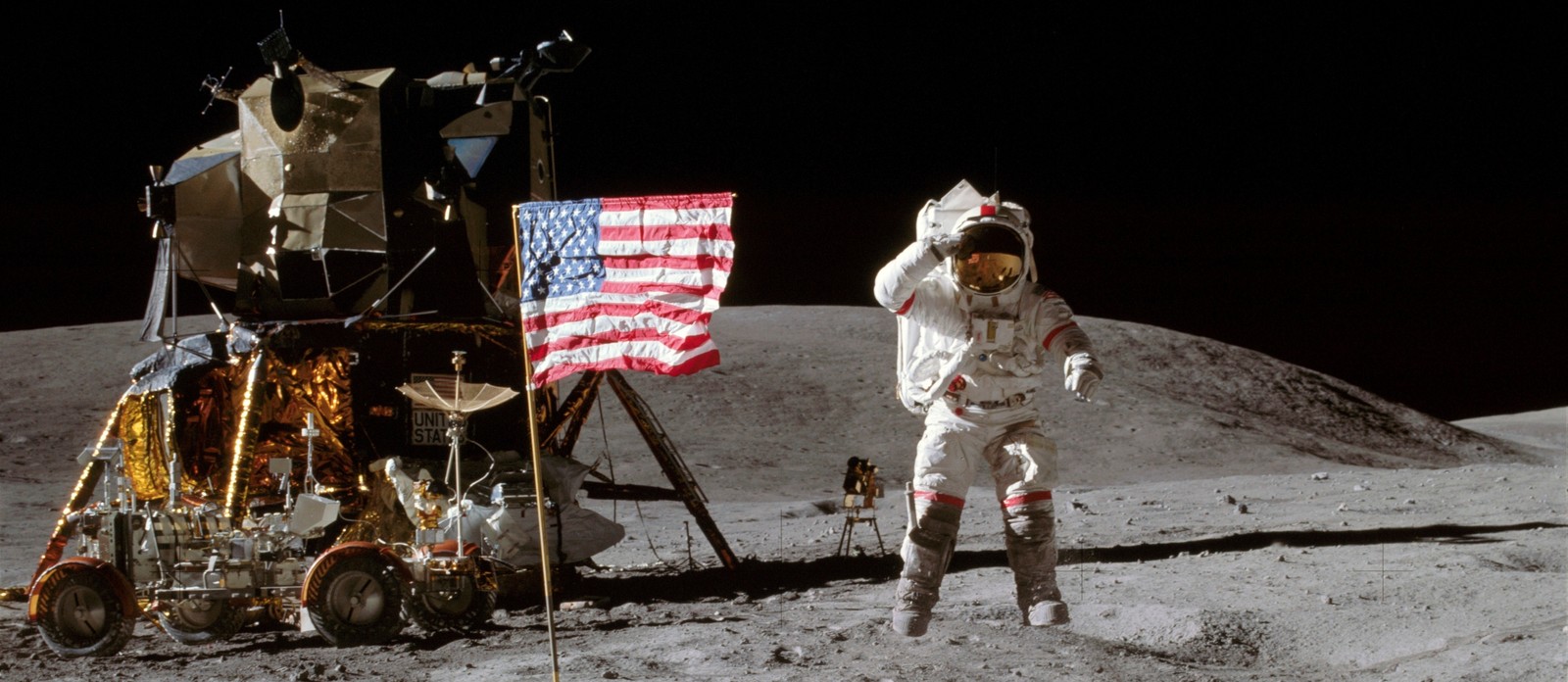
You probably never realized that NASA, the same agency that revolutionized space travel back in the sixties and seventies, is also responsible for the microchips in your favorite electronics, the alarm that warns you of fire, the sensor that lets you take a quick selfie on your phone , among other everyday inventions. Ready to rediscover them?

1
Microchip

Image: Laura Ockel

Before microchips, computers relied on glass vacuum tubes that were large, fragile, and too heavy for a spacecraft. To solve this, NASA, during the moon race in the 60s, made a massive bet on a new invention called the integrated circuit, which packed complex electronics onto a tiny sliver of silicon. While these early "microchips" were very expensive and unproven, the Apollo program committed to buying over 60 per cent of all chips made in America. This guaranteed market gave companies like Fairchild Semiconductor, a Californian technology company, the support they needed to perfect the tech and lower the costs. NASA's support as the principal customer for microchips helped the digital revolution happen much sooner than expected. Today, that technology is within almost every electronic device, from the microwave to the laptop.

2
Smoke Detector

Image: Yosuke Ota

They are among the most important safety tools in our homes, and most people don't know their modern version was shaped for a 1970s space mission. Truth is, the first electric smoke detector was invented in the 1930s by Swiss physicist Walter Jaeger, almost by accident, while working on a gas detection device. Early smoke detectors worked, but they were often too expensive or sensitive for everyday homes.

In the 1970s, NASA teamed up with Honeywell Corporation, a North Carolina-based technology and manufacturing company, to improve the design for Skylab, the first U.S. space station. Astronauts needed an alarm that could detect a real fire without constantly reacting to harmless gases inside the station's tight living quarters. So they added an adjustable sensitivity and long-lasting backup batteries, creating the "nuisance-free" smoke alarm we still use in our homes today.

3
Cell Phone Camera

Image: JD Mason

In the 1990s, NASA's Jet Propulsion Laboratory needed to shrink cameras down so they could fit on small spacecraft without draining the battery. Engineer Eric Fossum invented the image sensor, which put all the camera's functions onto a single tiny chip , making cameras much smaller and more efficient than ever before.

In 1995, Fossum founded the company Photobit to bring this space-age sensor to the commercial market. Today, this technology allows smartphones to take high-quality photos while staying thin enough to fit almost everywhere, making it the most used camera tech in the world.

4
Cordless Tools

Image: rakhmat suwandi

In the early 1960s, Black & Decker developed the first cordless electric drill for commercial use. NASA later recognized the potential and, in 1965, contracted Black & Decker to adapt and refine this technology for the Apollo program, creating a lightweight, battery-powered drill that could operate in the moon's harsh environment and in zero gravity.

But that wasn't all. To make it work for space, they had to improve a specialized motor and smart software that didn't drain the battery too fas t. By the late 1970s, the Dustbuster, the first cordless vacuum, was created, along with the improved battery-powered tools we still rely on today.

5
Memory Foam

Image: Kier in Sight Archives

Have you ever wondered why your mattress is smart enough to remember its original shape? Memory foam is a type of high-density polyurethane foam that softens when heated and under pressure. When you lie down on it, it molds to your body, and when you get up, it slowly returns to its original shape. That's what the "memory" part is about.

NASA developed memory foam in the 1960s to improve seat cushioning and crash protection for airline pilots and passengers, and later adapted it to protect astronauts from "G-forces" during space travel . As it reacted to body heat, the foam softened and molded perfectly to a person's frame, absorbing shock on impact. It took about twenty years to reach the public; the first memory foam mattress didn't hit the market until the early 1990s by companies like Tempur-Pedic and Fagerdala World Foams.

6
Sneaker Air Cushioning

Image: Damian Barczak

Ever wondered how Nike Airs were created? The truth is that the bounce in many modern sneakers is actually a product of the space industry. A NASA engineer named Frank Rudy, who worked on the Saturn and Apollo rocket engines, was introduced to a process called blow rubber moulding, used to create sealed, pressurised membranes for aerospace applications. He realized this same process could be used to trap gas inside a shoe sole.

In 1977, he brought this idea to Nike, and this led to the creation of the Nike Air Tailwind in 1978, the first shoe to feature this space-inspired cushioning. Today, air-cushioned soles are a standard, using the same aerospace tech to protect joints in every step.

7
Water Filters

Image: RephiLe water

In 1963, NASA faced an important challenge for the Apollo program: keeping drinking water pure for long missions without using heavy chemicals. To solve this, they pioneered a system that used silver ions to kill bacteria and activated carbon to remove pollutants. This allowed astronauts to have clean water stored for weeks.

By the 1970s, NASA shared this technology with the public, leading to the creation of companies like Aquaspace. These days, this same silver-ion and carbon tech is used inside household water pitchers and refrigerator filters to remove contaminants.

8
Scratch-Resistant Lenses

Image: Alireza Hashemi

In the 1970s, NASA scientist Ted Wydeven of the Ames Research Center was working on a spacecraft water purification system when he coated a filter with a thin plastic film using an electric discharge of an organic vapor. The result protected the plastic surfaces of aerospace equipment from scratching.

This film made plastic up to ten times more scratch-resistant than earlier materials. In 1983, Foster-Grant licensed the technology and used it to produce scratch-resistant lenses for sunglasses and eyeglasses, introducing space technology to our daily lives.

9
Ear Thermometer

Image: Artur Solarz

NASA technology and modern healthcare are surprisingly close. It turns out that the same tech used to measure the heat of distant stars is now in our medicine cabinet . In the 1980s, NASA developed special infrared sensors because scientists evidently couldn't place a physical thermometer on a planet millions of miles away. These sensors worked by "reading" invisible heat energy from a distance.

By 1991, a medical technology company called Diatek teamed up with NASA to bring this space tech into daily medicine. They realized the human eardrum also emits infrared heat, and that could work as a perfect window to measure our body temperature. This partnership resulted in the first handheld ear thermometer, making fever checks much more comfortable and easier.

10
Super Soaker

Image: Michael Starkie

You probably assumed that the world's most famous water gun was created in a toy lab. It was actually invented in the home workshop of NASA engineer Lonnie Johnson. In 1982, while working on a new heat pump that used water instead of refrigerant, a nozzle he was testing shot a powerful stream across his bathroom.

Johnson realized its toy potential and licensed his "Power Drencher" design to the toy company Larami. It was renamed to the Super Soaker in 1991, and it uses the same air-pressure principles Johnson applied to spacecraft systems.

Culture Culture 5 min read

LEGENDS OF THE ROAD

Let's Check Out 10 of America's Most Iconic Cars!

American cars have an unquestionable charm that's difficult to put into words. But it is worth trying! Whether you're a car fan captivated by engines or someone who simply appreciates the overwhelming beauty of legends like the Ford Model T or the powerful Dodge Charger , you'll enjoy this article, as the history and features of these cars are deeply linked with American culture. Join us on this road trip through these 10 iconic American car models that have shaped automotive history. Some might agree with our choice for the tenth spot, while others may not ; we want to hear your opinion!

1
Ford Mustang

Image: VizAforMemories

Often referred to simply as "the Mustang ," this series manufactured by Ford is one of the quintessential American automobiles.

The Mustang was born in 1964 and has been in production ever since (with the Mustang II being produced from 1974 to 1978), as its popularity transcends borders. Its smart, sporty design has evolved over the years, but it has never lost its pony car label.

Loved by many for its wide range of engine options and powerful performance, the Mustang is more than just a car; it's an icon of American automotive culture. Remember the Mustang GT 390 in the 1968 movie Bullitt ?

2
Chevrolet Corvette

Image: Abdul Bakar

With its iconic two-seater design and a very rich history, the Corvette is a legend that could not be left out of this list.

The Corvette was introduced by Chevrolet in 1953 , some 70 years ago! However, it has aged like fine wine. Far from being out of style, this classic remains a top choice for car enthusiasts worldwide, blending performance, design, heritage, and status.

And as if all that wasn't enough, the Corvette has multiple victories in prestigious endurance races such as the American Le Mans Series .

Fun fact: the Corvette gets its name from a small, fast type of warship!

3
Jeep Wrangler

Image: cody lannom

Famous for its off-road prowess, the Jeep Wrangler is definitely an icon.

The origin of this car perfectly explains its capacity. The Jeep Wrangler has its roots in the Willys MB , a military vehicle used during WWII, renowned for its rugged durability. Of course, the Wrangler has evolved into the version we know today, blending practicality and durability, and displaying features like removable doors .

The Jeep Wrangler's off-road expertise has earned it a global reputation that is hard to beat. As you might already know, a rugged Jeep Wrangler YJ appears in the iconic Jurassic Park . After all, no other car could handle dinosaurs!

4
Ford Model T

Image: Philip Schroeder

Who could forget the iconic Ford Model T ? A car instantly recognizable to everyone, whether you're a car lover or not.

Ford began producing the Model T in 1908 and ceased production in 1927. But in less than 20 years, over 15 million units were made! This incredible feat makes the Model T one of the best-selling cars in history.

As if its beauty wasn't enough, the T was also renowned for its durability and affordability , specifically designed to be accessible to the average American. Do you want to know how much the "Tin Lizzie" cost when it started revolutionizing the streets in the early 20th century? Initially, it was priced at around $850 , but its price even dropped in the years that followed!

5
Cadillac Escalade

Image: Craig Marolf

When Cadillac decided to enter the SUV market, it did so in a big way. In 1998 , the brand released one of its most acclaimed models: the Cadillac Escalade . Imposing from every angle, this SUV has a luxurious design both inside and out, with the quality and style that characterizes the brand.

Beyond its powerful performance, the Escalade distinguishes itself with leading technology . This includes multiple USB ports, high-quality sound systems, and advanced driver assistance systems.

With all these advantages, the Escalade became one of Cadillac's best-sellers and also a popular choice in the luxury SUV market!

6
Ford Thunderbird

Image: Maxim Simonov

In 1955 , Ford spiced up the car scene with their Ford Thunderbird , a stylish two-seat sports car. Quickly becoming an icon, this model was Ford's answer to Chevrolet's Corvette.

The " T-Bird ," as it came to be known, evolved over its production run. In 1961, a significant transformation occurred: it became a four-seat model. With its new sleek design, the Thunderbird earned a new nickname and became the " Bullet Bird ."

Over the years, Ford produced 11 generations of the Thunderbird, each with unique features. Unfortunately, Ford decided to stop production of the T-Bird in 2005 due to declining sales. However, its exceptional qualities and profound impact have made it one of America's classics.

7
Dodge Charger

Image: Tim Meyer

A legendary American muscle car , the Dodge Charger appeared in 1966 , right amid the dynamic 60s and 70s era.

You probably remember the first-generation Dodge Charger, which featured hidden headlights , something quite remarkable in its time! Its V8 engines and high-performance capacities also made it a star in the TV series " The Dukes of Hazzard ."

With many variations over the years, Dodge continues to produce the model to this day, always updating its technology but maintaining some of the main features of its iconic design. Are you among the many fans of this amazing model?

8
Pontiac GTO

Image: Vitali Adutskevich

If we talk about muscle cars , we cannot forget the Pontiac GTO . Born in 1963 , it became an instant hit, produced for eleven years until 1974 . It also made a comeback from 2004 to 2006, creating a new chapter in its history.

Considered by many as the perfect muscle car, the Pontiac GTO stood out for its powerful V8 front engine and its attractive design, which included dual exhausts and hood scoops. It was also available in a wide range of colors.

If you're wondering about its name, the abbreviation "GTO" stands for "Gran Turismo Omologato," Italian for "Grand Touring Homologated."

9
Chevrolet Camaro

Image: Tim Meyer

Classified as a pony car , the Camaro appeared in 1966 as Chevrolet's card to compete with the Ford Mustang. While maintaining its efficiency, speed, and powerful performance , the Chevrolet Camaro has seen its engines evolve across generations, ranging from V6s to V8s.

According to the legend surrounding its creation, the name of this famous model was conceived by Chevrolet's merchandising manager, Bob Lund. While flipping through an English-French dictionary, he found the French word c amaro , which translates as "friend, pal, or comrade." And that was exactly what the brand was looking for in its new pony car: to be a reliable companion for its owner.

10
Tesla Model S

Image: Jp Valery

Despite being a relatively new brand, Tesla has proven that it's more than capable of creating iconic cars.

A good example is the Tesla Model S , an all- electric luxury car that's relatively young, debuting in 2012 . Upon its introduction, it caused a sensation with its spectacular design and technology .

One of the most unique features of this model is its incredible speed. It can accelerate from 0 to 60 mph in 2.3 seconds! That's the definition of fast. It is also capable of traveling up to 370 miles on a single charge , highlighting its efficiency among electric cars. Of course, the vehicle's functions are controlled through an elegant touchscreen display. Can you imagine yourself driving this model?

Explore more American facts

Choose your favorite category!

General
General

As American as apple pie—the very best America has to offer!

Culture
Culture

Delve into the astounding richness of American lore.

Geography
Geography

Hop in and explore vast and diverse American landscapes.

History
History

Discover the key moments that shaped the United States.