Geography Geography 5 min read

WOULD YOU VENTURE INTO THESE FORSAKEN PLACES?

Urb-Ex: 10 Spots To Experience The Thrill Of Exploring Abandoned Places

Image: Christian Paul Stobbe

Short for Urban Exploration, Urb-Ex is the act of exploring abandoned buildings. Whoever walked through a once-inhabited and now-deserted place knows the strange allure that this activity generates.

America is crawling with that kind of place. Somewhere, somehow, an asylum, a space shuttle tank, a ghost ship, a school, a bunker, and just about every type of structure that can be built, has been abandoned. Read on and discover 10 of these haunting locations.

1
Edinburgh Manor, Iowa

Image: Yener Ozturk

Thanks, in no small part, to horror movies and documentaries, asylums make great abandoned places. So, we might as well start our list with Edinburgh Manor , a once-bustling institution located in Iowa. Built in the early 1900s, this huge building served as a home for the mentally ill, the elderly, and the indigent, until 2010.

Today, Edinburgh Manor continues to harbor visitors but in the form of thrill chasers who seek to experience the paranormal within the mysterious walls of the immense asylum, even daring to stay the night on its premises. Would you dare to be one of them?

2
Dinosaur Mini Golf Ruins, California

Image: Dan Meyers

Dinosaurs and golf are two entirely different things. But in the cultural melting pot that is California, it seemed like a good idea to build a dinosaur-themed mini golf course in the town of Apple Valley, complete with 15-foot-tall creatures rendered in concrete.

Alas, the economics of the whole endeavor proved too much for its creator, who was forced to abandon his dream to the desert. Today, the deteriorating remains of these dinosaurs can still be visited, as an attraction that lures travelers off the highway.

3
Space Shuttle Fuel Tank, Green Cove Springs, Florida

Image: SpaceX

Picture a humongous 154-foot-long space fuel tank sitting alone in the middle of nowhere. For many years, this tank stood on display at the Kennedy Space Center. But after the Space Shuttle program ended in 2011, NASA announced that they would remove the test fuel tank to make room for the retired space shuttle Atlantis, along with a new exhibition facility. The tank was auctioned off and sold to the Wings of Dreams Aviation Museum in Keystone Heights, Florida.

It took a 200-foot barge, two tugboats, and cranes to transport the massive tank to Green Cove Springs, where it would be temporarily held before moving to its final destination. But the logistics of moving such a massive structure proved difficult, and that temporary staging site seems to have become the fuel tank’s final home.

4
Meigs Field Tower and Terminal, Illinois

Image: Mads Eneqvist

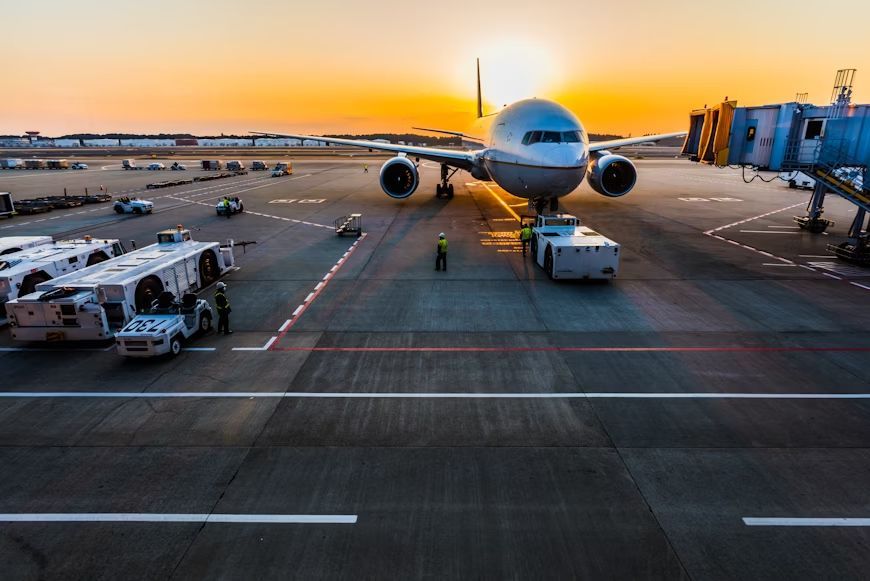
An abandoned airport ranks high amongst the personal goals of any urban explorer worth its salt. And, to anyone close to Chicago, Meigs Field certainly delivers. Built on an artificial peninsula, the airport functioned as such from 1948 to 2003.

Today it no longer works as an airport but the stubby control tower is still very much recognizable as such, standing watch over the breezy park and its native grasses and birds.

While the tower is closed to the public, the old terminal building is not; it houses a Parks Department Visitor’s Center.

5
Old Zoo Nature Trails, Texas

Image: Matthew Cabret

A long-abandoned zoo repurposed as a hiking trail? Sign me up! The Cisco Zoo in rural Texas functioned as such for only a few years starting in the 1920s until it closed its doors due to a poisoned bear, a mysterious deer death, and other factors.

Visitors can walk through the rusted enclosures and concrete shelters where the animals were once kept, and even find the remains of what were once offices used by zoo staff. The ruins form an eerie backdrop to an otherwise tranquil 1.5-mile track still in the shadow of the dam.

6
Redstone Coke Ovens, Colorado

Image: Nadia Jamnik

Picture a mysterious "town" made up of several lines of man-made caves of equal dimensions, with open entrances like dark mouths. Now place it in a mountainous terrain, in the middle of nowhere. Welcome to Colorado Fuel and Iron coke ovens , in Coal Basin.

Built in 1899, the 249 ovens worked only for a few years, until 1908. In recent decades, the site was recognized as a historic one, and nowadays, many ovens remain intact and open to the public.

7
Black River Ghost Ship, Ohio

Image: zhao chen

Another high-ranking site in the books of any urban explorer is a ghost ship . Located on the banks of the Black River outside of Cleveland, lies a bit of a nautical mystery for the residents of Lorain, Ohio. Sinking into the muddy water along the shore and listing to one side, rusting away a little more each season, is a 90-foot-long Canadian automobile ferry that mysteriously appeared docked under the bridge sometime around 2003.

For the last 20 years, the ship has remained where it dropped anchor all those years ago. No one knows what will happen to the ship. But, for now, it serves as a decaying piece of maritime history that is well worth the walk to the top of the bridge in Lorain to view.

8
Lando School, South Carolina

Image: Evgeny Matveev

Going back to your former school as an adult is a recurring dream for many. Going back to your former school and walking through its ruins is a slightly less common dream, but it is also known to happen. And, if you went to school before the year 1955 in the Lando Schoolhouse in South Carolina, you can live the dream.

The school ruins feature classrooms, an auditorium, and balcony seatings above, all on three floors full of eerie corners, dusty blackboards, and forgotten tables. Quite creepy, right?

9
Abandoned Castle Video Games, South Carolina

Image: Chris Anderson

A defunct casino building fashioned as a castle, complete with a stone exterior, an arched wooden door, a looming knight statue, turrets, and other cliché castle features. It doesn’t get much better than that.

Castle Video Games was a video gambling center in the late 80s and early 90s until the Carolina Supreme Court ruled video gambling illegal, thus shutting the casino castle doors forever.

10
Camp Hayden, Washington

Image: Greg Panagiotoglou

Bunkers are gloomy places by design, with very little room for windows, if any, and an oppressive atmosphere. Now, imagine being in a World War II abandoned bunker at the end of a thickly forested road inside the Salt Creek Recreation Area west of Port Angeles, Washington.

One of seven locations in Washington’s system, this bunker featured a fire control radar and harbor entrance radar. Constructed of steel-shielded concrete, the structure was designed to withstand a direct hit. All of the bunkers still stand, and portions of the interiors are accessible to explorers.

History History 3 min read

The Westward expansion

Was the Wild West really wild? 10 myths debunked

Image: Cayetano Gil

The American West has been so romanticized and misrepresented in movies, TV shows, books, and pop culture that we might not realize what’s truth and what’s myth. We have come to think of it as a place of both opportunity and chaos , with robbers running rampant and settlers constantly fighting with Native Americans. But was this true? Is all we know about the Wild West a tall tale? Let’s find out!

1
The Wild West was wild

Image: Dominique Hicks

Life in the West certainly wasn’t as chaotic and unruly as Hollywood would have us believe. Most of the challenges experienced by the people were those of any settler in a distant place: hard labor, harsh weather conditions, loneliness, petty thefts, and uncertainty. Dangerous conflicts certainly arose, but they were not a daily occurrence.

2
Gold was easily found

Image: rc.xyz NFT gallery

Beginning in the year 1848, gold discoveries inspired a series of rushes that contributed to the Westward expansion, but fewer people actually became rich from the so-called boom. Gold in large quantities was rare to come by , and the overpopulation of prospectors diminished the chances of gathering enough gold to make the labor worth it. In addition to this, shopkeepers demanded outrageous food prices, which consumed the little wealth that prospectors managed to gather.

3
Wild West towns were lawless

Image: Sarah Lachise

While they had their fair share of gunmen and robbers, towns in the Wild West had lower violence rates than big cities . Following the law was essential for the new settlements to thrive, and public order was maintained through the joint effort of marshals, sheriffs, Army soldiers, and private citizens. While the bad reputation of some towns was justified, they were the exception rather than the norm.

4
There was endless free land for the taking

Image: Thomas Bush IV

The West was vast, but it was certainly occupied . Thousands of Native Americans were forcefully displaced, confined to reservations, or forced to assimilate to make way for those arriving. Many settlers were not aware of, nor complicit in this injustice —especially immigrants coming from afar— but others believed they were entitled to the land, even at the cost of native lives.

5
Everyone owned a gun

Image: Luis Domenech

Pistols and rifles have become synonymous with the Wild West, but they weren’t as common as one might think. While they were a useful protection on the range or while travelling, they were usually forbidden in town , so cowboys and travellers had to check them in the sheriff’s office upon arrival.

6
Settlers and Native Americans fought constantly

Image: Jon Sailer

Native Americans who were not displaced or confined to reservations were not necessarily hostile towards settlers. In fact, many of them were open to coexistence and trade with communities that didn’t pose a threat . The majority of their confrontations were with government forces, usually as a result of broken treaties and empty promises.

7
Cowboy hats were the norm

Image: Olivier Piquer

Stetsons, or cowboy hats, might be the quintessential headgear of the modern cowboy, but they were not the standard in the Wild West. Bowler hats, Army caps, and Mexican-style sombreros were far more common choices at the time. In fact, the Stetson brand wasn’t established until 1865.

8
Violence was the main cause of death

Image: United Artists, Public domain, via Wikimedia Commons

The Wild West was not as unruly as it is portrayed, and the chances of dying in a duel or a highway robbery were not as high as one would imagine. The main cause of death was disease , either caused by the harsh circumstances, the lack of sanitary conditions, or the spread of viruses and infections before the advent of modern medicine.

9
The Pony Express was the main communication service

Image: Paramount Pictures, Public domain, via Wikimedia Commons

The Pony Express and its riders revolutionized communication in the Wild West. Beginning operations in 1860, it reduced the travel time of messages between the East and West coasts to about ten days . However, its existence was short-lived: After merely 18 months of operations, the company went bankrupt when a telegraph line was established.

10
Banks in the Wild West were easy targets for robbers

Image: Stefan Münz

Movie westerns would have us believe that bank robberies were a daily occurrence in the Wild West, but nothing could be further from the truth. Though there were heists carried out by famous outlaws, bank robberies were far from common , and train and stagecoach robberies were more likely to happen.

Culture Culture 5 min read

Heroines of the American Revolution

Discover 10 amazing Founding Mothers who often get forgotten

Image: Gerald R. Ford Presidential Museum, Public domain, via Wikimedia Commons

Stories about the American Revolution are usually about battles, generals, and soldiers. Since most women did not fight in battles, they are often left out of this period in history. But they did contribute to the struggle for American freedom, just in less conventional ways. From influential politicians' wives to journalists, artists, and spies, this article about revolutionary heroines is a reminder that women's patriotism and bravery also helped to win American independence.

1
Abigail Adams

Image: Christian Schussele, Public domain, via Wikimedia Commons

Women in the 1770s were not supposed to be concerned about politics. But Abigail Adams, wife of the second president of the United States, talked and wrote about politics with extraordinary insight. She was one of the earliest supporters of independence, and her ideas influenced the Founding Fathers.

Often ill as a child, Abigail educated herself in her father’s library. Her studies prepared her for a life of public service in which she fought for freedom from England and women’s rights, and stood firmly against slavery. She even wrote the famous "Remember the ladies" letter 150 years before women were allowed to vote. Abigail’s influence over John Adams was so great that some rival politicians nicknamed her "Mrs. President."

2
Mary Katherine Goddard

Image: Thomas Jefferson, Public domain, via Wikimedia Commons

Mary Katherine Goddard was the director of the Baltimore Post Office and one of the world's first female publishers. Her greatest contribution to the Revolution, however, was the printing of the first copy of the Declaration of Independence that included the names of all signatories.

During the war, she ran the Providence Gazette and Maryland Journal , two newspapers that actively supported the American patriots' efforts. Despite the challenges she faced as a woman trying to make her way in a male-dominated society, Mary Katherine Goddard left an invaluable legacy as a pioneering woman in journalism and federal government work.

3
​​Martha Washington

Image: Billy Hathorn, CC0, via Wikimedia Commons

During her lifetime, she was known as Lady Washington, but Martha Dandridge Custis Washington will always be remembered as the first in a long line of first ladies of the United States. Martha married George Washington in 1759 and would be by his side in private and public life, even joining him on the battlefield.

While Washington was in office, Martha was in charge of the Presidential galas held to entertain members of the administration and foreign dignitaries. Although at that time she had no official duties or title, her warm temperament and classy poise laid the foundations for a key role that continues to this day.

4
Esther de Berdt Reed

Image: National Portrait Gallery, Public domain, via Wikimedia Commons

Even though Esther was born and raised in England, she sided with her husband, an aide to General Washington, in the American fight for independence. Five years into the war, Esther felt it was time for women to support the Continental troops in a more active way.

Esther's group, the Philadelphia Association, went door to door to ask for contributions. They ended up raising a large sum of money, which they used to supply soldiers in desperate need of provisions. Eventually, they stitched over 2,000 shirts by hand. Esther's vision and the group's dedicated efforts helped remind the men fighting the American Revolutionary War how much they were appreciated.

5
Elizabeth Schuyler Hamilton

Image: Ralph Earl, Public domain, via Wikimedia Commons

Elizabeth Hamilton, sometimes called "Eliza" or "Betsey," was the daughter of one of New York State's wealthiest and most politically influential families. In 1780, Eliza married Founding Father Alexander Hamilton. During their more than 20 years of marriage, she helped Hamilton write his letters and newspaper contributions and accompanied him on numerous historic events.

Strong-willed but caring, Eliza would devote her long widowhood to charity, helping to found New York's first private orphanage. In addition, she worked tirelessly to spread her husband's legacy and ensure that Hamilton had the place he deserved in American history.

6
Patience Lovell Wright

Image: William Faden, Public domain, via Wikimedia Commons

Did you know that during the American Revolutionary War, the Patriots had an American spy in the heart of King George's court? More interestingly, it was a woman! Famous for molding incredible wax sculptures, Patience Lovell Wright had to move to England after her New York studio caught fire.

Her friend, Benjamin Franklin, introduced her to London society. Soon enough, word of her talent reached King George III, who invited her to Buckingham Palace. But she remained loyal to her "dear America," as she called it, and when trouble started back home, Patience decided she could help America's fight for independence by providing decisive information her prominent clients revealed while posing for her.

7
Mercy Otis Warren

Image: John Singleton Copley, Public domain, via Wikimedia Commons

At a time when women were expected not to air their views on political issues, Mercy Otis Warren was a poet, playwright, and activist.

During the American Revolution, Warren not only maintained a close relationship with leading political figures such as George Washington, Thomas Jefferson, and John Adams, but she also became a historian and outspoken commentator, as well as the leading female intellectual of the early republic.

8
Penelope Barker

Image: Attributed to Philip Dawe, Public domain, via Wikimedia Commons

In the 18th century, women had no public outlet to express their convictions or to take a stand. Rebellion was considered men's business. Yet, the courageous Penelope Barker proved to everyone that women could contribute a great deal to the efforts for independence.

In 1774, in Edenton, North Carolina, a group of fifty-one women signed a declaration by Penelope, stating they would not drink tea or wear clothes made in England. The British press called it the "Edenton Tea Party" and ridiculed them. But soon enough, women all over the colonies were boycotting British products. Thanks to Penelope Barker's declaration, every woman in America discovered a smart and original way to rebel against the colonists.

9
Mary Norris Dickinson

Image: Prateek Katyal

The daughter of wealthy Pennsylvania Quakers, Mary Norris Dickinson was well-educated and owned one of the largest libraries in the colonies. She believed in a life without violence and in equal rights for men and women, ideas that she did not shy away from voicing in public to the dismay of some more conservative individuals.

For her fundamental role in political thought, influence on other women, and involvement in events related to the Constitutional Convention, the wife of Founding Father John Dickinson definitely deserves her place in history.

10
Phillis Wheatley

Image: Phillis Wheatley, CC0, via Wikimedia Commons

Brought to America as a slave, Phillis Wheatley became the first African-American author. Her poems celebrated learning and virtue and described a yearning for freedom. She also wrote a number of patriotic verses on subjects like the peace treaty of 1783 that ended the American Revolutionary War.

Her most famous piece was a poem to George Washington, in which she refers to him as "first in peace." The poem was published several times during the war to promote the Patriot cause, and Washington liked it so much that he asked to meet her. A true patriot and later a symbol for the abolition of slavery, Phillis Wheatley will always be known as a key contributor to freedom.

Explore more American facts

Choose your favorite category!

General
General

As American as apple pie—the very best America has to offer!

Culture
Culture

Delve into the astounding richness of American lore.

Geography
Geography

Hop in and explore vast and diverse American landscapes.

History
History

Discover the key moments that shaped the United States.