General General 2 min read

Shocking the neighbors

These things are not as common outside the US
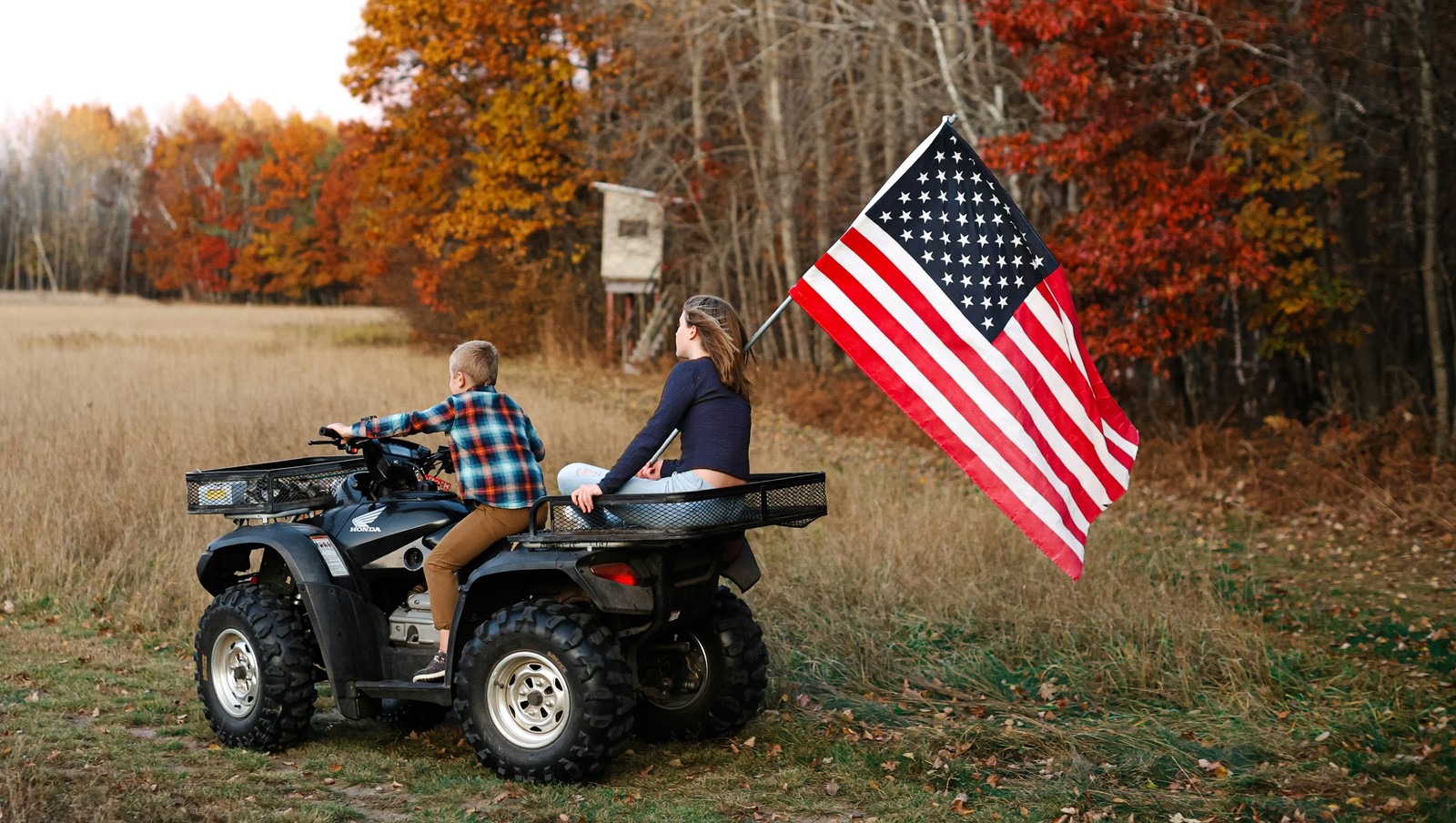
Image: Jennifer Kalenberg

America is a land of unique customs and rituals, many of which leave outsiders scratching their heads. From super-sized food to partying habits, these traditions reflect the country’s history, creativity, and widespread patriotism. Here are 10 American practices that are often admired, misunderstood, or simply confusing to people abroad.

1
Tipping everywhere

Image: Sam Dan Truong

Americans tip for almost every service, from coffee to taxis. The standard is 15–20% of the bill. Unlike most countries where service charges are included, tipping is often expected and essential for workers’ income.

Restaurants, bars, and even hair salons rely on it. Since this is not as common elsewhere, tourists often miscalculate or under-tip, causing awkward interactions.

2
Super-sized portions

Image: Nima Naseri

Restaurant portions in the U.S. are notoriously large, often doubling or tripling international standards.

This stems from both historical abundance and marketing strategies that equate quantity with value. All-you-can-eat and combo meals reinforce the "more is better" mentality.

3
College tailgating

Image: Josh Applegate

Fans arrive hours before football games, grilling and partying in parking lots. Tailgating mixes sports passion with social gatherings, showing regional pride and university loyalty.

This uniquely American tradition often shocks outsiders with the devotion shown to local sports.

4
Black Friday mania

Image: Artem Beliaikin

Originating in Philadelphia in the 1960s, Black Friday marks the start of the holiday shopping season. It’s a consumer spectacle tied as much to capitalism as to tradition.

Retailers use extreme discounts to generate sales; the frenzy often leaves international observers bewildered by the ensuing chaos.

5
Wearing patriotic clothes year-round
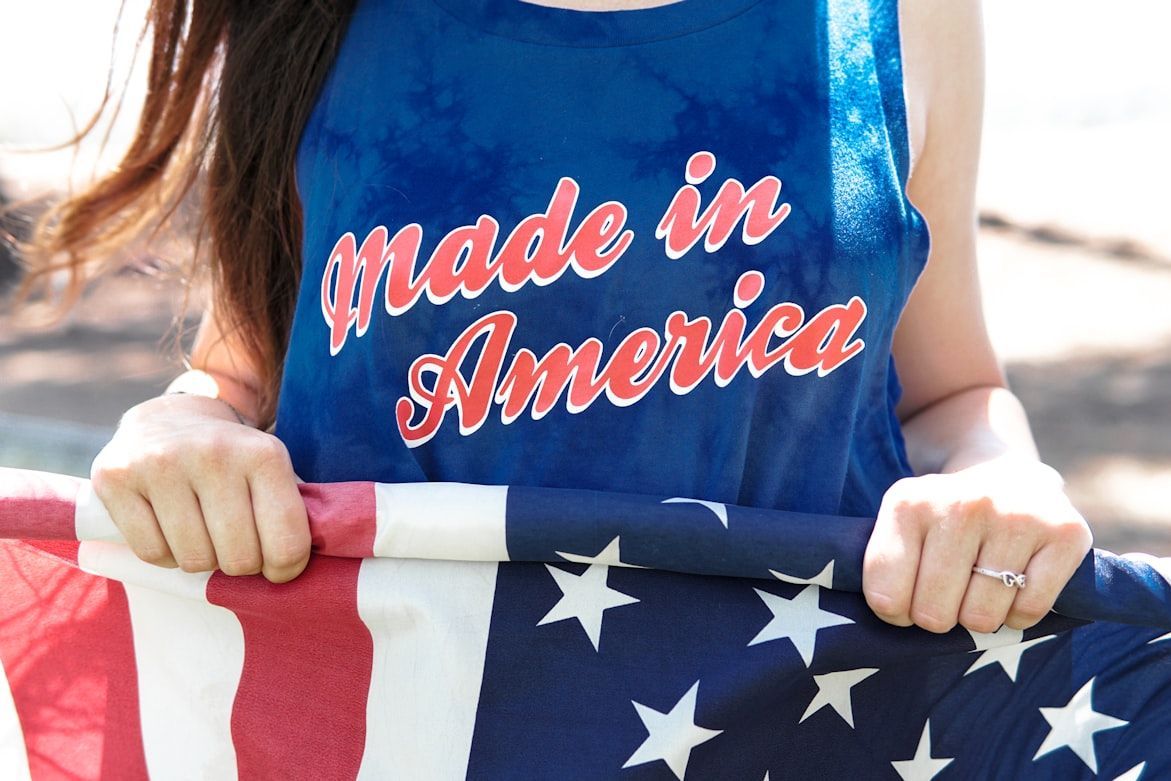
Image: Shari Sirotnak

Americans often wear flag-themed clothing even outside national holidays. The practice intensifies during major sporting events, but displaying the flag as apparel reflects civic pride in everyday life.

For many outsiders, wearing a flag as clothing seems unusual, yet this custom embodies American individualism and patriotism.

6
Driving everywhere

Image: why kei

Unlike many countries with extensive public transit, Americans rely heavily on cars. Suburban expansion and urban planning favor personal vehicles.

Gas prices, infrastructure, and cultural identity reinforce driving as normal. Tourists accustomed to walking or trains find long drives mandatory, and as a result, the layout of U.S. cities is unusually spread out.

7
High school proms

Image: Long Truong

Proms evolved in the 20th century as a rite of passage. Teenagers dress formally for dances with elaborate rituals, including crowning kings and queens.

While other countries almost always have some form of graduation celebrations, the formality, expense, and emphasis on dating customs in American proms often confuse foreigners.

8
Obsession with college sports

Image: Riley McCullough

Universities dominate cities with massive stadiums and fanfare. College football and basketball inspire loyalty rivaling professional leagues.

The intensity is unusual internationally, where professional sports typically overshadow collegiate athletics.

9
Yard sales

Image: Clem Onojeghuo

Communities host sidewalk sales for secondhand goods. This tradition emphasizes recycling, community interaction, and bargain hunting.

This casual sale of used goods in public spaces is uncommon in many countries, making it a uniquely American practice.

10
Spelling bees

Image: Brett Jordan

Americans hold intense competitions where kids spell increasingly difficult words aloud. Spelling bees originated in the 19th century as educational contests, promoting literacy and vocabulary skills.

The National Spelling Bee, held annually since 1925, draws contestants nationwide and often surprises outsiders due to English’s tricky spelling rules.

General General 4 min read

Wave them with pride

Honoring the states: learn about the history of 10 state flags

Image: Tina Chelidze

From the 13 colonies to the consolidation of the 50 states, America’s journey of growth and unity is remarkable. Each state is unique, with distinctive features, mottos, and, of course, flags. Each flag tells a story and honors the rich history and heritage of the state it represents. Among the 50 state flags, we’ve chosen 10 state flags to learn about their design, elements, and the history they represent.

1
New York

Image: Clker-Free-Vector-Images

New York was one of the 13 original colonies and is one of the most populated states today. Its flag, with a vibrant blue in the background, features a sun symbol, one supporter on each side, and the state’s inspiring motto "Excelsior," meaning "ever upward."

The scene in the coat of arms paints a picture of the Hudson River flanked by Liberty on the left, and Justice on the right. Topping it all off is a bald eagle, always majestic, perched atop the world. Powerful, isn’t it?

2
California

Image: Clker-Free-Vector-Images

California was the 31st state to be admitted to the Union (1850) and the history behind its flag has elements present in previous models of banners used by what we know today as Mexico.

This flag was first hoisted in 1846 after American settlers in the territory fought for its independence. Finally, it was recognized as official in 1911.

The flag depicts a grizzly bear —also the official state animal— and a lone red star symbolizing previous attempts to gain independence.

3
Indiana

Image: Clker-Free-Vector-Images

Indiana’s flag was designed by Paul Hadley and approved as the state flag in 1917 after the Daughters of the American Revolution held a flag design contest.

Over the dark blue flag stands a golden torch surrounded by 19 stars . The 13 stars on the outer circle represent the 13 original colonies, while the five stars in the inner circle were added to symbolize the next five states that joined the union, Indiana being the 19th.

The torch? You guessed it right, it represents liberty and enlightenment.

4
Louisiana

Image: Clker-Free-Vector-Images

Blue background abounds among the official state flags and it’s no surprise since it’s one of the national colors. Louisiana’s flag is not the exception.

This flag is the only one to depict a pelican nurturing its offspring in a nest. What is curious about it is that the pelican, an animal that symbolizes devotion to progeny, is crying tears of blood, which represents sacrifice. Underneath, belted in a white ribbon, the state’s motto: "Union, Justice, and Confidence".

5
New Jersey

Image: Clker-Free-Vector-Images

New Jersey’s flag is the only state flag to have a buff background , although it is wrongly depicted as yellow most times. This background color represents the uniform worn by soldiers from New Jersey’s regiments in the Revolutionary War.

In the center of the flag, there is a coat of arms supported by Liberty and the goddess Ceres, representing agriculture. Above the coat of arms, a horse’s head that stands for strength, and, below it, a helmet that symbolizes sovereignty.

6
Arkansas

Image: Clker-Free-Vector-Images

Arkansas’s flag depicts a complex symbolism using well-known elements: a diamond shape, with 25 stars on the outer part, the state’s name in the middle, one star above, and three stars below.

Arkansas was the 25th state to join the union, hence the stars around the diamond. The star over the word "Arkansas" represents the Confederacy to which it was admitted in 1861. The three stars below represent different things: the nations Arkansas belonged to, the Louisiana Purchase, and the fact that it was the third state formed after such purchase. A simple design, yet a complex meaning, don’t you think?

7
Colorado

Image: Clker-Free-Vector-Images

Colorado’s flag is quite simple in its design, although it represents many state elements . For example, the name, a Spanish word that means "red", is symbolized by the red C in the middle. But that’s not all, the letter C also means "columbine" the state flower, represented by the colors blue, yellow, and white. These two last colors also stand for the gold and silver present in the area.

Last, but not least, the letter C stands for "Centennial State" as Colorado became a state in 1876, when the nation was celebrating a century of its independence.

8
Washington

Image: Clker-Free-Vector-Images

Washington is the only state to have a flag with a green background. At the same time, it is the only one to depict a real person . George Washington’s picture is surrounded by a golden ring that reads "The Seal of the State of Washington 1889," the year in which the territory became a state.

The background color refers to the "Evergreen State" while the golden ring represents the wheat areas of the Eastern part of the state.

9
Wyoming

Image: Clker-Free-Vector-Images

This flag was also chosen during a flag design competition held in 1916. It consists of a dark blue background bordered by white and red and, in the center, the silhouette of a bison with the state seal that reads "Great Seal of the State of Wyoming."

Within the seal, the state motto "Equal rights," since Wyoming was the first state to grant women the right to vote. Below the ribbon, a farmer and a cowboy, the main occupations in the state, and two pillars that read "Livestock, mines, grain, oil." And that’s not all, at the bottom, a bald eagle and a star with the number 44, the order of admission to the union.

10
New Mexico

Image: Clker-Free-Vector-Images

Let’s finish this list with what may be the simplest flag of all the 50 states: New Mexico’s. With colors that symbolize the Spanish ruling over the territory, this state flag was adopted in 1925 and it consists of a yellow background with the Zia sun in the center.

The Zia sun is an ancient interpretation of the sun and its design consists of four rays, a sacred number of the Zia. Beautiful, isn’t it?

Culture Culture 4 min read

TIMELESS ACHIEVEMENTS

Celebrate These 10 Extraordinary American Nobel Laureates!

Image: Anastacia Dvi

For many disciplines, being awarded a Nobel Prize is akin to reaching the summit of Mount Everest: it is the highest achievement that many scientists, writers, and world leaders can aspire to. In that regard, we Americans can take pride in knowing that our country has been awarded an extraordinary 400 Nobel Prizes, making us the nation with the most laureates in the world. We have selected ten of these extraordinary Americans in history, in an effort to celebrate and remember their remarkable achievements.

1
Barack Obama

Image: History in HD

We’ll begin with our most recent Laureate President. You’ll quickly notice that many U.S. Presidents have made it to this list, which seems only fitting considering their paramount efforts in maintaining world peace.

In this regard, President Obama is no exception, and in 2009 he was awarded the Nobel Peace Prize for his "extraordinary efforts to strengthen international diplomacy and cooperation between peoples."

2
Al Gore

Image: Markus Spiske

The only American Vice President on this list, Al Gore, received the Nobel Peace Prize in 2007 for his "efforts to build up and disseminate greater knowledge about man-made climate change." Gore has been a long-time advocate for fighting climate change, and his endeavors were featured in the Academy Award-winning documentary An Inconvenient Truth .

Nowadays, Al Gore continues to educate the world about environmentalism and the perils of climate change. In 2021, he addressed the United Nations during their Climate Change Conference.

3
Martin Luther King Jr.

Image: Unseen Histories

No other figure represents the fight for Civil Rights in America as Martin Luther King Jr. does. In 1964, Reverend King was awarded the Nobel Peace Prize for "his non-violent struggle for civil rights for the Afro-American population."

King, who was 35 years old at the time, became the youngest Peace Prize recipient in history. This title is now held by Malala Yousafzai, who was awarded the Prize at 17 years of age, in 2014.

4
Richard P. Feynman

Image: Zoltan Tasi

From his bongo playing to his iconic studying technique, American theoretical physicist Richard Feynman has become a pop culture icon. In 1965, Feynman received the Nobel Prize in Physics alongside Julian Schwinger and Shin'ichirō Tomonaga "for their fundamental work in quantum electrodynamics."

While Feynman was by no means the first (nor will be the last) American Nobel-winning physicist, his recognition is still remembered fondly by the scientific community. With the money from the award, Feynman and his wife purchased a beach house in Baja California, Mexico.

5
Bob Dylan

Image: weston m

Bob Dylan is known as "The Voice of a Generation" and with good reason: his songs of protest and insightful lyrics have inspired generations of Americans for almost 70 years. Dylan is truly a renaissance man, being an accomplished musician, painter, and, perhaps more importantly for this list, writer.

In 2016, Bob Dylan was awarded the Nobel Prize in Literature for "for having created new poetic expressions within the great American song tradition." Fellow American musician (and die-hard Bob Dylan fan) Patti Smith performed a heartfelt rendition of his classic song "A Hard Rain’s a-Gonna Fall" during his Nobel ceremony.

6
Jimmy Carter

Image: Library of Congress

At almost 100 years of age, Jimmy Carter’s life has been filled with outstanding achievements and awards. In that sense, it is rather remarkable that our 39th President’s Nobel Peace Prize was awarded almost 20 years after he left the White House.

In 2002, President Carter received the Peace Prize for "his decades of untiring effort to find peaceful solutions to international conflicts." His award mostly acknowledged his work with the Carter Center and their exceptional work in defending and promoting human rights around the world.

7
Ernest Hemingway

Image: Annie Lang

"Beige" prose master and iconic American author Ernest Hemingway was awarded the Nobel Literature Prize in 1954 for his "mastery of the art of narrative". The Nobel Foundation specially cited Hemingway’s then most recent novel, The Old Man and the Sea , as a contributing factor in their decision.

At the time of his award, Hemingway was recuperating from an airplane accident and didn’t travel to Stockholm to receive the award. He did, however, send a speech to be read at the ceremony, in which he stated that "Writing, at its best, is a lonely life."

8
John Forbes Nash

Image: Roman Mager

American mathematician John Forbes Nash was brought into the spotlight thanks to the 2001 film A Beautiful Mind , in which Nash was portrayed by Russell Crowe. Thanks to this movie, the whole world was able to learn about Nash’s troubled but extraordinary life and the amazing theories that earned him a Nobel Prize in Economics in 1994.

Nash is mostly remembered for his groundbreaking contributions to the mathematical field known as "game theory." He was awarded the prize alongside John Harsanyi and Reinhard Selten "for their pioneering analysis of equilibria in the theory of non-cooperative games."

9
Toni Morrison

Image: Isaac N.

American novelist Toni Morrison was awarded the Nobel Prize in Literature in 1993 when she was 62 years of age. A few years earlier, Morrison received the Pulitzer Prize for her groundbreaking 1988 novel Beloved , which was instrumental in her Nobel nomination.

The Nobel Foundation acknowledged Morrison’s extraordinary talent, recognizing her as a writer "who in novels characterized by visionary force and poetic import, gives life to an essential aspect of American reality."

10
Theodore Roosevelt Jr.

Image: Library of Congress

We’ll end this article with the very first American to win a Nobel Prize. Our 26th President received the Nobel Peace Prize in 1906, in recognition of his tremendous and successful efforts in ending the Russo-Japanese War.

Roosevelt was not only the first American but also the very first statesman to receive the Nobel Peace Prize. While at the time this award was deemed controversial, ultimately the Nobel Foundation decided to acknowledge Roosevelt’s "role in bringing to an end the bloody war recently waged between two of the world's great powers, Japan and Russia."

Explore more American facts

Choose your favorite category!

General
General

As American as apple pie—the very best America has to offer!

Culture
Culture

Delve into the astounding richness of American lore.

Geography
Geography

Hop in and explore vast and diverse American landscapes.

History
History

Discover the key moments that shaped the United States.