History History 3 min read

Homebrewed ingenuity

The weirdest things Americans once thought were great ideas
Image: Johnny Briggs

From genuine problem-solving to baffling overengineering, American inventors have produced some truly strange creations. From electric spoons to fragile glass instruments, many of these bold designs were patented, tested, or even briefly sold. Below are 10 inventions that prove innovation isn’t always a hit—even when it comes from brilliant minds.

1
The horse diaper

Image: Lucia Macedo

Designed to catch manure in crowded cities—a problem once so severe that it shaped public infrastructure as well as the entrances to houses—the horse diaper was an invention meant to be strapped beneath working horses pulling carts and carriages.

The idea was to reduce disease and street filth during the horse-powered urban era. While the device saw limited use before automobiles rapidly replaced horses, similar designs are still occasionally used in modern veterinary practice.

2
The baby cage

Image: Taylor Flowe

Built as wire cages attached to apartment windows, so-called "baby cages" allowed infants to get fresh air when outdoor space was unavailable. Some models were guaranteed to safely hold over 30 pounds.

While alarming today and ultimately abandoned due to obvious safety concerns, the designs likely inspired some of the baby-proofing nets used today.

3
The pneumatic subway
Image: Eddi Aguirre

In the late 1860s, American entrepreneur and inventor Alfred Ely Beach set out to prove the feasibility of a human-sized pneumatic subway system beneath New York City, capable of moving both people and cargo using nothing more than air pressure.

The prototype was set up as a public attraction and carried passengers along a tunnel just over 300 feet long, from a station to a dead end. Despite its initial success, bureaucratic obstacles and high costs halted expansion, leaving it as a functional but largely forgotten underground experiment.

4
The mechanical horse
Image: Gabriel Tovar

Created for exercise and riding practice, the mechanical horse used a system of gears, cranks, and pedals to simulate walking and trotting motions while the rider sat in a saddle-like seat. It was marketed to urban riders and cavalry trainees who lacked access to stables or live horses.

Though bulky and impractical for widespread use, the device anticipated modern fitness machines by replicating real-world movements for conditioning and skill retention, rather than simple repetitive exercise.

5
The first metal detector
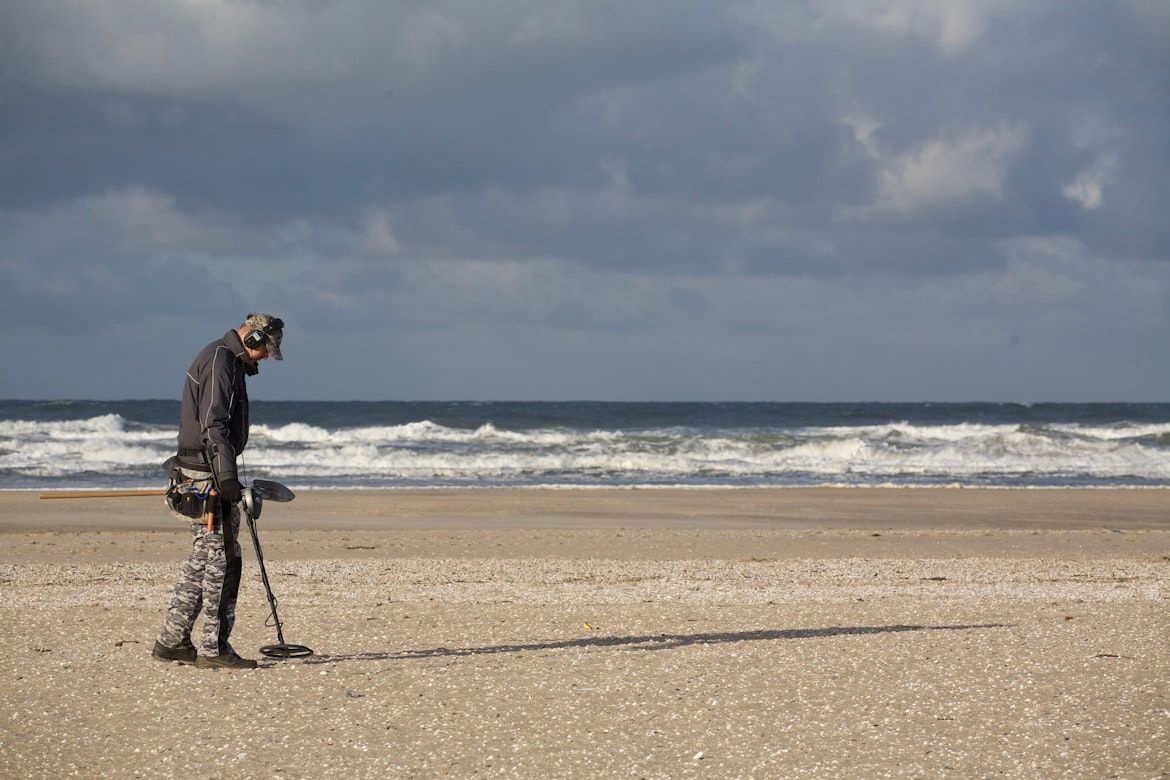
Image: Fer Troulik

After a failed assassination attempt on President James Garfield, Alexander Graham Bell hastily built an early metal detector in an effort to locate the bullet lodged in his body. The device functioned as intended, but it was unable to find the bullet because metal bed springs interfered with the signal.

Despite this setback, Bell’s early design proved the concept and directly influenced the development of modern metal detectors.

6
The pet-powered butter churn

Image: Matt Bero

In an inventive twist on animal-powered machinery, some 19th-century American farmers rigged small treadwheels for dogs, cats, or even goats to generate kinetic energy for churning butter. The animal ran inside the wheel, turning a rope or pulley connected to the churn.

While technically functional, the system was limited by the animal's willingness to cooperate and the small amount of power it generated.

7
The umbrella hat

Image: Claudio Schwarz

Robert W. Patten, often called the "Umbrella Man," patented one of the first commercially successful hands-free umbrella hats. It strapped a small umbrella directly to the wearer’s head, providing both sun and rain protection while keeping the hands free for work or walking.

His original design even included a mosquito net attached to the canopy. Patten didn’t enjoy much commercial success but became somewhat of an eccentric and comical popular figure, partly due to a series of comics that were inspired by his unusual invention.

8
The one-wheel motorcycle

Image: CJ Toscano

In 1971, American inventor Kerry McLean built and refined a monowheel—a one‑wheeled motorized vehicle in which the rider and engine sit inside the wheel’s circumference.

Since then, various attempts have been made to build on his original design, but it remains a niche vehicle used primarily for entertainment rather than practicality, as riders must be highly skilled simply to turn or even stay upright.

9
The first talking doll
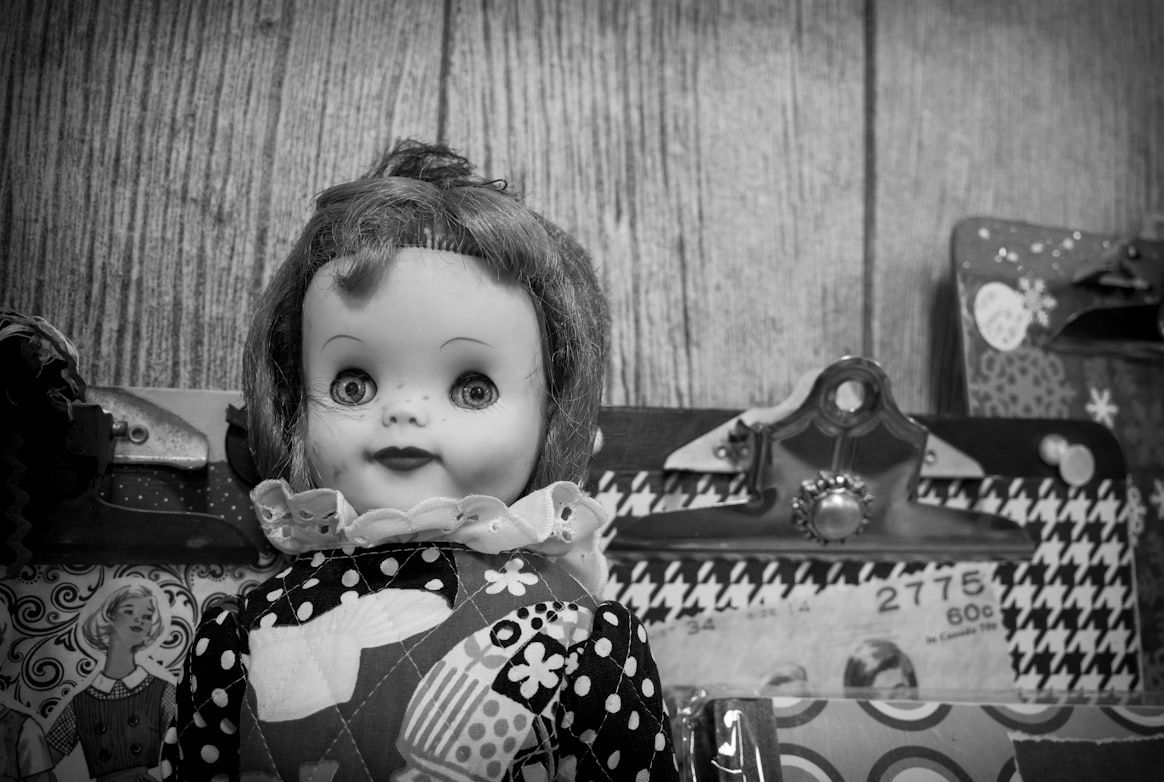
Image: Holly Ward

In 1890, Thomas Edison embedded miniature versions of one of his most popular inventions —the phonograph—inside dolls so they could recite nursery rhymes.

While the idea was innovative, the technology was not yet there. The recordings were fragile, distorted, and often failed to work properly. The dolls were pulled from the market within weeks due to customer complaints, making it one of Edison’s rare commercial failures.

10
The glass harmonica
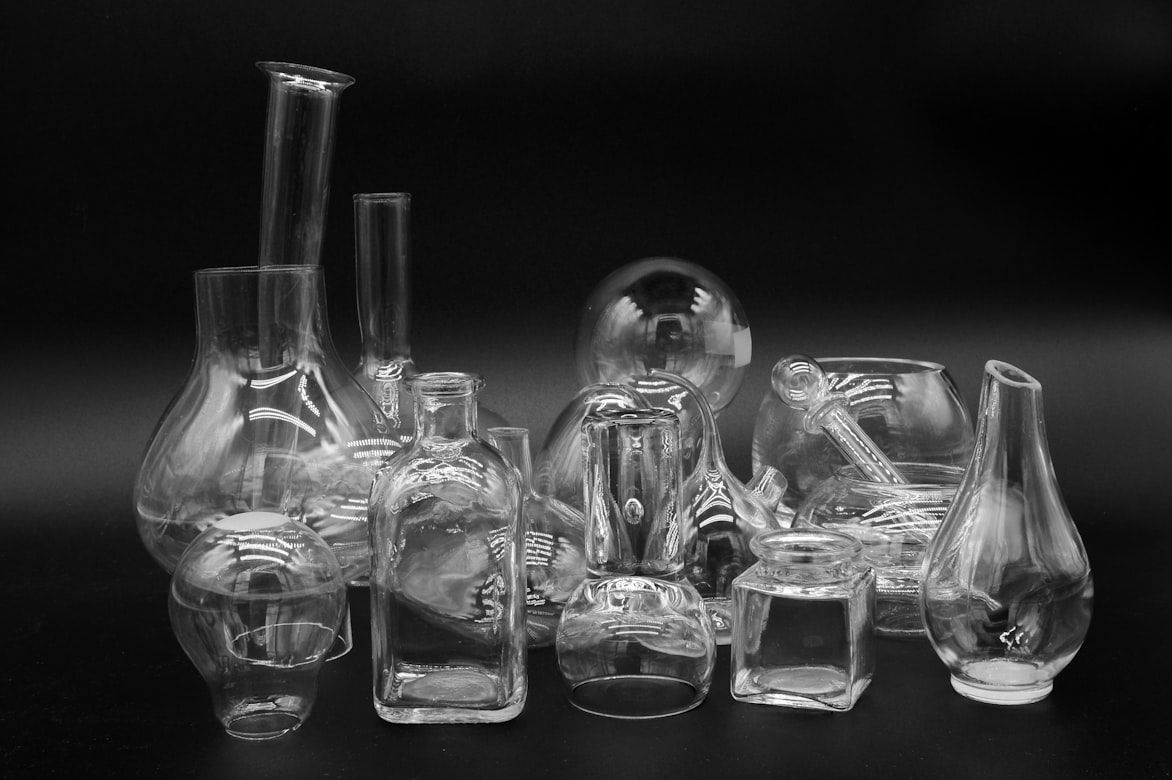
Image: Francesco Bovolin

Faithful to his eccentricity and inventive spirit, Benjamin Franklin redesigned the existing glass harp into a rotating spindle of glass bowls, played by touching the spinning rims with wet fingers, which he called the "glass harmonica."

The instrument produced eerie, sustained tones unlike anything else of its era. However, its fragile nature made it somewhat impractical, and the rotating mechanism posed a potential danger to the player if anything went wrong.

General General 5 min read

20th-century marvels

Architecture in the Jazz Age: 10 Art Deco buildings that shaped America

Image: Kit Suman

Characterized by sleek lines, geometric shapes, and luxurious materials, the Art Deco style was a favorite among American architects during the 1920s and 1930s. They designed opulent skyscrapers and glamorous buildings that celebrated progress and modernity. Join us to learn more about this Jazz Age style, explore its fascinating history, and tour 10 of the most beautiful Art Deco buildings in the United States.

1
Empire State Building, New York City

Image: William Wachter

Undoubtedly, the Empire State is the most famous building in New York City. Every year, about 2.5 million people visit it, and it has been featured in countless movies and TV shows. Designed by American architect William F. Lamb, it was inaugurated in 1931.

For forty-one years, the Empire State Building was the tallest skyscraper in the world. The symmetry, limestone façade, huge windows, and the monumental and luxurious lobby are some of its main features. The design of this Art Deco masterpiece is so spectacular and breathtaking that in 1986 it was designated a National Historic Landmark.

2
The Carlyle, Miami Beach

Image: Luis Erives

Miami has the largest concentration of Art Deco buildings in the world. The city has a remarkable collection of around 800 structures built in this style. Visiting the Art Deco district along Collins Avenue, Ocean Drive, and Washington Avenue is like traveling back in time. And perhaps the Carlyle, for its sophisticated combination of horizontals and verticals, is one of the most emblematic.

It was built in 1939 by German-American architect Richard Kiehnel, and its façade has barely changed since then. Its interior, on the other hand, went from hotel rooms to apartments.

3
Boston Avenue United Methodist Church, Tulsa

Image: Quang Vuong

The Boston Avenue United Methodist Church in Tulsa, Oklahoma, is one of the few examples of an Art Deco church. Beginning in the 1920s, little Tulsa became the oil capital of the U.S., and the sudden influx of resources encouraged investors to build increasingly grandiose buildings. Thus, this church is considered the first ecclesiastical building strictly designed for an emerging automobile culture.

Constructed from Indiana limestone, the church features a steel-frame tower topped with a copper and glass lantern. A seven-pointed star symbolizes seven virtues: patience, purity, knowledge, suffering, kindness, love, and truth. The complex also includes a sanctuary, a small chapel, and offices, while the lobby serves as a social center.

4
Union Terminal, Cincinnati

Image: Fred Copley

Cincinnati Union Terminal in Ohio is one of the finest examples of Art Deco architecture in the United States. Its green terrazzo floors, fine-grained Indiana limestone façade, and vast rotunda adorned with industrial murals by Winold Reiss make the station a true architectural masterpiece. In fact, it is considered the pinnacle work of Alfred T. Fellheimer, who had previously designed Grand Central Terminal in New York.

Unfortunately, Union Terminal began construction in 1928, during one of the worst periods in the country's economic history. The Great Depression was marked by a decline in train travel, and the opulent Union Terminal was considered a white elephant. In 1972, it was finally closed. Years later, however, the building regained its former luster. Today, it is served by Amtrak’s Cardinal line, while the rest of the complex houses several museums.

5
Carbide & Carbon Building, Chicago

Image: Anthony Fomin

The Carbide & Carbon Building, a 37-story skyscraper completed in 1929, is one of Chicago's most striking architectural achievements. A bold example of Art Deco design , the building is clad in black granite and green terra cotta, with genuine gold leaf adorning its tower.

It is so luxurious that the Burnham Brothers architectural firm is said to have designed it to resemble a champagne bottle. In 1996, it was designated a Chicago Landmark, and in 2021, it was renovated and reopened as the Pendry Chicago Hotel.

6
The Guardian Building, Detroit

Image: G + L

This 43-story Art Deco skyscraper is located in downtown Detroit, Michigan. Nicknamed the Cathedral of Finance , it was planned by architect Wirt C. Rowland and completed in 1929. Both the interior and exterior feature numerous modern decorative elements, including mosaics, murals, stained glass, and even a historic Tiffany clock.

Forty craftsmen worked on its design and construction, which required granite, stone, terra cotta, and more than two million distinctive "Union Guardian Orange" bricks. In 1989, the Guardian Building was designated a National Historic Landmark.

7
Chrysler Building, New York City

Image: William Wachter

The Chrysler Building in New York City is one of the greatest examples of the Art Deco style in the world. It was designed by architect William Van Alen at the request of industrial magnate Walter Percy Chrysler and completed in 1930.

The building exhibits great attention to detail, featuring many elements that mimic Chrysler automobile pieces, such as the ostentatious ornamentation of the tower. In the lobby, the ceiling mural—once the largest in the United States—was painted by artist Edward Trumbull. Following the building’s automotive theme, it depicts scenes of progress, transportation, and energy.

8
Eastern Columbia Building, Los Angeles

Image: Jordan Rubin

Located in downtown Los Angeles, this emblematic 1930s building features a striking turquoise terra cotta exterior. The Eastern Columbia Building was designed by renowned architect Claud Beelman, who also created several of the city’s notable Art Deco structures. At the time of its construction, the building was so unique that the city allowed it to exceed the maximum height limit.

Its unique color, majestic vertical lines, iconic clock, and golden ornamentation attracted Hollywood moguls and stars from the beginning. It was first used as office space and was later converted into luxury apartments. In 1985, the Eastern Columbia Building was declared a Historic-Cultural Monument.

9
Circle Tower, Indianapolis

Image: Alejandro, CC0, via Wikimedia Commons

The construction of a 14-story skyscraper in Indianapolis was a major news event in the early 20th century. "Circle Tower Is Rising," declared the Indianapolis Times in 1929. Circle Tower stands as a magnificent example of Art Deco architecture.

Built of ornately carved granite and limestone and decorated with Egyptian figures, Circle Tower has a unique, trapezoidal shape. This unusual silhouette was promoted as an icon of luxurious office space. The interior, on the other hand, features marble and terrazzo floors, bronze elevator doors, geometric flowers, zigzags, and concentric swirls. Details in the lavishly marble-clad lobby exude elegance.

10
Griffith Observatory, Los Angeles

Image: David Vives

The Griffith Observatory is one of Los Angeles’ most important cultural attractions. This Art Deco icon opened in 1935 and was designed with a revolutionary idea in mind: the cosmos should be accessible to everyone, not just astronomers.

Built of reinforced concrete on a 3,015-acre site donated by Colonel Griffith J. Griffith, it is a blend of modern design and Greek and Beaux-Arts influences. The building's most emblematic feature? The planetarium in the central dome!

Culture Culture 6 min read

Stories of blockbusters

Otherworldly budgets: The most expensive movies ever made

Image: 金 运 / Denise Jans

Alien invasions, superhero fights, and sinking ships are never easy to stage. Although Hollywood production companies don’t always disclose exact expenditures, some reports allow us to calculate which mega-productions were the most expensive at the time of their creation. A major movie production typically has a budget of around $100 million . However, the lowest budget on this list of blockbusters was $258 million–and that was in 2007. Which iconic scenes specifically made incredible bumps in these budgets? Were they worth it? Discover surprising facts about ten incredibly expensive movies in this article.

1
Spider-Man 3 (2007)

Image: Dante Muñoz

Tobey Maguire’s Spider-Man had been one of the most successful hits of the 2000s . That’s why, when Spider-Man 3 (2007) began production in 2005, it was given the highest budget of any movie in history at the time: around $258 million.

If you’ve seen this movie, you might have guessed that the biggest portion of the budget went into special effects for its three different villains. The New Goblin, Venom, and Sandman were three separate challenges for the visual effects team, particularly Sandman , played by Thomas Haden Church. Groundbreaking technology had to be developed to animate explosive sand fists and parting bodies of sand, making the character’s action scenes cost millions of dollars each.

2
Titanic (1997)

Image: Derek Oyen

To begin with, building the full-scale ship model and massive water tank for Titanic (1997) cost over $150 million. Director James Cameron was very particular about authenticity, so the ship’s interior design was meticulously designed to match that of the original Titanic. At the time, it was also the most expensive movie ever made. But one might argue it was all worth it.

The CGI, stunts, and practical effects used for replicating the sinking sequence were especially costly. Bear in mind that Leonardo DiCaprio and Kate Winslet were already known young talents by the time they were cast for this movie, so they took a small share of the fortune—around $5 million between them. Famously, though, James Cameron forfeited his paycheck to keep the movie under budget, much like Jack climbing down from the door to keep Rose afloat. It worked out in the end because he earned $97 million from backend profits.

3
Avengers: Infinity War (2018)

Image: André Volkmann

Balancing the stories of all of these superheroes was just as challenging as paying all the corresponding actors. Avengers: Infinity War (2018) had an estimated budget of almost $400 million. Who could forget the battle scenes filled with as many timeless superheroes as A-list actors? Reportedly, Robert Downey Jr. alone took home around $75 million after backend deals.

This two-hour-and-a-half movie had over 2,500 visual effects shots, which included the destruction of a planet and a ship, as well as an epic battle in the fictional Wakanda . Not to mention the advanced motion-capture technology required for Josh Brolin’s portrayal of Thanos, the villain of the film.

4
Avengers: Endgame (2019)

Image: Igor Bumba

When Avengers: Infinity War was released, it became the highest-grossing superhero film in history, amassing over $2 billion at the box office. But that title lasted it around a year, until its sister sequel Avengers: Endgame (2019) surpassed it. The sequel cost roughly the same as the previous installment but came just shy of earning $3 billion .

Just like the previous ones, this Avengers installment had a star-studded cast that included Scarlett Johansson, Chris Evans, and Chris Hemsworth. A feast of 3 hours worth of cameos, the movie ended with a climactic final battle scene, where almost every hero from the Marvel Cinematic Universe assembled. Making this movie involved hundreds of extras, an enormous amount of CGI, masterful choreography, and an unprecedented skill for star scheduling .

5
Pirates of the Caribbean: At World’s End (2007)

Image: cottonbro studio

Pirates of the Caribbean: At World’s End had a budget of around $300 million, making it one of the most expensive films ever at the time of its 2007 release. Whoever watched this film will remember a waterfall at the edge of the world or a massive final battle between two ships over a maelstrom. Those takes relied heavily on CGI, but not entirely. As with previous productions in the franchise, filming required large-scale water sets and multiple ships to be built. The cost of both practical and visual effects for these scenes was astronomical.

Admittedly, a significant portion of the budget went to the ensemble cast, particularly Johnny Depp, who received a notable pay bump following the massive success of the first two films. Keith Richards , the Rolling Stones guitarist, was also famously featured, adding to the film’s star power.

6
Avengers: Age of Ultron (2015)

Image: Deepak Rastogi

Surprise! The Avengers movie with the most colossal budget was the least liked of the four. It sometimes puzzles fans to learn that it cost $365 million in 2015, which, adjusted for inflation, would be over $430 million today.

Avengers: Age of Ultron (2015) had to use massive amounts of CGI to create cinematic takes on the levitating fictional city of Sokovia. Destruction, flying characters, drones, and explosions contributed significantly to the costs. More importantly, filming on location and flying so many celebrities around the globe added to the expense. This movie showed scenes filmed all over the world, including the U.S., South Africa, Italy, South Korea, and England.

7
Star Wars: The Rise of Skywalker (2019)

Image: LJ

Lightsaber battles have never been cheap. Star Wars: The Rise of Skywalker (2019) had a reported production budget of around $275 million. It was the third Star Wars movie produced by Disney, and while the budget had decreased compared to the previous installments, it was still a financial success.

The final battle sequence on the Sith planet Exegol required a fortune, but it needed to: as it served as the climax of Disney’s trilogy. Special effects even included the scenes of characters like General Leia, played by the late Carrie Fisher . The film faced the unique challenge of incorporating footage of Fisher filmed for previous Star Wars movies after her passing in 2016.

8
Pirates of the Caribbean: On Stranger Tides (2011)

Image: Pixabay

Even though the 4th installment of the Pirates franchise had relatively low reviews, it became the second film in the saga to surpass a billion dollars in box office revenue. Released in 2011, Pirates of the Caribbean: On Stranger Tides had a staggering budget of $379 million.

Mermaids, zombies, splitting ships, boats on fire, and a Fountain of Youth all required the coordination of several visual effects teams. The salaries of new stars like Penélope Cruz , along with filming locations across Hawaii, the UK, California, and Puerto Rico, added to the costs. Also, this was the first movie in the franchise to be shot for 3D screenings .

9
Jurassic World: Fallen Kingdom (2018)

Image: Nick Wehrli

A movie that revolves around dinosaurs fleeing from a volcanic eruption , Jurassic World: Fallen Kingdom (2018), received an estimated budget of around $432 million. How are dinosaurs created? Much like the earlier films of the saga, this one used a mix of CGI and animatronics , especially for the more up-close, intimate scenes involving Velociraptors and an Indoraptor.

For the dinosaur auction scene, a whole large-scale set was built. Filming also took place in Hawaii, England, and Spain. The stars of the Jurassic World trilogy, Chris Pratt and Bryce Dallas Howard, reportedly earned around $10 million each.

10
Star Wars: The Force Awakens (2015)

Image: Rod Long

When Disney acquired the rights to produce movies from Lucasfilm , it proceeded to give the first installment of their Star Wars reboot the biggest budget it had ever given. That was over $447 million in 2015.

With J.J. Abrams directing a Star Wars movie after so long, he could indulge in creating a full-size Millennium Falcon , animatronic creatures, and remote-controlled puppetry. The Starkiller Base destruction sequence was one of the most expensive scenes. Not to mention that the legendary face of Star Wars , Mark Hamill, had a very short cameo at the end of this movie; that one-minute feature alone earned him $3 million .

Explore more American facts

Choose your favorite category!

General
General

As American as apple pie—the very best America has to offer!

Culture
Culture

Delve into the astounding richness of American lore.

Geography
Geography

Hop in and explore vast and diverse American landscapes.

History
History

Discover the key moments that shaped the United States.