Culture Culture 3 min read

What’s going on?

The name changes on these songs saved them from oblivion

Image: Mick Haupt

It’s hard to believe now, but some of the most famous hit songs in pop music history began with completely different titles.

Whether they would’ve had the same success with those alternate names, we’ll never know, but these shifts transformed a good idea into a timeless anthem. Take a look at these 11 musical backstories and see what could’ve been.

1
"Born to Run" (1975) - Bruce Springsteen

Image: Mick Haupt

The list’s opener is a Springsteen anthem of escape that was not immediately destined to carry its famous title. In early drafts, the Boss called it "Wings for Wheels" . As the song evolved, the chorus took on a new intensity.

Switching to "Born to Run" sharpened the message, capturing the concept of youth that is expressed in the song.

2
"Hotel California" (1976) - Eagles

Image: Mick Haupt

Before becoming a haunting allegory of excess, the track carried the placeholder name "Mexican Reggae." The band used that phrase to describe the unusual rhythm and guitar feel they had stumbled upon in rehearsal.

But when Don Henley and Glenn Frey shaped the lyrics, the story became much larger, and the now-classic title stuck.

3
"Good Vibrations" (1966) - The Beach Boys

Image: Mick Haupt

Brian Wilson envisioned his experimental pop masterpiece under the simpler working title "Good Vibes." The phrase matched the psychedelic optimism of the era, but it didn’t quite sing.

By expanding to "Good Vibrations," Wilson captured the idea of mystical, almost spiritual energy.

4
"Free Fallin’" (1989) - Tom Petty

Image: Sean Benesh

This timeless ballad started life with the less evocative title "It’s a Long Day," borrowed directly from the opening lyric of the second verse. The phrase, while descriptive, lacked the lyrical punch Petty wanted for a chorus.

As the song took shape, "Free Fallin’ " emerged as the hook that defined the track.

5
"Superstition" (1972)- Stevie Wonder

Image: Mick Haupt

Stevie Wonder’s funk classic nearly went to press as "Very Superstitious. " That title echoed the first line and emphasized the theme, but it felt slightly clunky when repeated.

Stripping it down to "Superstition" lent the track greater impact. With it, the song became one of Wonder’s defining masterpieces.

6
"Respect" (1967) - Aretha Franklin

Image: Clay Banks

Aretha’s most famous song was nearly titled "Take Care, TCB," highlighting her famous line about "Taking Care of Business."

In the end, keeping it simply "Respect" made the track timeless. The title embodied empowerment and self-worth.

7
"What’s Going On" (1971) - Marvin Gaye

Image: Clem Onojeghuo

When Marvin Gaye began work on his masterpiece, the track carried the working name "What’s Happenin’ Brother." That phrase later became the title of a different song on the same album.

By renaming it "What’s Going On," Gaye gave the song broader resonance.

8
"Blowin’ in the Wind" (1962) - Bob Dylan

Image: Brett Jordan

Bob Dylan’s folk anthem once had a far more literal title in mind: "Answer, My Friend." The phrase came from the chorus line that would become the song’s most quoted passage.

Choosing "Blowin’ in the Wind" turned a straightforward lyric into a metaphor for freedom and justice.

9
"Crazy" (1961) - Patsy Cline

Image: Florencia Viadana

Willie Nelson originally drafted this ballad under the blunt title "Stupid." Though catchy, it didn’t capture the tenderness he wanted for the song.

Delivered with Patsy Cline’s aching vocals, "Crazy" became a country standard and one of the most recorded ballads of its era.

10
"Born in the U.S.A." (1984) - Bruce Springsteen
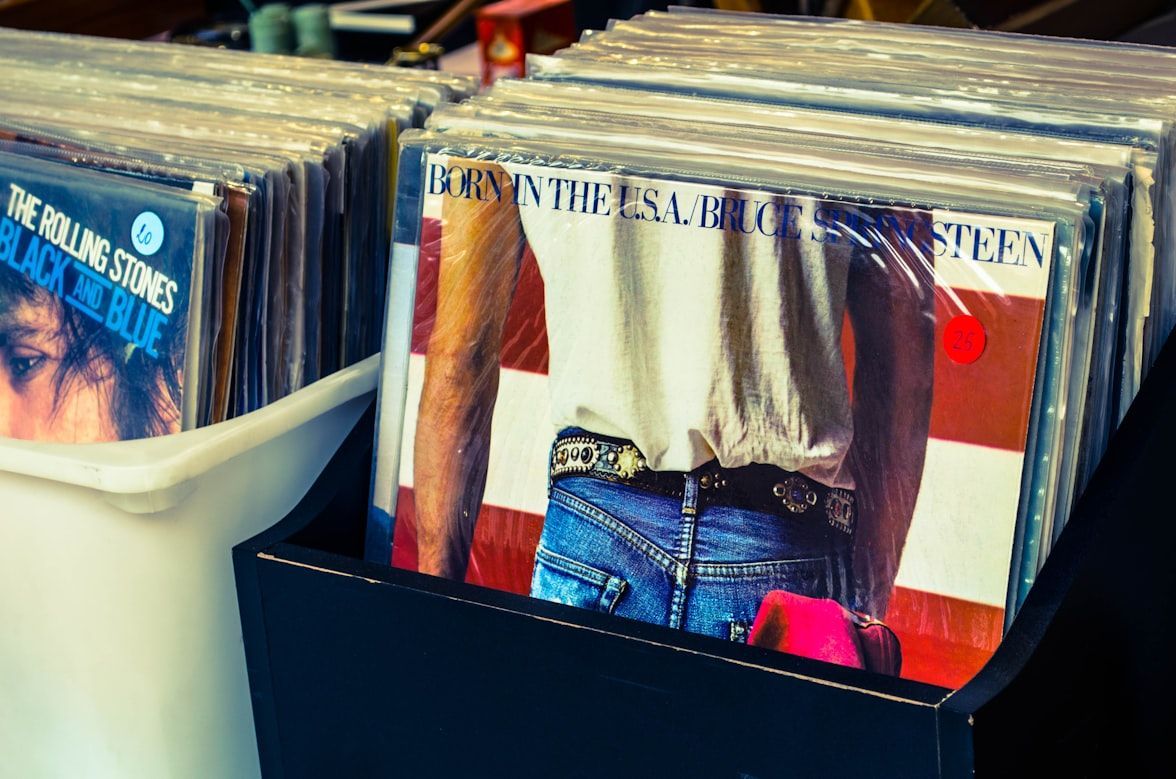
Image: Jose Antonio Gallego Vázquez

This track was first conceived under the stark working title "Vietnam." Its focus was originally narrower, highlighting the struggles of veterans returning home from war.

By renaming it "Born in the U.S.A.," Springsteen expanded the scope. The patriotic-sounding title created a powerful contrast with the song’s harsh lyrics.

11
"Material Girl" (1985) - Madonna

Image: Sebastian

Written by Peter Brown and Robert Rans, the pop hit almost debuted as "Living in a Material World." The longer phrase fit the chorus but lacked the commercial hook they wanted.

Shortening it to "Material Girl" made all the difference. The title captured Madonna’s persona — a moniker that stuck with her for the duration of her legendary career — and helped define an era.

Geography Geography 3 min read

Want to go for a ride?

From epic exploration to lonely road trips: the Great American Road

Image: Enric Cruz López

America has provided its majestic landscape for many different types of journeys, from the heroic to the touristic. Its infinite roads offer all kinds of experiences, and different personalities will find different adventures. The following ten journeys showcase these extremes and then some more. Which of these travelers do you identify yourself with the most?

1
Lewis & Clark

Image: James Lee

Also known as the Corps of Discovery Expedition, the Lewis and Clark Expedition crossed the newly acquired western portion of the country after the Louisiana Purchase . This group of U.S. Army and civilian volunteers under the command of Captain Meriwether Lewis and his close friend Second Lieutenant William Clark set out from Illinois, on May 14, 1804.

They crossed the Continental Divide of the Americas near the Lemhi Pass, eventually coming to the Columbia River, and the Pacific Ocean in 1805. The return voyage ended on September 23, 1806.

2
George Wheeler

Image: Alex Moliski

The leader of the Wheeler Survey, George Montague Wheeler, was an American pioneering explorer and cartographer who led one of the major geographical surveys of the western United States in the late 19th century.

In 1872, the US Congress planned to map the portion of the country west of the 100th meridian . This plan became known as the Wheeler Survey, which lasted until 1879 when the Wheeler, King, and Powell Surveys’ combined work was reorganized as the United States Geological Survey.

3
The Donner Party

Image: Naithen

The Donner Party was a group of pioneers who migrated to California in a wagon train from the Midwest. Delayed by a multitude of mishaps, they spent the winter of 1846-1847 snowbound in the Sierra Nevada .

While the journey west usually took between four and six months, the Donner Party chose to follow a new route called the Hastings Cutoff, which delayed them greatly.

4
Mark Twain

Image: Jim Strasma

Mark Twain was never one to shy away from adventure. Roughing It was published in 1872. It follows his travels through the American West from 1861 to 1867, when he joined his brother Orion Clemens, appointed Secretary of the Nevada Territory, on a stagecoach journey west.

5
John Muir

Image: Mathilda Khoo

The "Father of the National Parks" was a Scottish-born American explorer, naturalist, author, botanist, and early advocate for the conservation of the nation’s wilderness.

After spending much of his youth traveling across the country, Muir visited Yosemite and was enthralled by its natural beauty . Later on, he worked as a shepherd for a season in the valley, built a cabin, and began advocating for the creation of a national park to protect the area.

6
Jack Kerouac

Image: Ana Viegas

Probably one of the most famous entries on this list, Jack Kerouac’s 1947 cross-country hitchhiking round-trip became the basis for On the Road , a freeform travelogue that became the bible of the Beat Generation.

His roundtrip started and ended in New York, passing through Chicago on the way out to California, following the West Coast south before returning east.

7
John Steinbeck

Image: Jack Anstey

In 1960, John Steinbeck decided to travel across America setting out from his Long Island home aboard his camper van, dubbed Rocinante, and accompanied by his French poodle, Charley . In 1962, he published Travels with Charley: In Search of America .

Their 10,000-mile-long trip passed through New England, then via Niagara Falls along the Canadian border, hitting Chicago and continuing to Seattle before turning south towards the Salinas Valley, then to Texas, New Orleans, and a huge chunk of the Deep South.

8
Tom Wolfe

Image: Geio Tischler

Long before writing The Bonfire of Vanities , Tom Wolfe embarked on a trip across the country with a group of psychedelic enthusiasts known as the Merry Pranksters. The trip produced his 1968 nonfiction book, The Electric Kool-Aid Acid Test .

9
William Least Heat-Moon

Image: Aaron Huber

William Least Heat-Moon lost his wife and his job as a professor in a short period of time, which prompted him to embark on a soul-searching journey across the country . The result was 1982’s Blue Highways , a novel that describes the experiences he had during his travels, including conversations with colorful characters, the towns he visited, and his adventures on the road.

10
Michael Paterniti

Image: Tim Trad

Imagine driving across the country with the brain of one of the world’s most celebrated geniuses in the backseat . That is exactly what Michael Paterniti experienced and shared in his 2000’s Driving Mr. Albert: A Trip Across America with Einstein’s Brain .

The author started his quest in New Jersey, driving the doctor who performed Einstein’s autopsy and afterward refused to give up the brain which, eventually, was delivered to an Einstein heir in Berkeley.

General General 5 min read

Will it rain?

Take a look at the strangest weather phenomena in the US

Image: NOAA

We are accustomed to being surprised by weather events—unexpected rains, colder days than anticipated, or sudden heat waves. But these everyday surprises have nothing to do with the kind of extreme weather phenomena listed here. From devastating fire tornadoes to benign incidents where distant objects appear closer due to atmospheric conditions, weather is one of the biggest forces of nature and it has made sure to let humankind know it more than once.

1
Fire tornado, California

Image: Zoltan Tasi

A tornado is bad enough, but imagine a fire tornado—you’re entering a whole new level of catastrophe. This is exactly what occurred in 2018 near Redding, California, during the infamous Carr Fire event.

Intense wildfires almost always produce fire devils, fire whirls, and occasionally stronger vortexes resembling the tornadoes associated with severe thunderstorms. Fire tornadoes typically range from 100 to 1,000 feet in diameter , with rotational velocities of up to 90 mph. However, the Redding fire tornado was fueled by winds reaching an astonishing 143 mph .

2
Freak March heat wave, Midwest region

Image: Nadiia Ploshchenko 🇺🇦

High temperatures can be expected in the Midwest region but never for such an extended period during the winter season as occurred from March 14 to March 22, 2012 . Over these eight days, some areas experienced average daily temperatures that were 40°F above normal. Remarkably, even the daily low temperatures in certain locations exceeded the record highs for those dates.

On March 21, the temperature reached 90°F in Lapeer, Michigan—a stark contrast to the subzero temperatures that have often occurred in these same locations at this time of year, when snowpack is typically at its deepest.

3
Two F5 tornadoes at the same place on the same day

Image: Greg Johnson

F5 tornadoes are exceedingly rare. Only a handful of tornadoes of this intensity have been documented outside of the United States. Since 1900, just 104 of these monsters have been recorded anywhere on Earth.

This rarity makes the event on April 3, 1974 , near the town of Tanner, Alabama , even more astounding. Located about 20 miles west of Huntsville, Tanner was struck by two F5 tornadoes within just 30 minutes of each other.

4
The Dust Bowl

Image: Samantha Sheppard

The Dust Bowl, one of the most devastating weather events in American history, has a shared responsibility between nature and human interaction . In the 1930s, poor land management practices and unsustainable farming methods led to prolonged drought and massive dust storms in the Great Plains.

This ecological disaster forced thousands of families to abandon their homes, triggering a mass migration to find better opportunities elsewhere. As the Great Depression intensified, drought and decades of overfarming dried out the topsoil, leading to a series of dust storms from 1933 to 1939 that carried the soil eastward.

5
The Galveston Hurricane

Image: NASA

In 1900 a category 4 hurricane struck the city of Galveston, Texas , with devastating force, claiming an estimated 8,000 lives and causing widespread destruction. This tragedy prompted the construction of a seawall and the implementation of hurricane preparedness measures that continue to shape coastal planning and response strategies that are still in place today.

6
A summer-less year

Image: Todd Diemer

The combination of a tepid spring with late snows and an exceptionally cold summer, featuring frosts in July and August made 1816 a year without a proper summer . On July 4th, the high temperature in Savannah, Georgia, was only 46°F. Finally, there was a drought during early fall that culminated in a killing frost well before the end of September.

The apparent cause of this unusually cold summer was the eruption of the Tambora Volcano, half a world away in Indonesia, in 1815. A tremendous cloud of fine ash and dust was ejected into the stratosphere, where it remained for an extended period, significantly reducing the sun's heat and light and causing a cooldown throughout the Northern Hemisphere.

7
The darkest day

Image: Ganapathy Kumar

On May 19th, 1780, an extremely dark overcast mixed with thick smoke from nearby forest fires made the day feel like night for the people of New England. The mysterious event was first reported at dawn over southwest Vermont, and it slowly traveled southeastward during the day. The last place to report this strange weather was Barnstable, Massachusetts, on Cape Cod, in the late afternoon.

In Boston, the atmosphere darkened noticeably after 9 a.m., to the point where reading newsprint outdoors became difficult. Many New Englanders believed that Judgment Day was at hand.

8
Animal rain

Image: Sanket Rajurkar

It should come as no surprise that the number of people who have heard of raining animals is much higher than the number of those who have actually experienced this phenomenon. After all, these types of rain are highly unusual.

The first documented instance of raining frogs was in Kansas City in 1873. In Texarkana, Texas, another strange form of precipitation occurred—this time in the form of fish falling from the sky. According to science, animal rain occurs when small aquatic animals like frogs, crabs, and small fish are swept up in waterspouts or drafts that occur on the surface of the earth. They are then rained down along with the rain.

9
Technicolor solar storm

Image: Luke Tanis

Unlike the northern lights, which usually appear as blue and green swirls in the sky, solar storms are so intense that they create a kaleidoscope of colors and can also be seen in regions where people have never witnessed them before.

In 2012, one of these events produced a stunning aurora over Crater Lake in Oregon. Scientists believed that two clouds of glowing particles were flung toward Earth by sunspots larger than our planet.

10
Super refraction

Image: Matthijs van Schuppen

Imagine waking up and being able to see much farther than you ever could before. That is exactly what happened in 2013 to the people of northern Ohio. They were stunned to find that they could see the Canadian shoreline, which is not at all possible under normal circumstances.

Locals were able to see Canada because of a rare natural phenomenon known as super refraction, where rays of light are bent downward toward the surface of the Earth. This bending occurs because of changes in air density. During this light-bending, distant objects that are usually hidden from view become visible, as they are reflected in the rays of light.

Explore more American facts

Choose your favorite category!

General
General

As American as apple pie—the very best America has to offer!

Culture
Culture

Delve into the astounding richness of American lore.

Geography
Geography

Hop in and explore vast and diverse American landscapes.

History
History

Discover the key moments that shaped the United States.