Culture Culture 6 min read

Outlaws & Cowboys

Saddle up: Here are 10 of the most iconic figures of the American West

Image: Zeynep Sude Emek

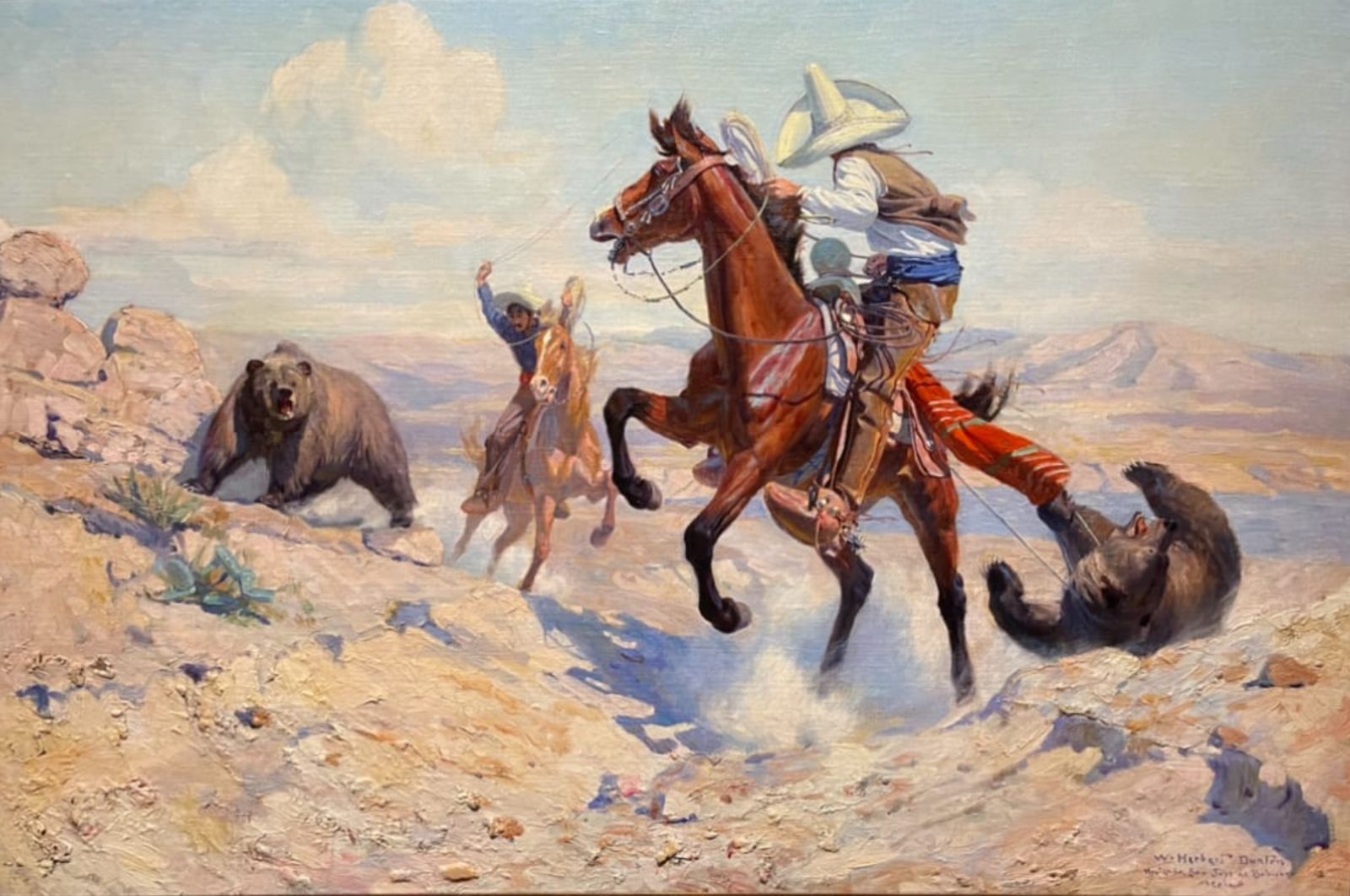
American Wild West stories are fascinating but would be incredibly boring without the men and women who roamed the untamed frontier in search of new opportunities. Their activities ranged from lawmen and gunslingers to ranchers, gamblers, farmers, rodeo stars, bounty hunters, and outlaws. Join us to learn about the lives of 10 cowboys (and cowgirls!) who helped shape our nation’s cultural landscape.

1
"Buffalo Bill" Cody

Image: Illinois State University, Public domain, via Wikimedia Commons

If we had to name the most famous cowboy in history , Buffalo Bill Cody would probably be a top contender. Throughout his lifetime, Cody greatly contributed to shaping the image we have of the American West.

Born in Iowa in 1846, he earned his nickname while working for the Union Pacific Railway, where railroad workers were amazed by his hunting skills. But history had bigger plans in store for Cody, and he would soon become an actor , traveling throughout the eastern United States performing plays based on stories of the Wild West for more than 30 years.

Eventually, poor business management and a certain change in popular interests led Buffalo Bill to ruin and he retired from show business just two months before his death in 1917. He was, however, mourned by millions of people who considered him a hero.

2
John Henry "Doc" Holliday

Image: Mehmet Turgut Kirkgoz

John Henry "Doc" Holliday was born in 1851 in Griffin, Georgia, into a wealthy family. He earned his Doctor of Dental Surgery degree in Philadelphia but was shortly thereafter diagnosed with tuberculosis and advised to live in the drier, hotter climate of the West.

In Dallas, Texas, he pursued his trade as a dentist but also discovered saloons and whiskey. Soon, realizing that gambling could be much more lucrative than dentistry, he began his professional gambling career.

The rest of his life was spent among crooks, gunfights, and jailmates in New Mexico, Arizona, and California. At only 36 years old, his lungs could not keep up with his gunslinging way of life and he finally met his death in 1887 in a hotel bed in Colorado. It is said that his last words were, "This is funny."

3
Butch Cassidy and The Sundance Kid

Image: yavuz pancareken

The lives of Butch Cassidy and The Sundance Kid became legendary pretty quickly. As early as 1903, their exploits inspired the first modern film —Edwin S. Porter's _The Great Train Robbery_— and since then, their adventures have not ceased to be portrayed by popular culture. In a way, they symbolize the definitive end of the romanticized Western era at the hands of 20th-century industrialization and urbanization.

Both cowboys were members of a gang known as "The Wild Bunch," which earned them a reputation as bank and train robbers. According to lore, after several years of crime and run-ins with the law, the bandits managed to escape to Latin America. Eventually, they were caught and killed in Bolivia in 1908. The fact that their graves were never found helped fuel the myth that they had, in fact, returned to the United States and lived in anonymity for many more years.

4
Jesse James

Image: Steve

Jesse James's life is one of the most emblematic of the Wild West. His criminal career began after his involvement with pro-Confederate guerrillas during the Civil War. Along with the Younger brothers, he created a gang with which they robbed banks, trains, stagecoaches, and stores from Iowa to Texas and from Tennessee to California.

It is believed that throughout the years they netted more than a quarter of a million dollars. Despite the gory nature of their heists and murders, the gang often had public sympathy.

Jesse's death is as controversial as his life. At only 34 years old, he was shot in the back by one of his gang partners, who hoped to obtain a state reward in exchange for his betrayal. The public was not happy with the government conspiring to assassinate a citizen, no matter how criminal, and the matter became a scandal, resulting in Jesse James's rise to mythical status.

5
Annie Oakley

Image: International Film Service, Public domain, via Wikimedia Commons

From an early age, Phoebe Anne Oakley Moses, better known as Annie Oakley, took up hunting to help support her family. At the age of fifteen, she won a competition against the famous marksman Frank Butler, to whom she later married. Together, they appeared in several exhibitions across the country and, in 1885, joined Buffalo Bill's Wild West show.

Annie was able to open the edge of a letter, shatter glass balls thrown in the air, and hit dimes held between her husband's fingers or apples placed in her poodle's mouth by shooting from 30 paces away. Her life was so rich and fascinating that she was the inspiration for several movies and plays.

6
Billy the Kid

Image: See page for author, Public domain, via Wikimedia Commons

According to legend, Henry McCarty, better known as Billy the Kid, killed at least 21 people during his career as a notorious outlaw in New Mexico. However, he cemented his place in the pantheon of frontier legends not so much for his murders as for his personality and incredible marksmanship skills.

Born in the late 1850s in the Irish slums of New York City, McCarty had to reinvent himself as a gunslinger after the death of his mother when he was just a teenager. His life and the events surrounding his death at the hands of legendary lawman Pat Garrett were immortalized in numerous films, books, and songs. In fact, Billy the Kid holds the record as the most portrayed individual in cinematic history.

7
Lucille Mulhall

Image: Melissa Walsh

By 1900, split riding skirts allowed women to compete in rodeos without shocking Victorian-era audiences. But the truth is that women have been participating in exhibitions even in the early days of the Old West.

Lucille Mulhall is considered America's first legendary cowgirl. Born in 1885, Lucille grew up on her family's ranch in Oklahoma, where she acquired her incredible cattle-roping skills. She began performing in shows as a teenager and, throughout her career, competed in many rodeos, setting a few roping world records.

8
Belle Starr

Image: Pixabay

Perhaps the most famous female gunslinger in the history of the West was Myra Maybelle Shirley Reed Starr, better known as Belle Starr. Born in Missouri in 1848, Belle had a fairly well-to-do childhood and was a bright student. However, when her family moved to Texas after the Civil War, the young girl stumbled upon the James-Younger gang. After falling in love with Cole Younger, she became a member of the gang.

That love affair didn't last long, but a few others followed, which led her to live outside the law for the rest of her life. Her alleged riding and gun skills increased her fame throughout the country, turning her into a legend.

9
Wyatt Earp

Image: National Archives at College Park, Public domain, via Wikimedia Commons

Wyatt Earp belonged to a large family whose members were famous for being gunfighters, gamblers, bison hunters, miners, and lawmen. While all were notorious Wild West characters, it was Wyatt's exploits that have gone down in history. His life is testimony to the ambiguity that prevailed at a time when there was no distinction between upholding the law and transgressing it.

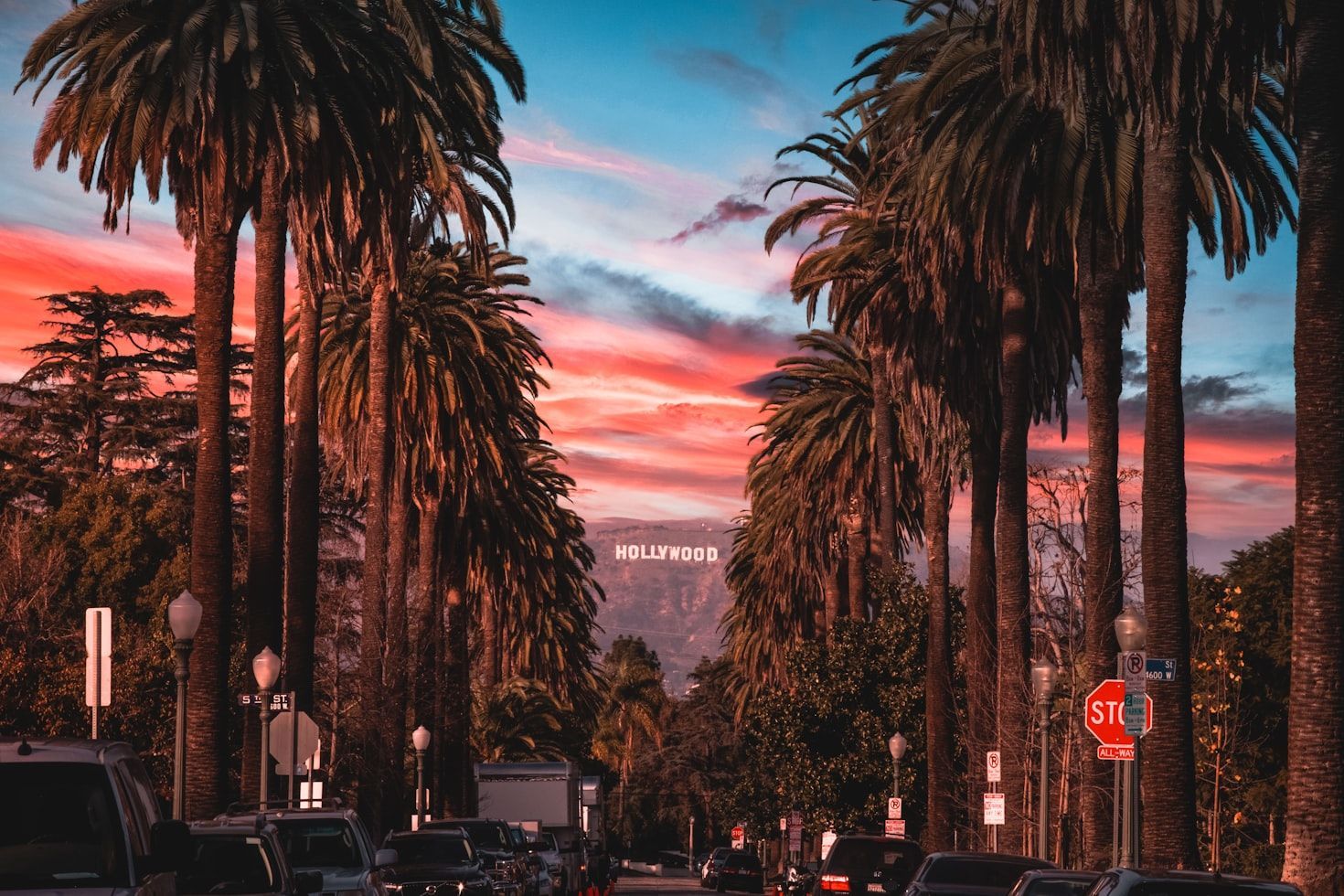
After a long life traveling the American West as a deputy sheriff, bounty hunter, and saloon owner, in 1905 Wyatt settled permanently in Los Angeles, California. He became a film consultant in Hollywood, befriending producers, directors, and actors. It is even said that John Wayne took Earp’s stories as inspiration for some of the tough characters he portrayed on the big screen.

10
"Wild Bill" Hickok

Image: Turuncu Sakal

James Butler Hickok, better known as "Wild Bill," is a legendary folk hero thanks to the many stories that romanticized his life as a soldier, gunslinger, gambler, marshal, and actor. Over the years, his adventures have been retold numerous times in pop culture. The truth is that Hickok did more in his thirty-nine years of life than most who lived twice as long.

Since his birth in Illinois in 1837, he is said to have been involved in some of the most dramatic and, at the same time, most spectacular events in the history of the Wild West. His death, unsurprisingly, is also legendary. In 1876, while playing a game of poker in a saloon in Deadwood, Dakota Territory, a man named Jack McCall shot him in the back of the head. The cards he was holding at the time —two pairs of Aces and black Eights— became the well-known "dead man's hand."

History History 4 min read

Western stories

Debunking myths and truths about the California Gold Rush

Image: Scottsdale Mint

Were the 49ers pioneering winners? Who made the most money over there, in the West? Who wrote the best accounts of lifestyle and stories about the gold fever? If the answers to these questions are a mystery to you, you might enjoy these lesser-known stories about the California Gold Rush!

1
Gold Rush myths bubbled up immediately

Image: Tomáš Malík

It didn’t take long for the truth to get buried. As soon as gold was discovered, the stories started to shimmer. Tales of instant wealth, golden boulders, and rivers gleaming with nuggets.

Letters home were often exaggerated, and newspapers sensationalized every find. These myths fueled the frenzy and caused proverbial FOMO all over the world. People wanted to see it for themselves.

2
The best Western business wasn’t in fact gold

Image: Stefan Münz

If you wanted to get rich during the gold rush, you had better chances opening a store than mining. That was the golden rule for smart entrepreneurs like Levi Strauss, who didn’t strike it rich in a streambed, but in a sewing room. Another legend, Samuel Brannan, made a fortune selling picks, pans, and shovels —not gold.

3
The "49ers" were actually latecomers

Image: Emilie

The famed "49ers," the nickname for those swept up in the gold frenzy in 1849, weren’t the first on the scene. There’s a plot twist. Gold was discovered in January 1848 at Sutter’s Mill.

But the news spread slowly . By the time the world caught on, most of the easily accessible gold had already been plucked from riverbeds by locals, soldiers, and early arrivals.

4
Thousands came from China and South America

Image: rc.xyz NFT gallery

The Gold Rush was a global stampede . Tens of thousands of Chinese immigrants crossed the Pacific, some bringing generations of mining knowledge with them. Others came from Chile, Peru, and Mexico, arriving in San Francisco to find opportunity.

5
Women were there not just as camp followers

Image: Michael & Diane Weidner

Women were there too, not just as wives, but as businesswomen, cooks, hoteliers, and even miners. Take Luzena Wilson, a widow who hauled her children west and set up a boarding house for miners. Her clean beds and hot meals turned into a booming business.

Others ran laundries, tended bar, or staked their own claims. In a lawless land where survival meant creativity, many women found fortune in hard work.

6
Some came from Hawaii, Russia, and Europe

Image: Trey Hollins

They called them " Argonauts ," a romantic nod to the Greek myth of Jason and his quest for the Golden Fleece. And like the legend, the real Gold Rush was international. Adventurers came not just from the American East, but from as far as Russia’s Pacific coast, the Hawaiian Islands, and every corner of Europe.

7
Gold Rush towns became ghost towns

Image: Stefan Münz

Take Bodie, for example. A lawless hotspot where saloons outnumbered schools. At its peak, it had over 10,000 residents. A few decades later, it was all tumbleweeds and creaky wood .

Once the gold ran out, so did the people. Tools were abandoned and whole towns vanished almost overnight, leaving behind eerie remnants.

8
The "Gold Fever" spread worldwide

Image: suradeach saetang

Once word of gold reached distant shores, "gold fever" spread around the world . Australia had its own rush by 1851. The Klondike in Canada followed in the 1890s, and South Africa’s rich deposits turned Johannesburg into a boomtown in the 1880s.

Prospectors chased hope, not just gold. Each new report of found gold sparked a fresh migration, with fortune-seekers packing up and heading to the hot spots.

9
Gold mining required team effort

Image: Elena Mozhvilo

Forget the image of the lone prospector whistling by the river . That only worked for a short time.

As surface gold dried up, miners turned to hard labor, which involved blasting rock, diverting rivers, and eventually using powerful water cannons in a process called hydraulic mining. It was expensive. Teams of men pooled resources, hired help, and invested in equipment.

10
Many "Gold Seekers" never even made it to California

Image: James Lee

Getting to California in the 1840s was no stroll through the prairie. Hundreds of the hopefuls who set out never arrived. Some perished on the overland trails due to disease, accidents, or exhaustion.

The sea route around Cape Horn was no solution; it was just longer and colder. Some turned back. Others settled in Oregon or Utah. A few found fortune far from the gold fields.

11
The "Gold Rush" fueled California's statehood

Image: Emre Ayata

In 1848, California was a sleepy outpost with little U.S. oversight. By 1850, it had boomed into a booming, brawling land with more than enough people.

The rush had brought merchants, farmers, lawyers, and politicians. With them came the push for schools, railroads, and laws. California skipped the usual phase of being a U.S. territory and leapfrogged straight into statehood.

12
Women and children wrote some of the best eyewitness accounts

Image: The Cleveland Museum of Art

Some of the most vivid details of this era came from women and children who chronicled the chaos . Their letters and diaries tell of lonely cabins, muddy streets, makeshift schools, and the daily drama of camp life.

Women like Louise Clappe (aka "Dame Shirley") wrote witty, unfiltered dispatches from the Sierra Nevada. Young girls described the thrill of arriving in San Francisco and the terror of crossing the plains.

13
The Gold Rush didn't end in 1850

Image: Michael & Diane Weidner

By the time most folks arrived, the easy pickings were gone, and the story was just getting started.

The gold fever didn’t vanish in a year. Prospecting surged well into the 1850s and beyond. Some of the biggest strikes, like Nevada’s Comstock Lode in 1859, came after the main rush was supposedly over. By then, mining had evolved into an industrial enterprise, with machinery, corporations, and deeper digs.

General General 4 min read

Raise a Glass

Do you choose them too? The top 10 favorite drinks in America!

Image: Alleksana

Whether at a party, an important dinner, a wedding, or on vacation, enjoying a drink can create a nice moment. And while the mixtures and types of drinks are varied, it seems that we Americans know very well what our favorites are. Join us to discover America's 10 favorite cocktails; you may be in for a surprise or two!

1
Margarita

Image: Julie Sd

Margarita is a name we all recognize. So much so that it stands out as one of the most popular drinks in America. With roots in Mexican culture, the Margarita is a well-designed drink, blending the strong flavor of tequila with fresh lime juice and triple sec.

With simple ingredients and preparation, this drink is one of the most popular among those looking for a perfect balance of flavors.

2
Martini

Image: Johann Trasch

A classic of classics, the Martini has its rightful place on this list. Not only is it one of the most famous cocktails in the world, but it's also one of Americans' favorites. We understand why: its combination of gin, dry vermouth, and an olive or lemon twist makes it hard to beat.

Born in the 19th century and rising to fame during the Prohibition Era, the Martini proves that simplicity can perfectly go hand in hand with elegance and sophistication.

3
Moscow Mule

Image: Gary Meulemans

The Moscow Mule, created in America in 1940, has since become one of the most beloved cocktails. With a perfect blend of vodka, ginger beer, and fresh lime juice, this drink offers a refreshing taste, perfect for any summer evening.

But that's not all: Its iconic copper mug not only keeps the Moscow Mule always cold but also gives it a unique look!

4
Espresso Martini

Image: Krists Luhaers

Now, let's talk about one of the surprises on the list: the Espresso Martini. Although it has gained popularity in recent years (especially among coffee and cocktail fans), the recipe for this drink has actually been around since the 1980s.

Let's be honest: its formula is genius. It blends extremely popular flavors -vodka and coffee- into one perfect drink. Often meticulously crafted and served in a chic glass, this drink definitely gets all the attention.

5
Old Fashioned

Image: Bon Vivant

The Old Fashioned teaches us that something doesn't have to be new to be on trend. In fact, this is one of the classic American drinks and is already part of the cocktail tradition in our country.

Bourbon, sugar, bitters, and a twist of citrus peel: that's all it took for this cocktail to win the hearts of many Americans and become an icon of our culture.

6
Mojito

Image: Marc Schulte

When summer arrives, there is a drink that becomes one of the stars. We're talking about the famous Mojito, which successfully mixes mint, lime, rum, sugar, and soda water. Delicious, right?

If rum isn't to your liking, you can easily substitute it with other spirits, such as vodka or gin, which makes it a versatile and adaptable option to different contexts and events. In addition, its preparation is very simple, so you don't need to leave your home and go to a bar to enjoy its refreshing taste.

7
Long Island Iced Tea

Image: sangsang pic

Some may be disappointed to learn that the popular Long Island Iced Tea has no tea in it at all. That's right, this cocktail is made with vodka, rum, gin, tequila, triple sec, sour mix, and a splash of cola. Potent, don't you think?

Perhaps it's its boldness that makes it so popular, as it ranks among the top choices for Americans. But let's be honest: this might not be the best drink if you have to be up early the next morning.

8
Spritz

Image: Miikka Luotio

If the cocktail in the previous entry seemed too much for you, the Spritz might be the perfect choice. As one of the drinks with the lowest alcohol content on the list, the Spritz stands out for its light and refreshing taste.

Plus, its preparation is incredibly simple. All you need is Prosecco, Aperol (sometimes replaced for Campari), and a splash of soda water. And as if all that weren't enough, its characteristic orange tones make it an Instagram-worthy cocktail.

9
Mimosa

Image: Briona Baker

When it comes to brunches, the Mimosa takes the spotlight. It seems to be one of the most popular drinks for celebrating special occasions during the day, thanks to its refreshing, light taste and relatively low alcohol content.

Since it is made with just two ingredients -orange juice and sparkling wine in equal parts- we can all make it at home. Simply mix the ingredients, pour into a tall champagne flute, and you're ready to enjoy!

10
Bloody Mary

Image: Nicole Honchariw

Hand in hand with the Mimosa, the Bloody Mary also stands out as a classic brunch cocktail. Its ingredients -vodka and tomato juice- pair perfectly with the dishes typically served at such gatherings. In addition, different spices, seasonings, and garnishes are often added to its two basic ingredients, making it a versatile drink that can be adapted to different tastes and preferences.

Fun fact: Although it has remained relevant over the years, this cocktail is reported to be most popular among Generation X!

Explore more American facts

Choose your favorite category!

General
General

As American as apple pie—the very best America has to offer!

Culture
Culture

Delve into the astounding richness of American lore.

Geography
Geography

Hop in and explore vast and diverse American landscapes.

History
History

Discover the key moments that shaped the United States.