General General 5 min read

Overlooked travel essentials

Pack these travel items, and you'll save yourself a lot of headaches

Image: Getty Images

You've done it all before: the rolling suitcase, the neck pillow, the quart-sized bag for your toiletries. You know how to pack. But here's the thing: after a certain point, travel experience doesn't just teach you where to go. It teaches you what to bring . Little things, like a set of compression packing cubes that magically squeeze three days' worth of clothes into half the space you expected, or a portable luggage scale that saves you from that sinking feeling at the check-in counter when your bag is two pounds over the limit. Sounds useful? Read on.

1
Compression packing cubes
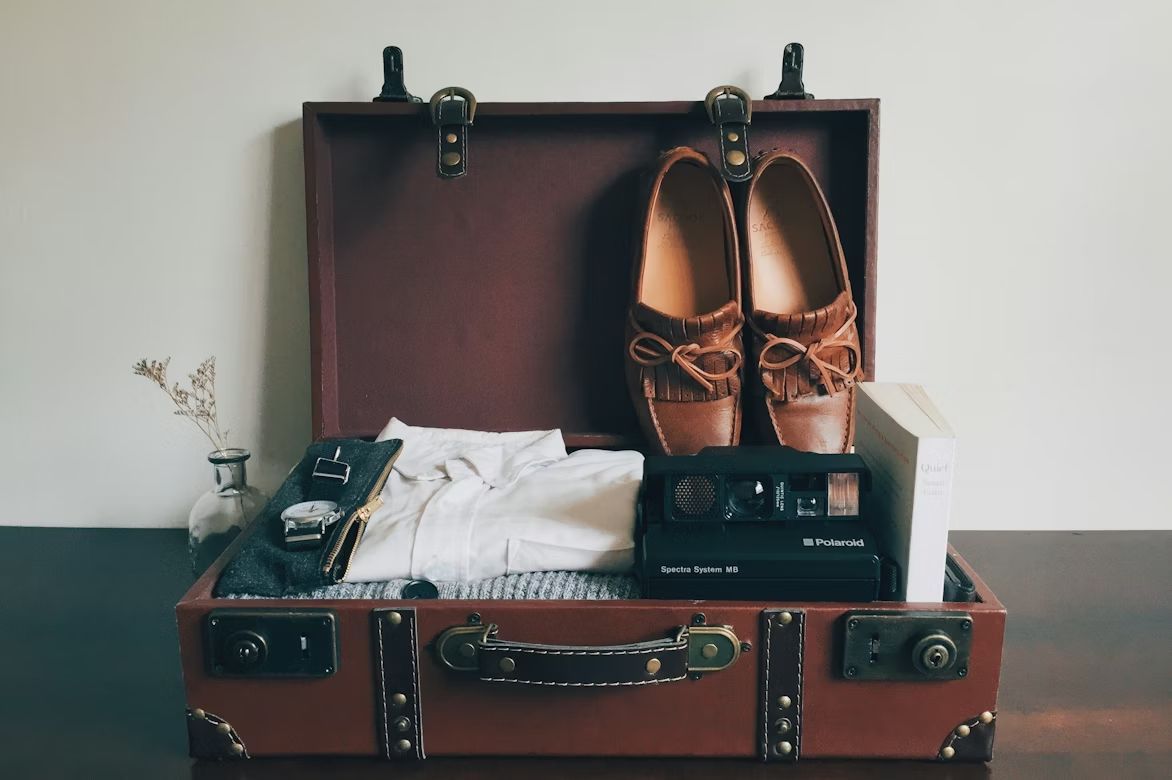
Image: Shawn Augustine

These zippered fabric cubes let you sort your clothes by category—shirts in one, pants in another, underwear in a third—and then compress them down by squeezing out excess air. They keep everything tidy and surprisingly compact . Most come in sets of different sizes, so you can mix and match depending on what you're packing.

Imagine you're flying to visit family for a long weekend but want to avoid checking a bag. Without packing cubes, that's a puzzle. With them, you'd be amazed what fits into a carry-on.

2
Portable luggage scale

Image: isens usa

This little handheld device hooks onto your bag's handle and gives you an instant weight reading. It costs about $10and weighs almost nothing itself. Use it the night before your flight, and you'll never get blindsided by an excess baggage fee of $50 (or more) again.

Picture this: you've spent a week in Florida and picked up a few things for the house. You think your bag is fine. The airline disagrees—to the tune of $75. A luggage scale would have caught that before you ever left the hotel room, giving you time to rearrange or ship something home instead.

3
Doorstop alarm

Image: Jun Ren

This wedge-shaped gadget slides under your hotel room door and sounds a piercing alarm if someone tries to push it open. It's a simple, inexpensive way to add a layer of security that the hotel deadbolt alone doesn't always provide. It fits in the palm of your hand and weighs almost nothing.

If you're traveling solo or in an unfamiliar area, peace of mind matters . Prop one of these under your door at night, and you'll sleep a lot better, knowing that if anyone tries to come in uninvited, the whole hallway is going to know about it.

4
Foldable tote bag

Image: Sasha Pestano

A lightweight tote bag that folds into a tiny pouch is one of those things you'll reach for constantly once you have it . Use it as an overflow bag on the way home when your suitcase is full of souvenirs, or as a beach bag, a grocery bag, or a day-trip bag when you don't want to lug your whole luggage around.

Say you're on a cruise with a port stop in a charming little town. You want to browse the market and pick up some local olive oil and pottery. You didn't plan for that. But if you've got a foldable tote tucked in your bag, you won’t have to scramble for a bag at the gift shop.

5
Travel clothesline

Image: Elisa Calvet B.

This is a simple elastic or bungee-style cord that stretches between two points—a towel bar, a bedpost, a shower curtain rod—so you can hang hand-washed clothes to dry overnight. No suction cups, no hardware, nothing complicated.

If you're on a two-week trip and trying to pack light, being able to wash a few things in the sink and hang them up makes a real difference . Woke up in Rome and realized you need your shirt for the following day? Wash it, and it will be dry by morning.

6
Universal travel adapter
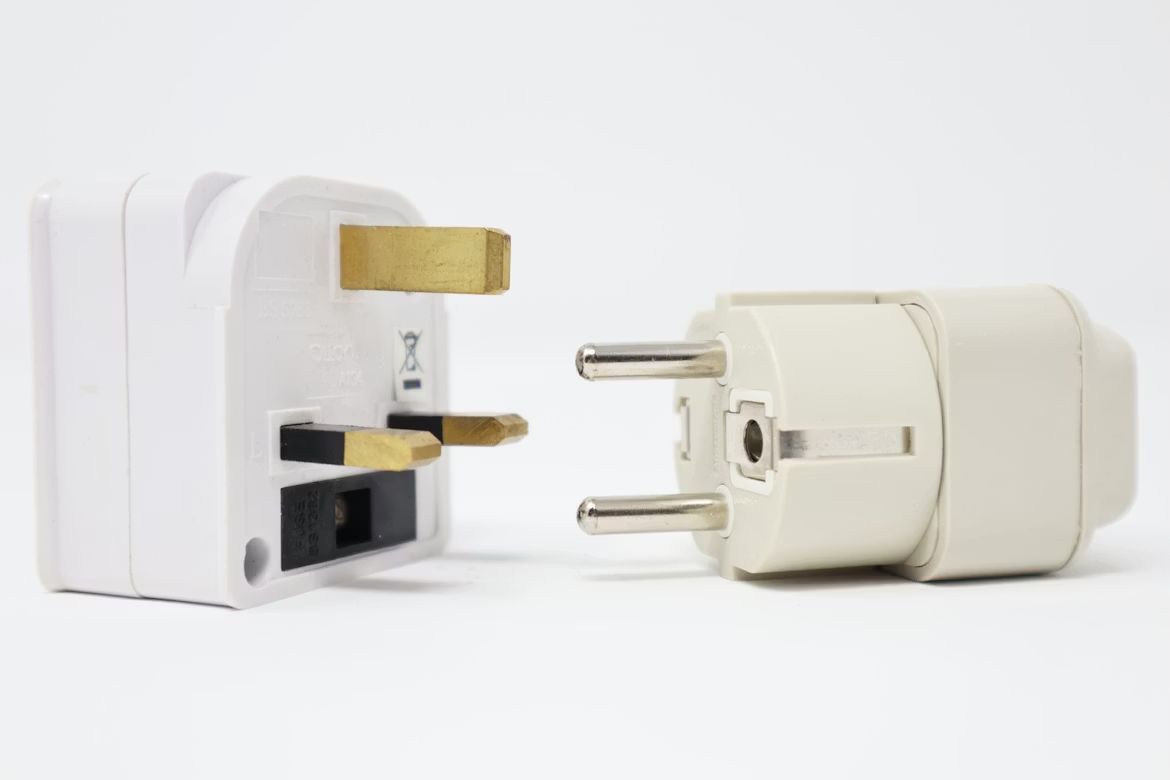
Image: Call Me Fred

Different countries use different outlet shapes and voltages. A universal adapter handles all of it— Europe, Asia, South America, the UK—in one compact device . Most modern ones also have built-in USB ports, so you can charge your phone directly without needing a separate plug.

You've landed in London, and your phone is at 8%. Your American charger is useless in a British outlet. One universal adapter, and that problem will never exist again. It's a one-time, ten-dollar fix for something that can otherwise ruin a morning.

7
RFID-blocking pouch

Image: Geoffrey Crofte

Modern credit cards and passports have chips in them that can, in theory, be scanned wirelessly by someone nearby. An RFID-blocking pouch or wallet liner prevents that from happening by creating a simple signal-blocking barrier around your cards .

Crowded airports, busy subway stations, tourist hotspots; these are exactly the environments where electronic pickpocketing is a concern. Slipping your passport and cards into an RFID pouch takes two seconds and gives you one less thing to worry about in a busy place.

8
Portable hard drive
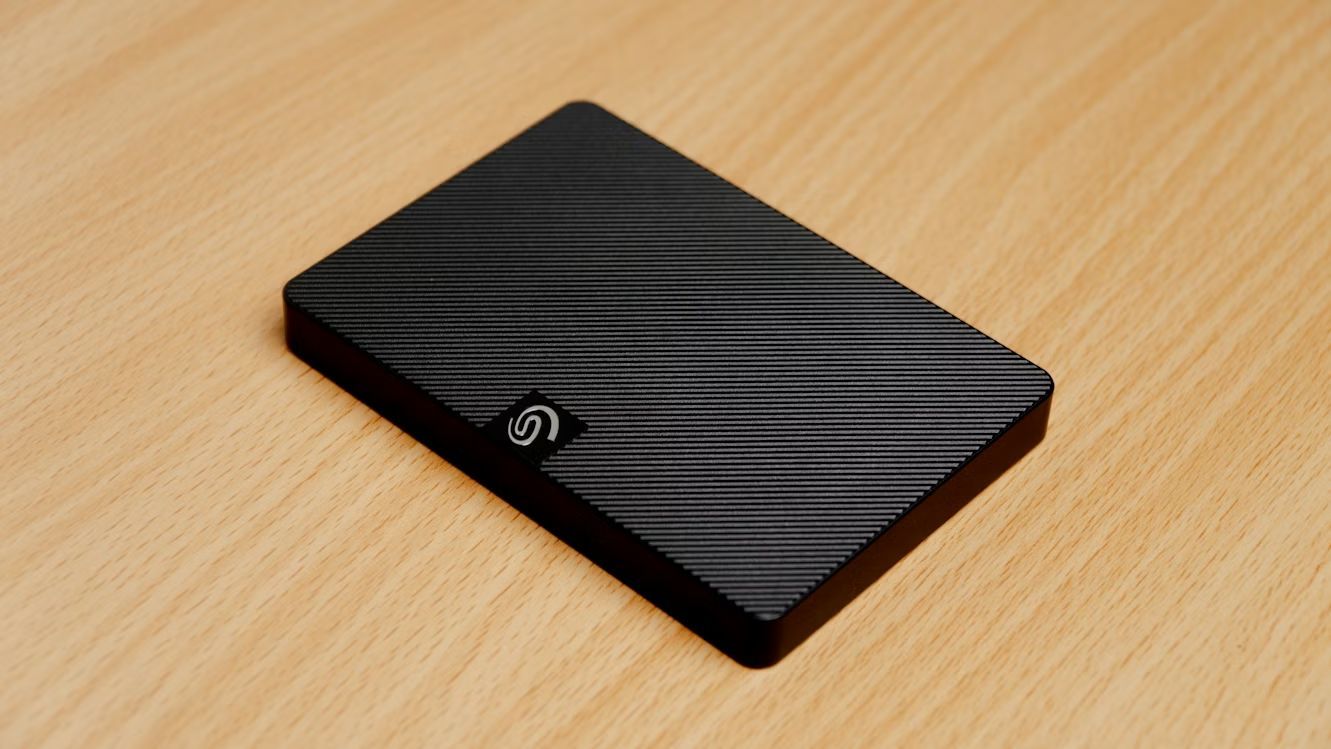
Image: Uwukuri Emery

A compact external hard drive is no bigger than a deck of cards and lets you back up your photos and documents while you're still on the road. You don't need Wi-Fi, you don't need cloud storage, and you don't need to worry about your phone running out of space at the worst possible moment.

Imagine you've spent eight days photographing the national parks out West. You have thousands of pictures and irreplaceable memories, but your phone gets lost or stolen on day nine. Without a backup, those photos are simply gone. With a portable hard drive, you plug in each night, transfer the day's shots, and travel with the peace of mind that your memories exist in more than one place .

9
Compact extension cord with USB ports
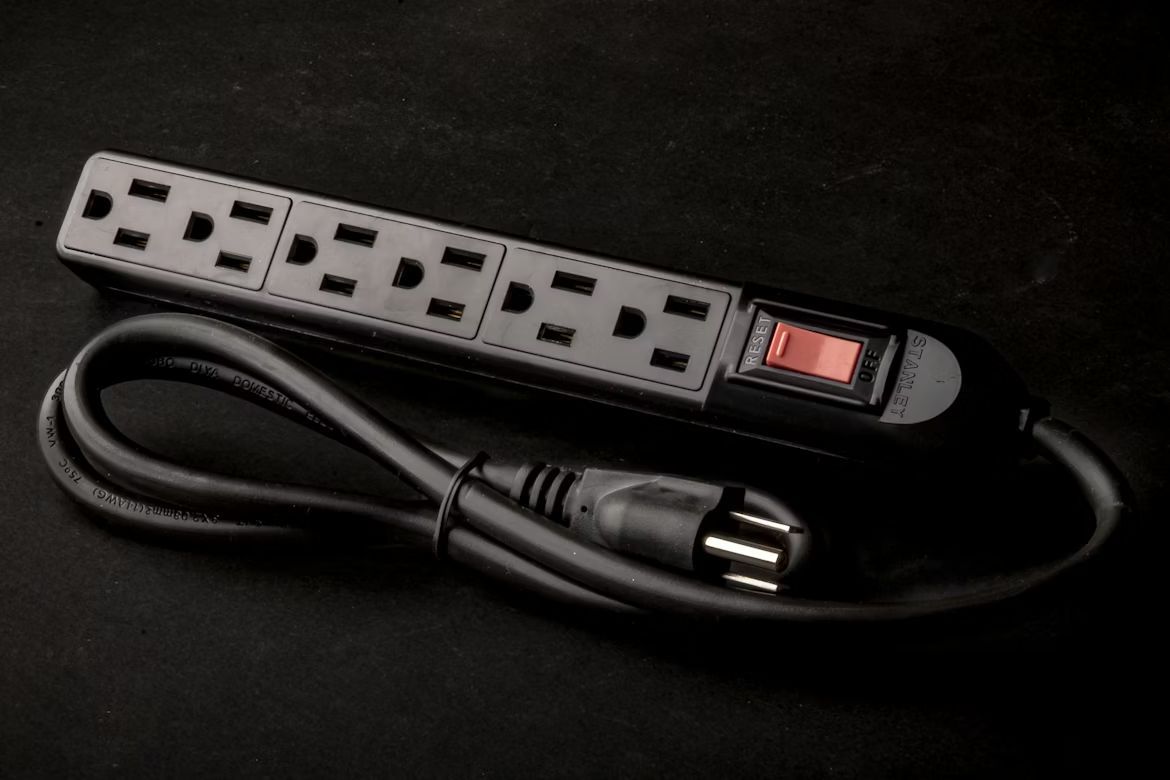
Image: Davied Thielen

Hotel rooms have a frustrating habit of putting their one or two outlets in the least convenient spots: behind the bed, across the room from the desk, nowhere near where you actually sit. A compact extension cord with built-in USB ports solves this instantly. You plug it into whatever outlet exists, and suddenly you've got four or five charging options right where you need them .

Picture arriving at your room after a long travel day with a dead phone, a tablet that needs charging, and a CPAP machine to plug in before bed. One outlet, three needs. A compact extension cord turns that into a non-issue in about ten seconds, and it takes up barely any space in your bag.

10
Collapsible water bottle

Image: Mazin Omron

When it's empty, a collapsible silicone water bottle folds flat, thin enough to slip into a jacket pocket . When you need it, it expands and holds a full 20 ounces or more. It's TSA-friendly when empty, and you can fill it right after security.

Staying hydrated on a long travel day matters more than most people realize, especially if you're dealing with heat, walking a lot, or spending hours in dry airplane air.

Culture Culture 5 min read

Straight to Netflix

10 of the biggest commercial flops in cinema history

Image: cottonbro studio

Just like any other business, making a movie is a gamble. No matter how many focus groups, ponytailed executives, or alternate-ending shoots a film production involves, no one truly knows whether the final product will be a blockbuster or a flop. And no one flops quite as spectacularly as big studios with multi-million-dollar productions. The following 10 movies were expected to dominate the box office but instead ended up on the wrong side of movie history. Have you seen any of these ten? Were they really that bad?

1
The Adventures Of Pluto Nash

Image: Antoine J.

Why anyone thought that a movie about a nightclub owner on the Moon with a ridiculous name was worth investing millions of dollars into remains a mystery. This science-fiction comedy , starring Eddie Murphy in the title role , proved that A-list talent alone is not enough to save a movie.

The film lost a staggering $156 million upon release, partly due to the disastrous critical reaction and the bad word of mouth from the few who actually saw it.

2
Titan A.E.

Image: Conrad Crawford

Science fiction is a tricky genre. Good sci-fi movies cost a pretty penny to produce, and if the story is compelling, they can become huge blockbusters. However, if the public does not like them, the commercial flop can be massive.

Titan A.E. tells the story of a young hero sent to save the human race after an alien species destroys Earth , blending traditional 2D animation with 3D CGI. The cast included Matt Damon, Nathan Lane, and Drew Barrymore. However, this star power was not enough to lead the movie to box office success, as it earned only $36.8 million worldwide and resulted in a $170 million loss for Fox Animation Studios.

3
The Lone Ranger

Image: Taylor Brandon

As is often the case, the problem isn’t so much the story as the budget. A decent movie can achieve a respectable box office performance as long as it was made for a reasonable price. However, when the budget is in the $225–250 million range, the film is forced to become a massive box office success just to recoup the money invested in it.

Based on the character of the same name, The Lone Ranger starred Armie Hammer and Johnny Depp in a Wild West adventure that had all the ingredients of a successful summer blockbuster. Unfortunately, its massive budget made it almost impossible to meet expectations.

4
John Carter

Image: Rod Long

The third (but not the last) science fiction movie on this list, John Carter tells the story of an American Confederate Civil War captain who accidentally transports himself to Mars and becomes entangled in the planet's internal power struggles.

With a production budget of $263 million, John Carter was one of the most expensive movies ever made, with its marketing costs adding nearly another $100 million. Despite eventually earning $284 million at the box office, the film suffered a historic $255 million loss, cementing its reputation as the biggest box office bomb of all time.

5
Mars Needs Moms

Image: Nicolas Lobos

Computer-animated movies are notoriously expensive to make , which is why any studio attempting to create a blockbuster using this technique must be absolutely confident in both the quality of the script and the effectiveness of the marketing campaign.

Mars Needs Moms suffered an estimated loss of $180–190 million, due to a combination of its high production costs, a subpar story, and an underwhelming marketing campaign.

6
Battleship

Image: John Kostyk

Despite being based on the popular board game and having an action-packed premise, Battleship didn’t achieve the commercial success its creators had hoped for. A combination of poor writing, weak direction, and an even worse plot created the disastrous mix that led the producers of the film to lose nearly $200 million.

The movie was expected to capitalize on the public's interest in big-robot CGI blockbusters, spurred by the success of the Transformers franchise. However, the poorly executed final product failed to achieve box office success.

7
Cutthroat Island

Image: Cezary Kukowka

Before Pirates of the Caribbean brought the pirate genre into the spotlight, 1995’s Cutthroat Island failed big time in these same waters due to a poorly written script . The film was marketed as a swashbuckling adventure but didn’t capture the vibrant, action-packed essence of pirate tales or create the same excitement as other blockbusters of the era.

Directed by Renny Harlin and starring Geena Davis, Cutthroat Island lost over $200 million and was universally panned by critics and audiences alike.

8
Indiana Jones And The Dial Of Destiny

Image: Colton Jones

An Indiana Jones movie would have been a sure thing 30 years ago, but in 2023, it was more of a gamble—even with Harrison Ford on board. Following the lukewarm reception of Indiana Jones and the Kingdom of the Crystal Skull , the new adventure aimed to conclude the franchise on a high note.

The reception to Dial of Destiny was somewhat mixed, though more positive than its predecessor. However, Indiana Jones 5 became the lowest-grossing installment in the series , earning under $384 million at the box office. Due to its large budget, the film ultimately resulted in a loss of $143 million.

9
The Flash

Image: King Lip

And finally, one day, the public seemed to reach a breaking point with superhero movies. One of the most notorious failures in the genre was DC's long-awaited standalone film, The Flash . Not only was the movie intended to be this character’s first solo outing, but it also promised exciting cameos from other DCEU cast members, including Batman and Wonder Woman.

Despite its potential on paper, the movie faced an extended and tumultuous development process, with multiple directors coming and going . This all led to The Flash failing to surpass $272 million at the worldwide box office, resulting in a staggering $150 million loss.

10
The Marvels

Image: Craig McLachlan

The final item on the list further proves the point that the public has grown tired of subpar superhero movies: The Marvels . Serving as a sequel to both Captain Marvel and the Ms. Marvel television series , The Marvels marked the 33rd film in the Marvel Cinematic Universe.

While the film grossed over $200 million worldwide, this box office revenue would have been considered a success under different circumstances. However, with a reported budget exceeding $250 million and substantial marketing costs for such a high-profile movie, The Marvels ultimately suffered a $237 million loss.

General General 3 min read

Thank God for sliced bread!

The entire world has adopted these 12 conveniences born in the U.S.

Image: Rifandi G

So many everyday comforts we now take for granted were first developed in the U.S. These innovations didn’t just change American life —they ultimately spread across the world and reshaped how people shop, eat, and move around.

1
Fast food chains

Image: Boshoku

The U.S. pioneered large-scale fast food chains like McDonald’s, Burger King, and Wendy’s, especially after World War II. These restaurants focused on speed, consistency, and low prices .

Their standardized menus and assembly-line kitchens made quick meals widely accessible. The model spread globally, shaping modern eating habits.

2
Drive-Thru restaurants

Image: Jonathan Cooper

The drive-thru concept took off in the U.S. in the 1940s, with chains like In-N-Out and later McDonald’s making it national. It allowed diners to order food without leaving their cars .

This idea dovetailed perfectly with a growing car culture and suburban life in the aftermath of WWII. Today, drive-thrus are common worldwide, but their roots lie in mid-century America.

3
Credit cards

Image: Avery Evans

While earlier charge systems existed, modern credit cards became widely used in the U.S. in the 1950s with Diners Club and BankAmericard (later Visa).

They allowed consumers to buy now and pay later , transforming spending habits. This system became a global standard, making everyday purchases faster and more flexible.

4
Online shopping

Image: Marques Thomas

Modern online shopping began in the U.S. during the 1990s, with now-ubiquitous companies like Amazon leading the way. Consumers could browse and buy products without visiting a store .

This shifted retail forever, offering convenience, home delivery, and endless variety. Today’s global e-commerce industry grew from these early American platforms.

5
Self-service gas stations

Image: Gene Gallin

Self-service gas stations became popular in the U.S. in the 1960s and 70s, allowing drivers to pump their own fuel instead of relying on attendants .

This reduced costs and sped up service, appealing to busy motorists. Over time, it became the standard in most parts of the world.

6
Supermarkets with one-stop shopping

Image: Peter Bond

The first true supermarkets appeared in the U.S. in the 1930s, offering a wide range of goods, from fresh meat and produce to dry goods to cleaning and personal care products, under one roof . King Kullen in New York is often cited as an early example of this.

These mega-stores replaced smaller specialty shops and made grocery shopping easier. The concept became a global standard for food retail.

7
Shopping malls

Image: WeLoveBarcelona.de

Indoor shopping malls emerged in the U.S. in the mid-20th century, designed as climate-controlled spaces with multiple stores in one location , beginning with Southdale Center, which opened in Edina, Minnesota, in 1956.

They became social hubs as well as retail centers. The mall concept spread worldwide, especially in suburban areas.

8
Frozen TV dinners

Image: Kouji Tsuru

TV dinners were introduced in the U.S. in the 1950s, notably by Swanson. These frozen meals were designed to be heated quickly and eaten while watching television, hence the term "TV dinner."

They reflected changing lifestyles in which convenience and entertainment overlapped. Frozen meals later became a global staple, especially with the advent of microwave ovens, which became increasingly popular in the 1970s and 80s.

9
Automatic dishwashers

Image: Ostbacher Stern

Dishwashers existed earlier, but automatic home models became widely adopted in the U.S. during the mid-20th century, making their way into American homes in the 1950s and 60s.

They saved time and reduced household labor, especially in busy families . Today, they are a common appliance in many parts of the world.

10
Sink garbage disposals

Image: Giorgio Trovato

The garbage disposal system was invented in the U.S. in the 1920s and became popular in American homes after World War II. It grinds food waste directly in the sink .

This innovation simplified kitchen cleanup and reduced trash volume. It remains especially common in U.S. households.

11
Vending machines

Image: Kenny Eliason

Modern vending machines became widespread in the U.S. during the 1950s and 60s, offering snacks and beverages in public places.

They provided quick, unattended service at any hour . While now global, their large-scale use and variety were strongly shaped by American consumer culture.

12
Ride-sharing apps

Image: Paul Hanaoka

Ride-sharing apps like Uber and Lyft began in the late 2000s, using smartphones to connect passengers with drivers instantly .

They transformed urban transportation, offering flexible alternatives to taxis. This model has since expanded to cities around the world.

Explore more American facts

Choose your favorite category!

General
General

As American as apple pie—the very best America has to offer!

Culture
Culture

Delve into the astounding richness of American lore.

Geography
Geography

Hop in and explore vast and diverse American landscapes.

History
History

Discover the key moments that shaped the United States.