Geography Geography 4 min read

Behind tall faces

Mount Rushmore hides many secrets. Did you know all of these?
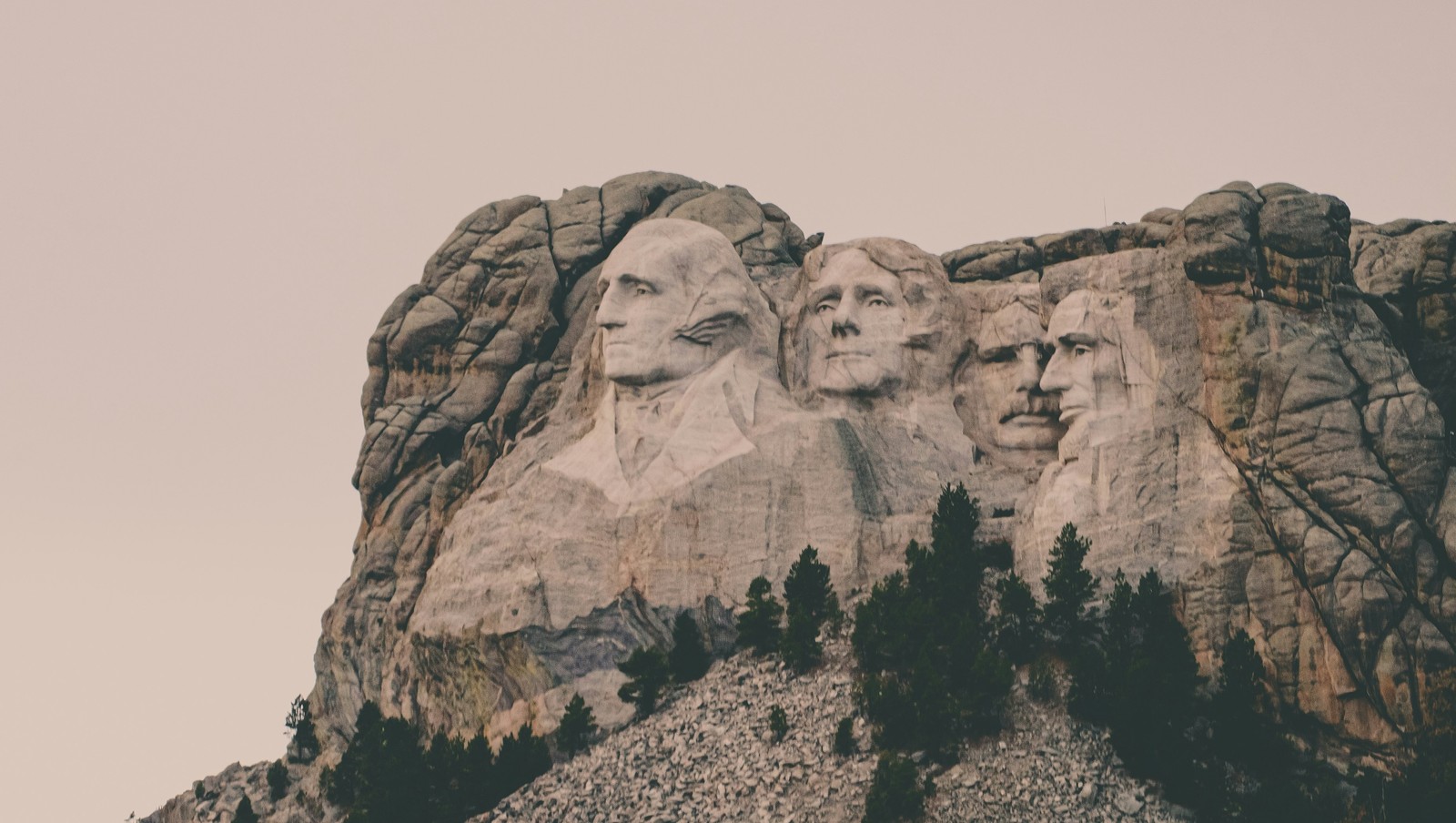
Image: Jake Leonard

What famous woman’s face almost became the fifth face on Mount Rushmore? Did the sculptor Gutzon Borglum really intend to just carve out the heads? Why is the mount named that, and not Borglum? The answers to these questions are some lesser-known facts about one of the most famous landmarks and sights in our country. Let’s dive into these stories!

1
The original plan included full-body figures
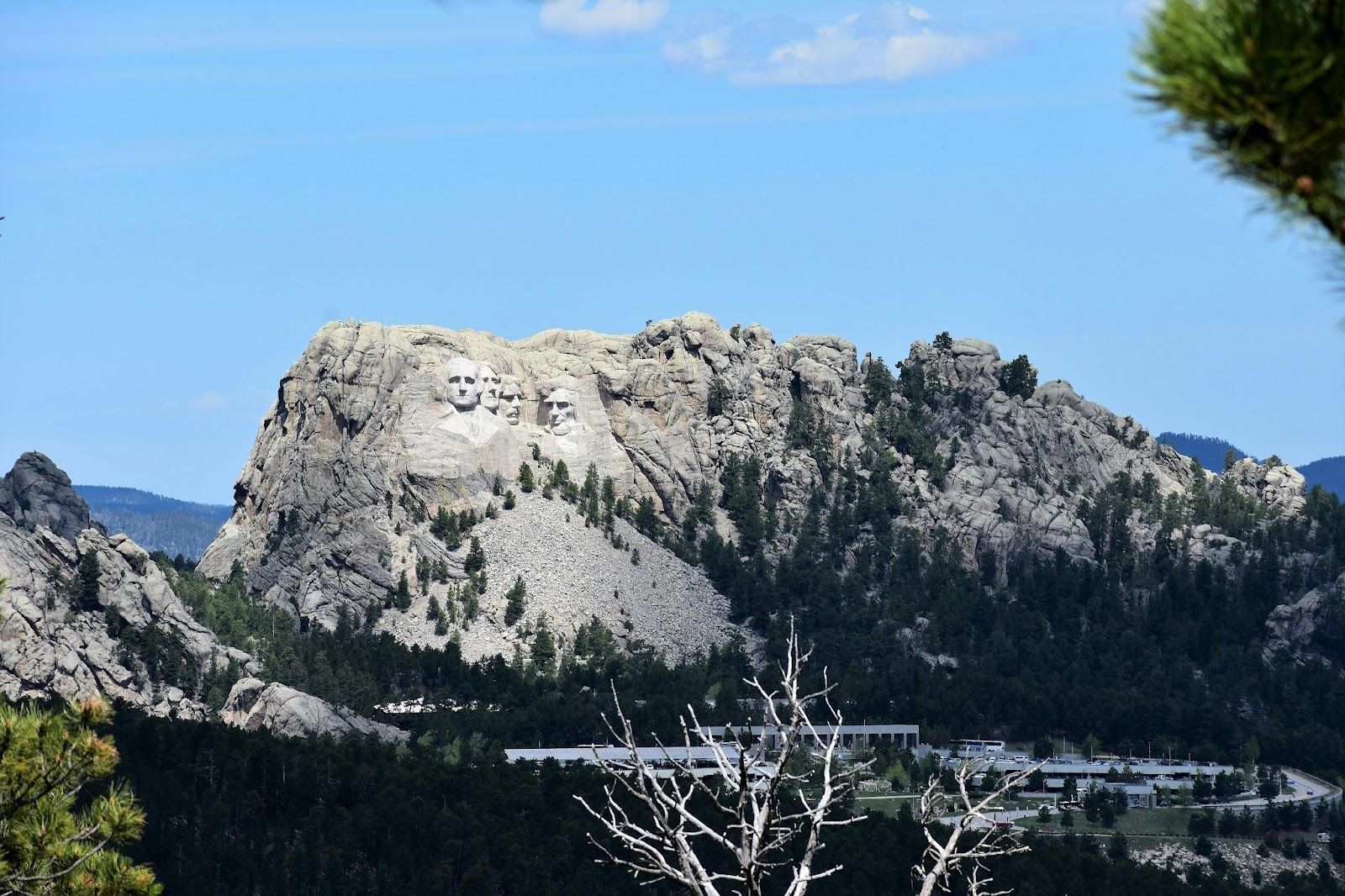
Image: Thomas Shockey

Mount Rushmore was supposed to be even more colossal than it already is. Sculptor Gutzon Borglum envisioned the four presidents carved from the waist up .

He even made plaster models showing Abraham Lincoln's coat folds and Teddy Roosevelt’s hand clutching his lapel. But as costs went up, Congress said: "heads only, please."

2
Charles Rushmore was just a curious New Yorker
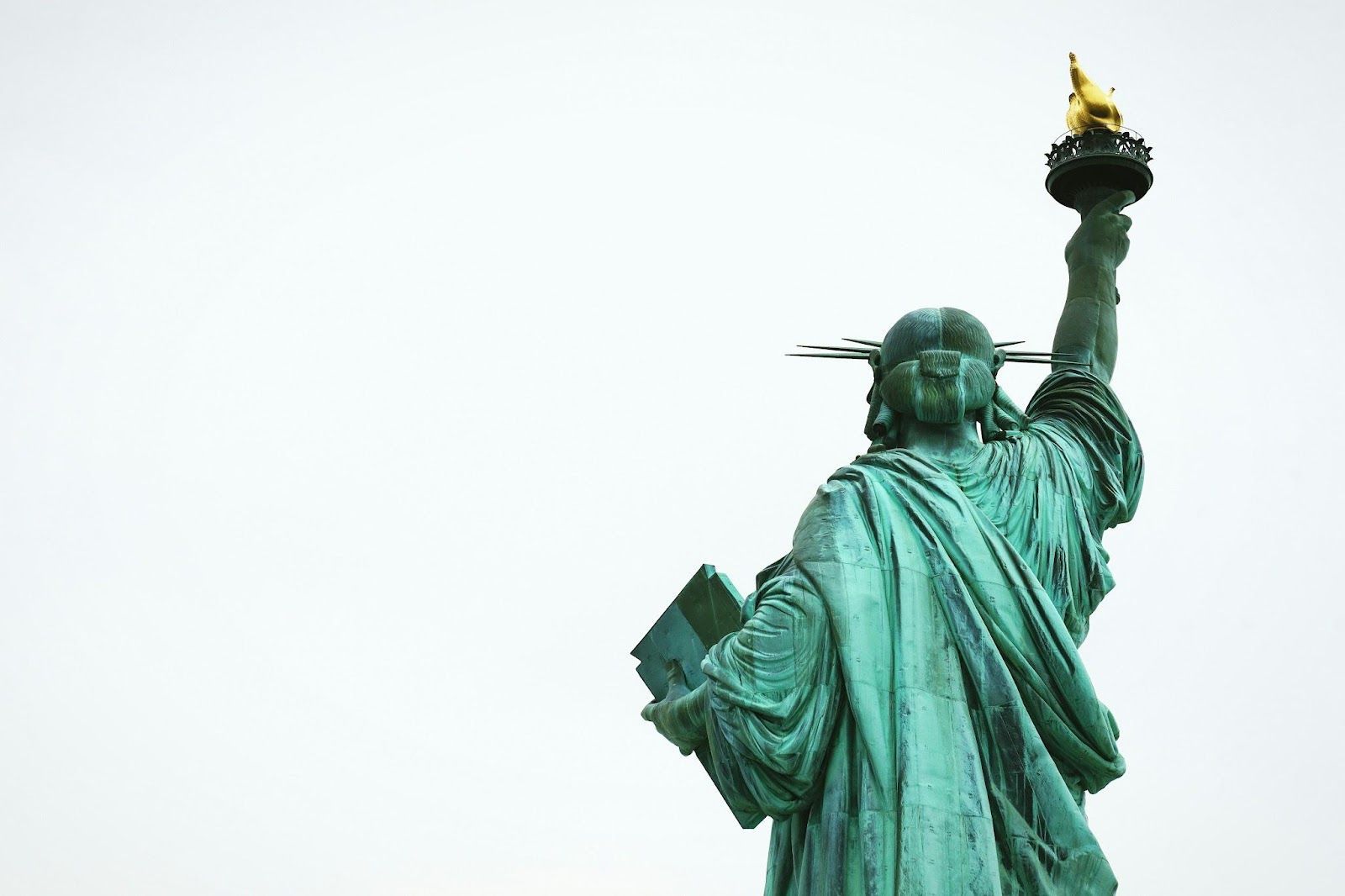
Image: Maarten van den Heuvel

Back in 1925, when the mount was about to be carved into a monument, Charles Rushmore wrote a letter explaining why the peak bore his name. He recalled that in the 1880s he was a young New Yorker working in the area, and fell fond of that particular granite peak .

When he asked the locals about it, they informed him that it had no name, but that if he wished so, they would just start calling it Rushmore Peak, or Mount Rushmore, or the likes. Years later, that very name had been inscribed in the public domain to designate the peak.

3
Yes, there’s a hidden room behind Lincoln’s head
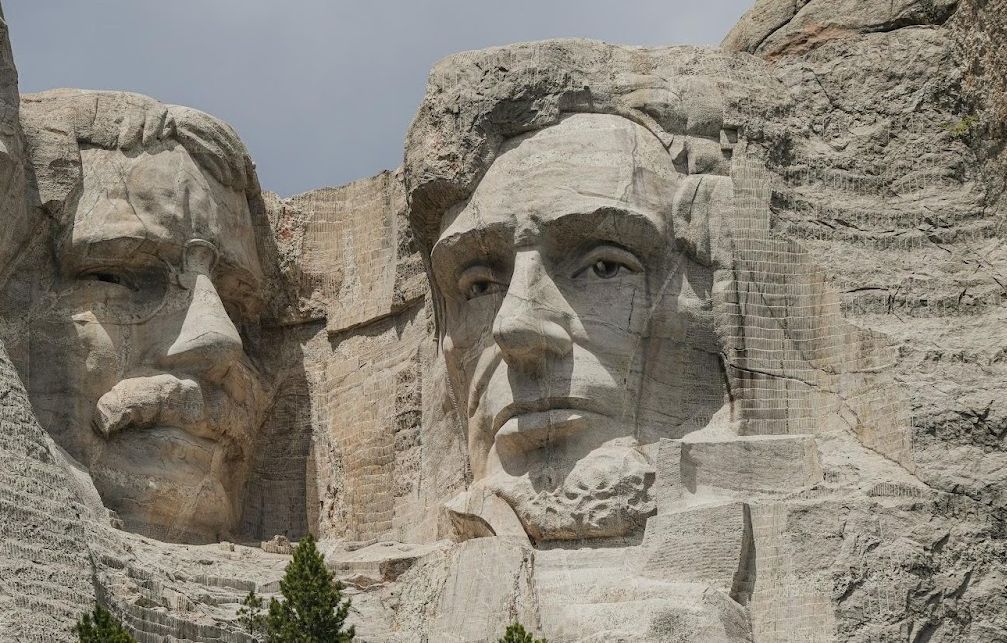
Image: Laura Nyhuis

Behind Abraham Lincoln’s hairline lies a hidden chamber, part of Borglum’s lofty idea for a "Hall of Records." This room was meant to house foundational American documents like the Constitution or the Declaration of Independence.

Instead of that, in 1998, a titanium box was placed inside, filled with copies of important documents and biographies, as a time capsule to preserve the treasure of knowledge for future generations.

4
Thomas Jefferson was moved
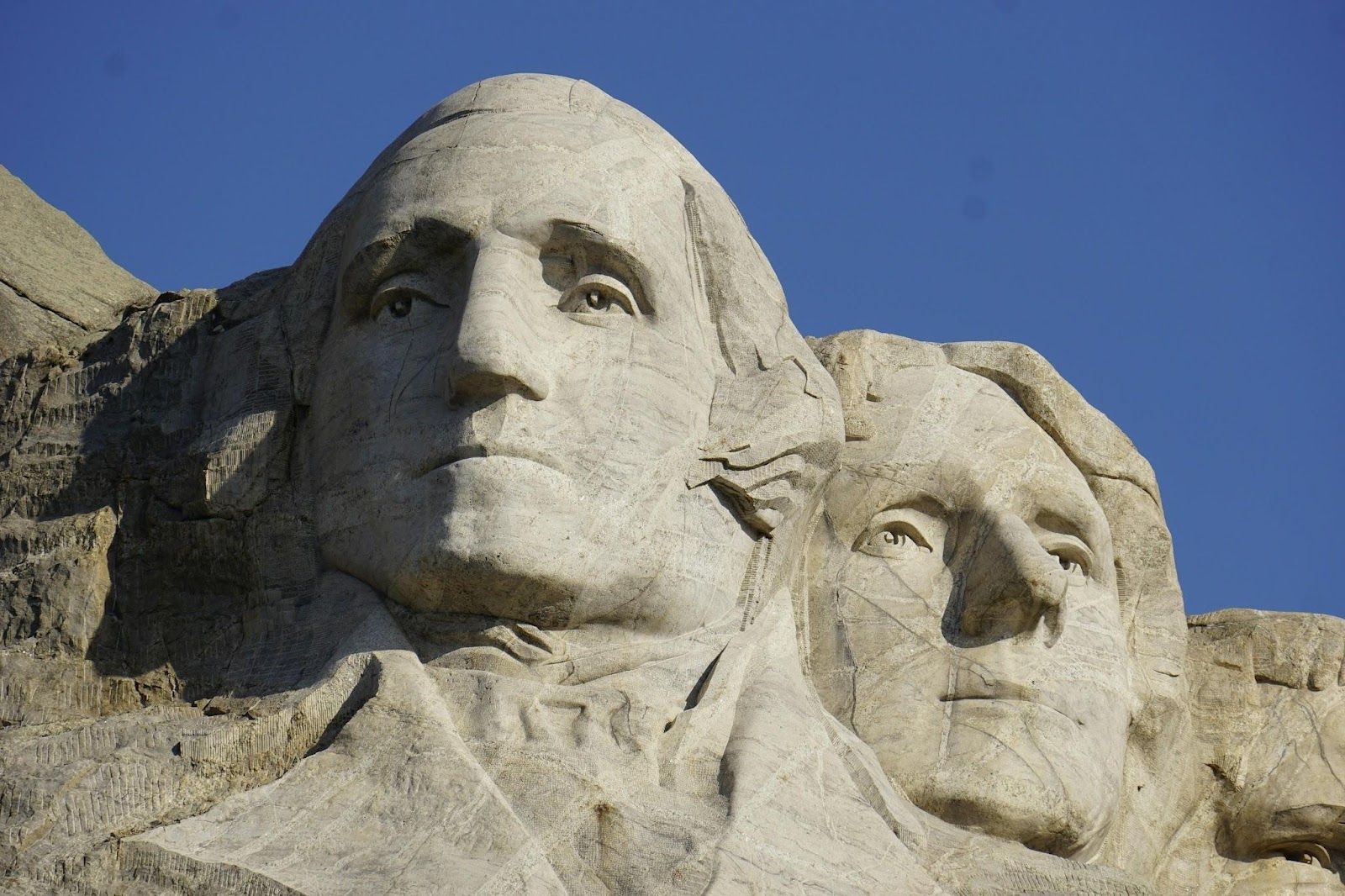
Image: Dave Baraloto

Jefferson was originally supposed to go to Washington’s right, but after 18 months of chiseling , the granite betrayed them. Cracks and flaws made the site unworkable.

Borglum made the painful decision to blast Jefferson’s half-formed face clean off and start anew on Washington’s left.

5
The mountain was almost a monument to western heroes
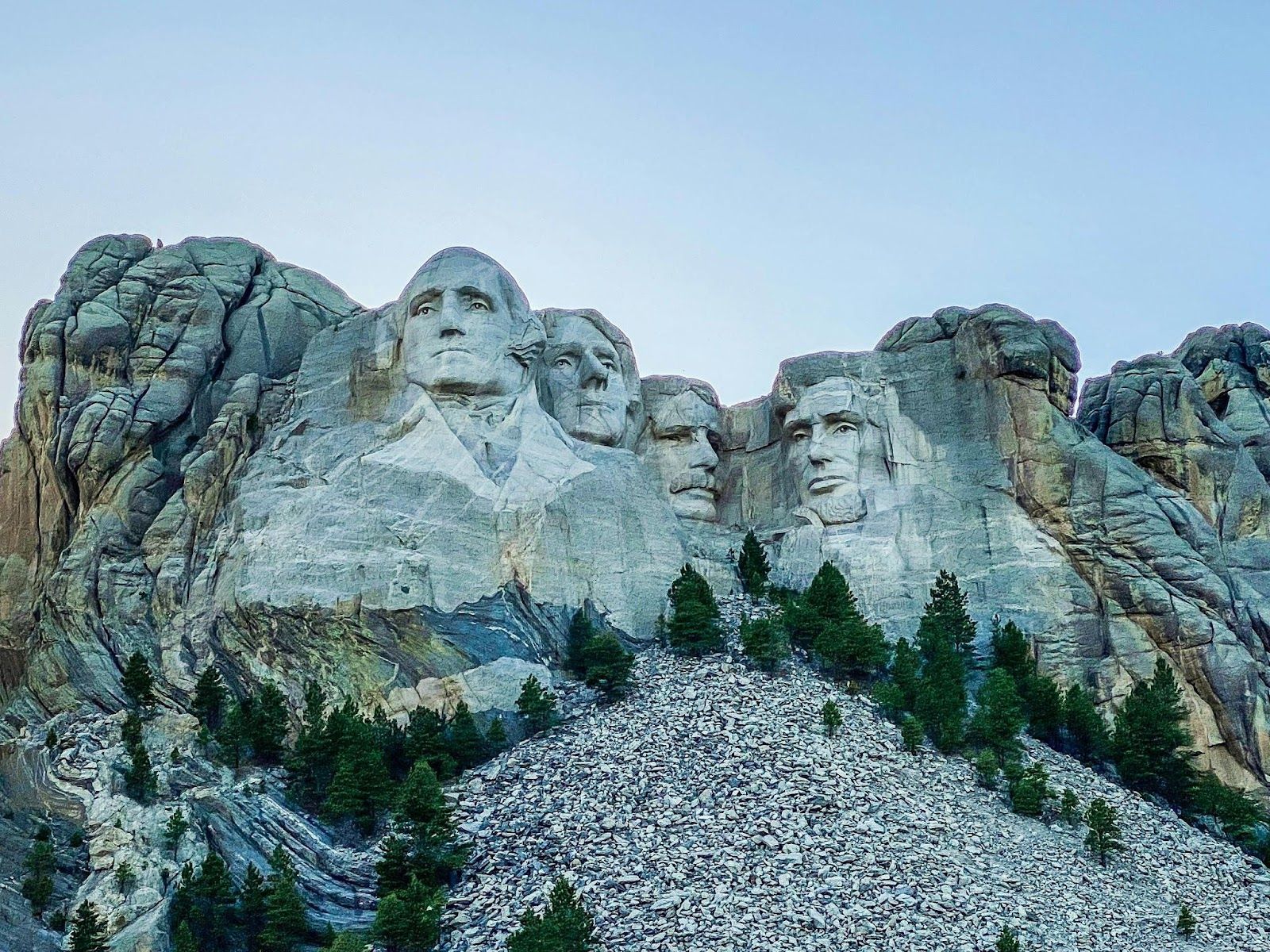
Image: Timberly Hawkins

Before presidents took over, the mountain was pitched as a giant tribute to the Wild West . South Dakota historian Doane Robinson wanted to see frontier legends like Lewis & Clark carved into the Black Hills.

But when Borglum came aboard, he had a grander (and more politically bankable) idea: four presidents to symbolize national unity and expansion.

6
A woman’s face was almost added
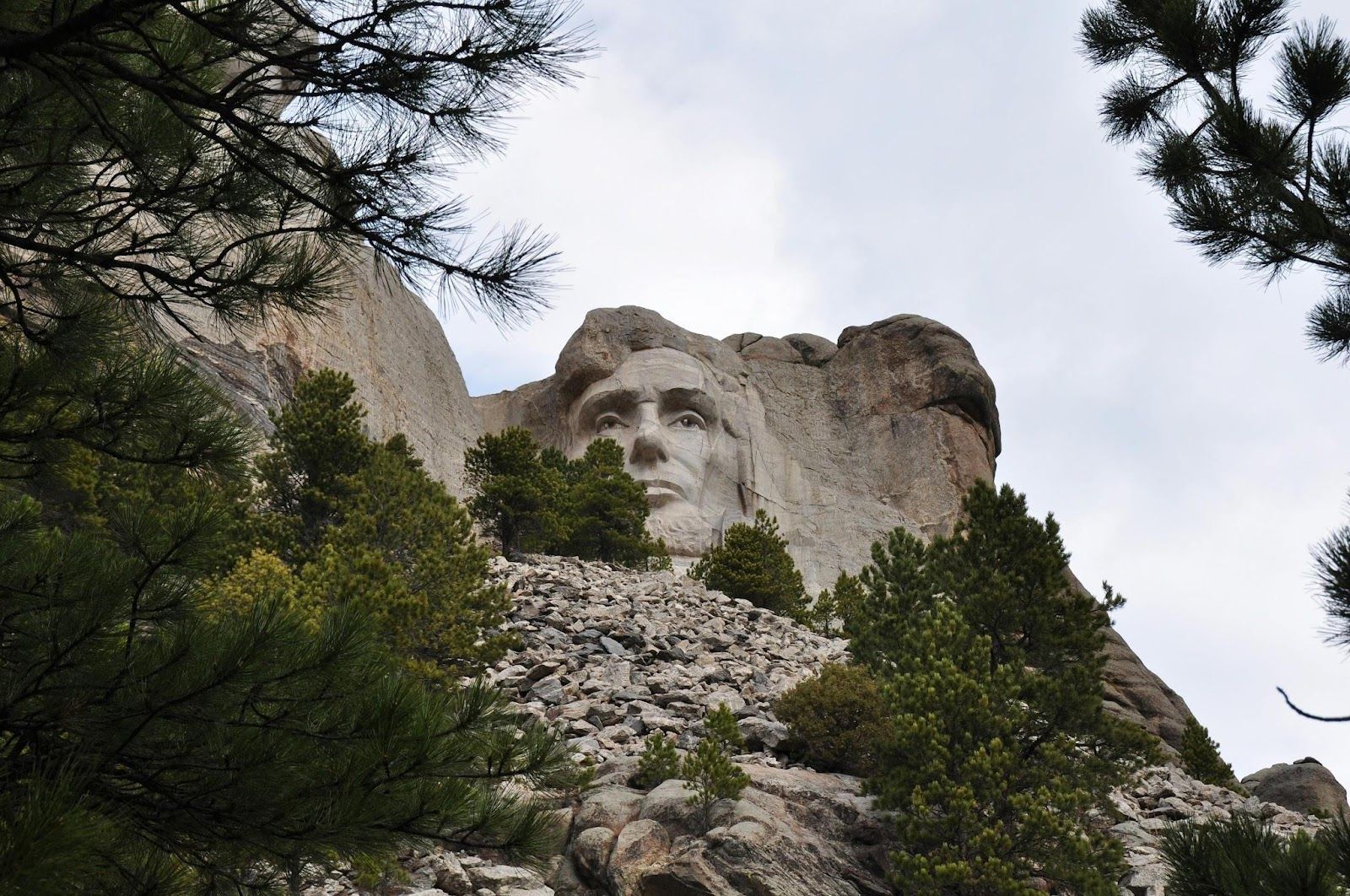
Image: Tom Fournier

In the 1930s, there was serious talk of honoring Susan B. Anthony alongside the Founding Fathers, as a nod to the women’s suffrage movement.

Borglum wasn’t opposed to the idea, but Congress quickly nixed it, stating that only U.S. presidents could be included.

7
The workers were mostly local miners and loggers
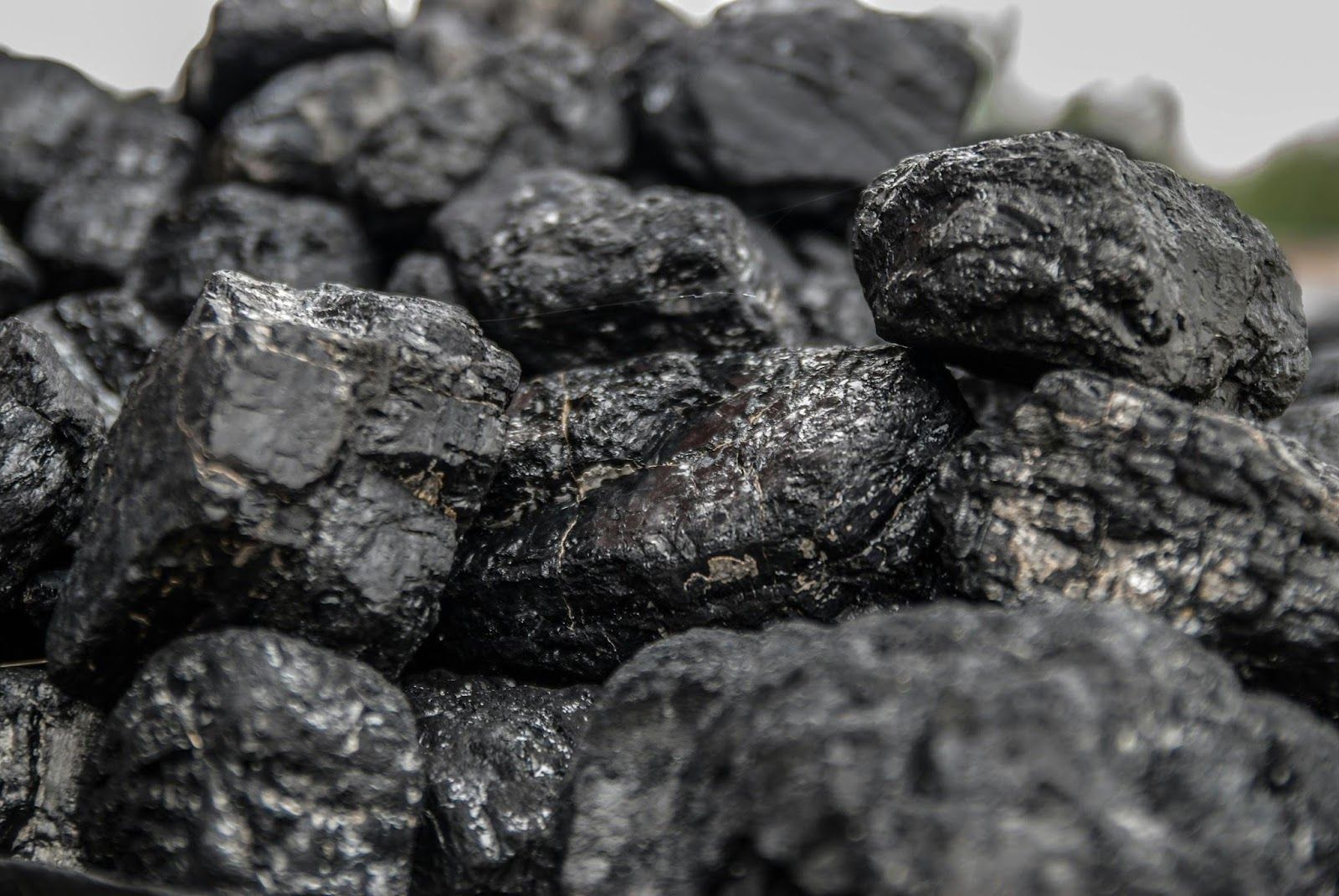
Image: Pixabay

They were neither sculptors nor artists. Most of the workforce came from nearby Keystone, South Dakota: miners, loggers, and hard-up laborers looking for work during the Great Depression.

Borglum trained them himself. There were no safety harnesses, and yet, remarkably, no one died on the job.

8
Dynamite did 90% of the work
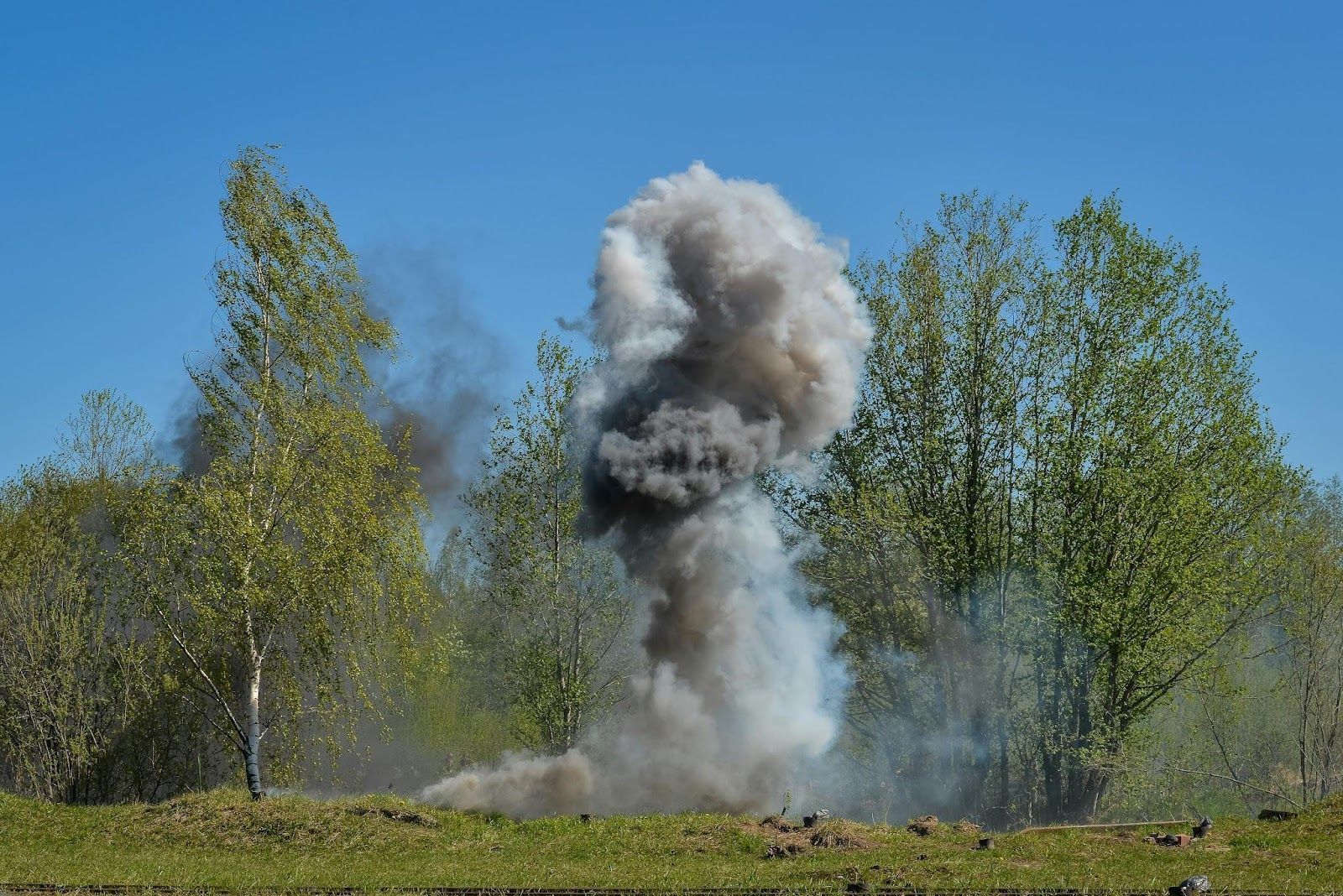
Image: Alexander Paramonov

To carve the faces of Washington, Jefferson, Roosevelt, and Lincoln, workers used carefully timed dynamite blasts to remove over 450,000 tons of rock. They got so precise, they could blast within inches of where the final surface would be.

The last details, like wrinkles, pupils, or Roosevelt’s glasses, were done with jackhammers and chisels.

9
The noses are disproportionate
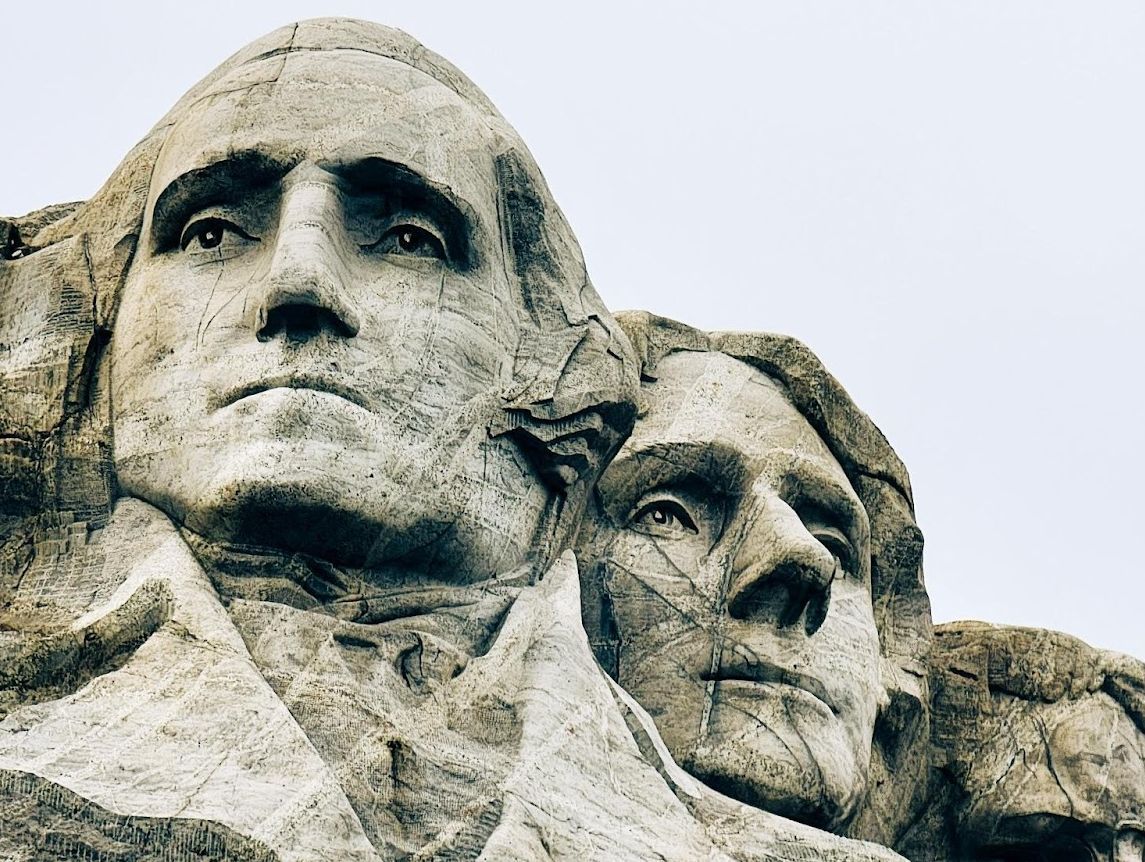
Image: Dudubangbang Travel

Standing in front of the mountain, the faces seem alright. But that’s a trick of perspective. Each presidential nose is a whopping 20 feet long .

If the sculptures had included full bodies as planned, each figure would have stood 465 feet tall. That’s taller than the Statue of Liberty and most downtown skyscrapers.

10
Teddy Roosevelt was the most controversial pick
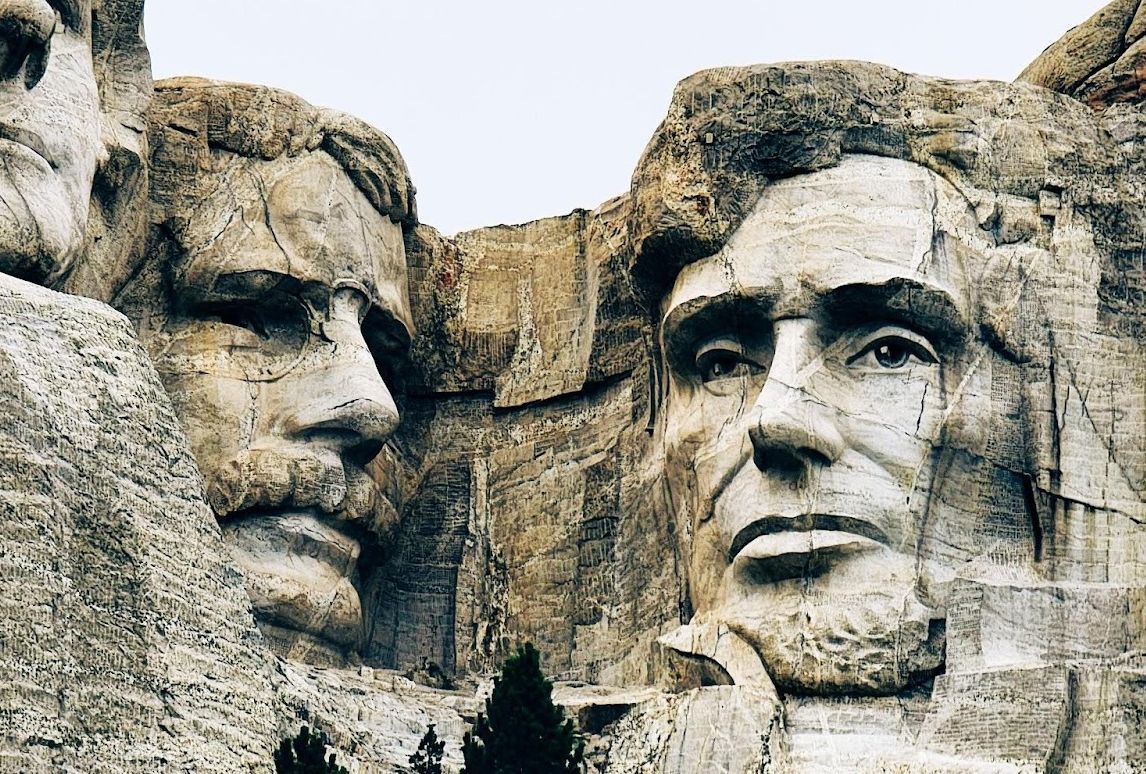
Image: Dudubangbang Travel

Washington, of course. Jefferson, made sense. Lincoln, sure. And Teddy? Some critics raised their eyebrows at Borglum’s fourth choice. Roosevelt had only recently passed away in 1919, and many questioned whether he'd stood the test of time.

But Borglum defended the decision Roosevelt’s role in breaking up monopolies, conserving national parks, and engineering the Panama Canal. Plus, Borglum had met him personally and was a fan.

11
It was supposed to have inscriptions
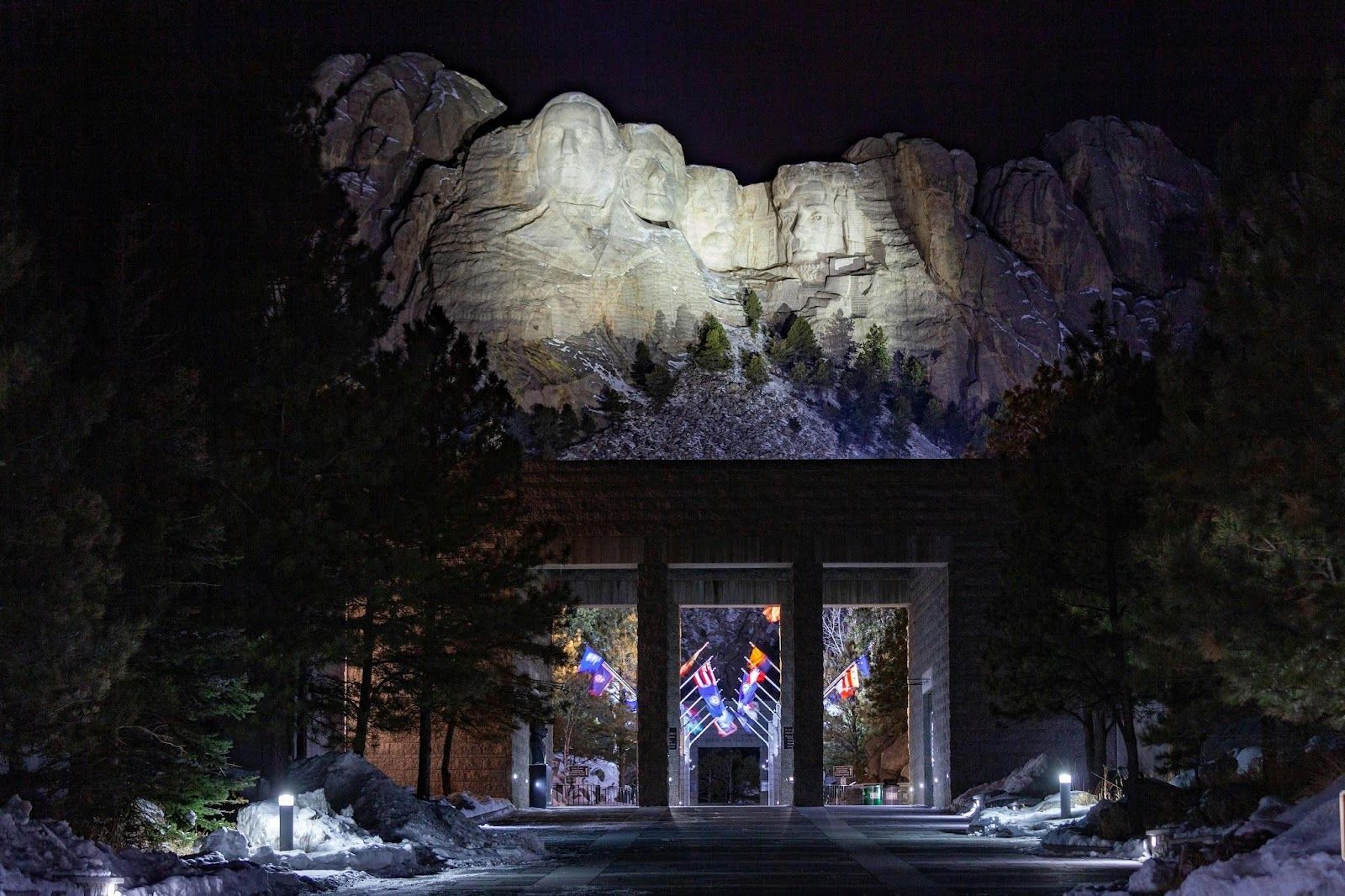
Image: Dan Pick

Borglum had grander plans than just four giant heads. He wanted to carve a massive inscription next to them, a timeline of America’s most important milestones , chiseled straight into the mountain. In time, the idea was scrapped for practical and aesthetic reasons.

12
The visionary died before completion
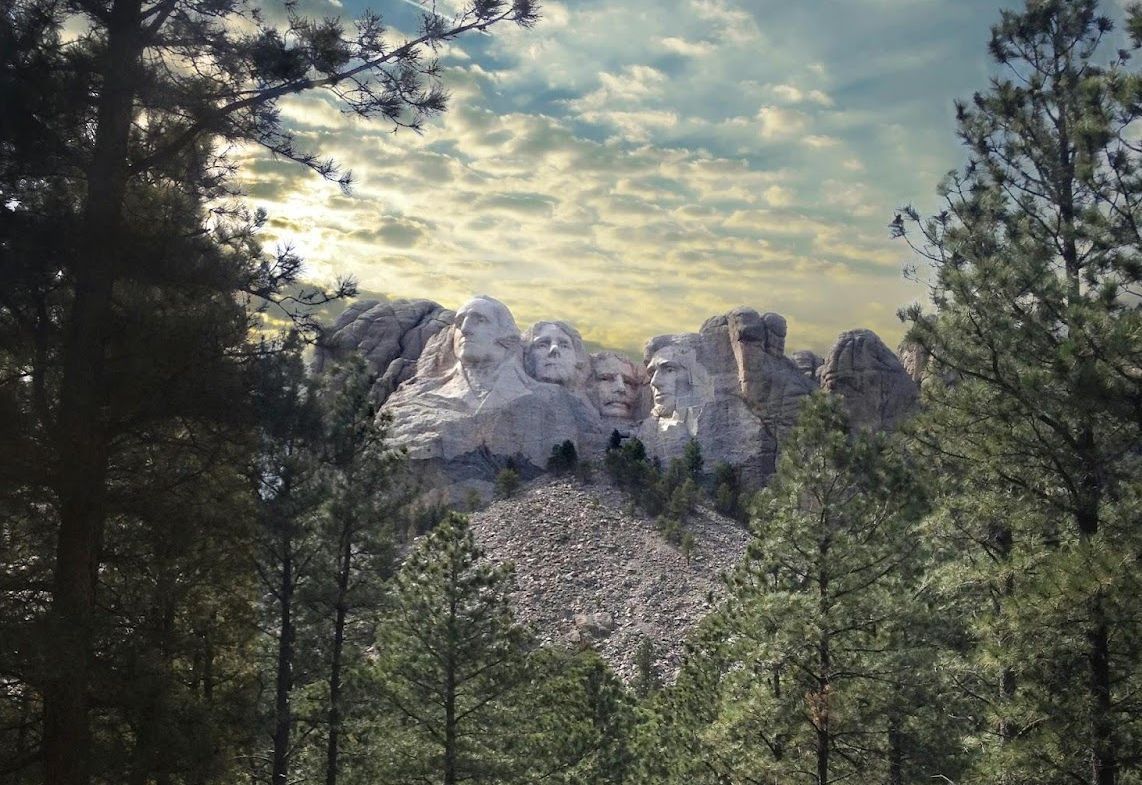
Image: Lisa Reichenstein

Gutzon Borglum, the visionary behind it all, didn’t live to see his masterpiece finished. He died in March 1941, just as the construction was reaching its end. His son, Lincoln Borglum (yes, named after that Lincoln), took over the project.

Still, with WWII drawing resources elsewhere, funding was slashed, and Lincoln had to wrap things up quickly . Some features, like Lincoln’s ear, were never fully detailed.
Geography Geography 4 min read

Famous mottos

What does "Dum Spiro Spero" truly mean? The story behind iconic mottos!

Image: Roszred

State mottos reflect the identity and values of each US state, often appearing on flags, monuments, and even license plates. But with 50 states, remembering all of them can be a challenge! Think you can do it? Put your patriotism to the test and see if you can match these 6 mottos to their respective states . Let’s play!

1
"Sic Semper Tyrannis"

Image: Scott Pruett

You’ve probably come across this motto many times—it belongs to one of the most historically significant states in our country. In fact, this state is sometimes called the "Mother of States"!

Eight U.S. presidents were born here, including none other than George Washington himself. Can you guess which state we’re talking about?

2
"Excelsior"

Image: Matheus Cenali

Many iconic landmarks make this state one of the most famous—Times Square, Broadway, and Wall Street, to name a few. It’s also known for its apple and maple syrup production.

When it comes to history, this state played a fundamental role. The Federalist Papers , which helped shape the Constitution, were written here! We bet you know which state we’re talking about—don’t you?

3
"Live Free or Die"

Image: Brian Wangenheim

Home to Mount Washington, this state is renowned for its stunning landscapes. Its impressive quarries and granite formations earned it the nickname "The Granite State."

This state played a key role in the American Revolution , serving as an early center of resistance against British rule. It later became the ninth state to ratify the US Constitution. So, what's your guess?

4
"Dum Spiro Spero"

Image: Dylan Mullins

This state is home to historic Fort Sumter, where the American Civil War officially began . It’s also the birthplace of Andrew Jackson, the seventh US president—though some historical debate remains.

On the other hand, this US state is known as "The Palmetto State" for its beautiful palmetto trees, which are also featured on its flag. Think you've got it?

5
"Friendship"

Image: Lori Stevens

Known as "The Lone Star State," this state was once an independent republic before joining the US. It’s home to the Alamo , the historic site of a pivotal battle in its revolution.

In addition to Presidents Dwight D. Eisenhower and Lyndon B. Johnson, famous figures like Beyoncé and Farrah Fawcett were also born here!

6
"Eureka"

Image: Jake Blucker

This is the splendid motto of a state famous for its wine and citrus fruit production. It's also considered a tech hub for being home to the iconic Silicon Valley, a global center for tech innovation.

Known as "The Golden State," it boasts famous landmarks like the Hollywood Walk of Fame and the Hollywood Sign. Got the answer?

7
"Sic Semper Tyrannis": Virginia

Image: Richard Hedrick

You got it right! Sic Semper Tyrannis is Virginia’s state motto, meaning "Thus always to tyrants" in Latin. Chosen in 1776, this phrase symbolizes Virginia’s historic stand against tyranny, reflecting its key role in the Revolutionary War.

8
"Excelsior": New York

Image: Luke Stackpoole

If you guessed New York, congratulations! Excelsior , meaning "Ever Upward" or "Higher," has been the state’s motto since 1778 . True to its meaning, New York chose this motto to symbolize its relentless ambition and drive for progress. Did you know that?

9
"Live Free or Die": New Hampshire

Image: The New York Public Library

New Hampshire adopted "Live Free or Die" as its official state motto in 1945. The phrase was coined by General John Stark , a hero of the American Revolutionary War . In 1809, Stark was invited to an anniversary reunion of the Battle of Bennington, where he had fought and led New Hampshire militiamen. Unable to attend due to poor health, he sent a letter with his toast: "Live free or die: Death is not the worst of evils."

10
"Dum Spiro Spero": South Carolina

Image: Leo Heisenberg

Dum Spiro Spero is South Carolina’s official state motto! Officially adopted in 1776, this Latin phrase means "While I Breathe, I Hope." Pretty inspiring, isn’t it? But that’s not all—South Carolina actually has 2 mottos ! The other, also adopted in 1776 and engraved on the original Great Seal, is Animis Opibusque Parati ("Prepared in Mind and Resources").

11
"Friendship": Texas

Image: Avi Werde

Texas chose a powerful word as its state motto! "Friendship" has symbolized Texas since 1836, when it declared independence from Mexico and became a republic. The motto remained even after Texas joined the US in 1845 .

Representing the state’s unity and diplomatic intentions, the word was officially adopted as the state motto in 1930 .

12
"Eureka": California

Image: Maarten van den Heuvel

You were right! Eureka is California’s state motto, meaning "I have found it" in Greek. But why this phrase? Well, California's state motto takes inspiration from the Gold Rush that kicked off in 1848, after the precious metal was discovered in the state's lands.

General General 4 min read

QUIRKY FRIENDS

America's most beloved characters: 10 mascots we all love

Image: Jacob Rice

Few things are more American than identifying your favorite sports team or favorite breakfast cereal with a beloved mascot. Marketing has found a great way to make consumers feel attached to specific brands and identify with their products and characters. Who doesn’t love Tony the Tiger or our fluffy friend, the Pillsbury Doughboy? They have found their way into our homes and hearts! In this article, we’ll talk about 10 of our favorite American mascots. Read on and enjoy!

1
Rich Uncle Pennybags

Image: Maria Lin Kim

Board games are popular, at least some of them. Clue, Pictionary, Monopoly—we’ve all played at least one of these. But Monopoly’s popularity is something else. And it’s not just the game’s popularity but the fine man who is the face of the brand.

Rich Uncle Pennybags was introduced in 1936 and is widely known as Mr. Monopoly. This rich guy, dressed in a smart tuxedo, turned out to be so popular that he’s been incorporated into the brand’s logo altogether.

2
Tony the Tiger

Image: Franki Chamaki

Introduced in 1951, Tony the Tiger has been a fixture in, possibly, every single household in the United States and many more countries around the world.

With his classic blue background, Tony the Tiger successfully helped Kellogg’s skyrocket as a brand and made not only the mascot but the cereal truly unforgettable. In spite of being a tiger, Tony is known for his courageous messages and friendly smile that invites consumers to take a scoop of cereal and be ready to face the day. Who doesn’t need this shot of inspiration every morning? We can definitely count on Tony the Tiger for that!

3
Pillsbury Doughboy

Image: Kelsey Todd

This fluffy, adorable mascot, affectionately known as Poppin’ Fresh has been making kitchens a little brighter since 1965.

His real name is the Pillsbury Doughboy, and he is famous for his infectious laugh that erupts whenever someone pokes his belly. Dressed in his signature white chef’s hat and scarf, this giggling, chubby fella is the best company one can have when baking. If you have any doubts, you can ask this baking master!

4
Gritty

Image: Lynda Sanchez

If chaos had a face, it would definitely be Gritty! This wild-eyed, orange furball took the world by storm as the official mascot of the Philadelphia Flyers NHL team.

He made his debut in 2018 and soon became a favorite thanks to his unpredictable antics and meme-worthy expressions, which you are surely familiar with!

Both his personality and his color are quite loud, making him quite unforgettable, as orange is also the color of the team. It represents their essence: unapologetically weird and proud of it!

5
Smokey Bear

Image: Brian Wangenheim

Nature is truly a wonder, but in order to keep it that way, we need to protect it. Now, when it comes to this, warning messages have effectively prevented people from accidentally starting wildfires, thanks to a strong brown bear with a powerful message "Only you can prevent wildfires."

The campaign started in 1944 when Smokey Bear was introduced to the nation to spread the message across radio, TV, and print media. In no time, he became a success and a mighty figure of environmental protection.

6
Mr. Met

Image: Lesly Juarez

The spring of 1963 must be a loving memory for Mets fans: that’s when their mascot, Mr. Met, was born. And he came to this world with only one purpose, to cheer the New York Mets for life, and oh-boy did he accomplish it!

For over four decades, and with a partner in crime who joined the family in the mid-1960s, Lady Met, this baseball-loving mascot with a giant baseball for a head, has not only been a mascot but has also become part of the family. Is he a part of yours?

7
Kool-Aid Man

Image: Reba Spike

This brand is one of the most consumed in America and, even though they didn’t need a mascot to be successful, the Kool-Aid man surely brought around a fair dose of cuteness and good marketing.

Originally known as Pitcher Man, which made sense since he is the drawing of a pitcher, he was later renamed Kool-Aid Man with a clear target audience: children. Once again, the brand mascot made it an undeniable success, and it soon became a cultural icon with an iconic "Oh, Yeah!" catchphrase that can make you thirsty just from reading it! Thank goodness we have the Kool-Aid man to assist us there!

8
The Laughing Cow

Image: Kenny Eliason

This brand has a namesake mascot which, ever since it was created in 1921, has undergone quite an evolution! The cheerful cow, known as the Laughing Cow, first appeared to promote high-quality dairy products when packaged cheese was a novelty.

The character, highly recognizable for its red color, has graced all kinds of the company’s product packages and has become a synonym for quality dairy products, so much so, that it continues to be the logo of the brand today!

9
Big Tex

Image: Ray Shrewsberry

If you are from Texas, or if you have attended its State Fair, you are probably familiar with this 55-foot-tall state mascot. Big Tex, the official mascot of the State Fair of Texas was introduced in 1952 as a repurposed Santa Claus figure!

At the time, he was completely transformed into the towering cowboy we all know today. With his classic cowboy hat and his iconic greeting "Howdy, folks!" However, it’s not entirely fair to call him just a mascot, as he actually serves as a cultural ambassador for everyone who visits the State Fair.

10
Cy the Cardinal

Image: Jacob Rice

Cereal, cleaning products, sports teams—mascots are everywhere. And universities also have their furry friends. In the case of Iowa State University, Cy the Cardinal is the one and he has been ever since 1954.

Born from a student contest to create a mascot that embodied the school pride, Cy was inspired by the university’s nickname, the Cyclones. He is characterized by his vibrant red plumage and his big smile, which is key to rallying fans at any sporting event. Isn’t he fierce?

Explore more American facts

Choose your favorite category!

General
General

As American as apple pie—the very best America has to offer!

Culture
Culture

Delve into the astounding richness of American lore.

Geography
Geography

Hop in and explore vast and diverse American landscapes.

History
History

Discover the key moments that shaped the United States.