History History 3 min read

Who would you write it for?

Mark Twain said what? Remarkable book dedications and their stories
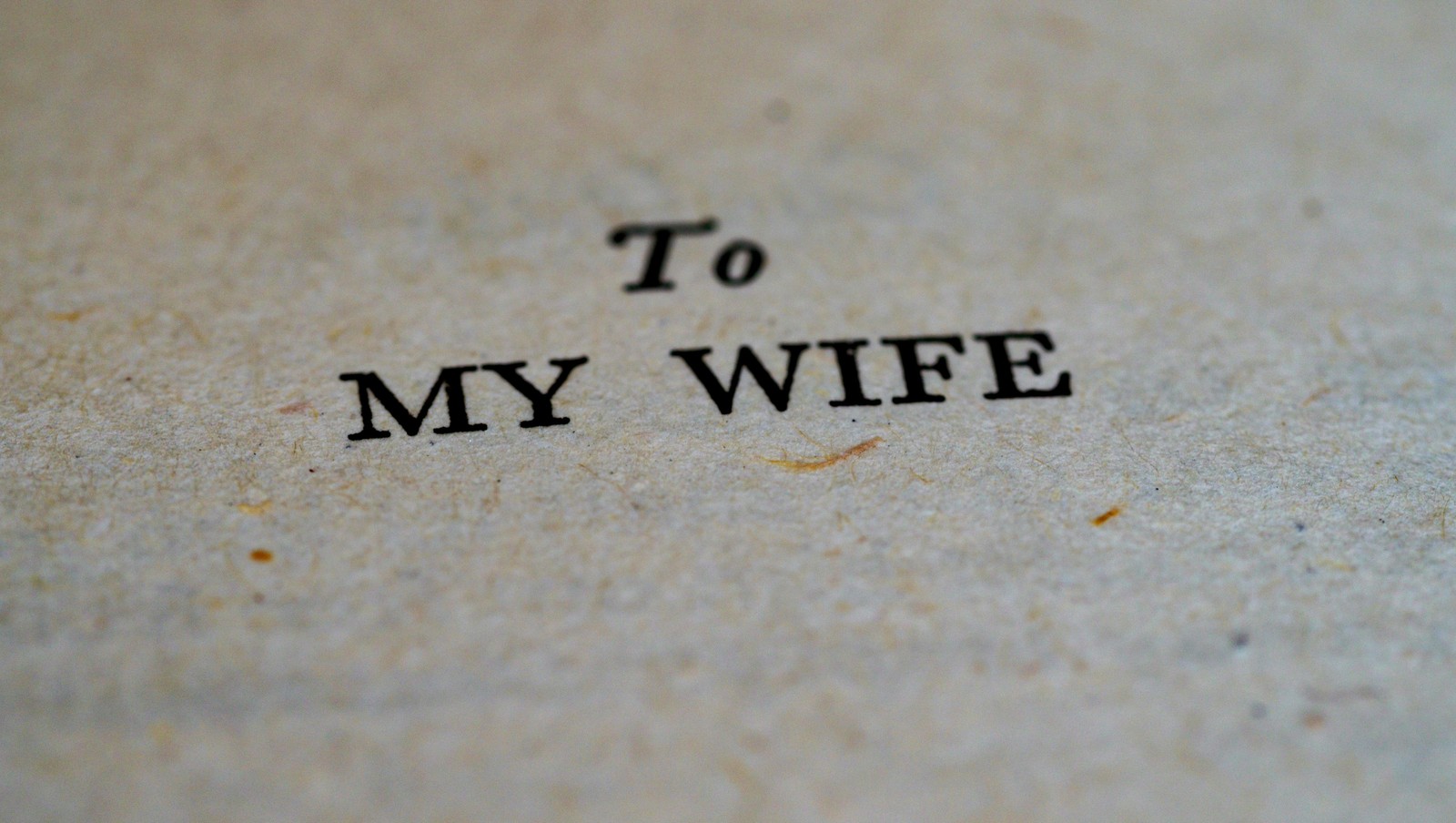
Image: Hưng Lê

These might be memorable titles written by renowned authors, but sometimes the dedications are just as remarkable as the rest of the volume. Have you ever read the lines tucked into the opening pages of famous books? Some are chilling, some funny, some thought-provoking—and we’ve gathered a list of particularly interesting ones!

1
Don’t question the author
Image: Amaan Ali

In his usual sarcastic style, Mark Twain wrote in the opening "Notice" of The Adventures of Huckleberry Finn : "Persons attempting to find a motive in this narrative will be prosecuted; persons attempting to find a moral in it will be banished; persons attempting to find a plot in it will be shot." It’s an unforgettable way to open a classic.

2
What you don’t know…
Image: Markus Spiske

In the book This Boy’s Life, Tobias Wolff wrote: "My first stepfather used to say that what I didn’t know would fill a book. Well, here it is."

It’s a dark but funny recounting of his turbulent youth in this memoir, so the line is a perfect setup for what’s to come.

3
About loyalty
Image: Niranjan V S

In her book Dark Places , thriller writer Gillian Flynn wrote: "What can I say about a man who knows how I think and still sleeps next to me with the lights off?"

The author of Gone Girl tipped her hat to her husband, Brett Nolan, here. Who doesn’t want a partner who accepts us fully—even if we spend our days writing about murky crimes?

4
Cosmic love

Image: Jayshree Sharma

If you’re a romantic, try not to swoon over Carl Sagan’s dedication in Cosmos : "In the vastness of space and the immensity of time, it is my joy to share a planet and an epoch with Annie."

This beautiful line of cosmic love was dedicated to his wife and collaborator, Ann Druyan. And the book that follows is a science classic.

5
A touch of fantasy
Image: Ali Müftüoğulları

Ken Kesey’s famous book One Flew Over the Cuckoo’s Nest , set in a psychiatric ward, wouldn’t be cataloged as fantasy at all. And yet, its memorable dedication reads: "To Vik Lovell, who told me dragons did not exist, then led me to their lairs."

6
The inclusive take
Image: Andrew Neel

John Cheever had a good idea in his dedication of The Wapshot Chronicle : "To M with love, and with best wishes to practically everybody else I know." A playful and inclusive way to make sure you leave out no one who matters! It was his debut novel, and it won the National Book Award.

7
The vengeful one
Image: Gaspar Uhas

This one is dark but packs a memorable punch. The dedication of No Thanks , by E. E. Cummings, is simply a list of names—the 14 publishers who turned his work down. But here’s the unforgettable bit: the words are arranged on the page in the shape of an urn.

8
Thanking the parents
Image: Lucas George Wendt

Comedian Judd Apatow dedicated his book Sick in the Head to his loving parents: "For Mom and Dad. Your support—and the mental health issues you gave me—made all of this possible." Tongue in cheek, just as fans would expect from him.

9
Chilling and sobering
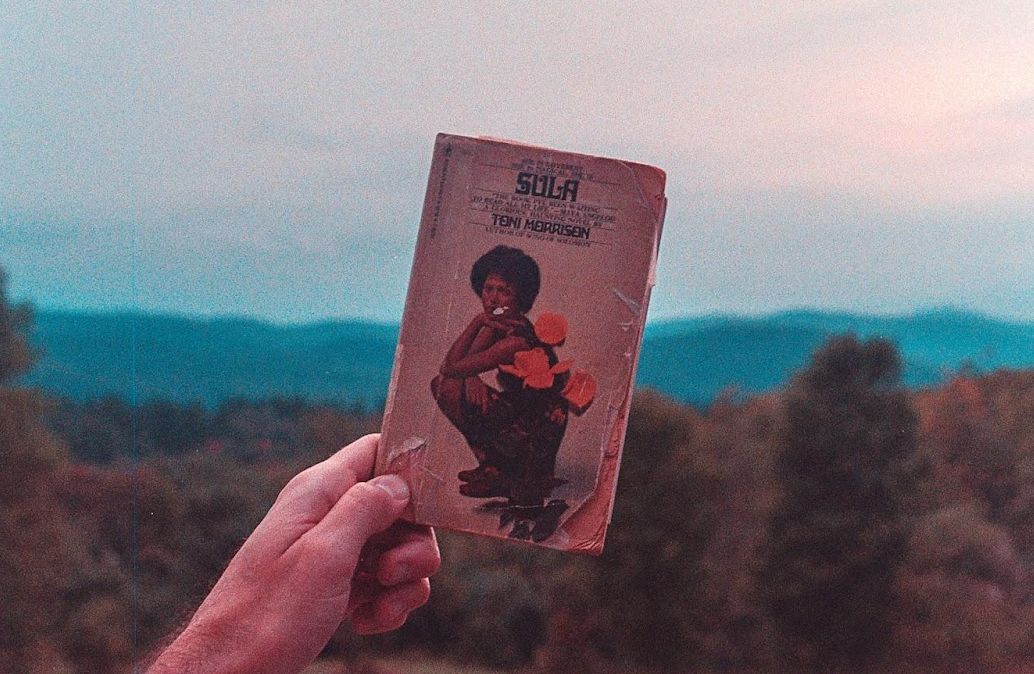
Image: Isaac N.

Powerful: Toni Morrison’s dedication in Beloved is simply the phrase "Sixty million and more," referring to the victims of the transatlantic slave trade. No verbs, no explanations—just five heavy, sobering words to leave readers thinking.

10
About undying love
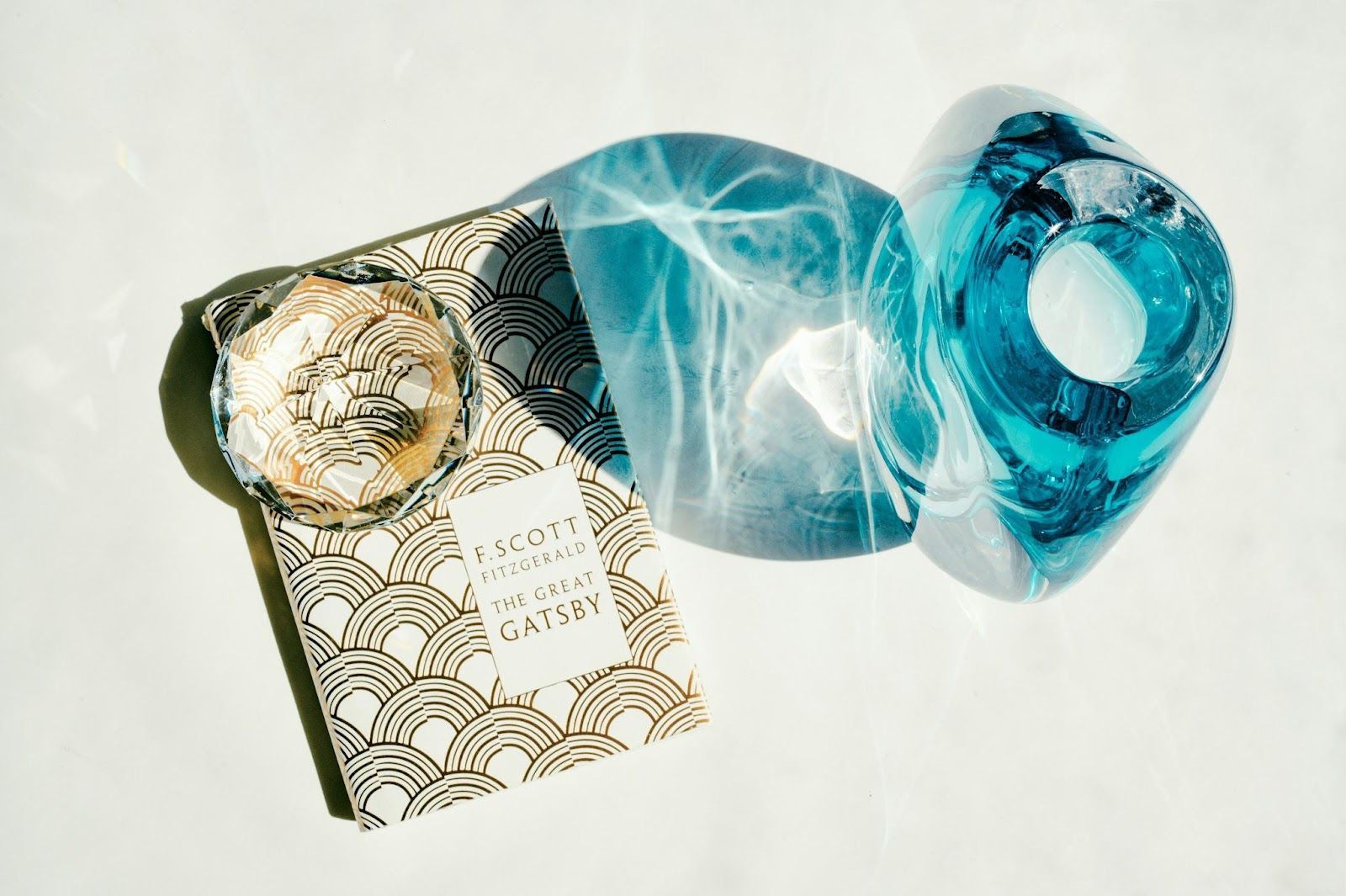
Image: Girl with red hat

F. Scott Fitzgerald’s The Great Gatsby is, after all, a story steeped in undying love. His dedication was fitting: "Once again, to Zelda." It’s a brief but heartfelt nod to his wife and muse.

11
An offering
Image: Jouwen Wang

John Steinbeck’s East of Eden opens with a sort of letter. It’s longer than this, but it begins with an anecdote in which "Pat" asked him to give him a box to fill with things. The dedication reads:

"Dear Pat… Well, here’s your box… Nearly everything I have is in it… all the gratitude and love I have for you. And still the box is not full. JOHN."

General General 4 min read

WHAT GOES INTO A NAME?

10 States with unusual names explained

Image: Nico Smit

A lot of consideration goes into naming a state. Or, at least, it should. After all, that enormous piece of public land will be an important part of the country, and its citizens will be defined by its name as well. Some states’ names are obvious: New York was named after the English town of York, New Mexico was named after Mexico, and so on. But many other states have strange-sounding names, like Wyoming or Connecticut. Stick around until the end of this list and learn why ten of these states are named that way!

1
Massachusetts

Image: Kaya Arro

A curious word in itself, Massachusetts originated from an Algonquian word meaning "large hill place." The term "Massachusett" was first recorded in 1616 as the name of a village near present-day Boston, and the English added an -s to signify the plural.

The name was applied to the bay, from which the Massachusetts Bay Company, founded in 1629, took its name. With the Massachusetts Constitution of 1780, legislators officially adopted the name Commonwealth of Massachusetts.

2
Michigan

Image: Aaron Burden

Another name with an Algonquian origin, like Massachusetts, Michigan comes from the word mishigama which means "big lake." The state was named after its chief geological feature: that large body of water to its west. After all, Michigan is in direct contact with four of the five Great Lakes.

When the area became a U.S. territory, the name Michigan was adopted as the name of the state. Michigan achieved statehood in 1837.

3
Montana

Image: Tim Stief

A name most likely derived from the either Spanish ( Montaña ) or Latin ( Montanus ) word for mountain, Montana was suggested by Rep. James M. Ashley of Ohio, who was a member of the House Committee on Territories. He recommended it in 1863 for the territory that would become Idaho. He liked the name so much that he recommended it again for a territory being organized in 1864.

The name Montana itself was first given in 1858 to a town in the Pike’s Peak gold region, which was at the time part of Kansas and is today part of Colorado. The town eventually died, though, when the gold ran out, but the name lived on.

4
Oklahoma

Image: Skyler Smith

The name Oklahoma was coined in 1866 by Allen Wright, a Choctaw chief and Presbyterian minister who served in the Confederate Army during the Civil War. He combined two Choctaw words that, together, mean "Land of the Red People." Eventually, the name was adopted into the Choctaw-Chickasaw Treaty.

5
Pennsylvania

Image: Lera Kogan

In 1681, the English king Charles II gave a land grant to William Penn. The charter designated that the colony was to be called Pennsylvania, which was a combination of Penn’s name and the Latin " silva " (spelled " sylva " in the 17th century), meaning "forest." Therefore, Pennsylvania means " Penn’s forest ."

William Penn had originally suggested that the land be called New Wales, but since the charter was signed with Pennsylvania permanently inscribed, he declared that the name was in honor of his father.

6
Tennessee

Image: Brice Cooper

While the names of many states originate from descriptions, the name of Tennessee didn’t have any particular meaning when it was bestowed upon the Volunteer State. This name originally came from a Cherokee town called Tanasqui by the Spanish, and Tinnase by the English. But the Cherokees themselves didn’t associate any literal meaning with the word.

The name was also given to a stream near the town, and as English settlers moved downstream, they carried the name with them. Tennessee first appeared in that spelling as the name of a newly organized county in North Carolina in 1788, and it was eventually proposed and accepted by Congress as a state name in 1796.

7
Wyoming

Image: Kellie Klumb

The name of Wyoming originated from the Algonquian word meche-weami-ing , which meant " at the big flats. " It was originally applied to a valley in Pennsylvania and became well-known through Thomas Campbell’s epic 1809 poem "Gertrude of Wyoming," which was about a girl from Pennsylvania.

James Ashley, a member of the House Committee on Territories representing Ohio, suggested the name for a new territory in 1868.

8
Alaska

Image: Rod Long

The name Alaska is thought to come from the Aleut word aláxsxaq or aleyska , which translates to " an object to which the sea is directed ."

When Alaska was purchased from Russia in 1867, the name Alaska was suggested by Senator Charles Sumner under the belief that it meant "great land," when in fact the word was simply what Aleuts used to refer to the mainland.

9
Connecticut

Image: Christopher Luther

Whoever thinks Connecticut sounds like a complicated word, should take a look at the Algonquian word from which it originated: Quinnehtukqut , which means " place beside the long tidal river. "

An English scribe probably inserted the second, silent "c" in the name into the word to form the more common "connect" section, as we know it today.

10
Idaho

Image: Clay Elliot

The name of the state of Idaho has at least two probable origins. On the one hand, it may be derived from the word Idahi , the Kiowa-Apache name for the Comanche, both of whom were known to have been in that area. On the other hand, it might have been fabricated by a mining lobbyist at a time when native-sounding names were popular.

When Colorado was being organized as a territory in 1860, the name Idaho was considered, but Congress chose Colorado instead. The name came up again in 1863 when territories farther north were being organized. Montana was first proposed for the new area, but the U.S. Senate decided to call it Idaho.

Culture Culture 5 min read

TIMELESS FILMS

Howdy, Partner! Do You Know These 10 Iconic Westerns?

Image: JosephHershMedia

Is the Western the quintessential American movie genre? It certainly seems to be. Not only do these movies center around a fundamental time in the history of our country, but they are definitively a unique cultural product, as well as a groundbreaking contribution to the world of cinema.

We have selected ten of the most iconic Western movies that definitively left their mark in history. From John Wayne’s first roles to more recent blockbusters, we hope these films make you throw your cowboy hat to the air and yell "Yeehaw!". Enjoy!

1
The Searchers

Image: Tobias Keller

We’ll begin with what many critics believe to be the best Western ever made. Not only that: this 1956 movie is considered among the 100 best American films of all time, and it was selected for preservation in its National Film Registry in 1989. John Ford’s masterpiece truly marked a turning point in the history of the genre and influenced an entire generation of American filmmakers.

2
"The Searchers" stars John Wayne as Ethan Edwards, a Civil War veteran who searches for his abducted niece all throughout Texas and New Mexico. The gorgeous shots in Technicolor (a huge leap at the time) helped cement this Western as a completely revolutionary film.

3
The Good, the Bad and the Ugly

Image: Scott Warman

The archetypical example of the subgenre known as "Spaghetti Western", this 1966 Sergio Leone film tells the story of three gunslingers competing to find a hidden treasure amid the chaos of the Civil War. The three characters’ personalities are more than the traits described in the film’s title: "The Good", Clint Eastwood’s character, is definitively more of an antihero than a regular protagonist.

Considered by many to be Leone’s masterpiece, "The Good, the Bad and the Ugly" is a tension-filled, thrilling experience , and credited with launching an American icon like Eastwood to stardom.

4
The Quick and the Dead

Image: Taylor Brandon

Few Westerns feature female gunslingers , so let’s take a second to showcase an excellent example. The 1995 movie "The Quick and the Dead" tells the story of "The Lady", an unnamed gunfighter who enters a deadly tournament to face off against an outlaw-turned-mayor named Gerrod, played by the iconic Gene Hackman.

Sharon Stone plays an extremely compelling protagonist, driven only by the desire to avenge the death of her father. The film features a star-filled cast , including Russel Crowe, Keith David, and then-newcomer Leonardo Di Caprio.

5
True Grit

Image: Taylor Brandon

Sharon Stone’s "The Lady" is not the only strong female lead on this list. Granted, the character of Mattie Ross in the 1969 classic "True Grit" is only a young girl, but don’t be fooled by her age: Mattie is a strong and determined character, hell-bent on apprehending the man responsible for her family’s death.

"True Grit" is also responsible for bringing us one of the most amazing cowboys ever portrayed on film. John Wayne’s legendary depiction of U.S. Marshal Rooster Cogburn earned him a well-deserved Oscar.

6
Stagecoach

Image: Maddy Weiss

Considering our entry on "The Searchers", it probably won’t surprise you to learn that John Ford’s contributions to Westerns are incommensurable. In that sense, considering his 1939 film "Stagecoach" as anything other than groundbreaking would be a massive disservice to the entire genre.

This movie’s revolutionary shots and character development helped the film industry take a huge leap forward. Not only that, this movie stars John Wayne in his breakthrough role.

7
The Treasure of the Sierra Madre

Image: Stefan Münz

Legendary actor Humphrey Bogart is not particularly remembered as a Western actor: In fact, he only starred in two movies of the genre. However, the 1948 film "The Treasure of the Sierra Madre", which stars Bogart as drifter Fred C. Dobbs, is considered an absolute Western treasure (no pun intended) and was selected for preservation by the Library of Congress.

The film focuses on Dobbs and fellow drifter Bob Curtin, played by Tim Holt who, along with an old prospector, try to make a living searching for gold in Mexico.

8
The Man Who Shot Liberty Valance

Image: Luis Domenech

The 1962 film "The Man Who Shot Liberty Valance" begins with the funeral of a seemingly unimportant cowboy named Tom Doniphon which is attended by a powerful and influential U.S. senator. What follows is the retelling of an unusual friendship between two men, and their unyielding fight for justice.

This film holds the honor of being the very first film that starred both John Wayne and James Stewart. Under the direction of John Ford, these two acting juggernauts truly gave an unforgettable performance.

9
Butch Cassidy and the Sundance Kid

Image: JosephHershMedia

Nowadays, the subgenre of a buddy film seems almost exclusively reserved for cop movies: Think about movies like "Lethal Weapon" or "Bad Boys". However, the 1969 Western "Butch Cassidy and the Sundance Kid" is an outstanding addition to the buddy film subgenre, since it focuses on the adventures of this iconic gunslinging duo.

The movie describes the adventures of these two train robbers, wonderfully portrayed by Robert Redford and Paul Newman, who are trying to escape the law and flee to South America. It was awarded for Oscars, including "Best Story" and "Best Cinematography".

10
Unforgiven

Image: Karsten Winegeart

Besides avenging a loved one or escaping a corrupt sheriff, another powerful staple of the Western genre is the repentant outlaw trying to make amends with his past. In that sense, Clint Eastwood’s 1992 film "Unforgiven" combines both classic elements of the genre, while still providing a refreshing and innovative perspective.

The movie tells the tale of William Munny, an aging and retired outlaw who decides to take on one last job. Portrayed by Eastwood , Munny’s adventures take him on a violent path, seeking a cruel and dangerous cowboy named "Quick Mike".

11
The Magnificent Seven

Image: Priscilla Du Preez 🇨🇦

We’ll finish this list with one of the most innovative and daring entries to the Western genre. John Sturges’ "The Magnificent Seven" is an Old West remake of a Japanese movie, Kurosawa’s "Seven Samurai". Featuring an ensemble of legendary leads like Yul Brynner and Steve McQueen (The "King of Cool" himself!), this iconic film is to this day considered one of the very best Western films of all time.

The story centers around the titular "Magnificent Seven", a group of gunfighters hired to protect a small Mexican village from a group of bandits led by Eri Wallach, another heavy-hitter of the Western genre. It received an Academy Award for Best Score, and it was included in the National Film Registry by the Library of Congress.

Explore more American facts

Choose your favorite category!

General
General

As American as apple pie—the very best America has to offer!

Culture
Culture

Delve into the astounding richness of American lore.

Geography
Geography

Hop in and explore vast and diverse American landscapes.

History
History

Discover the key moments that shaped the United States.