General General 4 min read

Read on and dream on

Luxury life: 12 extravagant features in American millionaires’ yachts

Image: Viktor Ritsvall

Peeking into the lives of the rich and famous has become easier over the years, thanks to social media and smartphones, which allow for very personal and up-close contact between the super-wealthy and the rest of us. Among the many spoils and luxuries these individuals indulge in, few pique interest quite like their superyachts. From basketball courts to helipads and more, the following 12 features are just a small glimpse of what money can buy. Can you imagine yourself on one of these boats?

1
Garage

Image: Danielle-Claude Bélanger

If you’re like most of us, when you hear the word garage , you think of a place to store cars—on land. But if you belong to the super-rich, you might think otherwise. Octopus is a superyacht owned by an extremely wealthy individual (as with every other massive boat on this list, we’ll avoid naming names) that features a two-story wet dock functioning as the explorer yacht's very own mini-marina.

Two primary tenders are stored and launched through a giant transom door, while the floodable dock is complemented by rows of smaller toy garages.

2
Spa

Image: Jared Rice

Many cruise ships offer spas as part of their onboard amenities, but sharing those accommodations with other passengers is usually to be expected. Unless, of course, you happen to own Kismet , a superyacht that boasts a " 7-star wellness suite ." This luxurious space includes a hammam, sauna, cryotherapy chamber, private treatment room with a massage table, and a chromotherapy bathtub. Not bad, right?"

3
Air-conditioned helicopter hangar

Image: Andrew Palmer

If you own a superyacht, chances are you probably own a helicopter too. So, it only makes sense to have a proper deck on your yacht to land your helicopter. However, the owner of Moonrise took things a step further by adding an air-conditioned helicopter hangar to the mix.

4
Bespoke chandelier

Image: William Krause

Probably due to the fact that these things always seem to hang rather precariously from the ceiling, chandeliers tend to be installed on dry land and not on moving vehicles. However, if your yacht is large enough, anything is possible.

Such is the case with the Aquila superyacht, which boasts a bespoke chandelier crafted by the Czech company Preciosa. This masterpiece made up of more than 850 pieces of hand-blown glass , stretches an astonishing 36.7 feet , cascading elegantly through four of Aquila’s five decks.

5
Nature-inspired spa

Image: Roberto Nickson

The Ahpo superyacht features a massive spa designed with curves, leaves, waves, and bamboo for a serene, nature-inspired aesthetic. Located on the lower deck, this luxurious facility includes a plunge pool , a Himalayan salt sauna , a hammam , and a massage room . Each space is decorated with intricate nature-themed mosaics and ceilings embedded with twinkling fiber optic lights, creating a tranquil and immersive experience.

6
A snow room

Image: Nathan Wolfe

If an onboard spa isn’t luxurious enough, how about a walk-in snow room ? The Faith superyacht takes indulgence to another level with its spa, which includes this unique feature. Aside from the fun of building a snowman while navigating across the Caribbean, spending time in the snow room offers several health benefits , such as stimulating metabolism , improving sleep , and relieving pain .

7
Underwater lounge

Image: Jeremy Bishop

Imagine relaxing in your superyacht’s private lounge, gazing through a huge window in front of you, half of it over the water line and half of it, underwater . This is the kind of extraordinary experience awaiting owners and guests aboard the Savannah . Spot marine life with a drink in your hand, anytime.

8
Private library

Image: Iñaki del Olmo

Arguably the most understated feature on this extravagant list, the massive L-shaped library aboard the M5 superyacht exudes a cozy, residential charm. With hundreds of volumes neatly arranged in rows and a plush L-shaped sofa to match, this library offers the perfect space to unwind in style.

9
Outdoor cinema
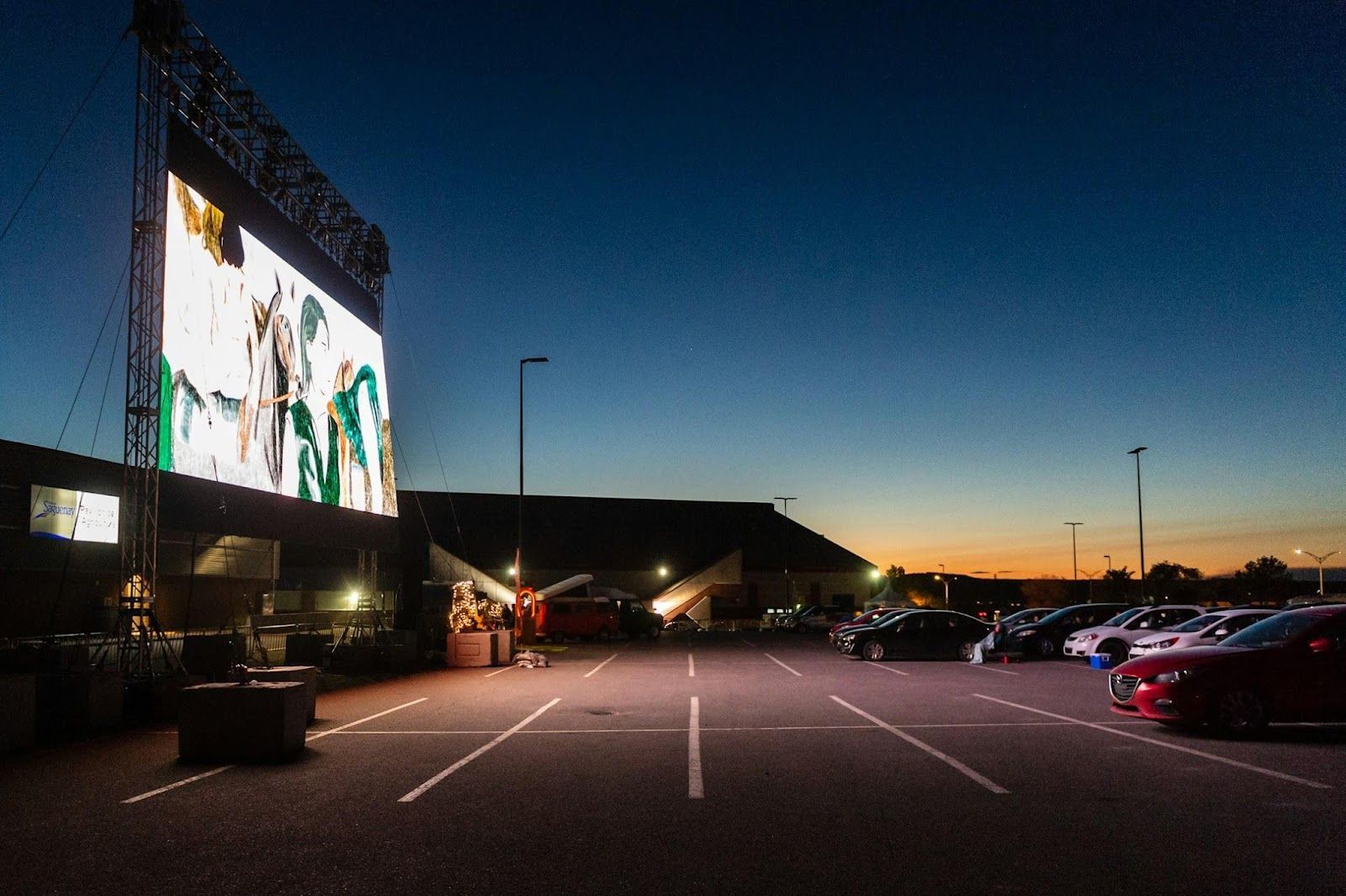
Image: Andre Ouellet

Imagine a drive-in theater—but at sea, and without the cars. That’s the kind of experience you can enjoy aboard Grey , another big boat with a glass-sided swimming pool complete with a high-luminosity cinema setup . Flanked by plush sofa seating, the area boasts integrated speakers and a state-of-the-art surround sound system.

And yes, in case you were wondering, the screen can completely retract and fold away when not in use.

10
Basketball court

Image: JC Dela Cuesta

Imagine playing basketball while the entire court is rocked by the waves —quite an experience! The lucky owner of Joy , another luxurious ship, can do just that. The court can also be converted into a badminton court. And after the workout, the dedicated onboard spa is ready to soothe those sore muscles.

11
A jaguar

Image: Jeff Heaton

Figureheads on the bow of ships are an ancient tradition, but placing a car-style hood ornament on a ship is something else altogether. And doing it on a massive scale creates quite the spectacle. The Whisper superyacht boasts a 12-foot silver jaguar statue on its bow , a tribute to its previous owner, who also happened to own the Jacksonville Jaguars football team.

12
Greek pool

Image: Alex Harmuth

Picture a massive pool, set underneath dramatic lighting to give the appearance of a night-lit sky, and surrounded by grand Greek statues , all aboard a luxury private yacht . That’s Leona , a 240-foot superyacht. The lavish atmosphere is completed by water outlets and fresco walls that make its visitors feel like they are in a Greek villa .
History History 3 min read

Black blood

How oil powered the world: a story of America’s most lucrative industry

Image: Provincial Archives of Alberta

Since the first oil well was drilled, the United States’ crude oil industry has been a story of ambition, innovation, and power. Here are 10 pivotal moments—from the first black gold gush to the modern shale surge—that defined the role of oil in America.

1
1851: Early refining emerges

Image: Cedrik Wesche

Just before the drilling boom, chemists like Samuel Kier developed small stills to refine crude oil into kerosene for lamps.

That innovation turned oil from a curiosity into a practical commodity. Kerosene replaced whale oil, making lighting cheaper and more widely available, and it created demand for a reliable crude supply.

2
1859: First commercial well

Image: Provincial Archives of Alberta

On August 27, 1859, Drake Well near Titusville, Pennsylvania, drilled by Edwin L. Drake, became the first purposefully drilled commercial oil well in U.S. history.

This moment ignited the first true American oil boom. Suddenly, it was possible to produce large volumes of crude—not just collect surface seepage—and to refine it into useful fuels.

3
1860s–1870s: Pennsylvania oil rush

Image: Jeff W

Word of the Drake success spread fast, and drilling spiked throughout Pennsylvania. Towns such as Titusville swelled almost overnight as wells and refineries spread along Oil Creek Valley.

Railroads extended into western Pennsylvania to transport oil across the country, embedding petroleum into America’s emerging industrial infrastructure.

4
1890s: Dawn of the automobile

Image: Matthew Lancaster

By the 1890s and into the early 20th century, the rise of the automobile created growing demand for gasoline , which had previously been a relatively minor byproduct of crude oil refining.

This shift moved oil’s primary role away from lighting and industrial lubrication and toward transportation fuel , setting the stage for petroleum to dominate America’s energy needs in the decades that followed.

5
1900s–1910s: Rise of big oil companies

Image: Russel Bailo

Following early successes, oil refining and distribution consolidated. Firms like Standard Oil Company rose to dominate refining, pipelines, and distribution networks.

At the same time, new oil fields and competition still challenged monopolies and spread oil wealth and infrastructure across more regions of the country.

6
1914–1945: Oil & war

Image: Roman

During both World War I and World War II, U.S. oil production and refining capacity became critical to the Allied war effort , fueling ships, vehicles, aircraft, and manufacturing.

That strategic role cemented oil’s position not only in industry but also in American global power, military strategy, and foreign policy.

7
1960: A global oil cartel forms

Image: Christian Harb

On September 14, 1960, the main oil‑exporting nations formed the Organization of the Petroleum Exporting Countries (OPEC) to coordinate oil production and influence prices globally.

Though initially limited in power, OPEC’s rise began to challenge American dominance , setting the stage for decades of geopolitical tension around oil supply.

8
1969: Santa Barbara oil spill

Image: matt brown

In early 1969, a blowout from an offshore drilling platform released tens of thousands of barrels of oil into the waters off California’s coast, devastating marine life and beaches.

The resulting public outrage helped trigger a surge in environmental awareness and regulation, marking a turning point in how the oil industry was perceived socially and politically.

9
1970–1973: Peak and decline

Image: Documerica

By 1970, U.S. conventional oil production reached its peak, but soon after began a decline as domestic fields matured and couldn’t keep up with the growing demand.

As American production fell, the country gradually became more reliant on foreign oil, a shift that would have major economic and political repercussions.

10
2000s–2010s: Top oil producer again

Image: engin akyurt

In the early 2000s, engineers refined techniques like hydraulic fracturing and horizontal drilling. This unlocked vast shale‑oil and shale‑gas reserves previously uneconomical to tap.

From about 2010 onward, U.S. crude oil production rose sharply, reversing decades of decline. By 2019, the country was producing at levels not seen since the early 1970s.

History History 5 min read

First things first

Pioneering presidents: The 10 firsts that shaped American history

Image: Caleb Perez / Wes Hicks

One fascinating aspect of history is that we can discover who was the first to accomplish certain things. Photography is an everyday activity today, but who was the first president to be photographed? Have you ever wondered who was the first U.S. president to be born in a hospital? The presidency has seen many "firsts" that have left a lasting impact on the nation. Let’s dive into some of the most significant presidential milestones that have shaped the course of American history. From the momentous to the most mundane, here are 10 presidential firsts!

1
Reagan: Breaking the glass ceiling

Image: Library of Congress

Although the numbers are still unequal, women occupy decision-making positions every day. They play an active role in political life, but that wasn’t always the case.

Ronald Reagan made a bold move for gender equality by nominating Sandra Day O'Connor to the Supreme Court in 1981. This historic decision marked the first time a woman would serve on the highest court in the country.

O'Connor’s nomination was a landmark moment for women’s rights, opening doors for future generations. Reagan’s choice was both strategic and symbolic, of course. It was a significant step toward inclusivity in the judiciary. Sandra Day O’Connor went on to serve with distinction, becoming a pivotal figure in many key rulings.

2
Johnson: A historic appointment

Image: Library of Congress

America has already seen a black president, but even that marked a significant turning point in history. However, Black men in such high government positions weren’t a reality until 1967 when Lyndon B. Johnson appointed Thurgood Marshall as the first Black Supreme Court Justice . In the ongoing struggle for civil rights and equality in the U.S., this was a monumental step.

At the time, Marshall was already a legendary figure for his role in Brown v. Board of Education, and his appointment brought a powerful voice to the court. It was a clear signal of the administration’s commitment to racial justice. Marshall served on the court for 24 years! Talk about leaving a mark, huh?

3
Roosevelt: The star of the show

Image: Library of Congress

We can’t get enough of our TVs today, right? But this device was once an innovation, and one can easily imagine how surprising it must have been to see a president on screen for the first time!

In 1939, Franklin D. Roosevelt became the first U.S. president to appear on television during the World’s Fair in New York.

It’s not that he had gone unnoticed, FDR was already a radio sensation with his "fireside chats," but the television debut marked a new era of presidential communication. This historic moment allowed Americans to not only hear but also see their president, making FDR an even more influential figure.

4
Adams: Picture perfect

Image: Library of Congress

People take pictures of everything, everywhere, all the time today. Photos are like our business cards on social media and even in our job profiles, but it wasn’t always like that. And John Quincy Adams was part of a photography milestone.

Adams wasn’t just a former president, he holds the prize for first presidential photography . In 1843, he became the first president to have his photograph taken, although it was after his term had ended. Before Adams, presidents were immortalized through paintings, but his photo brought a new sense of realism to how leaders were remembered. Was he, by any chance, the first influencer?

5
Hayes: A direct line to history

Image: Library of Congress

What would we do without our telephones? It’s like we can’t imagine our lives without them anymore, right? But have you ever wondered who was the first president to have a phone in the White House ?

In 1877, Rutherford B. Hayes ushered the presidential residence into the age of technology by installing the first telephone. Of course, this was far from the smartphones we use today, but it was quite revolutionary at the time.

Fun fact: Hayes’s telephone had the number "1," a fitting symbol for such a groundbreaking moment. Only a few could actually get in direct contact with that line, but the step was taken anyway and history was made.

6
John Adams: Home sweet white house

Image: Library of Congress

While George Washington oversaw the construction of the White House, he never actually lived in it. It was John Adams who had the honor of being its first resident in 1800 .

Adams and his wife Abigail moved into the unfinished mansion, making history as the first Presidential Family to live in the iconic building. Despite the unfinished state of the residence, the Adams family’s presence made it the center of American politics. And of course, he was the first, but he was certainly not the last, as the tradition continues today.

7
Truman: Code name "general"

Image: Library of Congress

If you’re a fan of detective novels, you probably always thought that having a code name is super cool! Well, imagine being the first president with a code name!

Harry Truman made history as the first U.S. president to receive a Secret Service code name . Known as "General," his code name served as a security measure. Although now that you know it, it doesn’t seem so secretive or mysterious, right?

The use of code names has since become standard practice, used to protect presidents and their families. While the tradition of assigning code names has evolved, Truman’s "General" remains a nod to the early days of presidential security. It was just the beginning of a tradition that still exists today.

8
Coolidge: A father’s pride

Image: Library of Congress

Few moments in life are so beautiful as when a father’s eyes are filled with tears of pride for his child, don’t you think? Well, now think about that, between a president and his father!

In a unique and touching moment in U.S. history, Calvin Coolidge was sworn in as president by his own father. After President Harding’s unexpected death in 1923, Coolidge’s father, a notary public, administered the oath of office in their Vermont home.

This made Coolidge the first and only president to be inaugurated by a family member, creating a truly personal and memorable moment. This father-son moment added a deeply personal touch to the transfer of power, making it a memorable event in both their personal lives and American history.

9
Carter: Born in a hospital

Image: Library of Congress

When you think of a birth, you think of a hospital, right? However, that hasn’t always been the case.

Jimmy Carter holds the distinction of being the first U.S. president born in a hospital, on October 1, 1924. Before Carter, presidents were typically born at home, which was the norm for the times.

His birth at the Wise Clinic in Plains, Georgia, marked a shift toward modern medical practices. This milestone highlighted the changing nature of healthcare in America. Carter’s hospital birth was a small, yet significant, indicator of progress in our country.

10
McKinley: Cruising into history

Image: Library of Congress

Our last "first" is a bit crazy and you’ll see why in a minute: William McKinley became the first sitting president to experience the thrill of a car ride .

In 1899, he took a ride in a Locomobile steam carriage, a cutting-edge mode of transportation at the time. The car was driven by the inventor himself!

This ride was quite an oddity, and McKinley’s willingness to try it out showed his interest in new technology. Why is it crazy? Because no president drives their own car today! Regardless of how innovative and technologically advanced it may be!

Explore more American facts

Choose your favorite category!

General
General

As American as apple pie—the very best America has to offer!

Culture
Culture

Delve into the astounding richness of American lore.

Geography
Geography

Hop in and explore vast and diverse American landscapes.

History
History

Discover the key moments that shaped the United States.