Culture Culture 5 min read

LEGENDS OF THE ROAD

Let's Check Out 10 of America's Most Iconic Cars!

American cars have an unquestionable charm that's difficult to put into words. But it is worth trying! Whether you're a car fan captivated by engines or someone who simply appreciates the overwhelming beauty of legends like the Ford Model T or the powerful Dodge Charger , you'll enjoy this article, as the history and features of these cars are deeply linked with American culture. Join us on this road trip through these 10 iconic American car models that have shaped automotive history. Some might agree with our choice for the tenth spot, while others may not ; we want to hear your opinion!

1
Ford Mustang

Image: VizAforMemories

Often referred to simply as "the Mustang ," this series manufactured by Ford is one of the quintessential American automobiles.

The Mustang was born in 1964 and has been in production ever since (with the Mustang II being produced from 1974 to 1978), as its popularity transcends borders. Its smart, sporty design has evolved over the years, but it has never lost its pony car label.

Loved by many for its wide range of engine options and powerful performance, the Mustang is more than just a car; it's an icon of American automotive culture. Remember the Mustang GT 390 in the 1968 movie Bullitt ?

2
Chevrolet Corvette

Image: Abdul Bakar

With its iconic two-seater design and a very rich history, the Corvette is a legend that could not be left out of this list.

The Corvette was introduced by Chevrolet in 1953 , some 70 years ago! However, it has aged like fine wine. Far from being out of style, this classic remains a top choice for car enthusiasts worldwide, blending performance, design, heritage, and status.

And as if all that wasn't enough, the Corvette has multiple victories in prestigious endurance races such as the American Le Mans Series .

Fun fact: the Corvette gets its name from a small, fast type of warship!

3
Jeep Wrangler

Image: cody lannom

Famous for its off-road prowess, the Jeep Wrangler is definitely an icon.

The origin of this car perfectly explains its capacity. The Jeep Wrangler has its roots in the Willys MB , a military vehicle used during WWII, renowned for its rugged durability. Of course, the Wrangler has evolved into the version we know today, blending practicality and durability, and displaying features like removable doors .

The Jeep Wrangler's off-road expertise has earned it a global reputation that is hard to beat. As you might already know, a rugged Jeep Wrangler YJ appears in the iconic Jurassic Park . After all, no other car could handle dinosaurs!

4
Ford Model T

Image: Philip Schroeder

Who could forget the iconic Ford Model T ? A car instantly recognizable to everyone, whether you're a car lover or not.

Ford began producing the Model T in 1908 and ceased production in 1927. But in less than 20 years, over 15 million units were made! This incredible feat makes the Model T one of the best-selling cars in history.

As if its beauty wasn't enough, the T was also renowned for its durability and affordability , specifically designed to be accessible to the average American. Do you want to know how much the "Tin Lizzie" cost when it started revolutionizing the streets in the early 20th century? Initially, it was priced at around $850 , but its price even dropped in the years that followed!

5
Cadillac Escalade

Image: Craig Marolf

When Cadillac decided to enter the SUV market, it did so in a big way. In 1998 , the brand released one of its most acclaimed models: the Cadillac Escalade . Imposing from every angle, this SUV has a luxurious design both inside and out, with the quality and style that characterizes the brand.

Beyond its powerful performance, the Escalade distinguishes itself with leading technology . This includes multiple USB ports, high-quality sound systems, and advanced driver assistance systems.

With all these advantages, the Escalade became one of Cadillac's best-sellers and also a popular choice in the luxury SUV market!

6
Ford Thunderbird

Image: Maxim Simonov

In 1955 , Ford spiced up the car scene with their Ford Thunderbird , a stylish two-seat sports car. Quickly becoming an icon, this model was Ford's answer to Chevrolet's Corvette.

The " T-Bird ," as it came to be known, evolved over its production run. In 1961, a significant transformation occurred: it became a four-seat model. With its new sleek design, the Thunderbird earned a new nickname and became the " Bullet Bird ."

Over the years, Ford produced 11 generations of the Thunderbird, each with unique features. Unfortunately, Ford decided to stop production of the T-Bird in 2005 due to declining sales. However, its exceptional qualities and profound impact have made it one of America's classics.

7
Dodge Charger

Image: Tim Meyer

A legendary American muscle car , the Dodge Charger appeared in 1966 , right amid the dynamic 60s and 70s era.

You probably remember the first-generation Dodge Charger, which featured hidden headlights , something quite remarkable in its time! Its V8 engines and high-performance capacities also made it a star in the TV series " The Dukes of Hazzard ."

With many variations over the years, Dodge continues to produce the model to this day, always updating its technology but maintaining some of the main features of its iconic design. Are you among the many fans of this amazing model?

8
Pontiac GTO

Image: Vitali Adutskevich

If we talk about muscle cars , we cannot forget the Pontiac GTO . Born in 1963 , it became an instant hit, produced for eleven years until 1974 . It also made a comeback from 2004 to 2006, creating a new chapter in its history.

Considered by many as the perfect muscle car, the Pontiac GTO stood out for its powerful V8 front engine and its attractive design, which included dual exhausts and hood scoops. It was also available in a wide range of colors.

If you're wondering about its name, the abbreviation "GTO" stands for "Gran Turismo Omologato," Italian for "Grand Touring Homologated."

9
Chevrolet Camaro

Image: Tim Meyer

Classified as a pony car , the Camaro appeared in 1966 as Chevrolet's card to compete with the Ford Mustang. While maintaining its efficiency, speed, and powerful performance , the Chevrolet Camaro has seen its engines evolve across generations, ranging from V6s to V8s.

According to the legend surrounding its creation, the name of this famous model was conceived by Chevrolet's merchandising manager, Bob Lund. While flipping through an English-French dictionary, he found the French word c amaro , which translates as "friend, pal, or comrade." And that was exactly what the brand was looking for in its new pony car: to be a reliable companion for its owner.

10
Tesla Model S

Image: Jp Valery

Despite being a relatively new brand, Tesla has proven that it's more than capable of creating iconic cars.

A good example is the Tesla Model S , an all- electric luxury car that's relatively young, debuting in 2012 . Upon its introduction, it caused a sensation with its spectacular design and technology .

One of the most unique features of this model is its incredible speed. It can accelerate from 0 to 60 mph in 2.3 seconds! That's the definition of fast. It is also capable of traveling up to 370 miles on a single charge , highlighting its efficiency among electric cars. Of course, the vehicle's functions are controlled through an elegant touchscreen display. Can you imagine yourself driving this model?

History History 4 min read

Nature’s wrath unleashed

Wild, wild weather: 10 natural disasters that changed U.S. history

Image: Greg Johnson

America’s vast territories and diverse landscapes make it a hotspot for some of the world’s most remarkable weather and natural phenomena . From raging tornadoes to volcanic eruptions, the U.S. is no stranger to extreme natural events. While some of these events have left deep scars on the nation’s collective memory, many have also driven significant advancements in prevention and disaster response protocols, helping to mitigate the impact of future occurrences. Here’s a look at 10 of the most powerful natural events in American history.

1
Tri-State tornado

Image: Greg Johnson

In 1925, the Tri-State Tornado carved a path of destruction across Missouri, Illinois, and Indiana. With winds exceeding 300 mph, it remains the deadliest tornado in U.S. history, claiming more than 700 lives and leaving thousands homeless.

This record-breaking F5 tornado—classified as such by modern standards—traveled over 200 miles in just three and a half hours, leveling entire towns. Its unprecedented speed and longevity exposed the limitations of early warning systems, prompting significant advancements in tornado research and forecasting.

2
The Dust Bowl

Image: Sophia Simoes

The 1930s Dust Bowl was a man-made disaster exacerbated by a severe drought across the Great Plains. Decades of over-plowing and unsustainable farming practices had left the farmland highly vulnerable to erosion.

When the drought struck, winds swept loose soil into colossal clouds that darkened cities and devastated remaining crops. These massive dust storms, known as "Black Blizzards," choked the skies and forced thousands of families to abandon their homes . Eventually, the disaster led to significant agricultural reforms under the New Deal.

3
Lake Michigan's seiche wave

Image: Silas Baisch

On the morning of June 26, 1954, a 10-foot-high seiche wave crashed onto the Chicago shoreline , sweeping away eight people and injuring many others. But what exactly is a "seiche wave"?

According to researchers, seiche waves are large, sudden standing waves that form in enclosed bodies of water due to extreme atmospheric changes, such as abrupt shifts in air pressure or strong winds. This rare event shocked the Midwest and prompted scientists to study lake oscillations and their connection to storm systems.

4
Great Alaska earthquake

Image: Joris Beugels

In 1964, Alaska was struck by a devastating earthquake with a magnitude of 9.2, making it the most powerful ever recorded in North America and the second most powerful worldwide. Lasting four minutes and thirty-eight seconds, the earthquake triggered massive tsunamis and landslides across the state, along with significant geographic changes —some coastlines sank while others rose dramatically.

The destruction it caused led to major updates in seismic safety protocols and infrastructure standards throughout the U.S. This event emphasized the need for better preparedness and stricter building codes , to handle similar future events, especially in earthquake-prone areas.

5
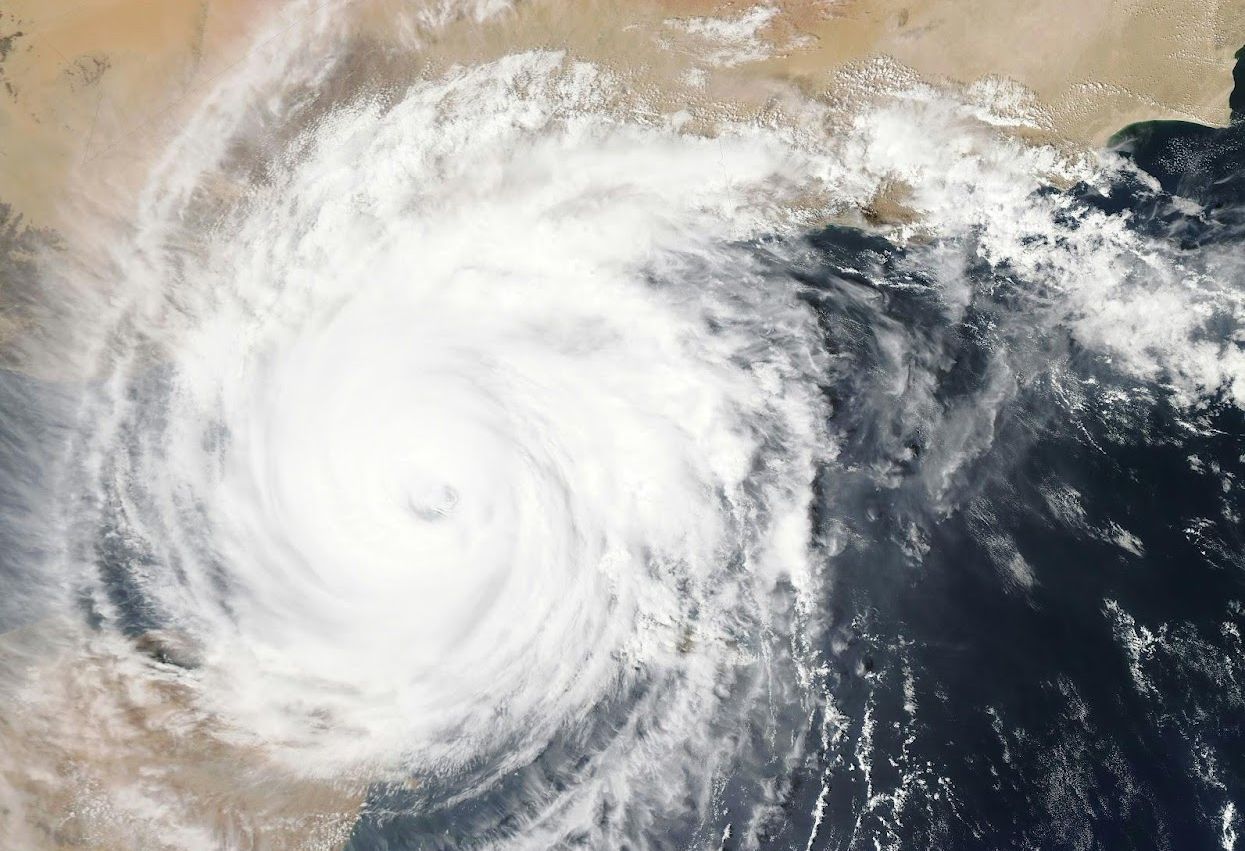
Hurricane Katrina

Image: NASA

In 2005, Hurricane Katrina ravaged New Orleans and the Gulf Coast, claiming more than 1,300 lives and leaving millions homeless, sparking an urgent humanitarian crisis. The storm caused an estimated $125 billion in damages, making it one of the costliest hurricanes in history , tied with Hurricane Harvey in the Atlantic basin.

Katrina exposed critical flaws in the region's levee systems and emergency response efforts, prompting widespread criticism and driving essential reforms in disaster preparedness and infrastructure.

6
The Peshtigo firestorm

Image: Tim Mossholder

On the same day as the Great Chicago Fire of 1871, a catastrophic firestorm near the small town of Peshtigo, Wisconsin, scorched approximately 1.2 million acres, making it the deadliest wildfire in recorded history . The uncontrolled blaze claimed over 1,500 lives, though the exact number of fatalities remains uncertain.

Since 1883, there has been speculation that the simultaneous outbreaks of major fires across Illinois, Michigan, and Wisconsin, including the Peshtigo and Chicago fires, were not coincidental but caused by burning fragments from Biela's Comet . However, this theory remains unproven.

7
Superstorm Sandy

Image: Matt Hardy

Nicknamed "Superstorm" by the media, Hurricane Sandy wreaked havoc on the Caribbean and the coastal Mid-Atlantic region of the United States in late October 2012. While it affected 24 states, the most severe damage was concentrated in New Jersey and New York .

The storm caused an estimated $70 billion in damages, flooding New York City's subway system and displacing thousands of residents. It also ignited a nationwide debate about the role of man-made climate change in amplifying the intensity of seasonal storms.

8
Death Valley heatwave

Image: Johannes Plenio

Death Valley recorded the world’s hottest temperature —134°F—in 1913. A testament to America’s climatic extremes, the region’s unique topography traps heat, effectively turning it into a natural furnace.

While the record remains a point of fascination for meteorologists and tourists alike, some recent researchers have challenged the accuracy of the 1913 measurement. Regardless, the region has come close to this temperature in recent years, indicating that a new record-breaking summer may be in the cards.

9
The Great Blizzard of 1888

Image: Jan Canty

The "White Hurricane" of 1888 buried the Northeast under as much as 55 inches of snow, crippling major cities and resulting in over 400 fatalities. Railroads were shut down, and many residents were confined to their homes for up to a week.

As one of the most severe blizzards in American history , the storm compelled New York City to bury power lines and redesign its transportation systems to better withstand future extreme weather events.

10
Mount St. Helens eruption

Image: Tetiana Grypachevska

On May 18, 1980, Mount St. Helens erupted in Washington, triggering massive landslides and pyroclastic flows, killing 57 people and causing over $1.1 billion in damages. The violent blast also reduced the mountain’s height by more than 1,300 feet and sent a plume of ash 80,000 feet into the atmosphere, disrupting air travel for weeks.

This volcanic event, the first in the contiguous United States since the much smaller 1915 eruption of Lassen Peak in California, is considered one of the most disastrous volcanic eruptions in U.S. history. Its aftermath raised awareness of volcanic hazards and underscored the importance of geological research in the country.

Geography Geography 5 min read

Let’s go on a sightseeing tour

Wander the streets of these 10 iconic American neighborhoods!

Image: Breno Assis

America is truly a wonderful place to live. Take a stroll through any of our busy and vibrant cities, and you’ll come across streets buzzing with culture, breathtaking architecture, and, perhaps most importantly, delightful people. After all, a huge part of what makes our country so great is the generations of Americans who helped build it. In making their homes a better and safer place for the generations to come, these Americans gave our neighborhoods an identity and culture that truly make them unique. With that in mind, we have selected 10 of the most iconic and beautiful neighborhoods in America for you to discover. Enjoy!

1
The French Quarter - New Orleans

Image: João Francisco

We’ll begin this article with a Southern jewel. New Orleans’ French Quarter is the oldest neighborhood in the city, and for a while, it was the central square around which the city was built. In fact, its French name, Vieux Carré ("Old Square") describes its status as an essential location.

Nowadays, the French Quarter serves as a quaint and charming time machine. Millions of tourists visit it for its delightful architecture, delectable restaurants, and buzzing jazz scene. Other attractions include Jackson Square, a public park dedicated to Andrew Jackson, and Bourbon Street, filled with picturesque bars and taverns.

2
Little Havana - Miami

Image: Kian Lem

This neighborhood proves that good things come in small packages. Little Havana got its name in the 1960s after a substantial number of Cuban immigrants moved into the area. With them came the vibrant and colorful culture that has defined this neighborhood for over 60 years.

If you only have time for a quick visit, we recommend taking a stroll through the neighborhood's main street, the world-famous Calle 8 . This strip is filled with stores and restaurants offering traditional (and delicious) Cuban food. You might also visit one of the many live music venues and dance the night away!

3
Chinatown - San Francisco

Image: Madeleine Maguire

We could have taken our pick from the many amazing neighborhoods called "Chinatown" across America, but we ultimately settled on the oldest one in the country. Centered on Grant Avenue and Stockton Street, San Francisco’s Chinatown is instantly recognizable, made famous by amazing movies like The Maltese Falcon or The Pursuit of Happyness .

This neighborhood is also considered largely responsible for popularizing Chinese cuisine in America, and for creating new Chinese-American dishes like chop suey. San Francisco’s Chinatown is also world-known for its spectacular Chinese New Year celebrations, perhaps the biggest of its kind in America.

4
Beverly Hills

Image: David Vives

Since it was incorporated as an American city in 1914, Beverly Hills is technically not a neighborhood. However, because it is completely enveloped by the city of Los Angeles, it is considered a suburb. So, for the sake of argument, we’ll include "90210" on this list, if only because it gives us a chance to talk about the quintessential home of the rich and famous.

Beverly Hills got its name from "Beverly Farms" located in Beverly, Massachusetts, after the landowners realized there was no oil to be found in it and decided to develop it into a town. Nowadays, it is mostly known for its lush scenery, luxury shopping, and, of course, its connection to Hollywood stars. Literally, too many movies and shows feature this city, so we’ll just name a few off the top of our heads: The Beverly Hillbillies , Beverly Hills Cop, and Beverly Hills 90210 .

5
Brooklyn - New York City

Image: Víctor Martín

What is a borough if not a big neighborhood? I know many New Yorkers will disagree with this statement, especially those lucky enough to reside in Brooklyn . After all, many consider Brooklyn to be a separate entity—an independent (albeit small) city. And when you consider all the amazing things this borough has to offer, can you really blame them?

Brooklyn is comprised of over 70 different neighborhoods. If it were a standalone American city, it would rank as the fourth largest in the entire country. However, the sole reason we included it on this list is that the entire borough feels like one massive neighborhood, instantly recognizable by its distinct identity and culture.

6
Haight-Ashbury - San Francisco

Image: Burak Ceviz

San Francisco is world-famous for many reasons: Its slanted streets, cable cars, and the Golden Gate Bridge make it instantly recognizable. Architecture buffs also adore "the City" (as it's known by locals) for a very specific reason: its abundance of "Painted Ladies," the nickname given to the gorgeous Victorian houses built in the 1800s. In that sense, while many of San Francisco’s neighborhoods boast these houses, our top pick goes to those in the Haight-Ashbury neighborhood.

In truth, Haight-Ashbury has so much more to offer than these lovely houses. For starters, this neighborhood was the center of the 1960s counterculture; many claim that the "Hippie" movement began here. Several stores in the area pay tribute to that era, particularly record stores and boutiques.

7
Little Italy - New York City

Image: Alex Haney

Just like with our nation’s Chinatowns, we could have easily picked from a number of locations known as "Little Italy." In fact, New York City houses several of them, from the Morris Park neighborhood in the Bronx to the section formerly known as "Italian Harlem." Ultimately, we decided to focus on what is probably the most famous of them all: the Little Italy neighborhood in Manhattan.

While this area was made famous by Francis Ford Coppola’s legendary Godfather trilogy, the truth is that Little Italy’s charm can’t fully be described by any art form. From its history to its amazing culture and proud heritage, this neighborhood is truly a sight to behold.

8
Pike Place - Seattle

Image: Ben Dutton

We know what you’re thinking: Pike Place is not a neighborhood. And while it’s true that this name is most heavily associated with Seattle’s iconic public market, the area surrounding Pike Place is now considered a neighborhood in its own right—and a gorgeous one at that.

Although small, the Pike Place district is filled to the brim with spectacular landmarks and fantastic gastronomic offers. You can visit the very first Starbucks location, wander around the many offerings in the farmer’s market, or take a stroll through Waterfront Park.

9
The Loop - Chicago

Image: Anthony Fomin

Standing in the heart of "the Windy City" there’s a neighborhood blessed with a unique name: The Loop is Chicago’s commercial district and the true center of the city. It’s named after the central train station located in the neighborhood, where all the city’s train lines meet and form a "loop."

Millions of tourists visit this neighborhood every year, as it is conveniently located near several of Chicago’s main attractions. Anyone staying in the Loop is within walking distance of Millennium Park, the Art Institute of Chicago, and the "Cloud Gate" sculpture, perhaps best known by its nickname, "The Bean."

10
Beacon Hill - Boston

Image: Vanessa Sezini

We’ll end this article with a wonderful historic neighborhood. Beacon Hill ’s name is delightfully straightforward: it refers to a former beacon placed on top of the highest hill in central Boston. As you might have guessed, the function of this beacon was to alert residents to any invasions, which is a true statement of the history of this iconic neighborhood.

Beacon Hill is perhaps Boston’s most famous neighborhood, characterized by its lovely rowhouses, gas-lit streets, and brick sidewalks. It has been home to both the Massachusetts State House and many notable Americans, including author Louisa May Alcott and poet laureate Robert Frost.

Explore more American facts

Choose your favorite category!

General
General

As American as apple pie—the very best America has to offer!

Culture
Culture

Delve into the astounding richness of American lore.

Geography
Geography

Hop in and explore vast and diverse American landscapes.

History
History

Discover the key moments that shaped the United States.