General General 3 min read

Lady Liberty enlightens the world with her torch

Image: Dudubangbang Travel

The Statue of Liberty stands proudly on Liberty Island in New York Harbor, raising her torch high above her head as a symbol of freedom and hope. This American icon has welcomed millions of immigrants and visitors, becoming one of the most recognizable landmarks across the globe. Let's dive into 12 fascinating facts about this beloved American monument!

1
Her torch has been replaced

Image: Mateus Maia

Lady Liberty is no longer holding her original torch. The first one, made out of copper and covered in gold leaf, was replaced in 1986 due to extensive damage. The current torch sports a 24-karat gold flame, which gleams in the sunlight by day and is illuminated by torchlights at night.

2
What happened to the original torch?

Image: Epicgenius, CC BY-SA 4.0 <https://creativecommons.org/licenses/by-sa/4.0>, via Wikimedia Commons

The original torch is on display in the Statue of Liberty Museum on Liberty Island. It was removed on July 4, 1984, after leaks from rain and corrosion from the elements damaged it beyond repair. It was replaced in 1986 with the current replica and inaugurated by First Lady Nancy Reagan.

3
The view from the top

Image: Lowe, Jet, creator, Public domain, via Wikimedia Commons

Visitors could originally climb up to a small observation deck inside the Statue of Liberty's torch. However, the structure was damaged in an explosion in 1916, and access to the torch has been closed ever since.

4
Lady Lighthouse

Image: Luke Stackpoole

From 1886 to 1902, the Statue of Liberty served as an official lighthouse, guiding ships and welcoming visitors into New York Harbor with 14 electric lamps housed inside the torch.

5
A gift from France

Image: Albert Fernique, Public domain, via Wikimedia Commons

To celebrate the centennial of American Independence and the friendship between the American and French nations, the people of France gifted the Statue of Liberty to the United States in 1886.

6
Gustave Eiffel

Image: Carol M. Highsmith, Public domain, via Wikimedia Commons

Gustave Eiffel, the very same engineer behind Paris' most famous tower, designed Lady Liberty's inner iron framework. His design allowed the statue to withstand the strong winds and harsh weather conditions in New York Harbor. The entire puddled iron structure was replaced by corrosion-resistant stainless steel in 1986.

7
She wasn't always green

Image: Maarten van den Heuvel

Lady Liberty's outer shell is made out of copper. It originally had a shiny brown color, but exposure to the elements over time caused the copper to oxidize, giving the statue the famous green patina it is known for.

8
The New Colossus

Image: Gautam Krishnan

Emma Lazarus, the famous American author and poet, was inspired by the Statue of Liberty to write a poem titled The New Colossus . Lines from the sonnet are now inscribed on a bronze plaque on the statue's pedestal.

9
A challenging trek

Image: Zoshua Colah

Visitors to the Statue of Liberty's famous crown observation deck must do so by climbing 354 narrow steps. The view from the top, however, sure is worth it!

10
Visitors from the Seven Seas

Image: Laurenz Heymann

Lady Liberty's crown has seven rays or spikes. The number was chosen to mirror the Seven Seas of ancient literature, as well as the seven continents of the world, meaning Asia, Africa, North America, South America, Antarctica, Europe, and Australia. Through this symbol, the Statue of Liberty extends her message of freedom across the globe.

11
Her left hand

Image: Ron Cogswell from Arlington, Virginia, USA, CC BY 2.0 <https://creativecommons.org/licenses/by/2.0>, via Wikimedia Commons

Besides the torch in her right hand, Lady Liberty is holding a tablet in her left hand. The tablet reads JULY IV MDCCLXXVI . In Roman numerals, that is July 4, 1776, the date of the American Declaration of Independence.

12
Broken chains

Image: Atsme, CC BY-SA 4.0 <https://creativecommons.org/licenses/by-sa/4.0>, via Wikimedia Commons

The Statue of Liberty stands 305 feet from the ground to the tip of her torch, making her one of the tallest statues in the world. At her feet lie broken shackles and chains, symbolizing the abolition of slavery, oppression, and tyranny.

Culture Culture 6 min read

STORIES OF CHAMPIONS

Do You Remember These 10 Iconic American Olympic Moments?

Image: Aditya Joshi

Every four years, the world comes together and competes for a chance of glory. The Olympics are mostly a time for every country to be proud of its amazing athletes, and the United States is definitively no exception. After all, we are the country with the most Olympic medals in the world! The task of selecting ten iconic moments in American Olympic history is definitively a daunting one. Nevertheless, here is our selection of legendary American athletes and how each of them made our country proud. Enjoy!

1
The "Dream Team"

Image: Markus Spiske

We’ll start with what many believe to be the greatest sports team ever assembled . Before the 1992 Summer Olympics held in Barcelona, the rules stated by the International Basketball Federation prevented professional players from competing in Olympic tournaments. However, once this rule was revoked, the United States saw this opportunity to summon the very best the NBA had to offer. And with that, the "Dream Team" was born.

The Dream Team roster included basketball legends like Michael Jordan , Patrick Ewing, Magic Johnson, and Larry Bird. Accordingly, their performance was flawless: The American team stampeded through every match, earning the gold medal in a 117–85 victory over Croatia.

2
Muhammad Ali

Image: Johann Walter Bantz

There’s no denying that Muhammad Ali’s nickname "The Greatest" is very well-deserved: Few boxers have left a mark as indelible in the history of this sport as Ali has. Bearing that in mind, it seems only fitting to take a look at the point in time at which his transformation into a sports legend began, and most boxing enthusiasts agree that this took place during his outstanding performance at the 1960 Olympics.

Before the 1960 Summer Olympics in Rome, Muhammad Ali (then known as Cassius Clay) was a promising but relatively unknown pugilist from Kentucky. However, that 18-year-old boxer showed the world who he was by winning the light-heavyweight gold medal, the first achievement in a career filled with nothing but greatness.

3
Michael Phelps

Image: Gentrit Sylejmani

Speaking of nicknames, American swimmer Michael Phelps has also earned his share of monikers, like "The Flying Fish" or "The Baltimore Bullet". Phelps’ achievements are not restricted to just one Olympics: This iconic athlete had incredible performances in five separate Olympics, becoming the most decorated Olympian of all time in the process.

Michael made his Olympic debut at the young age of 15, becoming the youngest male to make a U.S. Olympic swim team in 68 years. By the time he participated in the 2008 Beijing Olympics, he was already an outstanding competitor: Phelps earned first place in eight different categories, breaking the record for most gold medals won in a single Olympics.

4
Simone Biles

Image: Eduardo Cano Photo Co.

During the 2016 Summer Olympics in Rio de Janeiro, American gymnast Simone Biles dazzled the world with her debut performance. She earned four gold medals, one as part of the U.S. gymnastic team known as the "Final Five". With an impressive total of 37 Olympic and World Championship medals, Simone is the most decorated gymnast in history.

Nowadays, at age 27, Biles still competes professionally, earning her eighth U.S. Gymnastics title in 2023. Her determination and impressive skills made her the recipient of the Presidential Medal of Freedom in 2022.

5
Joan Benoit

Image: sporlab

In March 1984, American marathon runner Joan Benoit injured her knee while training for the 1984 Los Angeles Olympics. This forced Benoit to undergo surgery just 17 days before the trials. While this could have understandably been the end of her Olympic dream, Benoit was not daunted by this dreadful situation: Instead, she recovered much more quickly than expected and earned her place in the American team.

While this feat alone is remarkable, Benoit didn’t stop there . She went on to win the gold medal in the Los Angeles Olympics, becoming the first women's Olympic Games marathon champion in history.

6
The "Miracle on Ice"

Image: gerhard crous

Just like with the "Dream Team", the American ice hockey team's victory in the 1980 Winter Olympics was a team effort. However, while the Dream Team was fully expected to earn the gold medal, the American team’s win over the heavily favored Soviet Union was so unexpected that it is now known as "The Miracle on Ice".

The United States faced the Soviet Union in the first game in the medal round. The odds heavily favored the Soviet team, since it was a four-time defending gold medalist. Not only that, their players were more experienced and seasoned compared to the American team, the youngest team in the entire tournament. And yet, the underdog prevailed: the American team upset the Soviets and won the game 4-3. After this remarkable victory, the U.S. team defeated Finland in their final game and earned the gold medal.

7
Mary Lou Retton

Image: Vladyslav Melnyk

The 1984 Los Angeles Games introduced the world to the energetic gymnast Mary Lou Retton, who quickly and understandably gained the nickname "America’s Sweetheart" . Retton’s pleasant demeanor and unforgettable smile were only eclipsed by her amazing talent: She scored perfect tens and won the individual all-around gold medal, the first female gymnast from outside Eastern Europe to achieve this feat.

What makes this accomplishment even more impressive is the fact that Retton had just recovered from suffering a severe knee injury just five weeks before the Olympics. She was forced to undergo an operation, recovering just in time for the competition. Nevertheless, Retton’s outstanding performance secured her a place among the greatest Olympians of all time.

8
Carl Lewis

Image: Braden Collum

Track and field star Carl Lewis truly made a name for himself throughout his 17-year career: He set world records in three different disciplines and amassed a total of nine Olympic gold medals and 10 World Championships medals. Nevertheless, however fruitful his career was, Lewis is still most fondly remembered for his debut in the 1984 Los Angeles Olympics, considered one of the best Olympic debuts in history.

During his first Olympic games, Lewis won the gold medal in all four events he entered: 100 meters, 200 meters, long jump, and 4x100-meter relay, on which he set a world-record time of 37.83 seconds. This exceptional performance proved to be only the beginning of an outstanding athletic career.

9
The Williams Sisters

Image: Josephine Gasser

Venus and Serena Williams truly need no introduction: these sisters have earned 22 women’s doubles titles, as well as a combined total of 30 Grand Slam titles. Naturally, their outstanding careers include several achievements in the Olympics, both playing individually and as a team.

Perhaps the most iconic of these Olympic wins is the sisters’ first doubles championship win, which they achieved during the 2000 Olympics. While many gold medals would follow this first one, their triumph in Sydney showed the tennis world that they were truly a force to be reckoned with.

10
1996 Atlanta Olympics Opening Ceremony

Image: Igor Lepilin

We’ll end this list with one of the most touching instances in Olympic history. Granted, this moment is not an athletic landmark, but rather a celebration of one of America’s most inspiring athletes. The Olympic opening ceremony is always an extraordinary display of energy and excitement, during which the entire world expectantly awaits that moment at which the cauldron is finally lit. In that regard, the opening of the 1996 Atlanta Olympics is still fondly remembered, thanks to the legend that officially inaugurated the games.

Muhammad Ali ’s declining health didn’t stop him from lighting the cauldron in the Atlanta Games. This spectacle was particularly moving not only because of Ali’s battle against Parkison’s Disease but also because it symbolized the passing of the torch from one of history’s most prominent sports legends to a new generation of American athletes.

History History 5 min read

Do you know what SoHo, NoLIta, and TriBeCa actually mean? Find out now!

Image: Florian Wehde

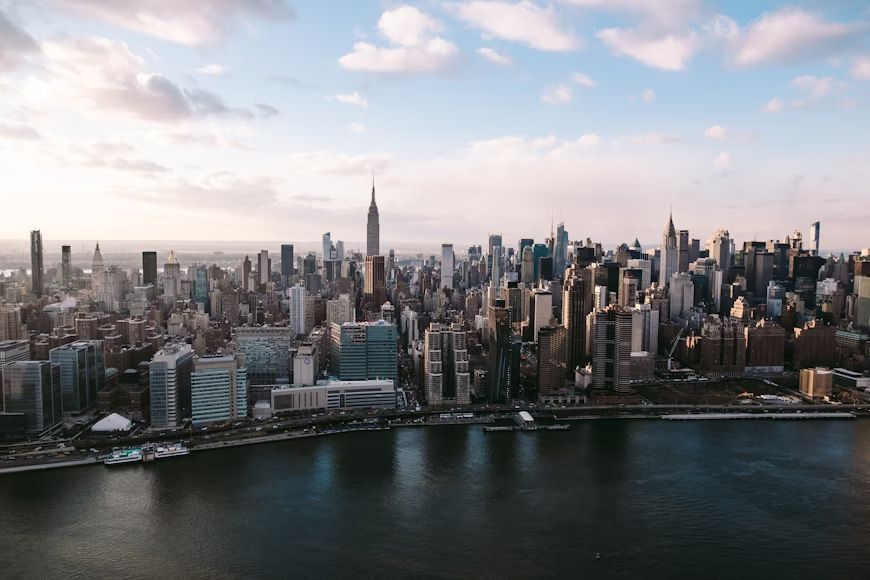
For a small island just 13 miles long, the Big Apple holds centuries of history in its neighborhood names. Some were borrowed from Dutch or British settlers, others from police officers, urban planners, or real estate promoters, and a few were coined by architects armed with a map and imagination. Each name tells a story of how the city grew, block by block. Here’s a lively stroll through 12 of Manhattan’s most famous neighborhoods and the stories of how their names first came to life.

1
Hell’s Kitchen

Image: Michael Matloka

What’s in a name? In this case, fire, grit, and a wink of humor. Legend has it that during a riot, a young police officer muttered, "This place is hell itself," only for his older partner to quip, "Hell’s a mild climate—this is hell’s kitchen." The pun was too good to forget, and the nickname stuck. Years later, developers tried a new label—"Clinton"—hoping it would sound more welcoming on real estate brochures. But New Yorkers can be a bit stubborn, and locals chose to keep the old name. After all, only "Hell’s Kitchen" could do justice to a neighborhood with that much flavor, grit, and, well, heat.

2
Harlem

Image: Phil Evenden

Back in the 1600s, when northern Manhattan was little more than farmland, Dutch settlers, homesick for their town across the sea, named the area Nieuw Haarlem after Haarlem in the Netherlands. Time smoothed away the "Nieuw," but the name remained. Centuries later, Harlem became something entirely of its own: a world capital of music, art, and pride. The rhythms may have changed from Dutch hymns to jazz and soul, but the name still carries the same echo of nostalgia and creativity.

3
Greenwich Village

Image: Budgeron Bach

Long before jazz bars and coffeehouses filled the air with chatter, this corner of Manhattan was a quiet patch of countryside known as Groenwijck—Dutch for "pine district." The British, with their habit for renaming, turned it into Greenwich, and generations of locals affectionately shortened it to "the Village." Its winding lanes still ignore the city’s rigid grid, twisting and bending like memories of the farmland that came before. Even today, as musicians play on stoops and artists linger in cafés, the Village keeps that timeless feeling.

4
Chelsea

Image: Elric Pxl

Here’s a name steeped in nostalgia and old-world charm. In the mid-1700s, retired British Major Thomas Clarke bought a large plot of land overlooking the Hudson River and built his dream home, naming it "Chelsea" after the genteel London district he once knew. The estate is long gone, swallowed by the city’s constant growth, but its name never left the map. Over the centuries, the neighborhood evolved with a flair worthy of its heritage. First a quiet residential area, then a bustling creative hub filled with galleries, theaters, and fashion studios. Much like its London namesake, New York’s Chelsea has always worn its artistic spirit proudly, with just the right touch of elegance.

5
The Meatpacking District

Image: TanjaSchwarz

It sounds tough because it was. In the early 1900s, this corner of Manhattan had more than 250 meatpacking plants and slaughterhouses filling the air with noise—and, yes, a certain aroma that no candle could ever mask. Workers hauled sides of beef down cobblestone streets dusted with ice and sawdust, a daily ballet of grit and muscle. Today, the scent of raw steak has been replaced by perfume and espresso, and the warehouses now house boutiques and rooftop bars. Still, the name "Meatpacking District" hangs on proudly, a reminder that even glamour was built on hard work and heavy lifting.

6
Times Square

Image: James Ting

Believe it or not, the origin of this glowing crossroads has more to do with ink and paper than neon lights. In 1904, when The New York Times moved its headquarters to what was then called Longacre Square, the city decided to rename the area in the paper’s honor. To mark the occasion, the Times threw a grand celebration complete with fireworks and electric lights. Decades later, the newspaper has long since moved out, but the glow never dimmed. What began as a nod to journalism became the city’s biggest stage, where the lights still flash like headlines that never stop breaking.

7
SoHo

Image: Zeke Goodyear

It may sound like a borrowed bit of London, but this SoHo is a New York creation. Back in the 1960s, urban planner Chester Rapkin was writing a report about a fading industrial zone just SOuth of HOuston Street, and casually shortened that phrase into "SoHo." He couldn’t have known he was naming one of the city’s trendiest neighborhoods. As artists began filling the old cast-iron factories with studios and galleries, the nickname spread faster than wet paint. Soon, SoHo meant loft living, street art, and downtown cool. And here’s a fun fact for visitors: in Manhattan, Houston is pronounced HOW -ston, not like the Texas city. Mispronounce it, and you’ll hear all about it before you hit the next crosswalk!

8
NoHo

Image: Dylan Dehnert

By now, you probably know the drill. After the renaming of SoHo proved such a success, the north couldn’t be left behind. When the area NOrth of HOuston Street, another cluster of lofts and studios began to bloom, it soon earned the mirrored name "NoHo." Smaller and quieter, it kept its creative streak without the chaos. Cast-iron buildings, cobbled streets, and a calm charm that feels like SoHo’s thoughtful twin, equally artistic but happy to hum instead of shout.

9
TriBeCa

Image: Essow K

What if geometry had a ZIP code? That’s pretty much how TRIangle BElow CAnal Street —better known as TriBeCa—came to be. The name began as a bit of city-planning jargon for a small, oddly shaped area, but once The New York Times printed it, the label spread faster than a rumor on the subway. Before long, the whole neighborhood embraced its new identity. Today, those wide streets and grand old warehouses host film festivals, art galleries, and lofts so sleek they make geometry look downright glamorous.

10
NoLIta

Image: Alex Haney

Tucked just NOrth of LITtle ITAly, this petite pocket of Manhattan once blended seamlessly with its pasta-and-pastry-filled neighbor. Then came the wave of stylish boutiques, corner cafés, and street-front charm that begged for its own identity. The solution? NoLIta, a name so snappy it sounds like it’s been around forever. Sleek, sunny, and effortlessly cool, it’s proof that in New York, a clever name can turn a few city blocks into a full-blown destination.

11
Turtle Bay

Image: Masahiro Naruse

At first glance, the name sounds cute enough for a storybook, and in a way, it is. Back in the 1600s, Dutch settlers named a small farm near a creek that flowed into the East River. Some say it referred to the turtles that lived there; others claim it came from the Dutch word deutal , "bent blade," describing the curve of the bay. Either way, it’s one of Manhattan’s softest names, a calm corner in the city that never sleeps.

12
Gramercy

Image: Megan Bucknall

Long ago, this Manhattan neighborhood was a swampy patch of land the Dutch called Krom Moerasje , meaning "little crooked marsh," hardly the kind of description you’d want on a real estate brochure. In the early 19th century, developer Samuel B. Ruggles acquired the land and renamed it Gramercy , adapting an archaic expression derived from the French grand merci , meaning "many thanks." Suddenly, it sounded far more elegant. The neighborhood grew around its most famous feature: Gramercy Park, a private, gated square that remains key-only to this day. In New York, that’s about as close as it gets to a secret garden.

Explore more American facts

Choose your favorite category!

General
General

As American as apple pie—the very best America has to offer!

Culture
Culture

Delve into the astounding richness of American lore.

Geography
Geography

Hop in and explore vast and diverse American landscapes.

History
History

Discover the key moments that shaped the United States.