Culture Culture 5 min read

Jefferson uncovered

Jefferson: 10 fun facts about the Founding Father you thought you knew!

Image: David Trinks

We all know Thomas Jefferson, the Founding Father, the main author behind the Declaration of Independence, the third President of the United States, and the man who spearheaded the Louisiana Purchase. But in addition to all these impressive titles, Jefferson was also a man of many talents, tastes, interests, hobbies, and a few curious anecdotes. If you want to know more about The Sage of Monticello, stick around as we share 10 fascinating facts about the great Thomas Jefferson!

1
The sweet tooth

Image: Michelle Tsang

What's your favorite ice cream flavor? With so many options available today, it's hard to choose just one, right? Like us, Thomas Jefferson also loved ice cream. Not only that, he's often credited with making this treat famous in America.

The third US president discovered his sweet tooth during his time in France. It's impossible not to imagine Jefferson doing important paperwork with a bowl of ice cream on his desk. In addition, it's said that he often served the sweet dessert to his guests at the White House.

And that’s not all! A recipe for vanilla ice cream, handwritten by Jefferson himself, is still kept to this day in the Library of Congress.

2
The handshaker

Image: Erika Fletcher

It seems that Jefferson was a man who set trends and influenced fashions. Ice cream wasn’t the only custom that spread across the country thanks to him.

Today, the handshake is a very common and popular form of greeting. But this was not always the case. Before Jefferson's presidency, handshakes were less frequent, and people often used other formal greetings, such as bowing.

Jefferson argued that handshakes were horizontal and, therefore, more democratic. This belief illustrates how he integrated his principles into every aspect of his life, even small habits and customs.

3
The friend

Image: Joanna Kosinska

Thomas Jefferson and John Adams first met in 1775 at the Continental Congress in Philadelphia. Despite their differences, they liked and respected each other. Together, they were part of the committee that drafted the Declaration of Independence in 1776 and became even closer when they both served as diplomats in Europe during the 1780s. Jefferson later served as vice president to his friend Adams when the latter took office in 1797. Although they drifted apart after Adams' presidency, they reconciled in 1812, and their regular letters returned.

As if all this weren’t enough, they both died on the same day. And not just any day—both passed away on July 4, 1826, the 50th anniversary of the Declaration of Independence.

4
The polyglot

Image: Thomas Kelley

Can you speak more than one language? It's hard not to be impressed when you see a bilingual person developing their skills, right? And then there are those who speak three or four languages!

In this regard, Jefferson’s case is remarkable. The third president of our country was fluent in no less than six languages! In addition to his mother tongue, English, and the widely spoken French (which he used during his time as American minister to France in the 1780s), Jefferson also had strong skills in Latin, Ancient Greek, Italian, and Spanish. Furthermore, some sources suggest he also knew some German. A true polyglot!

5
The musician

Image: Baher Khairy

During his childhood in Virginia, Thomas Jefferson developed a strong interest in and passion for music. Music was a fundamental element in his home, and this art form was also a main part of his education.

The Father of the Declaration of Independence played the violin perfectly. His father, Peter Jefferson, taught him to play this instrument when Thomas was very young, and his talent only grew over the years.

Less frequently than the violin, Jefferson also played the cello—another stringed instrument known for its sophistication.

6
The architect

Image: Richard Hedrick

Jefferson's talents were even more varied! He was not only a polyglot and a musician but also an accomplished architect.

Thomas Jefferson played a major role in the design and construction of his plantation home in Virginia, the magnificent Monticello, which would later earn him one of his famous nicknames. Inspired by classical and Renaissance architecture, Monticello is considered one of the greatest works of American architecture. To add further merit to his work, Jefferson began the design of the plantation and its house in 1768, when he was only 25 years old!

Fun fact: Today, Monticello is a UNESCO World Heritage Site.

7
The family man

Image: Heike Mintel

If you're a family person, you'll love this aspect of Thomas Jefferson.

In addition to politics, business, and his many talents, Thomas Jefferson was also a devoted family man—and, we must say, he had quite a large family. But how big was his family? Jefferson was born to Peter Jefferson and Jane Randolph Jefferson and was the third of ten siblings.

In 1772, he married Martha Wayles Skelton, with whom he had six children. However, only two daughters survived to adulthood: Martha and Mary, who also gave him many grandchildren.

8
The farmer

Image: Stephen Radford

Agriculture was central to Jefferson's vision at the national policy level and also in his personal life.

Monticello was not only his home but also a 5,000-acre plantation where he experimented with different crops, including wheat, corn, tobacco, and various vegetables and fruits.

In addition, he was also an enthusiast of flower gardens. His interest in horticulture led him to import seeds and plants from around the world to experiment with in America!

9
The pet lover

Image: Dawn McDonald

Among his many qualities, his appreciation for animals truly stood out.

At Monticello, he had a variety of farm animals, including geese, turkeys, chickens, horses, cows, and pigs, all of which played an important role in maintaining the plantation. But his true love was for horses. He loved riding and spending time with them, both at his home in Virginia and even during his presidency.

It’s also said that he had a soft spot for birds. One of his most beloved pets was a mockingbird named Dick, who, according to historians, was allowed to fly around the house. Cute, isn't it?

10
The astronomer

Image: Matthew Ansley

Jefferson's interests and passions were not limited to earthly matters. In fact, he was an amateur astronomer. The stars and the cosmos sparked a deep curiosity in him.

In line with this interest, he developed a taste for telescopes, through which he could approach that mysterious object of study. He had several telescopes in his house and would spend hours and hours observing the night sky.

This inclination played a key role in the famous Lewis and Clark Expedition (1804-1806), as it’s believed that Jefferson provided precise astronomical guidance and instructions to the two explorers.

General General 3 min read

The language of today

Could you make a "GRWM"? Here's modern slang you need to know!

Image: Cup Of Couple

If you scroll through social media for even a few minutes, you'll likely come across terms like "bussin'" or "amped" and unusual abbreviations like "GRWM" or "IYKYK." Do you know what they mean? If you want to stay up to date with these and other trending slang terms, don't miss this article!

1
Extra

Image: Obie Fernandez

Some people are reserved and discreet, while others are just "extra." This slang term describes someone who is exaggerated, overly dramatic , or excessive—does anyone come to mind?

If a friend shows up to a casual hangout in an extravagant outfit or makes a big deal out of something insignificant, you can call them "extra."

2
GRWM

Image: Alexander Shatov

A popular abbreviation on TikTok is "GRWM." It's so well-known that you've probably heard it before.

Since fashion influencers often share videos about their outfits or ask for clothing advice, "GRWM" stands for "Get Ready With Me." With this phrase, video creators make viewers feel like part of their daily lives and invite them to join their digital adventures.

3
Bussin'

Image: Jackson Sophat

When it comes to flattery, "bussin'" is the term you need to speak today’s language. Something described as "bussin'" is exceptionally good, impressive, or exquisite. While it's most commonly used to describe food—like in "That Burger was just bussin'"—it can also be used to compliment other things or actions.

4
Mid

Image: Eran Menashri

Contrary to the previous term, "mid" is used to describe something as average or unimpressive. While it isn’t necessarily negative, it implies that a performance, dish, or speech wasn’t exactly the best you’ve seen.

"Mid" comes from the word "middle," suggesting that what you're referring to is neither good nor bad—it's just somewhere in the middle.

5
Spill the tea

Image: Manki Kim

If someone asks you to spill the tea, they’re not asking you to make a mess on the snack table—they want something much more interesting.

"Spill the tea" is a slang expression used to ask someone to share juicy gossip . If you love drama or want to stay up to date with the latest news and scandals, this phrase will come in handy. As for its origin, some suggest that "spill the tea" may have evolved from an earlier phrase with a similar meaning: "spill the beans."

6
IYKYK

Image: Melissa Askew

While it may look like a word from a strange, distant language, "IYKYK" is actually an abbreviation for "If you know, you know." It's great for those inside jokes you share with your friends or recalling moments that only a select group was part of. You know, something intimate, secret, or exclusive.

7
GOAT

Image: Nandhu Kumar

What do Michael Jordan, Aretha Franklin, Babe Ruth, Frank Sinatra, Anthony Hopkins, and Serena Williams have in common? Well, they're all GOATs! But what does that mean?

"GOAT" doesn’t refer to the adorable animal—it stands for "Greatest of All Time." That's right! This term is used to describe those who truly stand out as the best in their field, discipline, or art.

8
No Cap/Cap

Image: Jakob Owens

It seems that saying "true" or "false" has gone out of fashion. The new trend is to say "no cap" or its opposite, "cap." As you might guess, these terms relate to truthfulness, honesty, and authenticity .

If a friend says, "The show was incredible, no cap," they’re assuring you they’re telling the truth. But if someone hears a suspicious story and calls out "cap," they’re likely calling it a lie.

9
Amped

Image: Austin Schmid

Have you been on Cloud Nine lately? If so, there's a perfect slang term for you: "amped." This adjective describes someone who’s excited about something or simply feeling really, really happy .

The term originated in the 1980s as a shortened form of "amplified," originally referring to someone highly charged with energy. Over time, it became associated with excitement and joy and has recently made a comeback, especially on social media.

10
Bet

Image: Ursula Castillo

If you're talking with a group of teens and you want to express your agreement with something, just say, "Bet." This short word is commonly used today to mean "Yes," "Exactly," "That’s it," or "Let’s do it."

As you might have guessed, it was born in the gambling world and is tied to that feeling of confidence or certainty needed when placing a bet.

History History 3 min read

Got mail?

Did you know these 12 facts about the evolution of mail delivery?

Image: Wolfgang Vrede

We take many things for granted, especially when they have been around forever. Their stability is reassuring and commanding. But everything has to start somewhere, and mail delivery certainly has had an interesting history in America. From humble tavern-based post offices to airplanes and ZIP codes, the postal service has a few stories to share. Did you know about these 12?

1
The first post office? A Boston tavern

Image: Mick Haupt

In 1639, the first organized mail service in British North America started at Richard Fairbank’s tavern . The owner collected and distributed mail brought by ship.

Although informal and modest by today’s standards, this post office laid the foundation for communal mail collection and delivery.

2
Enter Benjamin Franklin

Image: Brett Wharton

From 1753, Franklin served as joint Postmaster General for the colonies and undertook a sweeping reform: he organized delivery routes, aligned them with major roads and rivers, and cut the mail travel time between Philadelphia and New York to about 33 hours .

He also introduced the first rate chart, standardizing delivery costs based on weight and distance, turning what had been a scattered courier network into a more reliable, structured mail system.

3
National Postal System founded

Image: David Trinks

With the American Revolution underway, the Second Continental Congress established the first national postal agency in 1775 , appointing Benjamin Franklin as the first Postmaster General.

This new postal service initially handled mostly military and diplomatic correspondence, but the agency laid the groundwork for what would become a national communications service.

4
The Age of Steam: mail by steamboat

Image: mandylin

In 1813, Congress authorized the Postmaster General to contract steamboat companies to carry mail. Soon, steamboats were ferrying mail up and down the East Coast and the Mississippi River .

By 1848, mail even traveled to California via steamship and across the Isthmus of Panama, a three-week voyage.

5
Overland stagecoaches and the Butterfield Overland Mail

Image: Ricky BiggsSr

Between 1858 and 1861, the Butterfield Overland Mail stagecoach service carried U.S. mail across the western frontier, from eastern posts like Memphis and St. Louis to San Francisco .

This service helped connect the eastern U.S. with rapidly growing western settlements long before the completion of the transcontinental railroad.

6
Railroads enter the picture

Image: Jay Kettle-Williams

As railroads expanded, the postal service started to use this new technology: in 1832, the first mail deliveries by train were made.

Rail transport vastly improved speed and reliability compared to horse and stagecoach travel , and became a key advance as mail traffic increased and the nation expanded westward.

7
First U.S. postage stamps

Image: The New York Public Library

In 1847, the first official U.S. postage stamps were issued: a 5-cent stamp featuring none Ben Franklin and a 10-cent stamp featuring George Washington .

Prepaid stamps simplified payment and collection of postage, removing complications from pay-on-delivery systems and helping the postal system function more efficiently.

8
The Pony Express

Image: The New York Public Library

In 1860, the Pony Express started its overland mail route between Missouri and California, nearly 1800 miles of relay horseback riding . The mail took 10 days between endpoints.

Although short-lived (it ended in 1861), the Pony Express demonstrated the demand for rapid cross-country communication.

9
City-wide home delivery

Image: Lesli Whitecotton

In 1863, free city mail delivery began , allowing residents in major cities to receive letters directly at their homes rather than picking them up at a post office.

This represented a major shift: mail became a part of everyday domestic life, not just something dropped off and picked up by hand.

10
Pneumatic tube mail in NYC

Image: The New York Public Library

In 1897, a pneumatic-tube mail system began operation in New York City. Mail could travel underground at high speeds, from the General Post Office to other offices in Manhattan within minutes .

At its peak, the system carried thousands of letters daily: at one point, nearly 30% of New York City mail went through this immense underground network.

11
Parcel post service launches

Image: Olivier Rouge

On New Year’s Day 1913, the U.S. Post Office inaugurated the first official parcel post service , allowing packages, not just letters, to be sent through the mail.

The impact was immediate: within the first five days, millions of packets passed through post offices, fueling mail-order business and expanding commerce everywhere.

12
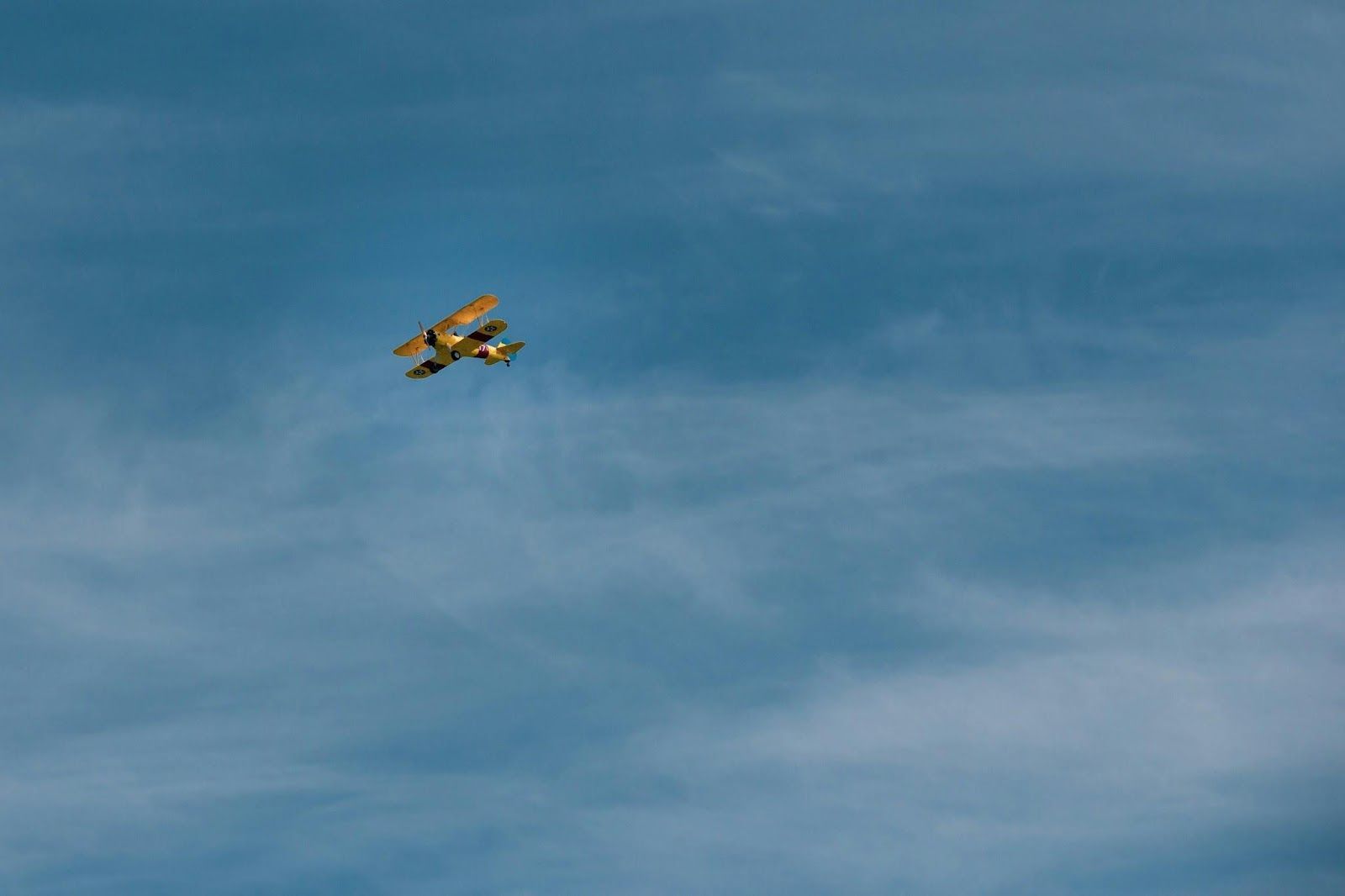
First airmail route

Image: Qihao Wang

In 1918, the postal service launched the first regularly scheduled air mail route between Washington, D.C., and New York , marking the beginning of mail carried by airplane.

Airplane mail allowed far faster coast-to-coast and long-distance communication, a major leap from sailboats, stagecoaches, or railroads.

Explore more American facts

Choose your favorite category!

General
General

As American as apple pie—the very best America has to offer!

Culture
Culture

Delve into the astounding richness of American lore.

Geography
Geography

Hop in and explore vast and diverse American landscapes.

History
History

Discover the key moments that shaped the United States.