General General 6 min read

RAISE YOUR GLASS TO AMERICA

Have You Tried These 10 Classic American Cocktails?

America is celebrated as the home of many wonders . Among its most delightful creations are a variety of delicious drinks and cocktails that have not only gained international fame but have also been critically acclaimed across the country and around the globe for their quality and flavor . There's always something to celebrate, right? Whether you are the life of the party or you just enjoy relaxing in the backyard with a cool drink in hand, this article is for you.

Let's take a look at the recipes and places of origin behind these 10 tasty American cocktails . Cheers!

1
Long Island iced tea

Image: yeoul Shin

There are two theories about the origin of this cocktail, both rooted in Long Island , though not the sameLong Island!

One story claims it was born during the Prohibition era in a community named Long Island in Kingsport, Tennessee . Another, more recent, credits Robert "Rosebud" Butt with inventing the recipe in a 1972 contest held on Long Island, New York .

A daring choice for some, the iconic Long Island Iced Tea has a recipe with a long list of ingredients . To prepare it, you'll need tequila, light rum, vodka, triple sec, gin, and a splash of cola. Only the bravest dare to try it!

2
Martini

Image: Daniel Lloyd Blunk-Fernández

If you are one of those who loves a drink that's both strong and stylish , then the classic Martini is probably among your favorites. It is the choice of the sophisticated James Bond, who famously prefers his Martini "shaken, not stirred."

Traditionally made with gin and vermouth , and garnished with an olive or a lemon twist, the Martini has several variants, including the vodka Martini, which -as its name suggests- swaps gin for vodka.

While the origin of this classic is not entirely clear, most sources argue it comes from a drink called the Martinez , which had the same basic ingredients and was already being served in the mid-19th century at the Occidental Hotel in San Francisco, California.

3
Old Fashioned

Image: Nuff

Let's step back in time with the classic Old Fashioned ! This drink traces its roots back to the early 19th century right here in the United States.

Initially called "the whiskey cocktail," it was prepared much like it is today: mixing sugar with bitters and water, then adding whiskey or brandy. However, as the 19th century progressed, new ingredients like fruit juices, soda, or other liquors became part of many drinks. To stick to the original recipe and avoid these modern twists, people began ordering it as an "Old Fashioned."

The invention of this liquid delicacy is sometimes linked to The Pendennis, a gentlemen's club that opened in 1881 in Louisville, Kentucky . However, mentions of this delicious drink across the country long predate the club.

4
Mint julep

Image: Abby Boggier

Originally from the south of the United States and very popular, especially in Kentucky , there are mentions of this fresh cocktail as early as the 1770s!

It truly stood the test of time, and we understand why. With a base of bourbon , a hint of sugar, water, the classic crushed ice, and the essential fresh mint , it is a mix that's hard to resist.

Served traditionally in silver or pewter cups , this classic American drink is perfect for summer. However, the touch of bourbon can also be good for a cool winter day.

5
Manhattan

Image: OurWhisky Foundation

Remember the original Old Fashioned recipe? Well, let's spice it up. Take the whiskey cocktail and add a splash of sweet vermouth . That's it! Now you have a chic drink: the popular Manhattan .

The Manhattan cocktail has a fascinating origin myth , situated -of course- in NYC . Legend has it that this recipe was created in the 1870s , at the Manhattan Club for a banquet hosted by Winston Churchill's mother! However, historical records show that Lady Randolph Churchill was actually in Paris and pregnant with Winston at the time.

According to more reliable sources, the Manhattan cocktail was actually invented in the 1860s by a bartender named Black , who ran a bar near Houston Street in Manhattan.

6
Sazerac

Image: Bon Vivant

The classic Sazerac cocktail embodies the spirit of The Big Easy , where it was born in the mid-19th century.

The Sazerac we savor today is named after the Sazerac de Forge et Fils brand of Cognac brandy, from which this cocktail was first created. To make a Sazerac, absinthe, bitters, and sugar were combined with the brandy. Over time, rye whiskey replaced brandy in the modern recipe.

What sets the Sazerac apart, besides its Frenchy name, is its distinctive serving style . The ritual begins by rimming an old-fashioned glass with absinthe. Next, the drink is mixed with ice and strained into the prepared glass. Finally, a classic touch: a twist of lemon.

7
Mai Tai

Image: wu yi

While it might sound like the name of an ancient martial art, the Mai Tai is actually a delightful cocktail born in the United States of America.

More modern and with a tropical touch, the Mai Tai is a vibrant blend of rum , Curaçao liqueur, orgeat syrup, and lime juice. The year was 1944 when this balanced recipe was created by Victor J. Bergeron at his Trader Vic's restaurant in Oakland, California .

Apparently, the Mai Tai's name comes from the Thai expression "maitaʻi," which translates as "good," "excellent," or even "the best." So, if you haven't tried it yet, consider this your signal!

8
Tequila Sunrise

Image: Jamin Eyes

Named for its unmixed colors that mirror the beautiful moment when the sun rises, the Tequila Sunrise carries an intense blend: tequila, orange juice, and grenadine syrup .

The original recipe was a bit different. Between the 1930s and '40s , bartender Gene Sulit stirred up tequila with crème de cassis, lime juice, and soda water at the Arizona Biltmore Hotel in Phoenix. Some three decades later in Sausalito, California , Bobby Lozoff and Billy Rice made a change to the original recipe. They traded out the original last three ingredients for orange juice and grenadine, creating the present version.

In case you're wondering, yes, The Eagles' song was inspired by this drink!

9
The Ramos Gin Fizz

Image: The Humble Co.

And New Orleans is here again! With its festive spirit, this city also gave birth to another American cocktail: The Ramos Gin Fizz . This delightful recipe was born in 1888 , courtesy of Henry Charles "Carl" Ramos, owner of the Imperial Cabinet Saloon .

Originally called the " New Orleans Fizz ," it was an instant hit. But if you want to try making it at home, be prepared for a trip to the grocery store, as the recipe is a bit long . The mix for a perfect Ramos Gin Fizz includes gin, lemon juice, lime juice, egg whites, sugar, heavy cream, orange flower water, and soda water.

10
Cosmopolitan

Image: Laure Noverraz

Who hasn't heard of the iconic " Cosmo "? This delightful, sweet drink is a blend of vodka , Cointreau (a type of triple sec), cranberry juice, and a splash of sweetened lime juice. It is served in a chic martini glass and often garnished with a lemon twist.

The origin of this drink is a subject of debate, with various reports suggesting its creation in different places across the country . Some stories trace it back to the 1970s in Provincetown, Massachusetts ; San Francisco, California ; or Minneapolis, Minnesota . Others claim it was born a bit later, in the mid-1980s , in the sunny state of Florida . The current recipe, however, has traces in the bustling city of New York.

Regardless of its birth city, this drink originated in our country and is part of American culture. Let's enjoy it!
General General 4 min read

Enlightening comparisons

How many elephants fit in a cloud? Wild comparisons you won’t believe

Image: David Yu

How much does a cloud weigh? How powerful is the flow of Niagara Falls? How deep is the deepest point of the Grand Canyon? And how far away is the Moon from Earth? Sure, we could give you the straight numbers. Or we could find fun and illustrative ways to put these measurements into perspective, like using basketballs, cars, elephants, and electric toasters. Read on to learn some down-to-earth comparisons of outstanding things!

1
Alaska is so big, it could fit Texas inside twice

Image: Paxson Woelber

Sure, everything’s bigger in Texas… but where does that leave Alaska? The Last Frontier spans about 663,000 square miles , while the Lone Star State covers roughly 268,000 square miles. So yes, you could comfortably fit Texas inside Alaska twice, and still have room left over for California.

2
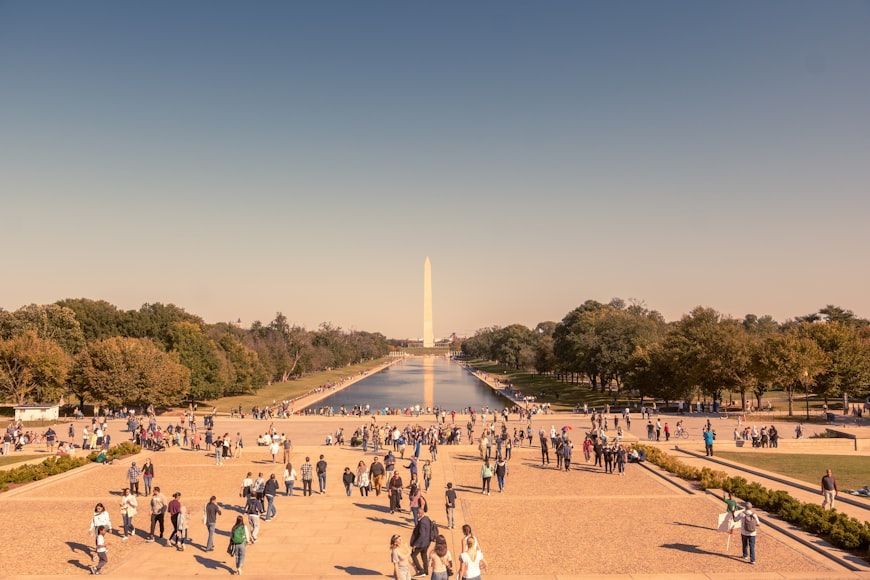
You could stack 10 Washington Monuments inside the Grand Canyon’s depth

Image: Sonaal Bangera

At its deepest point, the Grand Canyon plunges more than 6,000 feet. That’s more than a mile of height, to give you an idea. To put that in perspective, the 555-foot-tall Washington Monument could fit inside the canyon roughly ten times from top to bottom.

3
The Statue of Liberty’s sandal is the size of a small car.

Image: A n v e s h

Have you ever paid attention to the Statue of Liberty’s feet? Yes, they are visible, right next to the broken shackles at her base. You can’t stand next to the feet, of course, but if you could, you’d see that each sandaled foot measures about 25 feet long , which is a bit over the length of a Chevy Suburban.

4
The Empire State Building was built faster than a modern kitchen remodel

Image: Kit Suman

Did you know that one of the most famous buildings in the world was pretty much speed-built? Construction took just 410 days , starting in 1930 and finishing in 1931. This rapid progress was possible thanks to prefabricated steel parts and a workforce of roughly 3,400 workers each day. Nowadays, your average kitchen renovation takes 6 months to a year.

5
If the Earth were the size of a basketball, the Moon would be a tennis ball 24 feet away

Image: Anne Nygård

This is a fun way to illustrate the relationship between our planet and its satellite. If Earth were the size of a basketball (about 9.5 inches in diameter), the Moon would be roughly the size of a tennis ball (about 2.5 inches).

But they would be a whopping 24 feet away, about the length of a stretch limousine (or a Statue of Liberty sandal). This scale model helps explain just how far apart and disproportionate they really are!

6
A single cloud can weigh as much as 90 elephants

Image: Volodymyr Dobrovolskyy

Clouds may not look heavy, but these giant beauties are surprisingly massive. Scientists estimate that an average fluffy cumulus cloud contains about 1.1 million pounds of water, which is roughly the weight of 90 adult African elephants .

7
You could fit 7 Yankee Stadiums inside the Mall of America

Image: David Vives

With over 5.6 million square feet, the Mall of America is one of the largest indoor spaces in the country . Imagine trying to meet your friends in just one of its 500+ stores!

The mall also features an indoor amusement park and an aquarium. To give you an idea, Yankee Stadium covers roughly 800,000 square feet. You could fit about seven of them within the Mall of America.

8
A hummingbird flaps its wings faster than a car engine runs

Image: James Wainscoat

Hummingbirds beat their wings between 50 and 80 times per second , roughly eight times faster than the revolutions per second of a typical V8 engine at idle. No wonder they have enough force to seemingly fly in place!

9
Comparing lightning bolts with defibrillator shocks

Image: chutipon Pattanatitinon

The energy in lightning bolts can vary, but it’s not uncommon for them to unleash 5 billion joules . Roughly, a biphasic defibrillator delivers about 200 joules in a single shock. And, to give you an idea, it takes roughly 50,000 joules to toast a single slice of bread.

10
Yellowstone sits on top of a supervolcano the size of Rhode Island

Image: Denys Nevozhai

You might have heard of Yellowstone’s supervolcano and how tourists leave mesmerized by the geysers, hot springs, and wildlife.

But the size of its caldera is even more astonishing: it stretches 20 by 45 miles , covering nearly 1,350 square miles. That’s roughly the same area as Rhode Island, the smallest U.S. state.

11
Niagara Falls could fill an Olympic pool in less than a second

Image: Hadi Yazdi Aznaveh

A standard Olympic-size swimming pool holds about 660,000 gallons. Niagara Falls, however, pours roughly 700,000 gallons of water every second, meaning it could fill a pool in under one second, approximately 0.94 seconds to be exact.

If you were filling the same pool with a standard hose, it could take about 19 days .

History History 4 min read

Western stories

Debunking myths and truths about the California Gold Rush

Image: Scottsdale Mint

Were the 49ers pioneering winners? Who made the most money over there, in the West? Who wrote the best accounts of lifestyle and stories about the gold fever? If the answers to these questions are a mystery to you, you might enjoy these lesser-known stories about the California Gold Rush!

1
Gold Rush myths bubbled up immediately

Image: Tomáš Malík

It didn’t take long for the truth to get buried. As soon as gold was discovered, the stories started to shimmer. Tales of instant wealth, golden boulders, and rivers gleaming with nuggets.

Letters home were often exaggerated, and newspapers sensationalized every find. These myths fueled the frenzy and caused proverbial FOMO all over the world. People wanted to see it for themselves.

2
The best Western business wasn’t in fact gold

Image: Stefan Münz

If you wanted to get rich during the gold rush, you had better chances opening a store than mining. That was the golden rule for smart entrepreneurs like Levi Strauss, who didn’t strike it rich in a streambed, but in a sewing room. Another legend, Samuel Brannan, made a fortune selling picks, pans, and shovels —not gold.

3
The "49ers" were actually latecomers

Image: Emilie

The famed "49ers," the nickname for those swept up in the gold frenzy in 1849, weren’t the first on the scene. There’s a plot twist. Gold was discovered in January 1848 at Sutter’s Mill.

But the news spread slowly . By the time the world caught on, most of the easily accessible gold had already been plucked from riverbeds by locals, soldiers, and early arrivals.

4
Thousands came from China and South America

Image: rc.xyz NFT gallery

The Gold Rush was a global stampede . Tens of thousands of Chinese immigrants crossed the Pacific, some bringing generations of mining knowledge with them. Others came from Chile, Peru, and Mexico, arriving in San Francisco to find opportunity.

5
Women were there not just as camp followers

Image: Michael & Diane Weidner

Women were there too, not just as wives, but as businesswomen, cooks, hoteliers, and even miners. Take Luzena Wilson, a widow who hauled her children west and set up a boarding house for miners. Her clean beds and hot meals turned into a booming business.

Others ran laundries, tended bar, or staked their own claims. In a lawless land where survival meant creativity, many women found fortune in hard work.

6
Some came from Hawaii, Russia, and Europe

Image: Trey Hollins

They called them " Argonauts ," a romantic nod to the Greek myth of Jason and his quest for the Golden Fleece. And like the legend, the real Gold Rush was international. Adventurers came not just from the American East, but from as far as Russia’s Pacific coast, the Hawaiian Islands, and every corner of Europe.

7
Gold Rush towns became ghost towns

Image: Stefan Münz

Take Bodie, for example. A lawless hotspot where saloons outnumbered schools. At its peak, it had over 10,000 residents. A few decades later, it was all tumbleweeds and creaky wood .

Once the gold ran out, so did the people. Tools were abandoned and whole towns vanished almost overnight, leaving behind eerie remnants.

8
The "Gold Fever" spread worldwide

Image: suradeach saetang

Once word of gold reached distant shores, "gold fever" spread around the world . Australia had its own rush by 1851. The Klondike in Canada followed in the 1890s, and South Africa’s rich deposits turned Johannesburg into a boomtown in the 1880s.

Prospectors chased hope, not just gold. Each new report of found gold sparked a fresh migration, with fortune-seekers packing up and heading to the hot spots.

9
Gold mining required team effort

Image: Elena Mozhvilo

Forget the image of the lone prospector whistling by the river . That only worked for a short time.

As surface gold dried up, miners turned to hard labor, which involved blasting rock, diverting rivers, and eventually using powerful water cannons in a process called hydraulic mining. It was expensive. Teams of men pooled resources, hired help, and invested in equipment.

10
Many "Gold Seekers" never even made it to California

Image: James Lee

Getting to California in the 1840s was no stroll through the prairie. Hundreds of the hopefuls who set out never arrived. Some perished on the overland trails due to disease, accidents, or exhaustion.

The sea route around Cape Horn was no solution; it was just longer and colder. Some turned back. Others settled in Oregon or Utah. A few found fortune far from the gold fields.

11
The "Gold Rush" fueled California's statehood

Image: Emre Ayata

In 1848, California was a sleepy outpost with little U.S. oversight. By 1850, it had boomed into a booming, brawling land with more than enough people.

The rush had brought merchants, farmers, lawyers, and politicians. With them came the push for schools, railroads, and laws. California skipped the usual phase of being a U.S. territory and leapfrogged straight into statehood.

12
Women and children wrote some of the best eyewitness accounts

Image: The Cleveland Museum of Art

Some of the most vivid details of this era came from women and children who chronicled the chaos . Their letters and diaries tell of lonely cabins, muddy streets, makeshift schools, and the daily drama of camp life.

Women like Louise Clappe (aka "Dame Shirley") wrote witty, unfiltered dispatches from the Sierra Nevada. Young girls described the thrill of arriving in San Francisco and the terror of crossing the plains.

13
The Gold Rush didn't end in 1850

Image: Michael & Diane Weidner

By the time most folks arrived, the easy pickings were gone, and the story was just getting started.

The gold fever didn’t vanish in a year. Prospecting surged well into the 1850s and beyond. Some of the biggest strikes, like Nevada’s Comstock Lode in 1859, came after the main rush was supposedly over. By then, mining had evolved into an industrial enterprise, with machinery, corporations, and deeper digs.

Explore more American facts

Choose your favorite category!

General
General

As American as apple pie—the very best America has to offer!

Culture
Culture

Delve into the astounding richness of American lore.

Geography
Geography

Hop in and explore vast and diverse American landscapes.

History
History

Discover the key moments that shaped the United States.