Geography Geography 4 min read

Secret cascades worth the trek

Forget Niagara Falls: These hidden American waterfalls are worth the trek
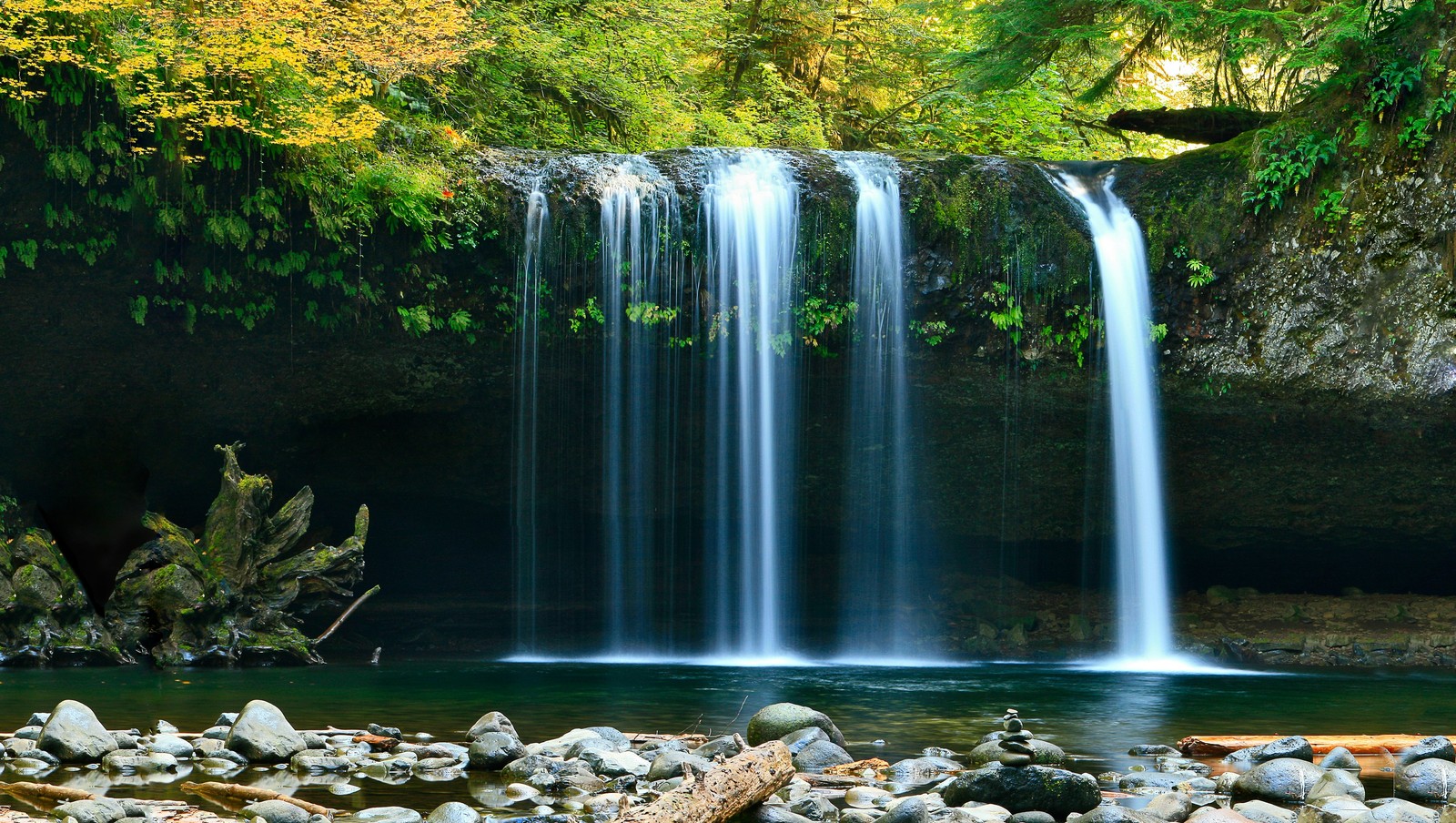
Image: Jeffrey Workman

Forget Niagara Falls and Yosemite's tourist crowds. The real magic happens at waterfalls that most people drive right past without a second thought . These hidden gems don't have gift shops or paved walkways, but that's exactly what makes them special. Grab your hiking boots and a sense of adventure: we're going waterfall hunting.

1
Havasu Falls, Arizona
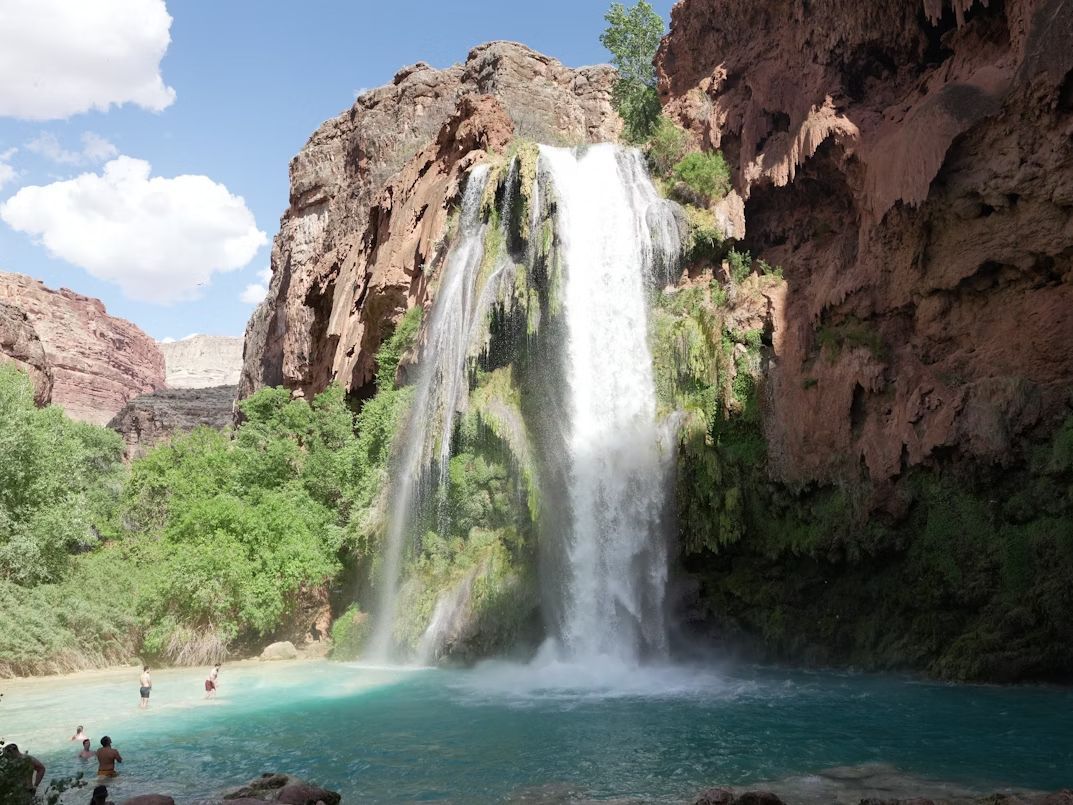
Image: Yacov B

Yes, technically, people know about Havasu Falls, but getting there requires permits, careful planning, and a ten-mile hike into the Grand Canyon that'll have your knees filing for divorce. The turquoise water looks Photoshopped, but it isn't—it's caused by calcium carbonate and magnesium that create that otherworldly blue-green glow. Most tourists snap their Grand Canyon photos from the rim and call it a day, completely unaware that this paradise exists below.

2
Linville Falls, North Carolina
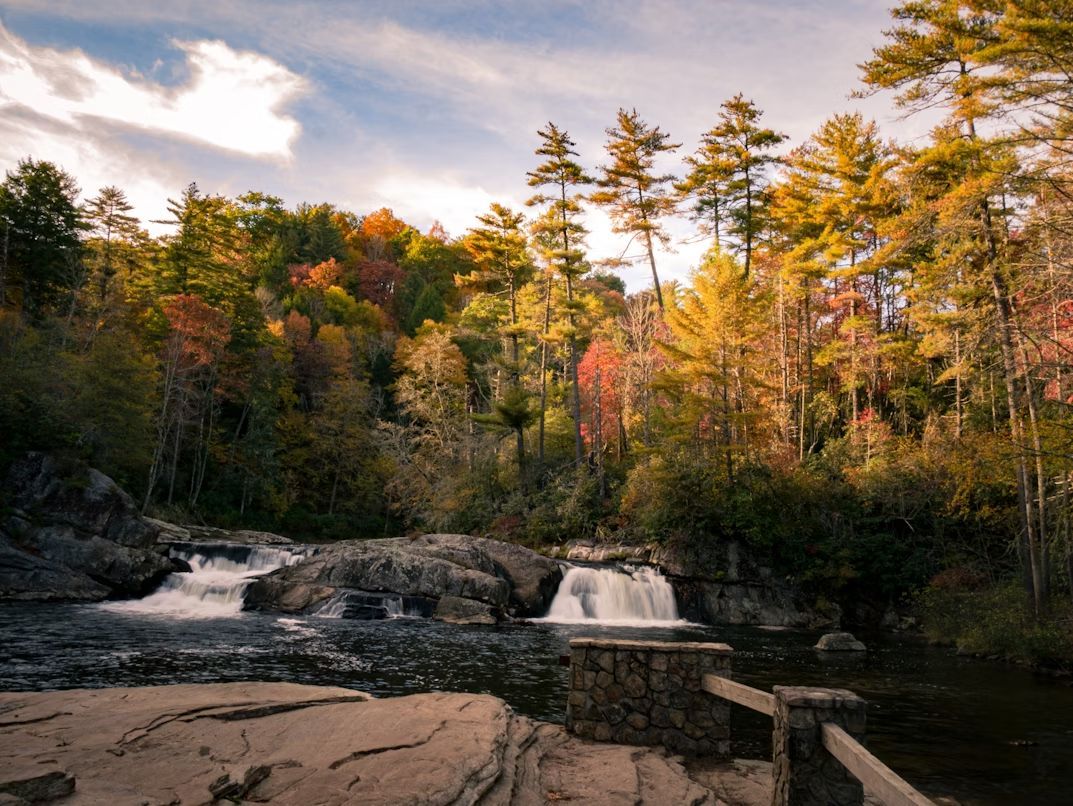
Image: Jeff Miller

Tucked in the Blue Ridge Mountains, this waterfall drops in multiple tiers through Linville Gorge , nicknamed the "Grand Canyon of the East." The upper falls plunge 12 feet, followed by the lower section, which drops another 90 feet into the gorge below.

Multiple trail options mean you can customize your effort level, from an easy quarter-mile stroll to more challenging overlooks. The best view? Probably Chimney View, which gives you the full dramatic drop and a sweeping view of the gorge beyond.

3
Potato River Falls, Wisconsin
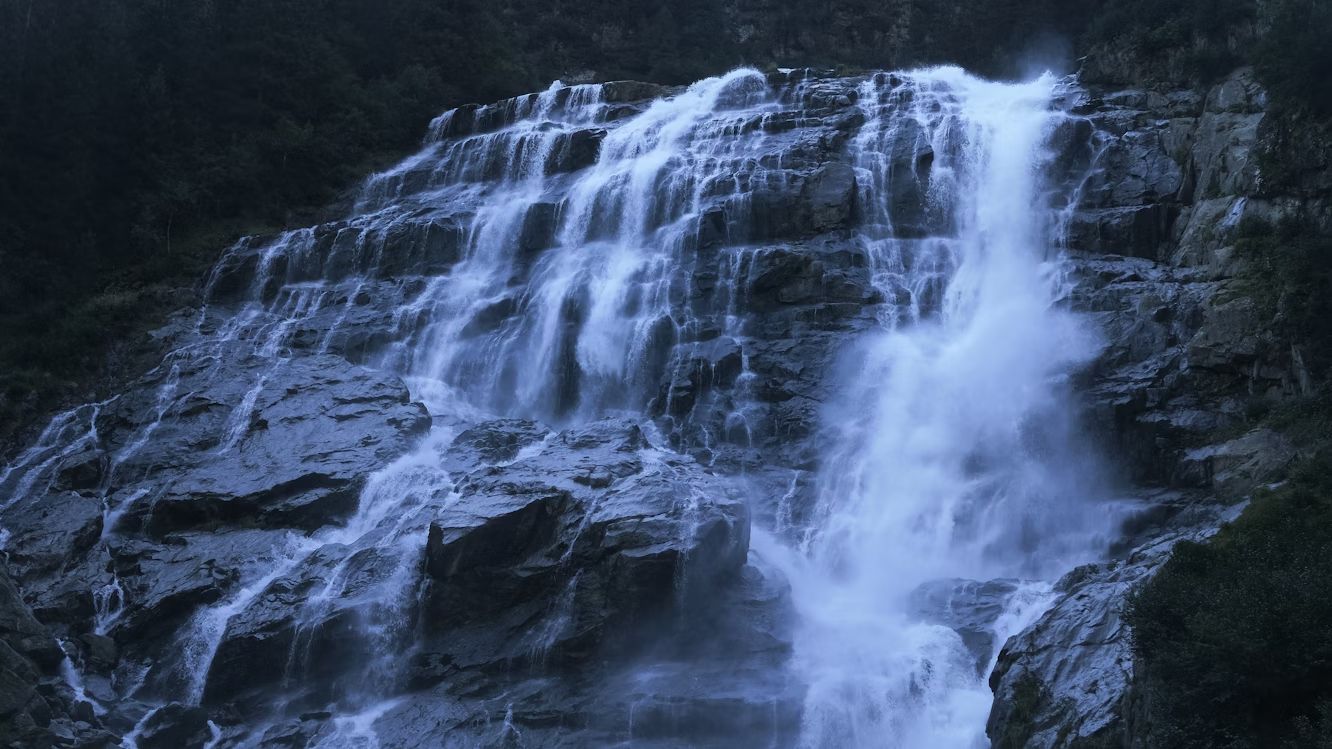
Image: Paul Pastourmatzis

Potato River Falls sits near the Michigan border in the Northwoods, where many visitors are too distracted by fishing and Friday fish fries to notice the waterfall itself. The falls drop about 90 feet in cascading sections, with observation platforms that make viewing easy —no mountain-goat skills required. The surrounding forest feels wonderfully remote, even though you're only a short walk from the parking area.

4
Natural Falls, Oklahoma
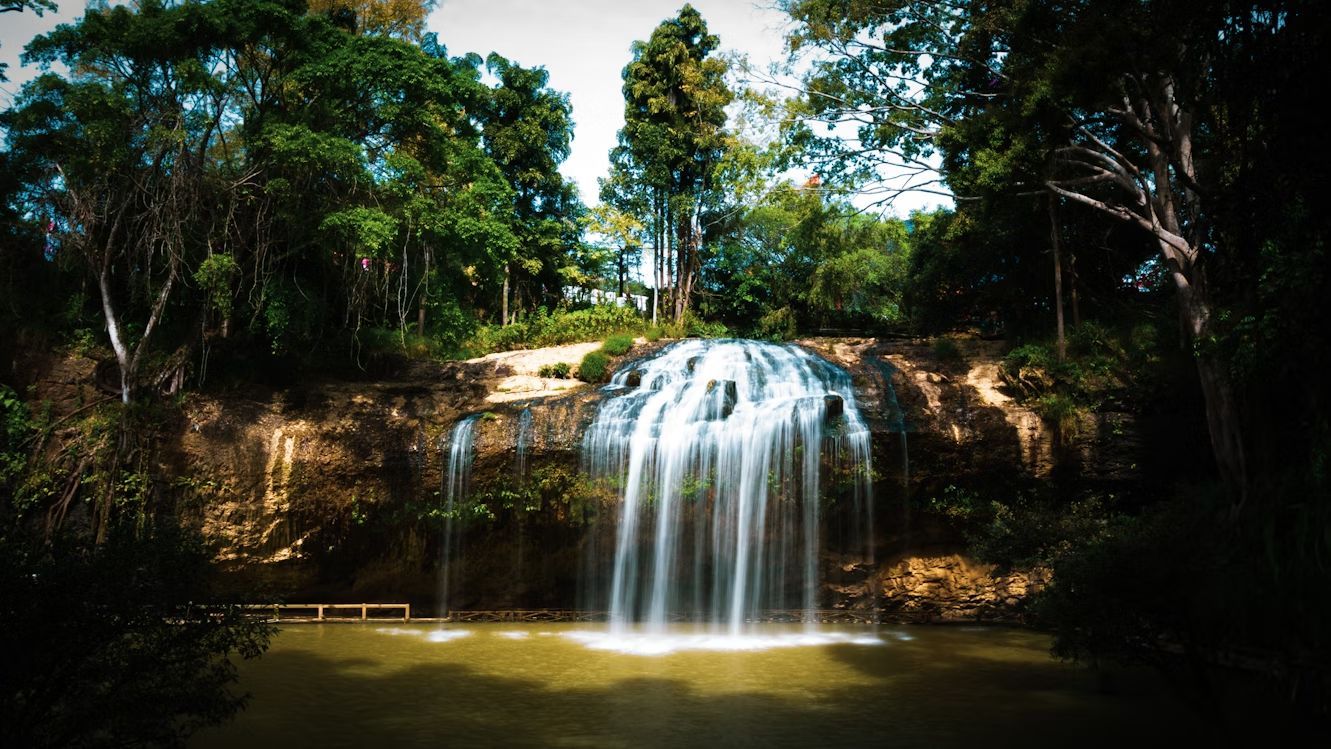
Image: Tien Vu Ngoc

Yes, Oklahoma has waterfalls, and Natural Falls State Park proves it, dropping 77 feet into a surprisingly lush canyon . The trail to the viewing platform takes about ten minutes, making this possibly one of the best effort-to-reward ratios on this list.

The falls flow year-round thanks to a spring-fed creek, though spring brings the most dramatic water volume. A large amphitheater-like alcove behind the falls provided the backdrop for parts of the 1974 movie Where the Red Fern Grows , if you're into vintage cinema trivia. Visit early in the morning to have the place to yourself and contemplate the geographical surprises America still holds.

5
Fall Creek Falls, Tennessee
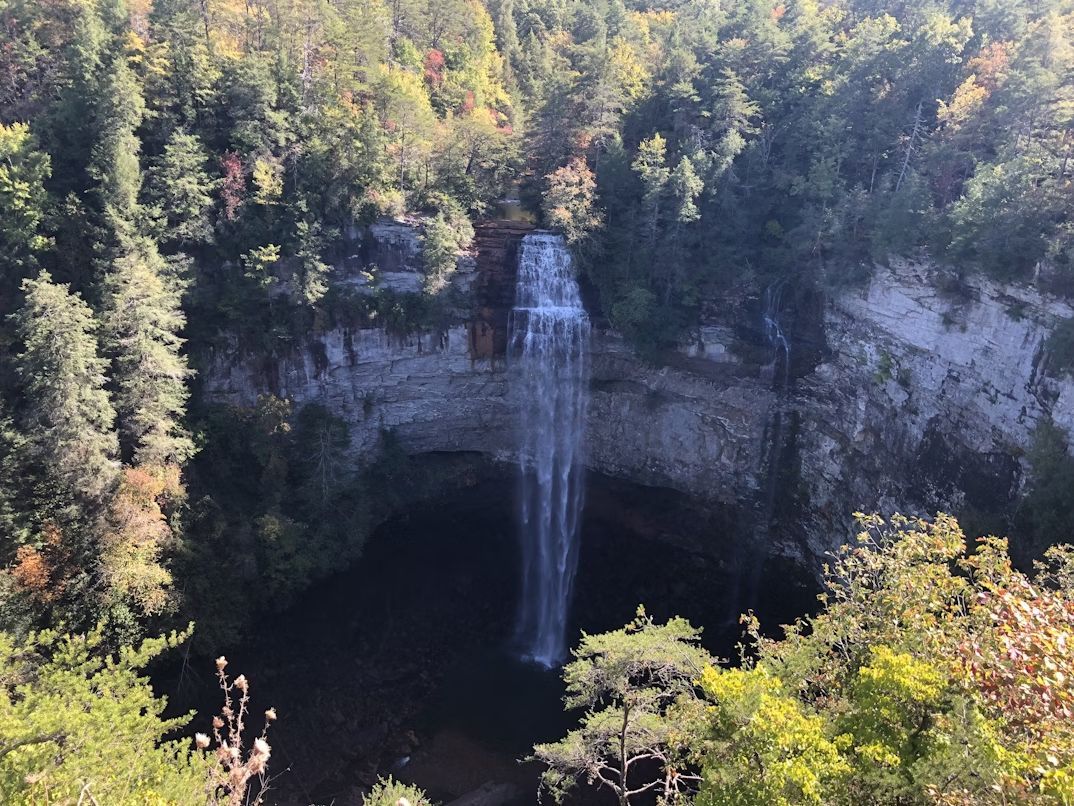
Image: Joshua Woods

At 256 feet, Fall Creek Falls is one of the tallest waterfalls east of the Mississippi , yet somehow remains less famous than Graceland. Located in a state park of the same name, it's the crown jewel among several waterfalls in the area, meaning you can actually hit multiple cascades in one day if you're feeling ambitious. The main overlook requires minimal effort, but trails wind down to the base if you want the full experience and don't mind plenty of stairs.

6
Alamere Falls, California
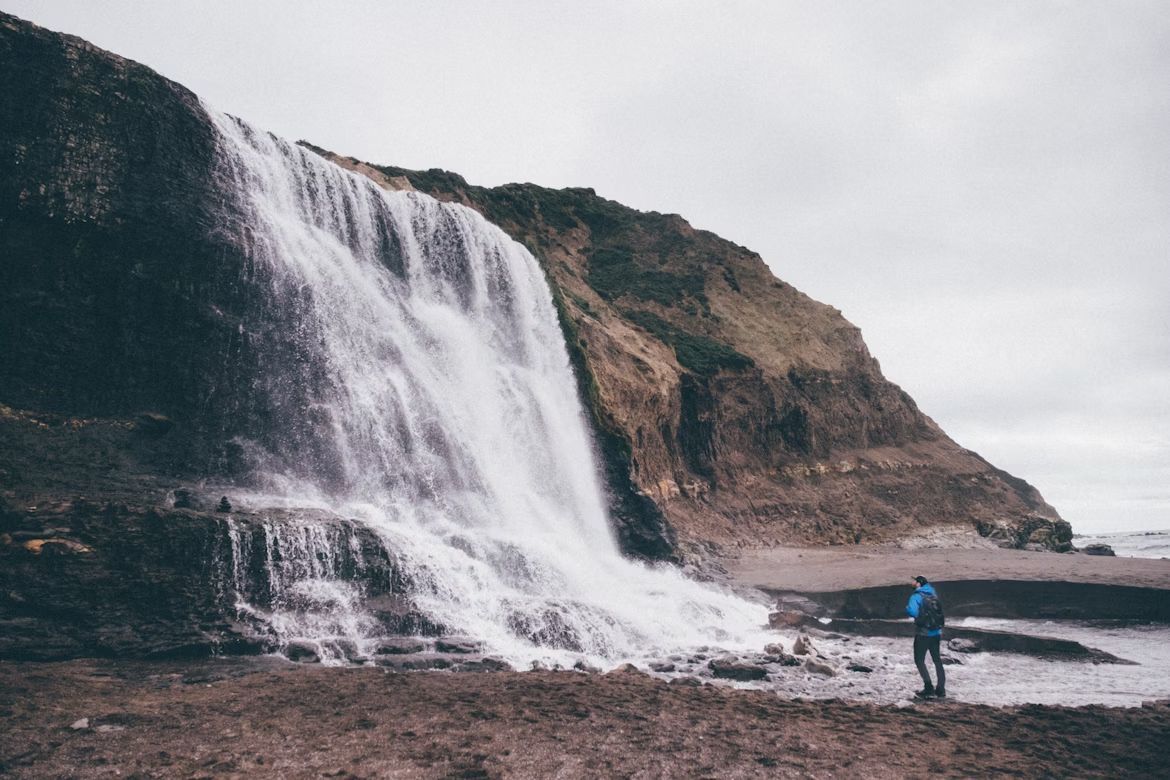
Image: Matt Bennett

California has no shortage of waterfalls, but Alamere Falls does something truly special: it drops directly onto the beach . This rare "tidefall" spills over cliffs at Point Reyes National Seashore, creating a scene that looks like a screensaver come to life. Getting there requires an 8-mile round-trip hike that's moderately strenuous but manageable for anyone in reasonable shape. The trail winds through coastal forest before emerging onto wind-swept beaches.

The falls flow strongest in winter and spring when California actually gets rain, becoming a mere trickle by late summer. Time your visit right, and you can stand on the beach while 40-foot waterfalls crash onto sand beside tide pools and sea stacks.

7
Kaaterskill Falls, New York
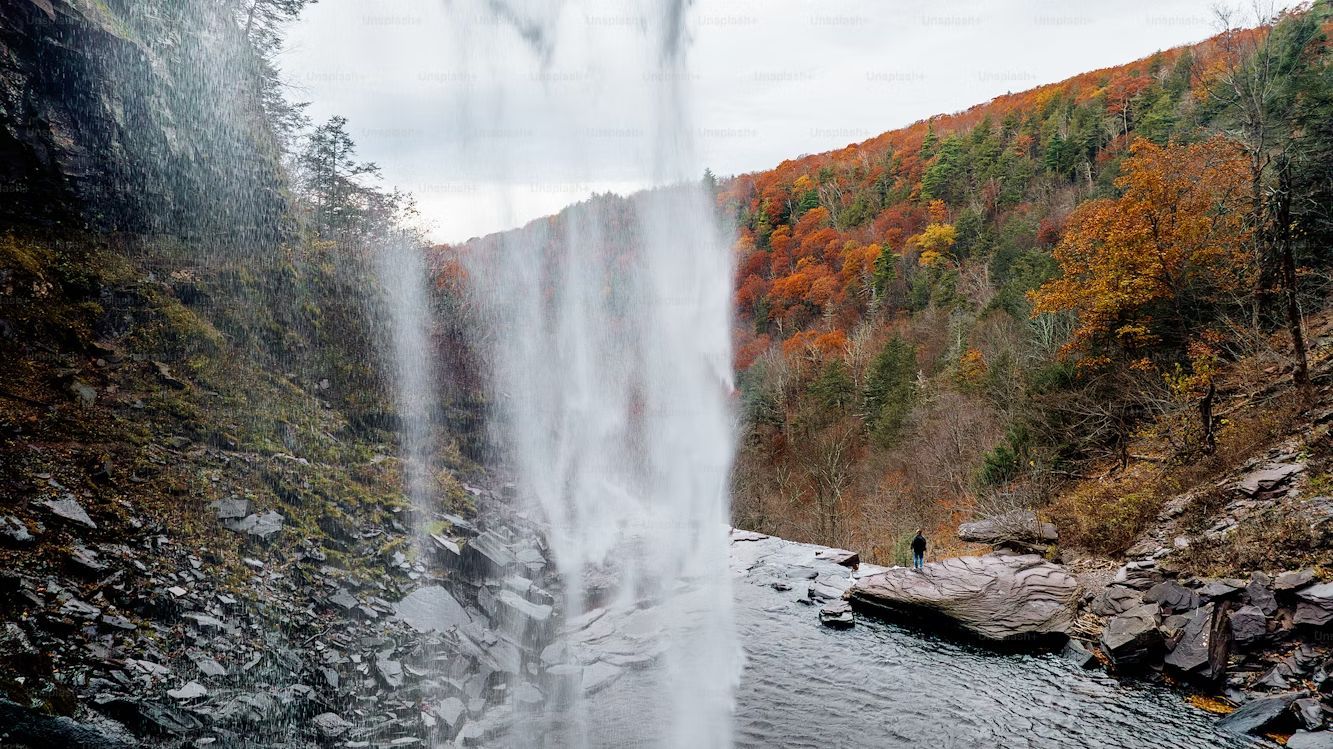
Image: Joshua Earle

The Catskill Mountains hide New York's tallest waterfall, a two-tiered, 260-foot cascade that inspired Hudson River School painters back when America was young, and landscape painting was the closest thing to Instagram. Kaaterskill Falls sits just off Route 23A, and the short trail to the base viewpoint feels properly wild. Adventurous types sometimes scramble between the tiers, though this requires caution and a complete disregard for your mother's warnings about safety.

Winter transforms the falls into a frozen sculpture, attracting ice climbers who've made interesting life choices. The surrounding forest looks like something from a fairy tale, all moss and ferns and filtered light.

8
Bridal Veil Falls, Colorado
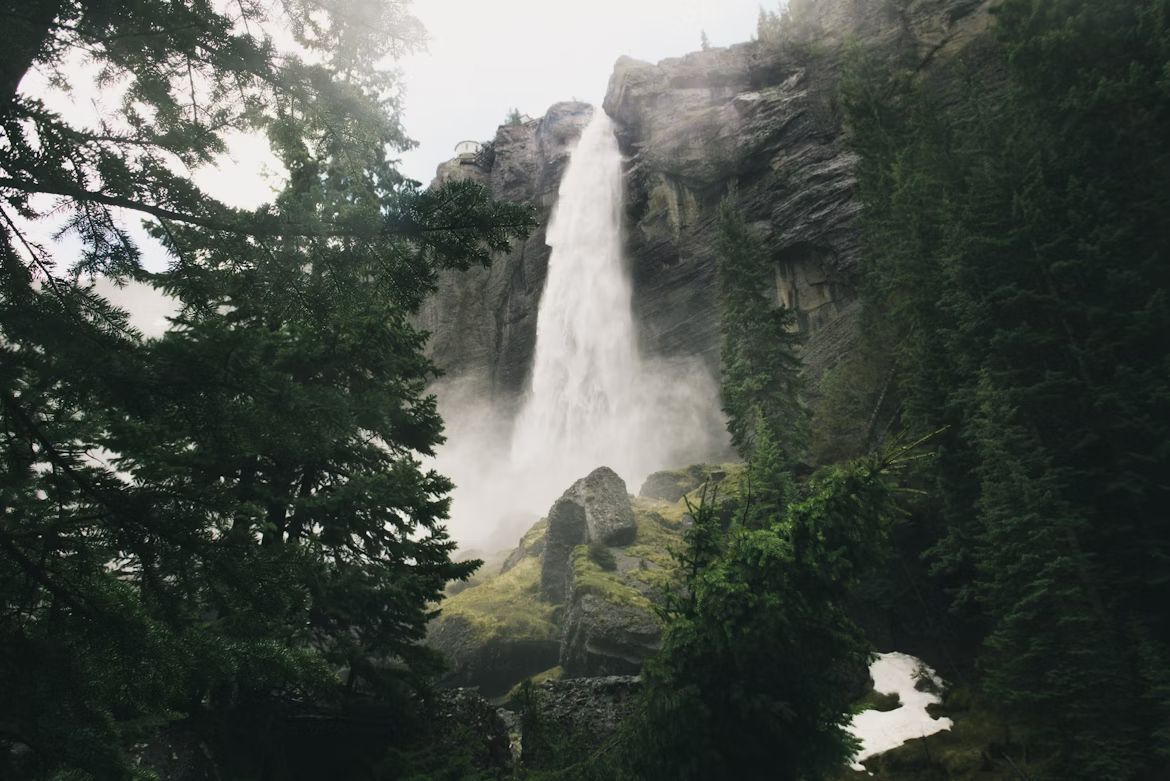
Image: Chad Madden

Bridal Veil Falls near Telluride claims the title of the state's tallest free-falling waterfall at 365 feet . The waterfall cascades like a lace curtain—hence the name—from a hanging valley, and at the top sits a power plant that's somehow still photogenic. The hike up is steep and challenging, gaining about 1,800 feet over roughly two miles, which sounds reasonable until you remember you're doing this at high altitude.

9
Cloudland Canyon Falls, Georgia
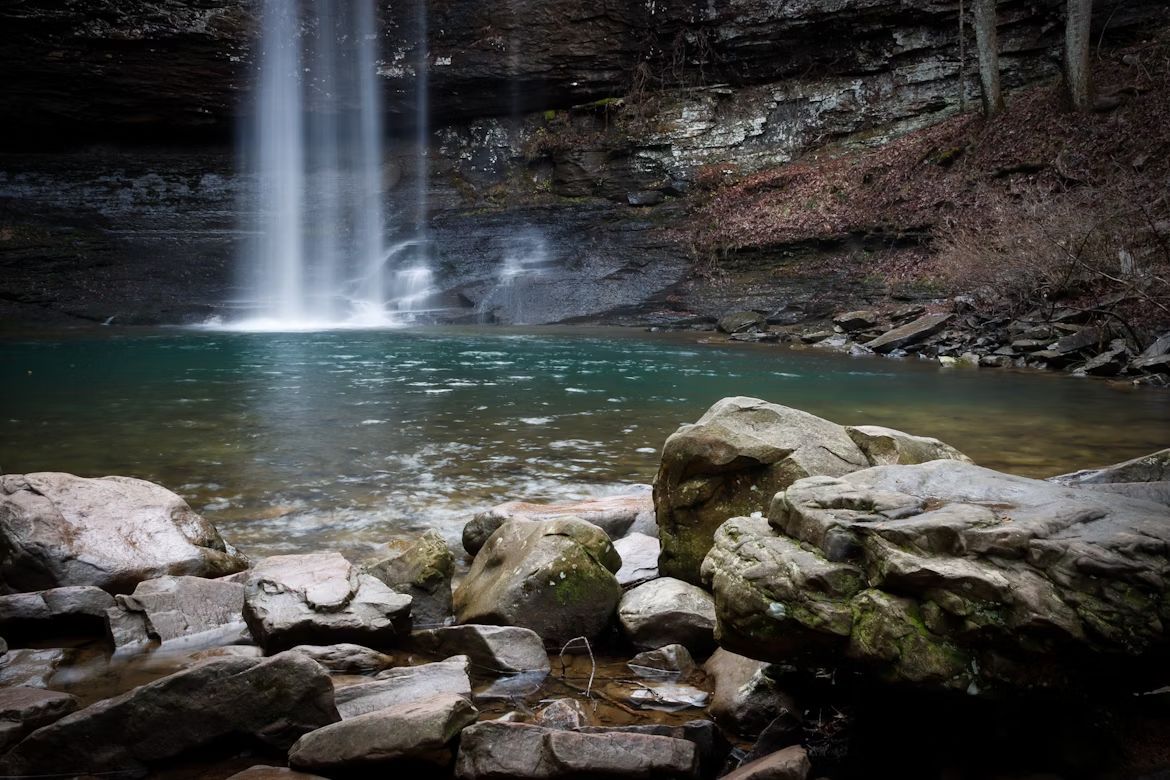
Image: Alla Kemelmakher

Georgia surprises people with its waterfalls, and Cloudland Canyon State Park delivers two beauties: Cherokee Falls and Hemlock Falls , accessible via a moderately strenuous trail system. The park sits on the western edge of Lookout Mountain, where the canyon cuts deep into the plateau. Cherokee Falls drops about 60 feet, while Hemlock Falls offers a 95-foot cascade. Both require descending (and later climbing back up) hundreds of stairs, so consider this your ultimate leg-day workout.

10
Fairy Falls, Wyoming
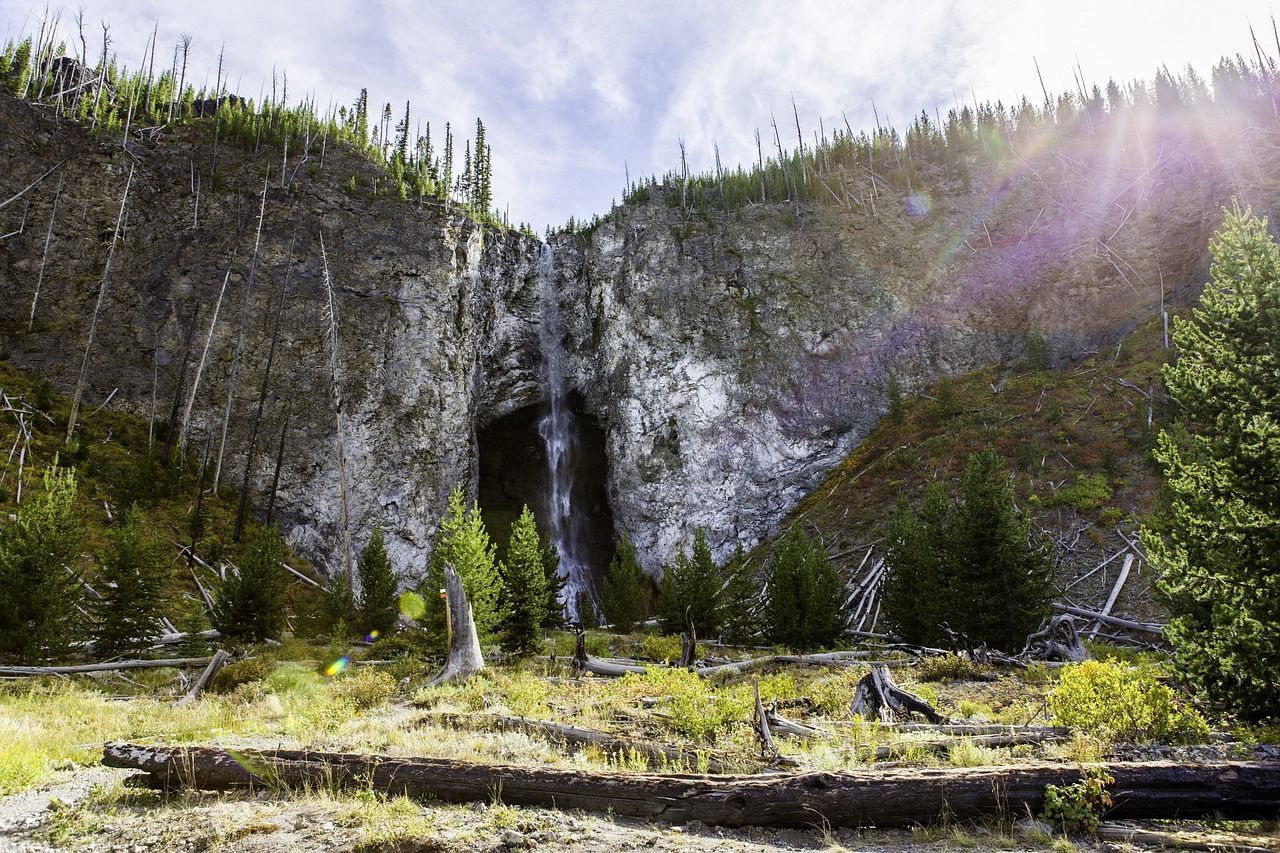
Image: Veenvorm

Yellowstone gets all the geothermal glory, but Fairy Falls offers a quieter experience just a few miles from the madness of Old Faithful. At 200 feet, this ribbon of water drops from the Madison Plateau into a peaceful forest clearing . The trail is about five miles round-trip along old fire roads, flat and easy enough for most fitness levels.

Most Yellowstone visitors stick to the main loop, which means Fairy Falls sees only a fraction of the park's three million annual tourists. The falls flow strongest during spring snowmelt, becoming more modest by late summer.
Culture Culture 3 min read

Powerful styles

How can a beard change history? 10 US presidents with iconic facial hair!

Image: Library of Congress

Can you guess how many US presidents have had beards? And how many grew a mustache? Which one comes to mind first? For some, it's Lincoln's unmistakable beard; for others, Roosevelt's distinguished mustache; and some will remember John Quincy Adams' sideburns. From the most classic mustaches to eccentric beards, today, we're taking a look at 10 unforgettable presidential styles!

1
Abraham Lincoln

Image: Library of Congress

Probably one of the most remembered presidential beards is that of the 16th US President and author of the unforgettable Gettysburg Address, Abraham Lincoln. But, while his image is forever linked to his top hat and distinctive, mustache-free beard, he actually didn't always have it.

Before he was elected president, an 11-year-old girl wrote him a letter suggesting he grow a beard. Fortunately, Lincoln took her advice! Thus, he became the first president to grow a beard while in office.

2
Theodore Roosevelt

Image: Library of Congress

Another iconic style was that of Teddy Roosevelt. His handlebar mustache is not only seen in photos and portraits from his time in office but is also forever etched on the imposing Mount Rushmore. Many men of his era imitated his dramatic, thick, and bushy mustache, which perfectly matched the vigor and toughness that defined the 26th US president.

3
Ulysses S. Grant

Image: Sergei Starostin

Beard? Yes! Sideburns? Of course. Mustache? That too! That is the case with Ulysses S. Grant, a president with a full look, fitting for a Civil War hero.

Grant's beard and mustache were thick -though not long- covering his jawline and also much of his cheeks. Thus, the 18th US president set a fashion trend that would be followed by several other presidents of the 19th century.

4
Grover Cleveland

Image: Dave Sherrill

Another president with a well-remembered mustache was Grover Cleveland, the first US president to serve two non-consecutive terms.

Cleveland's mustache was fluffy and extended just past the edges of his mouth. Although this might have been a problem when dining with guests, his mustache always looked neatly trimmed.

5
William Howard Taft

Image: Ronaldo Guiraldelli

Now, it's time to talk about the only person in the history of the US to have served as both President and Chief Justice of the Supreme Court: William Howard Taft.

Taft sported a bushy mustache, like Teddy Roosevelt, who served right before him. But, unlike his predecessor, the tips of Taft's mustache didn't point downward; instead, they bent upward, making it much more theatrical.

6
John Quincy Adams

Image: Library of Congress

John Quincy Adams didn't need a mustache to stand out with his style. His hallmark was something quite original: sideburns.

Remembered for being bushy and always well and neatly groomed, the 6th president's memorable sideburns extended down the sides of his face, even connecting beneath his chin!

7
Rutherford B. Hayes

Image: Nikolaos Dimou

Rutherford B. Hayes was another 19th-century president known for sporting a full beard. In addition to being thick, his beard and mustache were quite long and even joined together, fully covering his lips, as seen in portraits from the time. While the 19th President looked really distinguished, we can't help but wonder how he handled summer with that style!

8
James A. Garfield

Image: Sean Foster

James A. Garfield had a look strikingly similar to that of his predecessor, Rutherford B. Hayes.

Also sporting a thick, long, full beard, Garfield's mustache was slightly shorter than Hayes', and his beard extended further onto his cheeks. It seems that you had to put some serious effort into perfecting your facial hair to be trendy in the late 19th century!

9
Martin Van Buren

Image: Jack Bulmer

"Mutton chops" is the term for the thick, bushy sideburns worn by Martin Van Buren, the 8th president of the United States, a style known more for its volume than its tidiness.

As seen in portraits from different moments of his life, Van Buren had sideburns from a young age, but they definitely stood out during his presidency. In fact, political cartoons of his time often emphasized that very feature, making his sideburns exaggeratedly large.

10
Zachary Taylor

Image: Josh Sorenson

Before Lincoln, the dominant fashion was a clean-shaven look. But Zachary Taylor -just like John Quincy Adams and Martin Van Buren- came to revolutionize things with his sideburns.

We have to admit Taylor's sideburns were far more modest than those of his predecessors, but he remains one of the few presidents to have worn any facial hair before Honest Abe made it a trend!

History History 2 min read

Homegrown sounds

How America invented 10 of the world’s biggest music genres

Image: Daniel Angele

If the U.S. has exported anything in abundance, it’s music. From Delta blues to disco, America has shaped the global soundscape with genres that reflect its history, struggles, and triumphs. Join us as we explore 10 of the most influential music styles born on American soil.

1
Blues

Image: Ahmed Rizkhaan

Originating in the Deep South during the late 19th century, blues evolved from African American work songs, spirituals, and field hollers. More often than not, it channeled pain and the harsh realities of life in a segregated America. Formally, its 12-bar blues structure and expressive guitar playing influenced countless other genres, from rock and roll to jazz.

2
Jazz

Image: Carol Highsmith's America

Born in New Orleans in the early 20th century, jazz blended African rhythms, blues, and brass band traditions. It was a revolutionary genre defined by improvisation and syncopation. Great figures like Louis Armstrong and Duke Ellington helped jazz spread worldwide, becoming a symbol of American creativity.

3
Rock and Roll

Image: Ana Grave

Emerging in the 1950s, rock and roll combined elements of blues, gospel, and rhythm and blues to create a high-energy, powerful sound . It soon became the voice of a new, rebellious generation. Pioneers like Elvis Presley, Chuck Berry, and Little Richard became universally beloved legends, forever altering the course of popular music.

4
Country

Image: Ben White

Originating in the southern United States, country music evolved from folk ballads and fiddle tunes brought by European immigrants. Initially, the genre focused on stories about blue-collar American life but later expanded to include love ballads and dance tunes. Today, it remains one of the most popular genres in the U.S.

5
Bluegrass

Image: Priscilla Du Preez

A fast-paced, acoustic offshoot of country, bluegrass emerged in the 1940s thanks to Bill Monroe and his Blue Grass Boys. Drawing from Irish and Scottish folk traditions, it prominently features stringed instruments like the banjo, mandolin, and fiddle. A true heartland gem, bluegrass continues to thrive on festival circuits worldwide.

6
Rhythm and Blues

Image: Matthijs Smit

Rhythm and Blues, or R&B, evolved from blues and jazz in the 1940s, featuring soulful vocals and a strong, "insistent" backbeat. Though its boundaries have been historically difficult to define, it laid the foundation for rock, soul, and funk while remaining a powerhouse in American music for generations.

7
Gospel

Image: Iyinoluwa Onaeko

Rooted in African American church traditions, gospel music emerged in the early 20th century, blending spirituals with blues and jazz influences. Artists like Mahalia Jackson and The Staple Singers were among the first to bring gospel beyond church walls, paving the way for future soul and rock musicians.

8
Soul

Image: Kobe Subramaniam

A direct descendant of gospel and R&B, soul music took center stage in the 1960s with its mix of emotional vocals and deep grooves. Legends like Aretha Franklin and James Brown defined the genre, influencing everything from funk to modern pop.

9
Funk

Image: Krisztián Reischl

Emerging in the 1960s, funk placed a strong emphasis on groove and rhythm, featuring heavy basslines and syncopated beats made for dancing. Pioneers like James Brown, Parliament-Funkadelic, and Sly & The Family Stone helped popularize the genre, whose infectious rhythms later influenced disco, hip-hop, and even rock.

10
Disco

Image: Honey Fangs

Rising in the 1970s, disco blended soul, funk, and Latin influences into a beat-driven, club-friendly sound. More than just a music genre, it became a cultural movement centered on dance, freedom, and glamour. At its peak, artists like Donna Summer and the Bee Gees dominated the airwaves.

Explore more American facts

Choose your favorite category!

General
General

As American as apple pie—the very best America has to offer!

Culture
Culture

Delve into the astounding richness of American lore.

Geography
Geography

Hop in and explore vast and diverse American landscapes.

History
History

Discover the key moments that shaped the United States.