History History 4 min read

More than small steps

Fascinating facts you probably didn't know about the Apollo missions

Image: Brian McGowan

There are dozens of movies about the Apollo missions –and with good reason! Sure, we all know the legendary anecdotes about Apollo 11, like how many people were watching or the by-now-legendary words that Armstrong uttered. But what happened in the rest of the missions? Here are some of the most interesting stories from the twelve men who walked on the Moon and the teams who got them there!

1
"One small step" vs. "Man, that may have been a small one…"
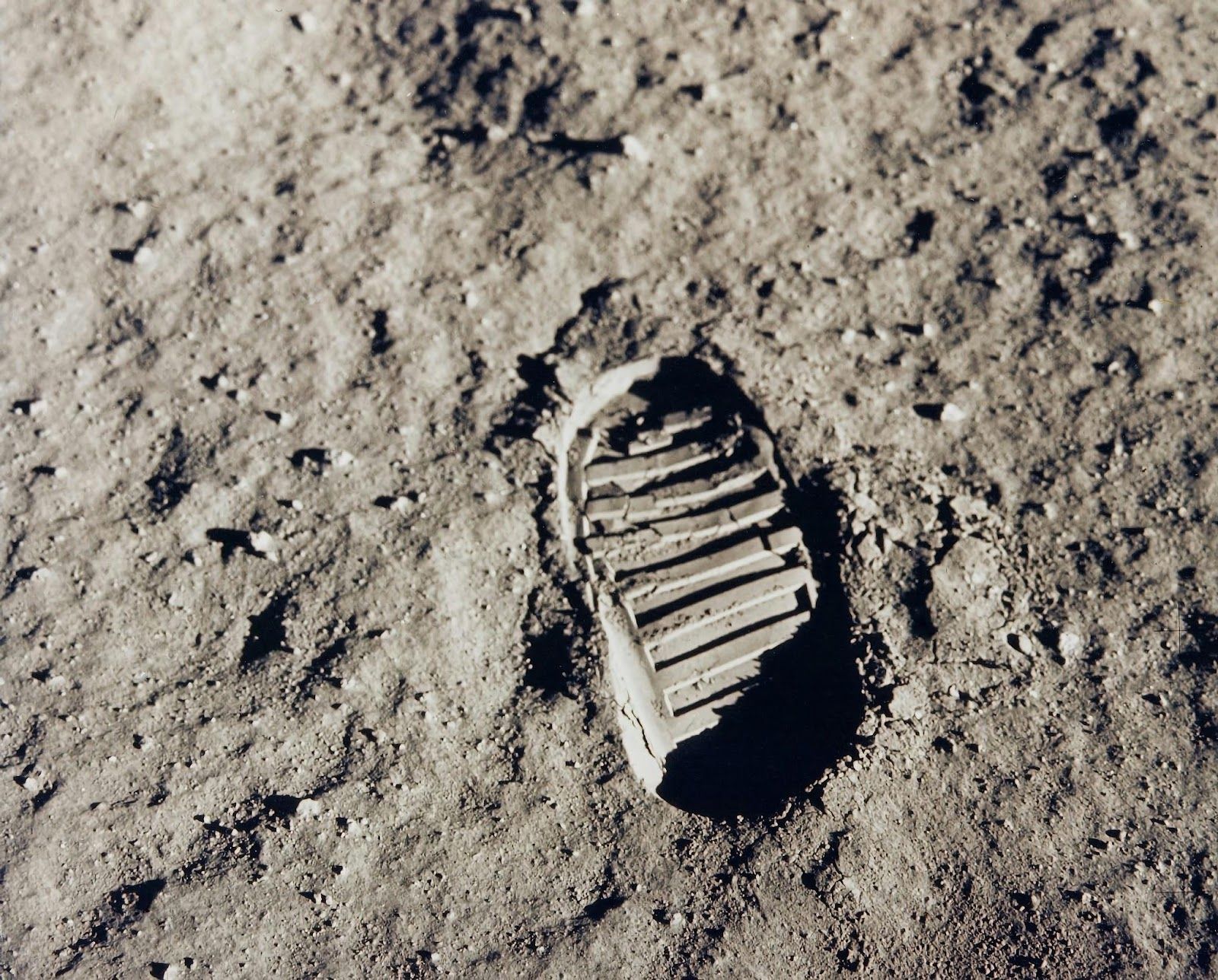
Image: NASA

Neil Armstrong stepped onto the lunar surface with his carefully planned line: "That is one small step for a man , one giant leap for mankind." Pete Conrad from Apollo 12 decided to have some fun with that.

Conrad was short, and he had bet a reporter five hundred dollars that he could say whatever he wanted when he stepped down. This is the line he went for, as documented in NASA transcripts: "Whoopie! Man, that may have been a small one for Neil, but that is a long one for me ."

2
Apollo 12 and the lightning strike that tried to end everything

Image: USGS

Apollo 12 was struck by lightning not once but twice, only 36 seconds after launch. The electrical surge wiped out telemetry in Mission Control.

The flight looked doomed until flight controller John Aaron said the now legendary instruction: "Try SCE to Aux." Conrad responded with, "What the hell is that?" because almost no one remembered what SCE meant.

Luckily, Alan Bean understood what to do. He flipped the switch, the instruments rebooted, and Apollo 12 kept flying.

3
Apollo 13 was just as dramatic as the movie showed

Image: David Trinks

The explosion of an oxygen tank in Apollo 13’s service module really did turn the mission into a race against time. The line "Houston, we have a problem" is Hollywood’s adaptation, however. The real line, spoken by Jack Swigert and repeated by Jim Lovell, was "Houston, we have had a problem."

Other real drama: the crew used the Lunar Module as a lifeboat, battled rising CO₂ levels, manually aligned the spacecraft using Earth’s horizon, and returned home with only a sliver of battery life left.

4
Apollo 16 astronauts drove a moon rover like teenagers with a new car
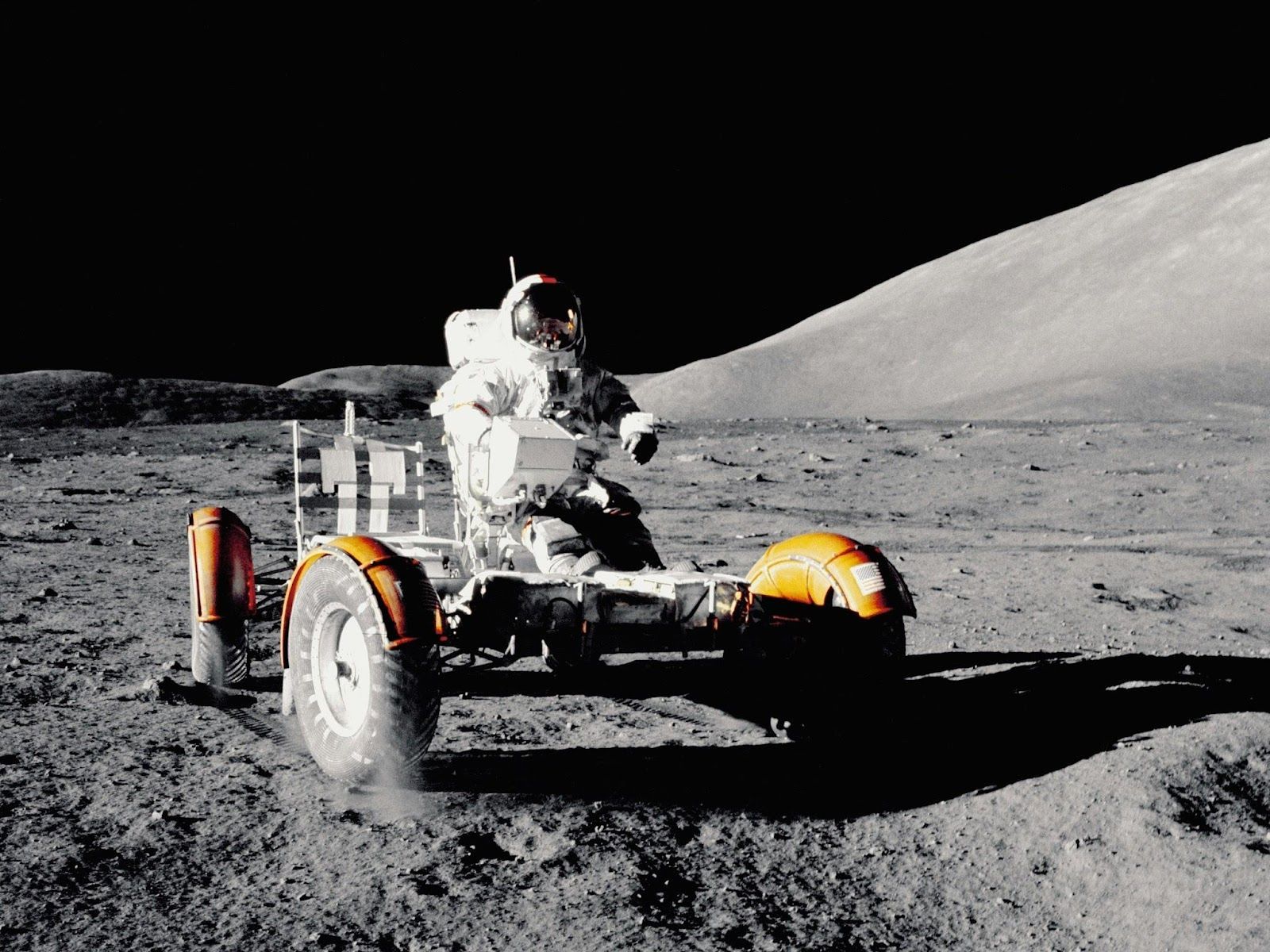
Image: NASA

The lunar rover was a marvel: lightweight, foldable, and capable of reaching 13 to 18 km/h depending on conditions.

John Young and Charlie Duke from Apollo 16 were so thrilled with it that Mission Control had to repeatedly remind them not to drive too fast on uneven terrain.

Duke even recorded one of the wildest moments of the program when Young yelled, "Look at that… look at that!" as dust flew up behind them.

5
The dust that drove astronauts nuts
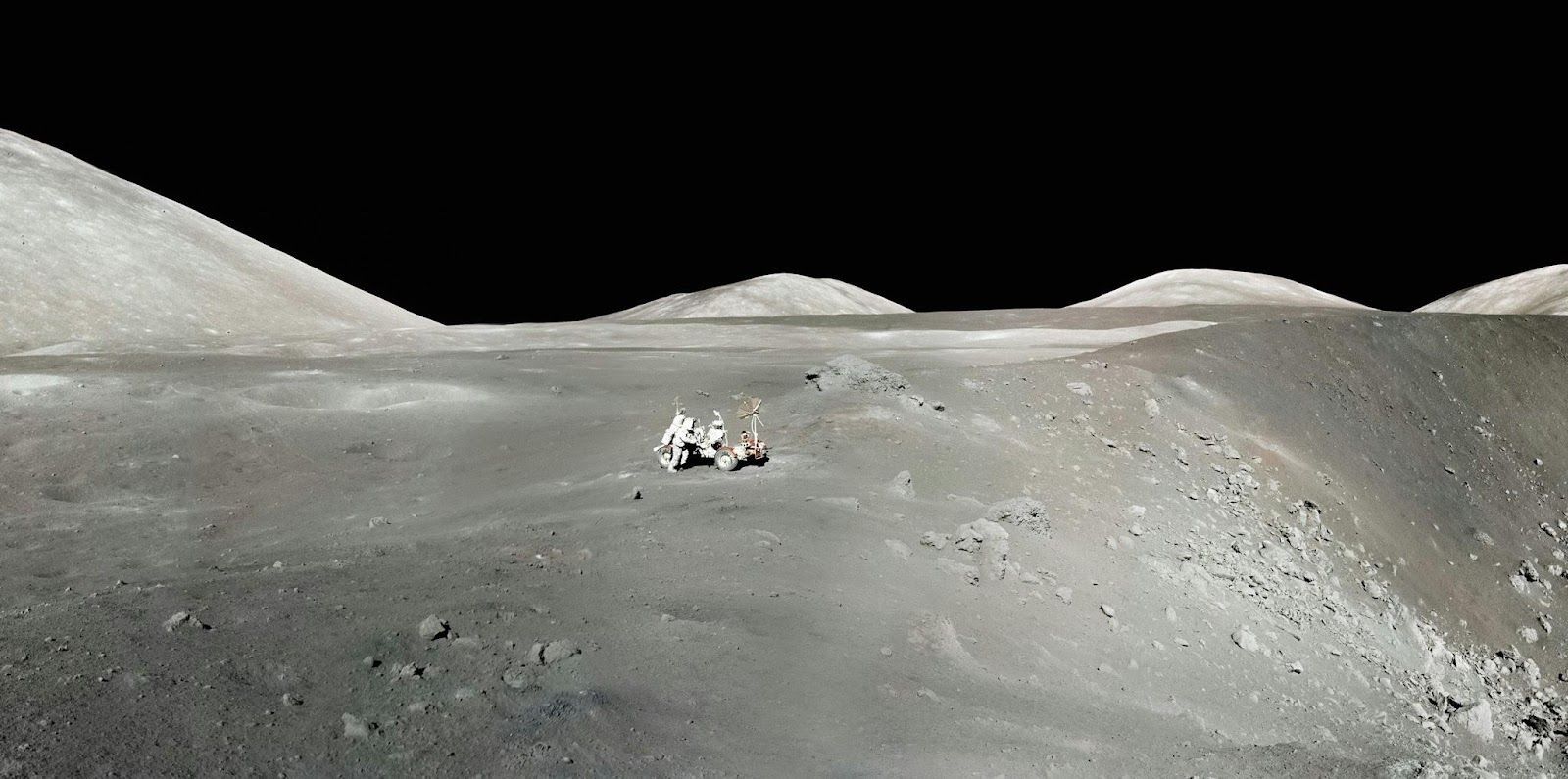
Image: NASA Hubble Space Telescope

Moon dust is sharp, sticky, and electrostatically clingy. Astronauts from Apollo 11 onward complained that it smelled like burnt gunpowder and got everywhere. Harrison Schmitt from Apollo 17 suffered "lunar hay fever" after breathing dust tracked into the cabin.

NASA later became mildly obsessed with studying how dangerous that dust might be… and it turns out it is genuinely abrasive to suits and could be risky to lungs.

6
Apollo 11 and the computer that said "nope"
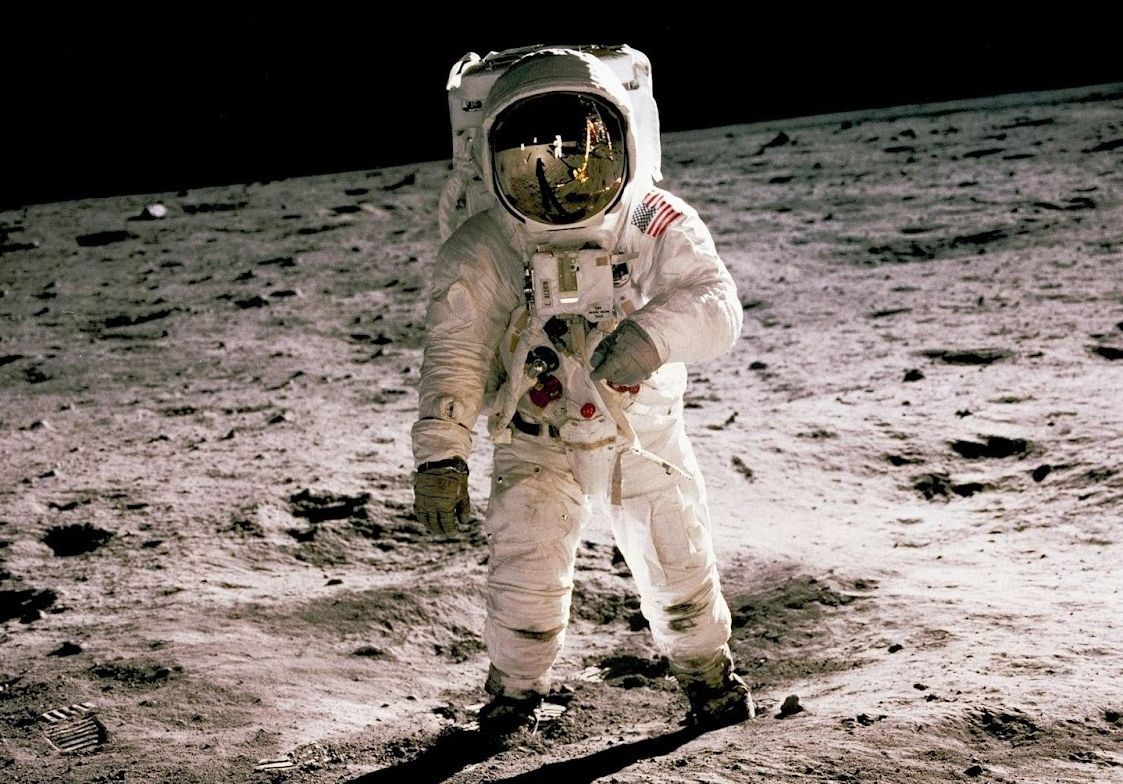
Image: History in HD

Just minutes before landing on July 20, 1969, the Apollo Guidance Computer flashed a "1202" program alarm. In non-NASA terms, the computer was overloaded and essentially panicking .

But guidance officer Steve Bales had trained for this exact situation and cleared the crew to proceed. Armstrong later said this call was one of the mission’s most decisive moments. So yes, the first Moon landing almost got canceled by a stressed-out computer.

7
The golf shot that echoed through history

Image: Stockholm Paris Studio

On Apollo 14, Alan Shepard smuggled a makeshift golf club head along with two golf balls.

On the moon, he attached it to a sample collection tool and made the most famous swing in the Solar System. The ball truly did travel far, although probably not the "miles and miles" Shepard joked about. Still, it remains the only round of lunar golf ever played.

8
Apollo 15’s postal controversy

Image: Tolga deniz Aran

The Apollo 15 astronauts carried unauthorized stamped envelopes to sell to collectors later.

This became a scandal when the deal came to light. NASA was furious, the crew was reprimanded, and the agency tightened rules on what astronauts could take to space.

The event is fully documented and remains one of the strangest side stories of the program.

9
Twelve people walked on the moon
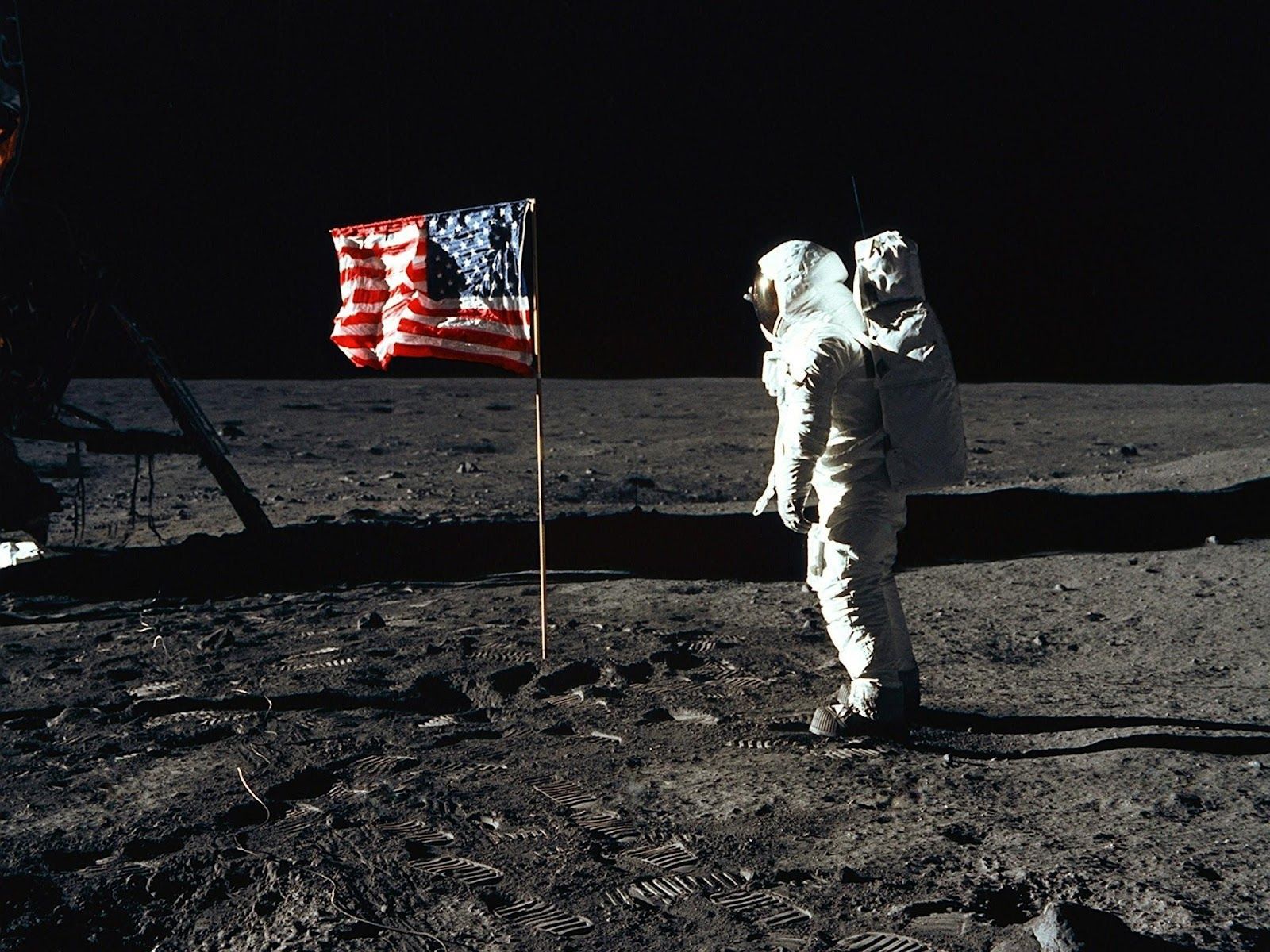
Image: NASA

Between 1969 and 1972, exactly twelve astronauts walked on the lunar surface.

The list, in chronological order, is: Armstrong, Aldrin (Apollo 11), Conrad, Bean (Apollo 12), Shepard, Mitchell (Apollo 14), Scott, Irwin (Apollo 15), Young, Duke (Apollo 16), and Cernan and Schmitt (Apollo 17). Cernan remains the last human to have walked on the Moon.

10
The last moonwalk included a love letter
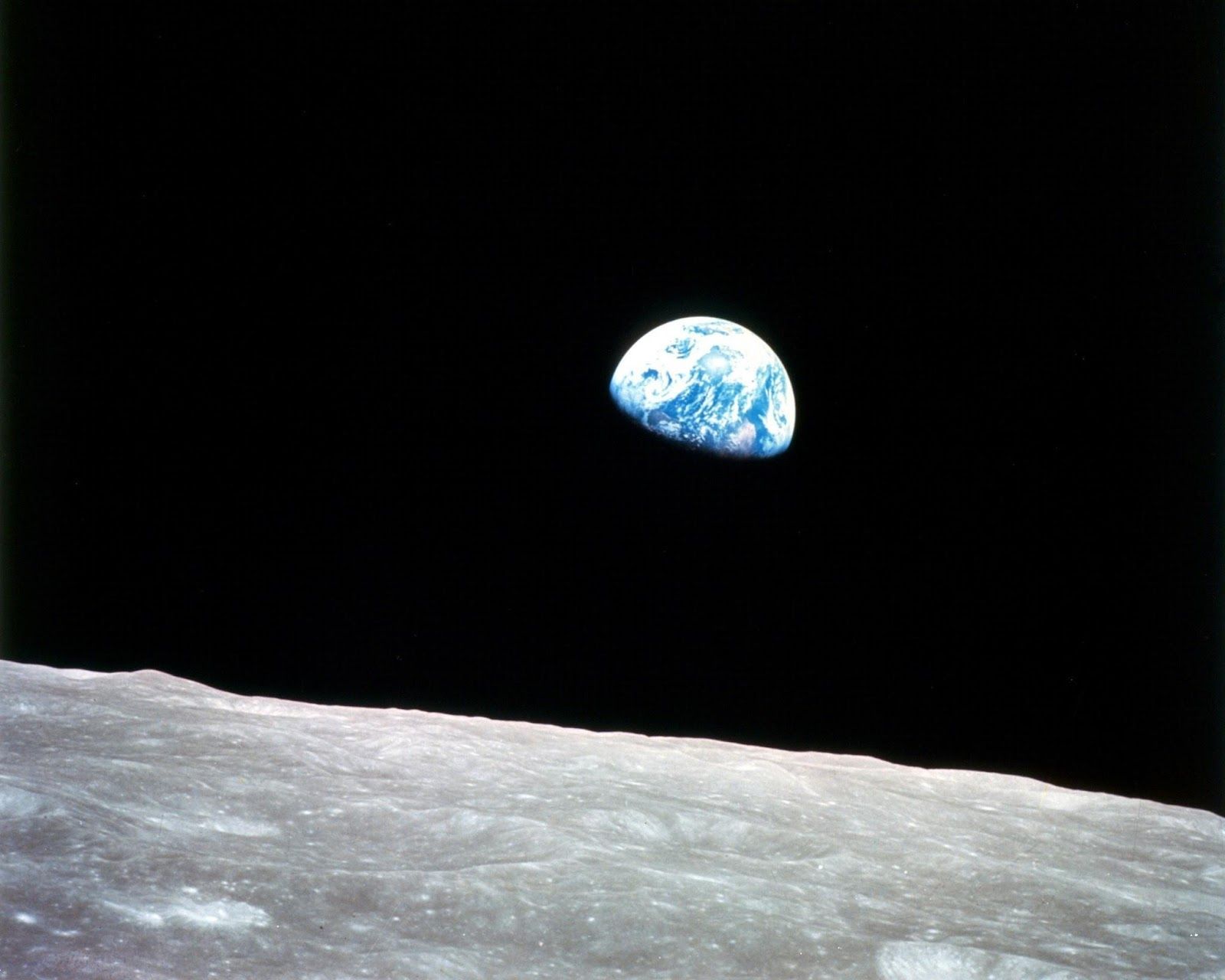
Image: NASA

During Apollo 17, Gene Cernan traced his daughter’s initials TDC on the lunar dust.

As he said his farewell words on the Moon, he hoped the world would continue exploring. His last line: "We leave as we came and, God willing, as we shall return, with peace and hope for all mankind."


Geography Geography 5 min read

Do you know who was the "Father of the National Parks"?

Image: Rakshith Hatwar

Known for its cliffs, waterfalls, and forests, Yosemite National Park holds far more than meets the eye: ancient trees older than empires, rare creatures that survived the Ice Age, and natural phenomena so strange it feels like magic. Whether you climb its tall granite walls or trace misty trails through hidden valleys, Yosemite invites you into a world where history, wonder, and wilderness meet. Here are ten facts that prove why this iconic park remains one of Earth’s true treasures.

1
Father of the National Parks

Image: Amaury Gutierrez

John Muir was a Scottish-born naturalist who devoted his life to protecting the wilderness, especially the Yosemite Valley area. He wasn’t content to simply admire the towering cliffs and ancient trees; he wrote tirelessly, crafting essays, letters, and articles that stirred both the hearts of ordinary readers and Congress representatives.

Muir’s words painted Yosemite not just as a landscape, but as a sacred treasure worth safeguarding. His relentless advocacy culminated in 1890 with the creation of Yosemite National Park, a triumph that earned him the nickname "Father of the National Parks". Even today, his legacy whispers through the valleys, reminding visitors that one person’s dedication can change the course of history.

2
A hike for every adventurer

Image: Nick Herasimenka

Some trails are built to challenge your limits, while others seem designed to comfort your soul. For those hungry for adrenaline, the Half Dome hike is the crown jewel: a 14-mile round trip of punishing switchbacks, dizzying cliffs, and cables that pull you toward a summit where sky and earth blur into one endless horizon.

Yet, Yosemite is just as generous to the quiet wanderer. The Mirror Lake Trail offers a soft stroll through shaded forest, ending in still waters that hold Half Dome’s reflection like a painting on glass. Here, courage and calm walk side by side—proof that in Yosemite, the trail you choose always leads to wonder.

3
Sunshine and rain: the perfect mix

Image: Joshua Earle

Think of California as a desert with endless sunshine? Yosemite tells a different story! Yosemite Park’s climate shifts dramatically with the seasons, offering a rhythm as dynamic as its landscapes. Winter storms roll in with steady rains feeding rivers, swelling waterfalls, and covering the higher elevations in snow.

Summer, on the contrary, arrives almost bone-dry. This contrast creates the park’s natural pulse: meadows explode with wildflowers, waterfalls thunder with fresh snowmelt, and clear blue skies stretch endlessly above hikers and climbers. The result is a cycle that ensures Yosemite is alive and ever-changing, no matter the season.

4
Carved by ice

Image: Colin + Meg

Nearly a million years ago, colossal glaciers crept through the Sierra Nevada like rivers made of ice, reshaping everything in their path. Some towers of ice reached heights four times taller than the Empire State Building, grinding, carving, and polishing the granite beneath them.

Their patient work sculpted the valley into the sweeping U-shape we see today, framed by jagged peaks, polished domes, and sheer cliffs that rise like walls in a cathedral. What appears like it was always there is, in truth, the breathtaking result of nature’s artistry in motion.

5
Sequoias that look like giants

Image: Adrián Valverde

Yosemite is home to some of the most awe-inspiring trees on Earth. The giant sequoias tower over the landscape, sometimes growing taller than 250 ft and stretching over 30 ft across at the base.

Among these living giants, the Grizzly Giant in Mariposa Grove stands out as a true ancient marvel, estimated to be nearly 3,000 years old—making it older than many human civilizations and a silent witness to millennia of history. Walking among these colossal trees feels like stepping into a natural cathedral, where every trunk tells a story of time, endurance, and the sheer power of nature.

6
Waterfalls that reach for the sky

Image: Jeremy Lwanga

Picture yourself at the base of a waterfall so immense it could swallow nine Statues of Liberty stacked on top of each other. That’s Yosemite Falls, one of the tallest cascades in North America, plunging a mind-blowing 2,425 feet.

But that’s not all. In springtime, Yosemite transforms into a symphony of rushing water: Ribbon Fall hurls its silvery stream, Horsetail Fall shimmers like molten glass, and Nevada Fall thunders with unstoppable force. Each waterfall plays its own note, and together they turn the valley into a grand amphitheater, where water takes center stage and every visitor is swept up in the drama, power, and beauty of nature’s performance.

7
A camping trip that changed the park forever

Image: Underwood & Underwood, Public domain, via Wikimedia Commons

Sometimes, a single night spent in the outdoors can reshape the course of history. In 1903, naturalist John Muir invited President Theodore Roosevelt to a campout in Yosemite—no ceremony, no politics, only the crackle of fire, the chill of mountain air, and the vast sky overhead.

Immersed in the park’s untamed beauty, Roosevelt saw for himself what words alone could never capture. When he returned to Washington, with the beautiful scenery forever carved in his heart, he decided to place Yosemite Valley and the giant sequoias of Mariposa Grove under federal protection, securing a legacy of wild wonder that millions still experience today.

8
Rocks that catch fire at sunset

Image: Leo_Visions

It might seem like something conjured from a legend, yet Yosemite’s cliffs truly blaze with light. As the day draws to a close, the sun paints El Capitan and Half Dome in fiery shades of orange and crimson, giving their granite walls the illusion of burning from within.

But the park saves its most dazzling event for mid-February, when Horsetail Fall transforms into the legendary "firefall." For a few fleeting evenings, the angle of the setting sun ignites the waterfall into a glowing torrent of liquid flame. Photographers, travelers, and dreamers gather from all corners of the country to witness this ephemeral wonder. It lasts only moments, but its brilliance lingers in memory long after the light fades out.

9
A home for the rare red fox

Image: Ray Hennessy

Tucked away in the remote heights of Yosemite lives one of the park’s most extraordinary residents— the Sierra Nevada red fox. Rarely seen and shrouded in mystery, this small but resilient predator has roamed California’s high mountain ranges since the Ice Age. With a lineage stretching back thousands of years, it is both a living relic of the past and a symbol of survival in harsh alpine conditions. Its elusive behavior and ancient roots make every confirmed sighting feel like a glimpse into a secret chapter of natural history.

10
A nighttime rainbow

Image: Karl Anderson

If a daytime rainbow feels too normal, Yosemite unveils a secret reserved for the night: the moonbow. On crisp spring evenings, when the sky is clear and the moon is bright, its silvery light bends through the fine spray of the waterfalls. The result is a faint, shimmering arc —delicate, ghostly, and glowing against the darkness. This phenomenon is so rare that catching it almost feels like stumbling into a hidden doorway, where the ordinary world slips away and nature reveals one of its most magical illusions.

General General 4 min read

Legendary meals

What's the most iconic meal in your state? Find out if people agree!

Image: Alena Shekhovtcova

Surely, if you traveled to Florida, someone would urge you to try their Key Lime Pie. Just as they would recommend that you don’t leave Rhode Island without having their trademark Calamari. Do you know what dish you would encourage all visitors of your state to try? Here, we discuss 12 meals that several Americans selected as most unmissable per state –and you must try them!

1
Florida - Key Lime Pie

Image: Delfina Iacub

Let’s open with a classic: This tangy and refreshing treat is a true Sunshine State main character.

Imagine sinking your fork into a creamy, tart filling nestled in a graham cracker crust. It’s often topped with a fluffy meringue or whipped cream. The key limes, smaller and more tart than regular limes, give this pie its signature flavor.

2
Arkansas - Chili Cheeseburger

Image: René Roa

Pure Americana, hearty and satisfying meal. The Arkansas chili cheeseburger takes a juicy beef patty and smothers it in a savory, meaty chili .

Of course, melted cheddar cheese and diced onions are included. Chili cheeseburgers have been a staple in Arkansas diners and drive-ins since at least the 1950s.

3
Kentucky - Kentucky Fried Chicken

Image: Erik Mclean

Nothing like the crispy, golden goodness of Kentucky Fried Chicken when you are hungry. This finger-lickin' good dish, featuring Colonel Sanders' secret blend of 11 herbs and spices, has been a Kentucky staple (and a national favorite) since the 1930s.

Whether you prefer the original recipe, extra crispy, or those tasty chicken tenders, KFC is a true Kentucky comfort food classic.

4
Delaware - Thrashers French Fries

Image: Louis Hansel

In Delaware, Thrasher’s French Fries reign supreme. These crispy, golden fries are cooked in peanut oil and served piping hot in a paper cone, with a generous shake of salt and a side of apple cider vinegar for dipping. Forget ketchup or mayonnaise!

The Thrasher’s bucket has been a Delaware tradition since 1929, and it’s now a must-have snack for any beach day.

5
Indiana - Hoosier Pie

Image: Corleto Peanut butter

A delicious and comforting dessert that's perfect for sharing (or not): Indiana's Hoosier Pie, a.k.a. the sugar cream pie , features a flaky crust with a creamy, custard-like filling that tastes like butter and vanilla.

This pie is believed to have been a popular treat in Indiana farmhouses in the 19th century.

6
Illinois - Deep-Dish Pizza

Image: Chenyu Guan

Chicago-style deep-dish pizza has its naysayers, but it also has its fans. A hearty pizza with a thick, buttery crust filled with layers of cheese, chunky tomato sauce, plus toppings.

Some argue it’s not a pizza as much as a cheese pie . But it can be both, and it’s unarguably delicious. Whether you prefer it with pepperoni, sausage, or veggies, this is a must-try iconic Illinois treat.

7
Georgia - Peaches

Image: NisonCo PR and SEO

Simple as that! Georgia, the Peach State, lives up to its name with its juicy and flavorful peaches, and its citizens voted this as an unmissable treat.

Whether you enjoy them cold, baked in a cobbler, or preserved in a jar, Georgia peaches are a true Southern delight. But locals suggest you try them fresh off the tree .

8
New Hampshire - Maple Waffles

Image: nabil boukala

A breakfast that's sure to satisfy a sweet tooth. New Hampshire's maple waffles are fluffy, golden, and drizzled with pure maple syrup , made from the sap of the state’s maple trees.

The state's long history of maple sugaring dates back to the Native Americans, and today, New Hampshire maple syrup is prized for its flavor and quality. You can enjoy your waffles plain or topped with fresh fruit and whipped cream.

9
Pennsylvania - Philly Cheesesteak

Image: Snappr

The Philly cheesesteak is a sandwich legend, born and bred in the City of Brotherly Love. It features thinly sliced ribeye steak, sautéed with onions and melted cheese (usually provolone or Cheez Whiz), all piled high on a soft hoagie roll .

The story goes that this sandwich was invented in the 1930s by Pat and Harry Olivieri, hot dog vendors who decided to try something new.

10
New York - Lox and Cream Cheese Bagel

Image: Nancy Ingersoll

New York City's lox and cream cheese bagel is a classic deli staple that's perfect for breakfast or lunch!

A chewy bagel topped with thinly sliced smoked salmon (lox) , creamy schmear, and often some capers, onions, and tomatoes. It’s a New York City icon enjoyed by locals and tourists alike.

11
North Carolina - Krispy Kreme Donut

Image: leannk

What's amazing about North Carolina's Krispy Kreme donuts is that people prefer their original version: light and airy donuts with a signature glaze .

The company was founded in the 1930s in Winston-Salem, North Carolina, and their "Hot Now" sign became a beacon for donut lovers everywhere. Of course, they offer many versions nowadays, like chocolate-iced or jelly-filled ones.

12
Rhode Island - Calamari

Image: Bart ter Haar

Rhode Island's calamari is a seafood lover's dream. This dish features tender squid, lightly breaded and fried to a golden crisp , often served with marinara sauce or a spicy aioli.

With its long coastline and rich fishing tradition, Rhode Island is known for its fresh seafood, and calamari is a local favorite.

Explore more American facts

Choose your favorite category!

General
General

As American as apple pie—the very best America has to offer!

Culture
Culture

Delve into the astounding richness of American lore.

Geography
Geography

Hop in and explore vast and diverse American landscapes.

History
History

Discover the key moments that shaped the United States.