Culture Culture 6 min read

Redefining success

Degrees of success: How these 10 college dropouts became icons

Image: Jonathan Borba / Celyn Kang

Many stars, artists, politicians, and all kinds of influential figures have gone through college. While some of them have one or more degrees, others have decided to drop out of college to take another path. And this doesn't have to be a bad thing! In fact, many of them have achieved great success. Today, we're going to review 10 famous college dropouts who have succeeded with flying colors.

1
Oprah Winfrey

Image: Ilyass SEDDOUG

If it wasn't for a professor's advice, we might have never got to meet the incredible Oprah Winfrey!

After graduating with honors from high school, Oprah attended Tennessee State University to study Communication. During her college years, she already participated in several different radio shows. While in one of her classes, she received a call that changed her life: CBS Channel Five offered her a very important job. At first, Oprah said no, as her father always insisted that she complete her studies. Accepting the position would mean putting her education on hold, so it was a difficult choice for her.

Winfrey told the situation to her Scenic Design professor, who immediately encouraged her to take the job. "This is what you study for, to get a call from CBS!" he allegedly said.

2
Bill Gates

Image: Tadas Sar

Bill Gates' work, intelligence, and journey as an entrepreneur to become the famous co-founder of Microsoft are admirable. Maybe that's why many are surprised to learn that Gates dropped out of college.

He began his education at a private school in Seattle, Washington. It's said that he demonstrated high capacities in math and science. During the early years of his education, he came into contact with computers, awakening his passion at a young age.

When he was 18 years old, Gates enrolled at Harvard to pursue a degree in computer science. During his time there, he became interested in programming languages. In particular, he wanted to design one for the Altair 8800, an early personal computer developed by MITS. In 1975, Gates decided to leave Harvard to create BASIC, which later evolved into the well-known Microsoft, co-founded by Gates and Paul Allen.

3
Steve Jobs

Image: Sumudu Mohottige

A similar path to Gates was that of Steve Jobs, the co-founder of Apple Inc.

Jobs attended elementary and high school in Cupertino, California. In the 1970s, while he was still in high school, he met Steve Wozniak, an engineering student who would join him in creating Apple.

Jobs was said to have a free and rebellious nature. Perhaps it was that spirit that led him to leave Reed College in Portland, Oregon, after the first semester in order to have more time to pursue his true interests: technology and design.

Although he didn't pursue what we know as a formal education, Jobs educated himself in numerous fields in different parts of the world.

4
Mark Zuckerberg

Image: Deeksha Pahariya

Jobs and Gates aren't the only tech geniuses who decided to drop out of college to take another path. Mark Zuckerberg joins this list.

Zuckerberg already stood out during his elementary and high school years for his mathematics and computer science skills. But it was at Harvard University that he really explored his potential.

Mark Zuckerberg enrolled at Harvard in 2002 to study computer science and psychology. There, he developed a number of applications and platforms, but one gained him all the fame. We're talking about Facebook, one of the most famous social networks in the world today. Two years after entering the university, he left to fully dedicate himself to his company, which was growing in success every second.

5
Ellen DeGeneres

Image: Ioann-Mark Kuznietsov

Not all the names on this list belong to the tech world. There are also some other showbiz figures. One of them is Ellen DeGeneres, the unmistakable comedian, actress, and TV host who has won the hearts of many Americans.

Her comedy and acting talents shone during her high school years in Atlanta, Texas. After high school, Ellen enrolled at the University of New Orleans in 1976 to study communications. However, after a couple of months, she dropped out in order to concentrate on her entertainment career. During those years, she did comedy and stand-up shows, gaining fame first locally and then nationally, eventually having her first sitcom, "Ellen," and then her successful daytime talk show, "The Ellen DeGeneres Show."

6
Steven Spielberg

Image: George Patient

Steven Spielberg is a talented and successful American film director whose name reached the ears of the whole world thanks to such classics as Jaws (1975), Raiders of the Lost Ark (1981), E.T. the Extra-Terrestrial (1982), Jurassic Park (1993), and many others.

In 1965, Spielberg enrolled at California State University Long Beach to pursue a career in film production. There, he started to work on many projects, and in 1968, he decided to drop out of college to pursue his passion.

In the 2000s, the famous director returned to college and completed his degree, presenting the iconic Schindler's List !

7
Brad Pitt

Image: César Guadarrama Cantú

The art of acting is truly admirable, and we can say, without a doubt, that the best actors and actresses in the world have a great mix of natural talent and hard work. A perfect example is Brad Pitt, who also has one more ingredient: his spectacular appearance.

After graduating from high school in 1982, Pitt enrolled at the University of Missouri to study Journalism and Advertising. There, he became interested in acting and participated in different creative and theatrical projects.

Two weeks before graduating, Pitt made the decision to quit college and move to California, where he would evolve as an actor into the world-renowned superstar he is today.

8
Larry Page

Image: Greg Bulla

Lansing, Michigan, was the birthplace of Larry Page, the co-founder of one of the world's largest technology companies. But before becoming the CEO of a huge corporation, Page also walked the halls of college, earning several degrees before his dropout.

Page earned a Bachelor of Science with a major in Computer Engineering with honors from the University of Michigan in 1995. He then enrolled at Stanford University, where he earned his Master's degree in 1998.

During his years at Stanford, he met Sergey Brin, with whom he would later co-found none other than Google! The success of their co-creation led Page to not complete his PhD, which he was pursuing during those years.

9
Ashton Kutcher

Image: Nathan Dumlao

When it comes to talented, hard-working, and handsome actors, Brad Pitt isn't the only one. Another one with all those attributes is Ashton Kutcher.

Kutcher is really smart. His hard work and intelligence led him to enroll at the University of Iowa in 1996, where he pursued a degree in biochemical engineering. But his student life was cut short when a talent agency discovered him.

In 1998, he decided to drop out of college to pursue his growing modeling and acting career. A few years ago, the actor famously declared, "I pursued something I was passionate about [...] So, that was the right decision for me."

10
Alicia Keys

Image: Soundtrap

Another artist on this list is none other than Alicia Keys, a major name in the entertainment world.

From a very young age, Alicia was encouraged to pursue her talent and artistic interests. She attended elementary and high schools specialized in arts, where she developed many of her musical talents.

After graduating from high school at 16, Keys was accepted into the Juilliard School in Manhattan, which is proof of her immense talent. However, the singer and songwriter decided to drop out of college a few months after being accepted in order to pursue her dreams as a singer. She signed her first record deal shortly after, and the rest is history!


General General 3 min read

How many are we?

Very few people know these key facts about the census. What about you?

Image: Enayet Raheem

Every 10 years, the U.S. undertakes one of its largest and most important national efforts: counting its population. Required by the Constitution since 1790, the census shapes political representation, funding, and planning across the country. While it may seem simple, it involves millions of households, strict legal protections, and years of preparation. Here’s how it all comes together.

1
It happens every 10 years

Image: Towfiqu barbhuiya

The U.S. Census is required by Article 1, Section 2 of the Constitution and takes place every decade, ending in "0," such as 2000, 2010, and 2020 . The first census was conducted in 1790 under President George Washington.

This fixed schedule ensures consistency. Population changes over time, so a regular count allows the government to fairly adjust representation and resources based on where people actually live.

2
It counts everyone living in the U.S.

Image: Joey Csunyo

The census aims to count every person residing in the country, not just citizens. This includes legal residents, undocumented immigrants, and people without permanent housing .

The key concept is "usual residence," meaning where a person lives most of the time. This approach provides a realistic snapshot of the population and ensures communities are represented accurately.

3
It determines seats in the House of Representatives

Image: Darren Halstead

Census results are used to divide the 435 seats in the U.S. House of Representatives among the 50 states , a process known as apportionment.

States can gain or lose seats depending on population shifts. For example, after the 2020 census, Texas gained two seats, while states like California and New York lost one each due to slower growth.

4
It influences federal funding

Image: Alexander Grey

Census data guide the distribution of hundreds of billions of dollars in federal funding each year, with estimates ranging from $675 billion to $1.5 trillion.

Programs for highways, hospitals, schools, and housing depend on population figures . Areas with higher populations typically receive more funding, making an accurate count financially important for communities.

5
Households receive census invitations

Image: Nguyen Dang Hoang Nhu

Every household in the United States receives an official census invitation , usually by mail. In 2020, more than 140 million housing units were included.

This system replaced earlier door-to-door counting methods. Using a national address database helps ensure broad coverage and makes it easier for people to respond on their own.

6
It can be completed online, by mail, or by phone

Image: sofatutor

The modern census offers multiple ways to respond. In 2020, people could complete it online, by mailing back a paper form, or by phone .

Adding online responses marked a major shift. It reduced costs, improved convenience, and reflected how Americans increasingly move towards digital communication.

7
Census workers follow up in person

Image: BoyuZhang1998, CC BY-SA 4.0, via Wikimedia Commons

If households do not respond, trained census workers, called enumerators, visit homes in person to collect the information.

This step is essential because the census must count everyone, not just those who respond voluntarily . It helps reach people in rural areas, dense cities, and communities with lower response rates.

8
It asks basic demographic questions

Image: Rafael AS Martins

The census form is intentionally short. In 202, it included about 10 questions covering age, sex, race, household relationships, and housing status.

The goal is to keep it simple. Shorter forms increase participation while still collecting the key data needed for representation, funding, decisions, and planning.

9
Responses are legally confidential

Image: Towfiqu barbhuiya

Federal law strictly protects census responses. Under Title 13 of the U.S. Code, personal data cannot be shared with law enforcement, immigration authorities, or other agencies .

Only anonymous, combined statistics are released. Census workers face severe penalties, including fines and prison, for revealing personal information.

10
Missing the census is technically against the law

Image: Tingey Injury Law Firm

Responding to the census is legally required. Federal law allows fines for refusing to answer or providing false information .

In practice, penalties are rarely enforced. The rule exists mainly to emphasize how important it is for everyone to be counted accurately.

11
The data helps draw voting districts

Image: KOBU Agency

After the census determines how many representatives each state receives, the data is used to redraw congressional and state legislative districts .

This process, called redistricting, ensures districts reflect current population patterns. It supports the principle of equal representation, often described as "one person, one vote."

12
Results are released over time

Image: Abdul Hakim

Census results are published in stages. Basic population counts come first, allowing Congress to complete apportionment.

More detailed demographic data follows months later. This gradual release ensures accuracy while protecting privacy , sometimes using advanced techniques like statistical noise to safeguard identities.

History History 3 min read

Leading young

Age is just a number: the 10 youngest US Presidents!

Image: Dep377

Age is often seen as a symbol of experience, but being the oldest doesn't always mean being the wisest. While the average age of US presidents when they assume office is 55, there have been some who took office much younger! Although no president has held the position in his thirties, some have started in their early forties. If you want to know about the youngest presidents in US history, read on. You may be in for a surprise!

1
John Tyler

Image: Benjamin Ashton

The oldest president on this list is John Tyler, the 10th US President, who took office in 1841 at the age of 51, after the passing of President William Henry Harrison. He became the first vice president to assume office due to the death of a sitting president. After serving one term, he left office at the age of 55.

2
Millard Fillmore

Image: Kendall Scott

As mentioned earlier, the average age of US presidents at the time of inauguration is 55. Surprisingly, this president took office at just 50, five years younger than the average! We're talking about Millard Fillmore, the 13th president of the United States. Although he was not elected, he assumed the presidency on July 9, 1850, following the death of President Zachary Taylor, and left office 3 years later at the age of 53.

3
James K. Polk

Image: René DeAnda

In 1825, James K. Polk became the 11th US president, taking office at the age of 49. During his campaign and time in office, he stated that he would serve only one term, and he kept his promise by not seeking re-election. Fun fact: At the time of his election, Polk was the youngest person ever chosen as president of the United States.

4
James A. Garfield

Image: Luke Michael

Just like Polk, James A. Garfield also became president at the age of 49. At the time of his inauguration in 1881, Garfield was not the youngest ever elected, but he was the youngest Republican to become president! And that's not all: He was also the first left-handed person to serve, though it is said that he could write with both hands!

5
Franklin Pierce

Image: Element5 Digital

Franklin Pierce may not be the most popular president in US history, but he was one of the youngest ever to hold office.

When Pierce took office in 1853, he was 48 years old. His presidency was marked by political tensions and personal tragedy. Serving only one term, he left office at the age of 52.

6
Barack Obama

Image: History in HD

In 2009, Barack Obama became the 44th President of the United States at just 47 years old. After serving two consecutive terms, he left office at 55. As you can see, he left office at an age when many typically start their presidency! Additionally, Obama was born in 1961, which makes him the first president born in the 1960s.

7
Ulysses S. Grant

Image: Kirsten LaChance

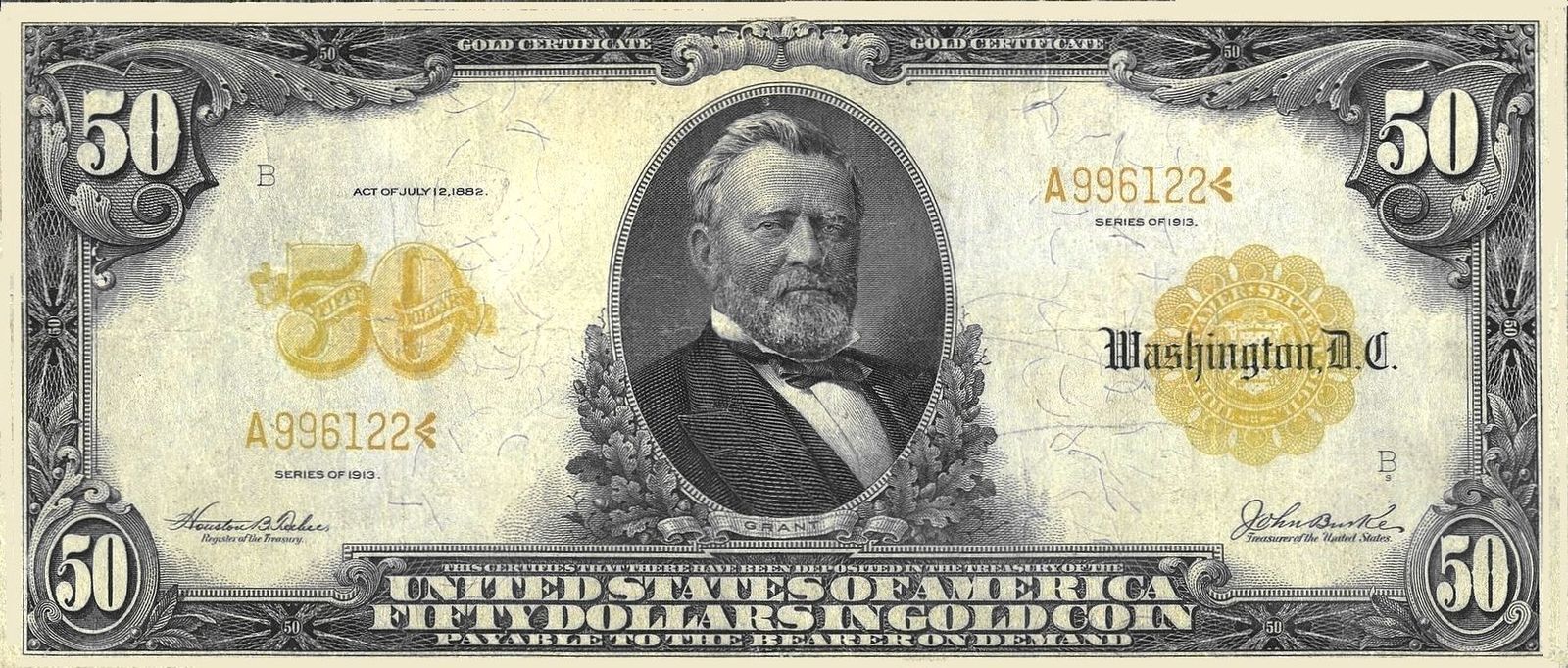
Ulysses S. Grant became the 18th President of the United States in 1869 at just 46 years old. He served two terms and left the presidency at 54, still quite young for a former president.

Perhaps it was precisely his youth that led to a rather amusing incident. President Grant, a well-known horse enthusiast, received a speeding ticket in 1872... On horse! He was racing a horse-drawn carriage in Washington, DC, and ended up paying a $20 fine.

8
Bill Clinton

Image: Jesse Karjalainen

The '90s may feel like just yesterday, but believe it or not, more than 30 years have passed since that decade began! However, we're sure you remember this event well: On January 20, 1993, Bill Clinton was inaugurated as the US President at just 46 years old. Like Grant, he served two terms and left office at 54.

9
John F. Kennedy

Image: Florida Memory

John F. Kennedy took office as the 35th US President on January 20, 1961, at just 43 years old, making him the youngest elected president in US history!

Although his presidency was tragically short, it was marked by major milestones. Kennedy set a goal for America: to be the first nation to land a man on the moon before the end of the 1960s. Although he sadly didn't live to see it, his words became a reality when Apollo 11 landed on the moon in 1969!

10
Theodore Roosevelt

Image: Stephen Walker

We've reached the youngest president, not just on this list but in all of US history! That title goes to Theodore Roosevelt, who became the 26th president in 1901 at just 42 years old.

While he first took office in 1901 following the death of President William McKinley, Teddy Roosevelt was officially elected in 1904 and began his second term in 1905.

Explore more American facts

Choose your favorite category!

General
General

As American as apple pie—the very best America has to offer!

Culture
Culture

Delve into the astounding richness of American lore.

Geography
Geography

Hop in and explore vast and diverse American landscapes.

History
History

Discover the key moments that shaped the United States.