General General 3 min read

The language of today

Could you make a "GRWM"? Here's modern slang you need to know!

Image: Cup Of Couple

If you scroll through social media for even a few minutes, you'll likely come across terms like "bussin'" or "amped" and unusual abbreviations like "GRWM" or "IYKYK." Do you know what they mean? If you want to stay up to date with these and other trending slang terms, don't miss this article!

1
Extra

Image: Obie Fernandez

Some people are reserved and discreet, while others are just "extra." This slang term describes someone who is exaggerated, overly dramatic , or excessive—does anyone come to mind?

If a friend shows up to a casual hangout in an extravagant outfit or makes a big deal out of something insignificant, you can call them "extra."

2
GRWM

Image: Alexander Shatov

A popular abbreviation on TikTok is "GRWM." It's so well-known that you've probably heard it before.

Since fashion influencers often share videos about their outfits or ask for clothing advice, "GRWM" stands for "Get Ready With Me." With this phrase, video creators make viewers feel like part of their daily lives and invite them to join their digital adventures.

3
Bussin'

Image: Jackson Sophat

When it comes to flattery, "bussin'" is the term you need to speak today’s language. Something described as "bussin'" is exceptionally good, impressive, or exquisite. While it's most commonly used to describe food—like in "That Burger was just bussin'"—it can also be used to compliment other things or actions.

4
Mid

Image: Eran Menashri

Contrary to the previous term, "mid" is used to describe something as average or unimpressive. While it isn’t necessarily negative, it implies that a performance, dish, or speech wasn’t exactly the best you’ve seen.

"Mid" comes from the word "middle," suggesting that what you're referring to is neither good nor bad—it's just somewhere in the middle.

5
Spill the tea

Image: Manki Kim

If someone asks you to spill the tea, they’re not asking you to make a mess on the snack table—they want something much more interesting.

"Spill the tea" is a slang expression used to ask someone to share juicy gossip . If you love drama or want to stay up to date with the latest news and scandals, this phrase will come in handy. As for its origin, some suggest that "spill the tea" may have evolved from an earlier phrase with a similar meaning: "spill the beans."

6
IYKYK

Image: Melissa Askew

While it may look like a word from a strange, distant language, "IYKYK" is actually an abbreviation for "If you know, you know." It's great for those inside jokes you share with your friends or recalling moments that only a select group was part of. You know, something intimate, secret, or exclusive.

7
GOAT

Image: Nandhu Kumar

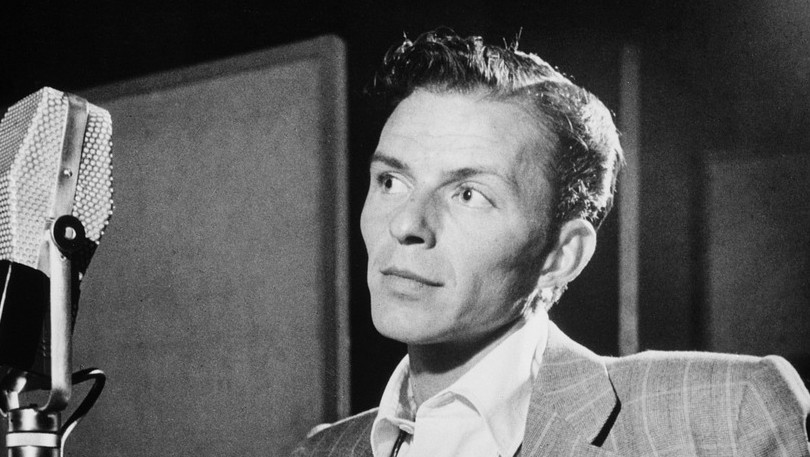
What do Michael Jordan, Aretha Franklin, Babe Ruth, Frank Sinatra, Anthony Hopkins, and Serena Williams have in common? Well, they're all GOATs! But what does that mean?

"GOAT" doesn’t refer to the adorable animal—it stands for "Greatest of All Time." That's right! This term is used to describe those who truly stand out as the best in their field, discipline, or art.

8
No Cap/Cap

Image: Jakob Owens

It seems that saying "true" or "false" has gone out of fashion. The new trend is to say "no cap" or its opposite, "cap." As you might guess, these terms relate to truthfulness, honesty, and authenticity .

If a friend says, "The show was incredible, no cap," they’re assuring you they’re telling the truth. But if someone hears a suspicious story and calls out "cap," they’re likely calling it a lie.

9
Amped

Image: Austin Schmid

Have you been on Cloud Nine lately? If so, there's a perfect slang term for you: "amped." This adjective describes someone who’s excited about something or simply feeling really, really happy .

The term originated in the 1980s as a shortened form of "amplified," originally referring to someone highly charged with energy. Over time, it became associated with excitement and joy and has recently made a comeback, especially on social media.

10
Bet

Image: Ursula Castillo

If you're talking with a group of teens and you want to express your agreement with something, just say, "Bet." This short word is commonly used today to mean "Yes," "Exactly," "That’s it," or "Let’s do it."

As you might have guessed, it was born in the gambling world and is tied to that feeling of confidence or certainty needed when placing a bet.

History History 3 min read

Leading young

Age is just a number: the 10 youngest US Presidents!

Image: Dep377

Age is often seen as a symbol of experience, but being the oldest doesn't always mean being the wisest. While the average age of US presidents when they assume office is 55, there have been some who took office much younger! Although no president has held the position in his thirties, some have started in their early forties. If you want to know about the youngest presidents in US history, read on. You may be in for a surprise!

1
John Tyler

Image: Benjamin Ashton

The oldest president on this list is John Tyler, the 10th US President, who took office in 1841 at the age of 51, after the passing of President William Henry Harrison. He became the first vice president to assume office due to the death of a sitting president. After serving one term, he left office at the age of 55.

2
Millard Fillmore

Image: Kendall Scott

As mentioned earlier, the average age of US presidents at the time of inauguration is 55. Surprisingly, this president took office at just 50, five years younger than the average! We're talking about Millard Fillmore, the 13th president of the United States. Although he was not elected, he assumed the presidency on July 9, 1850, following the death of President Zachary Taylor, and left office 3 years later at the age of 53.

3
James K. Polk

Image: René DeAnda

In 1825, James K. Polk became the 11th US president, taking office at the age of 49. During his campaign and time in office, he stated that he would serve only one term, and he kept his promise by not seeking re-election. Fun fact: At the time of his election, Polk was the youngest person ever chosen as president of the United States.

4
James A. Garfield

Image: Luke Michael

Just like Polk, James A. Garfield also became president at the age of 49. At the time of his inauguration in 1881, Garfield was not the youngest ever elected, but he was the youngest Republican to become president! And that's not all: He was also the first left-handed person to serve, though it is said that he could write with both hands!

5
Franklin Pierce

Image: Element5 Digital

Franklin Pierce may not be the most popular president in US history, but he was one of the youngest ever to hold office.

When Pierce took office in 1853, he was 48 years old. His presidency was marked by political tensions and personal tragedy. Serving only one term, he left office at the age of 52.

6
Barack Obama

Image: History in HD

In 2009, Barack Obama became the 44th President of the United States at just 47 years old. After serving two consecutive terms, he left office at 55. As you can see, he left office at an age when many typically start their presidency! Additionally, Obama was born in 1961, which makes him the first president born in the 1960s.

7
Ulysses S. Grant

Image: Kirsten LaChance

Ulysses S. Grant became the 18th President of the United States in 1869 at just 46 years old. He served two terms and left the presidency at 54, still quite young for a former president.

Perhaps it was precisely his youth that led to a rather amusing incident. President Grant, a well-known horse enthusiast, received a speeding ticket in 1872... On horse! He was racing a horse-drawn carriage in Washington, DC, and ended up paying a $20 fine.

8
Bill Clinton

Image: Jesse Karjalainen

The '90s may feel like just yesterday, but believe it or not, more than 30 years have passed since that decade began! However, we're sure you remember this event well: On January 20, 1993, Bill Clinton was inaugurated as the US President at just 46 years old. Like Grant, he served two terms and left office at 54.

9
John F. Kennedy

Image: Florida Memory

John F. Kennedy took office as the 35th US President on January 20, 1961, at just 43 years old, making him the youngest elected president in US history!

Although his presidency was tragically short, it was marked by major milestones. Kennedy set a goal for America: to be the first nation to land a man on the moon before the end of the 1960s. Although he sadly didn't live to see it, his words became a reality when Apollo 11 landed on the moon in 1969!

10
Theodore Roosevelt

Image: Stephen Walker

We've reached the youngest president, not just on this list but in all of US history! That title goes to Theodore Roosevelt, who became the 26th president in 1901 at just 42 years old.

While he first took office in 1901 following the death of President William McKinley, Teddy Roosevelt was officially elected in 1904 and began his second term in 1905.

Culture Culture 3 min read

Which one is your favorite?

Tigers, cheetahs & more: 12 advertising mascots turned cultural icons

Image: Erik Mclean

From cereal boxes to car commercials, advertising mascots are a big part of our pop culture. These characters aren't just selling products—they’ve become household names. Whether it’s a talking gecko or a grinning doughboy, mascots help brands stick in our minds. Can you recognize these 12?

1
Colonel Sanders

Image: Aleks Dorohovich

Colonel Sanders, the iconic KFC mascot, is based on Harland Sanders, the chain's founder . He received the honorary title of "Colonel" from Kentucky's governor in 1935.

Sanders embraced the persona, adopting a white suit, goatee, and bow tie, creating the famous image that still represents KFC today.

2
Energizer bunny

Image: Jerry Wang

The Energizer Bunny debuted in 1988 as a parody of Duracell’s "Drumming Bunny." Designed with sunglasses, flip-flops, and a bigger drum, it stood out as a bold contrast to its competitor’s mascot.

The campaign grew into a long-running success, and, obviously, a trademark battle followed, ultimately ending with Energizer securing exclusive rights to the pink bunny in the U.S. and Canada.

3
GEICO gecko

Image: Hunter Masters

The GEICO Gecko debuted in 1999 during an actors' strike, when live talent was unavailable. The idea stemmed from people mispronouncing "GEICO" as "Gecko," inspiring a quick lizard doodle during a brainstorming session.

In his first ad, the Gecko held a press conference asking people to stop confusing him with the company. The quirky concept quickly became a memorable and enduring mascot.

4
Jolly Green Giant

Image: Jun Weng

The Jolly Green Giant began in 1925 with the Minnesota Valley Canning Company’s "Green Giant" peas. The original mascot was a stern, fairy tale–like figure.

In 1936, ad legend Leo Burnett redesigned him with a leafy toga and a friendly smile, making him "jolly." The company later adopted the Green Giant name, and the mascot became a lasting icon.

5
Pillsbury Doughboy

Image: Sonia Nadales

The Pillsbury Doughboy, named Poppin' Fresh, was created in 1965 by ad copywriter Rudy Perz. The idea came to him as he imagined a dough character popping out of a can in his kitchen .

First seen in stop-motion animation, the Doughboy became a cheerful brand icon, starring in over 600 commercials since his debut.

6
Chester Cheetah

Image: Erik Mclean

Chester Cheetah became the face of Cheetos in 1986, replacing the original Cheetos Mouse. He debuted as a cool, animated cartoon character in TV ads.

Known for his smooth voice, catchy rhymes, and laid-back style, the character is depicted as a "cool cat" with a strong craving for Cheetos.

7
Kool-Aid Man

Image: Fotografía de Alimentos

The Kool-Aid Man, a smiling pitcher of Kool-Aid, evolved from earlier iterations and became the brand’s mascot after General Foods acquired the company in the 1950s. He quickly stood out in ads with his dramatic entrances.

Known for crashing through walls and shouting "Oh yeah!", this mascot became instantly recognizable.

8
Tony the Tiger

Image: Dom .

Tony the Tiger has been the mascot for Frosted Flakes since 1952, known for his upbeat catchphrase, "They’re gr-r-reat!" and his iconic presence on cereal boxes. He has also represented other cereals, such as Tony’s Cinnamon Krunchers.

9
Planters

Image: aboodi vesakaran

Mr. Peanut was created in 1916 by Antonio Gentile, a schoolboy who entered a design contest held by Planters. His original drawing featured a peanut with arms, legs, and a cane .

A commercial artist later refined the character by adding a top hat, monocle, and spats , transforming it into the classic Mr. Peanut mascot we know today.

10
Mr. Clean

Image: Clay Banks

Mr. Clean was created in 1957 by an ad agency for Procter & Gamble. Originally conceived as a genie, he evolved into a muscular, bald man dressed in white, sporting an earring and folded arms. Inspired by a Navy sailor, he became a symbol of powerful cleaning.

11
Toucan Sam

Image: Zoshua Colah

Toucan Sam, the colorful blue-and-orange mascot for Froot Loops, was created in 1963. Known for his catchphrase, "Follow my nose!" and his ability to "smell" Froot Loops from afar, Sam’s voice and design have evolved over time, making him a beloved cereal icon.

12
Ronald McDonald

Image: Erik Mclean

Ronald McDonald first appeared in 1963 in local TV ads in Washington, D.C., portrayed by actor Willard Scott. He was created by the Oscar Goldstein ad agency.

In 1965, McDonald's expanded Ronald’s role to national commercials with a slightly altered look. He became a key figure in McDonaldland, interacting with other characters . Over time, Ronald’s image and advertising style evolved, with updates to his outfit and overall presence.

Explore more American facts

Choose your favorite category!

General
General

As American as apple pie—the very best America has to offer!

Culture
Culture

Delve into the astounding richness of American lore.

Geography
Geography

Hop in and explore vast and diverse American landscapes.

History
History

Discover the key moments that shaped the United States.