General General 3 min read

Prehistoric giants

Can you believe all these dinosaurs were found here, in America?
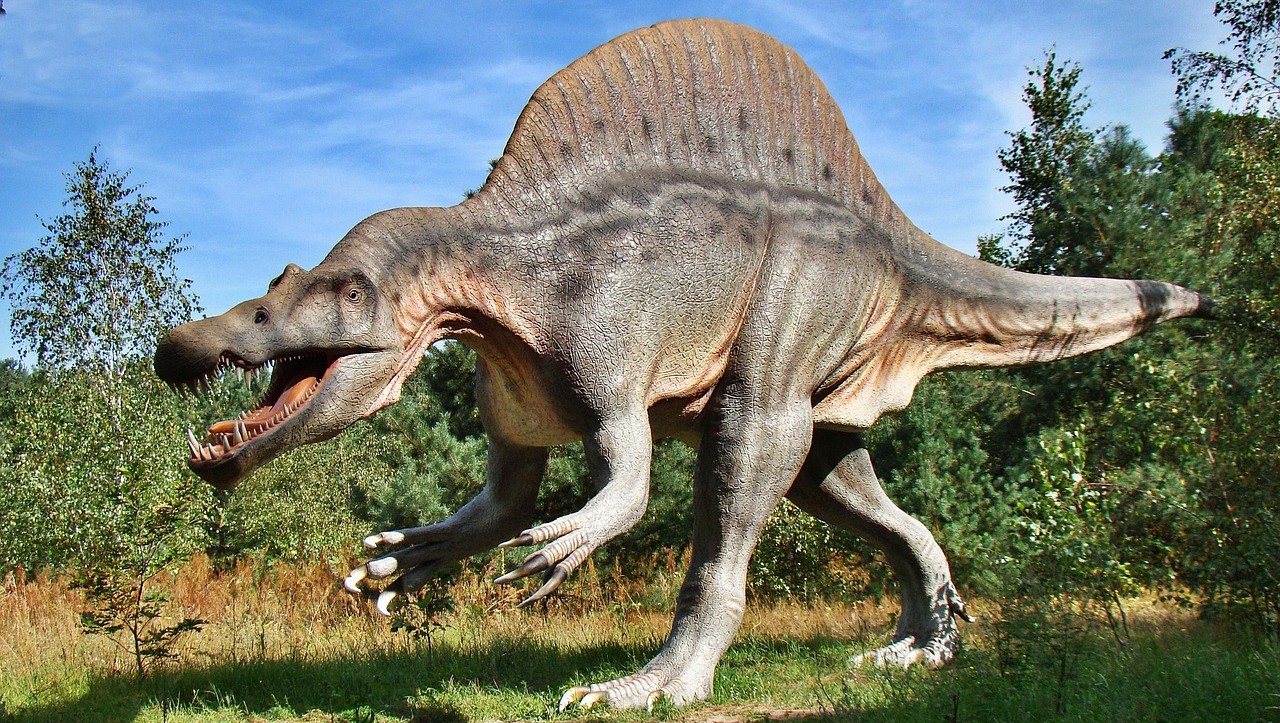
Image: Dieter Löffle

The United States of America has hundreds of years of history, and many people lived and built their lives on this land long before 1776. But 65 million years ago, the Earth was very different, and this territory was home to massive prehistoric creatures: the dinosaurs. Did you know the first partial Tyrannosaurus rex skeleton was discovered in Montana ? Fortunately, many other fossils have been found as well, allowing us to learn about these 10 incredible dinosaurs that once roamed what is now America!

1
Triceratops

Image: K. Mitch Hodge

One of the most popular dinosaurs of the Late Cretaceous was found in what is now Montana, Wyoming, Colorado, and South Dakota. We're talking about the Triceratops , known for its large bony ridge on the back of its head and its three horns . Despite being a herbivore, the Triceratops was huge, weighing between 6 and 12 tons and growing up to 30 feet in length and 10 feet in height!

2
Allosaurus

Image: The frolicsome Fairy

The Allosaurus lived approximately 150 million years ago, and its fossils were found in the areas occupied today by the states of Colorado, Wyoming, and Utah. With a size that could reach 39 feet in length and weighing about 2.5 tons, Allosaurus was a massive bipedal carnivore, which means it walked on two large, strong hind legs!

3
Ankylosaurus

Image: Blond Fox

If there was one creature that looked truly prehistoric, it was the Ankylosaurus , which lived around 66 million years ago and roamed the areas now known as Montana and Wyoming. It could grow up to 30 feet long and weigh about 8,000 pounds! It was herbivorous, but its body was like a tank, covered with thick bony plates and protective spikes.

4
Ornithomimus

Image: Tina Hartung

Now it's the turn of a very special specimen: the Ornithomimus . This peculiar dinosaur, whose fossils were found in the western United States, was light and fast. It weighed up to 300 pounds, not much compared to its colleagues. It looked more or less like an ostrich, and scientists believe it even had feathers on its forelimbs .

5
Coelophysis

Image: Kvnga

Coelophysis was another bipedal dinosaur that lived about 210 million years ago . Fossils of this species have been found in what is now New Mexico, Arizona, and other parts of the American Southwest. Unlike Allosaurus , Coelophysis was small, light, and fast, measuring between 6 and 10 feet in length and weighing roughly 60 pounds.

6
Maiasaura

Image: Yena Kwon

The incredible Maiasaura lived about 75 million years ago and was discovered in North America, specifically in Montana. It was a duck-billed herbivore, and according to research, it devoted a lot of time and dedication to the care of its eggs. In fact, its name means "Good Mother Lizard." Cute, isn't it?

7
Deinonychus
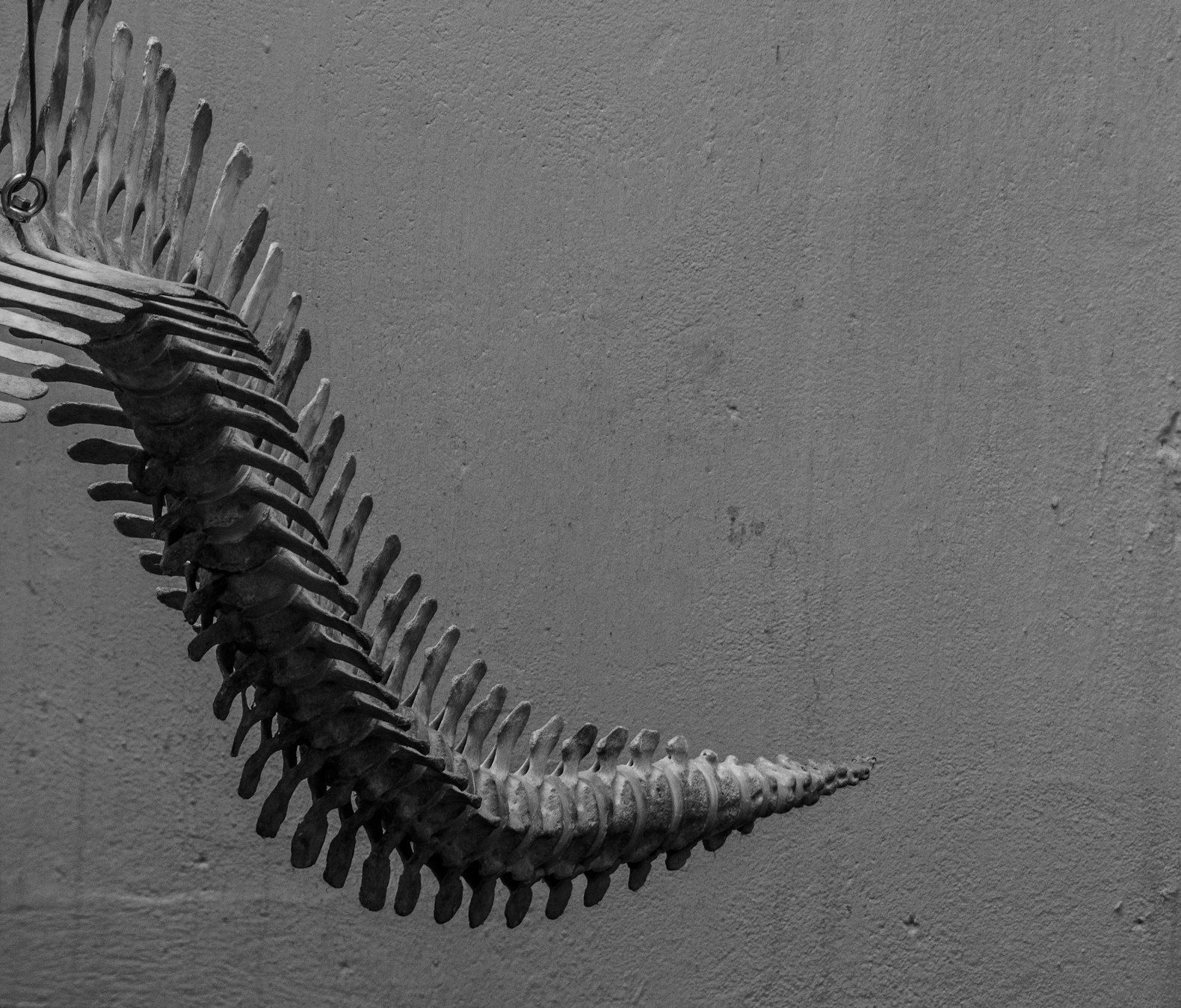
Image: Jossuha Théophile

Deinonychus is the name of this dinosaur that lived around 110 million years ago , with fossils discovered mainly in Montana, Wyoming, and Oklahoma. This carnivore is believed to have hunted in packs —a behavior that, if true, would have made it even more terrifying!

8
Stegosaurus

Image: Lucas George Wendt

We return to the "-saurus" with Stegosaurus , whose image is one of the most iconic, thanks in part to movies. Yes, it’s the big dinosaur with a long tail and bony plates running along its back . This 7-ton animal’s fossils have been found in Colorado, Utah, and Wyoming. Despite its massive size and weight, Stegosaurus had a very small brain .

9
Diplodocus

Image: Arthur Shuraev

Diplodocus was one of the largest dinosaurs ever to walk the Earth , and its footsteps left their mark in the lands of Colorado, Wyoming, Montana, and Utah. It could reach up to 100 feet in length, thanks in part to its incredibly long neck, and weighed between 15 and 30 tons. Yes, it’s the dinosaur that reminds many people of the Loch Ness Monster !

10
Tyrannosaurus Rex

Image: Tofan Teodor

We saved the best for last. The star of the dinosaurs is undoubtedly the popular Tyrannosaurus rex , or T. rex for friends. Its fossils have been discovered mainly in the western United States. This huge dinosaur lived between 70 and 66 million years ago and had an imposing body: it could reach 40 feet in length, stand 12 feet tall at the hips, and weigh an incredible 8 tons —as much as a bus!

History History 3 min read

NASA can be fun

Smuggled sandwiches, gorillas & more: 11 incredible space stories

Image: Gerhard Janson

Space exploration might seem like all rockets and science on the surface, but behind NASA’s historic missions lie some truly weird and hilarious moments. From smuggled sandwiches floating in zero gravity to surprise gorilla-suit pranks aboard the International Space Station, the U.S. space program has had its share of unexpected twists. Did you know about these 11?

1
Smuggled sandwich

Image: Gennady Zakharin

During the Gemini 3 mission, astronaut John Young secretly brought a corned beef sandwich into space . He and fellow astronaut Gus Grissom took a few bites while in orbit.

Needless to say, Mission Control wasn’t amused—there were serious concerns about crumbs floating around and interfering with the spacecraft’s systems.

2
A gorilla in the ISS

Image: Amy Reed

Astronaut Scott Kelly pulled off a wild prank during his year in space by dressing in a gorilla suit and chasing fellow astronaut Tim Peake around the International Space Station.

The costume had been secretly sent by Scott’s twin brother, Mark Kelly, as a surprise birthday gift during the mission.

3
Lunar picnic

Image: Lucie Capkova

In 1969, Neil Armstrong and Buzz Aldrin made history as the first humans to walk on the Moon. But they didn’t stop there.

To mark the occasion, they also shared the first meal on the lunar surface . The menu included bacon squares, peaches, sugar cookie cubes, a pineapple-grapefruit drink, and coffee.

And unlike the smuggled corned beef sandwich incident, this meal was entirely mission-approved.

4
Fined by Mars "owners"

Image: Planet Volumes

In 1997, NASA was sued by three men from Yemen who claimed that Mars had been passed down to them by their ancestors.

They accused NASA of trespassing when the Pathfinder rover landed—and even began selling plots of Martian land for $2 per square meter. Of course, the case was never taken seriously.

5
Metric vs. Imperial

Image: Bozhin Karaivanov

Back in 1999, NASA lost a Mars orbiter due to a mix-up between metric and imperial units. One team used the metric system, while another used imperial units to track thruster force.

The error caused the spacecraft to veer off course and burn up in the Martian atmosphere. It had been intended to be the first satellite to study Mars's climate and weather in detail.

6
Another fine—for littering

Image: Attila Lisinszky

In 1979, NASA’s Skylab space station re-entered Earth’s atmosphere and broke apart, scattering debris across Western Australia, about 482 kilometers east of Perth.

In response, the Shire of Esperance , a local government body in Western Australia, jokingly fined NASA $400 for littering.

7
A building with its own weather

Image: reza shayestehpour

NASA’s Vehicle Assembly Building (VAB) at the Kennedy Space Center is one of the largest buildings in the world by volume, enclosing over 3.7 million cubic meters of space. It was originally built to assemble the massive Saturn V rockets used in the Apollo missions.

But its immense size—combined with Florida’s high humidity—once led to clouds forming inside . To prevent this, NASA installed a 10,000-ton air conditioning system to control moisture and protect delicate spacecraft.

8
Bathroom issues

Image: Jan Antonin Kolar

Early space missions didn’t have modern toilets—just plastic bags taped in place. During Apollo 10, this led to an awkward moment when a piece of human waste was spotted floating through the cabin .

Commander Tom Stafford asked for a napkin to grab it, but no one claimed responsibility. Minutes later, another one appeared. The crew laughed it off, but to this day, the mystery remains unsolved.

9
Mutiny in space

Image: Towfiqu barbhuiya

In 1974, the Skylab 4 crew spent 84 days in space—the longest mission at the time. Overworked and stressed, the astronauts staged the first space mutiny by taking a surprise day off and cutting communication with NASA.

They relaxed and enjoyed the view of Earth before resuming contact the next day. NASA wasn’t thrilled but learned a valuable lesson: space missions must care for astronauts’ mental health, not just their physical well-being.

10
Paid to stay in bed

Image: Kinga Howard

NASA once paid volunteers $15,000 to lie in bed for 90 days to simulate the effects of zero gravity on the human body.

It sounds like a dream job (pun intended)—until you realize they weren’t allowed to get up at all, not even for a second.

11
No insurance

Image: Vlad Deep

Before Apollo 11 launched, the crew couldn’t get life insurance due to the mission’s high risks . So Armstrong, Aldrin, and Collins came up with a clever backup plan.

They signed envelopes and postcards, which friends postmarked during the mission. If the astronauts didn’t return, their families could sell them to collectors for financial support.

Geography Geography 4 min read

New identities

Rebranded: 10 US cities that changed their names and the reasons why!

Image: Jon Tyson

Can you picture cheering for the New Amsterdam Giants or the Jernigan Magic ? We can’t either! Cities like New York, Orlando, and Los Angeles are staples of American identity—we can’t imagine the country without them. But believe it or not, some of these cities had different names in the past! Join us as we explore 10 US cities that once went by different names and discover the reasons behind their transformations.

1
Los Angeles, California

Image: Venti Views

The Spanish settlers who arrived in the area in the 18th century originally named it El Pueblo de Nuestra Señora la Reina de los Ángeles , which translates to "The Town of Our Lady the Queen of the Angels." Elegant, but kind of a mouthful for a town name! Over time, the Spanish name stuck, but it was shortened to the more practical "Los Angeles." The city officially adopted this name when it was incorporated in 1850, the same year California became a state.

2
New York City, New York

Image: Colton Duke

Before becoming the one and only New York we know today, the city went by a different name. In the 17th century, the Dutch settlers who arrived in the area called it New Amsterdam . However, when the English seized control in 1664, they renamed it New York in honor of the Duke of York.

3
Seattle, Washington

Image: Michael Discenza

Seattle is more than its iconic Space Needle; it has a long history that shaped the city we know today. When European settlers arrived in the area in 1851, they named their settlement New York and added the Chinook word Alki , meaning "by and by," "someday," or "later," suggesting it would one day become as big as New York City. However, in 1852, they changed the settlement’s name to Seattle in honor of Chief Sealth, a Duwamish and Suquamish leader.

4
Portland, Oregon

Image: Zack Spear

Early settlers referred to the area as The Clearing because it stood out from the dense forests typical of the Pacific Northwest. But in 1845, an event occurred that would change everything. Portland’s two founders, Asa Lovejoy from Boston, Massachusetts, and Francis W. Pettygrove from Portland , Maine, each wanted to name the new settlement after their hometown. So how did they decide? Simple: they flipped a coin . Of course, you know who won!

5
Kansas City, Missouri

Image: Farhodjon Chinberdiev

Kansas City was originally founded as the Town of Kansas in 1850, named for its location near the Kansas River. As it quickly grew, it was reincorporated just three years later as the City of Kansas . Finally, in 1889, it officially became Kansas City.

Fun fact: Kansas City, Missouri, was actually founded before the state of Kansas!

6
Charleston, South Carolina

Image: Tyrone Sanders

Before it became the city we know today, Charleston had another name, though not so different. When it was first settled in 1670, the English named it Charles Town in honor of King Charles II. However, over time, the name gradually evolved in pronunciation to Charleston. In 1783, after the Revolutionary War, the city was officially renamed Charleston.

7
San Diego, California

Image: Sean Mullowney

San Diego was the first site on the US West Coast settled by Europeans, which is why it's often called "the Birthplace of California." When Spanish explorers arrived in the area in 1542, they named the bay after a different saint: San Miguel . But years later, in 1602, explorer Sebastián Vizcaíno renamed it San Diego, in honor of San Diego de Alcalá (Saint Didacus of Alcalá).

8
Orlando, Florida

Image: Aditya Vyas

In 1840, the first settlers arrived in what we know today as Orlando. They were the Jernigan family, who named the place after themselves. A post office with that name was even established in 1850. However, about 6 years later, Jernigan officially changed to Orlando. Although the exact reason isn't entirely clear, there are several theories. A popular one claims it was named after Orlando Reeves, a soldier who may have died in the area during the Seminole Wars. Another well-known theory suggests the name came from Orlando , a character in Shakespeare’s As You Like It .

9
Cincinnati, Ohio

Image: Matt Koffel

In the 1780s, the first settlement in this area was called Losantiville , a name created from a mix of words meaning "The town opposite the mouth of the Licking River." But in 1790, the first governor of the Northwest Territory, who was also a member of the Society of the Cincinnati (named in honor of the Roman general Lucius Quinctius Cincinnatus), disliked Losantiville and decided to change it to its present name.

10
Atlanta, Georgia

Image: Christopher Alvarenga

Atlanta didn't just have one or two names; it had three! By the mid-19th century, the area where the city stands today had become a transportation hub where several railroad lines converged. Because of this, in 1837, the area was called Terminus , meaning "the end of the line." Then, in 1843, the name was changed to Marthasville , in honor of Martha, the daughter of Georgia Governor Wilson Lumpkin. Finally, just two years later, the city was renamed Atlanta. This name is believed to be a shortened form of "Atlantic," referring to the Western and Atlantic Railroad.

Explore more American facts

Choose your favorite category!

General
General

As American as apple pie—the very best America has to offer!

Culture
Culture

Delve into the astounding richness of American lore.

Geography
Geography

Hop in and explore vast and diverse American landscapes.

History
History

Discover the key moments that shaped the United States.