History History 3 min read

Lesser-known tales

California's Grizzly is extinct? 10 stories behind American symbols
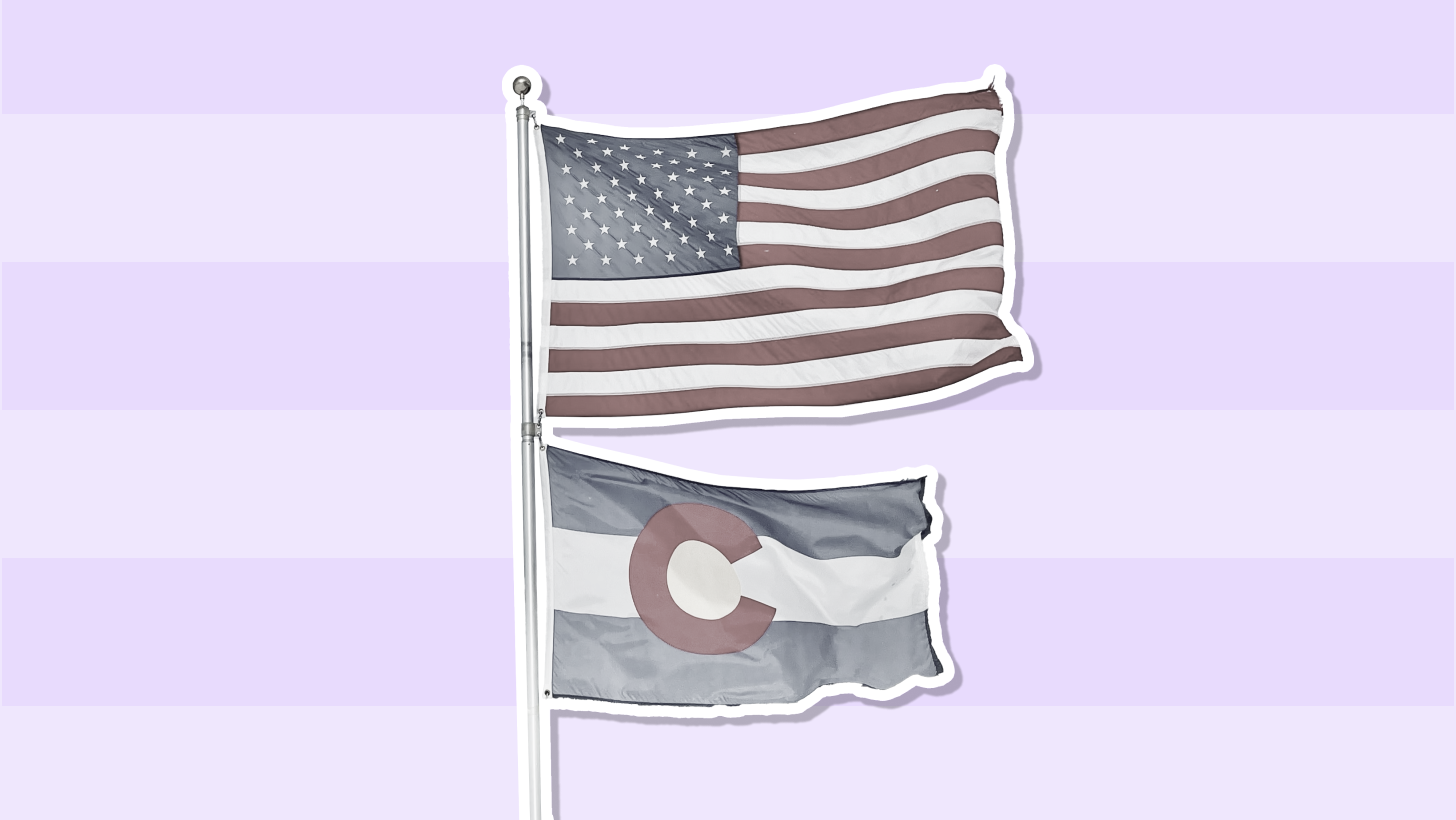
Image: Fr. Daniel Ciucci

It’s one thing to be acquainted with American symbols, but it’s another to learn—years later—the unexpected, hidden stories behind them! Did you know that California’s subspecies of grizzly bear (yes, the one on the flag) has been extinct for over a hundred years ? Or that Texas’s state dish was allegedly invented by prisoners? Maybe you know some of the facts listed here—but we’re sure you don’t know them all!

1
California’s state animal is extinct

Image: Levi Meir Clancy

The California grizzly bear adorns the state flag, but you won’t find one in the wild anymore. Once abundant throughout the region, this was a subspecies of Grizzly also known as "California golden bear."

By the 1920s, this majestic animal had disappeared from the wild, but it has remained a powerful symbol of the state, featured on the flag since the Bear Flag Republic’s short-lived attempt to break from Mexico in 1846.

2
The American flag was (probably) designed by a teenager

Image: Sharefaith

In 1958, around the time Alaska and Hawaii were being added to the Union, an Ohio high schooler named Robert Heft stitched a 50-star flag for a class project . His teacher gave it a B–, scoffing that the brand-new design "lacked imagination."

However, not long after, Heft’s design was selected from thousands of submissions sent to President Eisenhower to determine the official flag. That teacher later changed the grade to an A.

3
Texas’s state dish may have been invented by prisoners

Image: Zak Chapman

Chili con carne is the Lone Star State’s official dish. While its exact origins are uncertain, some say that Texan prisoners in the 1800s were the minds who concocted the dish. According to this version, the stew—made with beans, thin strips of beef, and chili peppers—was the local equivalent of bread and water: a kind of Texan gruel .

4
Alabama's state nut was once a life-saver

Image: Antoni Shkraba

Pecans aren’t just Alabama’s official nut—they’re also symbols of resilience from the Depression era. When cotton crops failed in the 1930s, families turned to harvesting pecans to survive. The nuts became a form of currency , traded for goods, and even used to make mortgage payments. Today, Alabama produces over 30 million pounds annually.

5
The Star-Spangled Banner was once a drinking song

Image: JosephHershMedia

You may know that America’s anthem has a boozy British past. The melody originated as "To Anacreon in Heaven," a raucous 18th-century tavern tune sung by a London gentlemen’s club. A relative of Francis Scott Key noticed that his poem fit perfectly with the melody—and thus, the anthem as we know it was born.

6
The Great Seal almost had a turkey

Image: Roman Manshin

Can you imagine if the Great Seal of the United States featured not a mighty eagle, but a turkey? It was none other than Benjamin Franklin who proposed the turkey as America’s symbol, calling it " a bird of courage ."

Instead, he dismissed the bald eagle as "a lazy scavenger." Congress ultimately overruled him, but Franklin did have a point: turkeys are known to be fiercely protective.

7
The flag’s colors weren’t meant to mean anything—at first

Image: Jon Tyson

Red, white, and blue may seem deeply symbolic today, but in 1775, the Continental Navy chose them simply to match the British flag’s palette. A rebellious decision, if you think about it. The "valor, purity, justice" meanings were tacked on later by poets and politicians.

8
Is South Carolina’s flag really what it seems?

Image: Jaden Dessureault

South Carolina’s flag features a blue background with a palmetto tree and what appears to be a crescent moon. But there are stories that sustain that the silver symbol isn’t a moon at all —it’s a gorget, the curved neck armor worn by 18th-century soldiers. Historians have searched for records to back this theory, but no nods to gorgets have officially been found.

9
Colorado’s flag was once a confusing disaster

Image: Olga Kovalski

When Colorado unveiled its bold "C" design in 1911, it forgot one crucial detail: specifying which shade of blue to use for the background. For 26 chaotic years, flags fluttered in everything from pale sky blue to deep navy—until officials finally standardized the hue in 1937.

10
One of Illinois’ state symbols was chosen by… kids

Image: Peter Schad

Illinois’ state snack was chosen by the most powerful lobbyists of all: children. When a group of fourth graders learned their state produced a large portion of America’s popcorn , they launched a 2003 campaign so persuasive that lawmakers had no choice but to make it official.
General General 3 min read

Banned in the USA

Would you ban velvet Elvis paintings? These towns really did it

Image: Dmitry Alexandrovich

The Land of the Free has had its fair share of strange bans over the years, and not all of them make sense today. From quirky laws to outright odd restrictions, plenty of everyday things have been outlawed at one point or another. Here are 12 unusual things that, believe it or not, were once banned in the U.S.

1
Sliced bread

Image: Laura Ockel

Not even the best of inventions are safe from odd bans. In 1943, the U.S. government temporarily banned pre-sliced bread as part of wartime resource conservation .

Thankfully, the ban only lasted a few months. Housewives, bakeries, and even newspapers complained, arguing that sliced bread was a necessity. The ban was lifted quickly due to public backlash.

2
Pinball machines

Image: Louie Castro-Garcia

Believe it or not, from the 1940s until the mid-1970s, pinball machines were outlawed in several major cities, including New York and Chicago. Officials claimed the machines promoted gambling and corruption .

Machines were confiscated and destroyed. The ban finally ended when it was proven that pinball was more skill-based than luck, leading to its revival as a popular arcade game.

3
Yo-Yos

Image: Eric Prouzet

During the 1930s, some U.S. towns banned yo-yos, believing they caused bad luck and distracted children from schoolwork . The fad was seen as both frivolous and superstitious.

Though short-lived, the bans show how something as harmless as a toy could spark moral panic and strange local laws.

4
Christmas

Image: Erwan Hesry

In the 1600s, the Puritans of Massachusetts Bay Colony banned Christmas , claiming it was rooted in pagan traditions and encouraged rowdy behavior .

Anyone caught celebrating risked punishment or fines. It wasn’t until the mid-1800s that Christmas gained widespread acceptance in the U.S.

5
Dancing after midnight

Image: Scott Broome

At different occasions during the 20th century, some cities enforced laws that restricted or outright banned late-night dancing . New York City’s "Cabaret Law" limited dancing to licensed venues only.

Authorities argued it was about maintaining order, but many saw it as cultural repression. By the 1990s, these laws faced strong opposition, and most have since been repealed, allowing nightlife to thrive.

6
Comic books

Image: Waldemar

Comic books have been a scapegoat for different things in different periods. For example, in the 1950s, they came under fire, accused of corrupting America’s youth . Parents, educators, and politicians believed violent and horror-themed comics encouraged delinquency.

Entire towns banned sales, and even public book burnings took place in different corners of the country.

7
Yellow margarine

Image: Marine Le Gac

Being a substitute for butter, margarine was heavily lobbied against by dairy farmers in the late 1800s. Several states passed laws banning margarine dyed yellow to resemble butter .

As a result, margarine was sold plain white, or consumers had to mix in dye packets themselves. These odd restrictions lasted well into the mid-1900s before finally being repealed.

8
Men’s long hair

Image: Siri louis

During the 1960s and 70s, schools across the U.S. cracked down on boys with long hair . Beatles-inspired styles were viewed as rebellious, unclean, and disruptive.

Some students were suspended or expelled over hair length. These policies reflected the cultural clashes of the era.

9
Left-handed writing

Image: Anna Savina

For much of the 19th and early 20th centuries, left-handed students were forced to switch hands . Teachers tied their left arms or punished them until they wrote with their right hand.

This practice was based on superstition and prejudice, with left-handedness considered "wrong" or even sinister.

10
Bathing suits above the knee

Image: Brett Jordan

In the early 1900s, strict laws dictated swimwear modesty at public beaches . Bathing suits that rose above the knee could result in fines or even arrest by "beach police."

Photographs from the time show officers measuring swimsuit lengths with rulers. The bans slowly disappeared as fashion and social norms shifted.

11
Coffee

Image: Jakub Dziubak

In the late 1600s, in Boston, coffee was briefly banned for being considered dangerous and unproductive . Authorities feared it encouraged idleness and vagrancy.

Coffeehouses were seen as gathering places for gossip and dissent. The ban didn’t last long, and coffee soon became a staple of American culture, eventually surpassing tea in popularity.

12
Velvet Elvis paintings

Image: Susan Mohr

In the 1970s and 80s, velvet Elvis paintings became a kitschy art craze. Some towns, embarrassed by the trend, tried banning their sale, calling them indecent or tacky .

Though the bans were rarely enforced, they reflected how taste and morality sometimes crossed into law.

Geography Geography 5 min read

Towns with a personality

Monkey’s Eyebrow and other most unusual US town names

Image: RDNE Stock project

Some towns have names that demand explanations. Designations like "Uncertain", "Dinosaur", or "Cut and Shoot" are more than just quirky . They imply stories of misunderstandings, mockery, and tongue-in-cheek communities who decided to embrace the funny anecdote. In this article, we decode the names of ten towns and cities that have had people pointing at the map and giggling for several decades. Let’s uncover tales behind 10 of the most unusual town names!

1
Monkey's Eyebrow, Kentucky

Image: Jonny Belvedere

A name like "Monkey's Eyebrow" begs an explanation. One assumes there is a very particular story behind it. This is an unincorporated community in Ballard County, rural Kentucky, and the origin of its name is disputed. One of the theories suggests that, when seen from the air or on a map, the landscape in Ballard County looks like a monkey’s head, and this community has formed where the eyebrow would be .

Kentucky is, after all, no stranger to towns with odd names. Some of them include Rabbit Hash, Bachelor’s Rest, Sparta, and Oddiville itself.

2
Whynot, North Carolina

Image: Tammi Nowack

Yet another unincorporated community with an unusual name is Whynot, from Randolph County, North Carolina. Founded in the 18th century, the name was originally spelled separately: "Why Not."

The legend holds that, undecided about what name to pick for the town, the residents started throwing at one another "Why not this?" and "Why not that?" Until one bored resident said: "Why not name the town ‘Why Not’ and let's go home?" Joke or not, that ended up being the official name for the land. Today the community has an estimated 100 inhabitants.

3
Fries, Virginia

Image: Dzenina Lukac

One would expect a big monument of golden fries to be erected in some square within Fries, Virginia. But you would be misled to imagine that. When pronounced correctly, this town’s name rhymes with "breeze." Situated on the New River in Grayson County, Virginia, Fries boasts beautiful natural landscapes, and visitors are encouraged to bike, hike or horse ride around the unspoiled countryside.

The town was named after a prominent cotton mill owner and businessman, Francis Henry Fries. Fries holds music festivals annually and has a strong bluegrass and country music culture.

4
Canadian, Texas

Image: Cedric Fauntleroy

Canadian, Texas is not, in fact, Canadian. Founded in 1887, it is home to around 2,400 residents from the north of Texas, in Hemphill County. It was named after the Canadian River that flows one mile north. The river is a tributary of the Arkansas River, and it was named so in the 1820s when Canadian traders were spotted camping in its borders.

Here is a piece of trivia that you would never guess: The beginning and the end of the movie Cast Away (2000), with Tom Hanks, which occur in Texas, were filmed in Canadian and nearby.

5
Truth or Consequences, New Mexico

Image: Csongor Schmutc

A city with a name that sounds like a threat, Truth or Consequences, New Mexico, is within Sierra County and has a population of a little over 6,000. It is sometimes shortened to "T or C."

The place wasn’t always called this.

Originally, it was named Hot Springs, after the springs it was built over, belonging to the Artesian Basin. However, in 1950, the NBC Radio quiz show called "Truth or Consequences" declared that the 10th anniversary of the program would be recorded in the first town that changed its name to that of the show. Thus, Hot Springs officially became Truth or Consequences to gain the honor, and the show’s host visited the former Hot Springs yearly for half a century after that.

6
Dinosaur, Colorado

Image: Danny Grizzle

Dinosaur is a small town in Moffat County, Colorado, that was once called "Artesia." However, in the 1960s, it was decided to rename it to attract tourists who were traveling to see the Dinosaur National Monument, east of the town. The park contains over 800 archeological sites and unique fossils and was proclaimed a National Monument in 1915 by Woodrow Wilson.

Dinosaurs did once roam the golden fields under the Blue Mountain Range where Dinosaur sits. Beyond the visit of paleontology fans, the town prides itself on boasting stunning natural views and wildlife that includes deer, elk, and antelope.

7
Okay, Oklahoma

Image: STEPHEN POORE

Those who named this Oklahoma town "Okay" weren’t just trying to be funny. Okay, OK had several other names throughout history, including Coretta, Falls City, and Rex. The current one was adopted in 1919. Oklahoma Auto Manufacturing Company had a factory nearby, makers of the "O.K. Trucks." The official postal designation was changed in its honor.

The community had been established in 1806 on the east bank of the Verdigris River and had soon become a trading post for many visitors in the area, which allowed the settlement to grow.

8
Uncertain, Texas

Image: Scott Graham

Imagine the complications of filling out a form indicating that the name of your city is "Uncertain." This probably has happened to several residents, and it is closely related to the origin story of the town’s name.

It is said that, when applying for township, the residents hadn’t yet agreed on a name for the place. They tried to explain this by writing "uncertain" in the form’s blank space for the town name, hoping to resolve it in the future. But the township was eventually granted and the place came to officially be called Uncertain.

Uncertain is located in eastern Texas very near to the border with Louisiana. It sits near the Big Cypress Bayou and the banks of Caddo Lake.

9
Cut and Shoot, Texas

Image: Guðleifur Kristjánsson

The town of Cut and Shoot, Texas, got its unusual name from a confrontation that occurred in July 1912. A local church, meant to be shared by various denominations, became the center of conflict when an Apostolic preacher was invited to hold a meeting. The community split into two sides, those for and against the preacher's appearance, and both arrived armed to enforce their stance.

During the argument, a frightened eight-year-old boy exclaimed, "I'm going to cut around the corner and shoot through the bushes!". The conflict was resolved peacefully that day, but a trial unfolded between the two leading families. When the judge asked the name of the community, someone suggested calling it the place of the "cutting and shooting scrape." Residents eventually took a liking to this term and adopted it.

10
Coward, South Carolina

Image: Yohan Marion

"Coward" sounds like an accusation, but it is also the name of a town in Florence County, South Carolina, with a population of just over 700. One would expect its name to derive from some story of dishonor and shame, but Coward is instead just a surname .

It is unclear and disputed whether the town was named after Capt. Solomon Coward, who owned most of the land, Col. Asbury Coward, a Confederate veteran, or John Wilson Coward, a member of the "Committee of 50." However, the rural farming community was called that many years before it was incorporated in 1963.

Explore more American facts

Choose your favorite category!

General
General

As American as apple pie—the very best America has to offer!

Culture
Culture

Delve into the astounding richness of American lore.

Geography
Geography

Hop in and explore vast and diverse American landscapes.

History
History

Discover the key moments that shaped the United States.