General General 7 min read

From blueprint to backstory

Bridges with fascinating backstories across the US
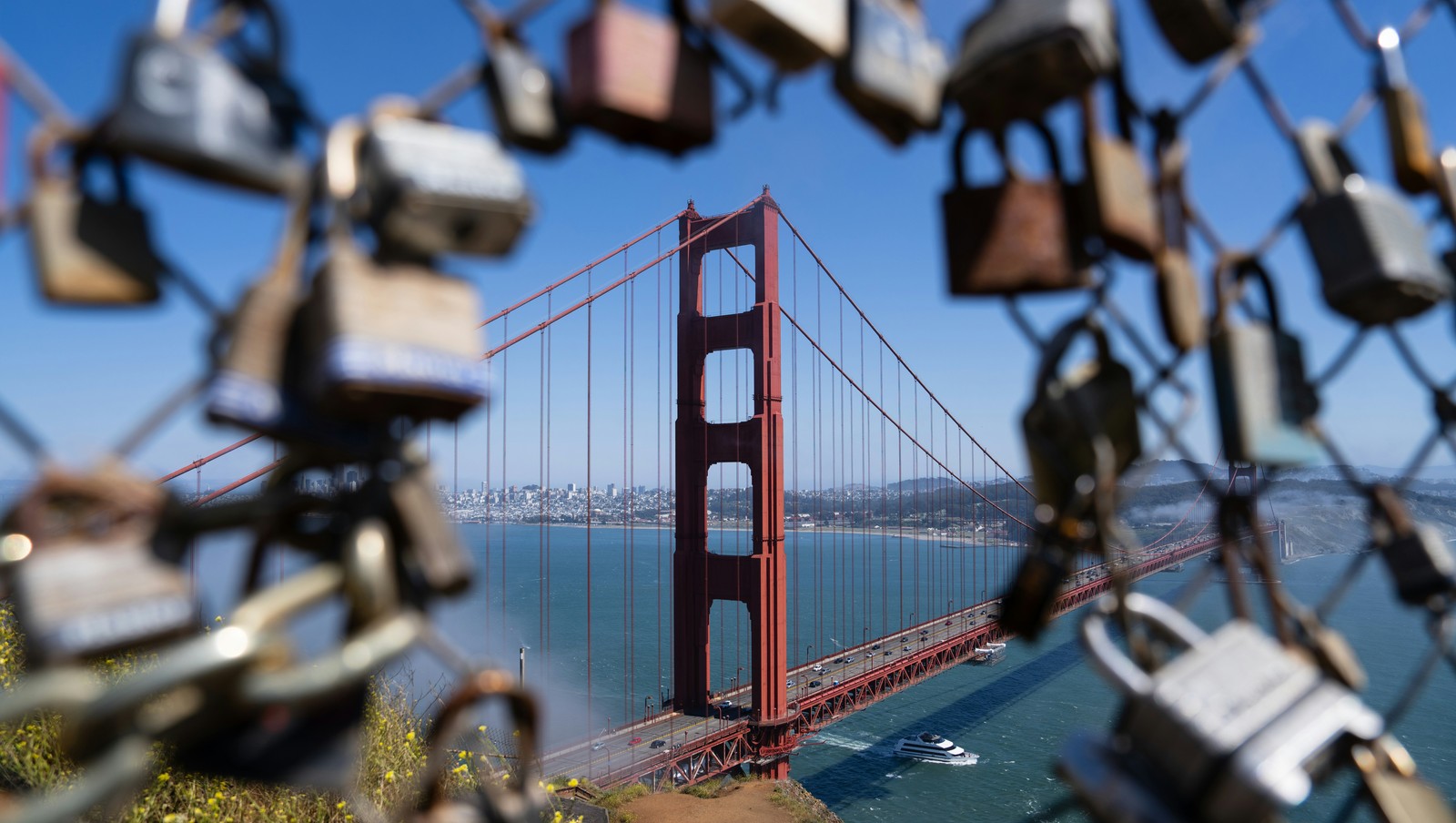
Image: Hari Manivannan

America's bridges are more than just ways to get from point A to point B—they're monuments to human ingenuity, determination, and sometimes sheer stubbornness. Underneath their steel cables and concrete pillars lie history-making stories of tragedy, triumph, and political intrigue. Let's explore ten famous bridges whose backstories are as captivating as their engineering , revealing the human drama behind these iconic structures.

1
Brooklyn Bridge, New York: A family affair with an undersung heroine
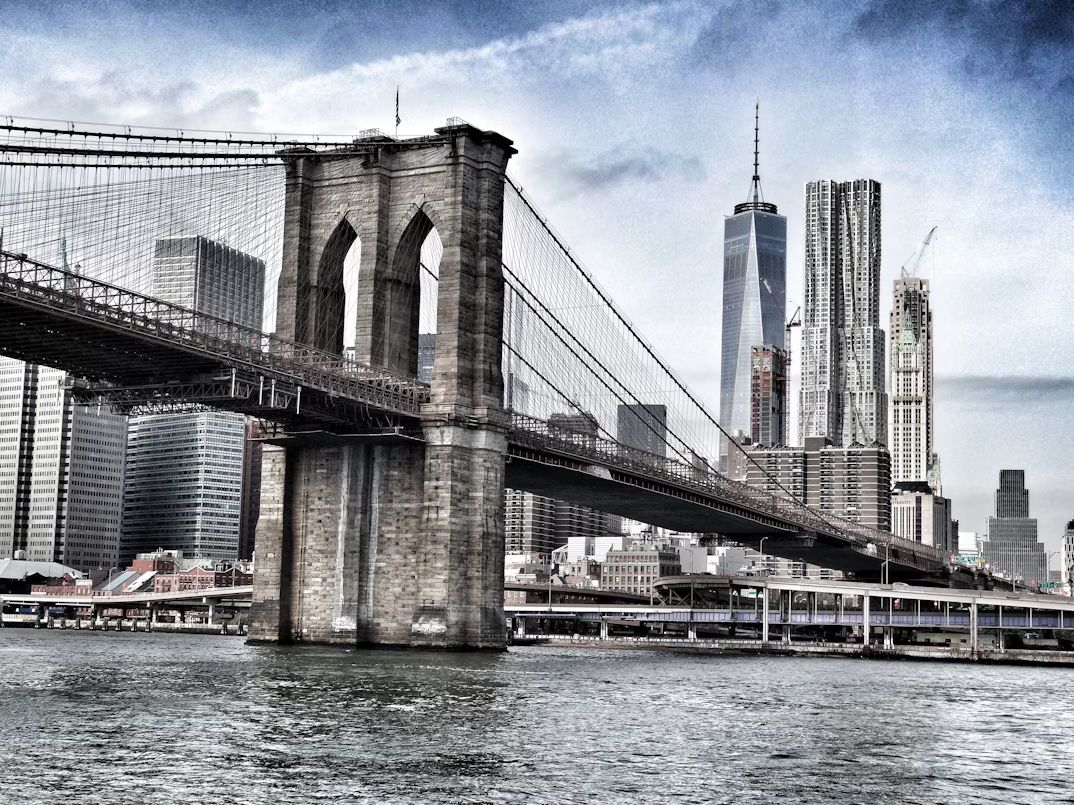
Image: Hannes Richter

Designer John Roebling died from tetanus after his foot was crushed during the initial survey in 1869, leaving his son, Washington, to complete the project. Then Washington developed debilitating "caisson disease" (the bends) from working in the underwater pressurized chambers, leaving him bedridden and barely able to speak. For the next eleven years, he directed construction from his apartment window through a telescope, while his wife Emily became his voice , learning advanced mathematics and engineering to communicate his instructions to the workers.

Emily Roebling essentially became America's first female field engineer, though she received no official title or recognition at the time. She walked the bridge on opening day in 1883, carrying a rooster as a symbol of victory—a moment that should have cemented her place in history but was largely forgotten until recently.

2
Golden Gate Bridge, San Francisco: They said it couldn't be built
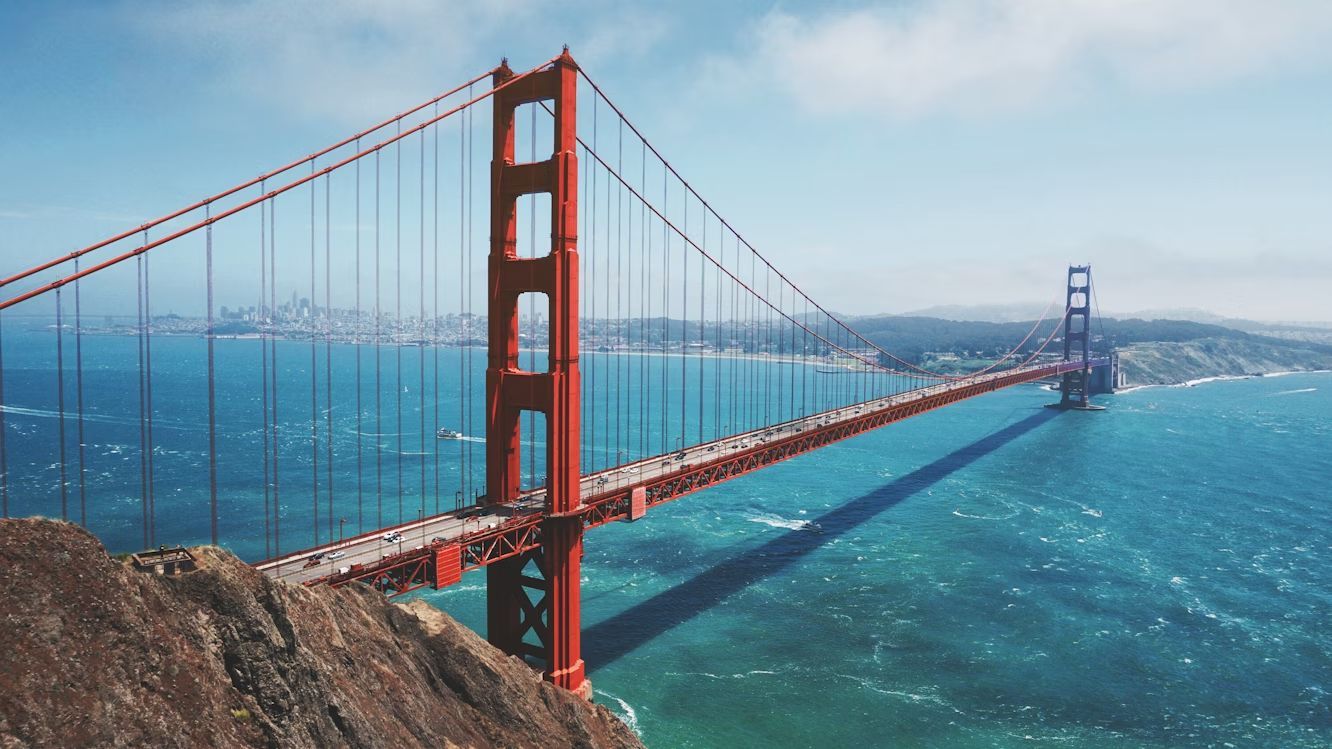
Image: Maarten van den Heuvel

Engineers insisted it was impossible: the water was too deep, the currents too strong, the fog too thick. Joseph Strauss, the chief engineer, was mocked by colleagues who called his design "Strauss's Folly." The Navy opposed it, claiming it would obstruct their ships. Environmentalists feared it would ruin the bay's natural beauty. Ferry operators lobbied against it, worried about losing their livelihoods.

Yet construction began in 1933, during the Great Depression, providing thousands of jobs when they were desperately needed. Strauss installed a revolutionary safety net beneath the bridge, saving nineteen men who became known as the "Halfway to Hell Club." Tragically, ten other workers still died when a section of scaffolding fell through the net near the end of construction. When it opened in 1937, the bridge was the longest suspension span in the world . Strauss died just one year after the bridge opened, worn out by the battle to build his "impossible" dream.

3
Sunshine Skyway Bridge, Florida: Rising from tragedy
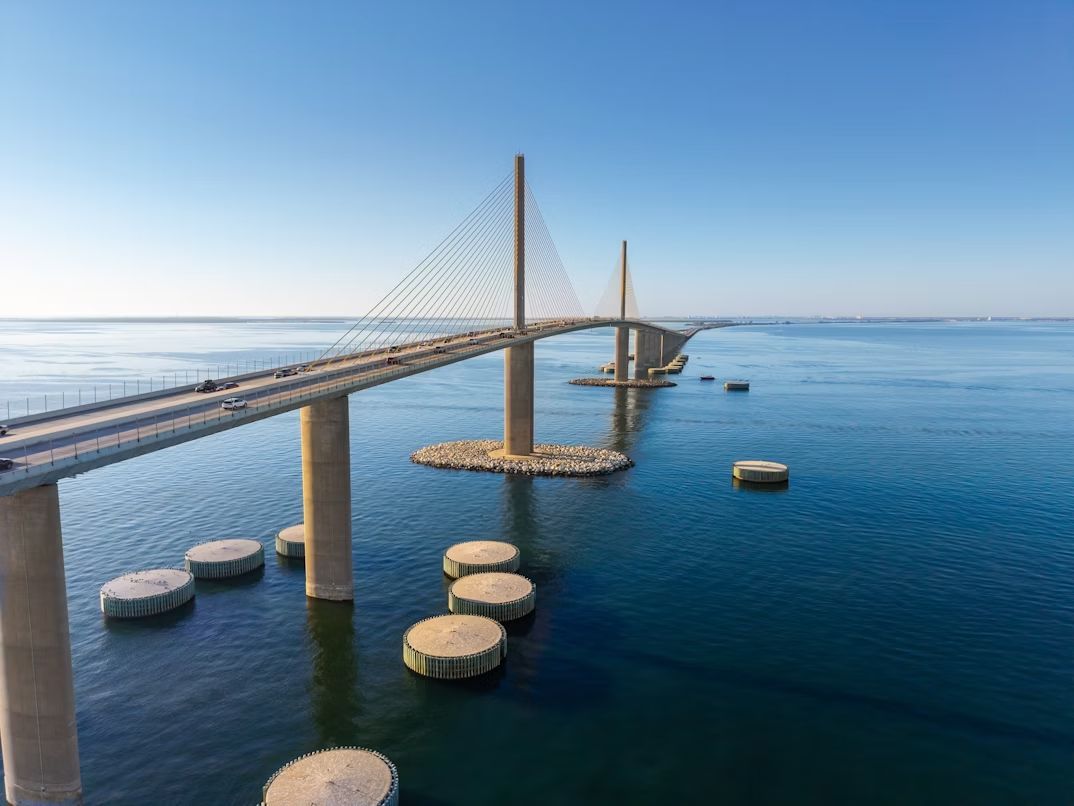
Image: Joseph Corl

On a foggy May morning in 1980, the freighter MV Summit Venture lost radar during a violent thunderstorm and slammed into the Sunshine Skyway Bridge. A 1,400-foot section of the bridge collapsed into Tampa Bay , sending six cars, a truck, and a Greyhound bus plummeting 150 feet into the water below. Thirty-five people died instantly. The only survivor was a truck driver whose vehicle teetered on the broken edge.

Rather than simply repair the damaged bridge, Florida decided to build an entirely new one. The new Sunshine Skyway, completed in 1987, features massive concrete "dolphins"—protective barriers designed to absorb ship impacts and prevent another catastrophe. The old bridge's remaining sections were converted into fishing piers, now popular spots where anglers cast lines into the same waters where so many lives were lost.

4
Tacoma Narrows Bridge, Washington - Galloping Gertie's fatal dance
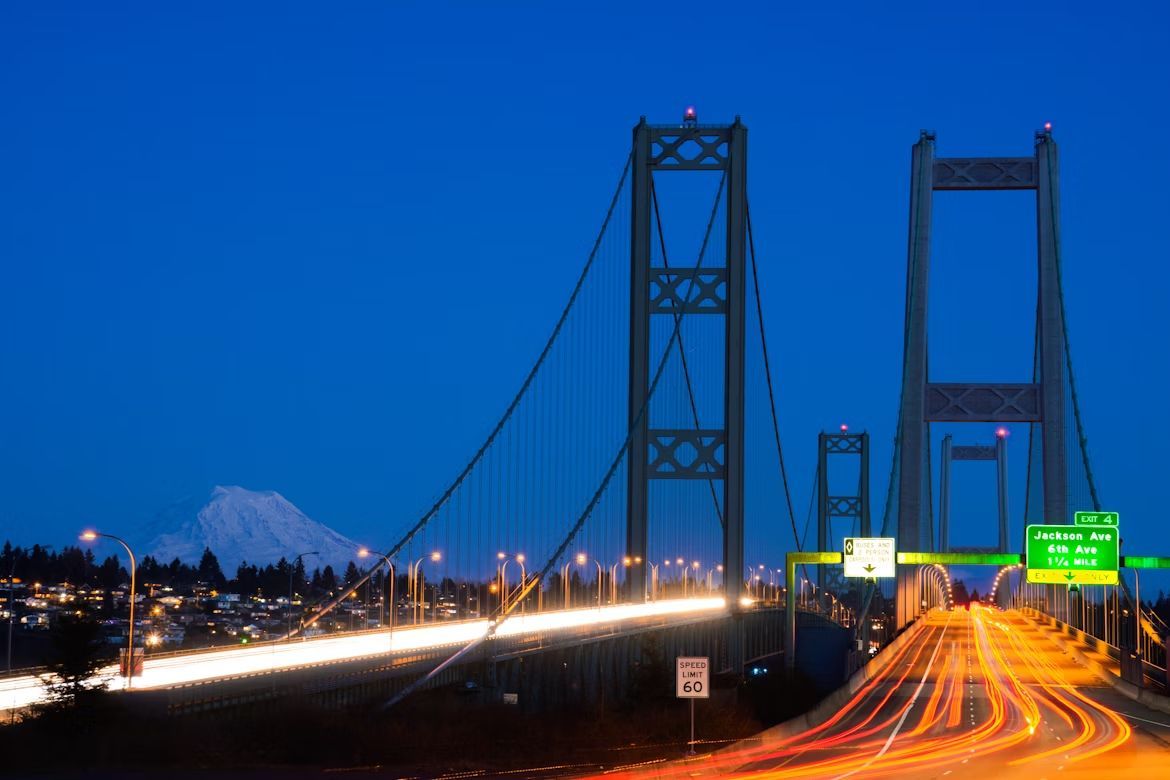
Image: Taylor Prince

From the moment the Tacoma Narrows Bridge opened in July 1940, it moved—undulating, twisting, and bucking in the wind like a living thing. This rhythmic, vertical bouncing reminded locals of a galloping horse, thus earning the bridge the nickname 'Galloping Gertie.' Engineers knew about the movement but considered it within acceptable limits. For four months, Gertie galloped along, becoming a tourist attraction and a source of local pride. Then came November 7, 1940.

In 40-mph winds, the bridge entered an aeroelastic fluttering that tore it apart in spectacular fashion. The only casualty was a three-legged black Cocker Spaniel named Tubby, left in a car by his owner, who fled on foot. Film footage of the collapse became required viewing in engineering schools worldwide. A new bridge opened in 1950 with crucial design changes, and in 2007, a parallel span was added.

5
London Bridge, Arizona: The bridge they bought by mistake
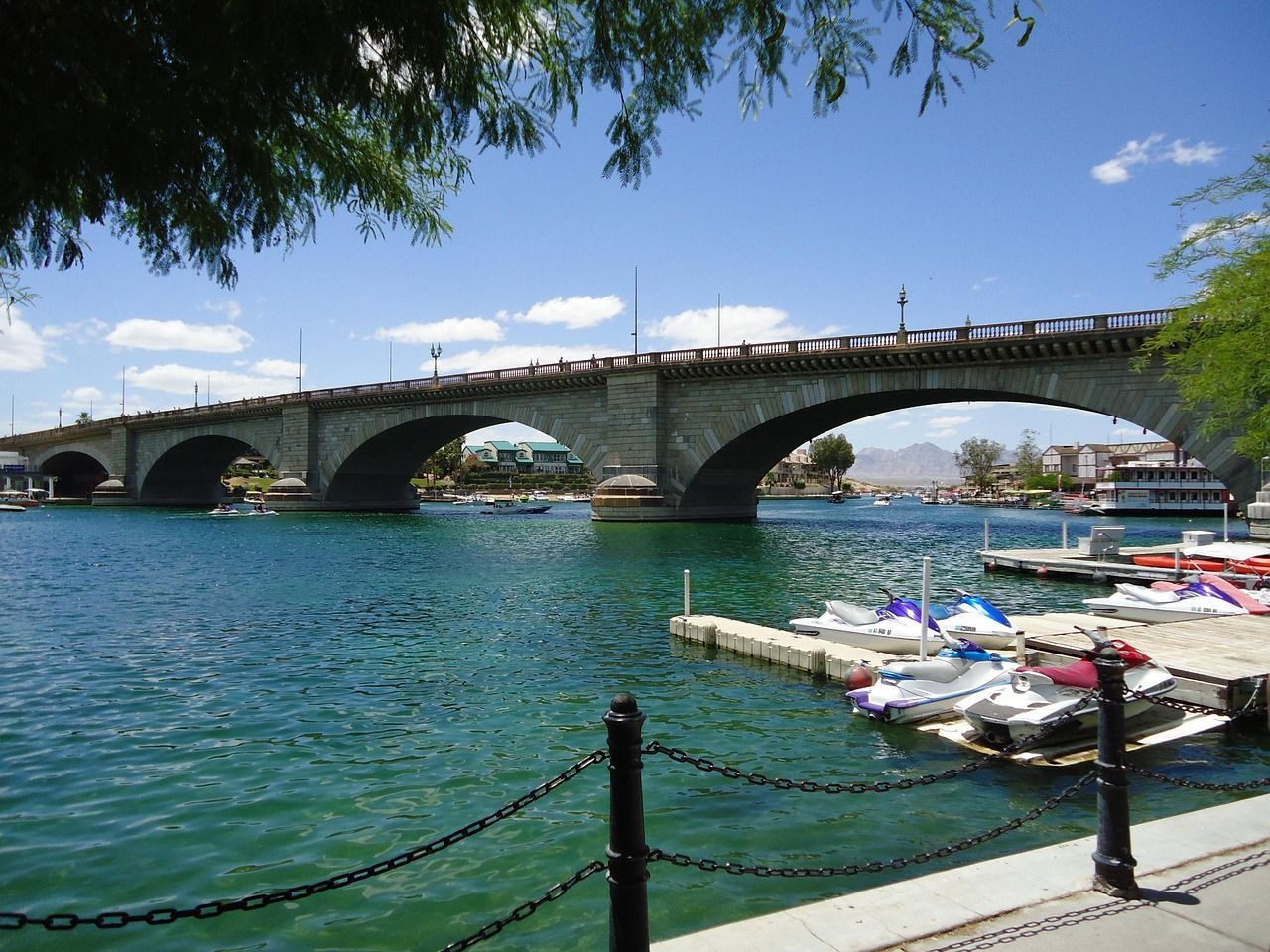
Image: SoCali

American entrepreneur Robert McCulloch bought London Bridge in 1968 for $2.46 million and had it shipped, stone by stone, from London to Lake Havasu City, Arizona . Urban legend claims McCulloch thought he was buying the iconic Tower Bridge and was disappointed when his purchase turned out to be the relatively plain London Bridge. While McCulloch denied this, the story persists because it's too good not to be true.

The bridge was disassembled into 10,000 tons of granite blocks, each numbered and shipped across the Atlantic. Workers reassembled it in the Arizona desert like a giant jigsaw puzzle, creating a channel beneath it afterward to make it an actual functioning bridge.

6
Chesapeake Bay Bridge-Tunnel, Virginia: Engineering ambition gone mad
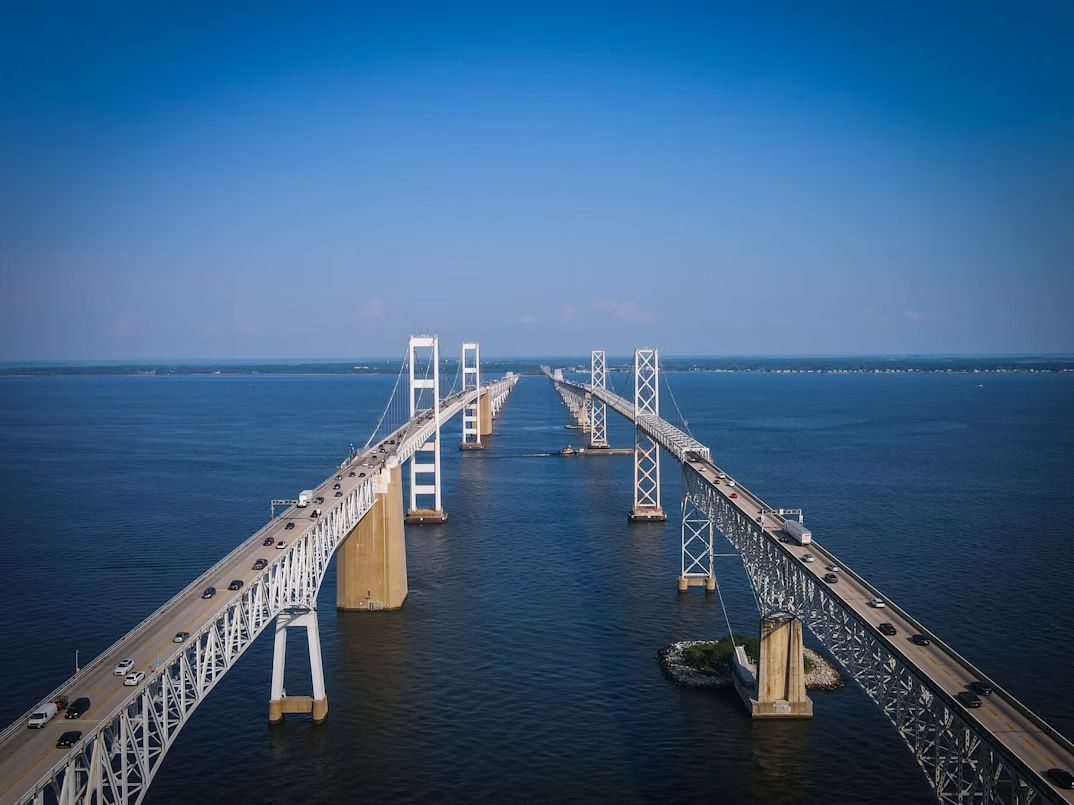
Image: Max Shein

When engineers proposed building a crossing for the 17.6-mile-wide mouth of Chesapeake Bay, skeptics called it impossible. The crossing would need to accommodate massive naval and commercial ships heading to Norfolk, one of America's busiest ports, while also withstanding hurricanes and ocean storms. The solution was audacious: build a structure that would be partly bridge and partly tunnel, diving beneath the water at two points to allow ship traffic through .

The completed structure, opened in 1964, includes two mile-long tunnels, nearly 12 miles of trestle bridges, four man-made islands, and multiple high-level bridges—all exposed to the open Atlantic Ocean. It was immediately declared one of the "Seven Engineering Wonders of the Modern World."

7
Seven Mile Bridge, Florida Keys: Flagler's folly made real
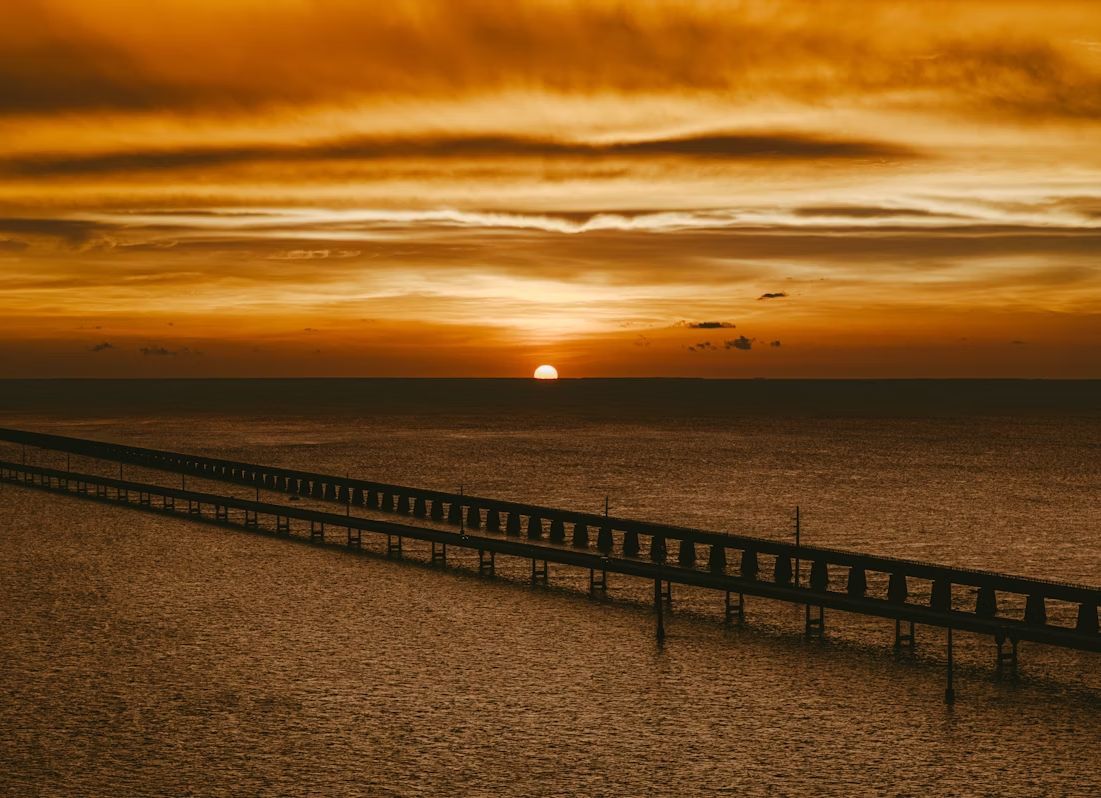
Image: Nils Huenerfuerst

Henry Flagler's dream of extending his railroad to Key West was called "Flagler's Folly" by critics. But Flagler, already wealthy from Standard Oil, was determined to connect the Keys to mainland Florida. Construction began in 1905, facing hurricanes, mosquitoes, brutal heat, and the challenge of building in water up to 40 feet deep. The worst disaster came in 1906 when a hurricane killed over 100 workers—mostly immigrant laborers, whose tragic deaths barely made headlines at the time.

The railroad finally reached Key West in 1912, a year before Flagler's death. For 23 years, it carried tourists and freight until the monster Labor Day Hurricane of 1935 destroyed much of the track, killing hundreds. Rather than rebuild the railway, the state converted the route into the Overseas Highway, with the Seven Mile Bridge becoming its centerpiece . The original bridge served cars until 1982, when a new parallel bridge opened.

8
Mackinac Bridge, Michigan: The bridge that refused to die
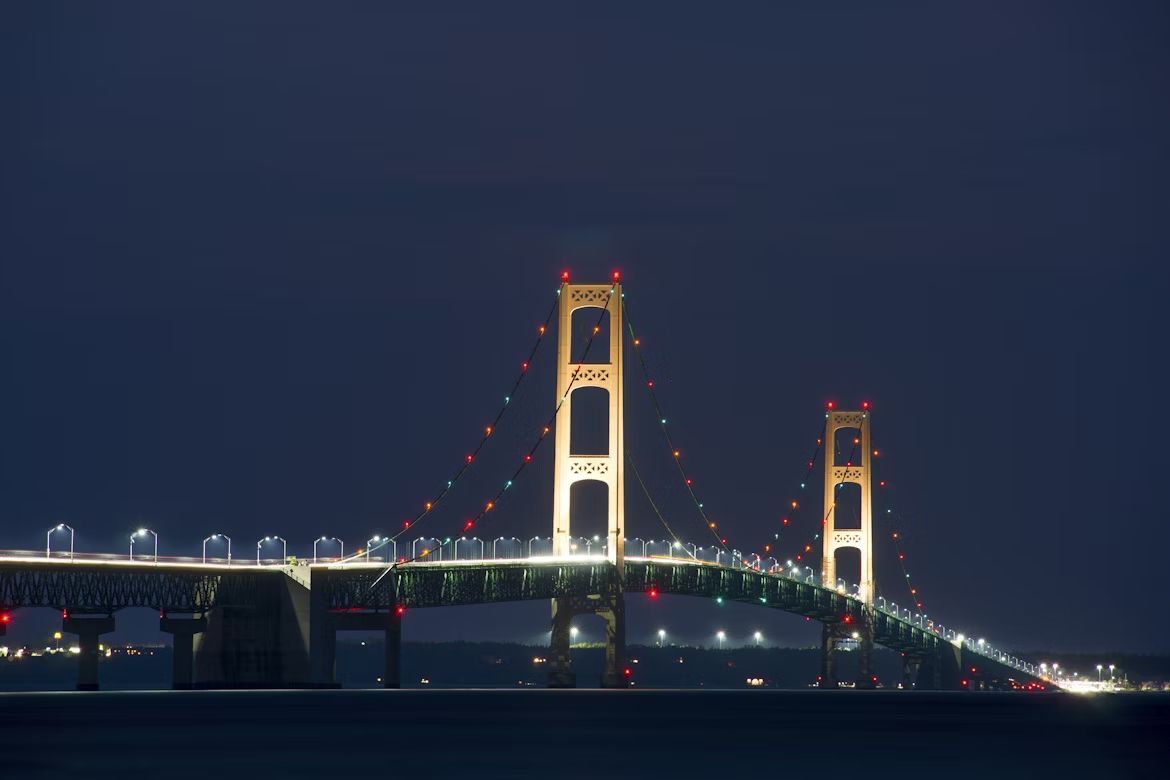
Image: Rudolph Arnstein

Dreams of a bridge between Michigan's Upper and Lower peninsulas dated back to the 1880s, but the five-mile strait seemed unbridgeable. The Great Depression killed early plans, and World War II delayed them further. By the 1950s, the project had died and been resurrected so many times that locals joked it would never happen. Then, engineer David Steinman took on the challenge, designing a suspension bridge that would span the straits despite brutal weather, thick ice, and deep water .

Construction from 1954 to 1957 employed 3,500 workers at its peak. Opening day in 1957 drew 50,000 people, and Governor G. Mennen Williams walked across alongside bridge workers. "Mighty Mac" became Michigan's symbol, though high winds remain dangerous—two vehicles have been blown off in separate incidents, leading to the bridge authority offering free transport for nervous drivers during storms.

9
New River Gorge Bridge, West Virginia: The bridge that became a party
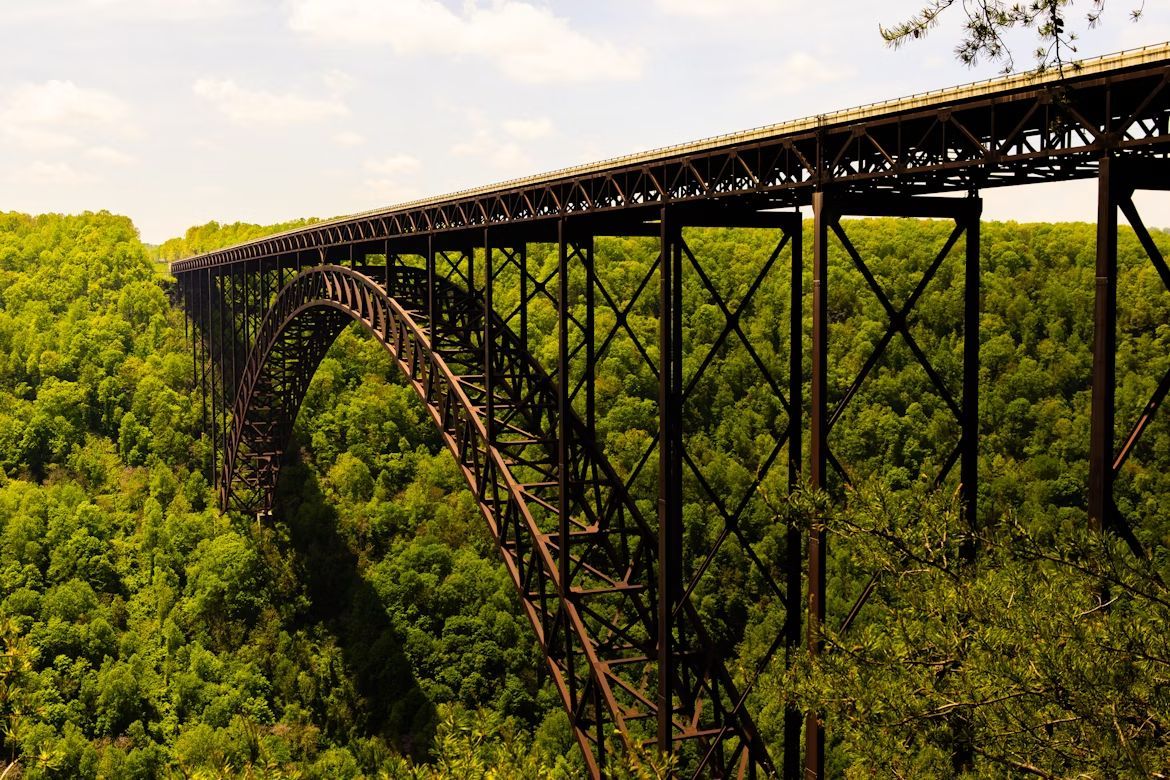
Image: Steve Wrzeszczynski

When the New River Gorge Bridge opened in 1977, it was the world's longest single-span arch bridge and the highest vehicular bridge in the Americas at 876 feet above the New River. The structure cut a 40-minute winding drive down to one minute, transforming the region's economy. But locals decided the bridge's annual achievement deserved an equally monumental celebration. Thus "Bridge Day" was born: a festival where the bridge closes to traffic and people are legally allowed to BASE jump and rappel off it.

Every third Saturday in October, up to 200,000 people descend on the tiny town of Fayetteville (population 2,800) to watch hundreds of BASE jumpers leap off the bridge . It's the largest extreme sports event in the world and the only day of the year when BASE jumping is legal in the U.S.

10
Navajo Bridge, Arizona: The bridge to nowhere that changed everything
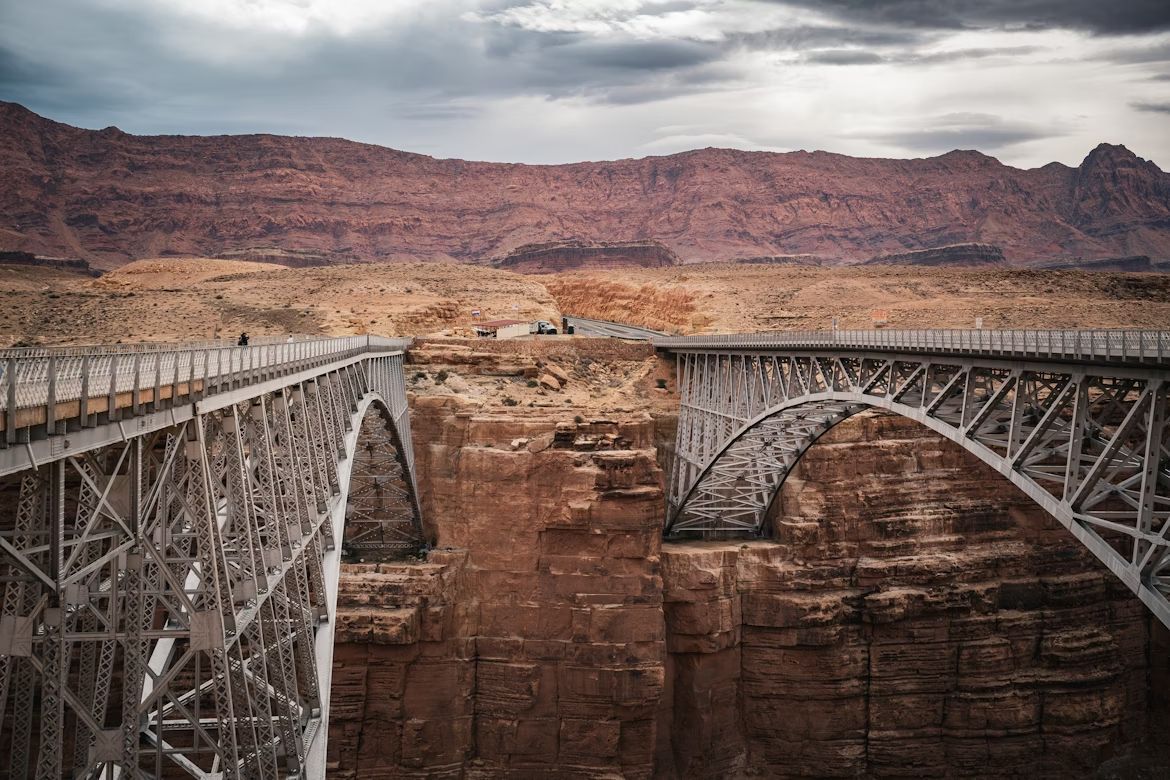
Image: Karina G

When the original Navajo Bridge opened in 1929, the closest town was 130 miles away, and the bridge spanned a remote section of the Colorado River in northern Arizona. Critics called it the "bridge to nowhere." But the bridge had a crucial purpose: it was the only crossing of the Colorado River for 600 miles, making it essential for anyone traveling between Utah and Arizona without taking a massive detour.

Over the course of decades, it became a vital link for Navajo Nation residents accessing healthcare, education, and commerce . It also opened the North Rim of the Grand Canyon to tourists, transforming the region's economy. By the 1990s, the original bridge couldn't handle modern traffic, so a parallel span opened in 1995. Rather than demolish the original, it was converted to a pedestrian bridge where you can look straight down 467 feet to the Colorado River.

General General 4 min read

Be on the safe side

Beware! These 12 common scams are aimed at senior citizens

Image: Kaboompics.com

For many reasons, senior adults are often targeted by scammers. Unscrupulous individuals are savvy and convincing, using tactics designed to catch people off guard. There is no shame in falling victim to one of these scams—it can happen to anyone. However, in today’s world, it is highly advisable to be aware of these schemes and familiarize yourself with them to avoid falling prey. Take a look at the following 12 scams—they could help protect you or someone you care about.

1
The Government impersonator

Image: Harold Mendoza

One of the most common scams targeting senior citizens involves fraudsters posing as a member of a government agency such as the FTC, Social Security Administration, IRS, or Medicare. The basic pitch is similar to many others: the caller claims that if the target does not pay a fee or provide personal information, they will face serious consequences.

Government agencies will never call, email, text, or message you on social media to request money or personal information . Only scammers engage in such tactics.

2
Fake Prize, Sweepstakes, and Lottery

Image: dylan nolte

Another common scam involves a call, email, or letter informing the recipient that they have won a sweepstakes, lottery, prize, or even a new car. The next part of their message is the key to uncovering the racket: the scammer will request money or personal account information to "claim" the prize . No serious company will ask for such things by telephone or email to award a prize.

3
Tech Support

Image: Simon Abrams

Technology can be intimidating to anyone who is not familiar with it, and tech support scammers know this. These individuals will attempt to convince their targets that their computer or phone has a serious issue, such as a virus.

Scammers often pressure victims into paying for unnecessary services that are not really needed or offer to do the repairs remotely if the recipient grants them access. They may use pop-up error messages, phone calls, or text messages to carry out their scheme. To protect yourself, always keep your antivirus software up to date.

4
'Grandparent' Scams

Image: Nikoline Arns

Exploiting emotional connections is a basic on any scammer’s manual and grandparents are frequent targets. Fraudsters may call and impersonate a grandchild or another close relative in distress , urgently requesting financial assistance .

If you receive such a call, hang up immediately and contact the family member directly to verify their well-being before taking any action.

5
Robocalls

Image: Jenna Anderson

Robocalls use automated phone technology to dial large numbers of households. One common scam is the "Can you hear me?" call. When the recipient responds "yes," the scammer records their voice and quickly hangs up. This recorded response can then be used as a voice signature to authorize fraudulent charges on stolen credit cards or other accounts.

6
Romance Scams

Image: Mayur Gala

Online dating and loneliness may seem like a natural match, but scammers have long exploited this opportunity. Romance scammers create elaborate fake profiles, often on social media, to take advantage of senior adults' loneliness and manipulate them for money.

They may request money for visas, medical emergencies, or travel expenses to visit the US. Since they tend to last for a long time, these types of scams can rob an older person of substantial amounts of money before realizing they’ve been deceived.

7
Business Imposter

Image: Constantin Wenning

This type of scam can take a serious financial toll on senior adults. This type of ruse involves the illegal or alleged sale of financial instruments promising low risk and guaranteed returns. The use of cryptocurrency is common in these scams, as it can be difficult to trace.

8
Pigeon Drop

Image: Alexander Mils

A pigeon drop scam occurs when a scammer offers the victim a large sum of money in exchange for a smaller upfront payment . While this should immediately raise suspicion, many people still fall for it. These scams are often carried out in person at tourist spots but can also happen frequently over the phone .

A classic example is an email claiming that the sender has inherited money from a distant relative but needs a small payment from you to transfer the funds.

9
Counterfeit Cashier's Checks

Image: Gadini

Cashier’s checks have been around for a long time and have been the subject of counterfeiters ever since. While forgeries can be highly convincing, a common red flag is being asked to deposit a check under suspicious circumstances and then return a portion of the funds to a stranger —chances are, it is a scam.

10
Travel Packages

Image: Marten Bjork

A tourist hoping for a dream vacation instead found cramped rooms and terrible accommodations that fell far short of expectations —this is not a new story.

To avoid such disappointments, travelers should always request information directly from the hotel in question and confirm which features are included in their selected package. Additionally, they should never provide credit card information unless they initiate the call or email.

11
Home Repair

Image: Jimmy Nilsson Masth

Another common scam involves criminals who appear in person and charge homeowners in advance for home improvement services they never provide . These scammers often pose as employees of utility companies.

If someone receives an unexpected visit like this, they should always call the company to verify the person's identity before allowing them inside.

12
Caregivers

Image: Ani Kolleshi

This one strikes particularly hard since caregivers are supposed to help people when they are most vulnerable. Unfortunately, sometimes, unscrupulous individuals can take advantage of the senior adults they are supposed to care for and steal their money .

Always make sure to screen anybody who will be in charge of, or around, a senior adult that requires assistance.

General General 5 min read

Native marvels

What 600-pound animal climbs trees? 10 amazing American animals

Image: Bryan Hanson

America is home to a rich tapestry of unique wildlife found nowhere else on Earth. These species thrive in diverse ecosystems, from mountains to oceans, and form an integral part of our natural heritage. Some have even become national icons, symbolizing the spirit of our country. From the majestic bald eagle to the resilient black bear, discover 10 animals that embody the wild essence of our nation.

1
American Bison

Image: Chloe Leis

The American bison once roamed the Great Plains in vast herds, a true icon of the American West. These massive mammals can weigh up to 2,000 pounds and stand 6 feet tall at the shoulder. Due to overhunting and habitat loss in the 1800s, their numbers dwindled dangerously low, with the species being driven to the brink of extinction.

Fortunately, thanks to dedicated conservation efforts, bison populations have rebounded miraculously and now roam freely through many of the United States' national parks, particularly in Yellowstone, where they have lived continuously since prehistoric times.

2
California Condor

Image: Kacie Long

The California condor is North America's largest flying land bird, boasting an impressive wingspan of nearly 10 feet. In the 20th century, populations dramatically declined due to various threats, including DDT and lead poisoning, poaching, and habitat loss. By 1987, only 27 individuals remained, with the species facing near-extinction.

Rigorous conservation efforts, including captive breeding programs, have increased the condor's numbers, and many individuals have been reintroduced to their natural habitats near the Grand Canyon area, Zion National Park, and the coastal mountains of California.

3
American Alligator

Image: David Clode

The American alligator, a formidable reptile, is native to the southeastern United States. As apex predators, they consume a wide range of prey, including fish, amphibians, reptiles, birds, and mammals. These powerful creatures can grow up to 15 feet long and weigh over 1,000 pounds.

Once hunted nearly to extinction for their hides, American alligators have made a remarkable comeback thanks to strict protection laws. Today, they thrive in swamps, marshes, and rivers, where they play a crucial role as ecosystem engineers. By constructing small ponds known as alligator holes, they create both wet and dry habitats that support a variety of other organisms.

4
Bald Eagle

Image: Ingo Doerrie

The bald eagle is not only America's national bird but also a powerful symbol of freedom all over the world. An opportunistic feeder that primarily subsists on fish, it is classified as a type of sea eagle, closely related to the European white-tailed eagle. Found throughout North America, this majestic bird has a wingspan of up to 7.5 feet and uses its sharp talons to snatch prey from the water.

Despite its name, the bald eagle is not actually bald. The name comes from an older use of the word "bald," which used to mean "white-headed." This bird of prey is also known for building the largest nest of any North American bird—a structure that can be up to 13 feet deep, 8 feet wide, and weigh almost 1 metric ton on average.

5
Gila Monster

Image: David Clode

The Gila monster, native to the southwestern United States, is one of the few venomous lizards in the world. These brightly colored reptiles are slow-moving and rarely attack humans, but they can deliver a powerful bite if threatened or mishandled. Gila monsters are a unique part of America's desert fauna, often inhabiting burrows or sheltering under rocks where conditions are favorable.

The name "Gila monster" refers to the Gila River Basin in Arizona and New Mexico, where these lizards were once abundant. Because the species has remained relatively unchanged morphologically since at least the Miocene, they are occasionally regarded as living fossils.

6
Red Wolf

Image: Patrick Fobian

A canid native to the southeastern United States with a size that falls between a gray wolf and a coyote, the red wolf is often classified either as a subspecies of the gray wolf or as a type of coywolf (a genetic hybrid of wolf and coyote). Despite their size, red wolves play a crucial role in their ecosystem as apex predators.

While their original range covered the southeastern United States to as far north as the state of New York, the species is currently critically endangered, with fewer than 20 individuals remaining in the wild. Efforts to save the species include captive breeding and reintroduction programs aimed at restoring their presence in the wild.

7
Florida Panther

Image: Maheera Kulsoom

The Florida panther, a subspecies of the cougar, roams the forests and swamps of southern Florida. Its modern range includes national parks and natural reserves such as the Big Cypress National Preserve and Everglades National Park. With only around 200 individuals left in the wild, these solitary and elusive cats are considered endangered and currently occupy only 5% of their historic range.

Conservation efforts focus on habitat preservation and reducing vehicle collisions, the leading cause of death for these big cats. Since 1982, this majestic feline has been officially recognized as Florida’s state animal.

8
Hawaiian Monk Seal

Image: Sebastian Coman Travel

Found only in the Hawaiian Islands, the Hawaiian monk seal is one of the only two mammals endemic to the islands, alongside the Hawaiian hoary bat. Its common name comes from the short hairs on its head, resembling a monk's tonsure, but native Hawaiians know it as ʻIlio-holo-i-ka-uaua, which translates to "dog that runs in rough water."

Considered one of the most endangered marine mammals in the world, with a population of about 1,400 individuals, these seals are protected by the Marine Mammal Protection Act and the Endangered Species Act.

9
Pronghorn

Image: Patrick Hendry

The pronghorn, native to North America's grasslands, is the second fastest land animal in the world, capable of reaching speeds up to 55 mph. Often mistaken for antelopes, pronghorns are actually unique to the American continent and are not related to Old World antelope species.

In fact, the pronghorn's closest living relatives are the giraffe and okapi. Remarkably, their incredible speed evolved as a defense mechanism against now-extinct predators, such as Miracinonyx , commonly known as the American cheetah.

10
Black Bear

Image: Robert Thiemann

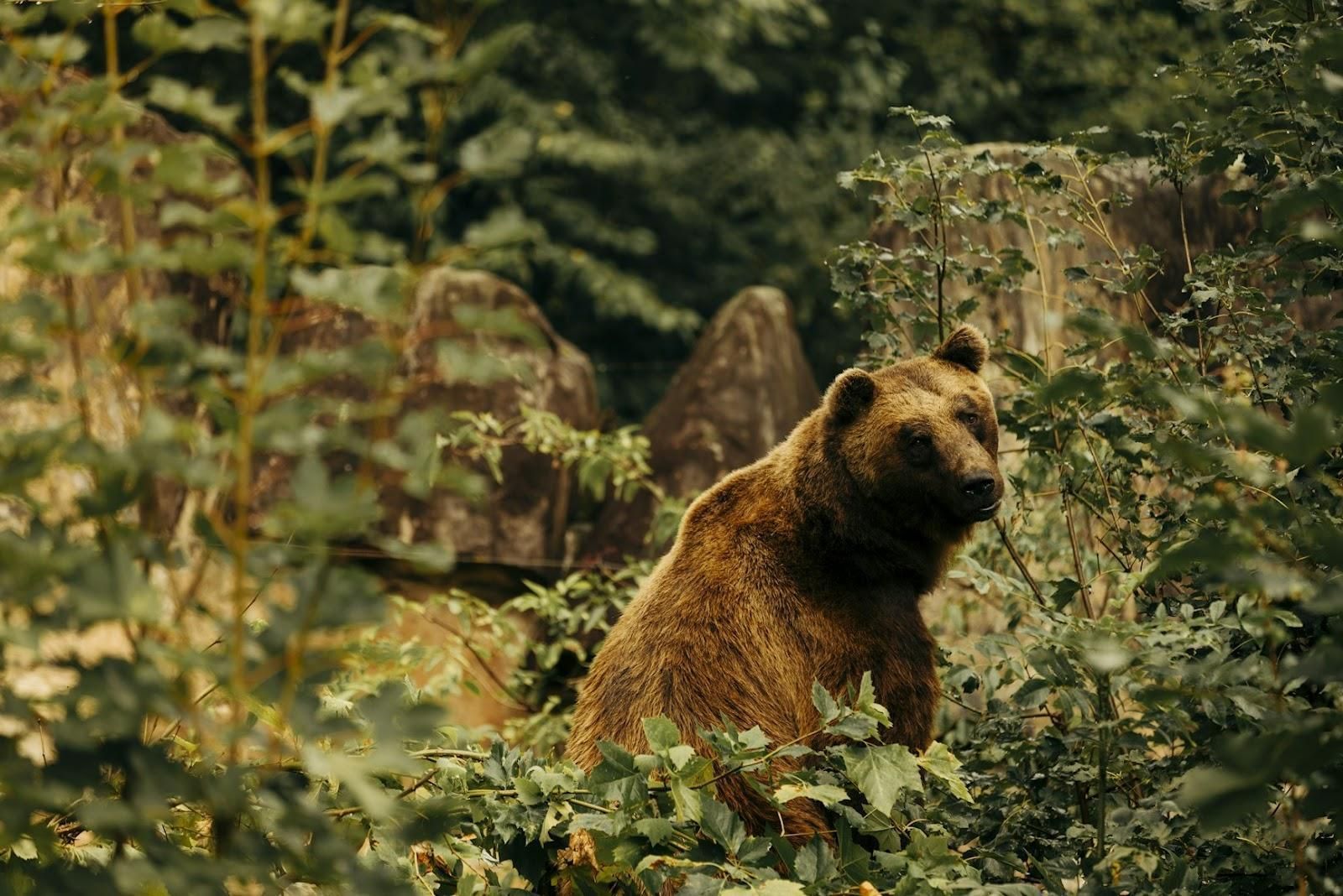
The black bear, the most widely distributed bear species in North America, is found in forested areas from Canada to Mexico. These adaptable omnivores can weigh up to 600 pounds and are skilled climbers and swimmers.

Not related to grizzly or polar bears, black bears share more genetic similarities with the Asian black bear than with any other species. And before the migration of brown bears to the continent, American black bears were likely the only bear species present in much of North America. Despite their size and strength, black bears are generally shy and tend to avoid human contact whenever possible.

Explore more American facts

Choose your favorite category!

General
General

As American as apple pie—the very best America has to offer!

Culture
Culture

Delve into the astounding richness of American lore.

Geography
Geography

Hop in and explore vast and diverse American landscapes.

History
History

Discover the key moments that shaped the United States.