General General 3 min read

Feeling uninspired?

Boost your creativity with these 12 easy habits!

Image: Prophsee Journals

Your creativity can be seen as a muscle: if you exercise it, it will grow. And there are many ways you can strengthen your creative brainpower. From taking a walk to reading, staying away from screens, and getting good sleep, these 12 habits will definitely help get your creative juices flowing. Which ones do you know?

1
Keep a journal

Image: Thought Catalog

Writing down your thoughts is a great way to organize them into cohesive ideas . Doing so daily, ideally around the same time every day, generates a creative routine that will promote the appearance of new ideas to emerge consistently around that time.

2
Walking

Image: Chris Hardy

As German philosopher Friedrich Nietzsche once said, "All truly great thoughts are conceived by walking." And while this statement may carry a deeper meaning, it's undoubtedly true that taking a walk helps get the creative juices flowing .

3
Reading

Image: Matias North

Reading not only exercises your brain and improves your vocabulary , but it also boosts your empathy and imagination. People who read literary fiction, in particular, are more likely to understand the feelings and beliefs of others.

4
Unplug

Image: Tobias Tullius

Spend less time in front of screens. Whether it’s your cellphone, computer, or television, unplugging from electronics —even for just a couple of hours each day—can significantly improve your brain’s ability to generate original thoughts and draw inspiration from within.

5
Exercise

Image: Jonathan Borba

This one goes hand in hand with the tip about walking. Exercise is a powerful way to boost your creative energy —it increases your metabolism and provides a sense of accomplishment that can carry over into other areas of your work and personal life.

6
Try new things often

Image: Laura D Vargas

Do something different every day. It could be a small detour from your usual routine or an entirely new activity. Your brain thrives with new things and your creativity feeds on anything that breaks away from the norm.

7
Move around

Image: Christin Hume

Changing locations gives you a new perspective , which affects how your brain processes information. It can be as simple as moving to a different room, working outside for the day, or venturing a bit farther—but it always helps.

8
Identify your best moments

Image: Avi Richards

Some of us work best in the early morning, while some work better late at night. Find the moment of the day when your energy is peaking and take advantage of it. This is the time of day when your concentration is sharpest, and it’s the best time to tackle tasks you've been putting off.

9
Seek out different opinions

Image: Christina @ wocintechchat.com

Creative people tend to interact with people who inspire them and capture their imagination, both in and outside of their own fields. Hearing about different opinions gives you a perspective outside your own and fosters new, creative ideas that you might not have come up with otherwise.

10
Be more curious
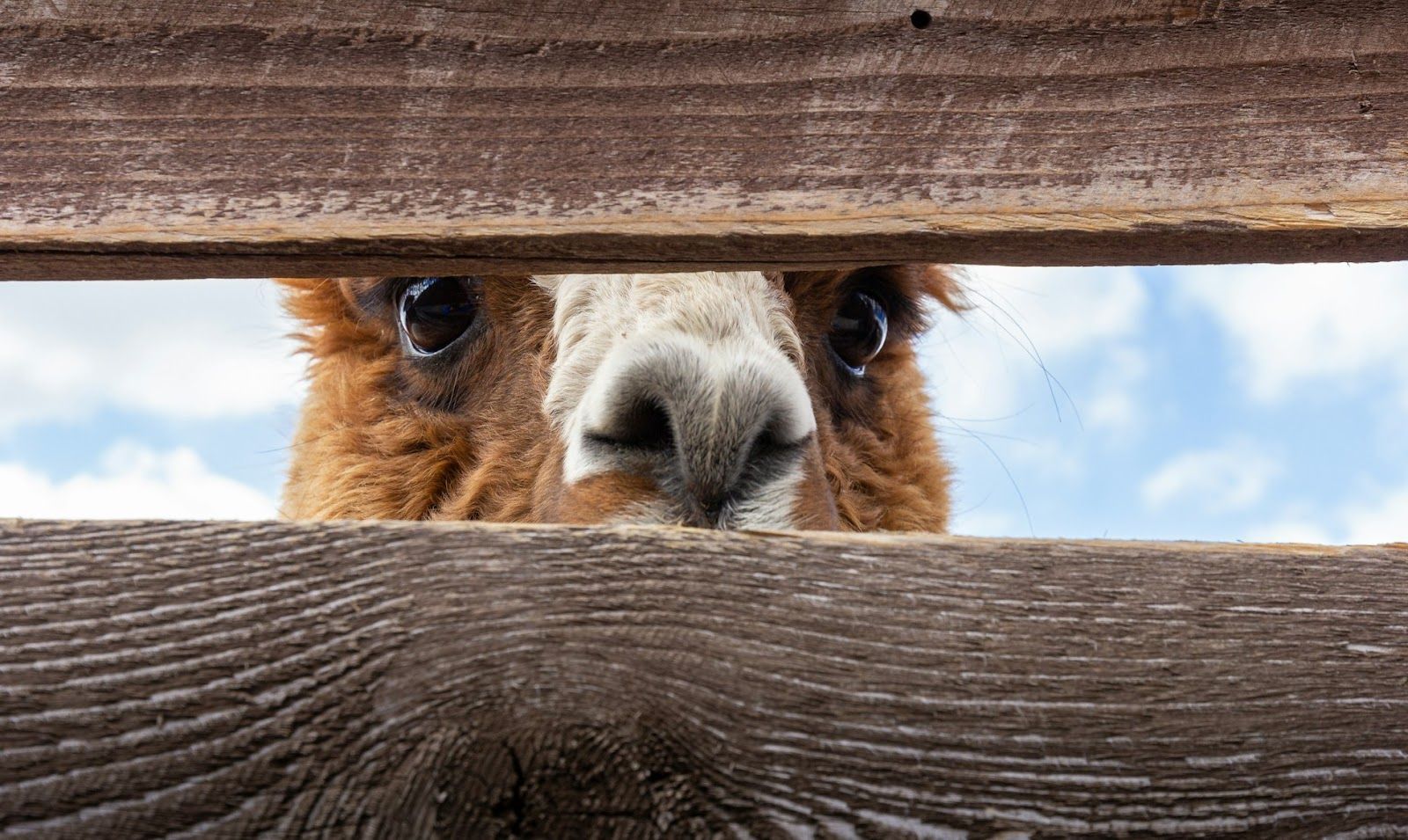
Image: Joakim Honkasalo

Being curious is possibly one of the best ways to fuel your creativity . Make it a point to learn something new every day. Allow yourself to go down rabbit holes and chase ideas—no matter how strange or unproductive they might seem (even if only for a short period).

11
Do not fear failure
Image: Kind and Curious

Two advantages to be gained from a mistake are finding out empirically what doesn’t work, and learning how to avoid similar situations in the future . This new information increases your experience and allows your imagination to better anticipate scenarios related to those mistakes.

12
Sleep well
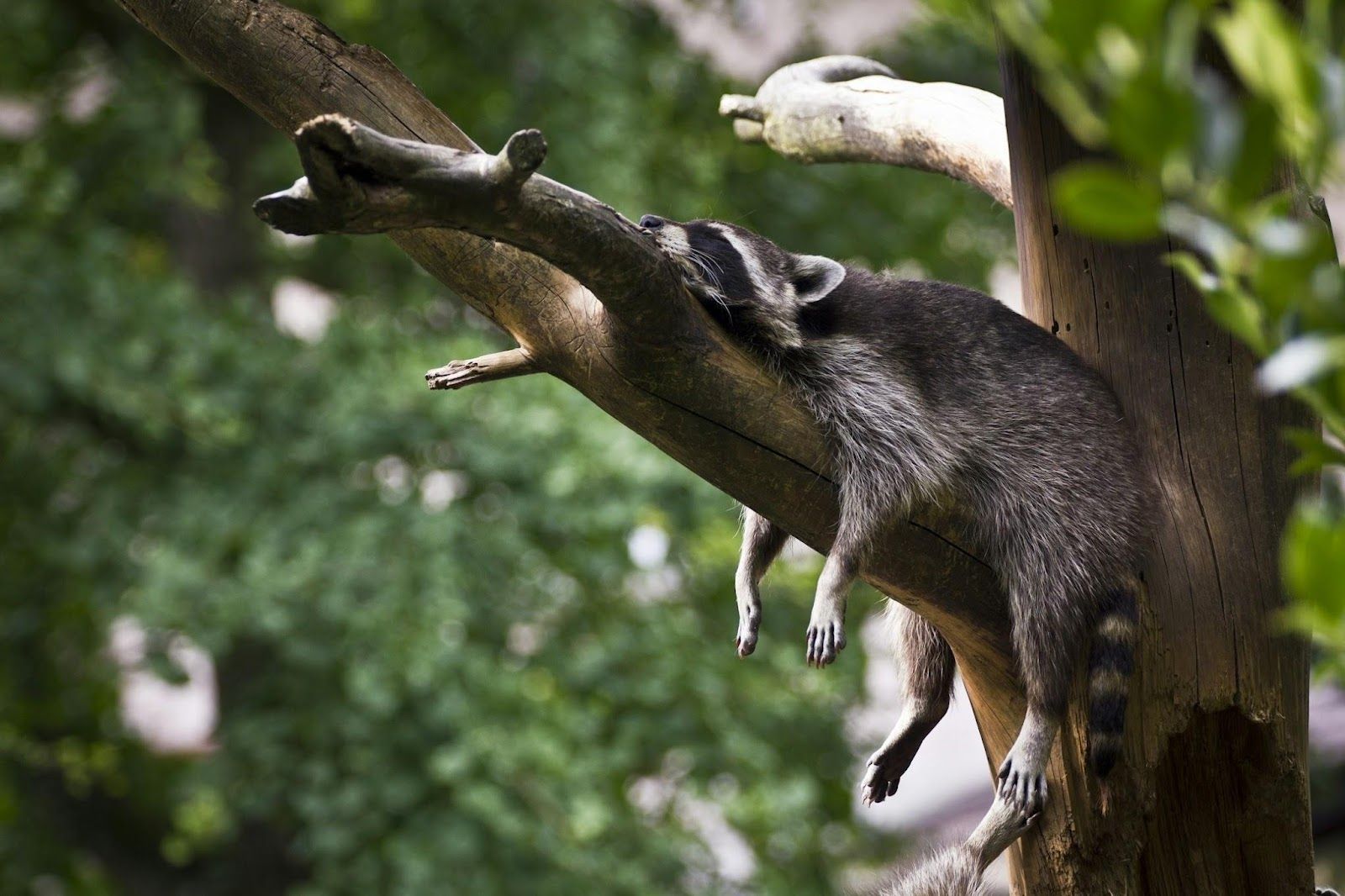
Image: Simon Infanger

Last but not least, sleep well. Lack of sleep can slow down cognitive functions, so prioritize getting a good night’s rest to ensure your brain is in top shape to come up with fresh ideas.
History History 3 min read

What would you take?

You'll never believe the things we've sent into space

Image: Pixabay / karen_la_banda

NASA has strict rules about non-essential items. And yet, over the decades, astronauts have managed to bring along all sorts of odd objects in their Personal Preference Kits. Sure, some may have been marketing stunts—like the time Pizza Hut delivered a meal to the International Space Station—but others were personal caprices, like David Walker’s gorilla suit smuggled onboard in 1984. Read on to discover the full list!

1
A gorilla suit

Image: ARTISTIC FRAMES

Space can get boring. It got a little more entertaining for astronaut Scott Kelly in 2016, when his twin brother, Mark Kelly, sent him a vacuum-sealed gorilla suit all the way to the ISS for his birthday.

Kelly’s crewmates didn’t know about it, so he had fun pranking them by suddenly appearing in the suit aboard the station. One of the prank videos went viral. As Kelly put it: "How can you not like space gorilla?"

2
Dirt from Yankee Stadium

Image: Chanan Greenblatt

Astronaut Garrett Reisman, a lifelong Yankees fan, of course, took a little piece of the Bronx to orbit . In 2008, aboard Space Shuttle Endeavour on mission STS-123, he brought a vial of dirt from Yankee Stadium’s pitcher’s mound—along with other Yankees memorabilia, including items autographed by players.

3
Amelia Earhart’s watch

Image: Tomas Martinez

In 2010, astronaut Shannon Walker brought Amelia Earhart’s watch to the International Space Station. The legendary aviator had worn it during two transatlantic flights , and it traveled to space on the 82nd anniversary of her first historic solo flight across the Atlantic.

4
Pizza

Image: Alan Hardman

Space pizza finally became a reality in 2001, when Pizza Hut paid millions to deliver a vacuum-sealed pizza to the International Space Station.

It was, quite literally, a publicity stunt out of this world . The pizza—topped with salami to withstand space conditions—was eaten by Russian cosmonaut Yuri Usachov aboard the ISS.

5
Pieces of the Wright Brothers’ first plane

Image: History in HD

Tucked into Neil Armstrong’s spacesuit was a small piece of fabric and a fragment of wood from the Wright Brothers' 1903 Flyer—carried all the way from Kitty Hawk to the Sea of Tranquility . He took them with him as he became the first person to step onto the Moon in 1969.

6
A set of instruments to play "Jingle Bells"

Image: Ali Rashedi

Just before Christmas in 1965, astronauts Wally Schirra and Tom Stafford pulled off a surprise serenade in space.

They had smuggled a harmonica and a set of sleigh bells aboard their Gemini 6A mission and played "Jingle Bells" for Mission Control—creating the first musical performance ever in space . The instruments are now on display at the Smithsonian Institution.

7
Several LEGO pieces

Image: Eugene Chystiakov

NASA's collaboration with LEGO took a literal leap when, in 2011, sets of LEGO bricks were sent to the International Space Station aboard mission STS-133.

Astronauts assembled models—such as the Hubble Space Telescope—in microgravity, engaging students around the world in STEM education.

8
A Buzz Lightyear toy

Image: Brian McGowan

Buzz Lightyear truly went " to infinity and beyond " when a 12-inch action figure flew aboard Space Shuttle Discovery in 2008. Spending 15 months on the International Space Station, Buzz was part of NASA’s educational outreach efforts.

Upon return, he was honored with a parade at Disney World and now resides in the Smithsonian’s National Air and Space Museum.

9
A lightsaber

Image: superneox lightsaber

In a nod to sci-fi fandom, a lightsaber prop used by Mark Hamill in Return of the Jedi journeyed to space aboard Space Shuttle Discovery in 2007.

The initiative celebrated the 30th anniversary of Star Wars , symbolizing the intersection of science fiction and real-world space exploration.

10
Dinosaur bones

Image: Jesper Aggergaard

In 1985, during NASA's SpaceLab 2 mission, astronaut Loren Acton brought aboard a fossilized bone and a piece of eggshell from Maiasaura peeblesorum , a dinosaur species known for nurturing its young.

These fossils, discovered in Montana , were sent to space to symbolize the connection between Earth’s prehistoric life and space exploration.​

11
Communion bread and wine

Image: James Coleman

In a very profound gesture, Buzz Aldrin privately took Christian communion aboard Apollo 11. As a Presbyterian elder , he carried a tiny wafer and a small pouch of wine, blessing them while orbiting the Moon shortly after the lunar landing.

12
Golf clubs (and golf balls)

Image: Peter Drew

During Apollo 14, Alan Shepard secretly packed a makeshift 6-iron —a golf club head duct-taped to a lunar tool—and two golf balls.

On live TV, he took a couple of awkward, one-handed swings while wearing his stiff spacesuit. The first ball flopped; the second soared "miles and miles," Shepard joked. It actually traveled about 40 yards, which is quite impressive in lunar terms.

History History 5 min read

Leading the way

Can you guess who was the first US president to visit the 50 states?

Image: Mohan Nannapaneni

We all know that George Washington was the very first President of the United States. But throughout history, many other US presidents have achieved memorable "firsts." Who was the first Chief Executive to inhabit the White House? Who was the first to make a phone call from there? And who was the first Commander-in-Chief to appear on TV? If you want to know the answers to these and other exciting questions, don't miss this article on 10 iconic presidential "firsts"!

1
First president to live in the White House

Image: Raymond M.E. Aguirre

In 1790, President George Washington signed an act of Congress declaring that the government would reside in a district "not exceeding ten miles square […] on the river Potomac." Today, we all know what stands at 1600 Pennsylvania Avenue NW in Washington, DC. That's right! We're talking about the White House, an enduring symbol of the US presidency.

But it hasn't always been that way. The construction of the White House began in 1792 and only had its first resident 8 years later. He was President John Adams, who moved into the Executive Mansion with his wife Abigail in 1800.

2
First president with telephone in Office

Image: Carlos Eduardo

Nowadays, many of us can’t imagine getting anywhere without our cell phones. But in the 19th century, things were entirely different.

The landline telephone arrived at 1600 Pennsylvania Avenue in the late 1870s, during the presidency of Rutherford B. Hayes, shortly after Alexander Graham Bell had unveiled the communication device. It's said that President Hayes was interested in the technology and recognized its potential.

However, because the invention was so new, calls from the White House were rare. The first president to use the telephone frequently and regularly is considered to be William McKinley, who took office in 1897.

3
First president to serve two non-consecutive terms

Image: Josh Carter

Several men have had the honor of serving as president of the United States on more than one occasion, starting with none other than George Washington. Thomas Jefferson, James Madison, and others have served two consecutive terms.

But there was someone who, for the first time, served two non-consecutive terms as president: Grover Cleveland. That's right, Cleveland first took office in 1885 after defeating Republican candidate James G. Blaine in the election. In 1888, he lost the presidency to Benjamin Harrison. However, in 1892, Cleveland won again, assuming his second mandate in 1893.

4
First president to win the Nobel Peace Prize

Image: Sunguk Kim

Winning a Nobel Peace Prize is not something that happens every day, right? Fortunately, four US presidents have achieved this remarkable recognition.

The first was Theodore Roosevelt, who received the Nobel Peace Prize in 1906 for his role in negotiating the end of the Russo-Japanese War. The other three presidents who received the Nobel were Woodrow Wilson, Jimmy Carter (who was awarded the prize after leaving office), and Barack Obama.

5
First president born in the 20th century

Image: Florida Memory

The turn of the century is always a momentous and exciting event, and the first decades of the last century were quite... shall we say, "busy." The first president to serve during the 20th century was William McKinley, who was already in office at the turn of the century. But here’s a different question: who was the first future president born in the 20th century?

We're referring to none other than John F. Kennedy, who was born on May 29, 1917, in Brookline, Massachusetts. At the age of 29, he won a seat in the House of Representatives, and six years later, he secured a position in the Senate.

Finally, in 1961, JFK was inaugurated as the 35th president of the United States.

6
First president to light the National Christmas Tree

Image: Gaby Dyson

The lighting of the National Christmas Tree by the president of the country has become a cherished tradition that beautifully reflects the American Christmas spirit.

This tradition began on December 24, 1923, when President Calvin Coolidge became the first to light the National Christmas Tree located at the Ellipse near the White House. The imposing tree stood 48 feet tall and was decorated with over 2,500 electric lights. Beautiful!

Fortunately, the presidents who followed Coolidge have continued this delightful Christmas custom, keeping the tradition alive for generations to enjoy.

7
First president on TV

Image: Yle Archives

In the 1930s, it wasn't common to see the president's face on TV. In fact, before 1939, no president had ever appeared on television while in office.

The first American president on TV was Franklin D. Roosevelt, who made his television debut on April 30, 1939, at the New York World's Fair. Although this might not seem so revolutionary today, at the time, it marked a turning point in political communication and how leaders connected with citizens. His speech is remembered for addressing important issues, such as the future of the nation and the world.

8
First president on color TV

Image: Aleks Dorohovich

Yes, Franklin D. Roosevelt was the first US president to appear on TV, but Dwight D. Eisenhower was the first sitting US president who was lucky enough to appear on color television!

This detail, which seems trivial today, was a radical change at the time. When color TV arose, everything people watched on their living room screens began to better reflect the reality outside. Eisenhower made his color TV debut during the 1950s , delivering a speech as part of his re-election campaign—a moment that symbolized the merging of politics and modern technology.

9
First president to visit all 50 states

Image: David Lusvardi

We know that the United States of America is a big country. In fact, we're one of the largest countries in the world in terms of territory. For this reason, it can be a challenge to get to visit all 50 states that make up our nation in a short period of time. However, one president managed to accomplish this feat for the first time.

The president who achieved this milestone was Richard Nixon, the 37th president (1969-1974), when he visited Maine on October 22, 1972, marking the completion of his goal.

It’s worth noting, in fairness to all previous presidents, that Hawaii and Alaska didn’t become states until 1959.

10
First president on the internet

Image: Anthony Massaro

Although the origins of the Internet can be traced back to the 1960s, it wasn’t until the late 1980s that it became a widely popular and accessible phenomenon.

In line with global technological advances, the White House decided to incorporate the use of the Internet during the presidency of Bill Clinton, who officially became the first president to use the Internet for work purposes while in office.

But that wasn't all! Clinton also hosted an event that seemed unimaginable before —he organized a live chat from the White House. With that, Clinton was establishing the first direct communication between a US president and the public through the Internet.

Explore more American facts

Choose your favorite category!

General
General

As American as apple pie—the very best America has to offer!

Culture
Culture

Delve into the astounding richness of American lore.

Geography
Geography

Hop in and explore vast and diverse American landscapes.

History
History

Discover the key moments that shaped the United States.