Geography Geography 3 min read

Which is your favorite season?

Beyond Vermont: Discover 12 amazing places to watch the fall foliage

Image: Pixabay

Everybody knows that Vermont is a popular destination for watching the leaves change color in the fall. However, as locals know, there are many other places in our gorgeous country where one can marvel at the rainbow created by nature during the autumn months. Did you know about these 12?

1
McKenzie River Scenic Byway, Oregon

Image: Atanas Malamov

Oregon is famous for its stunning landscapes, and autumn months are no exception. The McKenzie River Scenic Byway stretches from the vineyards of the Willamette Valley to the forests of the Cascade Mountains .

The best time of the year to visit if you want to enjoy the vibrant colors is mid-to-late October.

2
Charlottesville, Virginia

Image: Mitchell Kmetz

The endless forests and rolling hills of Virginia, especially in the foothills of the Blue Ridge Mountains, create breathtaking landscapes painted in red, orange, yellow, and green during October and November.

3
French Lick West Baden, Indiana
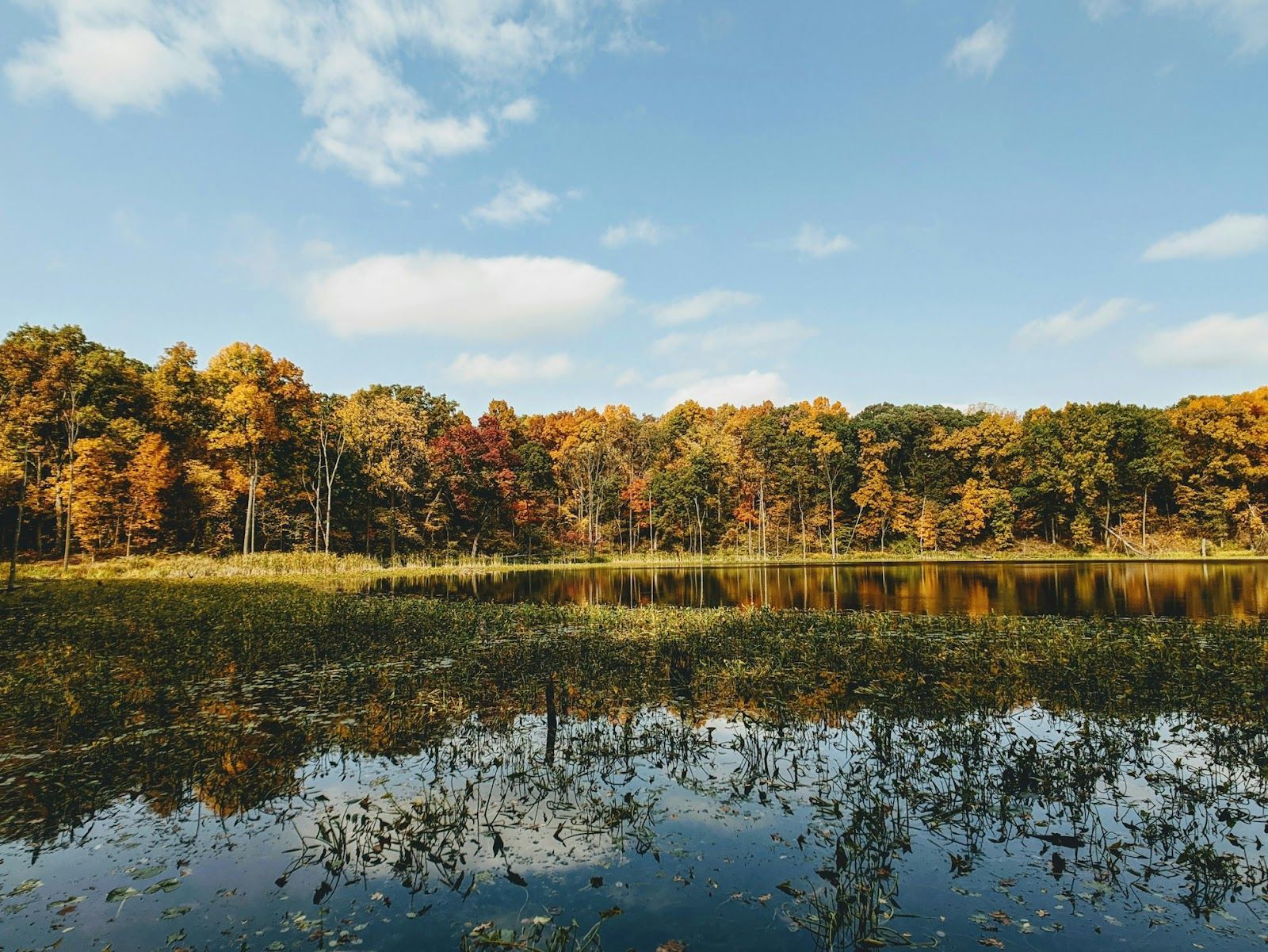
Image: Adam Bouse

Nestled in the hills of Hoosier National Forest, French Lick West Baden is a resort town that showcases some amazing views when it comes to fall foliage . The best time to visit is from mid-October to early November.

4
Mississippi River Valley, Minnesota

Image: Josh Hild

The Mississippi River Valley in southern Minnesota is home to vibrant forests, steep hillsides, and picturesque river towns , waiting to be explored by those eager to make the trip.

The best time to see the foliage change is from late September to mid-October.

5
Breckenridge, Colorado

Image: Thomas Morse

Breckenridge, Colorado, bursts into vivid colors every late September, with the changing leaves of the aspen trees creating a gold, red, and orange rainbow in the heart of the Rocky Mountains.

6
Northwoods, Wisconsin

Image: Dave Hoefler

Thousands of lakes and vast forests that stretch across five counties can be found in the Northwoods of Wisconsin. From mid-September to early October, visitors are treated to some of the best foliage in the region, with vibrant shades of orange, red, yellow, and purple.

7
Highlands, North Carolina
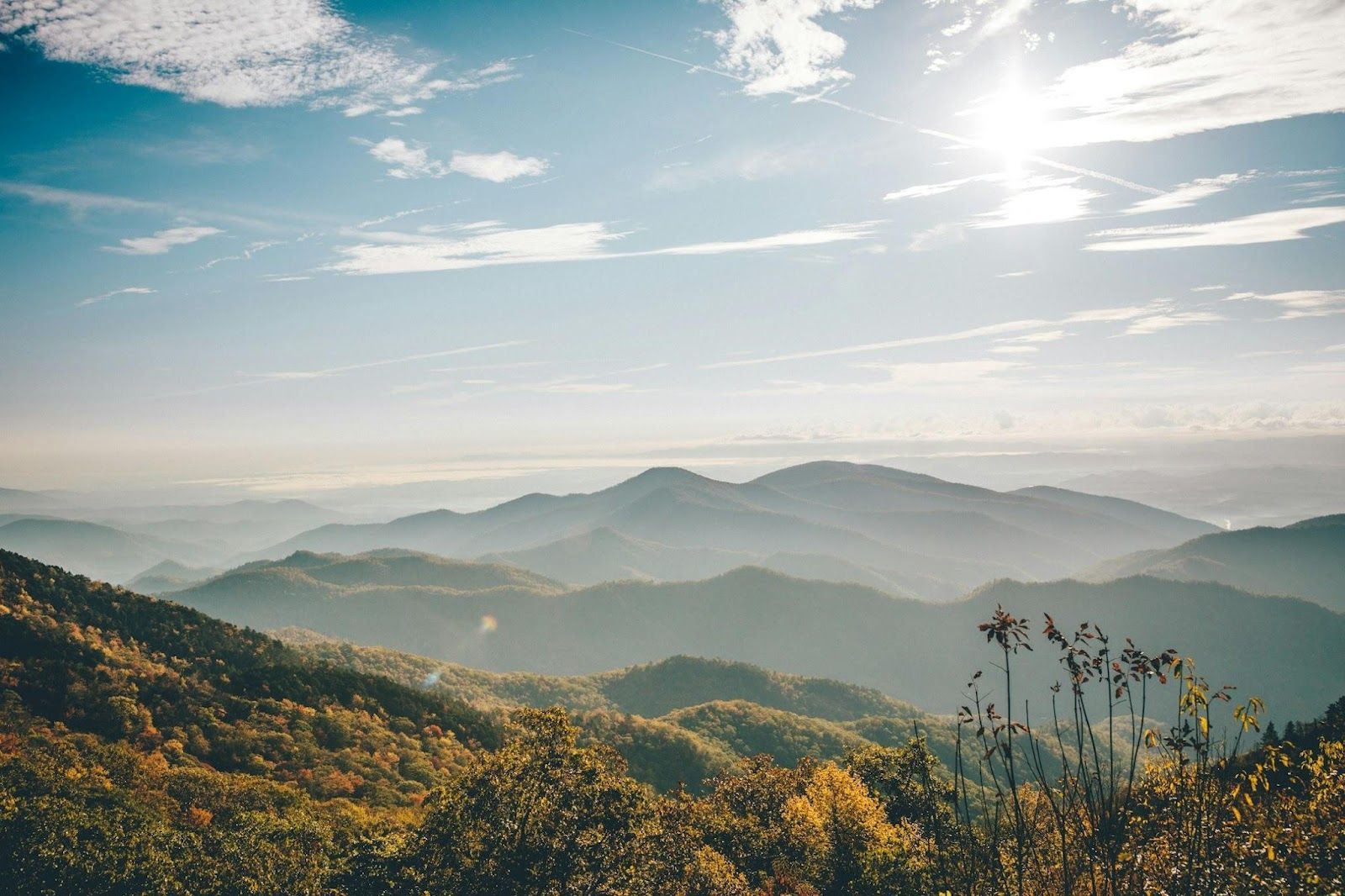
Image: Wes Hicks

Imagine a lush rainforest with waterfalls, rivers, and lakes to explore, combined with the typical colors of the leaf change season. Such a place exists in North Carolina. The mountain town of Highlands, perched at over 4,100 feet on the Highlands Plateau in Nantahala National Forest, offers breathtaking fall foliage, with the best viewing time in mid-October.

8
Whidbey Island, Washington

Image: Toan Chu

Washington’s ultimate road trip, the Cascade Loop, winds along the Puget Sound via the Whidbey Island Scenic Byway . Peak fall colors along this drive commonly occur between late September and mid-October showcasing brilliant shades of gold, orange, and red.

9
Tunnel of Trees, Michigan

Image: AJ Yorio

A place known as the Tunnel of Trees will hardly disappoint visitors who come during the foliage change season. This 20-mile scenic route follows the historic Michigan 119 highway between Harbor Springs and Cross Village . The canopy of gold, orange, yellow, and purple leaves is typically on display from late September to mid-October.

10
North Lake Tahoe, California & Nevada

Image: Ben Carless

The stunning Lake Tahoe is framed by the peaks of the Sierra Nevada range on its north shore. Its hundreds of hiking trails wind through diverse tree species that display vivid red, orange, and yellow foliage from mid-September to late October.

11
The Ozarks, Arkansas

Image: Derek Livingston

The Ozark Mountains are most famous for their neighboring lake of the same name, but the amazing autumn colors are a spectacle that deserves all the attention during October. The palette of bright golds, reds, and oranges is especially stunning in the Buffalo National River area near the small town of Ponca.

12
Anchorage to Kenai drive, Alaska

Image: Derek Livingston

Alaska is nothing short of breathtaking, and fall is no exception. Its vast landscapes come alive with vibrant shades of red, purple, yellow, and orange from late August through September.

One of the best ways to experience the season is on the 160-mile drive along the Seward and Sterling highways from Anchorage to Kenai, following two National Scenic Byways.

Geography Geography 6 min read

A BREATH OF FRESH AIR

Urban retreats: America’s most beloved city parks

Image: Emily Kessler

City parks are extremely important for communities: they encourage exercise, promote contact with nature, revitalize local economies, and, above all, they are a way to bring people together. In most U.S. cities, there are incredible parks and green spaces worth discovering. Whether you are traveling for business or pleasure, we recommend you take a little break and visit one of these 10 urban parks that make cities a better place.

1
Griffith Park, Los Angeles

Image: Venti Views

Covering over 4,000 acres, Griffith Park is one of the largest urban parks in the U.S. Located in the hillside neighborhood of Los Feliz, this park is full of natural spaces , with hiking and biking trails, picnic areas, baseball fields, tennis courts, and golf courses.

Probably the two most famous attractions in Griffith Park are the Griffith Observatory at the top of the hillside and the Hollywood Sign on the southeastern slope of Mount Lee. Griffith Park also features a number of museums and themed gardens, including the Los Angeles Live Steamers Railroad Museum, the Autry Museum of the American West, and the Los Angeles Zoo.

2
City Park, New Orleans

Image: Farah Almazouni

Imagine a spring afternoon sitting on a bench by the lagoon, in the shade of an 800-year-old oak tree, reading your favorite book. Is there a more delightful plan? This pleasant dream can come true if you visit City Park in New Orleans!

In addition to its 1,300 acres of woodlands, waterways, and wildlife, this park is full of cool attractions. From amusement and theme parks (Carousel Gardens and Storyland) to a 1930s Art Deco-influenced Botanical Garden, an art museum with 40,000 objects in exhibition, and a sculpture garden. Trust us, it's worth leaving the French Quarter for a little while to take a stroll around this majestic city park!

3
Sculpture Garden, Minneapolis

Image: Paul Esch-Laurent

Built in 1988 and spanning 11 acres, Sculpture Garden in Minneapolis is one of the top urban sculpture gardens in the country. The garden is an ongoing collaboration between the city's parks department and the Walker Art Center.

In 2017, Sculpture Garden underwent an extensive renovation. A few pieces by contemporary artists such as Theaster Gates and Katherina Fritsch were added, a former wetland was restored, and native flora was planted to help feed essential and endangered pollinators.

While most visitors are drawn to the garden's inaugural centerpiece, "Spoonbridge and Cherry," the park features 40 permanent art installations and many temporary pieces that rotate periodically.

4
National Mall, Washington D.C.

Image: Jacob Creswick

The National Mall is often considered the political heart of the United States. This landscaped park in downtown Washington, D.C., is surrounded by impressive monuments, iconic government buildings, and amazing museums. Nearly two miles long, it stretches from the Lincoln Memorial to the Capitol.

At the center of the National Mall is the Washington Monument. This obelisk, the highest point in the city, is surrounded by 56 flags representing the 50 states plus Washington D.C. and 5 U.S. territories.

Throughout this iconic park, you can also find 10 Smithsonian museums. For example, the National Museum of American History, which houses the first version of the American flag, and the National Museum of Natural History, with rooms full of dinosaurs and the Hope Diamond.

5
Forest Park, St. Louis

Image: Keran Yang

If you're looking for a peaceful place to relax after a busy day in the big city, Forest Park is the best option. It is visited by 13 million people a year for a reason! This 143-year-old park covers 1,326 acres of meadows and wetlands that are home to a great variety of birds and wildlife. It also features a six-mile bike ride, paddle boats, a golf and tennis center, an amphitheater, a skating rink, and a restaurant.

In addition, Forest Park is an important cultural hub . As well as housing the Saint Louis Art Museum, it hosts events such as the Great Forest Park Balloon Race, the Shakespeare Festival of St. Louis, and the LouFest Music Festival. But perhaps the most visited place in the park is the Saint Louis Zoo, which has a collection of 18,000 animals. It's impossible to get bored in Forest Park!

6
Balboa Park, San Diego

Image: Leslie Yu

Balboa Park is a must-see for anyone visiting the city of San Diego. This huge 1,200-acre cultural and urban park was built in 1868, making it one of the oldest public spaces in the United States. Moreover, in 1977, it was declared a National Historic Landmark.

Balboa Park's 15 museums play a predominant role in the city's cultural life. These include the Museum of Natural History, the Museum of Us, and the Museum of Art. Secondly, you can ' t miss the themed gardens, especially the Japanese Friendship Garden. Finally, the San Diego Zoo is one of Balboa Park's star attractions. This 99-acre zoo is considered one of the most important in the world, both for its diversity and its concern for the protection of animal species.

7
Golden Gate Park, San Francisco

Image: Jeffrey Eisen

Golden Gate Park is huge. At 1,017 acres, it is the largest park in San Francisco. Almost anything you can think of can be done in Golden Gate Park; from hiking and biking to disc golf and archery. But don’t worry if you are not a sports buff; this National Historic Landmark also has many relaxing spots to discover.

Some of the most interesting features you can visit are: the picturesque Dutch Windmill; the Garden of Fragrance, specially designed for blind visitors; the Japanese Tea Garden, decorated with bonsai and pagodas; or Shakespeare's Garden, with more than 200 flowers mentioned across the author’s works. Oh, and don't forget to head to the top of Strawberry Hill for an iconic view of the Golden Gate Bridge!

8
Patterson Park, Baltimore

Image: Aaron Burden

Patterson Park was once a key defense site for Americans fighting the British during the War of 1812. Today, this historic park, nicknamed "Best Backyard in Baltimore," is busy with bikers, joggers, and strollers who enjoy 137 acres of 50 different species of trees, smooth pathways, lakes, picnic areas, and sports fields.

In addition, during the summer, people can cool off in the swimming pool and, during the winter, have fun skating on the ski rink. But perhaps the park's main attraction is the Patterson Park Observatory, a gorgeous 1890s pagoda that serves as an observation tower and reflects Baltimoreans' fascination with the Orient.

9
Boston Common Park, Boston

Image: Josephine Baran

Boston Common was founded in 1634, making it the oldest public park in the United States. The site has great historical significance since many events related to American independence took place here. Today, the park is used primarily for recreational purposes and is the perfect spot to relax after a busy day.

Every spring, the famous swan-shaped boats sail away, as they have done for more than 140 years. In summer, the go-to place is the Frog Pond, which offers a refreshing wading pool for children. During winter, this same pond becomes a skating rink enjoyed by both kids and adults.

Fun fact: did you know that Boston Common sits on top of Boylston Station, the first subway station in the U.S.? Lots of "firsts" for this amazing site!

10
Central Park, New York City

Image: Michael Matloka

You may be thinking, what else can anyone tell me about Central Park that I don't already know? Yet, this city park is so iconic that it still has some secrets to reveal. For example, did you know Central Park is larger than the entire city-state of Monaco? Often referred to as "The Green Lung", this oasis in the heart of Manhattan is also the most filmed public park in the world, appearing in more than 500 movies.

With an extension of 843 acres, Central Park has a large number of attractions worth visiting, such as the Belvedere Castle, the "Imagine" mosaic, the Bethesda Fountain, the Alice in Wonderland Statue, the Central Park Zoo, lakes, 58 miles of pedestrian paths, many green areas to relax, two ice skating rinks and, in the warm season, outdoor theater and cinema. So, next time you visit New York City, you might want to check one of these out!

History History 4 min read

Side hustles

Whiskey, Hollywood, and Grammys? Unexpected jobs of former presidents!

Image: The Cleveland Museum of Art

Picture this: You have just finished your term as President of the United States. It was a tough job to tackle, but you made it. It’s your first day out of office, and you wonder, "What’s next?" A world of possibilities opens up. What is the first thing you would do in that position? These former presidents, from Washington to Bush, went different ways and took up activities most Americans don’t even know about. Let’s take a look at some fascinating second acts of former U.S. presidents.

1
George Washington - The whiskey-making Founding Father

Image: Daniel Vogel

After leading the nation, George Washington stepped into the world of spirits, whiskey spirits, that is! In 1797, his farm manager convinced him to open a distillery at Mount Vernon . Within two years, it became one of the largest in the country, producing nearly 11,000 gallons of whiskey annually.

Here’s a fun fact: Washington didn’t need a marketing team. His whiskey was sold in unmarked barrels to local merchants, and his operation was so successful that it became one of the top money-makers in the area. The best part? You can try it today at the reconstructed distillery!

2
Theodore Roosevelt - Adventurer-in-Chief

Image: Zetong Li

Not one to sit still, Theodore Roosevelt went on an exploration of the Amazon rainforest after leaving office. In 1913, he embarked on a seven-month journey to map an uncharted river . Guess what it’s called today? The Roosevelt River, of course!

The expedition was grueling: he caught malaria, suffered a leg injury, and nearly died. Though he made it back home, his health never fully recovered. Roosevelt’s post-presidency was all about adventure and risks!

3
Thomas Jefferson - The University Founder

Image: Ryan Ledbetter

Thomas Jefferson didn’t just help write the Declaration of Independence; he also founded the University of Virginia . A firm believer in education, he wanted to create a university that emphasized academic freedom and rigorous learning. So, in 1819, ten years after leaving office, he established the University of Virginia, which opened in 1825.

Jefferson personally designed the campus, including its iconic Rotunda, and hand-picked the first professors. He once called the university one of his greatest accomplishments, right up there with drafting the Declaration of Independence.

4
John Quincy Adams - From President to Congressman

Image: Ian Hutchinson

John Quincy Adams didn’t believe in retirement, you know? He didn’t go back for a second term, but instead of stepping away from public service, he returned to Congress, serving in the House of Representatives for nine terms until his death in 1848.

His dedication earned him the nickname "Father of the House." Even in his final moments, he was working: he collapsed on the House floor after casting a vote and died two days later. Well, once a public servant, always a public servant.

5
William Howard Taft - From President to Supreme Court Justice

Image: Adam Michael Szuscik

Most former presidents take a step back from government, but William Howard Taft went in the opposite direction. After serving as the 27th president, he was appointed Chief Justice of the Supreme Court in 1921.

He later admitted that being on the Supreme Court was his true calling, famously stating, "I don’t remember that I ever was president." Taft remains the only person in history to have served in both roles! Talk about an upgrade!

6
Calvin Coolidge - Presidential columnist

Image: AbsolutVision

Some former presidents write memoirs, but Calvin Coolidge took it a step further. From 1930 to 1931, he wrote a nationally syndicated newspaper column titled Thinking Things Over with Calvin Coolidge .

His articles covered a range of topics, from politics to everyday life. As it turns out, running a country gives you plenty to write about!

7
Jimmy Carter - The humanitarian president

Image: Library of Congress

If there’s one president who redefined life after the White House, that is Jimmy Carter. In 1982, he founded the Carter Center , a nonprofit organization focused on democracy, health, and human rights.

He has also spent decades working with Habitat for Humanity, personally helping to build homes for those in need. In 2002, Carter’s humanitarian work earned him the Nobel Peace Prize, making him the only former president to receive the honor for efforts made after leaving office. He once said his post-presidency was "more gratifying" than his time in politics. Only logical, right?

8
Ronald Reagan - A Knight of the Realm

Image: Annie Spratt

Yes, that’s a literal title. Ronald Reagan didn’t take up a new career after leaving office, but he did receive an unexpected knighthood from Queen Elizabeth II. In 1989, just months after stepping down as president, he was made a Knight Grand Cross of the Most Honorable Order of the Bath.

While it’s a prestigious honor, American citizens aren’t allowed to use the title "Sir," so there was no "Sir Ronald" in the works. Reagan wasn’t the only president to receive this honor; Dwight Eisenhower and George H.W. Bush were also knighted.

9
Bill Clinton - Grammy-winning storyteller

Image: Annie Spratt

Bill Clinton has always been a gifted speaker, so it’s no surprise that he won not one, but two Grammy Awards, though they weren’t for playing his famous saxophone. He won Best Spoken Word Album in 2004 and 2005, narrating both a children’s book and his autobiography.

Clinton joins a small but prestigious club of American presidents who have won Grammys, including Barack Obama and Jimmy Carter. His ability to captivate audiences didn’t end with politics; he simply found a new stage.

10
George W. Bush - From the White House to the Art Studio

Image: Yannis Papanastasopoulos

After serving two terms as president, George W. Bush discovered a surprising new passion: painting. How about that? In 2012, he began taking art lessons , and by 2013, his paintings were revealed to the public following an email hack.

Bush embraced his new hobby and has since published several collections, including Portraits of Courage , which features paintings of US military veterans. His artwork has been exhibited in galleries, proving that a president can become an artist, too. While politics was his career, painting has become his personal form of expression.

Explore more American facts

Choose your favorite category!

General
General

As American as apple pie—the very best America has to offer!

Culture
Culture

Delve into the astounding richness of American lore.

Geography
Geography

Hop in and explore vast and diverse American landscapes.

History
History

Discover the key moments that shaped the United States.