General General 5 min read

CUSTOM BEHAVIOR

Are You a Fan Of Tailgating? 10 American Traditions You Probably Follow!

Image: frank mckenna

Traditions are important as they serve as a testament to one’s culture and heritage. Despite the diverse nations and cultures coexisting within our country, American traditions are quite strong and challenging to evade.

Have you ever had a backyard barbecue or eagerly anticipated the Thanksgiving parade sitting on your couch next to your loved ones? This is evidence of your deep-rooted American identity and here we are to see ten of those customs that make us who we are . Are you ready?

1
Backyard Barbecues

Image: Maude Frédérique Lavoie

You say American, you smell a barbecue, isn’t that right? Backyard barbecues are probably one of the most American traditions there is and it is all about that summer fun we all love!

Casual gatherings on a hot summer day to grill some meat is a favorite pastime for all. Adults chat while grilling some burgers or hot dogs, and the kids play. Everyone has fun!

This tradition, like many others, is about good food, good company, and having a great day outdoors.

2
Gameday Tailgating

Image: Scott Madore

Pre-game events? Isn’t the game enough? A tailgate party is a social event held on and around the open tailgate of a vehicle. Tailgating often involves consuming alcoholic beverages and grilling food.

Hours before kickoff, fans tailgatein the parking lot with burgers on the grill and a football to toss. It is a fan gathering, a get-together to celebrate your team and get you in high spirits for the game ahead!

3
Family Game Nights

Image: Stephen Harlan

All it takes are those simple traditions, and sometimes they are the best traditions. A night of family games is an ideal opportunity to spend a few hours around the table having quality time with the ones you love.

Board games, card games, or even video games! It all comes down to bonding, some good-natured rivalry, and some potentially-not-very-serious debates on how to interpret the rules.

4
Turkeys Pardon

Image: Claudio Schwarz

If you don’t comply with many national traditions, this is one you definitely can’t evade. Thanksgiving has many rituals surrounding the holiday, but probably the most bizarre one is the ceremony by means of which the president officially grants a live turkey their pardon.

This is exactly as it sounds, traditionally, the president is gifted a turkey whose life is spared from the stove. The origins of this tradition are disputed but, regardless of who was the first to do so, this tradition continues today and it is one of the things that make Thanksgiving an amazing holiday!

5
Black Friday Shopping

Image: CardMapr.nl

The end of the year can easily become a chaotic time with all the gifts one has to get ready. Just as thousands of turkeys go unpardoned by the president, many shoppers take time to find the right Christmas gifts for their loved ones. The national weekend shopping kicks off with Black Friday, a day in which sales are high and shoppers are on alert . This shopping spree continues with Small Business Saturday and ends with Cyber Monday.

However this is one tradition that can escalate rather quickly, haven’t we all witnessed deadly stampedes or frantic arguments to get that one item?

6
Baby Showers

Image: Ajeet Singh

Celebrating a new child is customary in many cultures. All over the world babies to come are honored in many ways, but the American way is something else.

Baby showers are the traditional way to celebrate the mother and the child. They are gatherings in which friends and family "shower" the mother with gifts for the baby to come. It is worth noting that this tradition has evolved and it includes gender reveals now too.

Thanks to social media and the quick spread of news, baby showers have become a tradition in many countries now, but it all started in America!

7
Supersized Food

Image: Visual Karsa

You’ve surely been to McDonalds or Starbucks, have you ever stopped and thought about how they offer you different sizes of food and cups ? Why is that?

Well, this is already embedded in the American DNA. In our country, fast food or takeaway orders come in different sizes. And that is not all, the smaller size is not small at all; a nd the biggest is exactly as the title says, supersized.

This practice can be traced to the 70s when marketing directors saw a way to sell more for lower prices. This tradition became customary in many countries too, but each nation adapted their sizes to their customers.

8
Trick-Or-Treating

Image: Nick Fewings

Halloween is a festive time, customs come out and decorations get put up. Many cultures follow these traditions, but America is different in that children in our country go on a door-to-door hunt for candy. But that is not all, the practice is not complete until a child says "Trick or treat!"

Lovely as they are to see, the magic words are a requirement to get those precious pieces of candy they will later enjoy with their friends and family . They only have to hope the giver doesn’t require a trick from them!

9
Display Of National Symbols

Image: Serena T

If you are one to watch movies often, we have a challenge for you: try and spot the American flag in the movie you’re watching. No, we don’t work in the film industry, we know for a fact that American pride is shown in many ways, and displaying the American flag is probably the most common one.

Houses all over the country display a flag, American movies have at least one scene in which you can spot it, and the colors dress thousands of objects in all kinds of celebrations . Is there a flag in your front yard?

10
Road Trips

Image: Raphaël LR

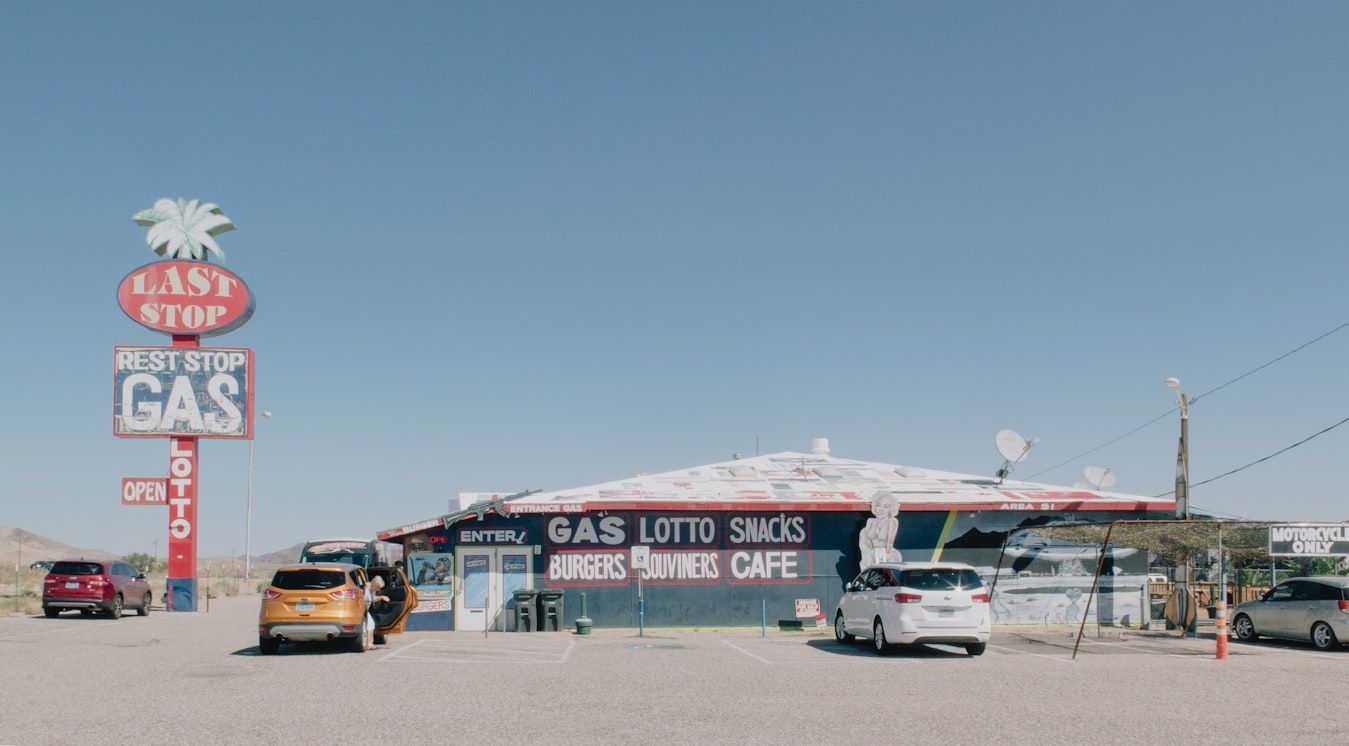
Americans are hard workers, but like everyone else, they await those well-deserved holidays to get their feet up and chill out. Regardless of the available budget, which may vary from family to family, road trips are highly popular in our nation and they are not so common in other countries.

Mostly because of how vast the American territory is , road trips are the perfect way to travel and see all the wonders the United States has to offer. True Americans go on at least one road trip in their life, have you done it already?
History History 4 min read

"Speak easy when you order"

Did you know these facts about the Prohibition era?

Image: DayanaLiquorNerd / maja7777

Endless myths and stories have permeated our culture about the era when alcoholic beverages were banned. Did pharmacists really get rich selling whiskey? Were all women in favour of Prohibition? In fact, were all rulers in favor of it, or did some publicly celebrate its ending? Let’s dive into some not-so-well-known facts about the Eighteenth Amendment .

1
The term "Speakeasy" came from a whispered instruction

Image: Shtefan Lounge

This expression, by now forever associated with the Prohibition Era, came from bartenders quietly warning patrons to "speak easy" when ordering illegal drinks.

It is believed that the phrase was already in use in 1800s saloons, but it took off during Prohibition. Hidden behind trapdoors or fake businesses, these secret bars required passwords or knocks to enter.

2
Prohibition sparked the rise of NASCAR

Image: Caleb Woods

Southern moonshiners during Prohibition needed to move whiskey fast. To evade federal agents, they needed to modify cars for speed and for driving through uneven terrains under the cover of the night.

What do you do with that peculiar set of skills when the Prohibition ends, then? Many of these trained drivers began racing each other for fun , and eventually for prizes. These informal competitions laid the groundwork for stock car racing, and in 1948, NASCAR was officially founded.

3
Grape bricks were a legal alternative

Image: Keegan Houser

Though commercial winemaking was banned, winemakers adapted quickly by selling "grape concentrate bricks" legally.

They were dense blocks that came with a cheeky warning: "Do not dissolve in water , add yeast, and let sit for 21 days, or it may ferment into wine." Of course, that’s exactly what people did.

4
Al Capone opened a soup kitchen

Image: Drew Gilliam

During the Great Depression, mob boss Al Capone operated a soup kitchen in Chicago, serving thousands of unemployed individuals .

The sign outside read "Free Soup, Coffee & Doughnuts for the Unemployed." It was certainly a clever PR move that helped soften his infamous image, even as he profited from illegal booze and violence.

5
There was a "whiskey prescription" loophole

Image: Anastasia Zhenina

While Prohibition outlawed alcohol sales, there was one major exception: whiskey prescribed by a doctor. The government allowed the writing of prescriptions for " medicinal liquor ," so millions were written. Patients could pick up their booze at a local pharmacy, usually in a clearly labeled bottle: "For Medicinal Use Only."

6
"Mountain Dew" meant Moonshine

Image: Josh McLain

Long before it was a neon-green soda, "mountain dew" was slang for homemade whiskey . The term already appeared in folk songs of the Appalachian region back in the 19th century, and it became especially popular during Prohibition, as illegal distilling became widespread.

In the 1940s, the creators of the soft drink Mountain Dew originally formulated it as a mixer for whiskey. The name was a wink after the bootlegging culture it came from.

7
Women were on both sides of the front lines

Image: Agustina Tolosa

Fierce women activists led the temperance movement, yes. For example, Carrie Nation famously stormed saloons with a hatchet. But many women also thrived in the world of illegal liquor.

Some saw Prohibition as an opportunity and became successful bootleggers, smugglers, and speakeasy owners. One of the most famous was Gertrude "Cleo" Lythgoe, nicknamed "The Queen of the Bahamas," who smuggled high-end liquor from Nassau to the U.S. East Coast and built a fortune.

8
Toothpaste and hair tonics were alcoholic

Image: Chelms Varthoumlien

With liquor banned, some people turned to unlikely products to get drunk. Items like bay rum aftershave, vanilla extract, hair tonics, and even toothache drops were legally sold and packed with high-proof alcohol. Desperate drinkers downed them despite the awful taste and potential health risks.

In New York City alone, an estimated 150,000 gallons of bay rum were consumed for intoxication in a single year.

9
Bootlegging funded jazz and nightlife

Image: cottonbro studio

Prohibition did help launch a cultural revolution . Speakeasies became centers of nightlife and music, and in places like Harlem, they gave rise to the Harlem Renaissance. Jazz greats like Duke Ellington and Billie Holiday got their start playing in these clubs.

10
New York’s mayor toasted the end with a beer… on air

Image: Muhammed ÖÇAL

When the 21st Amendment officially ended Prohibition on December 5, 1933, New Yorkers celebrated with flair. So did their mayor. Fiorello La Guardia, a vocal critic of the alcohol ban , marked the occasion by cracking open a beer during a press conference and drinking it on live radio.

La Guardia had long argued that Prohibition bred crime and disrespect for the law, so this on-air symbolic gesture made sense and marked the beginning of instant change.

11
Some states didn’t ratify the end until the 21st century

Image: Chris Hardy

Though the 21st Amendment repealed Prohibition in 1933, some states and counties held out for decades . Mississippi didn’t officially end state Prohibition laws until 1966; that’s 33 years after the national repeal. Kansas, meanwhile, banned public bars until 1987.

Even today, Prohibition echoes remain. Several U.S. counties are still "dry," meaning alcohol sales are restricted or banned outright.

General General 4 min read

Fast-food flops

Do you recall these 11 big McDonald's menu fails?

Image: Lucas van Oort

Around 2014, McDonald's received a lot of criticism for not including healthier, more nutritious options on its menu, especially for kids. In response, the company embarked on a mission to create bubblegum-flavored broccoli. Needless to say, it was a complete failure. But this was not the only unsuccessful attempt to introduce new recipes and flavors. Throughout its several decades of existence, the Golden Arches has ventured into a wide variety of products that didn’t receive the expected reception. Do McPizza, Hula Burger, or McDLT ring a bell? Join us as we look back at 11 McDonald's products that were complete misfires!

1
McLean Deluxe

Image: Szabo Viktor

Remember the low-fat diet craze of the 1990s? Well, McDonald's was no stranger to it. To attract customers seeking "healthier" options, Mickey D's introduced the McLean Deluxe—a supposedly lighter burger than the Big Mac . The patty, developed by food scientists at Auburn University, was made with 90% meat and seaweed extract.

The company’s intentions were noble, but most consumers weren’t convinced by the "low fat but tastes great" slogan. Apparently, it was not tasty enough for the American palate and was ultimately pulled from stores in 1996 .

2
McHotDog

Image: sstoyanov

It doesn’t seem far-fetched for McDonald's to offer a hot dog on its menu. Yet, for many years, the company avoided it because Ray Kroc—the man who transformed McDonald's into the megafranchise we know today—had banned them on the grounds that sausages were of questionable quality.

Despite his reservations, McDonald's introduced the McHotDog in several locations in the mid-1990s. For unknown reasons, however, the product never took off. Have you ever tried it? What did you think?

3
McDLT

Image: Aaron Boucicault

No, it has nothing to do with Subway's BMT or the classic BLT sandwich. The McDLT, introduced in 1984, was a lettuce and tomato burger with only one novelty: it was sold in a Styrofoam container, separated in two, and you had to assemble it yourself.

The most likely reason for the McDLT’s demise was the backlash against Styrofoam in the late 1980s, due to its environmental impact. And let’s be honest—how many people actually want to assemble their own hamburger?

4
Hula Burger

Image: Irene Kredenets

Long before vegan options became popular, Ray Kroc attempted to offer a meatless option for Roman Catholics to eat during Lent. Introduced in 1963, the Hula Burger was essentially a cheeseburger with a slice of pineapple instead of a meat patty.

The idea was a complete flop and was quickly replaced by the Filet-O-Fish, which served the same purpose but was much better received by the public.

5
McLobster

Image: ucomedia

Believe it or not, McDonald's once had a lobster roll on its menu. Introduced in 1993, the McLobster was a sandwich served in a hot dog bun with lobster sauce and shredded lettuce.

Why did it fail? Mostly because of the price . Not only was it expensive for a fast food chain, but if you wanted lobster, you’d probably go to a seafood restaurant instead—don’t you agree?

6
Arch Deluxe

Image: HamZa NOUASRIA

Flavor-wise, the burger "with the grown-up taste" was decent enough, the problem was the marketing campaign that went along with it. The Arch Deluxe was designed for adults , featuring more sophisticated and expensive ingredients.

However, the ads showed Ronald McDonald engaging in adult activities and young rappers saying, "Yuck," which failed to resonate with anyone. The product flopped and was discontinued in 2000 . After all, no matter how old we are, when we go to McDonald's, we all want to feel like kids again.

7
McPizza

Image: dankeck, CC0, via Wikimedia Commons

In hindsight, McDonald's should have stuck to selling burgers. But we have to give them credit for trying something different. In the late 1980s, the Golden Arches attempted to expand its menu with dinner options, introducing the McPizza. Sold only after 4 p.m. , it was heavily promoted through a major marketing campaign.

However, it was doomed to fail. Pizza takes much longer to prepare than a burger, and most people prefer to buy theirs from traditional pizza parlors. The McPizza was discontinued around 2000 and hasn’t returned to the menu since.

8
McPasta

Image: Lance Lozano

Just as pizza was a bad idea, offering pasta dishes at a burger joint was an even bigger stretch. Since the 1970s , McDonald's has attempted to market pasta, adding items like spaghetti and meatballs, lasagna, and fettuccine to its menu.

Needless to say, despite multiple attempts, all of McDonald's pasta products eventually flopped.

9
Onion Nuggets

Image: Brett Jordan

In 1975, a year after Burger King debuted its famous Onion Rings, McDonald's introduced Onion Nuggets. As the name suggests, this side dish consisted of small, fried onion pieces .

Unfortunately for vegetable lovers, Onion Nuggets were not as successful as their ring-shaped competitors and were finally removed from the menu in the mid-1980s. Just a few months later, McDonald's launched Chicken McNuggets, which proved to be a far bigger success.

10
McSalad Shakers

Image: Hermes Rivera

It seems that most of McDonald's attempts to offer healthier options were fruitless. The McSalad Shakers were salads sold in plastic cup-like containers that you had to shake to distribute the dressing evenly.

Although they featured three appealing flavors—Chef, Grilled Chicken Caesar, and Garden—McSalad Shakers lasted only a few years on the market. In 2003, the cups were replaced by traditional bowls, which, you’ll probably agree, make much more sense.

11
McDonaldland Cookies

Image: 三岁 陈

It remains a mystery why this item disappeared from the McDonald's menu, as it was a favorite among many for years. First introduced in 1974, this dessert consisted of crunchy lemon-flavored cookies shaped like the classic McDonaldland characters—Grimace, Hamburglar, The Fry Kids, Birdie, and Ronald himself!

McDonaldland Cookies came with the Happy Meal but were discontinued in the early 2000s , likely due to health concerns. The good news is, if you want to bring back this childhood flavor, you can still find them in Australia!

Explore more American facts

Choose your favorite category!

General
General

As American as apple pie—the very best America has to offer!

Culture
Culture

Delve into the astounding richness of American lore.

Geography
Geography

Hop in and explore vast and diverse American landscapes.

History
History

Discover the key moments that shaped the United States.