General General 5 min read

Foreign affairs

An ode to diplomacy: 12 extraordinary US embassies around the world
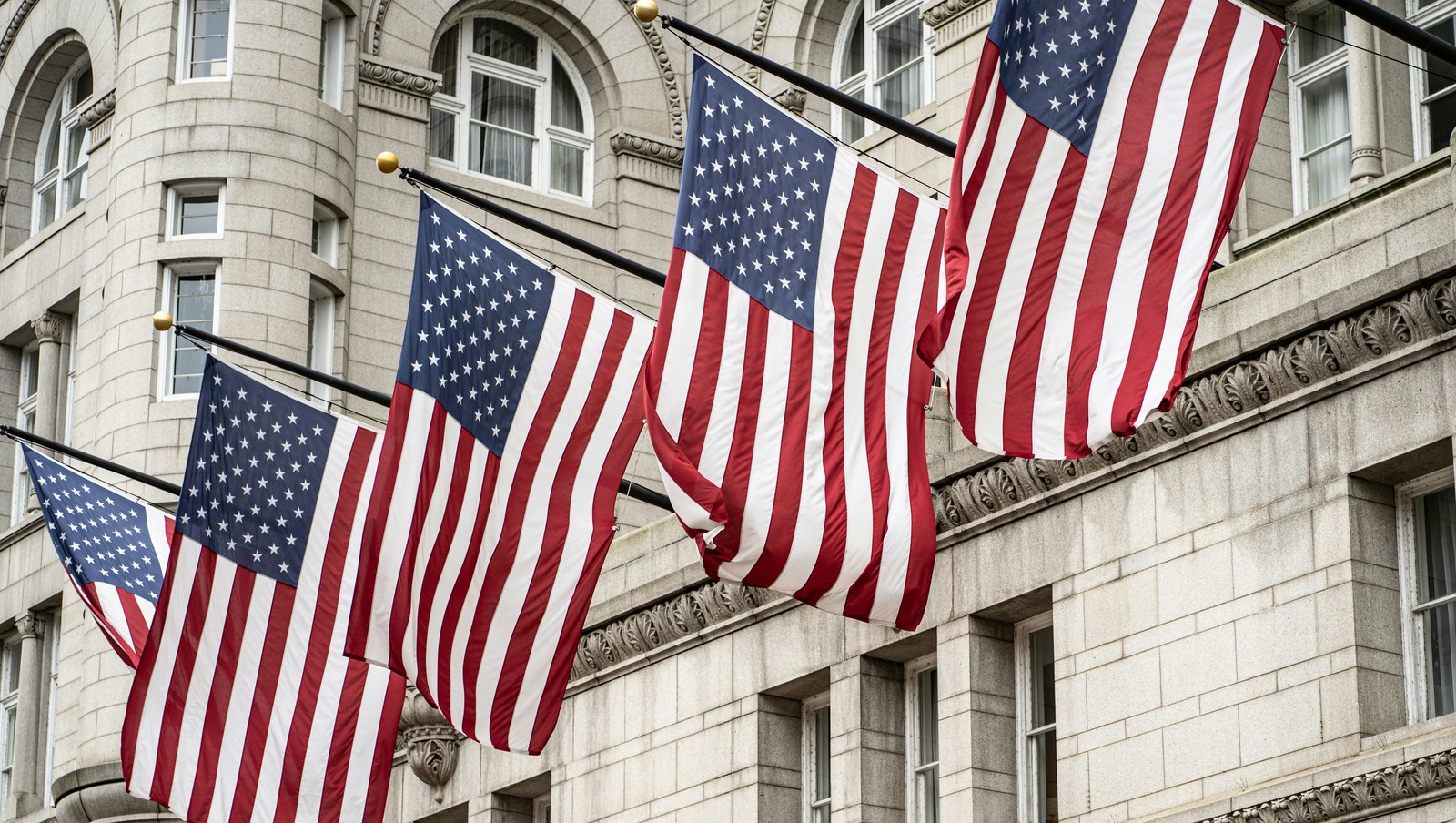
Image: Christian Lucas

You might think an embassy is just a plain office building for diplomats. Well, think again! The United States has some of the most eye-catching, quirky, and downright unique embassies you’ll ever see. From gleaming glass towers to tropical hideaways, these buildings aren’t just about paperwork—they’re part of America’s handshake to the world. Here are 12 beautifully designed US embassies where architecture meets foreign politics.

1
Paris, France

Image: U.S. Department of State from United States, Public domain, via Wikimedia Commons

The U.S. Embassy in Paris is the oldest American diplomatic mission in the world. Benjamin Franklin himself served as the first ambassador, back when the United States was fighting for independence. Today, the chancery building stands on the Place de la Concorde, a spot once used for public executions during the French Revolution. Few embassies can match this mix of American heritage and European history.

2
New Delhi, India
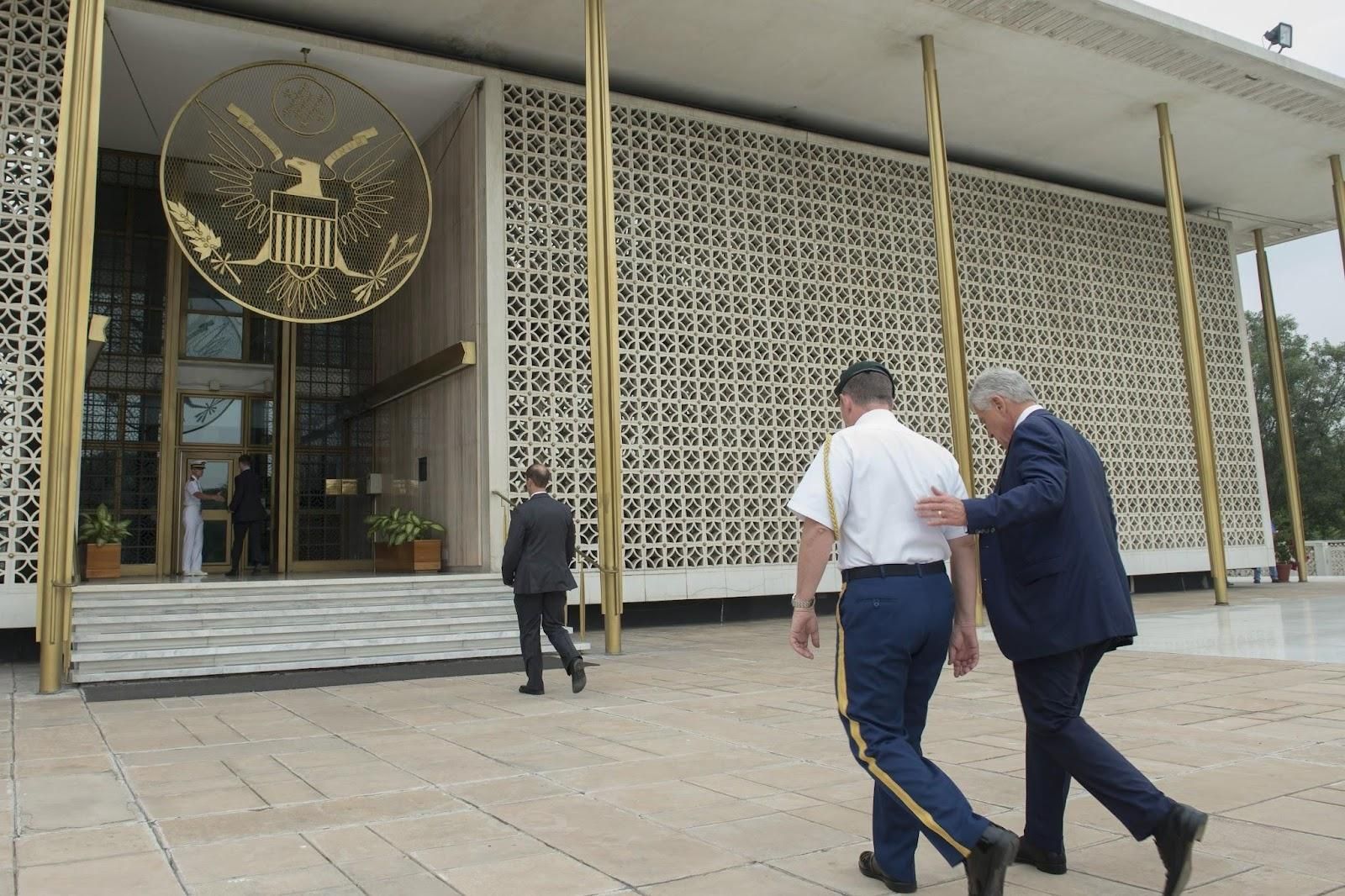
Image: Ash Carter, Public domain, via Wikimedia Commons

Set on 28 acres in a district where nearly every corner is marked by a foreign flag, the U.S. Embassy in New Delhi feels more like a grand estate than a government office. The entrance alone impresses visitors with its broad fountain and big golden Great Seal of the United States.

When it first opened in the 1950s, the complex introduced many locals to the clean lines and bold simplicity of American modernist design. Decades later, the compound still carries that sense of mid-century optimism, standing as both a piece of architectural history and a stage for diplomacy.

3
London, United Kingdom
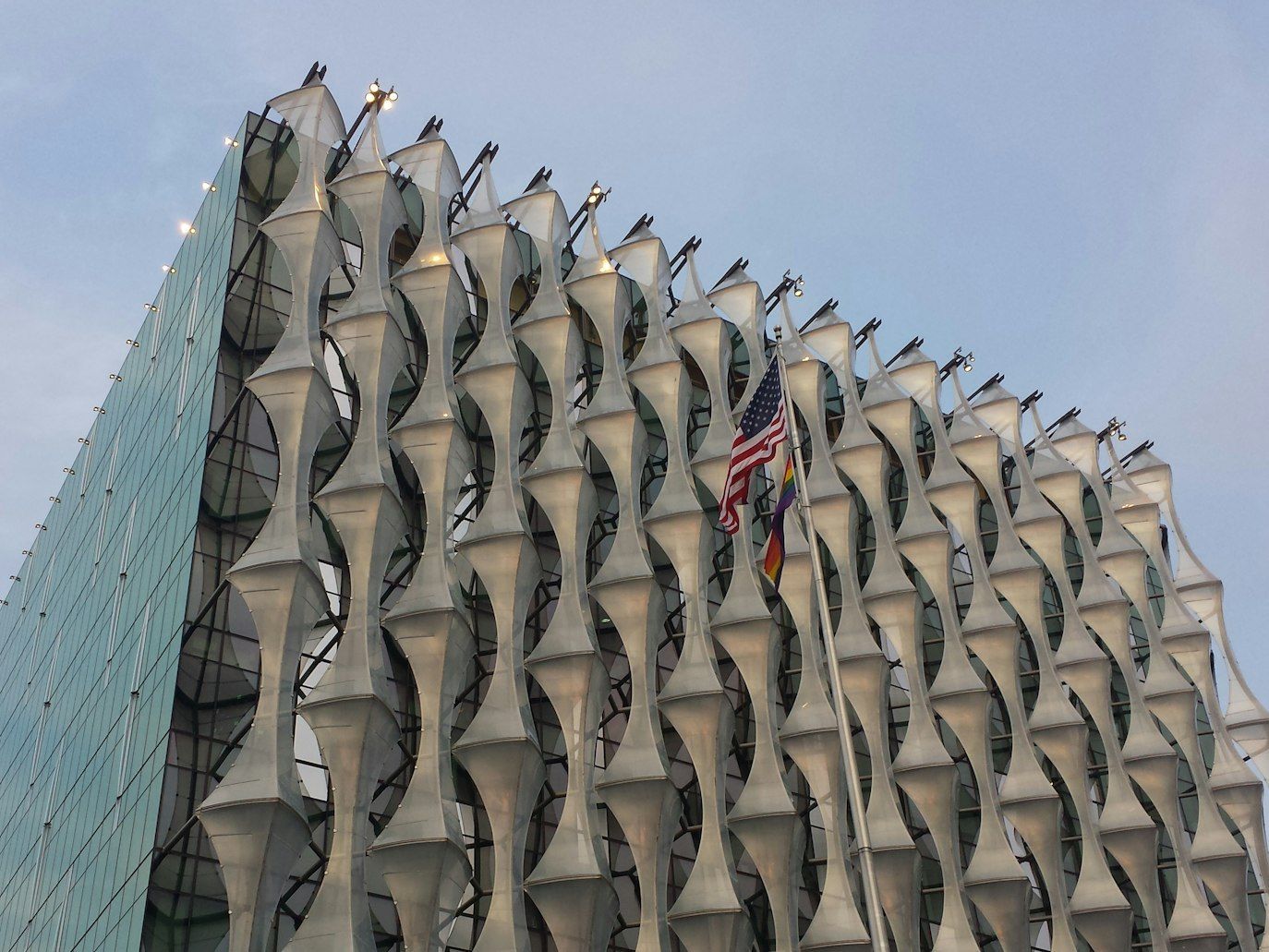
Image: Phil Lev

If James Bond had to hand-deliver a top-secret note to Uncle Sam, this is exactly where he’d go. Opened in 2018, the current building of the U.S. Embassy in London came with a price tag of about $1 billion—yes, billion with a "B." It spans nearly 12 acres along the River Thames, enough to be one of the most enviable addresses in town.

The sleek glass cube design doesn’t just reflect light, it sparkles as if auditioning for a starring role in a spy flick. Its gardens and public walkways also make it one of the few embassies in the world that feels just as welcoming as it does secure.

4
Brasília, Brazil
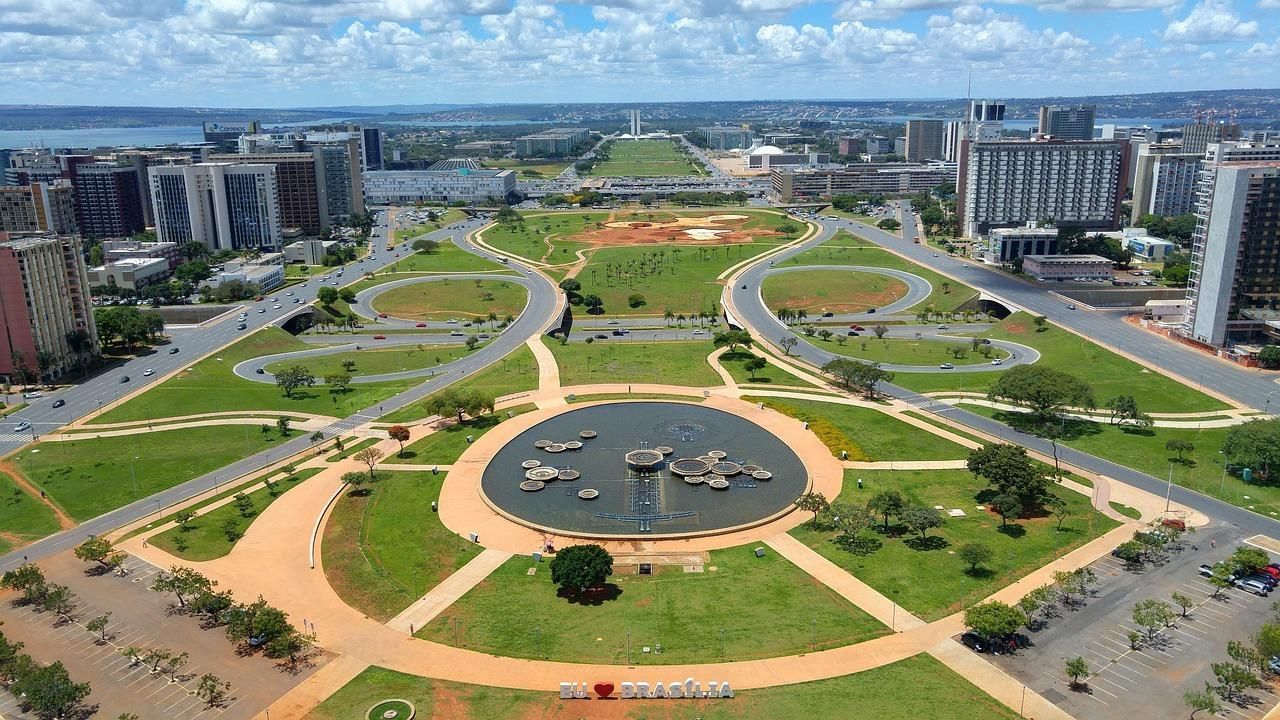
Image: mbastosbr

When Brazil built a new capital in 1960, the United States became the first nation to establish its embassy in the brand-new city of Brasília. The 12-acre compound took another decade to finish, but the wait was totally worth it.

Today, the building unfolds like a tropical retreat with lush courtyards, a marble facade, clusters of palms, and broad office space that seem to invite a slower pace. Inside, the Stars and Stripes waving overhead reminds you that this is less about vacation and more about international business, carried out in unmistakably American style.

5
Yerevan, Armenia
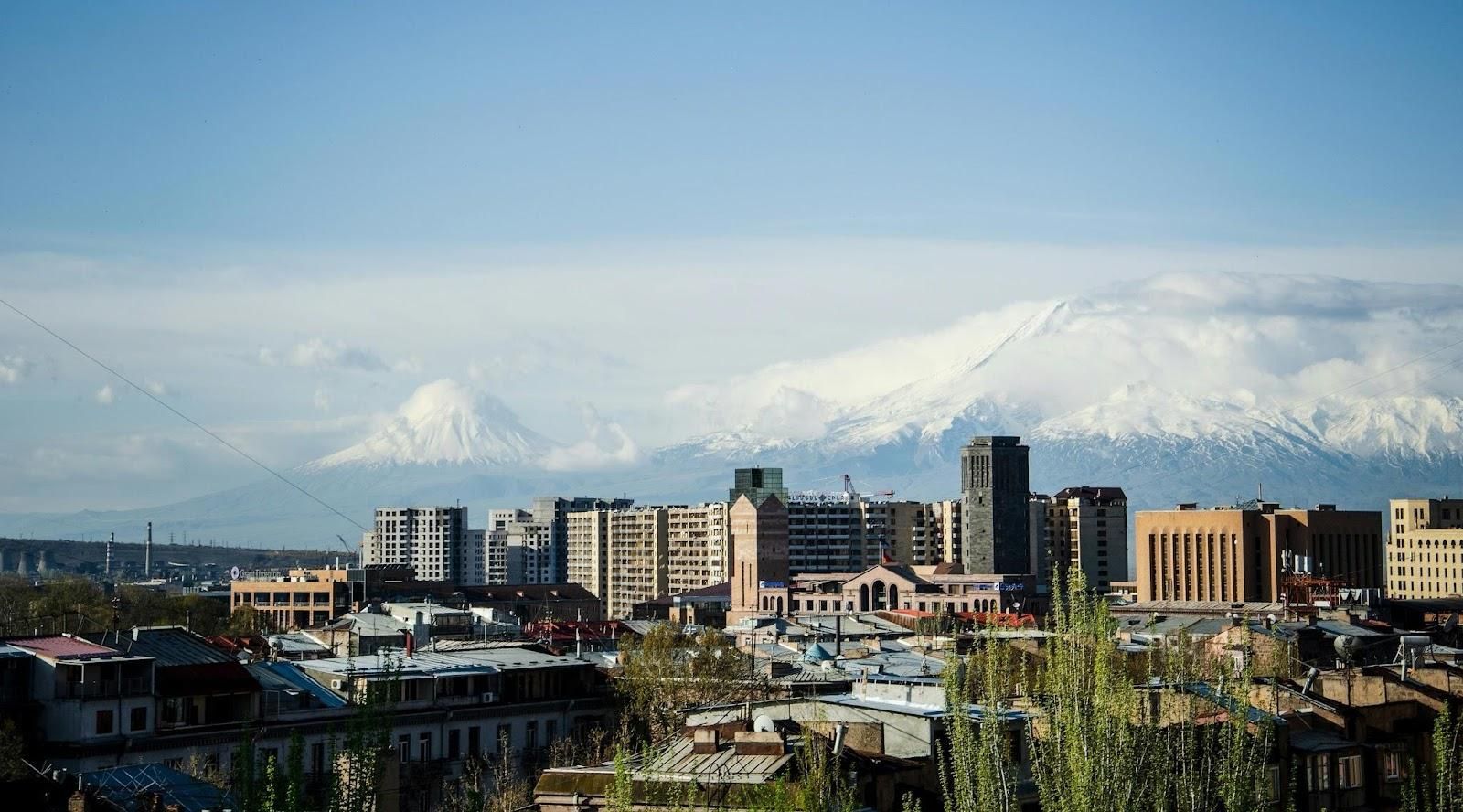
Image: Arina Dmitrieva

If embassies were given awards, the U.S. outpost in Yerevan would easily take home the trophy for "biggest backyard." Sprawled across 22 acres, it’s more park than office, with open lawns rolling out under the backdrop of Armenia’s rugged mountains.

Yet, the real deal is inside. The embassy serves as a gathering spot for locals, hosting cultural festivals, English-language programs, art exhibits, and workshops that make diplomacy accessible and engaging. With its airy design and community-centered vibe, it feels less like a fortress and more like an open invitation to join.

6
Ottawa, Canada

Image: Jane T D.

Right across the northern border, Canada hosts a striking U.S. Embassy right on Ottawa’s Sussex Drive. Spanning 138,000 square feet and completed in 1999, the building simply stands out. With its stainless-steel dome that gleams in the sunlight, it feels like a freshly minted coin.

Step inside and you’ll find an airy glass interior with open spaces, echoing the values of dialogue and solidarity. In a city lined with Gothic revival architecture, the U.S. Embassy rises as both a modern landmark and the stage where American diplomacy meets Canadian friendliness.

7
Tokyo, Japan

Image: Evgeny Tchebotarev

Set amid Tokyo’s frantic setting, the U.S. Embassy in Japan has stood its ground since the 1970s, quietly observing one of the world’s most dynamic capitals. Step outside its secure walls, and in just minutes you’re in the tranquil embrace of the Imperial Palace gardens, where koi ponds and ancient stone bridges feel worlds apart from the neon lights. Contrast is the essence of this post, rooted in a nation where skyscrapers rise beside shrines, and where diplomacy intertwines with both centuries-old heritage and cutting-edge modernity.

8
Canberra, Australia
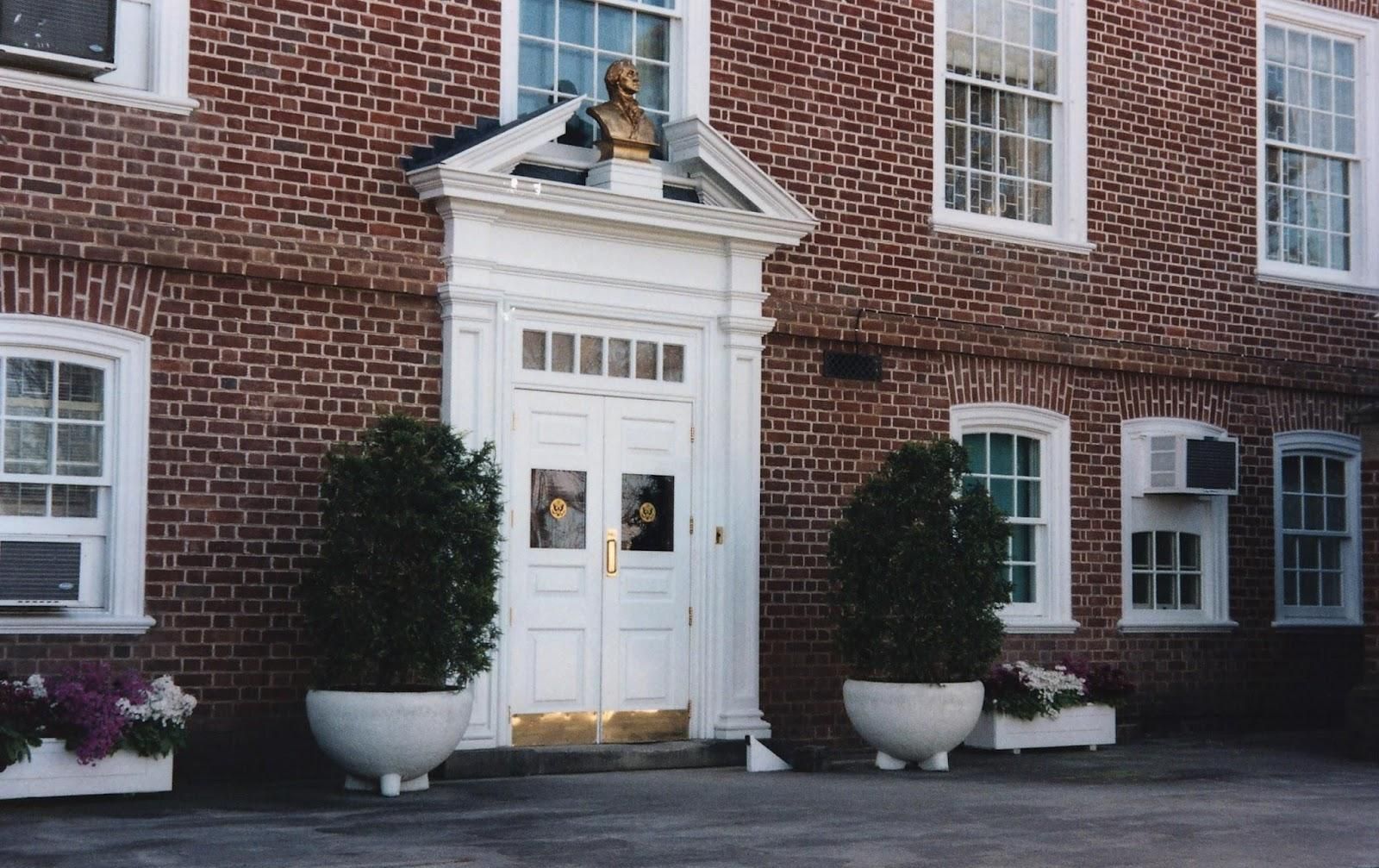
Image: National Archives at College Park - Still Pictures, Public domain, via Wikimedia Commons

Opened in 1963, the U.S. Embassy in Canberra feels like a time capsule from the golden age of mid-century design. With its grand dome and red-brick elegance modeled after Thomas Jefferson’s Monticello, the building brings a piece of Virginia heritage halfway around the world.

Framed by tall eucalyptus trees and the crisp skies of Australia’s capital, it strikes a balance between old-world stateliness and natural charm. For many visitors, this government office is a symbol of American history and Australian hospitality.

9
Buenos Aires, Argentina
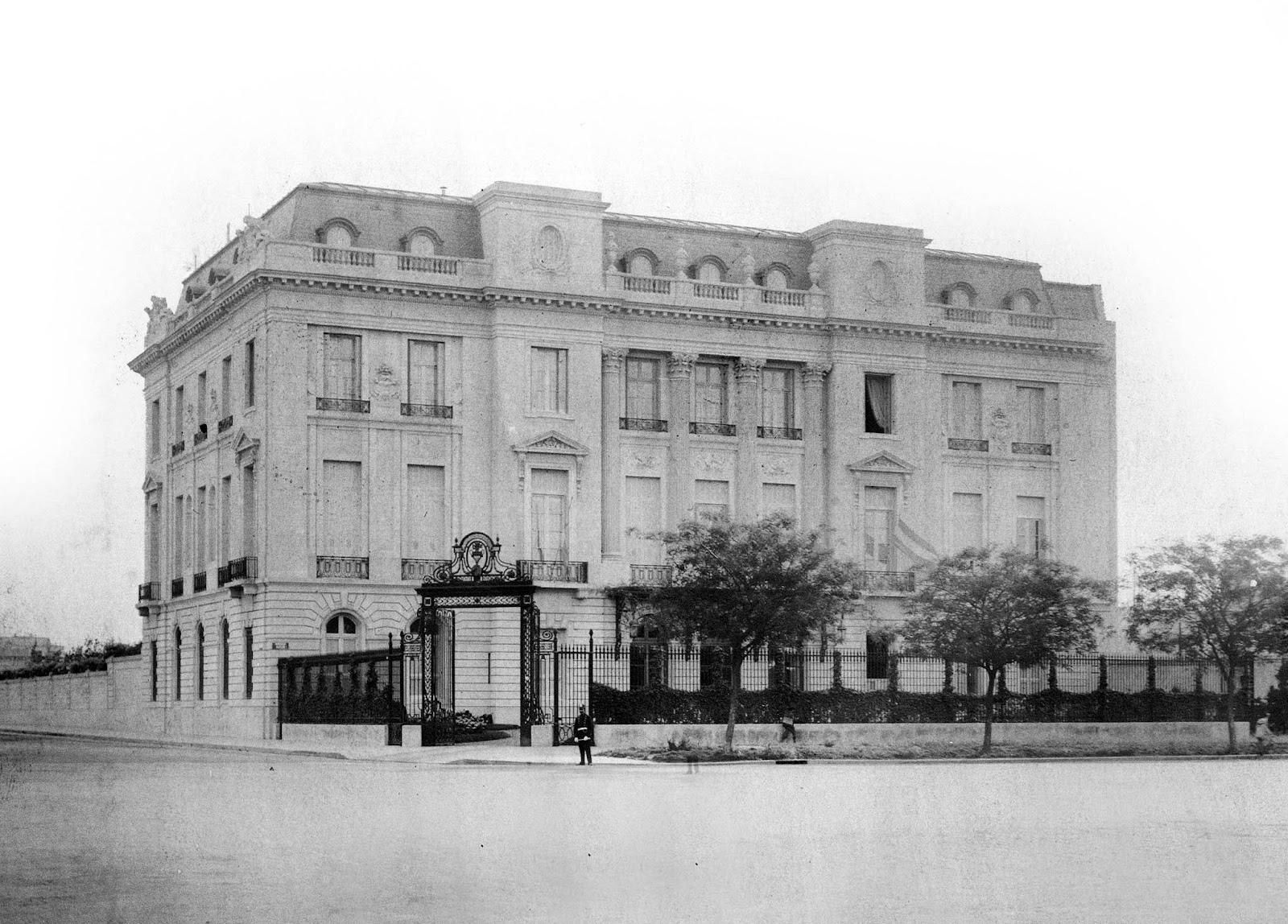
Image: here, Public domain, via Wikimedia Commons

Known as Palacio Bosch, this embassy doesn’t look like an office building at all. Originally built in 1910 for one of Argentina’s wealthiest families, the mansion still carries a Belle Époque aura. With sweeping marble staircases, glittering chandeliers, and fancy salons full of gilded details, it feels like the set for The Great Gatsby .

Outside, the gardens stretch wide and elegant, providing the backdrop for countless receptions where formal diplomacy blends with the warmth of Argentine culture. Guests might hear live music drifting through the air, join in animated conversation, or even share a round of _mate_—a reminder that this embassy is as much a cultural meeting point as it is a place for politics.

10
Oslo, Norway
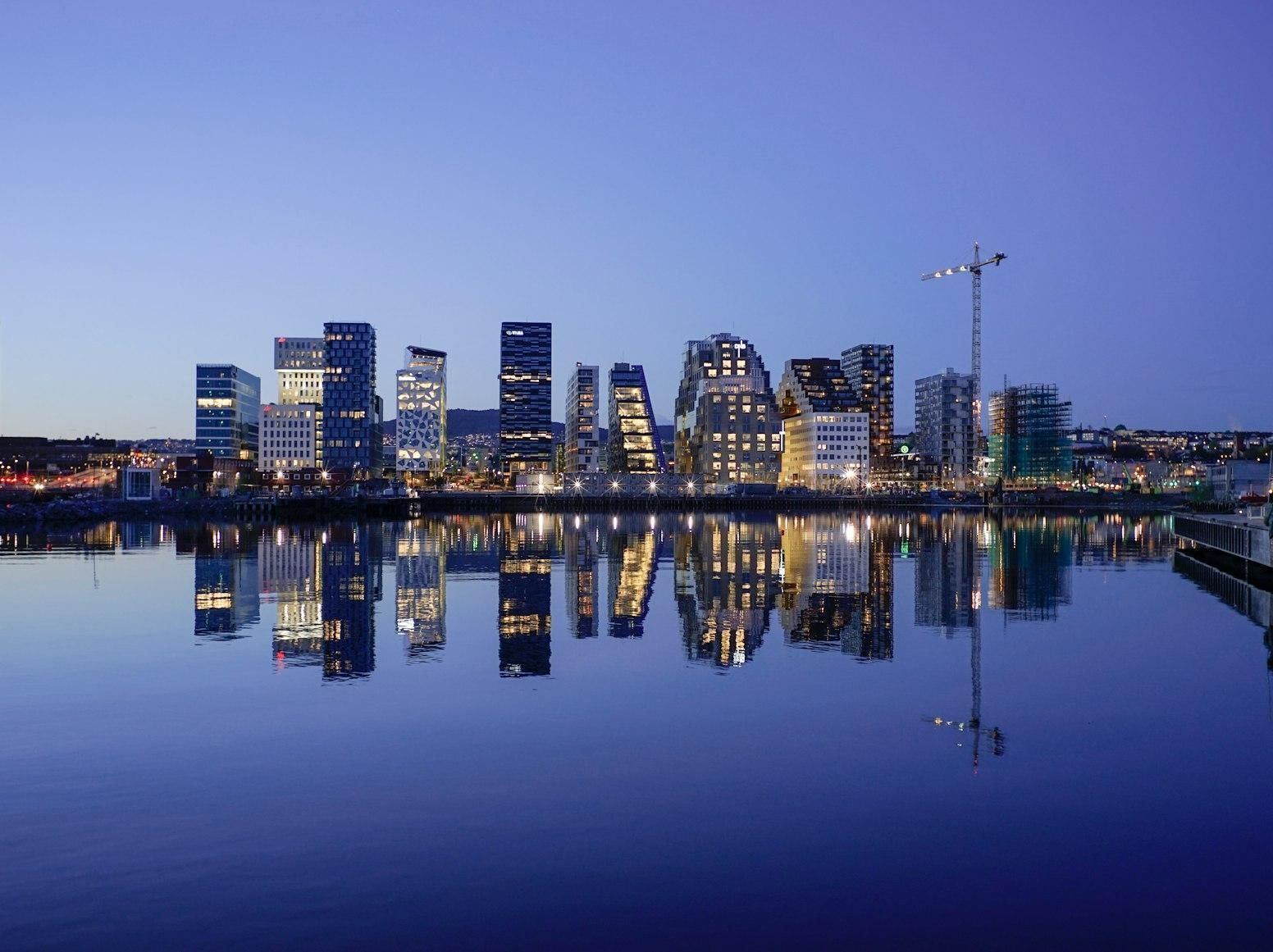
Image: Christoffer Engström

Though smaller in scale than others on this list, the U.S. Embassy in Oslo stands out with a design that mirrors the Norwegian landscape. Its facade pairs sleek glass walls with rugged stone, a blend that feels both contemporary and timeless.

In the summer, the building glimmers in the glow of endless daylight. Come winter, snow transforms its sharp lines into something out of a Nordic fairytale, with frosted rooftops and a quiet stillness in the air. More than just an office, this embassy feels woven into its setting—an architectural nod to Norway’s mix of modern design and deep connection to nature.

11
Mexico City, Mexico
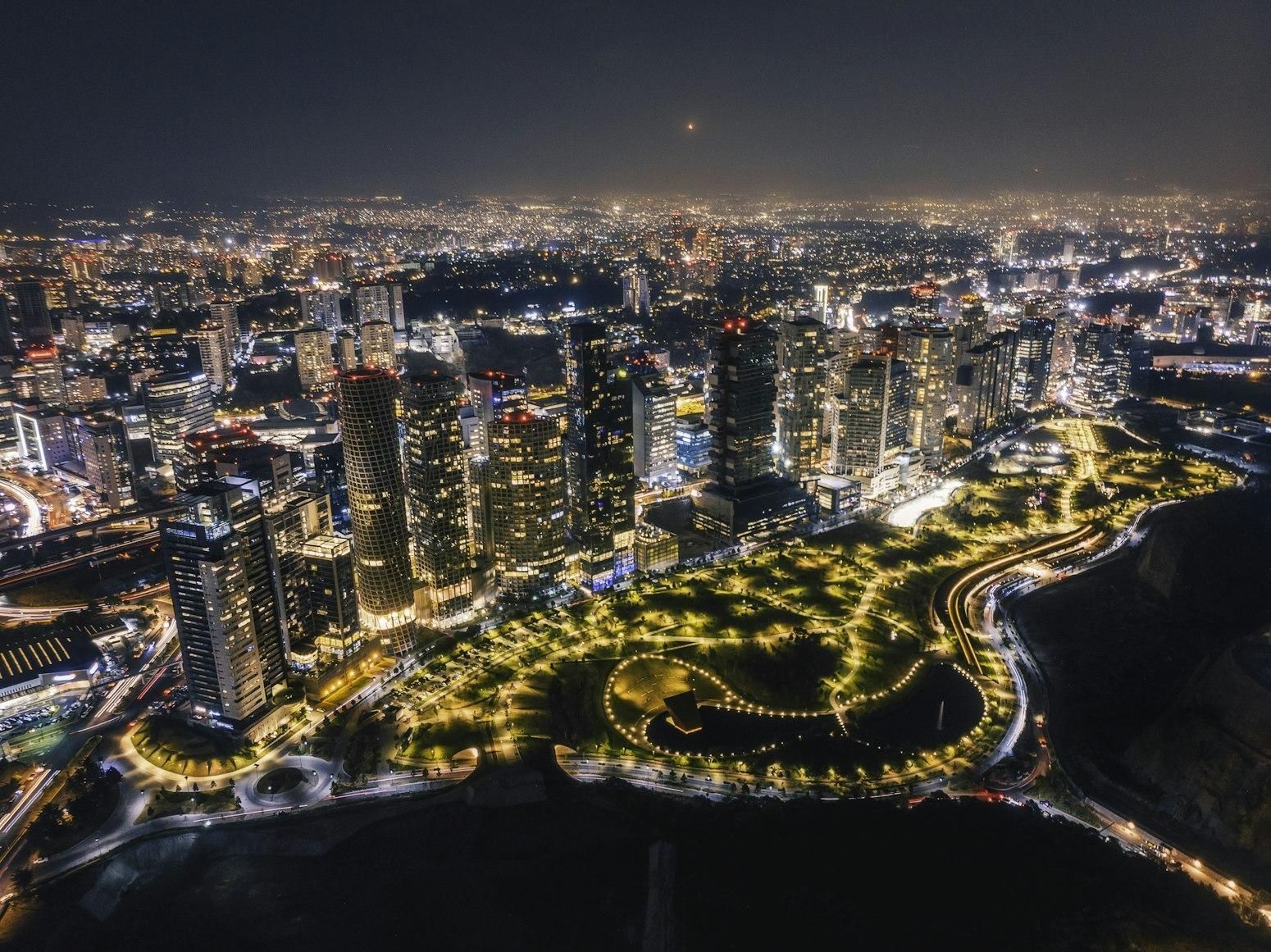
Image: Oscar Reygo

In one of the world’s liveliest capitals, this embassy makes its mark with sheer scale: over 1.8 million square feet of workspace. That makes it one of the largest American embassies , almost a city within a city.

Beyond its size, the U.S. Embassy in Mexico plays a central role in cultural exchanges and international cooperation, making it as vital to daily life as the bustling neighborhoods that surround it.

12
Singapore

Image: Mark Stoop

Nestled among orchids, palms, and flowering shrubs, the U.S. Embassy in Singapore feels more like a tropical retreat than an office. Its wide, low-slung profile is designed to stay cool in the humid climate, blending seamlessly into the greenery. Just like in the rest of the city, architecture and nature work in harmony, offering a daily reminder that diplomacy can grow strong roots in even the warmest of places.
History History 3 min read

Lesser-known tales

California's Grizzly is extinct? 10 stories behind American symbols

Image: Fr. Daniel Ciucci

It’s one thing to be acquainted with American symbols, but it’s another to learn—years later—the unexpected, hidden stories behind them! Did you know that California’s subspecies of grizzly bear (yes, the one on the flag) has been extinct for over a hundred years ? Or that Texas’s state dish was allegedly invented by prisoners? Maybe you know some of the facts listed here—but we’re sure you don’t know them all!

1
California’s state animal is extinct

Image: Levi Meir Clancy

The California grizzly bear adorns the state flag, but you won’t find one in the wild anymore. Once abundant throughout the region, this was a subspecies of Grizzly also known as "California golden bear."

By the 1920s, this majestic animal had disappeared from the wild, but it has remained a powerful symbol of the state, featured on the flag since the Bear Flag Republic’s short-lived attempt to break from Mexico in 1846.

2
The American flag was (probably) designed by a teenager

Image: Sharefaith

In 1958, around the time Alaska and Hawaii were being added to the Union, an Ohio high schooler named Robert Heft stitched a 50-star flag for a class project . His teacher gave it a B–, scoffing that the brand-new design "lacked imagination."

However, not long after, Heft’s design was selected from thousands of submissions sent to President Eisenhower to determine the official flag. That teacher later changed the grade to an A.

3
Texas’s state dish may have been invented by prisoners

Image: Zak Chapman

Chili con carne is the Lone Star State’s official dish. While its exact origins are uncertain, some say that Texan prisoners in the 1800s were the minds who concocted the dish. According to this version, the stew—made with beans, thin strips of beef, and chili peppers—was the local equivalent of bread and water: a kind of Texan gruel .

4
Alabama's state nut was once a life-saver

Image: Antoni Shkraba

Pecans aren’t just Alabama’s official nut—they’re also symbols of resilience from the Depression era. When cotton crops failed in the 1930s, families turned to harvesting pecans to survive. The nuts became a form of currency , traded for goods, and even used to make mortgage payments. Today, Alabama produces over 30 million pounds annually.

5
The Star-Spangled Banner was once a drinking song

Image: JosephHershMedia

You may know that America’s anthem has a boozy British past. The melody originated as "To Anacreon in Heaven," a raucous 18th-century tavern tune sung by a London gentlemen’s club. A relative of Francis Scott Key noticed that his poem fit perfectly with the melody—and thus, the anthem as we know it was born.

6
The Great Seal almost had a turkey

Image: Roman Manshin

Can you imagine if the Great Seal of the United States featured not a mighty eagle, but a turkey? It was none other than Benjamin Franklin who proposed the turkey as America’s symbol, calling it " a bird of courage ."

Instead, he dismissed the bald eagle as "a lazy scavenger." Congress ultimately overruled him, but Franklin did have a point: turkeys are known to be fiercely protective.

7
The flag’s colors weren’t meant to mean anything—at first

Image: Jon Tyson

Red, white, and blue may seem deeply symbolic today, but in 1775, the Continental Navy chose them simply to match the British flag’s palette. A rebellious decision, if you think about it. The "valor, purity, justice" meanings were tacked on later by poets and politicians.

8
Is South Carolina’s flag really what it seems?

Image: Jaden Dessureault

South Carolina’s flag features a blue background with a palmetto tree and what appears to be a crescent moon. But there are stories that sustain that the silver symbol isn’t a moon at all —it’s a gorget, the curved neck armor worn by 18th-century soldiers. Historians have searched for records to back this theory, but no nods to gorgets have officially been found.

9
Colorado’s flag was once a confusing disaster

Image: Olga Kovalski

When Colorado unveiled its bold "C" design in 1911, it forgot one crucial detail: specifying which shade of blue to use for the background. For 26 chaotic years, flags fluttered in everything from pale sky blue to deep navy—until officials finally standardized the hue in 1937.

10
One of Illinois’ state symbols was chosen by… kids

Image: Peter Schad

Illinois’ state snack was chosen by the most powerful lobbyists of all: children. When a group of fourth graders learned their state produced a large portion of America’s popcorn , they launched a 2003 campaign so persuasive that lawmakers had no choice but to make it official.

Culture Culture 6 min read

One hit per year

From Elvis to Dylan: 12 of the best 1960s songs everybody still listens

Image: Florian Schmetz

More than half a century has passed since the 1960s, yet there are songs from those years that we still listen to today. This decade saw the emergence of some of the most important musicians in the history of American music. It was an amazingly creative era that followed the initial explosion of rock'n'roll, where pop became more than just a teenage fad. It's very hard to choose just a few representative songs from the psychedelic 60s, but in this article, we'll make an effort: we present to you 12 of the most iconic songs of the decade that marked a before and after in music. We're sure you'll want to go and create a Spotify playlist to listen to non-stop!

1
1959: (Now and Then There's) A Fool Such as I

Image: Victrola Record Players

To better understand the music of the 1960s in the United States, one must first go back to the previous decade and revisit the major influences. The music of this era, especially rock and roll, stood out for its rebellious energy, strident guitar chords, and lyrics with messages of freedom.

And perhaps the greatest representative of this cultural change was the great Elvis Presley. In 1959 Elvis released "(Now and Then There's) A Fool Such as I". The song, composed by Bill Trader, had already been recorded years before by other artists, but the King of Rock 'n' Roll's version became a platinum record. Thanks to Elvis and other iconic musicians such as Bill Haley and His Comets, Chuck Berry, and Fats Domino, at the beginning of the 1960s the music world stood on the verge of a true revolution.

2
1960: Will You Love Me Tomorrow

Image: chienba

One of the groups that defined the sound of the 60s was The Shirelles, and one of the songs that helped them reach the top was "Will You Love Me Tomorrow", released in November 1960.

This song composed by Carole King and Gerry Goffin was not only The Shirelles' first number 1, but also became the first song by an African-American girl group to top the Billboard Hot 100 chart.

3
1961: Stand by Me

Image: Bru-nO

"Stand by Me" is probably one of the most beloved songs of all time. Not only was this song a massive hit when singer-songwriter Ben E. King released it in 1961, it was later listed as "the fourth most performed song of the 20th century". No wonder! It was recorded over 400 times by many notable artists such as Otis Redding, John Lennon, Tracy Chapman, and Florence and the Machine, among others.

4
1962: The Twist

Image: Sprinter_Lucio

Originally this song was released in 1958 by Hank Ballard and the Midnighters and later covered by Chubby Checker in 1960. However, two years later something incredible happened that would not be repeated until 59 years later. Checker's version of "The Twist" resurfaced in January 1962 setting a record as the only song to reach number 1 in two different runs. Do you remember this amazing hit inspired by the twist dance craze?

5
1963: Be My Baby

Image: BRUNO CERVERA

Released in August 1963, "Be My Baby" was The Ronettes' biggest hit. Composed by legendary record producer and songwriter Phil Spector, this song is regarded as the quintessential example of his Wall of Sound recording technique.

"Be My Baby" reached number 2 in the U.S., has been played on radio and TV over 3 million times, and has influenced dozens of artists of the golden era of rock and pop music.

6
1964: Oh, Pretty Woman

Image: Jack de Nijs for Anefo, CC0, via Wikimedia Commons

Long before the famous film starring Julia Roberts and Richard Gere, "Oh, Pretty Woman" was an instant success. Released in August 1964, this song was the biggest hit of Roy Orbison, a major player in American popular music of the 1960s.

Orbison was inspired by his wife Claudette, which seems to have brought him luck: the song quickly reached number 1 and was later inducted into the Grammy Hall of Fame.

7
1965: Like a Rolling Stone

Image: Brett Jordan

Right in the middle of the decade, the leading exponents of the music scene of the time seem to have reached the pinnacle of creativity. Many songs that are still iconic today were released in 1965: "I've Been Loving You Too Long (To Stop Now)" by Otis Redding, "I'll Feel a Whole Lot Better" by The Byrds, "The Sound of Silence" by Simon & Garfunkel, and "California Dreamin'" by the Mamas & the Papas.

But perhaps the one who broke the mold and changed the history of music forever was Bob Dylan with his mythical song "Like a Rolling Stone". The worldwide hit not only remained at number 2 on the US Billboard charts for three months (the first song of its length to do so) but also marked Dylan's transformation from folk singer to rock star.

8
1966: God Only Knows

Image: Photographer: Sam Psoras, Public domain, via Wikimedia Commons

Another turning point in the history of American music is the release of Pet Sounds by the Beach Boys. The album, released in May 1966, is made up of one hit after another: "Wouldn't It Be Nice" and "You Still Believe in Me", just to name a few.

But probably one of the record’s greatest songs is the sophisticated and innovative "God Only Knows". Despite being an unusual sound for the group, some consider it the most beautiful melody ever composed. Even great musicians like Paul McCartney have picked it as their favorite song of all time. Undoubtedly, it is a work of art born from the brilliant mind of Brian Wilson.

9
1967: Sunday Morning

Image: Anastasia Saldatava

The debut studio album by the American rock band The Velvet Underground will forever be remembered for the famous banana on the cover designed by Andy Warhol and for being one of the most influential albums of the 60s.

Although the album was too controversial when it was released in March 1967 and initially was a commercial flop, over time the songs became legendary. For example, "Sunday Morning", with Nico's haunting vocals, a dreamy melody, and cheeky lyrics was recorded with the intention of making a hit. And in our humble opinion, it more than delivers!

10
1968: I Heard It Through the Grapevine

Image: Travis Yewell

Although it had been recorded before by other Motown Records artists, Marvin Gaye’s version of "I Heard It Through the Grapevine" released in October 1968 is the one that went to the top of the Billboard Pop Singles chart and stayed for seven weeks. Since then, the song has been inducted into the Grammy Hall of Fame and is considered an acclaimed soul classic.

11
1969: I Want You Back

Image: Pexels

Another of Motown Records' iconic artists of the 1960s were the Jackson 5. "I Want You Back" is the first national single by the band in which a very young Michael Jackson took his first steps.

Released in October 1969 the song was performed on the band's first television appearances and became an instant hit. "I Want You Back" was number 1 on the Billboard charts and has sold over 6 million copies worldwide.

12
Bonus: Bridge Over Troubled Water

Image: Rob Bogaerts / Anefo, CC0, via Wikimedia Commons

Despite the innovation experienced in rock and pop in the previous decade, the most successful song of 1970 was the work of a folk group, proving that the genre had not been forgotten and would forever be a staple of American music.

Recorded with a technique similar to Phil Spector's "Wall of Sound" and inspired by gospel music, "Bridge Over Troubled Water" was Simon & Garfunkel's most successful single. The song won five Grammy Awards, including Song of the Year. Since then, more than 50 artists —including Johnny Cash, Aretha Franklin, and Elvis Presley— have released their own version of the beloved hit.

Explore more American facts

Choose your favorite category!

General
General

As American as apple pie—the very best America has to offer!

Culture
Culture

Delve into the astounding richness of American lore.

Geography
Geography

Hop in and explore vast and diverse American landscapes.

History
History

Discover the key moments that shaped the United States.