Geography Geography 5 min read

Cradles of history

America's forgotten capitals: Cities that were once their state’s main

Image: Martin Zenker

Every state has its heart: A main city that serves as the center for governance, lawmaking, and administration. But what about the cities that once held the title, only to see it moved elsewhere? Did any of them resist the change? Let’s look into towns that left indelible marks on the culture of their states, even after the halls of power packed up and moved inland.

1
San Francisco, California

Image: Belle Co

San Francisco was never officially a state capital, but there was a 9-month period during the early governance of California when the capitol stood in the city’s Merchant’s Exchange building .

The seat of California’s capital moved multiple times among cities, including Monterey, San Jose, Vallejo, and Benicia. In the mid-19th century, it settled in Sacramento, strategically situated at the confluence of major rivers –which also meant proneness to flood . Severe flooding hit the city in the 1860s, temporarily incapacitating it as a state capital.

The administration then moved to San Francisco, which had been instrumental during the Gold Rush and remained a cultural and economic powerhouse. When Sacramento had recovered, though, the legislature moved back and it has remained the state capital since.

2
Savannah, Georgia

Image: Jessica Furtney

Savannah, the beautiful city in Georgia famous for its cobblestone streets and picturesque squares, was the state’s first colonial capital. It continued to hold the capitol following the American Revolution.

In the late 1700s, however, the capital moved inland to Augusta, where the population was growing. The decision was also meant to protect the government from potential coastal attacks .

Several cities served as capitals in the decades that followed, such as Louisville and Milledgeville. It wasn’t until a constitutional convention was held in Atlanta that the city’s potential as a state capital was recognized, and later realized.

3
St. Augustine, Florida

Image: Maddie DiFilippo

Known for its well-preserved colonial architecture, like the Castillo de San Marcos fortress , St. Augustine was the capital of East Florida for hundreds of years, since Spanish rule.

When Florida became a U.S. territory, St. Augustine, on Florida's northeast coast, maintained its role as one of two capitals, alongside Pensacola, which served West Florida. However, the difficulty of travel between these two cities led to inefficiencies in governance.

A halfway point was set exactly at Tallahassee to make access easier for legislators of both sides. To this day, St. Augustine maintains many constructions and a strong heritage from its colonial past.

4
New Orleans, Louisiana

Image: Stella He

When Louisiana was admitted into the Union, vibrant New Orleans was the state capital, and it remained so for over 30 years until the government seat was changed to Baton Rouge.

New Orleans was the largest and most economically significant city in the state at the time, so it was a natural choice. Still, its location also posed challenges, like disease outbreaks that often plagued it, and the powerful political influence of the French Creole population .

Eventually, Baton Rouge became the official capital, and its new Gothic Revival-style capitol building opened in the mid-19th century. Today, New Orleans remains a cultural hub for the state and the country.

5
Lewiston, Idaho

Image: Anthony Camerlo

The original capital of Idaho was upstate Lewiston, a key shipping hub thanks to its access to river transport. But the discovery of gold in the Boise Basin meant that the population –and the riches– flew to southern Idaho.

With the majority of settlers now in the south, the capital's relocation was pushed. Lewiston residents did not take this lightly: They fiercely resisted losing the capital and went so far as to lock the territorial seal and papers in the town jail to prevent their removal.

Federal troops had to intervene to complete the relocation. Today, Lewiston still proudly proclaims itself as "Idaho's First Territorial Capital," a line displayed everywhere downtown.

6
Plymouth, Massachusetts

Image: donwhite84

Plymouth, located in southeastern Massachusetts on Plymouth Bay, was the landing site of the Pilgrims in 1620. For many decades it remained its capital until the colony merged with that in Massachusetts Bay.

After the merger, Boston, a city with a larger population and a central hub for trade and governance, was designated the new capital. But Plymouth is still considered "America's Hometown" and hosts elaborate Thanksgiving celebrations annually.

Plymouth will always retain its historical significance, such as being the home of Plymouth Rock , which commemorates the site of the disembarkation of the Mayflower Pilgrims.

7
Kingston, New York

Image: Amy Lavine, CC BY-SA 4.0

Kingston is located along the Hudson River in Ulster County, New York, with a scenic backdrop of the Catskill and Shawangunk Mountains.

It retains its Revolutionary War-era stone buildings, historic landmarks, and its title as the "birthplace" of New York State's government; It was its first capital. But when it became a center for revolutionary activities in the late 18th century, British forces burned the city in retaliation.

Kingston was rebuilt, but it never regained its capital status. Albany was later chosen as the capital for its central location and strong infrastructure.

8
Detroit, Michigan

Image: Alex Brisbey

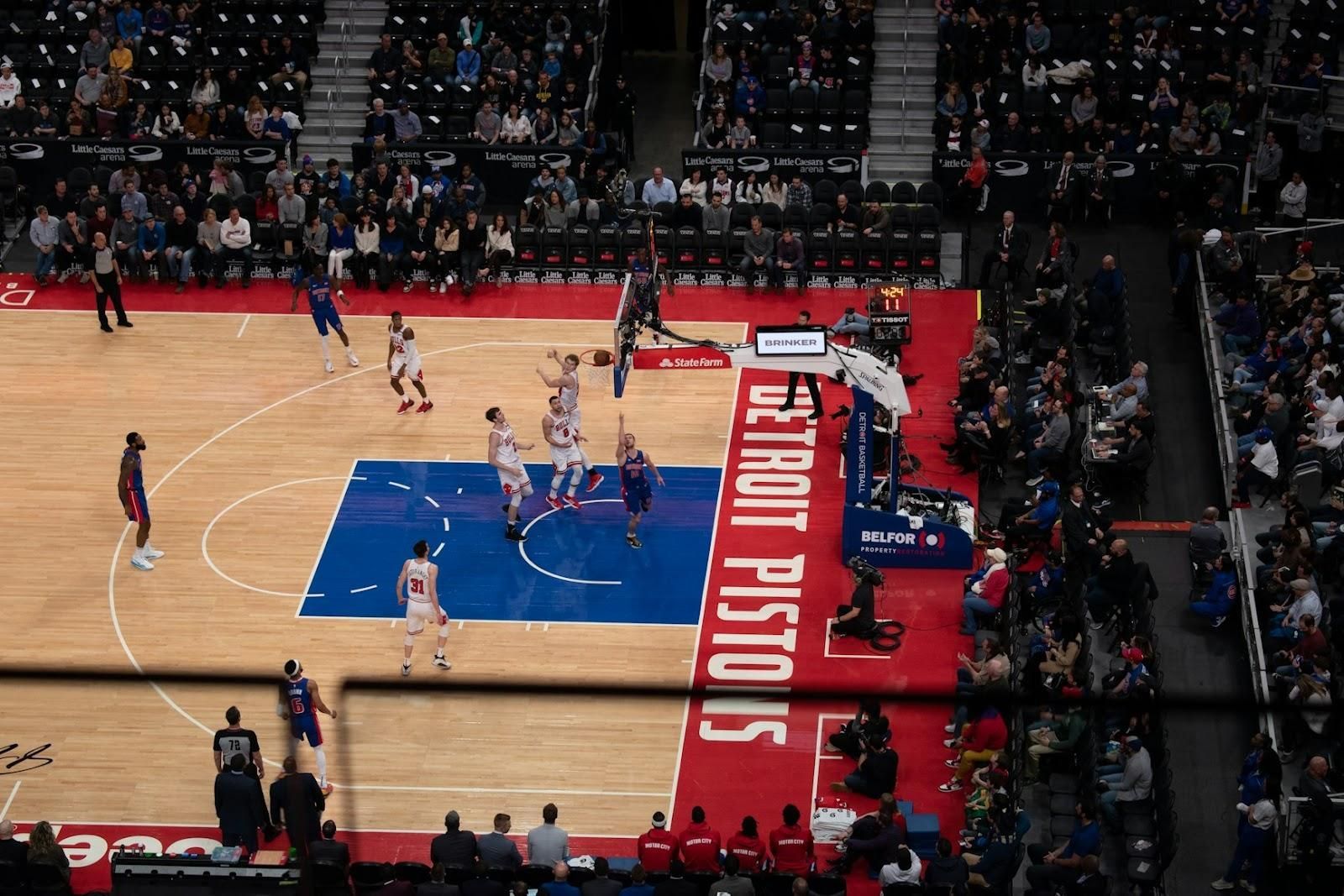
Detroit, a.k.a. "Motor City," is not just the center of the U.S. automotive industry, but was Michigan's first capital before it moved inland to Lansing.

Michigan Territory had Detroit as its center, and it remained so even after it became a state. But there were concerns over Detroit's proximity to the Canadian border , and, as with many other capitals, a desire to fix the capitol in the state’s center.

Lansing, just a small settlement at the time, was more accessible and more secure. Detroit didn’t stay behind, though; Its role as a transportation hub during the Industrial Revolution helped it become a manufacturing powerhouse .

9
Kaskaskia, Illinois

Image: Dave Hoefler

Kaskaskia is now nearly a ghost town , a quiet community of fewer than 20 residents. This is due to Mississippi River flooding and shifting channels –but it was once its state capital.

Situated in Randolph County, Illinois, near the Mississippi River, it’s uniquely located on the western bank of the river. In the early 19th century it was a center for trade and governance and remained the capital until the legislature decided to relocate to Vandalia.

Vandalia, inland and growing, was a reasonable choice back then, but it would be replaced by Springfield eventually, largely due to the efforts of Abraham Lincoln .

10
New Castle, Delaware

Image: jakob

New Castle served as Delaware’s colonial capital during the 17th and 18th centuries. It was here, in 1776, that Delaware declared independence from both Pennsylvania and Great Britain, establishing itself as a state.

The city’s location by the Delaware River was key during colonial times, but it also made it susceptible to British naval attacks during the American Revolution. That was why the seat was moved to Dover, although it wasn’t made the permanent capital until the 1780s.

New Castle still keeps its well-preserved colonial architecture, particularly in the district surrounding its courthouse.

General General 6 min read

Sugar rush!

Dig into these 10 delightful American sweet treats!

Image: Christopher Ott

There’s a reason why the word "sweet" has become synonymous with a good and pleasant time: As anyone with a sweet tooth can attest, some of the best-tasting things in life are sweet. In that sense, America is definitively no stranger to sweet treats, as any of the mouth-watering items in this article can prove. So, without further ado, let’s jump right into and discover 10 of the most amazingly delicious American sweet treats. Enjoy!

1
Oreo

Image: ABHISHEK HAJARE

Who better to start this article than Milk’s absolute best friend? Oreo has been the king of American cookies since its very beginning. Dunk it, twist it, or just eat it: There’s no bad way to eat an Oreo.

Did you know that Oreos were originally sold as part of a trio of cookies? Not only that, they were sold under a much less marketable name: Hydrox, which doesn’t really fit such a delicious treat.

2
Snickers

Image: Joshua Fernandez

Have you ever wondered where the name "Snickers" comes from? You might be inclined to think that it comes from the hearty laughter that might arise after eating one of these delicious bars, but the answer is actually rather strange: It comes from a horse! Specifically, it was the name of the Mars family horse, who decided to immortalize their beloved stallion in 1930.

Regardless of its unusual name, Snickers is one of the most beloved candy bars in America, if not the world. Over their 90 years of history, they have produced a number of delicious variants of their traditional caramel and peanut filling, including dark and white chocolate, as well as peanut butter and almond.

3
Apple pie

Image: Priscilla Du Preez 🇨🇦

We’ll continue with an American icon. If you ask anyone from outside the United States to choose 3 things to define our country, they’ll probably include apple pie . This beloved sweet treat is heavily associated with the 4th of July celebrations, but let’s be honest: There’s no bad time to have a slice or two of apple pie.

For such a culinary staple, apple pie definitely has a lot of variants. For instance, you can enjoy a delicious apple pie à la mode by adding a scoop of vanilla ice cream. Other toppings include custard, whipped cream, or (surprisingly) a slice of cheddar cheese.

4
Reese’s Peanut Butter Cup

Image: Terrance Barksdale

We debated which Reese’s product to include in this list: their delicious Peanut Butter Cups or their outstanding Pieces. We decided to go for the Peanut Butter Cup, if only for one reason. This amazing product was one of the first to showcase what a dynamic duo of chocolate and peanut butter make.

The story of Reese’s Peanut Butter Cup s goes back to 1928, when H. B. Reese, a dairy farmer employed by the Hershey Company, decided to start his own candy company after he was let go of his job. The rest is history! Almost 100 years after, Reese’s Peanut Butter Cups are still one of America’s most cherished sweet treats.

5
Beignets

Image: Jessica Tan

If you ever find yourself in the beautiful city of New Orleans, you’ll be amazed by everything "The Big Easy" has to offer, from its amazing jazz, gorgeous architecture, and mouth-watering food. In that regard, take this piece of advice to heart: Don’t leave New Orleans without having some delicious beignets with a hot cup of coffee.

Like many of the things that make New Orleans so special, beignets come directly from French culture. They were most likely brought over by French colonists in the 18th century. However, Louisiana-style beignets stand out because they are topped with powdered sugar and are mostly eaten for breakfast.

6
Boston Cream pie

Image: Marko Klaric

Boston is known as "Beantown" for its affinity for beans, but don’t you dare think beans are the only culinary treat this city has to offer. With that in mind, we would like to present a slice of delicious Boston cream pie as evidence.

Many believe that the Boston cream pie was created in 1856 by Chef Mossburg Sanzian at the Parker House Hotel. Regardless of its origins, this cream-filled delicacy has grown to become a staple of Boston cuisine, being declared the city’s state pie in 1996.

7
Donuts

Image: Courtney Cook

If TV has taught us anything, it is that police officers and donuts go hand in hand. But let’s be honest: You don’t really need to be an officer to enjoy a delicious donut . This tasty treat has become an instantly recognizable pop icon, with its iconic shape and many colorful frostings.

It is believed that donuts were first brought to America by Dutch settlers, who brought a similar pastry called an olykoek to New York. In time, donuts would be happily adopted by the entire country. Nowadays, millions of these treats are consumed around America every day.

8
Hershey’s chocolate bars

Image: Janne Simoes

Let’s continue with " The Great American Chocolate Bar." Over 120 years ago, the very first Hershey bar was sold by American chocolatier and businessman Milton Hershey. This first bar unknowingly started one of the most lucrative and iconic chocolate companies in the world.

After that first bar sold at the start of the 20th century, Hershey has produced a myriad of iconic products, including their "Cookies ‘n’ Creme Bar" or their "Air Delight Bar." Regardless, you know that whenever you unwrap a delicious Hershey’s chocolate bar , you’ll find some of the world’s finest chocolate inside.

9
Cobbler

Image: Beyza Ç.

Let’s face it; the word " cobbler " is an awful-sounding word for such a delicious treat. Not only that, historians can’t seem to agree on where this name comes from. Many believe that it is a variant of the verb "to cobble", while others state that it comes from its resemblance to a ‘cobbled’ stone pathway. But we digress: Let’s instead just focus on how delicious they are.

Although originally created in the United Kingdom, cobblers are particularly popular in America, with many states and regions having their very own special variants. American cobblers are literally too many to mention, so we’ll just highlight a few of our favorites, like the "Brown Betty" (made with fruits and sweetened crumbles) or the "apple pan dowdy".

10
M&Ms

Image: Oksana Zub

We’ll end this article with one of America’s most iconic pieces of candy. At first glance, M&Ms are deceptively simple: They are just small and colorful pieces of chocolate. However, as anyone who has eaten a handful of M&Ms will tell you, there’s something magical to these small yet wonderful sweet treats.

M&Ms were created in 1941, inspired by a similar British product called "Smarties". The two Ms featured in the name come from Forrest Mars Sr., who created the product, and Bruce Murrie, stakeholder and son of Hershey Chocolate’s president.

Geography Geography 4 min read

New identities

Rebranded: 10 US cities that changed their names and the reasons why!

Image: Jon Tyson

Can you picture cheering for the New Amsterdam Giants or the Jernigan Magic ? We can’t either! Cities like New York, Orlando, and Los Angeles are staples of American identity—we can’t imagine the country without them. But believe it or not, some of these cities had different names in the past! Join us as we explore 10 US cities that once went by different names and discover the reasons behind their transformations.

1
Los Angeles, California

Image: Venti Views

The Spanish settlers who arrived in the area in the 18th century originally named it El Pueblo de Nuestra Señora la Reina de los Ángeles , which translates to "The Town of Our Lady the Queen of the Angels." Elegant, but kind of a mouthful for a town name! Over time, the Spanish name stuck, but it was shortened to the more practical "Los Angeles." The city officially adopted this name when it was incorporated in 1850, the same year California became a state.

2
New York City, New York

Image: Colton Duke

Before becoming the one and only New York we know today, the city went by a different name. In the 17th century, the Dutch settlers who arrived in the area called it New Amsterdam . However, when the English seized control in 1664, they renamed it New York in honor of the Duke of York.

3
Seattle, Washington

Image: Michael Discenza

Seattle is more than its iconic Space Needle; it has a long history that shaped the city we know today. When European settlers arrived in the area in 1851, they named their settlement New York and added the Chinook word Alki , meaning "by and by," "someday," or "later," suggesting it would one day become as big as New York City. However, in 1852, they changed the settlement’s name to Seattle in honor of Chief Sealth, a Duwamish and Suquamish leader.

4
Portland, Oregon

Image: Zack Spear

Early settlers referred to the area as The Clearing because it stood out from the dense forests typical of the Pacific Northwest. But in 1845, an event occurred that would change everything. Portland’s two founders, Asa Lovejoy from Boston, Massachusetts, and Francis W. Pettygrove from Portland , Maine, each wanted to name the new settlement after their hometown. So how did they decide? Simple: they flipped a coin . Of course, you know who won!

5
Kansas City, Missouri

Image: Farhodjon Chinberdiev

Kansas City was originally founded as the Town of Kansas in 1850, named for its location near the Kansas River. As it quickly grew, it was reincorporated just three years later as the City of Kansas . Finally, in 1889, it officially became Kansas City.

Fun fact: Kansas City, Missouri, was actually founded before the state of Kansas!

6
Charleston, South Carolina

Image: Tyrone Sanders

Before it became the city we know today, Charleston had another name, though not so different. When it was first settled in 1670, the English named it Charles Town in honor of King Charles II. However, over time, the name gradually evolved in pronunciation to Charleston. In 1783, after the Revolutionary War, the city was officially renamed Charleston.

7
San Diego, California

Image: Sean Mullowney

San Diego was the first site on the US West Coast settled by Europeans, which is why it's often called "the Birthplace of California." When Spanish explorers arrived in the area in 1542, they named the bay after a different saint: San Miguel . But years later, in 1602, explorer Sebastián Vizcaíno renamed it San Diego, in honor of San Diego de Alcalá (Saint Didacus of Alcalá).

8
Orlando, Florida

Image: Aditya Vyas

In 1840, the first settlers arrived in what we know today as Orlando. They were the Jernigan family, who named the place after themselves. A post office with that name was even established in 1850. However, about 6 years later, Jernigan officially changed to Orlando. Although the exact reason isn't entirely clear, there are several theories. A popular one claims it was named after Orlando Reeves, a soldier who may have died in the area during the Seminole Wars. Another well-known theory suggests the name came from Orlando , a character in Shakespeare’s As You Like It .

9
Cincinnati, Ohio

Image: Matt Koffel

In the 1780s, the first settlement in this area was called Losantiville , a name created from a mix of words meaning "The town opposite the mouth of the Licking River." But in 1790, the first governor of the Northwest Territory, who was also a member of the Society of the Cincinnati (named in honor of the Roman general Lucius Quinctius Cincinnatus), disliked Losantiville and decided to change it to its present name.

10
Atlanta, Georgia

Image: Christopher Alvarenga

Atlanta didn't just have one or two names; it had three! By the mid-19th century, the area where the city stands today had become a transportation hub where several railroad lines converged. Because of this, in 1837, the area was called Terminus , meaning "the end of the line." Then, in 1843, the name was changed to Marthasville , in honor of Martha, the daughter of Georgia Governor Wilson Lumpkin. Finally, just two years later, the city was renamed Atlanta. This name is believed to be a shortened form of "Atlantic," referring to the Western and Atlantic Railroad.

Explore more American facts

Choose your favorite category!

General
General

As American as apple pie—the very best America has to offer!

Culture
Culture

Delve into the astounding richness of American lore.

Geography
Geography

Hop in and explore vast and diverse American landscapes.

History
History

Discover the key moments that shaped the United States.