History History 3 min read

Leading young

Age is just a number: the 10 youngest US Presidents!

Image: Dep377

Age is often seen as a symbol of experience, but being the oldest doesn't always mean being the wisest. While the average age of US presidents when they assume office is 55, there have been some who took office much younger! Although no president has held the position in his thirties, some have started in their early forties. If you want to know about the youngest presidents in US history, read on. You may be in for a surprise!

1
John Tyler

Image: Benjamin Ashton

The oldest president on this list is John Tyler, the 10th US President, who took office in 1841 at the age of 51, after the passing of President William Henry Harrison. He became the first vice president to assume office due to the death of a sitting president. After serving one term, he left office at the age of 55.

2
Millard Fillmore

Image: Kendall Scott

As mentioned earlier, the average age of US presidents at the time of inauguration is 55. Surprisingly, this president took office at just 50, five years younger than the average! We're talking about Millard Fillmore, the 13th president of the United States. Although he was not elected, he assumed the presidency on July 9, 1850, following the death of President Zachary Taylor, and left office 3 years later at the age of 53.

3
James K. Polk

Image: René DeAnda

In 1825, James K. Polk became the 11th US president, taking office at the age of 49. During his campaign and time in office, he stated that he would serve only one term, and he kept his promise by not seeking re-election. Fun fact: At the time of his election, Polk was the youngest person ever chosen as president of the United States.

4
James A. Garfield

Image: Luke Michael

Just like Polk, James A. Garfield also became president at the age of 49. At the time of his inauguration in 1881, Garfield was not the youngest ever elected, but he was the youngest Republican to become president! And that's not all: He was also the first left-handed person to serve, though it is said that he could write with both hands!

5
Franklin Pierce

Image: Element5 Digital

Franklin Pierce may not be the most popular president in US history, but he was one of the youngest ever to hold office.

When Pierce took office in 1853, he was 48 years old. His presidency was marked by political tensions and personal tragedy. Serving only one term, he left office at the age of 52.

6
Barack Obama

Image: History in HD

In 2009, Barack Obama became the 44th President of the United States at just 47 years old. After serving two consecutive terms, he left office at 55. As you can see, he left office at an age when many typically start their presidency! Additionally, Obama was born in 1961, which makes him the first president born in the 1960s.

7
Ulysses S. Grant

Image: Kirsten LaChance

Ulysses S. Grant became the 18th President of the United States in 1869 at just 46 years old. He served two terms and left the presidency at 54, still quite young for a former president.

Perhaps it was precisely his youth that led to a rather amusing incident. President Grant, a well-known horse enthusiast, received a speeding ticket in 1872... On horse! He was racing a horse-drawn carriage in Washington, DC, and ended up paying a $20 fine.

8
Bill Clinton

Image: Jesse Karjalainen

The '90s may feel like just yesterday, but believe it or not, more than 30 years have passed since that decade began! However, we're sure you remember this event well: On January 20, 1993, Bill Clinton was inaugurated as the US President at just 46 years old. Like Grant, he served two terms and left office at 54.

9
John F. Kennedy

Image: Florida Memory

John F. Kennedy took office as the 35th US President on January 20, 1961, at just 43 years old, making him the youngest elected president in US history!

Although his presidency was tragically short, it was marked by major milestones. Kennedy set a goal for America: to be the first nation to land a man on the moon before the end of the 1960s. Although he sadly didn't live to see it, his words became a reality when Apollo 11 landed on the moon in 1969!

10
Theodore Roosevelt
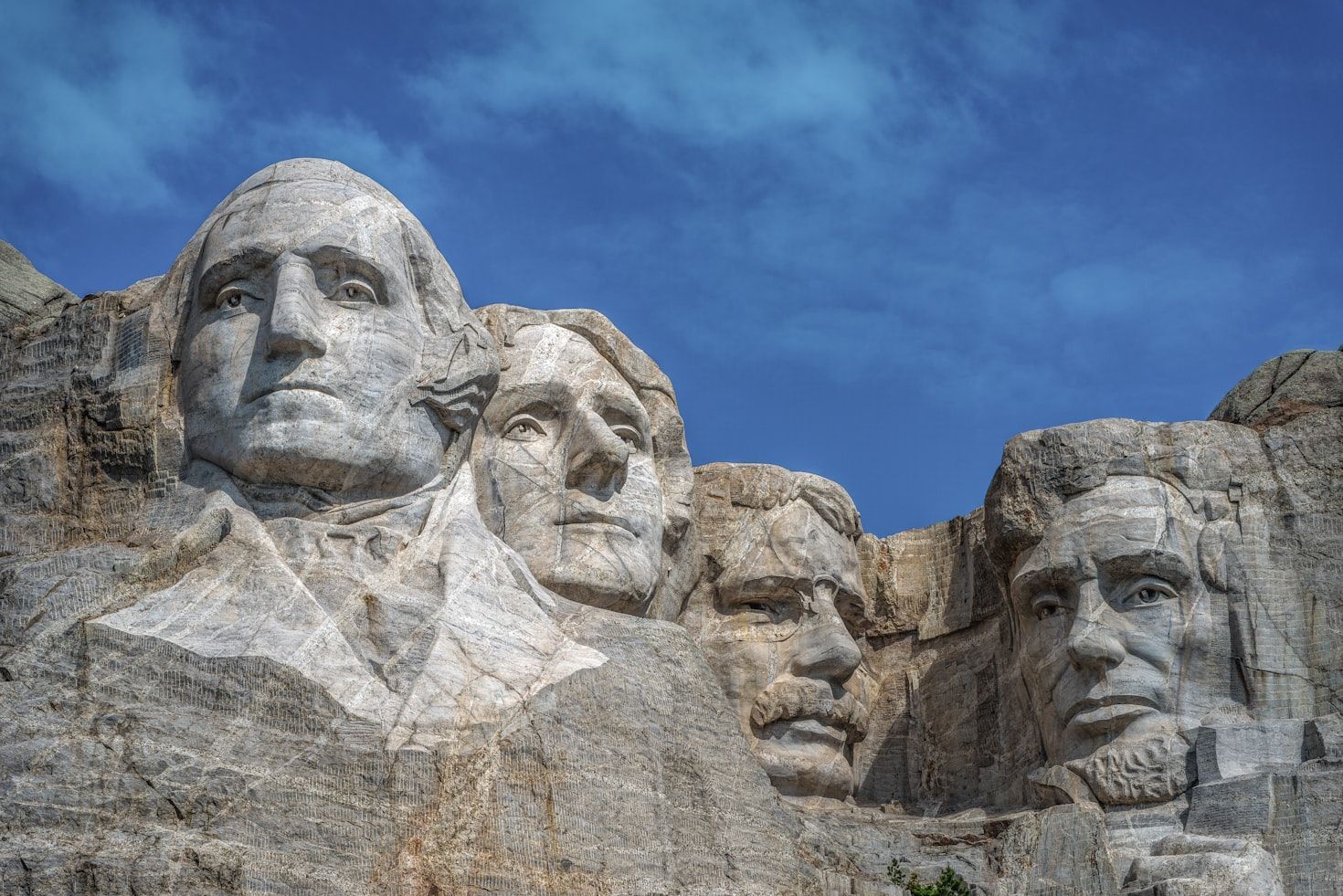
Image: Stephen Walker

We've reached the youngest president, not just on this list but in all of US history! That title goes to Theodore Roosevelt, who became the 26th president in 1901 at just 42 years old.

While he first took office in 1901 following the death of President William McKinley, Teddy Roosevelt was officially elected in 1904 and began his second term in 1905.

History History 2 min read

Homegrown sounds

How America invented 10 of the world’s biggest music genres

Image: Daniel Angele

If the U.S. has exported anything in abundance, it’s music. From Delta blues to disco, America has shaped the global soundscape with genres that reflect its history, struggles, and triumphs. Join us as we explore 10 of the most influential music styles born on American soil.

1
Blues

Image: Ahmed Rizkhaan

Originating in the Deep South during the late 19th century, blues evolved from African American work songs, spirituals, and field hollers. More often than not, it channeled pain and the harsh realities of life in a segregated America. Formally, its 12-bar blues structure and expressive guitar playing influenced countless other genres, from rock and roll to jazz.

2
Jazz

Image: Carol Highsmith's America

Born in New Orleans in the early 20th century, jazz blended African rhythms, blues, and brass band traditions. It was a revolutionary genre defined by improvisation and syncopation. Great figures like Louis Armstrong and Duke Ellington helped jazz spread worldwide, becoming a symbol of American creativity.

3
Rock and Roll

Image: Ana Grave

Emerging in the 1950s, rock and roll combined elements of blues, gospel, and rhythm and blues to create a high-energy, powerful sound . It soon became the voice of a new, rebellious generation. Pioneers like Elvis Presley, Chuck Berry, and Little Richard became universally beloved legends, forever altering the course of popular music.

4
Country

Image: Ben White

Originating in the southern United States, country music evolved from folk ballads and fiddle tunes brought by European immigrants. Initially, the genre focused on stories about blue-collar American life but later expanded to include love ballads and dance tunes. Today, it remains one of the most popular genres in the U.S.

5
Bluegrass

Image: Priscilla Du Preez

A fast-paced, acoustic offshoot of country, bluegrass emerged in the 1940s thanks to Bill Monroe and his Blue Grass Boys. Drawing from Irish and Scottish folk traditions, it prominently features stringed instruments like the banjo, mandolin, and fiddle. A true heartland gem, bluegrass continues to thrive on festival circuits worldwide.

6
Rhythm and Blues

Image: Matthijs Smit

Rhythm and Blues, or R&B, evolved from blues and jazz in the 1940s, featuring soulful vocals and a strong, "insistent" backbeat. Though its boundaries have been historically difficult to define, it laid the foundation for rock, soul, and funk while remaining a powerhouse in American music for generations.

7
Gospel

Image: Iyinoluwa Onaeko

Rooted in African American church traditions, gospel music emerged in the early 20th century, blending spirituals with blues and jazz influences. Artists like Mahalia Jackson and The Staple Singers were among the first to bring gospel beyond church walls, paving the way for future soul and rock musicians.

8
Soul

Image: Kobe Subramaniam

A direct descendant of gospel and R&B, soul music took center stage in the 1960s with its mix of emotional vocals and deep grooves. Legends like Aretha Franklin and James Brown defined the genre, influencing everything from funk to modern pop.

9
Funk

Image: Krisztián Reischl

Emerging in the 1960s, funk placed a strong emphasis on groove and rhythm, featuring heavy basslines and syncopated beats made for dancing. Pioneers like James Brown, Parliament-Funkadelic, and Sly & The Family Stone helped popularize the genre, whose infectious rhythms later influenced disco, hip-hop, and even rock.

10
Disco

Image: Honey Fangs

Rising in the 1970s, disco blended soul, funk, and Latin influences into a beat-driven, club-friendly sound. More than just a music genre, it became a cultural movement centered on dance, freedom, and glamour. At its peak, artists like Donna Summer and the Bee Gees dominated the airwaves.

History History 3 min read

Which one is your favorite?

Did you know that these 12 places had different names?

Image: Mackenzie Cruz

Changing the name of a long-established place can seem shocking to some, but it happens more often than one might think—the recent Mount Denali to Mount McKinley name change is a prime example. Such changes occur for various reasons, and new examples of this phenomenon appear every day. Our readers can probably think of at least one or two. Did you know about the following 12?

1
Big Shanty to Kennesaw

Image: Joe Yates

Changing the name was probably a good idea, as "shanty" is not the most flattering description for this suburban city northwest of Atlanta in Cobb County, Georgia. The original name was given in the 1830s when the Western and Atlantic Railroad was built, and shanty towns were established to house the workers . In 1887, the city’s name was changed to Kennesaw.

2
Rough and Ready to Mountain View

Image: Waldemar

A community with an interesting name, for sure, Rough and Ready was originally named after the Rough and Ready Tavern (also known as the Bagley House ), a stagecoach stop on the route from Macon to northern Georgia.

The name changed in 1956 when the community was incorporated as a city. It was renamed Mountain View —a reference to the fact that, on a clear day, Stone Mountain can be seen 20 miles to the east.

3
Terminus to Atlanta

Image: Gary Doughty

Atlanta, Georgia, was once known as Terminus because it served as the final station of a major state-sponsored railroad . However, as time passed, several other railroads converged in the city, the largest being the Western and Atlantic Railroad— from which the name "Atlanta" comes.

4
Idlewild Airport to John F. Kennedy Airport

Image: Afif Ramdhasuma

Although originally named New York International Airport , the 1948 facility was commonly known as Idlewild Airport . However, following the assassination of John F. Kennedy in 1963, it was officially renamed as it is today, in his honor.

5
New Amsterdam to New York

Image: Luca Bravo

There was a time when New York was called New Amsterdam. In the 17th century, the Dutch established a settlement at the southern tip of Manhattan Island , serving as the seat of the colonial government in New Netherland . It officially became a city in 1653.

However, when the English took control of New Amsterdam in 1664, they renamed it New York after the Duke of York.

6
Minnehanonck to Blackwell to Welfare to Roosevelt Island

Image: Mason C

The third New York-area entry on our list is an island in the middle of the East River , adjacent to Manhattan. It was originally called Minnehanonck by the Native Americans and later became known as Blackwell’s Island.

In 1921, it was renamed Welfare Island, and in 1973, it was renamed once more in honor of former U.S. President Franklin D. Roosevelt.

7
Hot Springs to Truth or Consequences Hot Springs

Image: Ethan Wright-Magoon

Believe it or not, this town accepted a challenge from the 1950s game show Truth or Consequences to change its name in exchange for hosting the program.

Since then, Hot Springs, New Mexico, has been known as Truth or Consequences Hot Springs.

8
Halfway to Half.com to Halfway

Image: everett mcintire

Another example of a town that changed its name in exchange for a reward is Halfway, Oregon. In the 1990s, as part of a marketing campaign , the town agreed to rename itself "Half.com" for an entire year in return for $110,000 and 20 computers for a local school —all to promote an internet start-up.

9
East and West Mauch Chunk to Jim Thorpe

Image: Donnie Rosie

The picturesque borough of Jim Thorpe in Pennsylvania was once known as East and West Mauch Chunk . However, after Native American sports legend Jim Thorpe passed away, the municipality negotiated a deal with his heirs to become the site of his tomb and rename the town in his honor , hoping to boost tourism.

10
North Tarrytown to Sleepy Hollow

Image: Richard Hedrick

North Tarrytown was the home of American writer Washington Irving , who drew inspiration from the town for his short story, The Legend of Sleepy Hollow .

In 1996, the town officially changed its name to Sleepy Hollow , honoring both the writer and the story that brought it worldwide fame.

11
Barrow to Utqiagvik

Image: Alexis Mette

This Arctic Circle city was once known as Barrow , named for its proximity to Point Barrow , America's northernmost point. However, following a referendum approved by residents in 2016, the city's name was officially changed from Barrow to Utqiagvik to better reflect its native roots .

12
Bella Vista to West Pittsburg to Bay Point

Image: Robert Bye

The original name of this community, Bella Vista (meaning "Beautiful View" in Spanish), was changed to West Pittsburg. However, because it was often confused with the western unincorporated section of Pittsburgh, California , the name was revised again in 1993 to Bay Point, reviving a historical name used in the area.

Explore more American facts

Choose your favorite category!

General
General

As American as apple pie—the very best America has to offer!

Culture
Culture

Delve into the astounding richness of American lore.

Geography
Geography

Hop in and explore vast and diverse American landscapes.

History
History

Discover the key moments that shaped the United States.