Culture Culture 5 min read

10 legendary movie villains we still can't forget

Image: Stefano Buttafoco

Some of the greatest movie heroes became what they are thanks to the evil and terrifying enemies they battled. Some of these villains left a lingering, haunting mark on the audience and pop culture at large. Who could forget Darth Vader’s robotic voice**,** the Joker’s twisted laugh**,** or the Wicked Witch of the West’s chilling threat, "I’ll get you, my pretty"? So let’s go down a scary path and revisit some of the most legendary and unforgettable villains in cinematic history .

1
Darth Vader (Star Wars)

Image: Tinxi

The first time Darth Vader appeared on the big screen in Star Wars: Episode IV – A New Hope (1977), his presence was mysterious and ominous . Was he a robot? A human? A monster? This enigmatic figure with a mechanical voice and unmistakable heavy breathing terrified his enemies and allies, too.

One of the most frightening elements of Darth Vader is, perhaps, his unpredictability; he could be talking with a crew member of his ship, and suddenly lift them in the air while choking them using the Force. Darth Vader said one of the most iconic quotes ever in one of the greatest plot twists in cinema history, when talking to Luke Skywalker: "I am your father."

2
The Wicked Witch of the West (The Wizard of Oz)
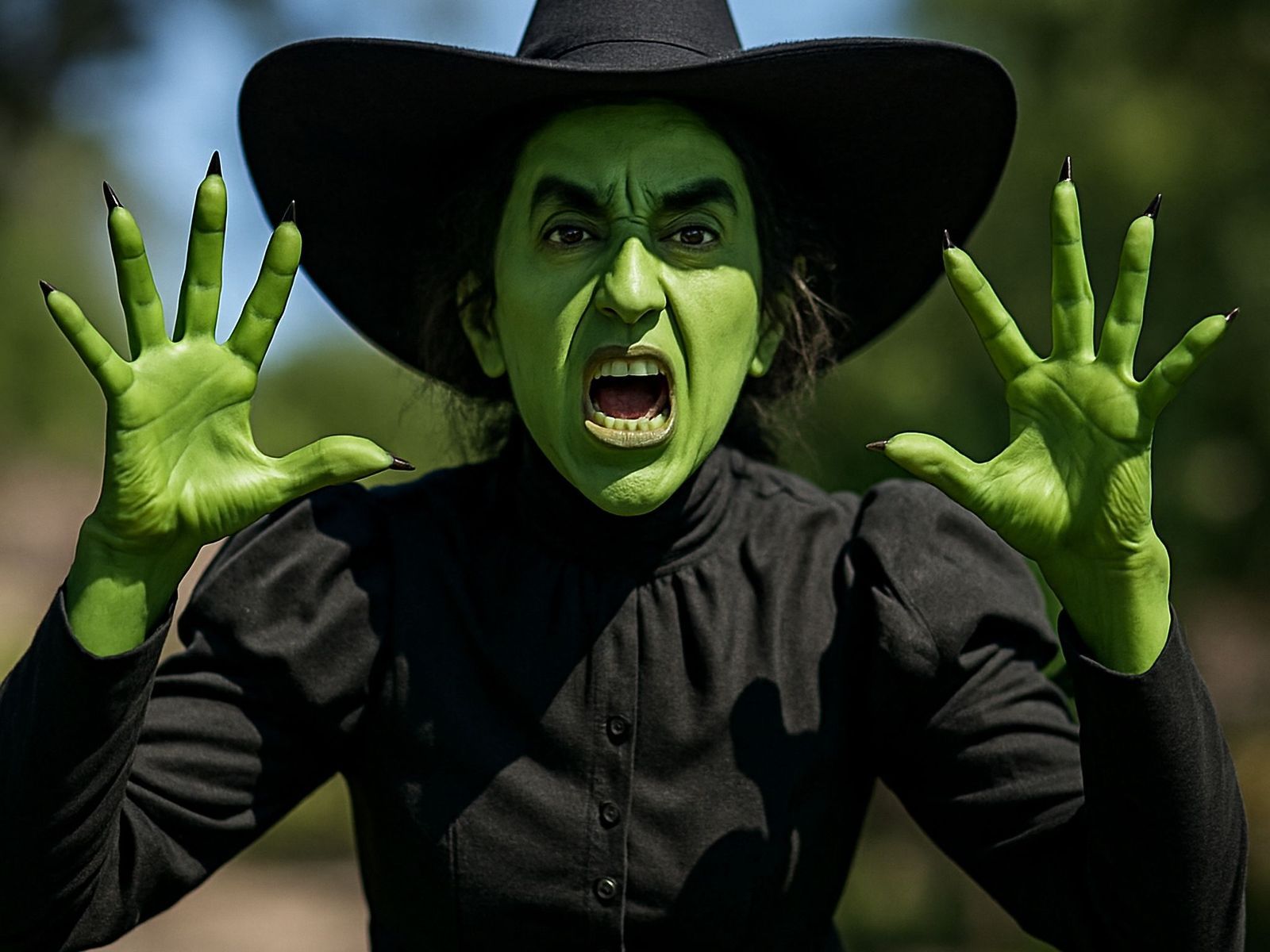
Image: Shutterstock AI Generator

Margaret Hamilton brought to life the unforgettable green-skinned Wicked Witch of the West in The Wizard of Oz (1939), scaring generations of children with her sinister laugh. In the movie, she relentlessly pursues the protagonist, Dorothy Gale (Judy Garland), and her friends and delivers one of the most quoted villain lines ever: " I'll get you, my pretty… and your little dog, too !"

The witch also commanded an army of Winged Monkeys in some of the most memorable and nightmare-inducing scenes. The American Film Institute ranked The Wicked Witch of the West as the fourth greatest movie villain of all time in 2003.

3
Joker (Batman)
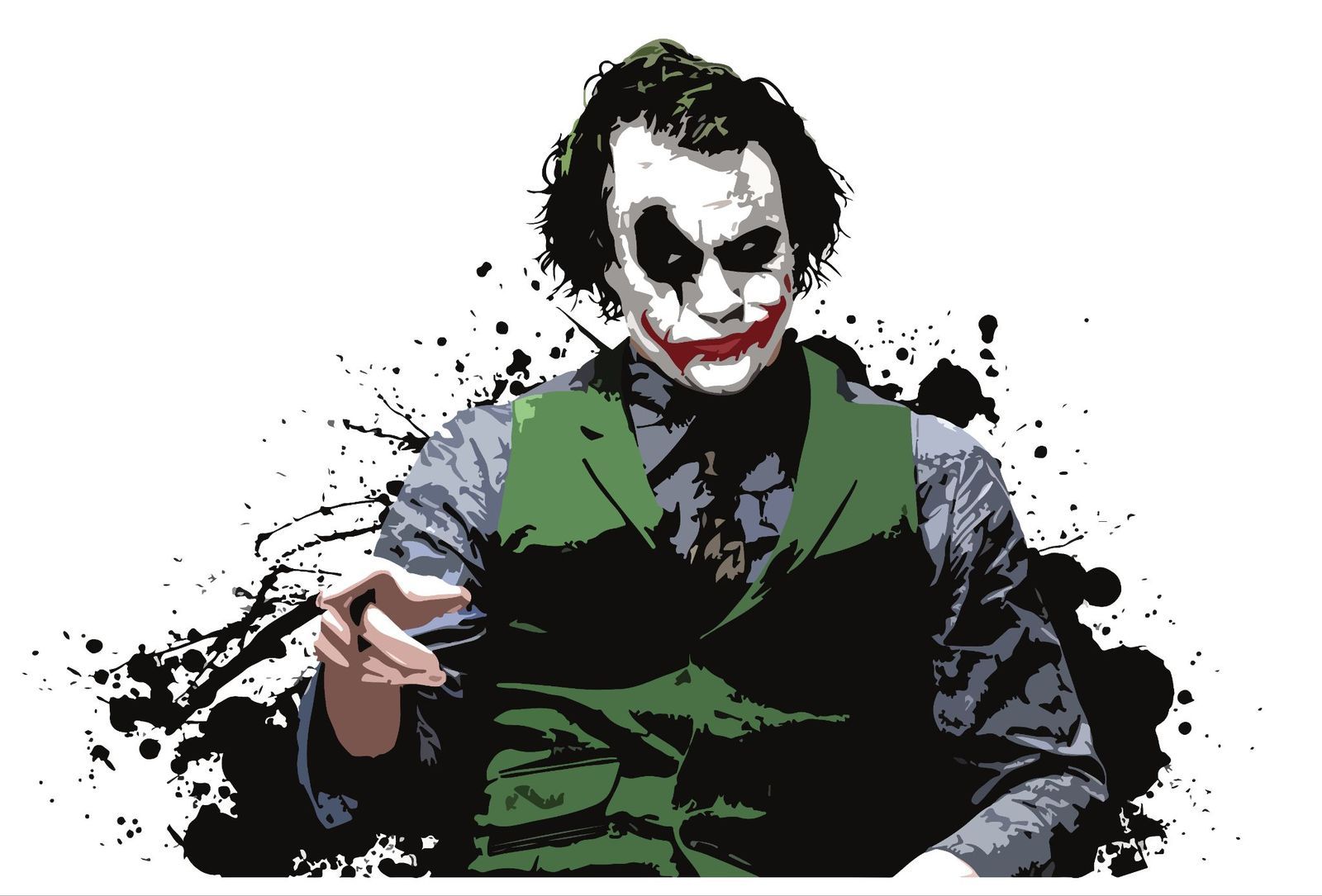
Image: Mahatir Salam

First introduced in the premiere Batman comic book in 1940, the Joker has been portrayed countless times in movies, animated fare, and TV shows, and it's hard to pick the best rendition. The iconic villain has so many characteristic features that make him unique: his exaggerated smile, green hair, and especially his twisted, vicious laugh . The first time The Joker made his big-screen debut was in Batman (1966) with Cesar Romero in the role, though he inarguably became an icon in Batman (1989) when Jack Nicholson breathed life into the character.

The Joker is Batman’s greatest enemy, and unlike many powerful villains, he doesn’t have powers . His only tool is his intelligence, which he uses to come up with the most macabre methods to terrorize Gotham. In 2009, actor Heath Ledger won a posthumous Academy Award for Best Supporting Actor for his performance playing The Joker in The Dark Knight (2008).

4
Norman Bates (Psycho)
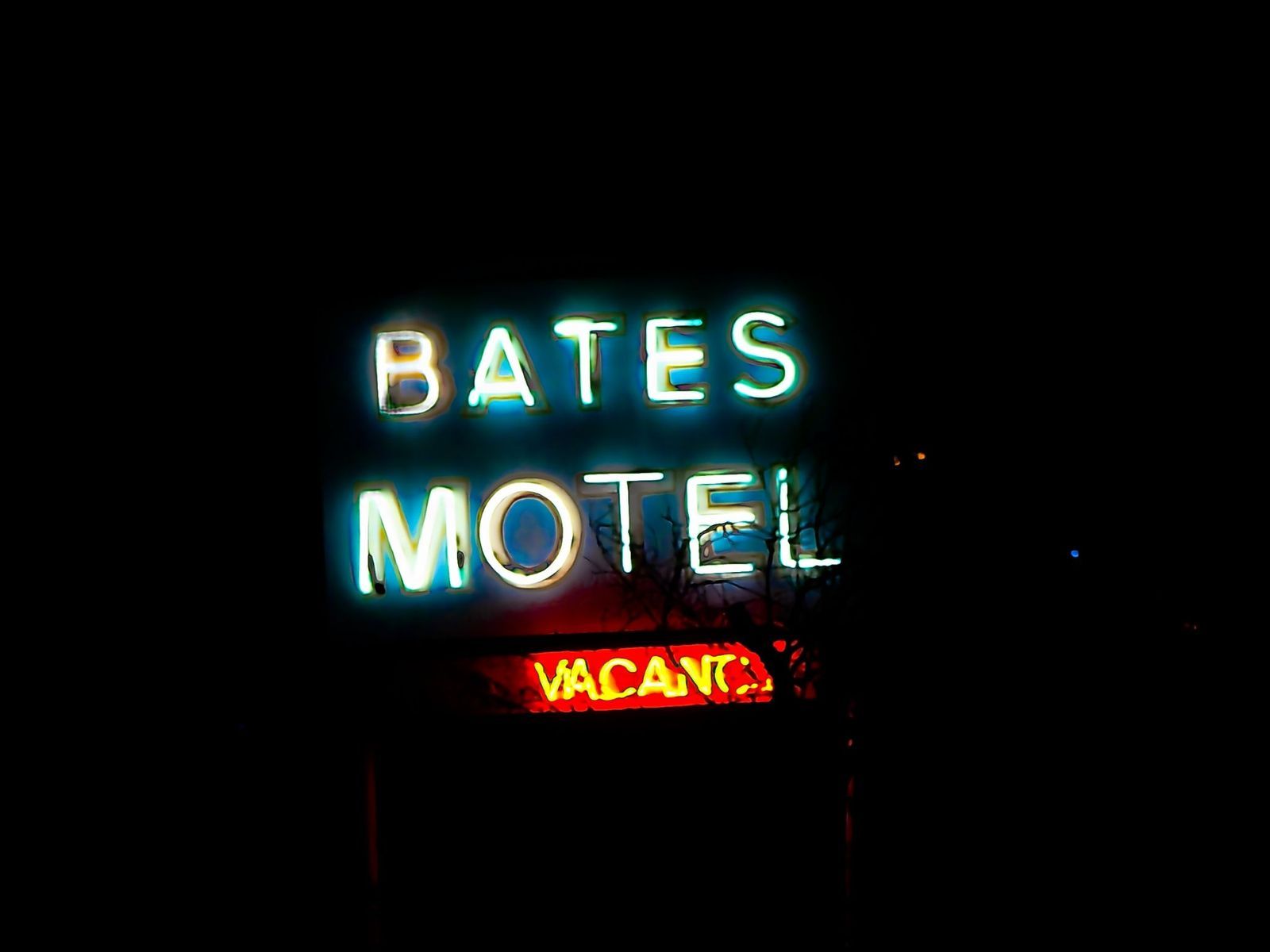
Image: Usa-Pyon

Who could forget the shower scene massacre of Marion Crane (Janet Leigh) in Alfred Hitchcock’s Psycho (1960) at the hands of Norman Bates (Anthony Perkins) — perhaps the most well-known murder scene of all time.

Belying the violent psychopath that lurks within, Norman Bates is the mild-mannered owner of the Bates Motel, and his notorious Mommy issues lead him to murder. Bates was ranked as the second greatest movie villain of all time by the American Film Institute.

5
Hannibal Lecter (The Silence of the Lambs)

Image: Anton_Ivanov

The cold-hearted and calculating Hannibal "The Cannibal" Lecter became world-famous thanks to The Silence of the Lambs (1991) and the fantastic performance of Anthony Hopkins —earning him an Oscar for Best Actor. Hannibal’s refined manners are unsettling when you know the brutality of his actions, creating an agonizingly tense atmosphere every time he’s on screen.

Hannibal uses his deep understanding of human psychology to manipulate almost everyone he meets, including FBI trainee Clarice Starling (Jodie Foster), with his iconic "Hello, Clarice" greeting. Hannibal Lecter was named the greatest villain of all time by the American Film Institute.

6
The Terminator (T-800) (The Terminator)

Image: Anton_Ivanov

Even though Arnold Schwarzenegger has over 50 onscreen credits, his most recognizable performance was playing the T-800 in The Terminator (1984), a relentless cyborg assassin sent from the future by the artificial intelligence Skynet that will never stop pursuing his target, no matter what.

The T-800 looks human, though beneath the skin, he’s an indestructible machine with a metal skeleton, and he is tasked with the mission of eliminating Sarah Connor (Linda Hamilton). During the movie, the T-800 delivers the staple line of the saga: "I’ll be back."

7
Freddy Krueger (A Nightmare on Elm Street)

Image: Sandro Amato

The idea of a homicidal maniac who can murder you in your dreams while you are sleeping is absolutely spine-chilling and still haunts many of us. Freddy Krueger was introduced in A Nightmare on Elm Street (1984), revolutionizing horror by attacking teens in a place where their parents couldn’t save them .

Freddy became an all-time horror icon thanks to his burned face, red-and-green striped sweater, brown fedora, and glove fitted with razor-sharp blades. Of the nine movies in which Freddy is featured, Robert Englund portrayed him in eight, which makes him one of the longest-running actors to play the same villain.

8
Michael Myers (Halloween)

Image: Willrow Hood

Michael Myers, originally appearing in Halloween (1978), wears one of the most famous props in movie history: his mask. The undying, knife-wielding killer — whose chief target in the first film and many sequels is Laurie Strode (Jamie Lee Curtis) — has been portrayed by several different actors over the years, but Nick Castle played him in the original film, turning Michael into a defining villain of the slasher genre .

Like many other villains on this list, Michael Myers’ outfit is unmistakable, and his slow, deliberate walk is a mark of the character. In contrast with other major villains, Michael never speaks, and his silence adds to the mystery surrounding him .

9
Cruella de Vil (101 Dalmatians)

Image: Shutterstock AI

Cruella de Vil’s film debut was in One Hundred and One Dalmatians (1961), and although the animated Disney movie is a lovely classic, we cannot say the same about her. The eccentric heiress has an obsession with Dalmatians because she wants to make a spotted fur coat , so she terrifies a family trying to steal their puppies.

Her appearance, with her black-and-white hair (a nod to the Dalmatians), red gloves, and bold makeup, is impossible to ignore . Cruella de Vil became even more famous after Glenn Close portrayed her in the live-action films 101 Dalmatians (1996) and 102 Dalmatians (2000).

10
Nurse Ratched (One Flew Over the Cuckoo's Nest)

Image: Maxx-Studio

Unlike the rest of the villains on this list, Nurse Ratched — brought to life by Louise Fletcher in One Flew Over the Cuckoo's Nest (1975) — doesn’t rely on violence; instead, she controls others through quiet authority and emotional manipulation . Ratched is the head nurse of a psychiatric hospital where patient Randle P. McMurphy (Jack Nicholson) battles against her for freedom and control.

Her calm yet intimidating demeanor makes her one of cinema’s most chilling antagonists, and in 2003, the American Film Institute (AFI) ranked Nurse Ratched as the fifth greatest movie villain of all time — the highest-ranked female villain on the list.

General General 4 min read

The secrets of the greenback

Dollar bills are green for this reason

Image: Pepi Stojanovski

The U.S. dollar is one of the most powerful and recognizable currencies in the world, but its physical form is unique for many other reasons . From its composition to its symbols, dollar bills and coins are carefully designed to combine history, security, and convenience. Let’s explore our national currency!

1
What are bills made of?

Image: Viacheslav Bublyk

Unlike other currencies, dollar bills are not made of paper or plastic. U.S. dollar bills are made from a special fabric blend composed of 75% cotton and 25% linen. This mix makes the bills extremely durable and resistant, and they can be folded about 4000 times before tearing.

2
What bills are valid?

Image: U. S. Government, The Bureau of Engraving and Printing, Public domain, via Wikimedia Commons

Any U.S. dollar bill that was legally printed is valid, no matter how old, as American currency does not have an expiration date. While some bills might not be accepted by businesses of foreign exchange services due to their condition or if they are a discontinued version of the bill, the bills themselves are still valid, and American banks will accept them, though they might take them out of circulation.

3
American leaders

Image: Lukasz Radziejewski

Five bills have a depiction of an American president. The exceptions are the $10 bill, with Alexander Hamilton on the front, and the $100 bill, with Benjamin Franklin. The $1 bill, depicting George Washington, is extremely symbolic: several elements are repeated 13 times as a nod to the thirteen colonies, and it showcases the Bald Eagle and the Eye of Providence as a sign of God watching over America.

4
A change in size

Did you know that dollar bills used to be so big that they were nicknamed "horse blankets"? Original dollar bills were 7.4 × 3.1 inches. In 1929, the Treasury Department reduced the size of bills to 6.14 × 2.61 inches to reduce production costs and materials. Old bills, though still valid, are worth much more as collector items.

5
Uniformity

Image: Avinash Kumar

Besides their value and design, all dollar bills have the same size (6.14 × 2.61 inches), color, and weight (1 gram) , which sets American currency apart from other countries where bills of different values are differentiated by size, color, or both. Why doesn’t the U.S. implement differences among bills? The cost of adapting vending machines, bank drawers, and ATMs to new bill sizes would cost billions of dollars.

6
Hard to copy

Image: United States Treasury Department, Public domain, via Wikimedia Commons

Originally, dollars were not green, but black. As time passed, green ink was favored, as it was cheap and did not fade as much as black. The new color also prevented people from using black-and-white cameras to create counterfeit money. Currently, dollar bills are predominantly green, but newer versions also include extra colors, such as pink, orange, or purple.

7
A $100,000 bill?

Image: The original uploader was Durova at English Wikipedia., Public domain, via Wikimedia Commons

Have you ever seen a $500 or 1,000 dollar bill? What about a $100,000? Up until 1945, the U.S. Treasury printed $500, $1,000, $5,000, $10,000, and $100,000 notes , in addition to the values currently in use. These higher-value notes were mainly intended for bank and government use, but were sought by criminals as they made it easier to hide large amounts of money. Even though they were officially discontinued in 1969, these notes are still valid, though rare, and they have a high worth as collector's items.

8
No numbers

Image: Quilia

Unlike bills, American coins have different sizes and colors related to their value. Originally, gold, silver, and copper were used for coins, but modern coins are made of copper, zinc, or nickel. Besides their size and design, the value of each coin is printed in letters, not in numbers , alongside depictions of American presidents.

9
Liberty for all (the coins)

Image: Money Knack

By law, all American coins must include six specific details : the word ‘Liberty’, the name of our country, the national motto "In God We Trust", the oldest American motto "E Pluribus Unum", the value of the coin, and the year. Each coin also includes a mint mark that shows where it was made: "P" for Philadelphia, "D" for Denver, "S" for San Francisco, and "W" for West Point.

10
A global currency

Image: Logan Voss

The American dollar is one of the most powerful currencies in the world, acting as a backbone for international trade and finances. It is estimated that two-thirds of the physical dollars in circulation are outside American territory. Besides the U.S. and its territories, eight sovereign nations have the U.S. dollar as their official currency, with several more accepting it as legal tender.

Geography Geography 4 min read

Get behind the wheel!

Motorhome paradise: 10 great spots in the U.S. to visit on wheels

Image: Frankie

Few countries, if any, are more prepared for a motorhome trip than the U.S. Its countless roads, vast and diverse landscapes, and thousands of RV campgrounds offer different types of journeys for every camper profile. Take a look at the following 10 suggestions, ranging from specific places to entire road trips, and see if any of them entices your curiosity!

1
Yellowstone National Park

Image: Johanna Persson

National parks and motorhomes are a match made in America, and no list of this kind would be complete without mentioning Yellowstone National Park, the oldest park in the country and a very popular RV destination for all the right reasons.

The park offers several RV-friendly campgrounds, and there are plenty of options to choose from in the surrounding towns as well. For drivers looking for an amazing scenic drive, take the Beartooth Highway, which will lead you to Yellowstone’s Northeast entrance. This roadway has been dubbed "The most beautiful in America" and is also known as the "Highway in the Sky."

2
Outer Banks

Image: Sergio Martínez

The Outer Banks is a chain of barrier islands off the coast of North Carolina , offering some of the East Coast’s most impressive and scenic beaches. With numerous RV parks throughout the islands, each with its unique charm, this location is an RV paradise.

Hike the largest dune system on the East Coast at Jockey’s Ridge State Park, kayak the peaceful waters of Cape Hatteras National Seashore, or take a ferry ride to Ocracoke Island’s rustic village. The Outer Banks has activities for everybody and infrastructure to provide all the necessary comfort.

3
Acadia National Park

Image: Marek Konopnicki

Acadia National Park is another gem on the RV roadmap of the U.S. Located primarily on Maine’s Mount Desert Island , the largest island off the coast of Maine, the park is sometimes referred to as the "Crown Jewel of the North Atlantic Coast."

Aside from being home to the highest rocky headlands along the Atlantic coastline of the U.S., the park features several different habitats, offering plenty of plants and animals to see. Acadia has four campgrounds within the park, three of which are RV-friendly.

4
California

Image: Fabian

The entire state of California makes for an incredible RV road trip , offering an endless supply of natural beauty, from towering redwood forests to dusty deserts to breathtaking seascapes and shorelines.

RV travelers can start their journey just northeast of San Diego and follow a clockwise loop, visiting the coast first and exploring the state's inner beauties later.

5
Joshua Tree National Park

Image: Mariana Brás

Joshua Tree National Park features some of America’s most beautiful landscapes, set along the sun-blasted frontier of the Mojave and Colorado deserts . That countryside includes remarkable monzogranite formations and boulders, such as Skull Rock, as well as multiple mountain ranges.

Year-round camping is available in this area, although the summer heat may not be for everyone. There are several campgrounds in the park, ranging from well-developed to primitive options and beyond.

6
Rocky Mountains

Image: Luke Porter

A road trip around the Rocky Mountains in a motorhome is a once-in-a-lifetime experience that any RV camper would love to add to their wishlist. These mountains stretch over 3,000 miles from New Mexico to British Columbia, offering a lifetime's worth of exploration opportunities.

Drivers could spend weeks at Yellowstone and Grand Teton alone, but the entire route is packed with amazing scenery and comfortable RV parks, ranging from primitive sites to lush locations with premium amenities.

7
New England

Image: Rodrigo Curi

New England is an excellent region for an RV road trip. Its balanced blend of forests, rocky seascapes, colonial history, and gorgeous seaside towns offer plenty of opportunities for adventure, sightseeing, relaxation, and more.

A possible route could start in upstate New York, heading east and north into the parks of upper New England, and then heading south along the coast after Acadia for some breathtaking ocean views.

8
Great Smoky Mountains National Park

Image: lucas Favre

The Great Smoky Mountains National Park spans the borders of Tennessee and North Carolina, containing expansive forests and mountainous terrain . This southern wonder features hiking trails, including parts of the greater Appalachian Trail, and a vast array of plant and animal life to explore.

The area is a popular RV destination, and there is no shortage of camps along the way, offering rest and comfort for happy campers.

9
Black Canyon of the Gunnison National Park

Image: Vladimir Kudinov

The majestic state of Colorado is filled with breathtaking landscapes , and the Black Canyon of the Gunnison National Park is no exception. The Gunnison River sculpted this vertical terrain of rock over thousands of years , creating many picturesque paths for hikers of all skill levels to explore.

During the winter, the sloped hills become a great destination for cross-country skiers. After a long journey in the wilderness, visitors can return to their RV at the South Rim Campground, which welcomes thousands of guests each year.

10
Sedona

Image: Julian Ackroyd

Located where the Colorado Plateau drops down to Arizona’s deserts, Sedona is world-famous for its red rock formations and vibrant communities. RV campers can also visit the Grand Canyon , which is situated not too far to the north .

Sedona is filled with RV parks and campgrounds, and ample public lands in the area offer a multitude of primitive camping opportunities.

Explore more American facts

Choose your favorite category!

General
General

As American as apple pie—the very best America has to offer!

Culture
Culture

Delve into the astounding richness of American lore.

Geography
Geography

Hop in and explore vast and diverse American landscapes.

History
History

Discover the key moments that shaped the United States.