General General 5 min read

WHAT ARE WE ORDERING TONIGHT?

10 Foreign Foods That America Embraced

Image: Önder Örtel

There are many ways of exploring the world and food is a great way to do it. While it would be great to experience each dish in its place of origin, these days it is possible to take a culinary trip around the world without ever leaving your home town.

America is a nation of immigrants and, as such, it has embraced many different types of food from all over the globe. Some of these dishes have proven to be quite popular and widespread, while others have remained within their own communities. Which of these have you tried?

1
Pizza (Italy)

Image: Kelvin T

Let us get the obvious out of the way first. Pizza and America were a love at first bite. This delicious food was brought to America by Italian immigrants in the late 19th century. In 1905, Gennaro Lombardi applied to the New York City government for the first license to make and sell pizza in this country, at his grocery store on Spring Street in what was then a thriving Italian-American neighborhood.

These days, from New York to Chicago to California, Americans consume more than three billion pizzas a year.

2
Sushi (Japan)

Image: Vinicius Benedit

A Japanese dish that has been a hit for a couple of decades now is, of course, sushi . This elaborate meal arrived in the U.S. somewhere between the 1950s and 1960s, and it was popularized with the opening of Kawafuku Restaurant in Los Angeles’ Little Tokyo.

Sushi restaurants began to open outside the confines of Little Tokyo, and the cuisine gained popularity, especially with Hollywood celebrities. Cosmopolitan cities like New York and Chicago soon followed suit with sushi restaurants of their own, and by the late 1980s, sushi was a full-on craze.

3
Burritos (Mexico)
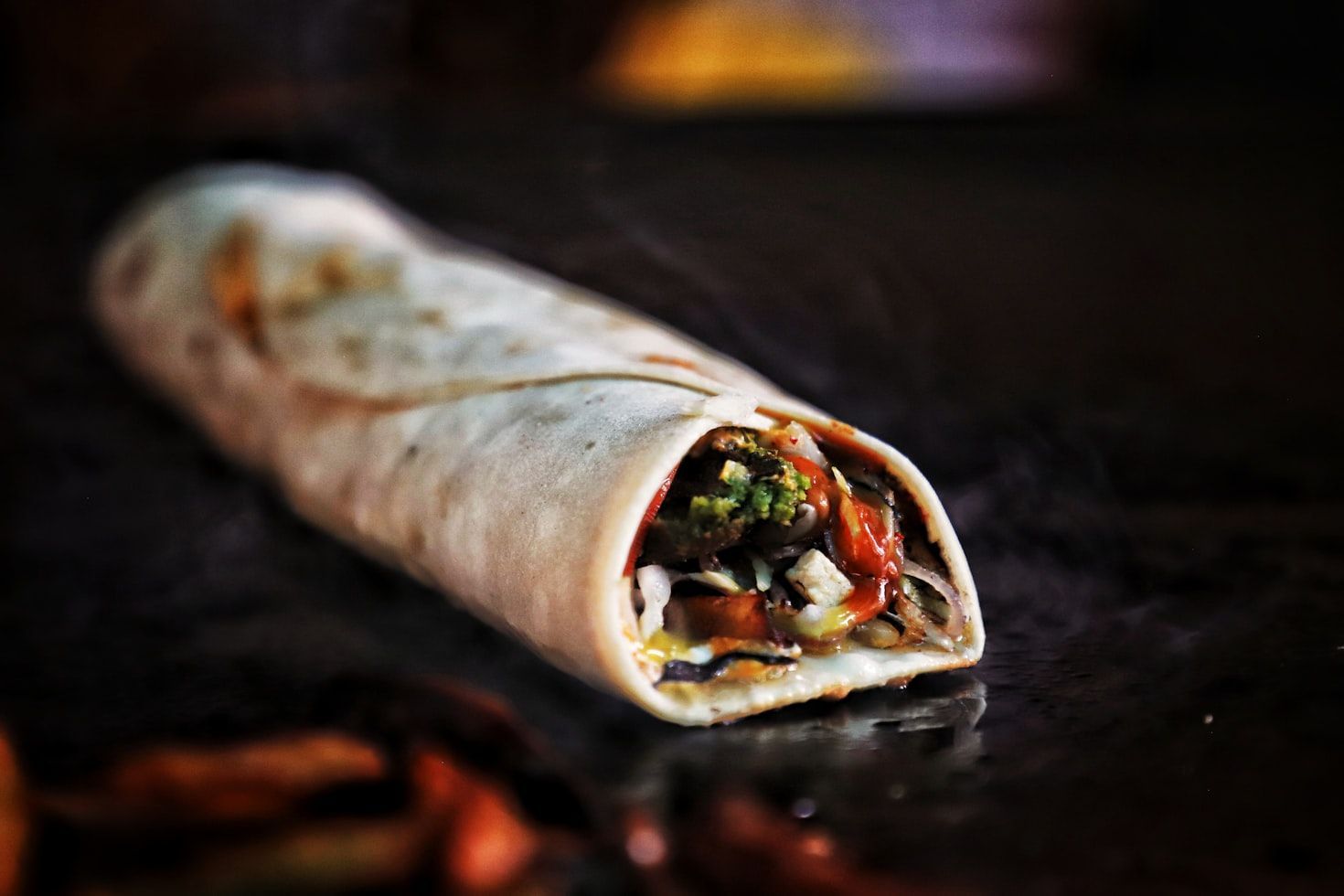
Image: Kashish Lamba

Being a traditional dish from a neighboring country, it is no wonder that burritos are such a popular food in the United States. These Mexican delicacies first appeared on American restaurant menus at the El Cholo Spanish Cafe in Los Angeles during the 1930s.

North of the border, the burrito evolved to include a wider variety of fillings, such as rice, cheese, sour cream, and salsa, and it became a popular and customizable fast-food item.

4
General Tso’s Chicken (China)

Image: Sunday 133

As ubiquitous as Chinese food is in America, General Tso’s Chicken is an ubiquitous item in its menus. The dish as most Americans know it today was invented by Peng Chang-kuei, a chef from the Hunan province.

During the 1950s, Taiwan became a haven for classical Chinese cuisine. Peng opened a restaurant in the capital of Taipei and for years served food inspired by traditional Hunanese cooking, including the now-famous General Tso’s Chicken.

5
Gyros (Greece)
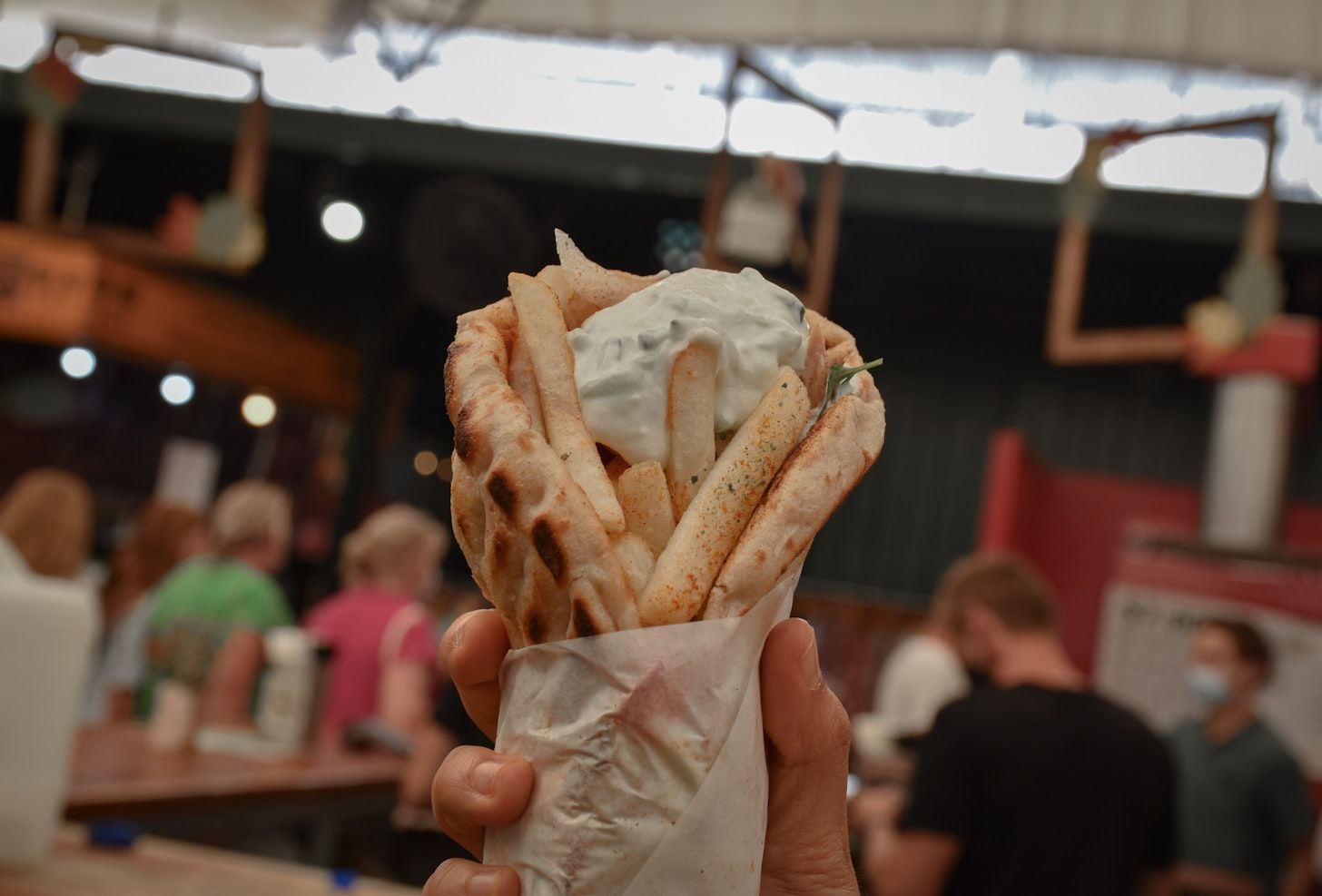
Image: irws

A beloved street food, Greek gyros have always been popular in the Mediterranean countries but gained popularity in the United States in the early 20th century when Greek immigrants began emigrating to the U.S. shortly after World War II.

A traditional Greek gyro is a dish made from thinly sliced meat baked on a vertical spit and served with a tangy sauce called tzatziki. It is most commonly made with lamb, but beef and pork are also available. In Greece, gyros are a popular meal choice.

6
Pad Thai (Thailand)

Image: Alyssa Kowalski

Pad Thai was born in Thailand during the time of World War II. The Prime Minister made this popular dish at the time because he was concerned about the country’s high rice consumption. So, to lower rice consumption, he encouraged citizens to eat more noodles—which Chinese merchants were selling at the time. The combination of Chinese rice noodles and native Thai flavors used for this dish eventually paved the way to creating what we call Pad Thai these days.

However, the delicious Pad Thai you might be familiar with from Thai restaurants in the U.S. is not a traditional Thai dish. Instead, it’s a nod to the American palate, introduced to the United States by Chinese immigrants who used "pad" as a catch-all term for any stir-fried noodle dish.

7
Coq Au Vin (France)
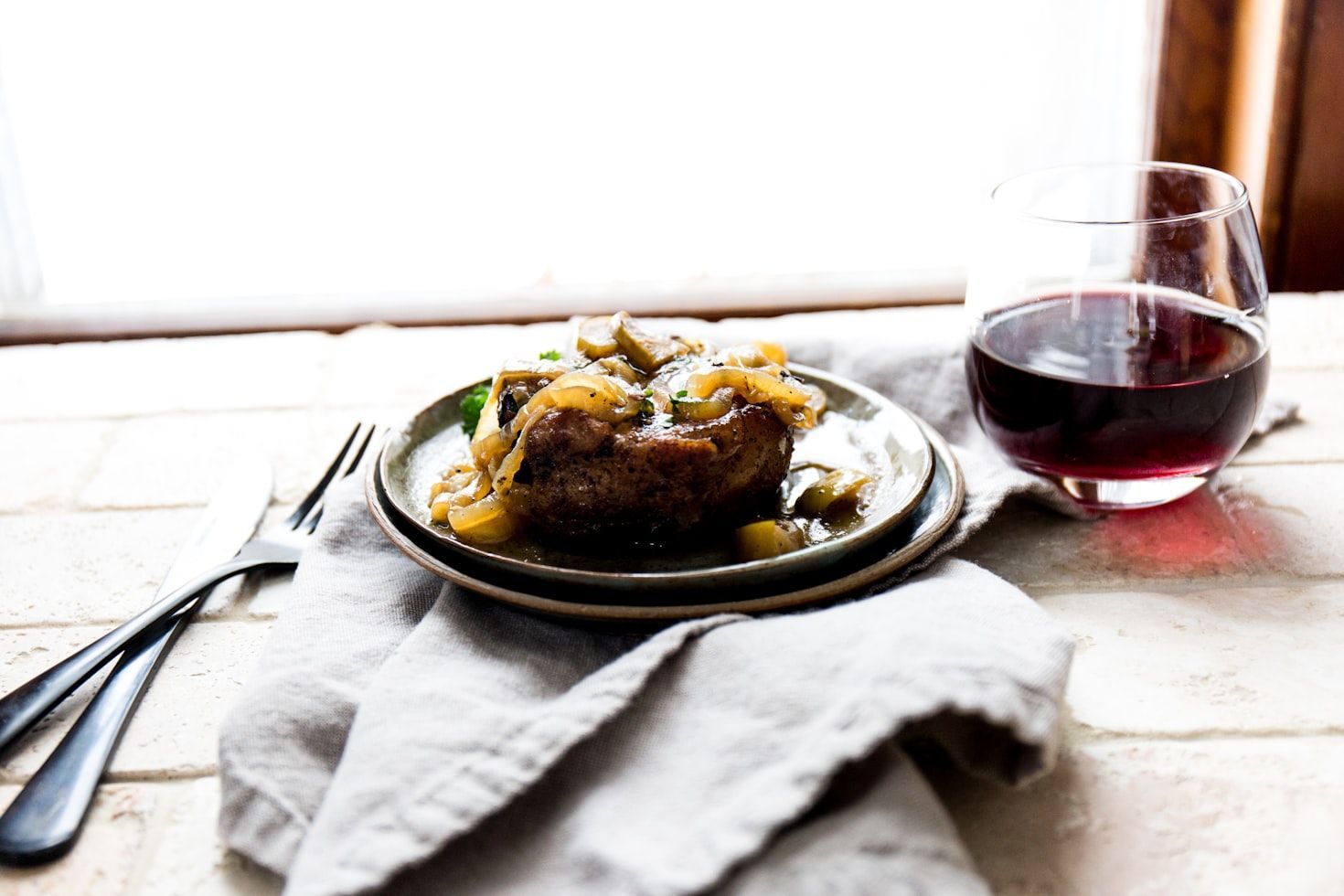
Image: Katherine Chase

Always associated with high cuisine, the iconic coq au vin was featured by Julia Child in her breakthrough 1961 cookbook Mastering the Art of French Cooking. And she must have liked it because it was a recurrent dish on her PBS cooking show The French Chef.

This media exposure helped increase the visibility and popularity of the dish in the United States, and coq au vin was seen as one of Child’s signature dishes.

8
Ceviche (Peru)

Image: Pirata Studio Film

Ceviche is a Peruvian seafood dish that made its way onto American plates in the 1980s when Caribbean flavors came from Florida. In its classic form iced cubes of raw fish, marinated in a lemon or lime juice mixture, react with the citrus juices to cure the fish protein and cause it to become opaque and firm while absorbing flavor.

The essential ingredients of any ceviche are raw fish, citrus juices, and seasonings. So, it could be said that, while not a deal-breaker, being a fish enthusiast will definitely help you enjoy this delicious meal.

9
K-BBQ (Korea)
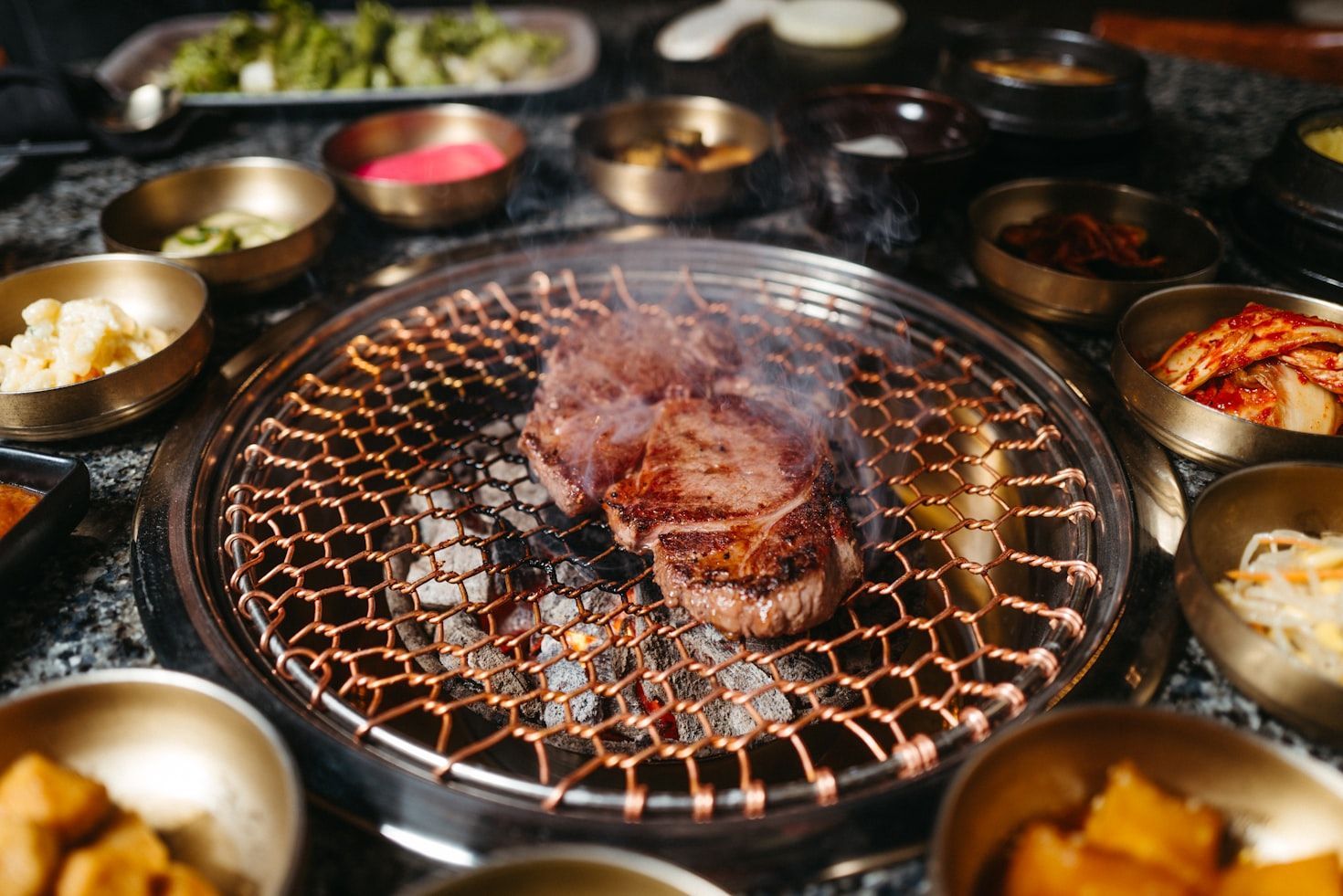
Image: Daniel Lee

Korean BBQ as we know it today began to develop in the 1940s and 1950s, following the Korean War when the US military introduced new grilling techniques and equipment to Korean food culture. In the following decades, Korean BBQ spread throughout Korea and eventually around the world.

During the past decades, Korean BBQ went from being something consumed by Korean immigrants and their descendants exclusively to something that can be found and is beloved in nearly all American cities.

10
Ropa Vieja (Spain)
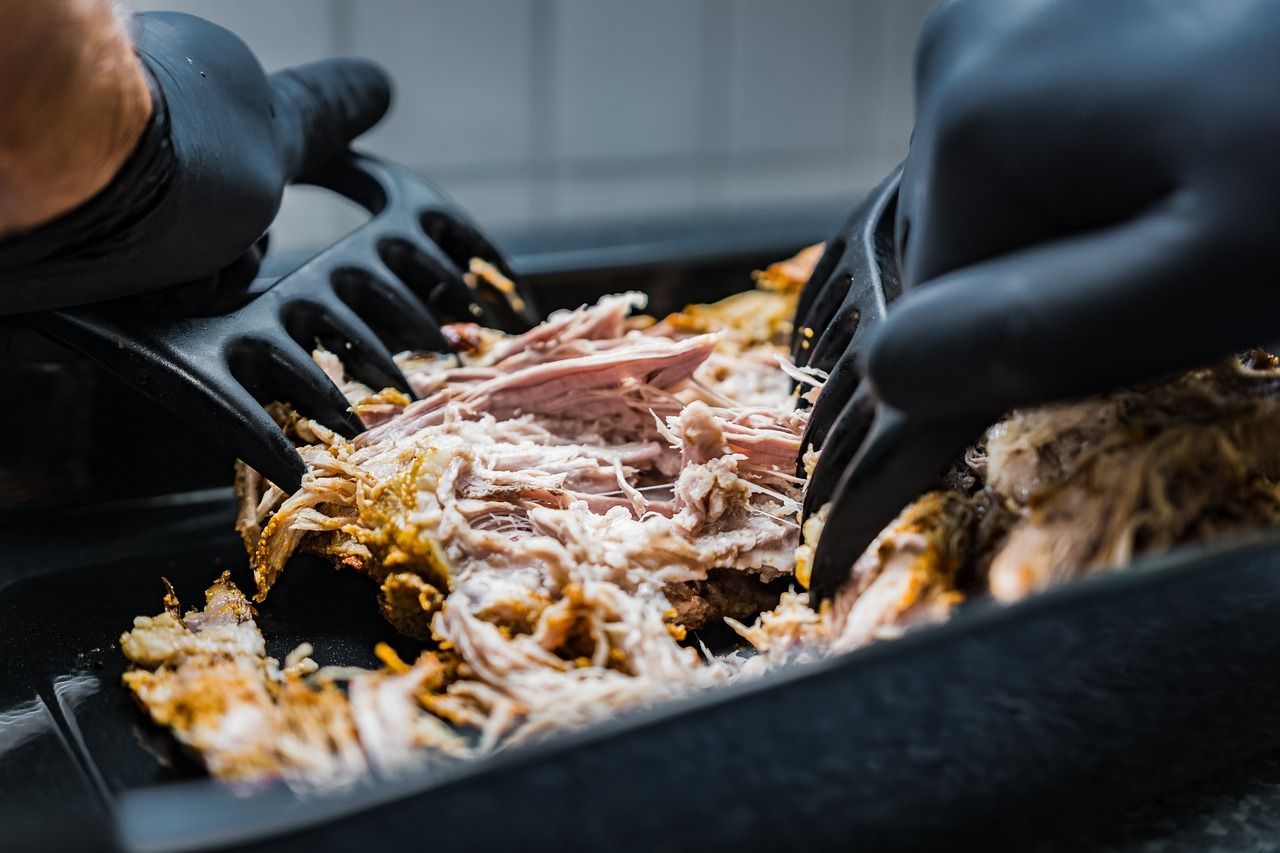
Image: Medamedia

A strange name for such a tasty meal, Ropa Vieja is Spanish for "old clothes". The origin of the name comes from the legend of a poor man who shredded his clothes to feed his family, magically transforming the rags into a slice of beef and vegetables. Legends aside, this is a delicious meal that became famous in Cuba but can be traced back to Spain.

Cooking the meat is a labor-intensive process, but it’s very rewarding when done right. The dish is made the night before so the juices really seep into the beef, giving it an amazing flavor and texture. Ropa Vieja made its way through Florida and into the country.
Geography Geography 3 min read

Let’s go book-gazing!

Beyond books: 11 breathtaking libraries you are going to want to visit

Image: Clay Banks

Whether you're a book lover or not, there's something magical about stepping into a beautiful library—the scent of old volumes, the quiet hum of readers, and the sheer architectural grandeur. Some libraries across the US are among the most enchanting places you can walk into. Here is a list of 11 stunning libraries worth exploring, even if you're not a bookworm!

1
Library of Congress

Image: Vincent Yuan @USA

Of course—the beating heart of American knowledge! As the largest library in the country and the world , it holds millions of books, rare manuscripts, and historical treasures.

Its grandeur isn’t just in its collection. Take the Thomas Jefferson Building: with its elaborate ceilings, marble columns, and frescoes, stepping inside feels like walking into a cathedral. Ever wanted to see an original Gutenberg Bible? This is the place.

2
New York Public Library

Image: Ran Ding

Patience and Fortitude stand guard—those are the two iconic stone lions flanking the entrance. The New York Public Library’s main branch is a true city landmark.

Step inside the Stephen A. Schwarzman Building, with its grand marble-lined halls and sweeping staircases. Don’t miss the Rose Main Reading Room —an awe-inspiring space adorned with murals, chandeliers, and rows of inviting wooden tables.

3
Boston Public Library

Image: Wendy Wei

A library so impressive it feels like it should charge an admission fee—but lucky for us, it doesn’t! Established in 1848, it was the first large free municipal library in the United States.

It’s home to Bates Hall, a stunning reading room with soaring barrel-vaulted ceilings and warm oak tables—a dream setting for book lovers.

4
Seattle Central Library

Image: Sylvia Yang

A sharp contrast to the historic beauties on this list, but no less worthy of inclusion. The Seattle Central Library is a futuristic masterpiece.

Designed by renowned architect Rem Koolhaas, its bold glass-and-steel exterior is impossible to miss. Inside, multi-level platforms create a space that feels more like a sci-fi movie set than a traditional library.

5
Geisel Library at the University of California, San Diego

Image: Jeremy Huang

Named after none other than Dr. Seuss himself (real name: Theodor Geisel) and his wife, Audrey, this library looks like something straight out of a sci-fi novel.

Its unique Brutalist-meets-futuristic design makes it one of UCSD’s most recognizable landmarks. It houses an extensive collection—but let’s be honest, the main draw is the building itself. It’s an architectural oddity that feels both retro and futuristic at the same time.

6
George Peabody Library

Image: Elijah Hail

Some libraries feel grand, but this one feels magical . Tucked away in Baltimore, the George Peabody Library is known for its soaring atrium, lined with six stories of cast-iron balconies adorned with gilded accents.

The library’s collection specializes in 19th-century literature—but honestly, most visitors come just to soak in its beauty. It’s a book lover’s dream come to life.

7
Iowa State Law Library

Image: Muhammed A. Mustapha

Hidden inside the Iowa State Capitol in Des Moines, this library is a Victorian-era gem —think spiral staircases, intricate ironwork, and rows of leather-bound books stretching to the ceiling.

It may be lesser-known than others on this list, but it perfectly illustrates how libraries can be both functional and visually captivating. This setting alone makes you not mind so much having to do legal research.

8
Beinecke Rare Book & Manuscript Library

Image: Tim Bish

This is no ordinary library—as you can plainly see. It’s an architectural marvel . Located at Yale University, the Beinecke Library is famous for its translucent marble panels, which bathe the interior in a soft, golden glow.

9
Morgan Library & Museum

Image: mana5280

Walking into the Morgan Library feels like stepping into a European palace—pure Gilded Age opulence with ceiling frescoes, carved wood, and velvet drapes.

Originally J.P. Morgan’s personal book collection , it is now a New York City landmark and museum showcasing rare manuscripts, original works by Dickens and Austen, and even handwritten music by Mozart!

10
William W. Cook Legal Library

Image: Mathew Schwartz

Some law libraries are dull and purely functional. This is not one of them. Located at the University of Michigan, the Cook Legal Library is a Gothic gem with towering stained-glass windows, massive oak tables, and cathedral-like reading halls.

The architecture alone makes studying law feel a bit more poetic, but it’s also one of the finest academic law libraries in the country.

11
Suzzallo and Allen Libraries

Image: Cameron Stewart

This one looks like a place to learn witchcraft and sorcery, doesn’t it? Part of the University of Washington in Seattle, the Suzzallo and Allen Libraries feature a Reading Room that is a Gothic architectural masterpiece, with soaring ceilings and stained-glass windows .

General General 6 min read

12 American inventions that shaped modern life

Image: National Gallery of Art, CC0, via Wikimedia Commons

From life-saving medical developments to groundbreaking technologies, American inventors have transformed how we live, work, and communicate. These innovations not only transformed everyday life but also ignited the flame of progress across the globe. Let’s dive into our selection of the 12 inventions that best reflect American creativity and ingenuity.

1
The light bulb

Image: Zach Lucero

Delivering electricity to the masses was one of the greatest technological advances in human history. The mid-1800s saw great competition in this area, as inventors around the world raced to invent their own electric light. The first filament bulb was developed by British inventor Warren de la Rue in 1840, but his use of a platinum filament made it expensive and impractical.

A few years later, Joseph Swan in the UK and Thomas Edison in the US each independently invented bulbs using cheaper elements. However, Edison received a patent on his bulb in early 1880, slightly before Swan. The light bulb, an invention that quickly reached every home, revolutionized life around the world, led to the development of the electrical grid, and set the stage for our modern electricity-dependent society.

2
The telephone

Image: viarami

In this modern era of emails and text messages, it can be hard to appreciate that the telephone was once revolutionary. The telegraph, the phone’s predecessor, only transmitted brief written messages. The telephone, however, allowed people to speak with one another in real time over long distances.

Inventor, scientist, and engineer Alexander Graham Bell invented the electric telephone in 1876. Although Bell was Scottish-born and also lived in Canada, he patented his invention in the US . The telephone was a game-changing technology that improved business efficiency, enabled instant global connections, and allowed emergencies to be reported as they occurred. It effectively made the world more connected and faster-paced.

3
The fire escape

Image: Lewis J Goetz

When we think of US inventions, the first things that come to mind are usually the light bulb or the telephone. But did you know that the modern fire escape was also a US innovation? Designed in 1887, this simple yet life-saving invention changed building safety forever.

In the late 1800s, fires were devastating cities across America. One woman, Anna Connelly, saw this horror up close and decided to do something about it. She designed an external iron staircase system, and in 1887, she patented it. At a time when women couldn’t even vote, Anna’s invention became a safety standard in most major cities, saving thousands of lives. Today her name is barely known, but next time you see a fire escape, remember the woman who made them possible.

4
The cash register

Image: Di Du

The first mechanical cash register for calculating and recording sales transactions was invented by saloonkeeper James Ritty following the American Civil War. He was looking for a way to stop cashiers from stealing, and finally patented his novel invention in 1879.

When a transaction was completed, Ritty's Incorruptible Cashier made a bell sound, and the amount was displayed on a large dial on the front of the machine. During each sale, a paper tape was hole-punched so the vendor could keep track of sales. Pretty ingenious, don’t you think?

5
Interchangeable parts

Image: gayulo

Standardized interchangeable parts for machines are now a staple of modern manufacturing, but it’s not a new idea. There’s evidence that thousands of years ago, ancient Carthage used them to build warships, and ancient China applied the idea to crossbows. Many centuries later, French experimentation with interchangeable musket parts inspired Thomas Jefferson.

In 1798, President George Washington and his Congress finally agreed to Jefferson’s idea of implementing the technology in America. They awarded a contract to Eli Whitney—the inventor of the cotton gin—to supply the government with 20,000 muskets. Whitney recognized the potential of developing firearms with identical parts and mechanisms. His advancements in interchangeable parts laid the foundation for modern manufacturing, enabling improved quality control, reduced costs, and faster production of goods.

6
The assembly line

Image: Public domain, via Wikimedia Commons

For most of human history, manufactured goods were custom-made. Every model of a machine, piece of clothing, or tool was unique. The development of interchangeable parts was a huge advancement, but automobile manufacturer Ransom Olds took it a step further with the assembly line in 1901. By standardizing and automating many aspects of manufacturing, uniform goods could be created faster and at lower costs.

Olds’ vehicle, the Oldsmobile Curved Dash, became the first mass-produced car . His method was later adopted and perfected by Henry Ford, whose moving assembly line for the Model T in 1913 revolutionized manufacturing. Today, the assembly line combines human labor and automation to produce nearly every mass-market product on Earth. Many experts agree it was one of the most significant technological developments of the 20th century.

7
The airplane

Image: Wright Brothers, Public domain, via Wikimedia Commons

People have always observed birds and insects and dreamed of flying. The Greeks told the story of Icarus and Daedalus, who crafted wings of wax and feathers; Leonardo da Vinci sketched and theorized flying machines, but it wasn’t until 1903 that the airplane became a reality in Kitty Hawk, North Carolina.

Wilbur and Orville Wright experimented with aeronautics for several years before achieving their successful first flight. A few years later, airplanes were first used in warfare. Within seven decades, their technology evolved and took us to the Moon. Today, the airplane is an indispensable technology that allows us to transport goods and people around the world in no time.

8
GPS

Image: Stanislav Kondratiev

It’s hard to imagine life without GPS—but do you know how it began? When the Soviet Union launched Sputnik in 1957, American physicists realized they could track the satellite’s radio transmissions using the Doppler effect.

Soon after, the U.S. military began testing and launching the Navstar Global Positioning System satellites. In 1983, President Ronald Reagan approved GPS for civilian use, and by the start of the 21st century, GPS devices were widely available in vehicles and mobile phones . Today, GPS is an essential technology for business, travel, and military operations.

9
Personal computers

Image: Unidentified U.S. Army photographer, Public domain, via Wikimedia Commons

The first electronic general-purpose computer, ENIAC, was built in 1946 at the University of Pennsylvania. It occupied 1,800 square feet of floor space and weighed 30 tons. At the time, imagining a consumer-grade computer small enough to fit in every home would have seemed impossible. Yet, just one generation later, the impossible became reality.

Over the years, computers became smaller, cheaper, and more powerful than the ENIAC’s creators could have imagined. In 1971, John Blankenbaker developed the first PC, the Kenbak-1. Fifty years later, it is clear that personal computing has fundamentally shaped the modern world.

10
The internet

Image: Lorenzo Herrera

Revolutionary technologies such as the wheel, the internal combustion engine, the telephone, and the airplane have forever changed the way we travel and communicate. The internet is no exception; it gives people access to the entirety of human existence with just a few clicks.

In 1969, computer scientists at the Advanced Research Projects Agency (ARPA) created the first network connecting labs at UCLA and Stanford. Over time, their network expanded, connecting anyone with a device. Since then, the internet has revolutionized the way human beings access resources and share information.

11
E-mail

Image: Brett Jordan

After the personal computer and the Internet, we only needed to invent a modern method of sending messages and letters to each other. The Advanced Research Projects Agency Network, known as ARPANET, sent the first email in 1971. Within five years, the majority of exchanges within the ARPANET community were via email.

With the introduction of attachments in the early 1990s, electronic mail became the fastest and easiest way to send information from point to point. By the start of the 21st century, email enabled people around the world to communicate quickly and inexpensively, and the technology quickly became one of the primary tools for global communications.

12
Magnetic resonance imaging

Image: MART PRODUCTION

The impact of the MRI machine on medicine is invaluable. The principles behind nuclear magnetic resonance (NMR) have been known since at least the end of World War II. Yet, two researchers in the late 1960s and early 1970s recognized the potential of this technology to revolutionize medicine forever.

American chemist Paul Lauterbur and physician Raymond Damadian separately experimented with NMR in scanning for cancer cells. After publishing the promising results of their experiments, a patent was filed. By 1977, the first full-body scanner was developed. Since then, millions of lives have been saved by the MRI machine. For his contributions, Lauterbur was awarded the Nobel Prize in Physiology or Medicine in 2003.

Explore more American facts

Choose your favorite category!

General
General

As American as apple pie—the very best America has to offer!

Culture
Culture

Delve into the astounding richness of American lore.

Geography
Geography

Hop in and explore vast and diverse American landscapes.

History
History

Discover the key moments that shaped the United States.