Geography Geography 6 min read

NATURAL WONDERS

10 Breathtaking Waterfalls In The U.S. You Should Visit

Image: Jared Erondu

Waterfalls never disappoint. And the United States, with its vast and rich biodiversity, is home to some of the most impressive examples in the world: Niagara Falls, McWay Falls, and Tahquamenon Falls, just to name a few.

From stunning water slides overhanging white sandy beaches to gentle falls on the side of a glacier, here’s a list of 10 of the most dazzling American waterfalls that should be on your travel bucket list. Dive in!

1
Multnomah Falls (Bridal Veil, Oregon)
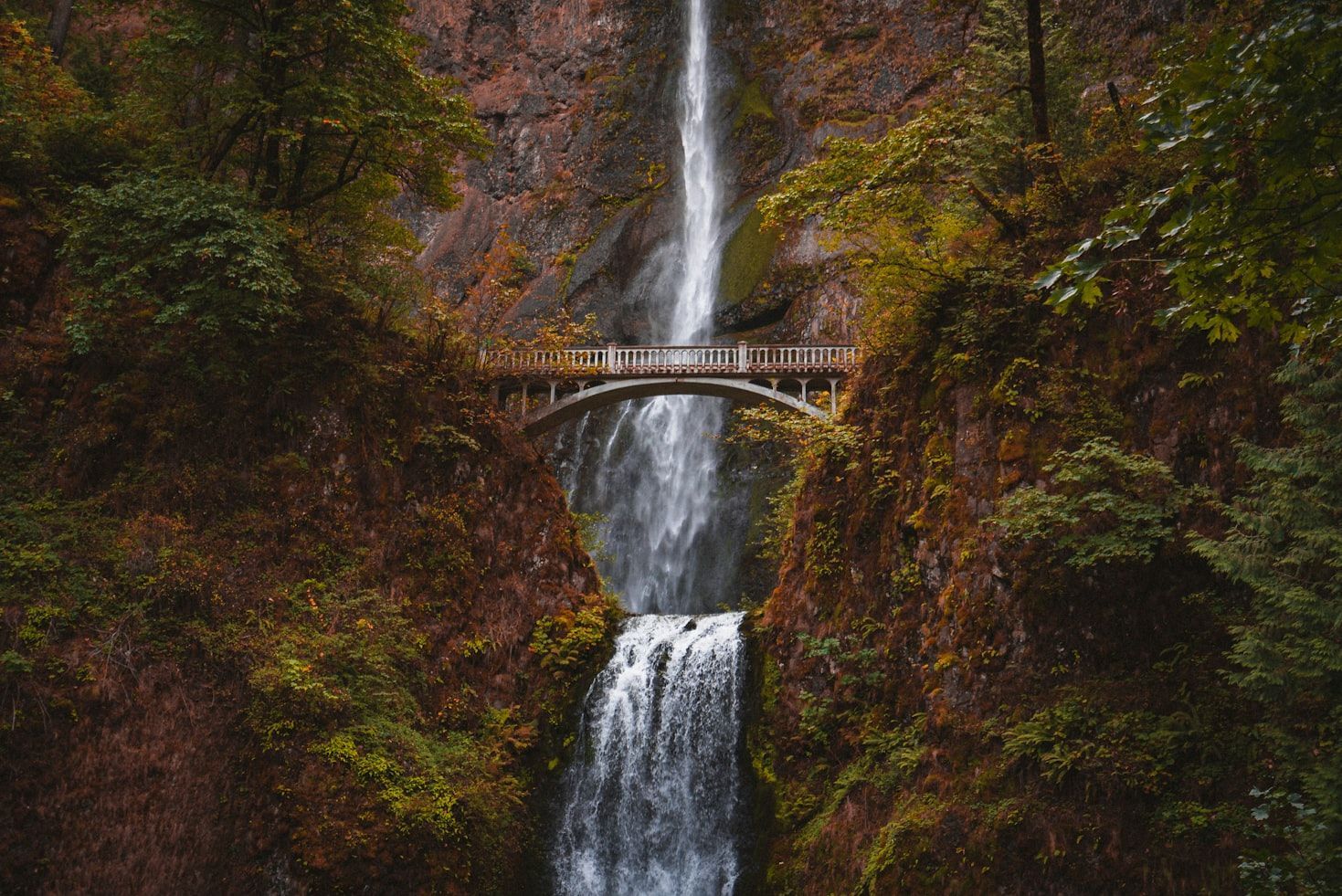
Image: Karsten Winegeart

Multnomah Falls is, without a doubt, the mother of all the 77 waterfalls that can be found in the gorge of the Columbia River in the state of Oregon. Located 30 miles east of Portland, it is one of the three largest waterfalls in the United States . Multnomah Falls has a staggering drop of 620 feet divided into two sections and is a natural wonderland of breathtaking beauty.

A stone bridge suspended between two cliffs offers the best views. The Benson Bridge, built in 1914, allows you to cross the lower falls and continue along a paved trail to the viewing platform at the top. From this privileged observation point, you’ll be able to appreciate the geology exposed by centuries of flooding. Multnomah Falls is the perfect place for hikers , especially during the autumn months. Its rich natural, cultural, and geological history is worth visiting at least once in a lifetime.

2
Bridalveil Fall (Yosemite, California)
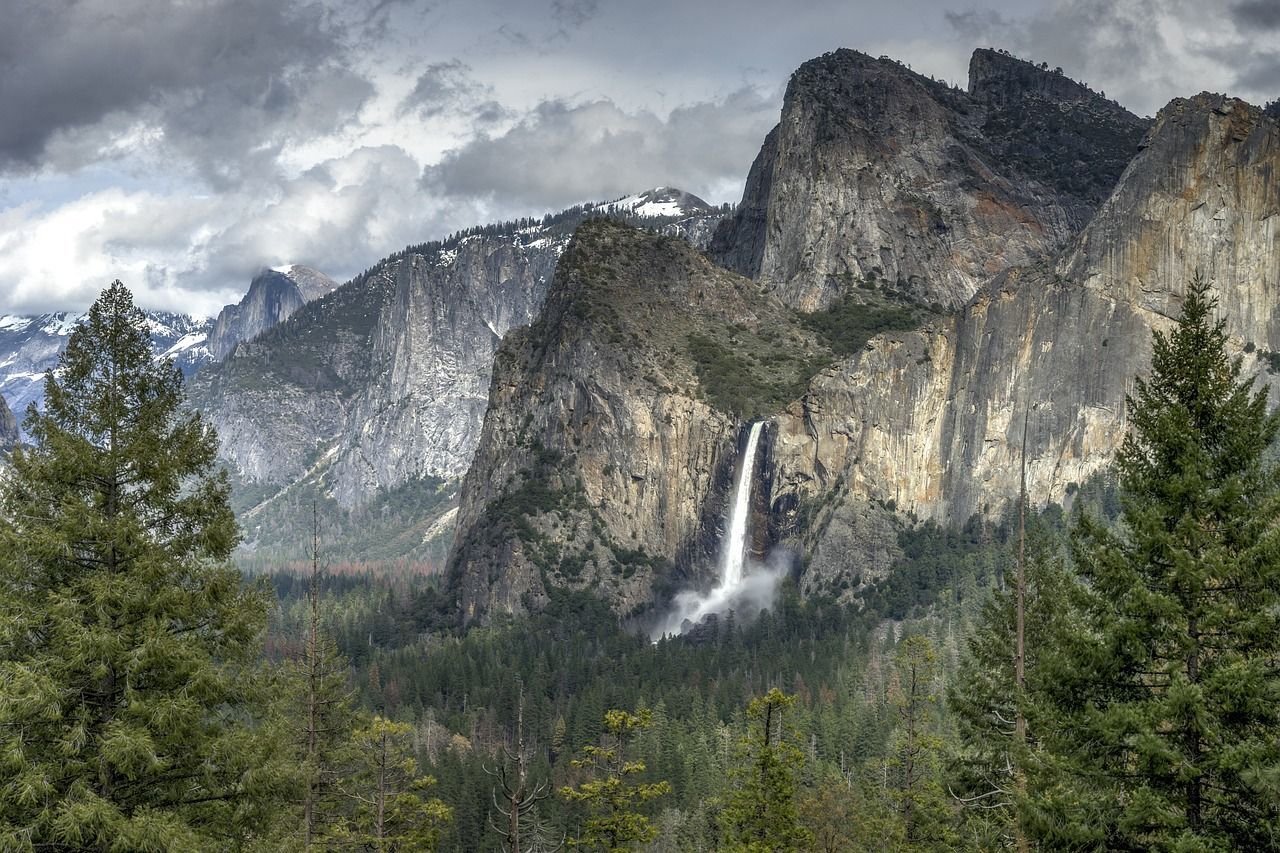
Image: PeterBowers

Bridalveil Falls is a 617-foot cascade and is one of the most iconic sights in the Yosemite National Park . This famous waterfall drops to the base in spring and early summer with enough water to spray its visitors with a gentle mist. In winter, Bridalveil Falls offers a soft yellow glow.

The Ahwahneechee tribe believed that Bridalveil Falls was home to a vengeful spirit named Pohono who protected the entrance to the valley and that those leaving should not look directly at the waterfall lest they suffer the curse. They also thought inhaling the mist from the waterfall would help them find someone to marry , hence the name it is known today.

3
Nugget Falls (Juneau, Alaska)

Image: Timon Cornelissen

Surrounded by snow-capped mountains, lush forests, and crystal-clear lakes, Nugget Falls is one of the most beautiful waterfalls in the United States. Although it’s a popular spot for outdoor enthusiasts , the scenery alone provides ample reasons for anyone to visit and explore.

Located at the tail end of Alaska's Mendenhall Glacier, these 377-foot falls are formed from a glacial stream making their way to Mendenhall Lake in the course of a two-tiered plunge. They can be accessed by a gravel road, but they are often visited as part of an excursion to Juneau Shore or Mendenhall Lake. Whether you’re an avid hiker or just looking for some tranquil moment in nature, Nugget Falls is sure to provide a memorable experience .

4
Wailua Falls (Līhuʻe, Hawái)
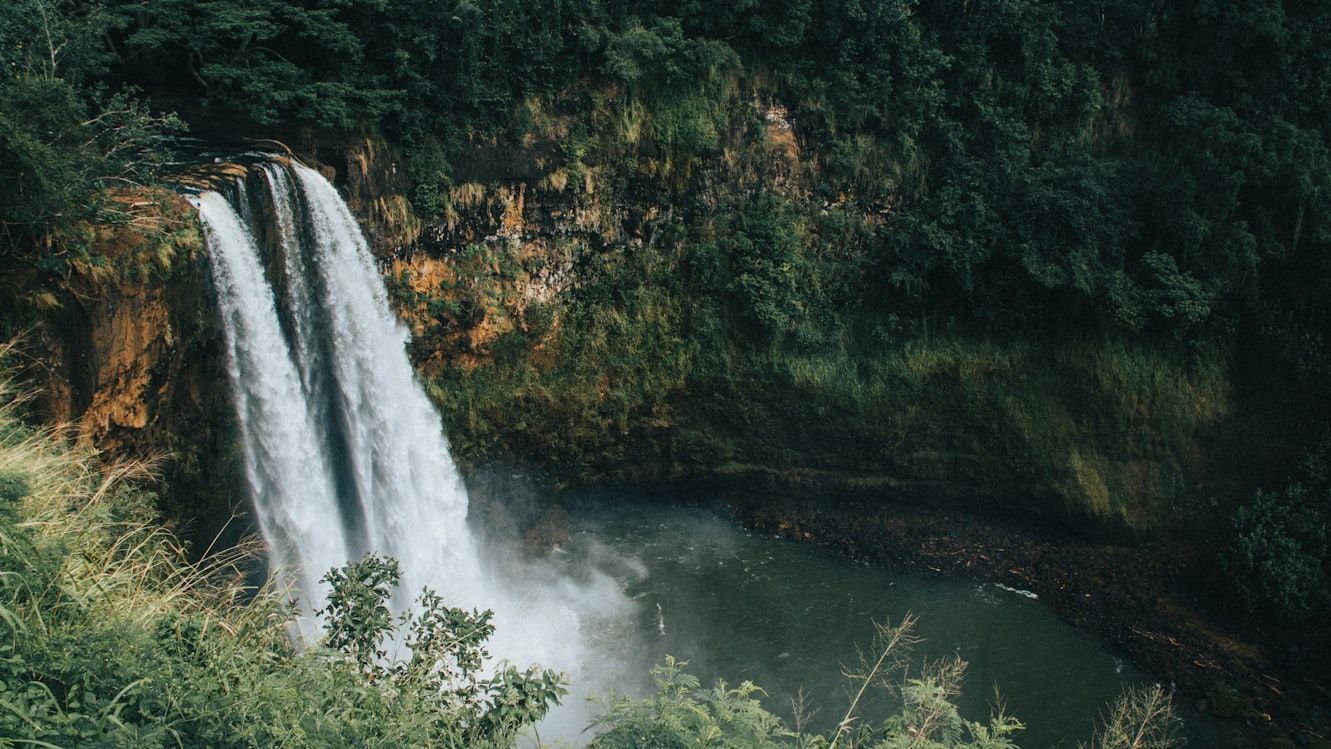
Image: Zane Persaud

You may recognize these waterfalls from their appearance in the opening credits of the hit TV show "Fantasy Island". Or you may have seen them in promotional materials for Kauai, as Wailua Falls are considered the most amazing waterfalls on this scenic Hawaiian island . It is located 5 miles north of downtown Līhuʻe and although there is no walking trail, it can be easily seen from the road.

The double-flow cascade spans an 80-foot drop, thundering and crashing into a small plunge pool below. A lush jungle wall surrounds Wailua Falls, a magnificent site, especially after heavy rains. If you visit in the morning, you may be greeted by a rainbow as the sunlight hits the mist rising from the waterfall . It's an excellent photo opportunity you don’t want to miss!

5
Tahquamenon Falls (Paradise, Michigan)
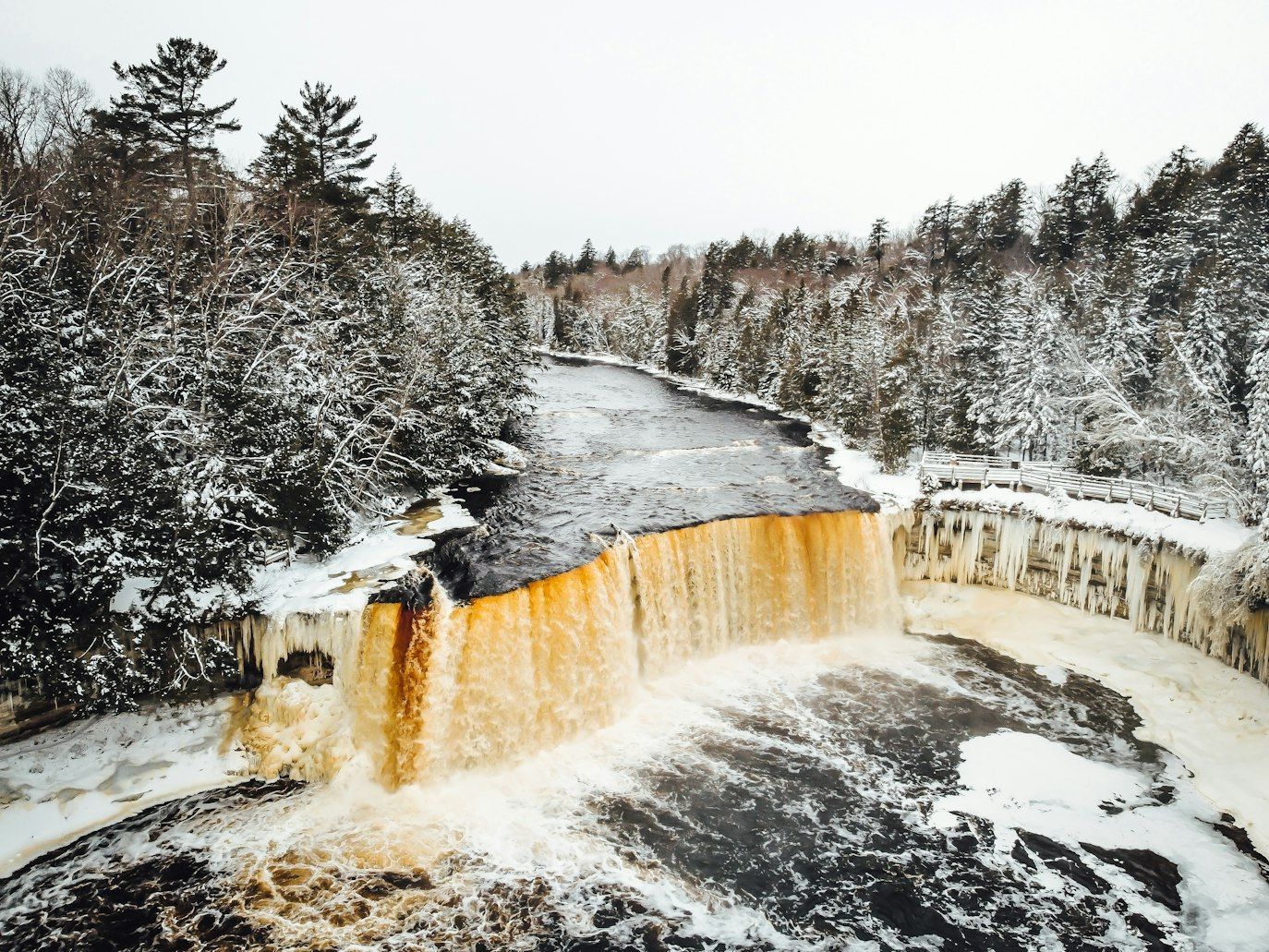
Image: Dillon Austin

The astonishing Tahquamenon Falls are divided into two equally impressive sections. You can visit the Upper Falls to witness the 200-foot-wide and 48-foot-high cascades before heading to the Lower Falls, a group of five waterfalls that drop around a freshwater island. This area was first popularized by Henry Wadsworth Longfellow’s "The Song of Hiawatha", but long before that, it was used as a hunting and fishing site by the Ojibwa natives .

Nowadays, these rust-colored cascades —the result of tannins released from cedar trees upstream— are known to some as "Root Beer Falls." They are located in Tahquamenon Fall State Park, an ideal location for fishing and swimming during the summer. In winter, it becomes a snow-covered paradise for snowmobiling and cross-country skiing . No matter the time of the year, the natural scenery of Tahquamenon is truly a sight to behold!

6
McWay Falls (Big Sur, California)
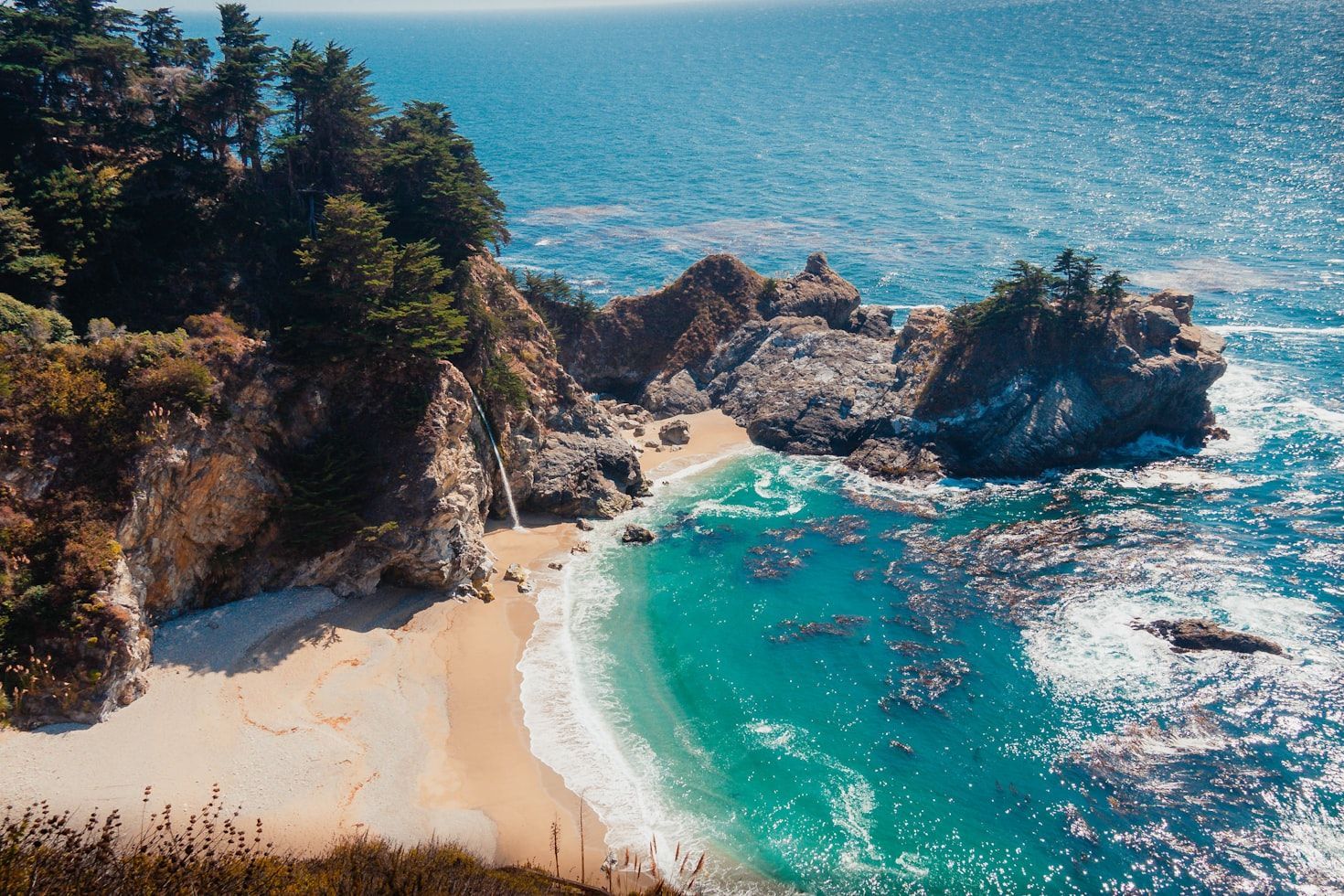
Image: Jairo Gonzalez

Located on the stunning California coast, McWay Falls is a true hidden gem. With its crystal clear waters cascading directly onto the white sandy beach, this 80-foot waterfall delights all visitors with its unique beauty . If you are planning to visit Big Sur and you're looking for spectacular views, McWay Falls is a must-see!

The history of McWay Falls dates back to the beginning of the 20th century when the area was acquired by the McWay family. Julia Pfeiffer McWay, a woman with an adventurous spirit and a passion for nature, fought all her life to preserve its native ecosystem. In 1983, the site was donated to the State of California and incorporated into Julia Pfeiffer Burns State Park, named in honor of Julia's generosity.

7
Crabtree Falls (Blue Ridge Parkway, North Carolina)

Image: Leslie Cross

North Carolina has many natural wonders that can be enjoyed all year round, and Crabtree Falls is no exception. Although it’s not as popular as other waterfalls in the state, it's a site worth visiting, especially during the warmer months . Located just 45 miles north of Asheville, this 70-foot-high cascade is surrounded by an oak and hickory tree forest.

Originally known as Murphy’s Falls, this area was renamed Crabtree Falls by the National Park Service when the Blue Ridge Parkway was constructed in the 1930s. If you are a flower and plant lover, Crabtree Falls is the place to be . In the spring, visitors can find a magnificent array of wildflowers along the trail, and during the summer, ferns fill the forest with rosebay rhododendrons in bloom.

8
Havasu Falls (Supai, Arizona)
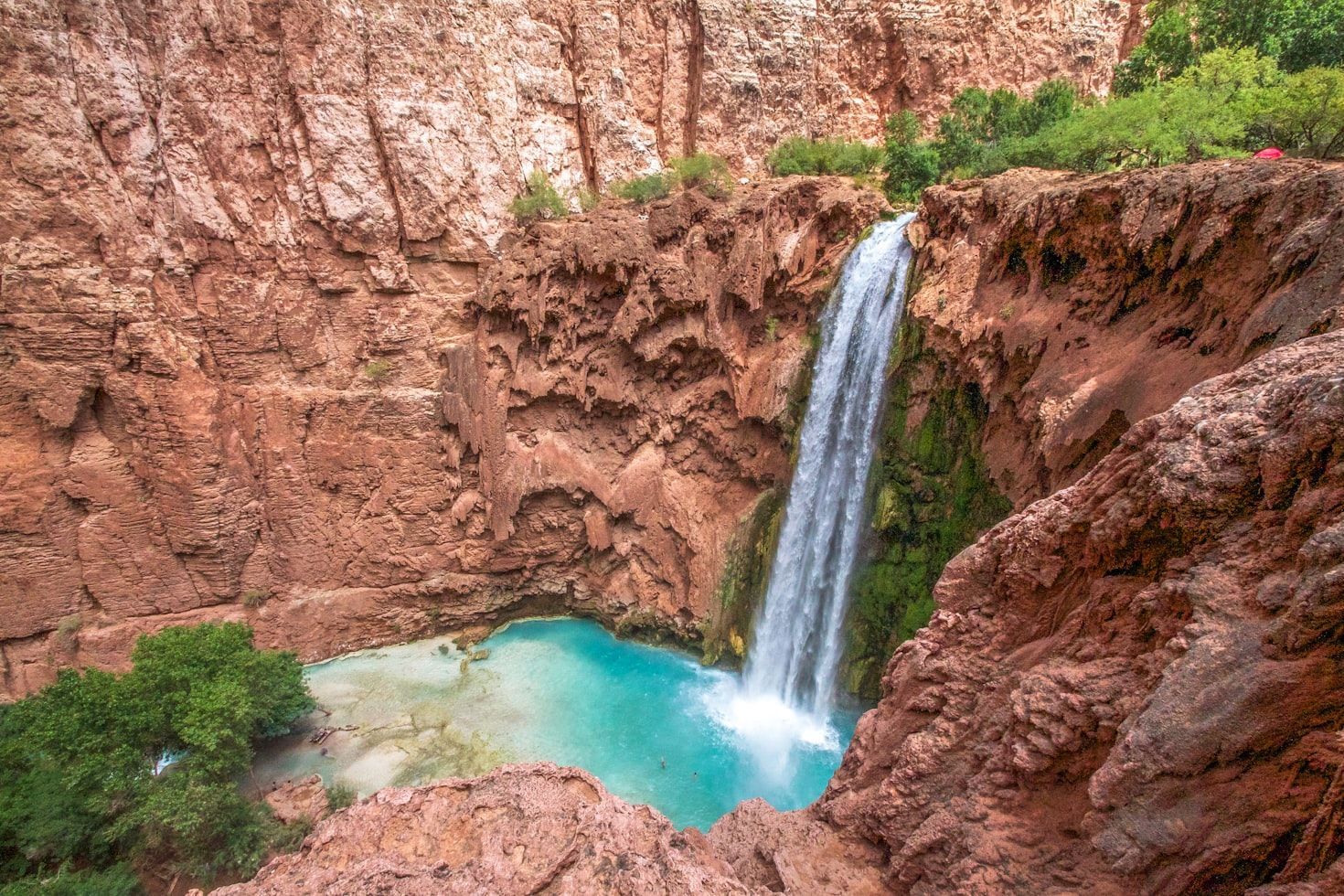
Image: Daniel Hernandez

The Grand Canyon attracts more than 5 million tourists every year and is considered one of the Seven Natural Wonders of the World. But hidden deep in the canyon, on the Havasupai reservation, there is a breathtaking site little known to most tourists: the Havasu Falls . Being in a protected reserve, a special permit is required to visit. If you're lucky enough to get one, the falls can be accessed by helicopter, horse, or mule. Another option is to hike 10 miles there and back, along a beautiful path of red rocks and ancient pictographs.

Havasu Falls is known for having a fantastic turquoise color due to the high levels of calcium carbonate present in the spring-fed waters of Havasu Creek, the main source of the waterfalls. These high levels also create the 70-degree travertine pools at the top, making them the perfect swimming spot!

9
Palouse Falls (LaCrosse, Washington)
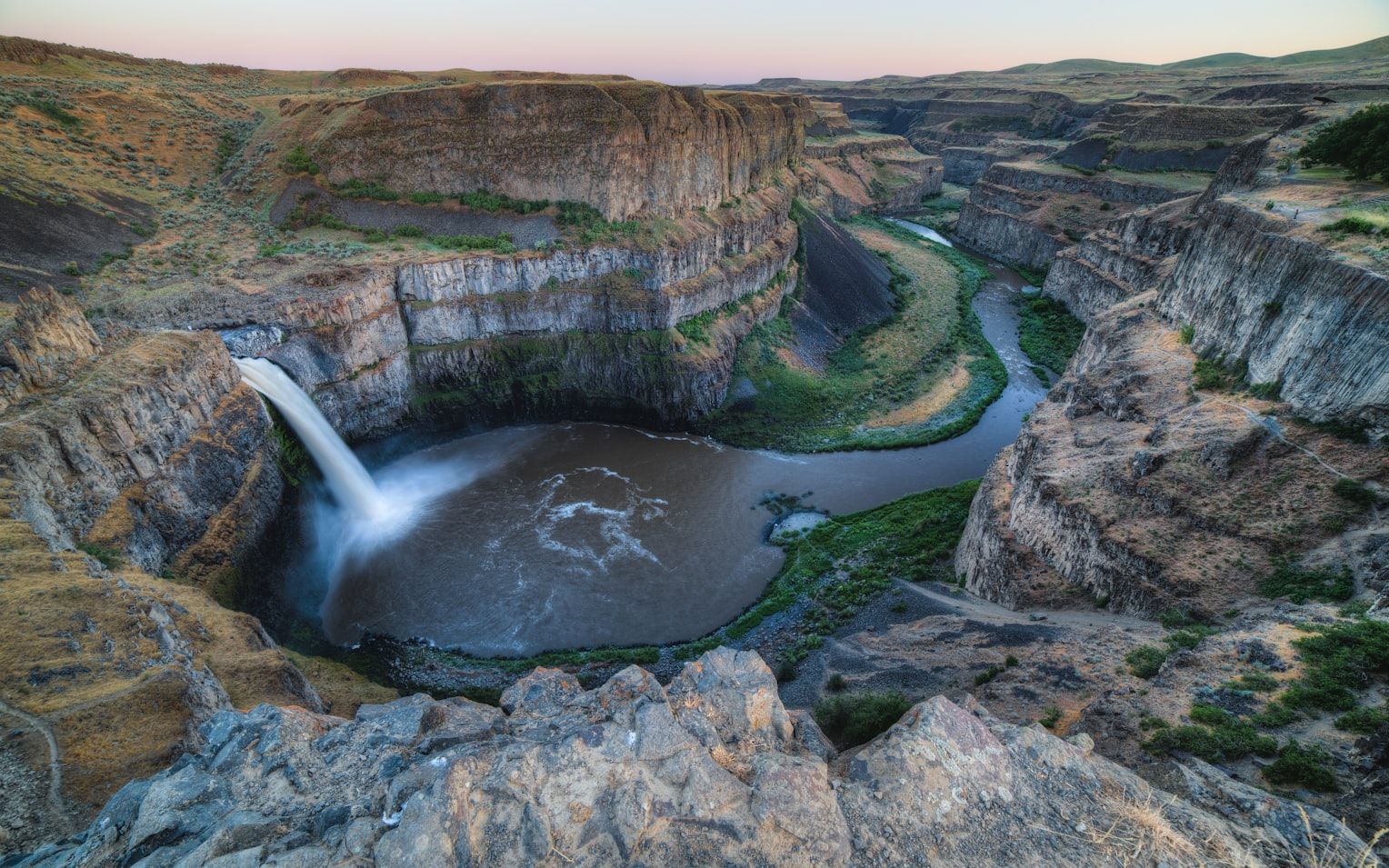
Image: Dave Hoefler

The unexpected beauty of Palouse Falls dominates eastern Washington, attracting thousands of visitors each year to experience the 200-foot drop from a stunning rocky outcrop into a swirling blue pool. The falls are surrounded by striking cliffs and can be seen from several vantage points throughout the State Park, including the trail that hugs the canyon's rim.

Palouse Falls is the result of the last Ice Age , the product of several glacial floods known as the Missoula Floods that swept across the region, creating the unique landscape that amazes us today. If you are feeling adventurous, just pack a tent and prepare to catch one of the best sunset views the country has to offer!

10
Niagara Falls (New York)
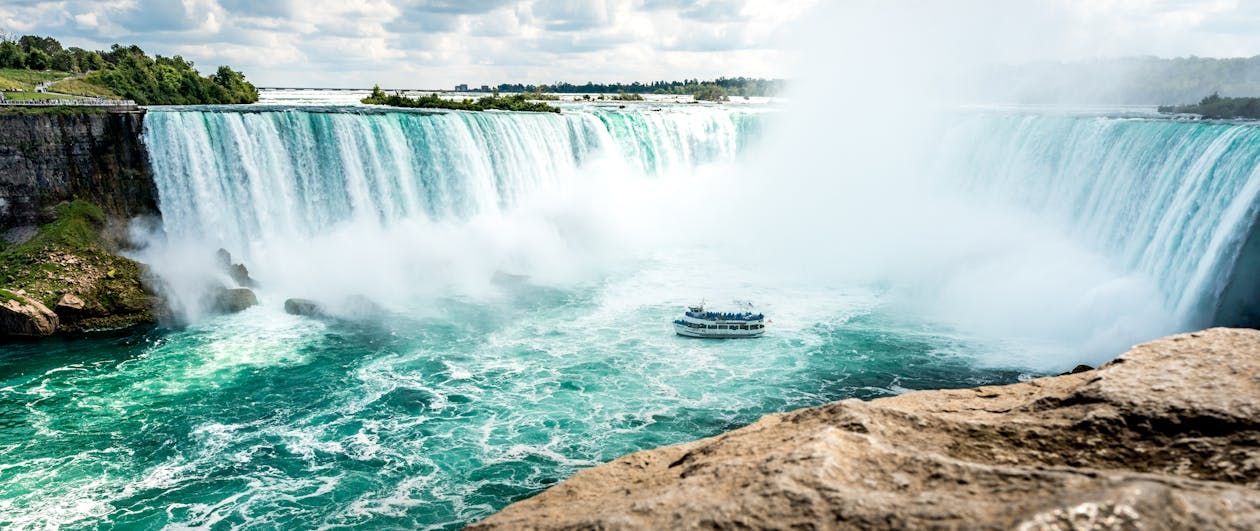
Image: Ivan Torres

Last, but certainly not least, Niagara Falls is one of the most beautiful sights in the United States and a unique destination that attracts millions of tourists from all over the world. With a width of more than 3,000 feet and a drop of 160 ft, these three magnificent falls —two American and one Canadian— are located 400 miles from New York City. Approximately 600,000 gallons of water flow over the falls every second and the average depth underneath is 170 ft.

Named by the Iroquois tribe, the word Niagara means "thunder of water" . Since its discovery by European settlers in the 17th century, Niagara Falls has become very popular, not only for their beauty but also as a source of energy. Niagara Falls is a marvelous spectacle that will remain in the memory of all those who have the chance to explore it . There’s no doubt about it, everyone should visit Niagara Falls at least once in their lifetime!


Geography Geography 3 min read

Waving wild

Why does Oregon have a design on the back of its flag? Find out here!

Image: Mathew Schwartz

Every state has its own symbols, and among them, those related to wildlife are often in the spotlight. From tiny bees or birds to huge bears and bison, our state flags display an amazing variety of creatures. But why were they chosen? Let’s find out!

1
Beaver – Oregon (reverse)

Image: Makaristos, Public domain, via Wikimedia Commons

As you’d expect from the Beaver State, this rodent appears on Oregon’s flag. The thing is, you just can’t see it here because it’s on the reverse side! That’s right, Oregon is the only state with designs on both sides of the flag. But why that animal? In the 19th century, the beaver fur trade played a key role in Oregon’s economic growth, forever linking this clever creature to the state’s identity.

2
Bear – California

Image: Drei Kubik

When you think of grizzly bears, California is probably the first state that comes to mind, and for good reason. Its flag is one of the most recognizable in the country. Grizzlies once roamed the region, and although they’re now extinct in the state, the animal lives on as a symbol. Back in the 1840s, American settlers pushing for independence from Mexico raised a flag with a grizzly and a star to mark their revolution. The design has evolved since then, but the iconic bear remains!

3
Bison – Wyoming

Image: Tony Webster, CC BY 2.0 <https://creativecommons.org/licenses/by/2.0>, via Wikimedia Commons

As one of the few places where American bison have roamed freely for centuries, it’s no surprise that this animal was chosen to represent the state of Wyoming. At the center of its flag, the white silhouette of the bison (often called a buffalo) features Wyoming’s coat of arms, which honors the state's key industries: livestock, mining, grain, and oil.

4
Bees – Utah

Image: JohnnyAstros, CC BY-SA 4.0 <https://creativecommons.org/licenses/by-sa/4.0>, via Wikimedia Commons

The new Utah flag, adopted in 2024, has a peculiar and modern design. The main characters in this story are none other than bees. Or, actually, a beehive, which was chosen to symbolize community, cooperation, and the hard work that reflects Utah’s industrial spirit.

5
Badger – Wisconsin

Image: Kenneth C. Zirkel, CC BY-SA 4.0 <https://creativecommons.org/licenses/by-sa/4.0>, via Wikimedia Commons

See that small yellow-and-brown figure above the shield on Wisconsin’s flag? Although many people don't notice it, that’s a badger, the state animal. But why a badger? Back in the 1800s, the first lead miners who worked in southern Wisconsin used to live in hillside tunnels during the winter, which resembled badger burrows. These workers were the first to be given the nickname, which was later transferred to the state.

6
Deer and cow- Vermont

Image: Tablelegs6, CC0, via Wikimedia Commons

The Vermont flag has plenty to see, but the most striking feature is the deer head that tops the shield. With deer abundant throughout the state, it was chosen to represent all of Vermont’s wildlife. But what about the cow? Tucked inside the shield, this small figure symbolizes the state’s dairy and agricultural industry.

7
Horse – New Jersey

Image: Public domain, via Wikimedia Commons

As part of the state coat of arms, a horse appears atop the beautiful New Jersey state flag. As in many other regions, horses were vital to New Jersey’s colonial economy, playing a key role in agriculture. For that reason, in 1777, the coat of arms’ designer placed the horse at the top, symbolizing both strength and the speed of the state’s growth. On both sides of the shield are two women: Liberty and Ceres, the Roman goddess of agriculture, honoring the state motto, "Liberty and prosperity."

8
Moose/Elk – Michigan

Image: Tony Webster, CC BY 2.0 <https://creativecommons.org/licenses/by/2.0>, via Wikimedia Commons

A moose and an elk seem like great choices for offering support, don’t they? That’s exactly what the designers of Michigan’s flag and coat of arms thought. These two majestic animals appear standing on their hind legs, as if holding up the shield. Both native to the state, they symbolize Michigan’s abundant wildlife and natural resources.

9
Pelican – Louisiana

Image: Public domain, via Wikimedia Commons

Although the pelican on Louisiana’s state flag is white, its actual name is "brown pelican", a species that abounds along the state’s coast. On both the flag and the coat of arms, the bird is shown wounding itself to feed its young; a strong symbol of devotion and sacrifice that reflects Louisiana’s motto: "Union, Justice, and Confidence."

10
Bald Eagle – Many

Image: Alexas_Fotos

We saved the unmistakable bald eagle for last. Native to North America, this majestic bird has become a symbol of the United States, representing strength, courage, freedom, and longevity. But the eagle isn’t just on the national coat of arms; it also appears on many state seals and flags, including Illinois, Iowa, Michigan, Missouri, New York, North Dakota, Pennsylvania, and Utah’s historic flag.

General General 3 min read

Your garden, your rules

12 common garden pests in the U.S. and how to control them

Image: Anna Shvets / Igor Son

Even on the smallest possible scale, nature is wild, and garden pests are a clear expression of that reality. Holes in leaves, small grubs around the roots of container plants, speckled foliage, and skeletonized leaves are just a few signs that pests may be present in your garden.

Check your plants often, and act quickly as soon as you spot a problem. Your garden will thank you!

1
Spotted and striped cucumber beetles

Image: Alexandria Szakacs

Striped and spotted cucumber beetles favor cucumbers and melon vines. These insects spread bacterial wilt from plant to plant, a disease that is often fatal. When striped cucumber beetles are a chronic problem, the best course of action is to choose bacterial-wilt-resistant cucumber varieties .

2
Colorado potato beetle

Image: Олександр К

As the name implies, the surest way to attract Colorado potato beetles to your garden is by planting potatoes. These insects lay clusters of orange-yellow eggs on the undersides of leaves, which hatch into highly destructive orange larvae that feed voraciously and grow quickly. While beetles can be killed at any stage, it's easiest to remove the adults and eggs by hand .

3
Eggplant flea beetle

Image: Weronika Romanowska

Eggplant flea beetles can destroy an eggplant plant in just a few days. While many insecticides can kill these pests, the most effective method requires protecting plants with summer-weight floating row covers. These covers transmit enough sunlight while physically blocking the beetles from the plants.

4
Harlequin cabbage bug

Image: David Clode

These insects might look striking, but they are the worst enemy of summer kale, broccoli, and other brassicas. They suck the sap from leaves, leaving behind unsightly pockmarks.

Harlequin cabbage bugs can be picked off by hand , and wearing a face mask can help you avoid the unpleasant odor they emit. Also, spraying them off with a jet of water will help knock them back.

5
Mexican bean beetle

Image: Viktor Talashuk

In a similar case to the one we mentioned earlier, it’s the larvae of Mexican bean beetles that cause the most damage. The adults emerge in late spring but usually don’t become a serious problem on bean plants until midsummer.

The best way to deal with this pest may seem harsh, but necessary if you want to keep your other plants safe: you must completely harvest and remove the infested plants from the garden . After picking all the beans, the entire plant should be pulled, bagged, and taken far away from the garden.

6
Red spider mites

Image: adege

Tiny red spider mites live on the undersides of leaves, where they feed on plant sap. To control them, the best approach is to increase humidity and, if growing under glass, introduce a biological control . Alternatively, organic sprays can also be effective.

7
Codling moth

Image: Mikkel Frimer-Rasmussen

These moths are responsible for the maggots found in apples. To avoid these, spray emerging caterpillars twice with bifenthrin , starting in midsummer. Another useful method involves hanging pheromone traps in late spring to catch male moths and prevent them from mating.

8
Winter moth

Image: Erik Karits

Winter moth caterpillars hide inside webbed leaves on fruit trees during the spring. One effective way to control these pests is by applying sticky traps to capture the adult moths before they lay eggs.

9
Scale insects

Image: efraimstochter

Scale insects cluster on branches and beneath leaves, often leading to poor plant growth. Other common symptoms include sticky excretions (called honeydew) and the development of sooty mold, especially on evergreens. The solution is to wash off the mold and spray the plant with horticultural oil .

10
Viburnum beetle

Image: Grant Ofstedahl

The Viburnum beetle and its larvae can create holes in the leaves. The answer to this is to spray the areas affected during the spring with bifenthrin or thiacloprid .

11
Adult vine weevil

Image: Henry Lai

The adult weevil is a nocturnal, flightless insect that makes notches in the leaves of your plants. To control this pest, apply nematodes by mixing them with water and applying the solution to the soil in the affected area.

12
Rose slug

Image: Naoki Suzuki

The rose slug is easy to overlook until its feeding starts to damage the leaves. Rose slugs feed on the undersides of leaves, out of sight, nibbling on the tissue between the veins. By the time they’re done, the leaves often resemble skeletons.

Luckily, the solution only requires blasting the slugs off the roses with a spray of water or treating them with spinosad, a bioinsecticide derived from soil bacteria.

Explore more American facts

Choose your favorite category!

General
General

As American as apple pie—the very best America has to offer!

Culture
Culture

Delve into the astounding richness of American lore.

Geography
Geography

Hop in and explore vast and diverse American landscapes.

History
History

Discover the key moments that shaped the United States.